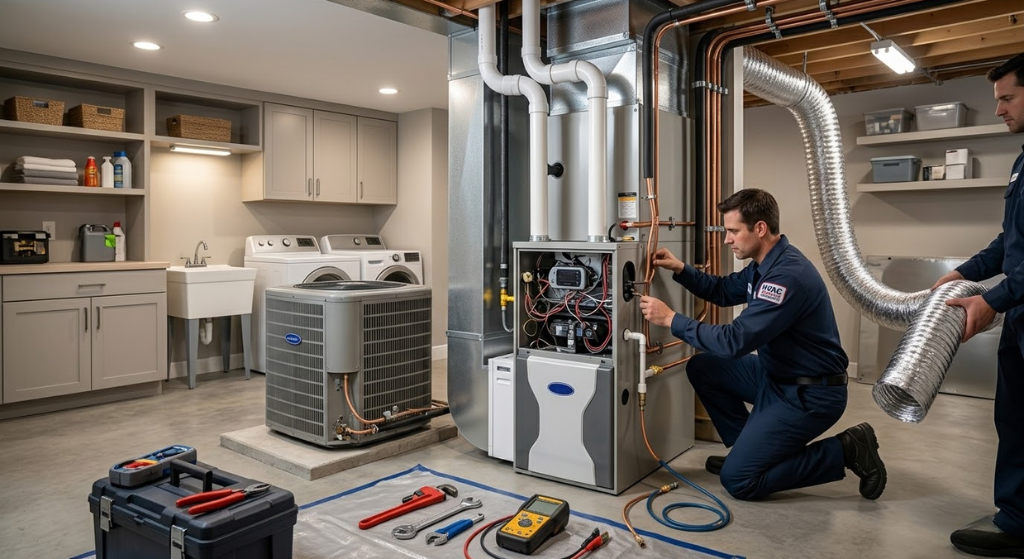
Your furnace dies on a Tuesday night in January. The house is 52°F by morning. A technician shows up, pokes around for twenty minutes, and tells you it’ll cost somewhere between $3,000 and $8,000 to get heat running again. You nod slowly, pretending that range makes sense, while internally wondering whether you’re about to be completely ripped off.
You’re not alone. Furnace replacement is one of the most significant home expenses most people will face — and one of the least understood. Contractors know it. That information gap is exactly how homeowners end up overpaying by thousands of dollars on a system they’ll live with for the next two decades.
This guide changes that. We’re breaking down every cost factor — equipment, labor, efficiency, sizing, brand, hidden fees, rebates, and financing — so that when you walk into that conversation with an HVAC contractor, you’ll know exactly what a fair price looks like, what questions to ask, and where your real opportunities to save money are.
Average Furnace Replacement Cost in 2026
Let’s start with the numbers that most people actually want: what does a furnace replacement realistically cost right now? The short answer is that the national average sits between $3,500 and $5,500 for a complete installed job, but that average hides a huge spread depending on your situation.
These figures represent the all-in cost: equipment, labor, permits, disposal of the old unit, and basic startup. They do not include major ductwork overhauls, gas line relocation, or electrical panel upgrades — we’ll cover those hidden costs later.
Why Do Prices Vary So Dramatically?
A $2,500 furnace job and a $7,500 furnace job can both be completely reasonable quotes depending on the circumstances. The key variables are:
- Furnace efficiency (AFUE rating): Higher efficiency = higher upfront cost, lower operating cost
- Furnace capacity (BTU output): Larger homes need more powerful units
- Fuel type: Gas, oil, and electric furnaces have very different price profiles
- Brand and model tier: Budget vs. premium manufacturer pricing
- Regional labor rates: NYC labor costs 2–3x rural Midwest labor
- Complexity of the job: Simple swap vs. rerouting vents, upgrading gas line
- Time of year: Emergency winter installs cost more than off-season scheduling
Cost by Region
| Region | Average Installed Cost | Labor Rate ($/hr) | Notes |
|---|---|---|---|
| Northeast (NY, MA, CT) | $4,500–$8,500 | $100–$160 | High labor, strict code, oil furnaces common |
| Midwest (IL, OH, MI) | $3,000–$6,000 | $65–$110 | Natural gas predominant, moderate labor |
| Southeast (TX, GA, FL) | $2,500–$5,500 | $55–$90 | Smaller capacity needs in milder climates |
| Mountain West (CO, UT) | $3,500–$6,500 | $75–$120 | High-altitude combustion considerations add cost |
| Pacific Coast (CA, OR, WA) | $4,000–$8,000 | $90–$150 | Strict energy codes, high labor rates |
Furnace Replacement Cost by Fuel Type
The fuel your furnace burns is one of the single largest determinants of both upfront cost and long-term operating expense. Here’s a realistic breakdown of each option.
Natural Gas Furnaces
Gas furnaces are by far the most common choice in North America, heating roughly 47% of all U.S. homes. They’re popular because natural gas is affordable, furnaces are efficient, and contractor availability is excellent.
| Type | Unit Cost | Installed Cost | AFUE | Best For |
|---|---|---|---|---|
| Single-Stage Gas | $700–$1,400 | $2,500–$4,000 | 80% | Budget builds, mild climates |
| Two-Stage Gas | $1,200–$2,200 | $3,200–$5,200 | 80–96% | Moderate climates, balanced value |
| Modulating Gas Best Value | $1,800–$3,200 | $4,500–$7,500 | 96–98.5% | Cold climates, long-term savings |
Oil Furnaces
Oil furnaces are common in the Northeast, where natural gas infrastructure is less developed. They run hotter than gas units (making them effective in extreme cold) but fuel costs tend to be higher and more volatile. Expect to budget for annual tank inspection and fuel delivery contracts on top of the hardware.
| Type | Installed Cost | AFUE | Annual Fuel Cost (est.) |
|---|---|---|---|
| Standard Oil Furnace | $3,500–$5,500 | 80–85% | $1,800–$3,200 |
| High-Efficiency Oil | $5,000–$8,000 | 86–95% | $1,500–$2,600 |
Electric Furnaces
Electric furnaces have the lowest upfront cost and simplest installation (no gas line, no combustion venting), but they’re expensive to operate in most parts of the country because electricity is costly relative to natural gas. They make sense in mild climates where you rarely need heavy heating, or in homes without gas access.
| Type | Installed Cost | Efficiency | Annual Operating Cost (est.) |
|---|---|---|---|
| Electric Furnace (5–20 kW) | $1,500–$3,500 | 95–100% | $2,000–$4,500 |
| Electric Heat Pump (hybrid) | $3,500–$8,000 | 200–350% (COP 2–3.5) | $800–$1,800 |
Propane Furnaces
Propane furnaces are functionally similar to natural gas units (often the same hardware with a conversion kit) and common in rural areas without gas mains. Equipment costs mirror gas furnaces, but fuel costs run roughly 30–50% higher per BTU than natural gas, making operating costs a significant consideration.
AFUE Ratings, Efficiency, and Long-Term Savings
AFUE — Annual Fuel Utilization Efficiency — measures what percentage of fuel your furnace converts into usable heat. An 80% AFUE furnace turns 80 cents of every fuel dollar into heat; 20 cents goes up the flue. A 96% AFUE furnace wastes only 4 cents on the dollar.
That difference adds up quickly. On a $1,600/year gas heating bill (common for a 2,000 sq ft home in a cold climate), upgrading from an old 70% AFUE furnace to a new 96% unit saves roughly $410 per year in fuel costs. Over 15–20 years, that’s $6,000–$8,000 in savings — often more than the premium you paid for the high-efficiency unit.
| AFUE Rating | Category | Annual Fuel Waste | Est. Annual Fuel Cost* | 10-Year Savings vs. 80% |
|---|---|---|---|---|
| 70–78% | Old/Minimal code | 22–30% | $1,900–$2,200 | Baseline |
| 80% | Federal minimum (most states) | 20% | $1,600–$1,800 | $300–$500 |
| 90–92% | High-efficiency entry | 8–10% | $1,350–$1,520 | $2,500–$3,800 |
| 96–98.5% | Premium high-efficiency | 1.5–4% | $1,200–$1,380 | $3,800–$6,000 |
*Estimates based on 2,000 sq ft home, cold climate zone, natural gas at $1.10/therm.
Single-Stage vs. Two-Stage vs. Modulating
Beyond AFUE, how a furnace operates — its staging — has a major impact on comfort and efficiency:
- Single-stage: Runs at 100% or completely off. Cheapest but least comfortable (temperature swings, frequent on/off cycling).
- Two-stage: Runs at ~65% for mild days, 100% for the coldest days. Better comfort, 15–20% more efficient in real-world use vs. single-stage.
- Modulating (variable): Adjusts output in 1% increments from ~40% to 100%. Most comfortable, quietest, most efficient. Pairs ideally with a smart thermostat for maximum savings.
North vs. South Efficiency Requirements
As of 2023, the Department of Energy split the country into two efficiency regions for gas furnaces:
- Northern states: New furnaces must meet 90% AFUE minimum (most 30 northern states)
- Southern states: 80% AFUE minimum remains in effect
If you’re in a northern state, you’re automatically getting a high-efficiency condensing furnace — which also means a white PVC exhaust pipe instead of a traditional metal flue. Factor in any needed venting modifications when budgeting.
Furnace Sizing: Getting the Right BTU for Your Home
Choosing the wrong furnace size is one of the most expensive mistakes a homeowner can make — and it happens more often than you’d think. An undersized furnace runs constantly without keeping your home warm. An oversized furnace short-cycles: it roars on, heats the space too fast, shuts off, then starts again — wearing out components faster and creating uncomfortable temperature swings throughout the house.
The Manual J Load Calculation
The correct way to size a furnace is through a Manual J heat load calculation, which factors in your home’s square footage, insulation levels, window area and efficiency, ceiling height, local climate data, and air infiltration rates. A qualified HVAC contractor will perform this before recommending a unit. Be wary of any contractor who quotes a furnace size based solely on square footage or on “what was there before.”
Rough Sizing Estimates by Climate
| Home Size (sq ft) | Mild Climate (South) | Moderate Climate (Midwest) | Cold Climate (North) |
|---|---|---|---|
| 1,000 | 30,000–40,000 BTU | 40,000–50,000 BTU | 50,000–60,000 BTU |
| 1,500 | 45,000–55,000 BTU | 55,000–70,000 BTU | 70,000–85,000 BTU |
| 2,000 | 55,000–70,000 BTU | 70,000–90,000 BTU | 90,000–110,000 BTU |
| 2,500 | 70,000–85,000 BTU | 85,000–110,000 BTU | 110,000–135,000 BTU |
| 3,000+ | 85,000–100,000 BTU | 100,000–130,000 BTU | 125,000–150,000 BTU |
How Oversizing Costs You Money
An oversized furnace doesn’t just cause comfort problems — it also costs more upfront (larger equipment = higher price) and more long-term (short-cycling wears out heat exchangers and inducer motors faster). Studies have shown that a furnace sized 25% too large can lose up to 30% of its theoretical efficiency in real-world operation due to short-cycling losses.
If a contractor recommends a much larger unit than you currently have without performing a load calc, that’s a significant red flag worth investigating before signing any contract.
Labor Costs: What You’re Paying For and Why It Matters
On a typical furnace replacement, labor accounts for 30–50% of the total bill. Understanding what that labor actually covers helps you evaluate whether a quote is reasonable or padded.
What’s Typically Included in Labor
- Disconnect and removal of old furnace
- Disposal of old equipment (often included; sometimes $50–$150 extra)
- New furnace installation and anchoring
- Gas line connection and leak test
- Flue/venting connection (or new PVC installation for condensing units)
- Electrical connections (thermostat wire, control board wiring)
- Startup, calibration, and safety checks
- Permit pulling and inspection coordination (sometimes extra)
Typical Labor Cost Ranges
| Task | Time Estimate | Cost Range |
|---|---|---|
| Simple furnace swap (same type/location) | 4–6 hours | $600–$1,200 |
| Furnace with new PVC venting (condensing) | 5–8 hours | $900–$1,800 |
| Furnace relocation | 8–14 hours | $1,500–$3,000 |
| Furnace + new ductwork | 2–4 days | $2,500–$6,000 |
| Emergency/after-hours installation | Varies | Add 25–50% to standard rate |
Understanding the Blower Motor Upgrade
One labor-adjacent decision that often surprises homeowners: ECM vs. PSC blower motors. PSC (permanent split capacitor) motors run at fixed speeds and consume significantly more electricity. ECM (electronically commutated motor) blower motors are variable-speed, dramatically more efficient, and run quieter. Higher-tier furnaces include ECM motors; budget units often don’t.
If you’re already spending $4,000+ on a new furnace, upgrading to a unit with an ECM motor is typically worth every dollar. For the full technical breakdown, see our guide on HVAC blower wattage: PSC vs. ECM costs and efficiency explained.
Hidden Costs That Can Blow Your Budget
The quoted price is rarely the final price. Experienced contractors know what add-ons typically arise; inexperienced ones don’t flag them until you’re mid-job. Here’s what to budget for beyond the base installation quote:
1. Venting and Flue Modifications
If you’re upgrading from an 80% AFUE atmospheric-vented furnace to a 90%+ condensing unit, the existing metal flue cannot be used. A new two-pipe PVC system must be run through an exterior wall or up through the existing flue with a PVC liner. Cost: $300–$1,200 depending on distance and complexity.
2. Gas Line Upgrades
Older homes sometimes have undersized gas lines (½” pipe where ¾” is required) or the line needs to be relocated. A gas line upgrade runs $300–$1,500 depending on the length and material used.
3. Electrical Panel Work
High-efficiency furnaces with ECM blower motors often require a dedicated 15-amp circuit. If your current installation is on a shared circuit or your panel has no open breakers, add $150–$600 for an electrician.
4. Ductwork Repairs or Replacement
A new high-efficiency furnace forces more air through your duct system at variable speeds. If your ducts are undersized, leaking, or deteriorating, you won’t get the performance you paid for. Duct sealing costs $300–$700; duct replacement can run $2,000–$6,000 for a full home.
5. Permits and Inspections
Mechanical permits cost $50–$250 depending on your municipality. This is non-negotiable — always insist your contractor pull a permit. Uninspected work can void your homeowner’s insurance claim if a failure occurs.
6. Condensate Drain Line
Condensing furnaces (90%+) produce water vapor as a byproduct of combustion. This condensate needs a drain line routed to a floor drain or condensate pump. Add $100–$350 if your installation location doesn’t have an existing drain.
7. Carbon Monoxide and Smoke Detectors
Many inspectors will flag missing or outdated CO detectors as part of the permit process. Budget $50–$200 for updated safety equipment near the furnace and in sleeping areas.
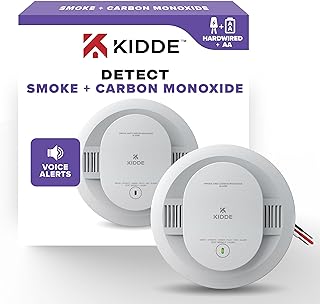
Kidde Combination Smoke & CO Detector — Required near any new furnace installation. Protects against carbon monoxide, a silent risk with any gas appliance. Most inspectors will check for this.
Check Price on Amazon →Top Furnace Brands: What You Get for the Money
The furnace market is dominated by a handful of manufacturers who actually build the equipment, while brand names like Lennox, Carrier, Trane, Rheem, and Bryant each represent distinct market positions. Understanding the brand landscape helps you decode contractor recommendations.
Brand Ownership: The Hidden Truth
Many homeowners don’t realize that most major furnace brands are owned by just three parent companies:
- Carrier Global: Carrier, Bryant, Payne (and ICP brands including Heil, Tempstar, Arcoaire)
- Lennox International: Lennox, Armstrong, Ducane, ADP
- Trane Technologies: Trane, American Standard
- Daikin: Goodman, Amana (the value leaders)
| Brand | Tier | Unit Cost Range | AFUE Range | Warranty | Best For |
|---|---|---|---|---|---|
| Goodman / Amana | Budget | $700–$1,600 | 80–96% | 10 yr parts / LTD HX | Cost-conscious buyers |
| Rheem / Ruud | Mid | $900–$2,000 | 80–96% | 10 yr parts | Balanced value/reliability |
| Bryant / Payne | Mid | $900–$2,200 | 80–98% | 10 yr parts | Carrier quality at lower price |
| Carrier | Mid-Premium | $1,200–$2,800 | 80–98.5% | 10 yr parts (20 yr HX) | Reliability, strong dealer network |
| Trane / American Standard | Premium | $1,400–$3,200 | 80–97.3% | 10 yr parts (20 yr HX) | Longevity, build quality |
| Lennox Top Pick | Premium | $1,600–$3,500 | 80–98.7% | 10 yr parts (20 yr HX) | Highest efficiency, quietest |
✅ Premium Brands (Lennox, Trane, Carrier)
- Highest AFUE ratings (96–98.5%)
- Better build quality and materials
- More sophisticated controls
- Longer warranty options
- Quieter operation
⚠️ Budget Brands (Goodman, Rheem)
- Higher failure rates in years 10–15
- Fewer efficiency options above 96%
- Less sophisticated staging controls
- Noisier operation at full capacity
That said, Goodman and Amana furnaces have dramatically improved their reliability over the past decade. For a budget-conscious homeowner in a mild climate who plans to sell the house within 10 years, a well-installed Goodman is a perfectly reasonable choice. For a family in Minnesota planning to live in their home for 25 years, spending the extra $1,500–$2,500 for a Lennox or Trane will very likely pay off.
Repair vs. Replace: Making the Right Call
This is the question that’s actually hardest to answer objectively, because the answer depends heavily on your furnace’s age, the nature of the repair, and your risk tolerance for another failure mid-winter.
The Rule of 5000
HVAC industry professionals often use a simple calculation called the Rule of 5000: multiply the furnace’s age in years by the cost of the proposed repair. If the result exceeds $5,000, replacement is almost always the smarter financial decision.
| Furnace Age | Repair Cost | Rule of 5000 Score | Decision |
|---|---|---|---|
| 5 years | $400 | 2,000 | Repair |
| 8 years | $500 | 4,000 | Repair |
| 10 years | $550 | 5,500 | Consider Replacing |
| 12 years | $500 | 6,000 | Replace |
| 15 years | $400 | 6,000 | Replace |
| 20 years | $300 | 6,000 | Replace |
Specific Situations That Always Justify Replacement
- Cracked heat exchanger: This is a carbon monoxide hazard. Non-negotiable: replace the furnace immediately.
- Failed control board on an older unit: A new board costs $500–$800 on a furnace that might fail again within a year. The math rarely works.
- Second significant repair within 3 years: If you’re already in repair debt, you’re buying time on borrowed interest.
- Furnace is 20+ years old: Even a “successful” repair extends its life 1–3 years at most. You’re better off starting fresh with a warranty.
- Efficiency has dramatically declined: A tune-up reveals 60–65% measured efficiency when the nameplate says 80%. That annual fuel waste is costing you hundreds of dollars that could fund a new unit payment.
When Repair Is the Right Call
- Furnace is under 10 years old with a minor component failure (igniter, capacitor, pressure switch)
- Repair cost is less than 20% of a new installed unit
- You’re planning to sell the home within 2–3 years (a working furnace of any vintage supports a home sale)
Tax Credits, Rebates, and Incentives: Free Money You Shouldn’t Miss
One of the most underutilized opportunities in furnace replacement is the patchwork of federal, state, utility, and manufacturer incentives that can meaningfully reduce your out-of-pocket cost. In 2026, these incentives are more generous than they’ve been in years, largely driven by the Inflation Reduction Act.
Federal Tax Credit (25C)
The Energy Efficient Home Improvement Credit (Section 25C) allows homeowners to claim 30% of the cost of qualifying HVAC equipment, up to $600 per year for gas furnaces. To qualify, your furnace must meet specific AFUE thresholds:
- Gas furnaces: ≥97% AFUE (or qualifying through the ENERGY STAR Most Efficient list)
- Oil furnaces: ≥95% AFUE
- Electric heat pumps: Meet qualifying SEER2/HSPF2 thresholds
The credit applies to both the equipment and installation costs. Note that the $600 cap applies per category — so you could potentially claim additional credits for insulation, windows, or a heat pump water heater in the same year.
State Rebate Programs
Many states operate their own efficiency rebate programs, often administered through the state energy office. These are frequently stackable with the federal credit, meaning you can capture both. Rebate amounts vary widely:
| State | Program | Typical Rebate |
|---|---|---|
| Massachusetts | Mass Save | $300–$1,500 for 95%+ furnaces |
| New York | EmPower NY / NYSERDA | $250–$800 |
| California | Various utility programs | $100–$500 (heat pumps preferred) |
| Colorado | Xcel Energy rebates | $200–$600 |
| Illinois | ComEd / Nicor Gas | $100–$400 |
Utility Company Rebates
Your gas or electric utility may offer rebates of $100–$500 for upgrading to a high-efficiency furnace. Check your utility’s website or call their energy services department — many offer rebates that aren’t prominently advertised. Some utilities also offer free energy audits that can help you identify the right size and configuration before you buy.
Manufacturer Rebates
Lennox, Carrier, Trane, and Rheem all run seasonal promotional rebates, typically $100–$400 cash back on qualifying units purchased during their promotional windows (usually spring and fall). Ask your contractor about current manufacturer promotions before finalizing your order.
- Lennox SLP99V furnace installed: $6,800
- Federal 25C tax credit (30%): −$600 (capped)
- State efficiency rebate: −$400
- Utility rebate: −$200
- Manufacturer seasonal rebate: −$300
- Effective out-of-pocket: $5,300
Always ask your HVAC contractor for documentation showing the furnace’s AFUE rating and that it appears on the ENERGY STAR qualified product list. You’ll need this when filing for tax credits and rebates.
Financing Options for Furnace Replacement
A furnace failure rarely arrives with advance notice or a convenient bank balance. Understanding your financing options can mean the difference between getting the right system or settling for a lower-quality unit because of an immediate cash constraint.
HVAC Company Financing
Most larger HVAC contractors offer financing through third-party lenders like GreenSky, Synchrony, or Wells Fargo. Promotional terms often include 0% APR for 12–18 months, which is an exceptional deal if you can pay off the balance before the promotional period ends. After that, interest rates typically jump to 19–26% — so read the fine print carefully.
PACE Financing
Property Assessed Clean Energy (PACE) financing is available in many states and allows you to finance energy-efficient improvements through your property tax bill. It’s long-term (5–25 years), often doesn’t require a credit check, and is transferable to new owners if you sell — though that last point can complicate real estate transactions.
Utility On-Bill Financing
Some utilities offer on-bill financing programs where the cost of a new furnace is added to your monthly utility bill. The interest rate is often subsidized (2–5%), and payments are structured so that the monthly bill increase is offset by energy savings. This is one of the most underused and underadvertised financing options available.
Personal Loans and HELOCs
If HVAC financing terms are unfavorable, consider a personal loan (typically 8–18% APR for qualified borrowers) or a home equity line of credit (HELOC), which often offers 7–9% rates and potential tax deductibility on interest. For large replacement projects that include ductwork or system upgrades, a HELOC is often the most cost-effective financing vehicle.
| Financing Type | Typical APR | Term | Credit Check? | Best For |
|---|---|---|---|---|
| HVAC 0% Promo | 0% (then 19–26%) | 12–18 months | Yes | Short-term, fast payoff |
| PACE | 5–9% | 5–25 years | No (typically) | No credit/low credit |
| Utility On-Bill | 2–5% | 3–10 years | Sometimes | Best rate, long-term |
| Personal Loan | 8–18% | 2–7 years | Yes | Flexible, fast approval |
| HELOC | 6–10% | 10–20 years | Yes | Best for large projects |

Honeywell Home T6 Pro Programmable Thermostat — A reliable, contractor-grade thermostat that pairs well with any new furnace. Supports single-stage and two-stage heating systems with easy installation.
Check Price on Amazon →Pairing Your New Furnace with the Right Thermostat
A furnace replacement is the ideal moment to upgrade your thermostat. The two systems are deeply intertwined: the right thermostat can unlock 10–20% additional efficiency savings from a high-efficiency modulating furnace, while the wrong thermostat can reduce your expensive new equipment to single-stage on/off operation — wasting half of what you paid for.
Single-Stage Furnaces
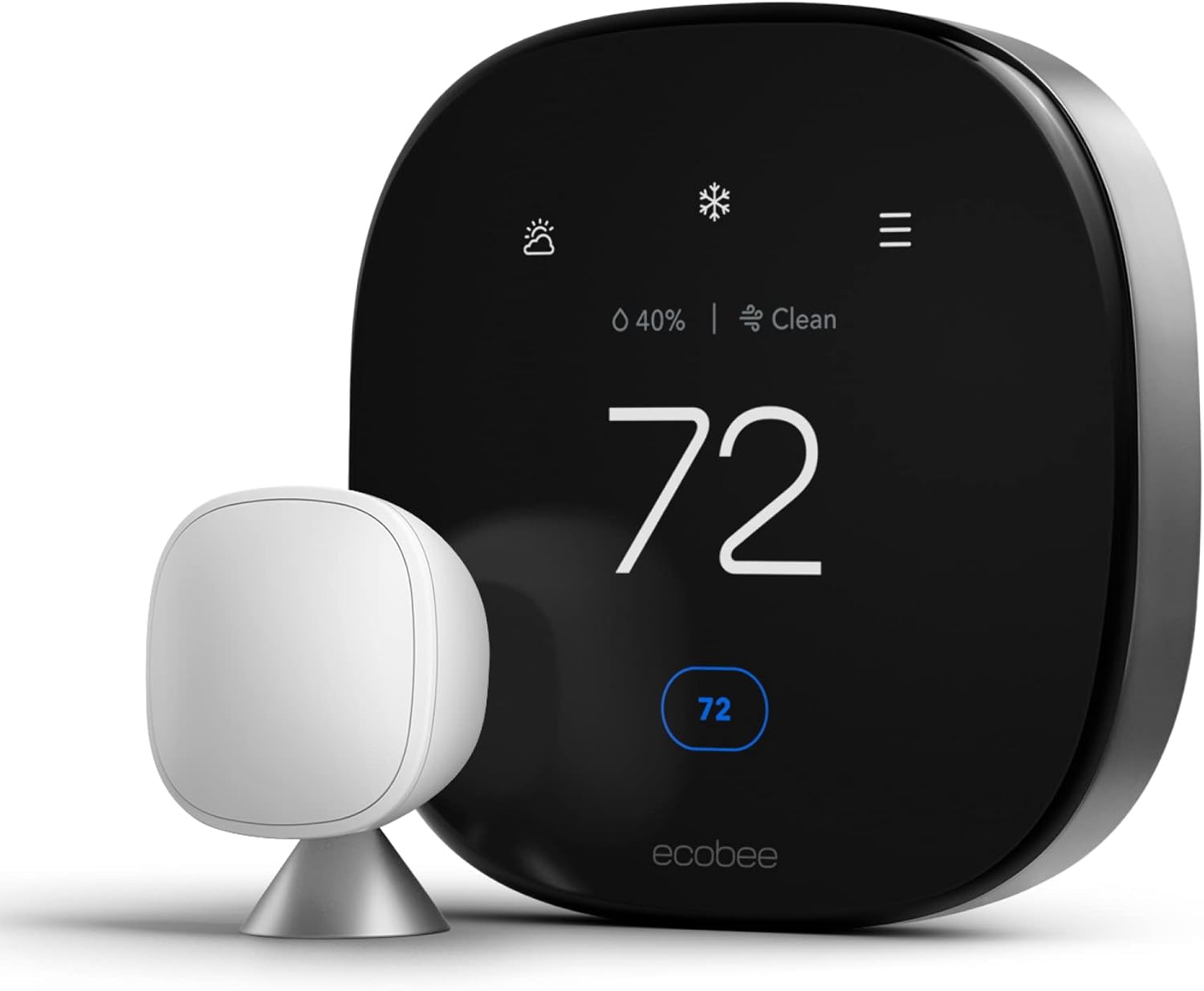
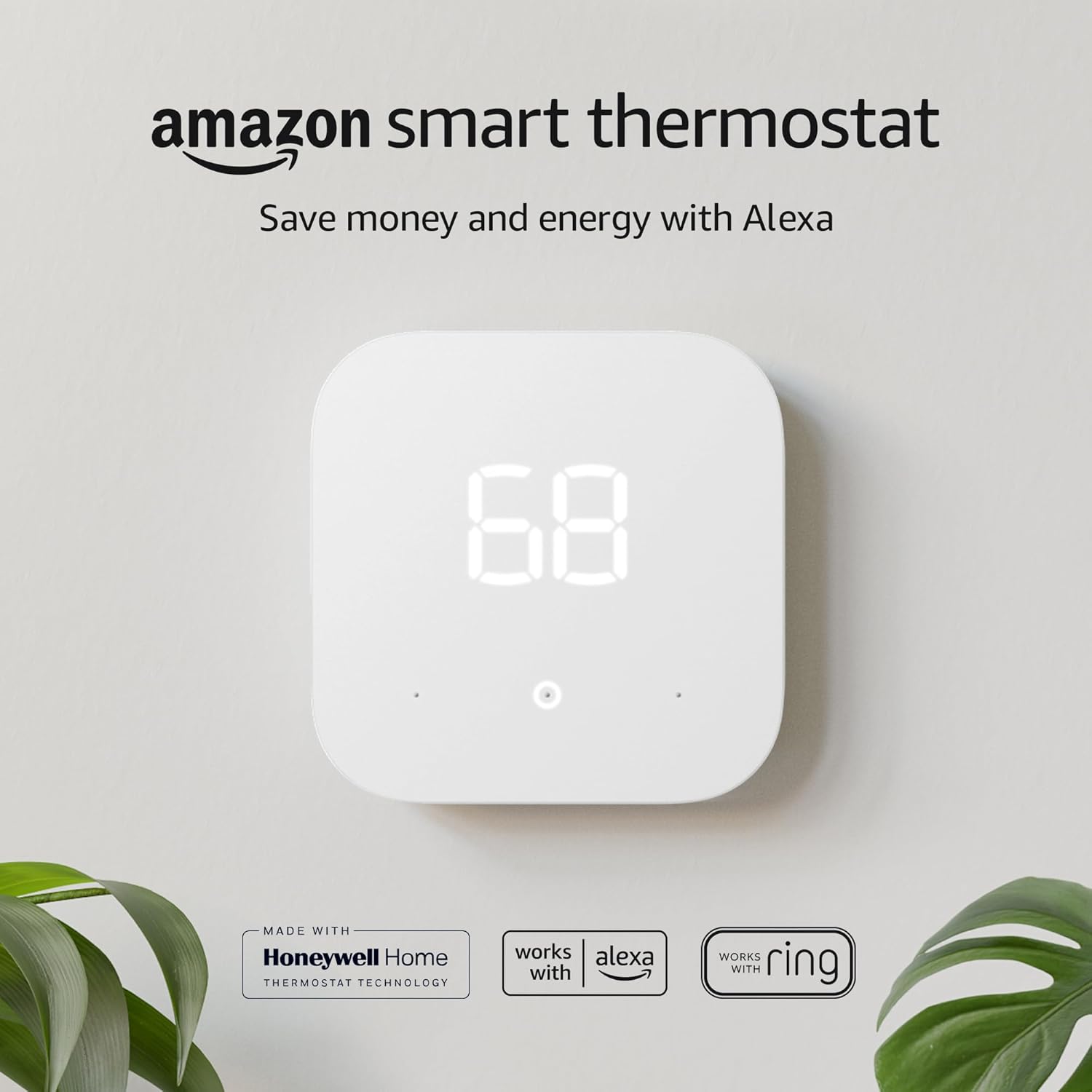
Any thermostat will work, but a smart thermostat that learns your schedule and uses geofencing can still save 10–15% on your heating bill by avoiding heating an empty home. The Ecobee3 Lite, Amazon Smart Thermostat, and Sensi Touch are all solid, affordable options.
Two-Stage Furnaces
You need a thermostat with a dedicated W2 (second-stage heat) wire connection. Smart thermostats that support two-stage heating include the Ecobee Premium, Nest Learning Thermostat (4th Gen), and Honeywell T9. Without proper two-stage support, your two-stage furnace will operate in single-stage mode — a significant waste.
Modulating Furnaces
Modulating furnaces (the top-tier units with 96–98.5% AFUE) communicate via proprietary protocols (like Lennox iComfort, Carrier Infinity Control, or Trane ComfortLink II) for maximum efficiency. Using a generic smart thermostat may work, but you’ll lose the ability to control modulation rates. Check your furnace’s manual for compatible thermostat models.
The Smart Thermostat ROI Case
Adding a $150–$250 smart thermostat to a $5,000 furnace installation is one of the highest-ROI additions you can make. Studies consistently show 10–23% energy savings from schedule optimization and geofencing alone. On a $1,600/year heating bill, that’s $160–$370 per year in savings — paying for the thermostat within the first year.
After your furnace installation, also consider reviewing your thermostat settings seasonally. See our guide on optimal winter thermostat schedules at 68°F to maximize comfort while keeping energy bills in check during the first heating season with your new system.
How to Get the Best Price on Furnace Replacement
The HVAC industry is competitive, and furnace replacement pricing is far more negotiable than most homeowners realize. Here are the proven strategies that consistently produce the best outcomes for informed consumers.
1. Get Three Quotes (Not Just Two)
The psychological tendency is to view two quotes as “comparison” and three as “overkill.” In practice, the third quote frequently reveals market pricing more accurately than the first two, which may be from the same trade network. For a $5,000 job, getting three quotes typically saves $500–$1,500.
2. Schedule in the Off-Season
Furnace replacements in September–October (pre-season) and March–April (post-season) are typically priced 8–15% lower than emergency winter installations. If your old furnace is giving warning signs but still functional, scheduling a planned replacement in September rather than waiting for a December failure can save hundreds of dollars on both the unit and the labor.
3. Be Specific About What You Want
When calling for quotes, specify the BTU size, fuel type, and AFUE tier you’re interested in. A quote for “a new furnace” allows contractors to price anything from a builder-grade unit to a top-of-line premium model. A quote for “a 96% AFUE, two-stage, 80,000 BTU gas furnace” gives you apples-to-apples comparison across contractors.
4. Ask About Manufacturer and Contractor Promotions
Many contractors receive quarterly kickbacks or dealer incentives for moving specific equipment. Ask directly: “Do you have any current manufacturer promotions or rebates available?” If yes, those savings should flow to you, not stay as margin.
5. Negotiate Labor Separately from Equipment
If a contractor bundles everything into a single price, ask them to break out equipment cost vs. labor cost on the quote. Once you know the equipment cost, you can cross-reference it against dealer pricing and wholesale databases. Labor is the variable that’s actually most negotiable.
6. Leverage Competing Quotes
Once you have three quotes, politely tell your preferred contractor what the lowest reasonable competing bid was. Most will match or come within 5–10% of it rather than lose the job. This conversation alone saves an average of $200–$600.
- Research AFUE requirements in your region (North vs. South) before calling any contractor
- Get a rough BTU estimate using your home size and climate zone (Manual J is done by contractor)
- Call 3–4 HVAC companies; schedule in-home estimates (never accept phone-only quotes for a full replacement)
- Review each quote line-by-line: equipment, labor, venting, permits, disposal
- Check rebates: ENERGY STAR website, your utility’s website, and manufacturer promotions
- Negotiate final pricing with your preferred contractor using competing bids
- Verify permits are included; ask for the inspection date
- Pair your new furnace with an appropriate smart thermostat for maximum efficiency
- Quote provided over the phone without a site visit
- No mention of permits or inspections
- Pressure to sign “today only” pricing
- No physical business address or license number provided
- Recommending oversized equipment without a load calculation
- No itemized breakdown of equipment vs. labor costs
Frequently Asked Questions
Ready to Replace Your Furnace?
You now have everything you need to navigate furnace replacement with confidence: the real cost ranges, what drives the price, how to evaluate brands and efficiency, where to find rebates, and exactly how to negotiate a better deal. The only thing left is taking action.
Start by getting three quotes from licensed HVAC contractors in your area. Check your state’s rebate programs before you sign anything. And if your thermostat is aging alongside your furnace, upgrade it at the same time — it’s the single highest-return add-on you can make to a new heating system.
Compare Smart Thermostats for Your New Furnace →Diagnose Your Current System Before Replacing




 Home
Home
 Info
Info
 Compare
 Reviews
 Shop
Shop