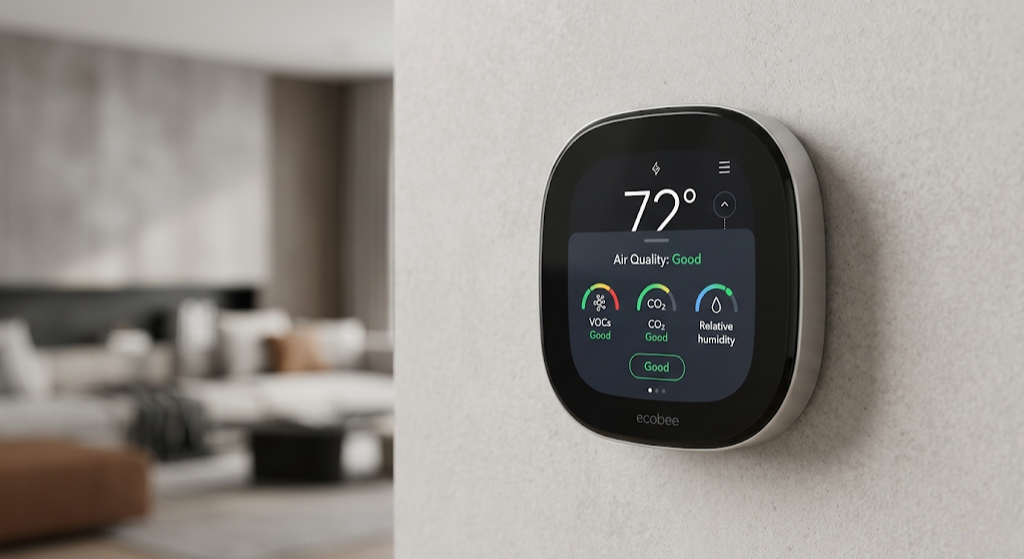
Unlocking the Ecobee Smart Thermostat Premium: A Comprehensive Deep Dive into VOC and CO₂ Air Quality Monitoring
For decades, thermostats had one job: turning your heating or cooling system on and off to maintain a set temperature. However, as homes have become more energy-efficient and tightly sealed, a new, invisible problem has emerged: poor Indoor Air Quality (IAQ). Enter the Ecobee Smart Thermostat Premium.
This flagship device doesn’t just manage thermal comfort; it actively monitors the very air you breathe, specifically tracking Volatile Organic Compounds (VOCs) and estimated Carbon Dioxide (eCO₂). In this exhaustive guide, we will unpack exactly how the Ecobee Premium’s air quality monitoring functions, what these metrics mean for your health, and whether this built-in capability replaces the need for dedicated standalone air monitors.
1. What is the Ecobee Smart Thermostat Premium?
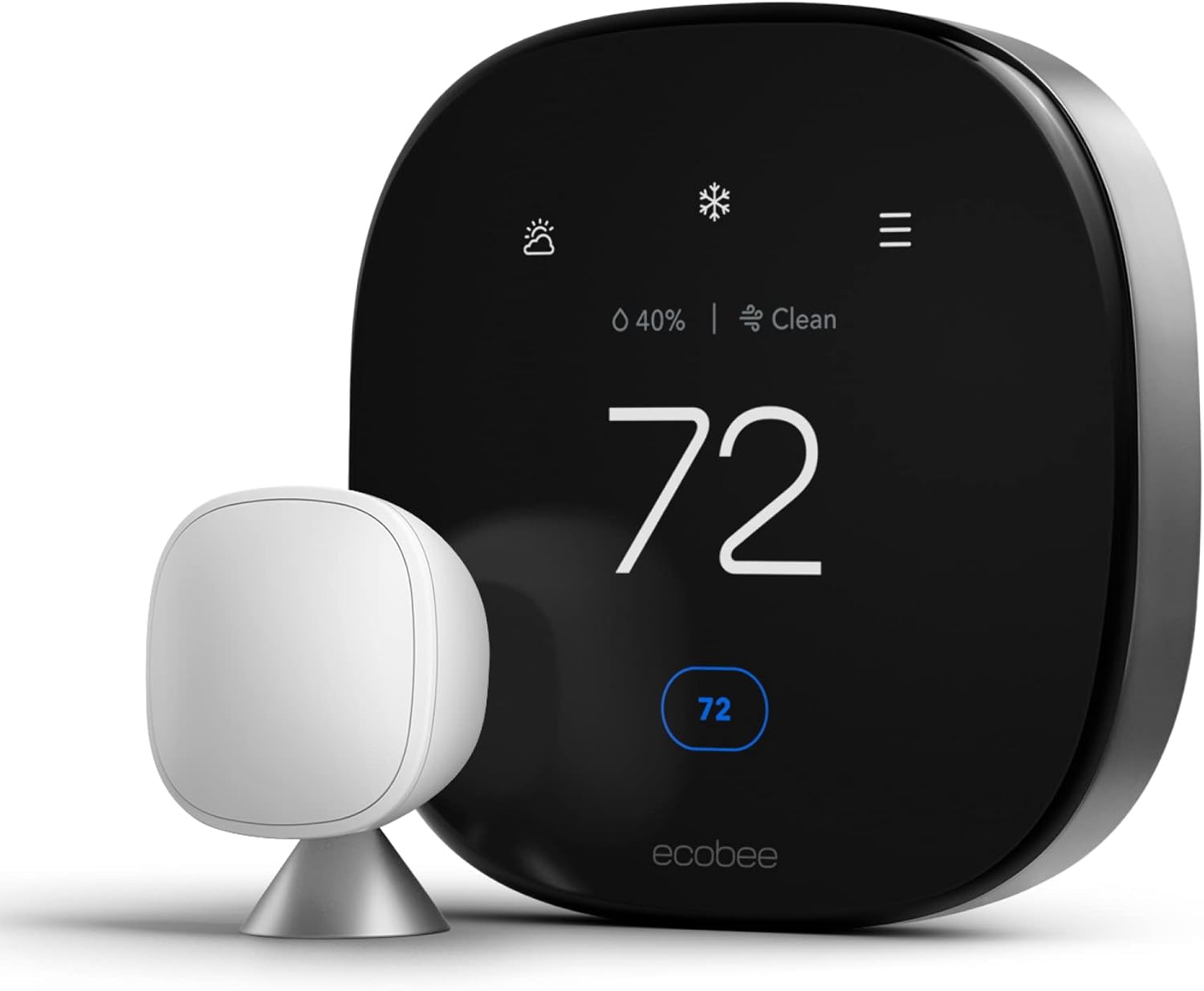
The Ecobee Smart Thermostat Premium represents the pinnacle of Ecobee’s hardware lineup. Crafted with a zinc body and a larger, crisper glass touchscreen, it is designed to be the central brain of your home’s HVAC system. Beyond aesthetic upgrades, the defining feature of the Premium model is its suite of advanced sensors.
While previous models focused on temperature and humidity, the Premium introduces a built-in air quality monitor. Furthermore, its advanced presence detection goes beyond simple motion sensing. If you’re curious about how this compares to older technology, it’s worth exploring the differences between the Ecobee Premium radar sensor and traditional PIR sensors.

Upgrade Your Home’s Air Quality Today
Monitor VOCs and CO₂ seamlessly with the Ecobee Premium.
Check Price on Amazon2. The Science of Indoor Air Quality (IAQ)
The Environmental Protection Agency (EPA) notes that Americans spend approximately 90% of their time indoors, where the concentrations of some pollutants are often 2 to 5 times higher than typical outdoor concentrations. Modern construction focuses on energy efficiency, sealing gaps to prevent drafts. The downside? Trapped air.
When assessing IAQ, thermodynamic and flow dynamics play a massive role. The Air Changes per Hour (ACH) is a crucial metric, defined technically as:
$$ \text{ACH} = \frac{\text{CFM} \times 60}{\text{Area} \times \text{Height}} $$
Without sufficient ACH, pollutants accumulate. The Ecobee Premium aims to provide a diagnostic window into this invisible accumulation, giving homeowners the data needed to trigger ventilation or filtration.
3. Deep Dive: Understanding VOCs (Volatile Organic Compounds)
Volatile Organic Compounds (VOCs) are a large group of carbon-based chemicals that easily evaporate at room temperature. They are ubiquitous in modern homes.
- Common Sources: Paints, varnishes, cleaning supplies, new furniture (off-gassing), carpets, cosmetics, and even cooking.
- Health Impacts: Short-term exposure can cause eye, nose, and throat irritation, headaches, and nausea. Long-term exposure to specific VOCs (like formaldehyde) is linked to chronic respiratory issues and even cancer.
The Ecobee Premium utilizes a Metal Oxide (MOX) sensor to detect the aggregate concentration of these reducing gases in the air. When VOC levels spike (for example, while you are using harsh cleaning chemicals), the thermostat alerts you via the app, prompting you to open a window or run your HVAC fan.
4. Deep Dive: Estimated CO₂ (eCO₂) Explained
Carbon Dioxide (CO₂) is naturally exhaled by humans and pets. While not inherently toxic at standard residential levels, high indoor CO₂ is the leading indicator of poor ventilation.
It is crucial to understand that the Ecobee Premium does not have a dedicated NDIR (Non-Dispersive Infrared) CO₂ sensor. Instead, it measures estimated CO₂ (eCO₂). Because humans emit a predictable ratio of VOCs (bioeffluents) and CO₂ when breathing, the MOX sensor uses an algorithm to calculate a proxy CO₂ level based on the VOCs detected.
Pros of eCO₂
- Reduces device cost and power consumption.
- Highly responsive to human occupancy.
- Accurately triggers ventilation alerts.
Cons of eCO₂
- Not a direct measurement of carbon dioxide.
- Can be skewed by non-human VOC spikes (e.g., mopping the floor).
- Not suitable for strict scientific or medical monitoring.

Take Control of Your Health
Get real-time alerts when your indoor air needs refreshing.
Shop Ecobee Premium5. How the Built-in Sensor Works
The sensor embedded within the Ecobee Premium is a micro-machined metal oxide semiconductor. Under normal clean air conditions, oxygen molecules bind to the surface of the sensor, restricting electrical current. When target gases (VOCs) hit the sensor, they react with the bound oxygen, freeing up electrons and increasing the electrical conductivity.
The microprocessor translates this change in resistance into an air quality score (Clean, Fair, or Poor). It requires a calibration period of about 7 days upon installation to understand the “baseline” of your specific home’s air.
6. Sensor Accuracy vs. Dedicated IAQ Monitors
How does a $250 thermostat compare to a $300 dedicated air quality monitor like the Awair Element or AirThings View Plus?
| Feature | Ecobee Premium | Dedicated IAQ Monitors |
|---|---|---|
| VOC Tracking | Yes (Aggregate) | Yes (Often highly calibrated) |
| CO₂ Tracking | Estimated (eCO₂) | Direct (NDIR Sensors) |
| PM2.5 / Particulates | No | Yes (Laser scattering) |
| HVAC Integration | Native / Immediate | Requires IFTTT or Smart Home Hubs |
If you suffer from severe allergies and need exact PM2.5 counts, a dedicated monitor is superior. However, for 90% of homeowners, the Ecobee provides actionable, baseline data combined with immediate HVAC control.
7. Integrating IAQ with HVAC Control
Knowing your air quality is poor is useless if you can’t fix it. Because the Ecobee is wired into your HVAC system, it allows for seamless automation. If the Ecobee detects a spike in VOCs, you can set it to automatically run the HVAC blower fan for a specified duration to circulate air through your furnace filter.
Pro Tip: Ensure your HVAC system is operating optimally before relying on it for air purification. If you are experiencing sudden power drops or erratic behavior, you should diagnose your thermostat with a quick 10-minute checklist to ensure your wiring and transformer can handle the load.
8. The Ecobee App Interface for Air Quality
The Ecobee smartphone app visualizes your IAQ data beautifully. On the main dashboard, an icon dictates current status. Tapping it reveals a timeline graph showing VOC and eCO₂ trends over the past days and weeks.
This historical data is vital. You might notice that every day at 6:00 PM, VOCs spike. By correlating this data, you might realize that cooking dinner without the range hood running is severely impacting your living room’s air quality.
9. Actionable Steps to Improve Your IAQ
When your Ecobee Premium alerts you to “Poor” air quality, what should you do?
- Ventilate: Open windows on opposite sides of the house to create a cross-breeze.
- Run the Fan: Turn your HVAC fan from “Auto” to “On” via the Ecobee interface.
- Upgrade Filters: Switch to a MERV 11 or MERV 13 filter, capable of catching smaller particulates (though note this won’t trap gases; carbon filters are needed for VOCs).
- Source Control: Identify and remove the offending chemical source (e.g., putting the lid back on paint cans or stopping the use of aerosol air fresheners).

Automate Your Home’s Health
Let Ecobee manage your air quality and temperature simultaneously.
View Ecobee Premium Deals10. Cost-Benefit Analysis: Is the Premium Worth It?
The Ecobee Premium commands a higher price tag than its siblings, like the Ecobee3 Lite. You are paying for the zinc finish, the built-in speaker/mic (Alexa/Siri), the included SmartSensor, and the IAQ monitor.
If you are on a strict budget and solely care about energy efficiency and basic scheduling, you might want to read our Ecobee3 Lite review for insights on cost savings and C-wire installation. However, if holistic home health is a priority, the extra cost of the Premium is easily justified by eliminating the need to buy a separate $150+ air quality monitor.
11. Comparison: Ecobee Premium vs. Alternatives
How does the Ecobee Premium stack up against other smart thermostats in the context of whole-home efficiency and monitoring? While Nest has its learning algorithms, it lacks built-in IAQ sensors. Other modern systems rely heavily on software tricks rather than hardware sensors.
For example, using spatial location to save energy is a common feature. You can learn more about how smart thermostat energy savings and geofencing work, but remember that geofencing only helps with temperature—it doesn’t tell you if the air you return to is stale or polluted.
12. The Future of Smart Thermostat Air Monitoring
We are entering an era where HVAC systems act as the immune system of the home. Future iterations of smart thermostats will likely include native PM2.5 sensors and direct integrations with ERVs (Energy Recovery Ventilators) and whole-home HEPA filtration systems.
The Ecobee Premium is the crucial first step. It shifts the paradigm from merely heating and cooling air to actively curating the chemical composition of the environment we live in.
Frequently Asked Questions (FAQs)
Conclusion
The Ecobee Smart Thermostat Premium successfully bridges the gap between HVAC management and environmental health. By integrating VOC and eCO₂ monitoring directly into the wall unit, it democratizes access to indoor air quality data that was once reserved for expensive, specialized equipment.
While it may not offer the scientific precision of a lab-grade NDIR or particulate laser sensor, it provides exactly what homeowners need: actionable, real-time alerts to keep their families breathing clean, fresh air. If you are ready to stop guessing about your home’s air quality, making the upgrade is a sensible, future-proof investment.

Ready to Breathe Easier?
Get the Ecobee Premium and transform your home’s climate control.
Buy the Ecobee Premium Now



 Home
Home
 Info
Info
 Compare
 Reviews
 Shop
Shop