Is Your Thermostat Lying to You?
Fix inaccurate temperature readings for better comfort, lower energy bills, and longer HVAC life.
Why Your Thermostat Shows the Wrong Room Temperature — Causes & Fixes
There is nothing more frustrating than a thermostat reading 72°F while you are shivering in a sweater — or sweating through your shirt when it claims the house is already at your setpoint. When a thermostat shows the wrong room temperature, it doesn’t just affect your comfort — it forces your HVAC system to work harder than necessary, leading to higher energy bills and premature system wear.
This complete guide covers every reason a thermostat might display incorrect temperatures, how to verify whether your unit is actually off, and a step-by-step approach to diagnosing and fixing the problem yourself — including when it finally makes sense to replace the device entirely.
How Thermostats Sense Room Temperature
Most modern thermostats — whether budget-friendly, programmable, or high-end smart models — use a component called a thermistor. This is a type of resistor whose electrical resistance changes significantly and predictably with temperature. The thermostat’s logic board continuously measures this resistance value and translates it into the degree reading you see on the screen or in the companion app.
Older analog thermostats often used a bimetallic strip instead — two bonded metals that expand at different rates when heated, physically moving a contact to trigger heating or cooling. While mechanically elegant, bimetallic strips are more susceptible to physical shock and aging than solid-state thermistors, and they typically require manual recalibration every few years.
Understanding which type of sensor your thermostat uses matters because the diagnostic and fix steps differ between them. A bimetallic unit may simply need a small calibration screw adjusted, while a thermistor-based unit may need a software offset correction or a full replacement.
Why Location Matters for Accurate Readings
A thermostat can only measure the air immediately surrounding its sensor. It has no way to “average out” the temperature across your entire home — it simply reacts to the local microclimate at the point of installation. This means that if it’s mounted in a spot with stagnant air, directly in a sunbeam, or near a drafty exterior door, the reading will not represent the real comfort level in the rooms where you actually spend time.
This is one of the most overlooked causes of thermostat inaccuracy. The fix is not always a new thermostat — sometimes it is simply moving the existing one to a better location. The U.S. Department of Energy recommends placing thermostats on interior walls in rooms used regularly, away from all heat-generating sources and air movement.
How Sensors Work Inside Your Thermostat
Internal sensors are designed to be extremely sensitive — often accurate to within ±0.5°F under ideal conditions. However, because they are housed inside the thermostat casing, they are vulnerable to heat generated by the device’s own electronics (a known issue in older first-generation smart thermostats), localized environmental factors, and the cumulative effects of dust insulation over time. Even a thin film of dust on the thermistor can shift readings by 2–3°F.
Smart Thermostat vs. Programmable vs. Analog: Accuracy Differences
Not all thermostat types are equally accurate, and understanding where your model fits helps set realistic expectations.
| Type | Sensor Technology | Typical Accuracy | Calibration Method |
|---|---|---|---|
| Analog / Mechanical | Bimetallic strip | ±3–5°F | Manual calibration screw |
| Programmable Digital | Thermistor | ±1–2°F | Menu offset setting |
| Smart Thermostat | Thermistor + software | ±0.5–1°F | App-based offset / firmware update |
| Multi-Sensor Systems | Multiple room sensors | ±0.5°F averaged | Weighted room average via app |
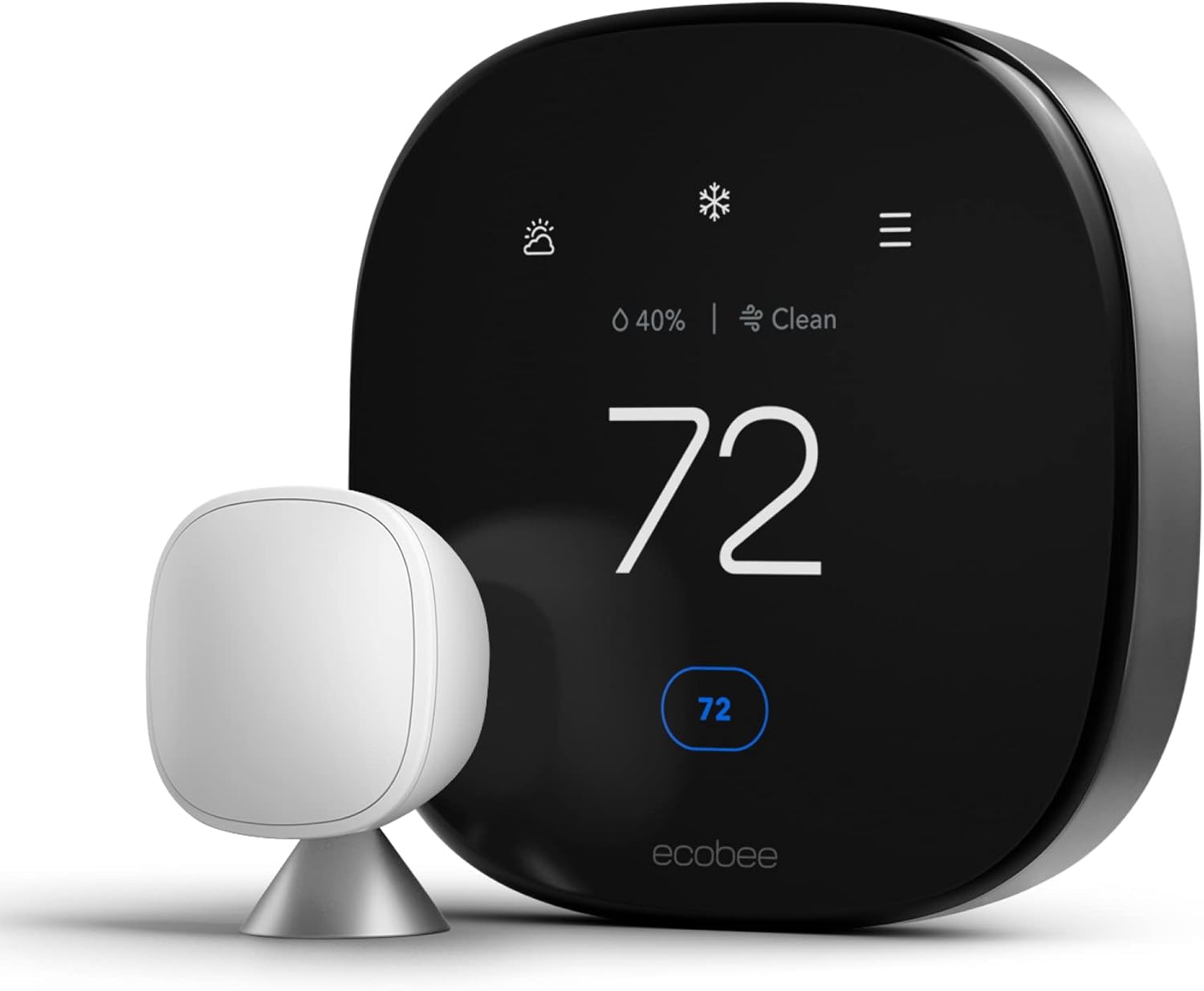
Smart thermostats like the Ecobee and Honeywell T6 Pro use additional remote sensors to average temperatures across multiple rooms — dramatically reducing the impact of poor placement. If thermostat location is a recurring problem in your home, upgrading to a multi-sensor system can be the most effective long-term fix.
Common Reasons a Thermostat Shows the Wrong Temperature
Poor Thermostat Placement on the Wall
Placement is responsible for more inaccurate thermostat readings than any other single factor. If your thermostat is installed on an exterior wall, next to a window, in a sunny hallway, or close to a kitchen, the sensor is essentially measuring the temperature of that specific microclimate — not your living room, bedroom, or the space you actually care about.
The most problematic locations include:
- Exterior walls that absorb cold from outside in winter
- Any wall that receives direct afternoon sunlight
- Near a kitchen where cooking heat and steam are present
- Adjacent to supply or return air vents, which push conditioned air directly at the sensor
- Near exterior doors or windows with air infiltration
- In rarely used hallways or rooms that stay cooler or warmer than living areas
- Above or below the 52–60 inch optimal mounting height (where temperature stratification is least pronounced)
The ideal thermostat position is on an interior wall in a central, frequently occupied room — approximately 5 feet from the floor, away from all of the locations above. If moving the thermostat means rerouting wiring, you may need to learn how to extend or splice thermostat wires to reach a more suitable location.
Temperature Stratification: Why Your Thermostat Reads High or Low Based on Height
Heat rises — this simple physics principle creates measurable temperature differences between floor level and ceiling level in any room. In a typical home with 8-foot ceilings, the temperature difference between the floor and the ceiling can be 5–10°F. If your thermostat is mounted too high (above 6 feet), it will measure warmer air than what you feel when seated. If mounted too low (below 4 feet), it may read several degrees cooler than the room at standing height.
This is also why a thermostat reading higher than the actual comfort level is particularly common in two-story homes where the unit is on the upper floor — and why the upstairs bedrooms feel cold even when the thermostat says the target temperature has been reached.
Dust, Dirt, or Obstructions Interfering with the Sensor
Over time, airborne dust settles onto and inside the thermostat casing. On thermistor-based units, this dust accumulates directly on the sensor, acting as an insulating layer that slows heat transfer between the room air and the sensor element. The result is a “laggy” reading that trails behind actual temperature changes — and in severe cases, a reading that is permanently 2–4°F off.
On bimetallic strip thermostats, dust and grime can physically bind the strip, preventing it from flexing at the correct temperature point. Both scenarios are easily fixed by opening the thermostat faceplate and cleaning the interior — but are frequently overlooked because thermostat maintenance is rarely part of a typical home maintenance routine.
Obstructions work differently: a thermostat tucked behind a curtain, bookshelf, or inside a cabinet cannot freely sample room air. It ends up measuring the temperature of a trapped, stagnant pocket of air that diverges significantly from the rest of the room, particularly when the HVAC system is actively running and creating air movement elsewhere.
Calibration Drift or Sensor Aging
Like any electronic component, thermistors experience gradual drift over their operational life. The resistance-to-temperature relationship that was precisely calibrated at the factory slowly shifts as the component ages, particularly after many years of thermal cycling (repeated heating and cooling). Aging thermistors may begin to report temperatures 2–4°F off from reality — and this drift is often slow enough that homeowners adapt to it without realizing the thermostat has become inaccurate.
Calibration drift tends to be consistent — the thermostat will be off by roughly the same amount across its operating range, which means a software offset correction is often sufficient to restore accuracy without a full replacement. Many homeowners use a faulty thermostat checklist to determine whether the sensor has simply drifted or has failed entirely.
Loose Wiring or Electrical Problems
Intermittent electrical connections can cause the thermostat’s logic board to receive corrupted data from the thermistor. A loose wire at the thermostat base, at the HVAC control board, or along the low-voltage wire run can cause voltage fluctuations that the unit interprets as temperature readings. The symptom is usually an erratic or rapidly jumping temperature display — the thermostat might show 68°F one moment and 74°F the next, even though the actual room temperature has not changed.
If you notice this pattern, check the breaker and wiring connections to ensure the unit is receiving stable, consistent power. Loose terminals at the thermostat base are the most common culprit and can usually be corrected by carefully re-seating the wires.
Low or Dead Batteries in Battery-Powered Units
As voltage drops in alkaline batteries below approximately 1.1V per cell, the thermostat’s logic board may struggle to accurately process the thermistor’s analog signal. The analog-to-digital conversion that translates the sensor’s resistance into a temperature reading becomes unreliable at low supply voltage. The most common symptom is a display that reads lower than the actual room temperature — sometimes by 5°F or more — before eventually going blank entirely when the batteries die.
This is one of the easiest fixes to try first: replace the batteries with fresh alkaline or lithium AA cells (lithium batteries perform significantly better in extreme temperature environments) and observe whether the reading corrects itself within 5–10 minutes.
Ghost Readings from the Thermostat’s Own Internal Heat
This issue is specific to smart thermostats with built-in displays, Wi-Fi radios, and processors. The internal components of these devices generate heat — sometimes enough to raise the temperature inside the thermostat casing by 3–5°F above room ambient. When the thermistor is in close physical proximity to the processor or power supply, it picks up this internally generated heat and reports a reading that is artificially high.
Manufacturers typically compensate for this with a software offset during calibration, but in some units — particularly older first-generation smart thermostats — this compensation is inadequate. The result is a thermostat that consistently reads higher than actual room temperature, causing the HVAC to under-heat or over-cool relative to your setpoint.
Thermostat Inaccuracy with Heat Pump Systems
Homes heated and cooled by heat pumps face a specific thermostat accuracy challenge that gas or electric resistance systems do not: heat pumps deliver air that is much closer to room temperature than a furnace would, and at lower airflow temperatures. This means that when a heat pump is running, the delivered air might be only 90–100°F — compared to a furnace’s 120–140°F.
If the thermostat is positioned near a supply vent in a heat pump system, it may be sampling air that is only slightly warmer than the room, causing it to believe the target temperature has been reached before the occupied spaces are actually comfortable. This is one reason why multi-room sensor systems are particularly valuable in heat pump homes.
Additionally, heat pumps require thermostats specifically rated for heat pump use. Using a standard heating/cooling thermostat with a heat pump can cause incorrect staging behavior, emergency heat activation at the wrong time, and ultimately inaccurate temperature control. Always verify that your thermostat is heat-pump compatible if your HVAC system uses a reversing valve.
How to Verify Your Thermostat’s Actual Accuracy
Using a Separate Thermometer for Comparison
The most reliable way to determine whether your thermostat is reading incorrectly is to compare it against a trusted reference thermometer. Place a high-quality digital thermometer with a ±1°F or better accuracy rating next to your thermostat — tape it to the wall at the same height as the thermostat sensor, without touching the thermostat itself — and leave it undisturbed for at least 15–20 minutes to fully equilibrate to room air temperature.
After the wait period, compare the two readings. A difference of 1–2°F is within normal tolerance for residential thermostats. A consistent difference of 3°F or more indicates a calibration problem that warrants correction. Note whether your thermostat reads higher or lower than the reference — this tells you which direction the offset correction needs to go.
When Your Thermostat Not Reaching Set Temperature Is the Real Problem
There is an important distinction between a thermostat that displays the wrong temperature and a thermostat that fails to reach the target temperature. If your thermostat displays an accurate room reading but the room never gets as warm or as cool as the setpoint, the problem is likely with the HVAC system itself — not the thermostat’s sensor. Common causes include a dirty air filter, a refrigerant leak, a failing blower motor, or undersized equipment for the space being conditioned.
Isolating which problem you have — display accuracy vs. system capacity — is the critical first step before investing time and money in thermostat fixes that won’t address the root cause.
Step-by-Step Troubleshooting to Fix Incorrect Thermostat Readings
Start with the simplest possible fix: replace the batteries with brand-new alkaline cells, or check that the C-wire (common wire) is properly connected if your thermostat uses 24V hardwired power. Verify the circuit breaker supplying the thermostat and HVAC system is fully on. After replacing batteries, wait 5–10 minutes for the reading to stabilize before evaluating accuracy.
Remove the faceplate by gently pulling it forward (most snap on and off). Use a can of compressed air held 4–6 inches away to blow dust out of the sensor area and ventilation slots. For bimetallic strip thermostats, use a soft artist’s brush to gently sweep debris away from the contact points and the metal strip itself. Do not use water, cleaning sprays, or abrasive materials on any internal components.
With power to the system turned off at the breaker, remove the thermostat from its base and inspect each wire terminal. Wires should be securely inserted with no bare copper visible outside the terminal. Gently tug each wire to confirm it is locked in. Re-seat any that feel loose. Check for wires touching each other (a short circuit) or showing damaged insulation. Restore power and allow 10 minutes for the reading to stabilize.
If the unit is currently near a kitchen, a drafty exterior door, in direct sunlight, or on an exterior wall, consider moving it to a better location. This is the most impactful long-term fix for placement-related inaccuracy. If moving the wires is difficult, you can learn how to extend or splice thermostat wires to reach a more central interior wall location without running entirely new wire.
One frequently overlooked cause of thermostat inaccuracy is an open hole in the wall behind the thermostat where the wires pass through. In older installations especially, this opening can allow cold outside air or unconditioned attic/basement air to travel up through the wall cavity and directly contact the sensor. Use a small amount of non-expanding foam sealant or plumber’s putty to seal the gap around the wire penetration. This single fix can correct a persistent 3–5°F reading error in drafty homes.
If your thermostat reads consistently off by a known amount, apply a software calibration offset. Check your manual for a setting labeled “Temperature Offset,” “Calibration Offset,” or “Display Offset.” Most digital and smart thermostats allow adjustment in a range of ±3 to ±5°F. If the thermostat reads 3°F too high, set an offset of -3°F. For Sensi users experiencing persistent issues, also check for reset failures related to power wiring before assuming a calibration issue.
If the thermostat’s temperature display behaves erratically — jumping between readings, displaying unusually high or low values, or not responding to offset corrections — a factory reset may clear corrupt firmware data causing the sensor to misinterpret readings. Consult your manual for the reset procedure; this typically involves pressing and holding a combination of buttons or using a pin to press a recessed reset button. Note that a factory reset will erase all programming and schedules, so document your settings beforehand.
Thermostat Calibration Offset: A Closer Look
The calibration offset is one of the most powerful and underused features in modern digital thermostats. Rather than living with a consistently inaccurate reading, you can instruct the thermostat to adjust its displayed temperature and its switching point by a fixed amount — effectively correcting for sensor drift, internal heat generation, or any consistent placement-related bias.
To use the offset correctly, you need a reliable reference temperature first. After placing a trusted digital thermometer next to the thermostat for 20 minutes with the HVAC at rest, calculate the difference: if the thermostat reads 71°F and the reference reads 68°F, you need a −3°F offset. Navigate to the thermostat’s setup or installer menu (often accessed by holding a combination of buttons for 5 seconds — check your specific model’s manual), find the offset setting, and apply your correction.
The offset affects both the display reading and the point at which the thermostat triggers heating or cooling, so applying the correct value directly improves both accuracy and system efficiency simultaneously. It is not a cosmetic change — it is a true operational correction.
How Thermostat Inaccuracy Affects Energy Efficiency and HVAC Life
A thermostat that reads even 3°F high in heating mode will keep your furnace running until the room is actually 3°F warmer than your intended setpoint — a scenario that plays out every single heating cycle, every day, all season long. Studies on HVAC energy consumption suggest that each degree of unnecessary heating or cooling above the setpoint increases energy consumption by approximately 1–3% per degree, depending on climate and home insulation.
Over a full heating and cooling season, a thermostat that reads 3°F off — and goes uncorrected — can add meaningfully to your annual energy bill. In a home spending $2,000 per year on HVAC energy, that could represent $60–180 in completely unnecessary costs from a problem that often costs nothing to fix.
Beyond energy cost, incorrect thermostat readings cause the HVAC system to run longer and cycle more frequently than designed. This additional runtime accelerates wear on compressors, heat exchangers, blower motors, and contactors — components that are expensive to repair or replace. Correcting a 3°F thermostat error doesn’t just save energy; it can meaningfully extend the service life of the equipment it controls.
When It’s Time to Replace Your Thermostat
Signs a Thermostat Sensor Has Failed
Some thermostat problems cannot be fixed through cleaning, calibration, or wiring corrections — the sensor itself has failed and replacement is the only path forward. Key indicators of a failed thermistor include:
- Temperature reading that jumps 5–10 degrees within seconds with no actual temperature change
- Display that shows impossible or wildly out-of-range values (e.g., 20°F in a heated home)
- Calibration offset required exceeds ±5°F and the full available range is insufficient to correct the reading
- Temperature reading that does not change at all over several hours despite HVAC running
- Cleaning, resetting, and wiring checks have all been performed without improving accuracy
- Thermostat is more than 10–15 years old and has shown gradual, worsening drift despite offset corrections
In these cases, replacement is almost always more cost-effective than repair, since thermistors in consumer thermostats are typically soldered directly to the circuit board and are not designed for field replacement. Modern thermostat replacements — even quality programmable models — are relatively affordable and frequently pay for themselves in energy savings within a single season.
Choosing a Replacement Thermostat for Better Accuracy
When selecting a replacement, prioritize models with published accuracy specifications of ±1°F or better. If placement limitations mean you cannot move the thermostat to an ideal location, consider a smart thermostat system with separate remote room sensors — these allow the thermostat’s switching logic to respond to an average of multiple sensor readings rather than just the thermostat’s own location, effectively eliminating the impact of imperfect placement on comfort.
For homes with heat pumps, confirm that any replacement unit is explicitly compatible with heat pump configurations, including emergency heat and auxiliary heat staging. Installing the wrong thermostat type on a heat pump is a common and costly mistake that leads to exactly the kind of inaccurate temperature control this guide is designed to help you avoid.
Frequently Asked Questions
Why does my thermostat show a different temperature than the rest of the room?
This is usually due to temperature stratification (heat rising toward the ceiling, creating cooler air near the floor), localized drafts from a nearby window or exterior wall, or the thermostat being positioned in a room or hallway that doesn’t represent the temperature of the main living areas. If the thermostat is mounted too high on the wall, it samples warmer stratified air; if too low, it samples cooler floor-level air. Moving the thermostat to an interior wall in a central room, at a height of 52–60 inches, usually resolves the discrepancy.
Can thermostat placement really affect comfort that much?
Yes, dramatically. A thermostat placed in a cool, unused hallway will keep the furnace running until that hallway reaches 72°F — which might leave your main living room at 77–78°F because the living room warms up much faster than the hallway. Conversely, a thermostat in a sun-drenched spot near a south-facing window may tell the air conditioner to run constantly in summer, overcooling the rest of the house to compensate for the solar heat the sensor is absorbing. Correct placement is the single most impactful factor in ensuring the thermostat actually controls comfort rather than just local temperature.
What thermostat reading difference is considered normal?
A difference of 1 to 2°F between the thermostat display and a handheld reference thermometer is generally considered acceptable and falls within the margin of error for most residential sensors. A consistent difference of 3°F or more is enough to noticeably affect comfort and energy use, and warrants investigation. A difference of 5°F or more usually indicates a specific, correctable problem — poor placement, dust accumulation, a wiring issue, or sensor drift — rather than normal thermostat behavior.
Why does my thermostat read higher than the actual temperature?
A thermostat reading higher than actual is most commonly caused by direct sunlight hitting the unit, proximity to a heat-generating appliance, internal self-heating from the thermostat’s own electronics (common in smart thermostats), or a thermistor that has drifted high with age. Seal any gap in the wall behind the thermostat, block any sunlight from reaching the unit, and apply a negative calibration offset to correct the reading.
Why does my thermostat read lower than the actual temperature?
A thermostat reading lower than actual is often caused by cold air infiltration through the wall penetration behind the thermostat, placement on a cold exterior wall, or a battery voltage that is too low to correctly process the sensor signal. Replace batteries first. If the problem persists, seal the wall gap behind the thermostat with foam sealant, and consider relocating the unit to an interior wall.
How do I find the calibration offset setting on my thermostat?
The calibration offset setting is usually found in the thermostat’s installer menu or advanced settings, rather than the standard user interface. On most digital models, you access it by pressing and holding a specific button combination (often “Up” + “Down” simultaneously for 5 seconds) or by pressing a small recessed button with a pin. The setting may be labeled “Temperature Offset,” “Display Offset,” “Calibration,” or simply “Offset.” Consult your specific model’s installation manual for the exact procedure — the user manual alone often does not document this feature.
My thermostat is not reaching the set temperature — is the thermostat broken?
Not necessarily. There is an important distinction between a thermostat that displays an inaccurate temperature and one that fails to reach the target setpoint. If the thermostat’s displayed temperature appears correct but the room never reaches the set temperature, the more likely culprits are a dirty air filter restricting airflow, a failing HVAC component such as a blower motor or compressor, a refrigerant issue (for air conditioning), or a system that is undersized for the space. Check and replace the air filter first, then verify the HVAC system’s performance independently before assuming the thermostat needs attention.
Do smart thermostats read temperature more accurately than older models?
Generally yes — smart thermostats use higher-quality thermistors and digital processing that reduces reading error compared to older analog designs. Many smart models also allow easy software offset correction via the companion app without accessing an installer menu. However, even the most accurate sensor in the world will read incorrectly if the thermostat is poorly placed. Placement quality matters more than sensor quality for real-world accuracy, which is why multi-room sensor systems — where multiple sensors can be placed in the rooms that matter most — provide the best overall comfort accuracy regardless of where the main thermostat unit is installed.




 Home
Home
 Info
Info
 Compare
 Reviews
 Shop
Shop