Manual Plan vs. AI Adaptation
Mastering your thermostat’s most powerful automation features to save energy and stay comfortable.
What Is Thermostat “Schedule” vs “Learning”? Key Differences Explained
When you install a modern smart thermostat, you are usually presented with two choices for automation: Schedule or Learning. While they both aim to save you money and keep your home comfortable, they go about it in fundamentally different ways. One follows your orders; the other watches your every move. Understanding not just what each mode does, but how it works under the hood, is the key to choosing the right one — and getting the most out of whichever you pick.
This guide goes beyond the basics. In addition to explaining each mode in depth, we cover the key differences between programmable and smart thermostats, how much money each approach actually saves, which temperature settings maximize efficiency across different seasons, and how to troubleshoot the most common problems users encounter with both modes. If you are trying to decide between a basic programmable unit and a full smart thermostat with learning capabilities, our detailed smart thermostat buying guide is a recommended companion read.
What Does “Schedule” Mean on a Thermostat?
Schedule mode is the traditional, time-tested way of automating home comfort. It is a purely time-based system: you dictate exactly what temperature you want at specific points during the day, and the thermostat executes those instructions with complete consistency, every single day.
Manual Temperature Programming Explained
In Schedule mode, most thermostats divide your day into preset activity blocks, commonly labeled Wake, Away, Home, and Sleep. You enter a temperature setpoint for each block along with the time each block begins. For example, you might program heat to 68°F at 6:30 AM (Wake), drop to 60°F at 8:00 AM (Away), rise back to 68°F at 5:30 PM (Home), and fall to 64°F at 10:00 PM (Sleep).
This kind of programming is available on both basic programmable thermostats and high-end smart models. The difference is how you input the settings — older units require navigating a small button interface, while smart models let you set schedules through a smartphone app with a much more visual and intuitive interface. To understand how heating and cooling thermostats differ in their scheduling logic, including heat pump systems, it is worth reading up before committing to any particular device.
7-Day, 5-2, and 5-1-1 Schedule Programming: What’s the Difference?
One important and frequently overlooked dimension of schedule mode is the programming structure — specifically, how many individual day patterns the thermostat supports. This varies significantly across thermostat models and has a real impact on how well the schedule matches your life.
7-Day Programming
Each day of the week gets its own unique schedule. Maximum flexibility — ideal for households where weekday routines differ significantly from each other, such as different work-from-home days.
5-2 Programming
Weekdays (Mon–Fri) share one schedule; weekends (Sat–Sun) share another. Works well for traditional Monday–Friday workers but assumes all weekdays and both weekend days are identical.
5-1-1 Programming
Weekdays share a schedule; Saturday gets its own; Sunday gets its own. A middle ground for households where Saturday and Sunday look meaningfully different.
Most smart thermostats support full 7-day programming. Many budget programmable models only offer 5-2 or 5-1-1, which can lead to unnecessary heating or cooling on days when the schedule doesn’t actually match your routine — partially undermining the efficiency gains you were hoping to achieve.
How Thermostat Schedules Work Day-to-Day
Once programmed, the thermostat is a strict follower of the clock. It doesn’t know — or care — whether you are home sick on a Tuesday, working overtime on a Friday, or heading out of town for a long weekend. At the programmed time, it changes the temperature as instructed. This predictability is exactly what makes schedule mode appealing to some users and limiting to others, depending on how consistent their life actually is.
- Total, predictable control over every temperature change
- Works perfectly for households with consistent 9-to-5 routines
- No adaptation period — works correctly from day one
- No unexpected temperature changes from AI misreadings
- No privacy concerns around behavioral data collection
- Works on basic programmable thermostats, no Wi-Fi required
- Wastes energy when your day deviates from the programmed plan
- Requires manual updates for holidays, vacations, and schedule changes
- Does not respond to actual occupancy — only to clock time
- 5-2 and 5-1-1 programming limits flexibility on per-day basis
- Requires upfront thought and setup effort to program correctly
Thermostat Schedule Tips for Maximum Energy Savings
A well-crafted schedule can achieve nearly the same efficiency as a learning thermostat — the key is programming it thoughtfully rather than just entering rough guesses. Here are the most impactful practices for getting the most out of schedule mode:
- Set the Away temperature as aggressively as comfort allows — for heating, 60–62°F during Away periods is safe for most homes and saves significantly more than 65°F
- Use the “pre-conditioning” window: set the Wake or Home period 20–30 minutes before you actually need comfort, so the home reaches temperature by the time you are active
- Use separate weekday and weekend schedules — even on 5-2 systems — since weekend sleeping patterns alone can waste significant energy if not separated
- Review your schedule seasonally: the Away window may shift with daylight saving time, school year changes, or seasonal work pattern variations
- Enable a vacation or hold mode when leaving for multiple days rather than relying on the Away setpoint, which still cycles more than a true hold
- For heating: every degree lower during Away and Sleep periods typically reduces heating costs by approximately 1% per degree per hour
Who Should Use Schedule Mode
Schedule mode is the stronger choice for people whose daily routine is genuinely consistent and predictable — remote workers who are home all day at stable hours, families with a fixed school and work commute that barely varies week to week, or users who simply prefer to know exactly what their HVAC system is doing at all times without trusting an algorithm to decide for them.
What Does “Learning” Mean on a Thermostat?
Learning mode is the algorithmic approach to climate control that emerged with the rise of smart home technology. Rather than following instructions you provide, a learning thermostat observes your behavior — your manual temperature adjustments, your movement patterns, your coming and going — and uses that data to build a personalized schedule on your behalf. For a thorough look at the underlying technology, our dedicated article on what thermostat adaptive learning is explains the AI and sensor mechanics in detail.
How Learning Thermostats Adapt to Your Habits
During the first week of use, a learning thermostat records every time you manually adjust the temperature and notes the time, day, and context of each adjustment. If you consistently turn the heat up to 70°F when you wake at 6:30 AM every weekday, the thermostat eventually encodes this pattern and begins anticipating it — automatically warming the house before you reach for the dial. If your Saturday mornings consistently start later and warmer, the algorithm will learn that differential too, without you ever manually programming separate weekday and weekend profiles.
This process is why the first week or two with a learning thermostat can feel slightly inconsistent — the algorithm is still accumulating data and its automatic decisions are still tentative. Most learning thermostats show users what schedule they have inferred so far, and allow manual corrections that feed back into the model.
The Learning Period: What to Expect in the First Two Weeks
The training period is the phase new users are least prepared for and most often frustrated by. Understanding what happens during this window helps set realistic expectations and avoid prematurely dismissing learning mode as broken or erratic.
The thermostat is primarily observing. It makes tentative automatic adjustments but may still ask you to confirm via the app or display. Every manual override is a data point that strengthens the model. You may notice the home temperature is not always exactly what you expect — this is normal and expected during this phase. Resist the urge to override constantly on atypical days, as this can confuse the model with non-representative data.
By the end of the second week, most learning thermostats have enough data to generate a reasonably accurate working schedule. The temperature transitions will begin to feel familiar and proactive rather than reactive. The algorithm continues refining — particularly for weekend vs. weekday differences and seasonal variations — but the experience should feel mostly “correct” at this point for users with consistent habits.
The learning process never fully stops — the algorithm continues updating its model as your behavior shifts with seasons, schedule changes, and lifestyle adjustments. This is both its greatest strength (it adapts to your life as it changes) and a potential source of frustration (a guest staying for a week, a new pet, or a temporary work-from-home period can temporarily distort the learned schedule until the algorithm recalibrates).
Occupancy Detection: How Learning Thermostats Know You’re Home
Accurate occupancy detection is the backbone of learning mode efficiency. A thermostat that doesn’t know you have left the house — or doesn’t notice you have arrived home early — cannot make smart decisions about when to heat or cool. Modern learning thermostats use multiple occupancy detection methods, and understanding each helps you configure your system for maximum accuracy. Our full explainer on the thermostat Home/Away feature goes deeper on how this detection logic works in practice.
Geofencing vs. Motion Sensors: A Direct Comparison
| Method | How It Works | Strengths | Limitations |
|---|---|---|---|
| Geofencing | Uses smartphone GPS to create a virtual boundary around the home. HVAC adjusts when your phone crosses the boundary. | Proactive — starts pre-conditioning before you arrive. Works regardless of in-home activity. | Requires smartphone and app. Misses occupants without the app installed. Drains phone battery slightly. |
| PIR Motion Sensor | Passive infrared sensor in the thermostat detects body heat movement in the room. | No smartphone required. Works for all occupants including children, guests, and pets. | Reactive, not proactive. Pets and warm objects can trigger false positives. Cannot detect sleeping occupants reliably. |
| Remote Room Sensors | Additional sensors placed in other rooms report occupancy and temperature data to the main thermostat. | Multi-room awareness. Can prioritize comfort in occupied rooms specifically. | Added hardware cost. Requires placement in appropriate rooms. Battery-powered sensors need periodic replacement. |
| App Check-In / Manual | User manually confirms presence or absence via the companion app or a “Home/Away” button on the device. | 100% accurate when used. No false positives or negatives. | Requires consistent user engagement. Defeats the purpose of automation if relied upon heavily. |
Most modern smart thermostats use geofencing alongside runtime data as their primary occupancy detection method, with the built-in PIR motion sensor as a backup layer. For best results, ensure the geofencing app is installed on all adult household members’ phones and that the geofence radius is set generously enough to allow pre-conditioning time — typically 1–3 miles, depending on commute speed and how quickly your HVAC system reaches setpoint.
Auto-Away Mode and Eco Mode Explained
Auto-Away is the feature that activates when a learning thermostat’s occupancy detection determines that the home has been empty for longer than expected. Rather than continuing to maintain the current setpoint for an empty house, the thermostat shifts to an energy-saving “away” temperature — typically a wider comfort band that uses less energy while still protecting the home from extreme temperatures.
Eco mode (used by Nest) and similar features on other brands are closely related but distinct: while Auto-Away is triggered by detected absence, Eco mode defines the specific temperature targets used during unoccupied periods. You can typically customize the Eco temperature setpoints independently of your standard schedule — for instance, setting Eco to 62°F in heating mode and 78°F in cooling mode to save maximum energy during genuine away periods while avoiding frozen pipes or excessive heat buildup.
The practical advice for configuring Auto-Away is to set Eco temperatures as aggressively as your home and lifestyle allow — the wider the gap between your comfort setpoints and your Eco setpoints, the more energy the system saves every time it detects an absence. For most homes, Eco heating setpoints between 60–63°F are safe and effective. Vacation or extended-away holds should be set slightly lower (58–60°F in very cold climates) to provide additional protection against pipe freezing during prolonged periods of low heat.
- Fully effortless once trained — no manual scheduling required
- Adapts automatically to irregular, changing, or seasonal routines
- Geofencing ensures the home is ready when you arrive
- Auto-Away prevents wasting energy on empty homes
- Continues improving over time as your habits evolve
- Training period of 1–2 weeks before reliable performance
- Guests, pets, or atypical weeks can corrupt the learned schedule
- Requires smartphone for full functionality (geofencing)
- Collects behavioral and location data (privacy consideration)
- Unpredictable temperature changes can surprise occupants
Thermostat Schedule vs. Learning — Complete Comparison
| Feature | Schedule Mode | Learning Mode |
|---|---|---|
| Control Source | User-defined (Manual) | AI-defined (Automatic) |
| Adaptability | Low — rigid clock-based | High — adapts to real habits |
| Setup Effort | Moderate — requires thoughtful programming | Minimal — observes you automatically |
| Ready From Day One | ✓ Yes | ✗ No — needs 1–2 week training period |
| Occupancy Awareness | None — clock-only | Yes — sensors + geofencing |
| Holiday / Vacation Handling | Requires manual hold or override | Auto-Away activates automatically |
| Best For | Fixed, predictable routines | Variable or spontaneous lifestyles |
| Privacy Risk | Low — no behavioral data collected | Higher — location and behavioral data used |
| Energy Savings Potential | Good — if programmed well | Typically 10–15% better than a poor schedule; comparable to a well-optimized one |
Can Schedule and Learning Work Together?
Yes — and for most users, the hybrid approach is the most practical configuration. Modern devices like the Nest Thermostat, Ecobee, and similar smart models allow you to set a baseline schedule and then enable optimization features that let the AI layer make efficiency improvements on top of your foundation rather than replacing it entirely.
How Smart Thermostats Combine Both Modes
For instance, you can program a solid, intentional 7-day schedule that reflects your core routine, but enable geofencing so the thermostat shifts to Eco mode when your phone leaves the geofence boundary — overriding the programmed setpoint for genuine away periods. You can also enable remote comfort sensors to help the algorithm prioritize the rooms that are actually occupied at a given time, preventing the learning algorithm from making decisions based solely on a sensor in an unrepresentative location like a drafty hallway or a sun-exposed entryway.
This hybrid approach gives you the predictability and control of schedule mode for your normal routine while retaining the real-world adaptability of learning features for the exceptions — vacations, sick days, guests, and seasonal shifts. Most HVAC professionals and efficiency experts recommend this configuration over relying exclusively on either mode alone. For a side-by-side look at how these hybrid features play out across specific devices, see our Nest Auto-Schedule vs Ecobee SmartSensors comparison.
Nest vs. Ecobee: Which Handles Each Mode Better?
Nest and Ecobee represent two distinct philosophies in smart thermostat design, and their approach to schedule vs. learning reflects those differences clearly.
The Nest Learning Thermostat is built around learning mode as its core identity. The onboarding experience actively steers users toward letting Nest build the schedule, and the Auto-Schedule feature is polished and well-tuned after many iterations. Nest’s geofencing implementation through the Google Home ecosystem is robust, and its occupancy detection using built-in PIR sensors is among the most reliable in the consumer market. For users who truly want a hands-off experience and are willing to invest 2 weeks in the training period, Nest’s learning mode delivers the most seamless result.
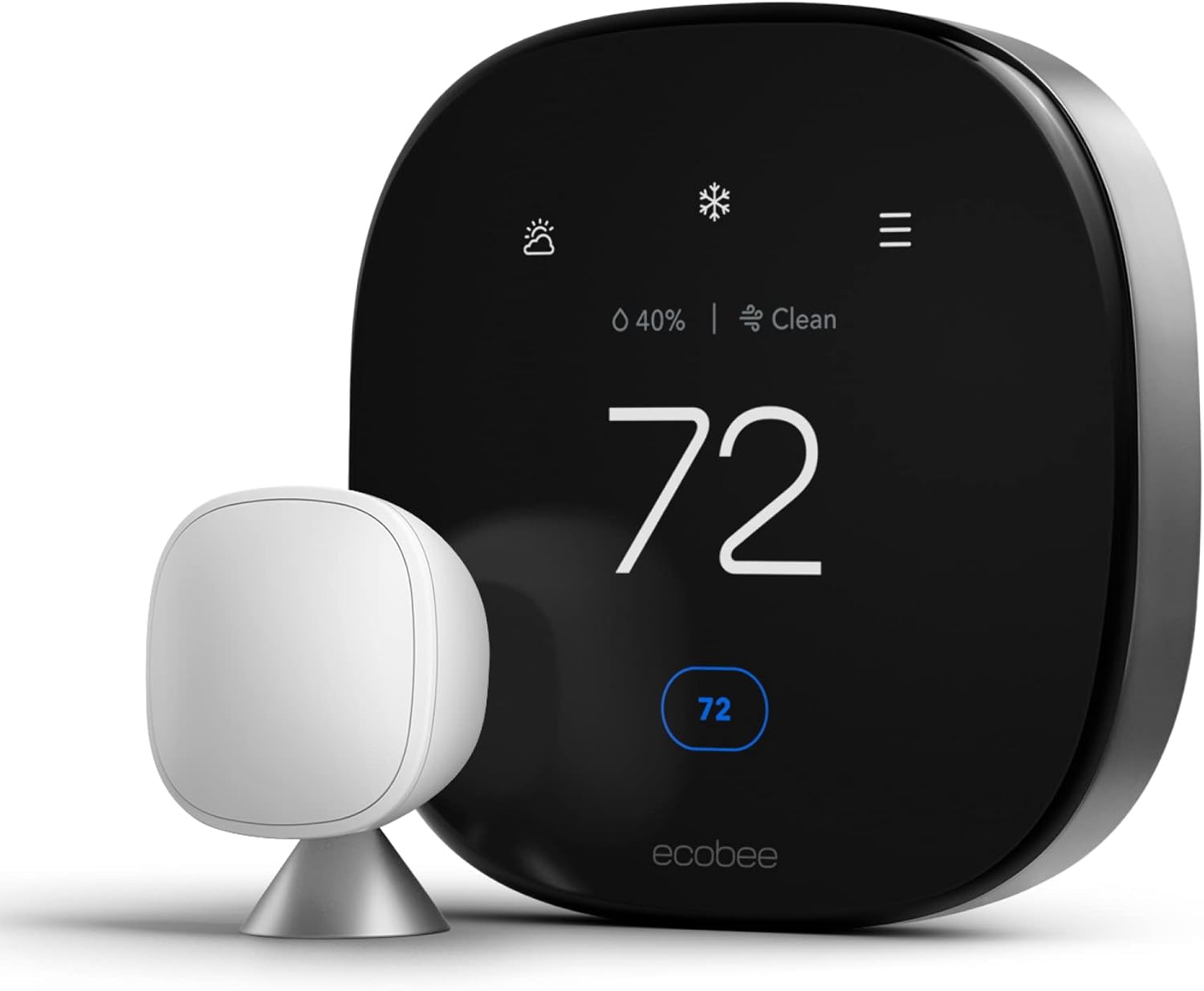
Ecobee takes a different approach, treating schedule mode as a first-class feature and enhancing it with its SmartSensor ecosystem. Rather than relying on a single thermostat-location sensor to drive all decisions, Ecobee allows you to place additional remote sensors in the rooms where you actually spend time — bedrooms, living rooms, home offices — and configure the system to respond to the average temperature and occupancy of those specific spaces. This makes Ecobee’s schedule mode significantly smarter than standard scheduling, because the temperature targets are informed by multi-room data rather than the thermostat’s potentially imperfect location. For users who prefer control but want to eliminate placement-related inaccuracies, Ecobee’s sensor-enhanced schedule is frequently the better fit.
How to Retrain or Reset a Learning Thermostat
One of the most common frustrations with learning mode is that the learned schedule has been corrupted — by an extended period of atypical occupancy, a guest who was home all day for two weeks, a new pet that triggers motion sensors constantly, or a seasonal shift that the algorithm hasn’t caught up to. When the thermostat’s behavior no longer matches your expectations, retraining is the appropriate fix rather than abandoning learning mode entirely.
- Soft retrain: Make consistent manual corrections over several days. The algorithm observes your overrides and updates the model accordingly. This works well for minor adjustments but takes 5–10 days to fully recalibrate
- Schedule reset (Nest): In the Nest app, navigate to Settings > Reset > Schedule. This clears the learned schedule while keeping your other preferences intact, allowing the training process to restart fresh
- Factory reset (all brands): Clears all learned data, preferences, and connected accounts. Use this only when the learned behavior is severely off-base or when transferring ownership of the device. Note that a factory reset should not be confused with solving sensor failures — if the thermostat behaves erratically after a reset, refer to a faulty thermostat diagnostic checklist to rule out hardware problems
- Temporary hold during atypical periods: Before a guest’s extended stay or a long work-from-home period, switch to manual hold mode. Resume learning mode when your routine returns to normal — this prevents the algorithm from encoding the exception as the rule
How Much Money Can You Actually Save with Each Mode?
Energy savings is the primary reason most homeowners upgrade to a programmable or smart thermostat in the first place. But the actual numbers vary widely depending on which mode you use, how well you configure it, and how much your old thermostat was wasting. Understanding the real-world savings potential of each approach helps you set realistic expectations and choose the right product. For a detailed breakdown, our guides on how a smart thermostat saves money and whether smart thermostats really save money are essential reading.
Schedule Mode: Savings Are Proportional to Programming Quality
With schedule mode, the savings you achieve are directly proportional to how well you program the setbacks. A household that programs a 60°F Away temperature during an 8-hour workday will save substantially more than one that only drops to 66°F. The DOE estimates that turning your heat back 7–10°F for 8 hours per day can save up to 10% per year on your heating and cooling bills. Extending that setback to evenings and overnight periods compounds the savings further.
The key insight is that schedule mode can be just as efficient as learning mode — but only if you put in the upfront effort to program it thoughtfully. A lazy schedule (same temperature all day, minor setbacks) will underperform even a moderately configured learning thermostat significantly. For actionable ideas on squeezing every dollar out of your HVAC, our HVAC energy efficiency tips guide covers both scheduling and hardware improvements.
Learning Mode: Savings Come From Occupancy Intelligence
Learning mode’s efficiency advantage over a poorly configured schedule comes almost entirely from one feature: Auto-Away occupancy detection. If your household’s schedule is inconsistent — some days you work from home, some days you leave early, some evenings you are out late — a fixed schedule will either heat an empty house or leave you coming home to cold rooms. Learning mode and geofencing solve both problems automatically, adjusting in real time based on where you actually are.
For households with highly consistent schedules, the efficiency gap between a well-programmed 7-day schedule and learning mode narrows to just 3–5%. This is a meaningful amount on a large annual heating bill, but for most users it represents the difference of perhaps one to three weeks’ worth of savings — not the dramatic gap that marketing materials sometimes imply. If your life is consistent, a great schedule can be just as frugal as AI. If your life is unpredictable, learning mode’s occupancy detection can make a larger real-world difference.
Rebates and Incentives: Reducing the Upfront Cost
One factor that significantly changes the financial equation for smart thermostats is the availability of utility rebates and government incentives. Many electric and gas utilities offer rebates of $25–$100 on qualifying smart thermostat models, and some state programs offer additional credits. Our smart thermostat rebates guide covers available programs by region and includes a savings calculator to estimate your payback period after rebates are factored in. For many households, these rebates reduce payback periods to under a single heating season.
Recommended Thermostat Settings: The Temperatures That Save the Most
Whether you use schedule or learning mode, the temperatures you program as setpoints have the single biggest impact on your energy bill. Understanding the recommended settings for different seasons and different activity periods gives you the foundation for building an efficient schedule — or validating that your learning thermostat has converged on sensible defaults. For a full seasonal breakdown, our recommended thermostat settings for winter guide covers the topic in depth.
| Period | Heating Season (°F) | Cooling Season (°F) | Notes |
|---|---|---|---|
| Wake / Morning Active | 68–70°F | 74–76°F | Start pre-conditioning 20–30 minutes before waking |
| Away / Workday | 60–62°F | 78–80°F | Most impactful period for savings — aggressive setback here matters most |
| Home / Evening Active | 68–70°F | 74–76°F | Set return pre-conditioning 30 minutes before expected arrival |
| Sleep | 64–66°F | 74–78°F | Cooler sleeping temperatures improve sleep quality and save energy simultaneously |
| Vacation / Extended Away | 55–58°F | 85–88°F | Low enough to save maximum energy; high enough to prevent pipe freeze or heat damage |
Vacation Mode and Away Temperature: What to Set When You Leave Home
One of the most practical questions homeowners have about their thermostat — regardless of whether it uses schedule or learning mode — is what temperature to set when leaving for an extended period. The answer involves balancing maximum energy savings against protection for your home and its contents. Our dedicated guide on what temperature to set your thermostat on vacation in winter covers this in full detail.
What Temperature Is Safe During Vacation?
For heating, the widely cited minimum safe temperature for an unoccupied home is 55°F (13°C). This is the threshold below which the risk of frozen pipes increases significantly in most climates — particularly in poorly insulated walls, under-sink plumbing, and garage spaces. In practice, most HVAC professionals recommend 58–60°F as a more comfortable safety margin that accounts for rooms that may be cooler than the thermostat location registers.
For cooling during summer vacations, setting the thermostat to 85–88°F prevents excessive heat buildup that can warp wood furniture, damage electronics, and create conditions that accelerate mold growth in humid climates. Going higher than 88°F is generally not recommended for occupied or furnished homes, even when unoccupied.
How Each Mode Handles Extended Absences
In schedule mode, you need to manually activate a Vacation Hold before leaving. Most smart thermostats have a dedicated vacation or hold feature in the app that lets you set a flat setpoint for a specific date range, after which the normal schedule resumes. This is more energy-efficient than relying on the Away period alone, since the Away setpoint is designed for a workday departure — not a week-long absence where the heating or cooling cycles more frequently than necessary.
In learning mode, the Auto-Away feature will activate automatically once the thermostat detects consistent absence. However, for vacations longer than 24–48 hours, manually setting a vacation hold is still advisable — Auto-Away was designed to respond to typical daily departures, and some algorithms will begin “expecting” your return based on historical patterns, potentially warming the house in anticipation on a day you are still away. Setting an explicit vacation hold overrides this pattern-based behavior entirely.
Thermostat Fan Settings: Auto vs. On — Which Is More Efficient?
One of the most underappreciated settings on any thermostat — whether it uses schedule or learning mode — is the fan control mode. Almost every forced-air heating and cooling system gives you two fan options: Auto and On. Choosing the right one has a meaningful impact on both energy consumption and comfort. This setting is separate from the heat/cool schedule but interacts with it in important ways.
Fan: AUTO Mode
- Fan runs only when the heating or cooling system is actively running
- More energy efficient — fan motor uses significant electricity
- Recommended for most households in most seasons
- Humidity control is better — air only circulates during active conditioning
- Filter lasts longer with lower runtime hours
- Temperature may feel slightly less even between cycles
Fan: ON Mode
- Fan runs continuously regardless of heating or cooling demand
- Provides more even temperature distribution throughout the home
- Useful in homes with significant hot/cold spots between floors
- Improves air filtration — more air passes through the filter per hour
- Can increase humidity in summer (recirculating unconditioned air)
- Increases electricity consumption — fan motors typically use 400–800 watts
For the vast majority of households, Fan: Auto is the correct default choice. The continuous fan in On mode can add $30–$50 per month to your electricity bill depending on your system’s fan motor size and local rates. The temperature evenness benefit of On mode is real but can usually be achieved more efficiently with proper duct balancing, ceiling fans, or by addressing the underlying insulation or air sealing issues that cause temperature stratification.
One practical use case where Fan: On makes sense is during mild transitional weather in spring and fall, when neither heating nor cooling is needed but air circulation would improve comfort. Some smart thermostats allow schedule-based fan settings — running the fan for short intervals (e.g., 15 minutes per hour) to circulate air without the full runtime cost of continuous operation.
C-Wire, Wiring Compatibility, and What You Need Before Upgrading
One of the most frequent pain points for homeowners upgrading to a smart thermostat — whether for schedule or learning mode — is discovering that their existing wiring does not support the new device. Understanding the basics of thermostat wiring and compatibility can save you a service call and prevent a frustrating installation experience. Our comprehensive thermostat wiring guide covers all wire configurations in detail, and our thermostat-to-furnace compatibility guide helps confirm whether your HVAC system can support the thermostat you want.
What Is the C-Wire and Why Does It Matter?
The C-wire (Common wire) is the wire that provides continuous 24V power to smart thermostats that need it to power their Wi-Fi radio, display, and learning hardware. Older programmable thermostats ran on batteries; smart thermostats need a constant power supply, and many require a dedicated C-wire to function reliably.
Many older homes (pre-2000) have thermostat wiring that does not include a C-wire. If your home lacks one, you have several options: have an electrician run a new C-wire, use a C-wire adapter kit (included with some smart thermostat models), or choose a battery-powered smart thermostat that does not require a C-wire. Our guide to the best battery-powered smart thermostats covers quality options that work without a C-wire.
Line Voltage vs. Low Voltage Thermostats
Another compatibility issue that catches homeowners off guard is the difference between line-voltage and low-voltage thermostat systems. Most forced-air furnaces and central AC systems use low-voltage (24V) thermostats — this is the standard that virtually all smart and learning thermostats are designed for. However, homes heated with electric baseboard heaters, radiant floor heating, or certain electric furnaces use line-voltage (120V or 240V) thermostats, which require completely different hardware. If you install a standard low-voltage smart thermostat on a line-voltage system, it will be damaged and may create a safety hazard. Our line voltage vs low voltage thermostat 2-minute wiring test can help you identify which type your home uses before purchasing.
Smart Thermostat Wi-Fi and Connectivity
For learning mode to function fully — particularly geofencing and app-based occupancy detection — a stable Wi-Fi connection is essential. Smart thermostats connect to your home network and communicate with cloud servers to enable remote control, geofencing triggers, and (in some cases) utility demand-response programs. If your thermostat is located far from your router, Wi-Fi signal strength can be an issue. Understanding how smart thermostat connectivity works — including the difference between Wi-Fi, Z-Wave, and Zigbee protocols — helps you anticipate and avoid connectivity issues before they interrupt your learning mode’s operation.
Programmable vs. Smart Thermostat: Which Do You Actually Need?
The schedule vs. learning debate assumes you already own a smart thermostat. But for homeowners who are still deciding whether to upgrade at all, the more fundamental question is whether a basic programmable thermostat can serve your needs just as well as a $200+ smart model. Our detailed smart vs programmable thermostat comparison addresses this question comprehensively. Here is the condensed version.
What a Programmable Thermostat Can Do
A basic programmable thermostat — typically priced between $20–$80 — offers time-based schedule programming (usually 5-2 or 5-1-1, occasionally 7-day), manual temperature setbacks, and simple hold modes. It does everything a well-optimized schedule mode does on a smart thermostat, at a fraction of the cost. If your household has a genuinely consistent routine and you are willing to program it thoughtfully, a quality programmable thermostat can achieve 90–95% of the energy savings of a smart model.
What a Smart Thermostat Adds
Smart thermostats add Wi-Fi connectivity (for remote control via app), geofencing-based occupancy detection, learning mode algorithms, remote room sensors, voice assistant integration, energy usage reporting, and in some cases air quality monitoring. These features are genuinely valuable for households with variable routines or multiple family members — but they represent incremental improvements over a well-programmed schedule, not a revolutionary leap. The best smart thermostat for energy savings guide covers top-rated models across different budget tiers and use cases if you are ready to make the upgrade.
Remote Room Sensors: How They Improve Both Schedule and Learning Modes
Remote room sensors are one of the most underutilized features in modern smart thermostat ecosystems. Whether you use schedule or learning mode, the fundamental challenge with any single-thermostat system is that the thermostat can only “feel” the temperature and occupancy at its own location — which is often not representative of where you actually spend your time. A thermostat in a hallway, entryway, or near an exterior door may be reading temperatures 5–8°F different from your living room or bedroom. Understanding what a thermostat remote sensor does is key to solving this placement problem.
How Remote Sensors Help Schedule Mode
In schedule mode, remote sensors solve the problem of averaging. Rather than heating or cooling to a setpoint measured at the thermostat’s potentially unrepresentative location, systems with remote sensors can average the temperature across multiple rooms — or, in systems like Ecobee, can be configured to prioritize a specific sensor (like the bedroom) during Sleep periods and the living room sensor during Home periods. This means your programmed setpoints more accurately reflect the temperature in the spaces you actually occupy, rather than the temperature in a hallway no one sits in.
How Remote Sensors Help Learning Mode
In learning mode, remote sensors provide occupancy data across multiple rooms — giving the algorithm far more accurate information about when and where the home is occupied. A system relying solely on the main thermostat’s PIR sensor may incorrectly determine the home is empty if no one has passed through that specific area recently. With sensors in the bedroom, living room, and home office, the system has a much more complete picture of actual occupancy — reducing false Auto-Away triggers that leave you coming home to a cold house.
Common Schedule and Learning Mode Problems — and How to Fix Them
Even well-configured thermostats develop problems over time. Here are the most frequent issues users encounter with both schedule and learning modes, along with targeted solutions.
Thermostat Not Reaching Set Temperature
If your thermostat’s schedule calls for 70°F but the house only reaches 67°F, the problem is almost never the thermostat’s mode settings — it is usually an HVAC capacity, airflow, or insulation issue. That said, a few thermostat-specific factors can contribute: a poorly placed sensor that reads warmer than the room (causing the system to shut off early), a failed temperature sensor, or an undersized setback recovery window (the pre-conditioning period before the Home or Wake block isn’t long enough for your HVAC system to reach setpoint). Our step-by-step thermostat not reaching set temperature diagnostic flowchart walks through the full troubleshooting process.
Thermostat Showing Wrong Temperature
A thermostat that consistently reads 3–5°F higher or lower than the actual room temperature will make poor scheduling decisions — whether in schedule or learning mode. For learning mode, this is particularly damaging because the algorithm builds its schedule based on the temperature the sensor reports, not the actual room temperature. Common causes include: thermostat placed in direct sunlight, located near a heat-generating appliance, installed in a drafty location near an exterior wall, or a failing internal temperature sensor. Our guide on why your thermostat shows the wrong room temperature covers all diagnostic steps.
Learning Mode Keeps Triggering Unexpected Temperature Changes
If your learning thermostat is making temperature changes at times that don’t match your schedule, the most common causes are: false occupancy detection from pets or direct sunlight on the PIR sensor, geofencing boundaries set too close to the home (causing frequent enters/exits), or a corrupted learned schedule that needs a soft or hard reset. Confirm that your geofence boundary is set at least 1 mile from your home for reliable performance. If the erratic behavior persists after retraining, consult our how to tell if your thermostat is bad guide to rule out hardware sensor failure.
Schedule Not Following After Update or Power Outage
Most modern smart thermostats store their schedules in non-volatile memory and recover automatically after a power outage. However, if your thermostat loses its programmed schedule after an outage, it is worth checking whether the device reverted to a factory state or whether the internal clock has lost sync. Re-entering the time and date, then verifying the schedule in the app, usually resolves this. Battery-powered backup systems (present on many smart thermostats) are designed to prevent this; if yours lacks a battery backup and schedule loss is recurring, see our notes on battery-powered smart thermostat options as a potential hardware upgrade.
Privacy Considerations with Learning Thermostats
Learning mode is fundamentally a data collection and analysis system — one that operates continuously inside your home. Understanding what data is collected, how it is stored, and who can access it is an important part of making an informed choice between schedule and learning modes.
Learning thermostats collect occupancy patterns, arrival and departure times, manual temperature adjustment history, and (when geofencing is enabled) smartphone location data. This data is transmitted to and stored on the manufacturer’s cloud servers. For Nest, this means Google’s infrastructure; for Ecobee, data is stored on Ecobee’s servers in Canada. Both companies publish privacy policies that detail retention practices and data sharing, though the depth of detail and user control varies.
For households where privacy is a significant concern — particularly around location data and occupancy patterns — schedule mode offers an equivalent level of automation comfort without any behavioral data collection. The thermostat follows a time-based program with no need to observe, record, or transmit information about your movements or habits. This is also relevant for renters, who may not be comfortable with occupancy data being collected in a home they don’t own and may not be able to control what happens to the device when they move.
Thermostat Mode Advice for Renters
Renters face a unique set of considerations when choosing between schedule and learning modes — and in many cases, they are not choosing at all, since the thermostat belongs to the landlord and may already be configured.
If you are a renter with a smart thermostat installed by your landlord, be aware that learning mode data — including your occupancy patterns and location — may theoretically be accessible to the account holder (the landlord) depending on how the device is registered. If privacy matters to you, check whether the thermostat’s learning and geofencing features can be disabled from the user interface without requiring account access, or ask your landlord to transfer app access to your account during your tenancy.
For renters who own a portable smart thermostat (such as devices that replace a standard unit and can be restored when you move), schedule mode is often the more practical choice simply because it eliminates the training period every time you move. A well-programmed 7-day schedule travels conceptually from apartment to apartment in a way that a learned schedule does not.
How to Choose Between Schedule and Learning Mode
Quick Decision Guide
Based on your household’s characteristics, one mode is usually a clearly better fit:
Choose Schedule If…
- Your daily routine is highly consistent week to week
- You have pets that would trigger motion sensors
- You prefer full, predictable control over HVAC decisions
- Privacy or data collection is a concern
- You are a renter who moves frequently
- You want the thermostat working correctly from day one
- Your household has multiple people with very different schedules that can’t be captured by a single learned pattern
Choose Learning If…
- Your schedule varies significantly day to day or week to week
- You frequently forget to adjust the thermostat when leaving
- You want true “set it and forget it” automation
- All primary household members have smartphones for geofencing
- You are willing to invest 1–2 weeks in the training period
- You want automatic vacation/away energy savings without manual holds
- Your lifestyle evolves seasonally and you want the thermostat to adapt
Best Option for Fixed Daily Routines
If you enjoy knowing exactly what your HVAC system is doing at any given moment — and you follow a routine consistent enough that a clock-based schedule captures it accurately — Schedule mode is the right choice. It eliminates the guesswork of AI entirely and ensures your home is at exactly the temperature you expect when you walk through the door. A well-optimized 7-day schedule programmed with appropriate away setpoints can match or exceed the efficiency of learning mode for users whose lives fit neatly into repeating weekly patterns.
Best Option for Changing or Irregular Schedules
If you are a freelancer, a shift worker, a frequent traveler, or someone whose home occupancy varies significantly from day to day, Learning mode is the clearly superior choice. A fixed schedule in your situation would either be set conservatively (always assume you’re home and waste energy) or aggressively (always assume you’re away and leave you coming home to an uncomfortable house). Learning mode and geofencing together handle the irregularity automatically, ensuring you aren’t heating or cooling an empty house just because a clock says so. If your AI starts acting erratically or the learned schedule diverges significantly from your actual habits, refer to the retraining steps above — and if erratic behavior persists after a reset, use the 10-minute faulty thermostat checklist to confirm it is a software issue and not an underlying sensor failure.
Frequently Asked Questions
Does Learning Mode override my manual schedule?
Yes. When Learning mode (or Auto-Schedule on Nest) is enabled, your manual temperature adjustments are treated as data points that gradually rewrite the underlying schedule. If you want a permanent schedule that never changes based on observed behavior, you must explicitly turn the Auto-Schedule or Learning feature off in the thermostat’s settings. Most smart thermostats make this toggle available in the main settings menu or through the companion app.
Can I turn off Learning and use only a manual schedule?
Yes. Most smart thermostats have a clear toggle in settings — labeled “Auto-Schedule,” “Learning,” or “AI Optimization” depending on the brand — that reverts the thermostat to a standard programmable schedule mode. On Nest, navigate to Settings and disable Auto-Schedule. The thermostat will retain whatever schedule has been learned up to that point, which you can then edit manually, or you can reset the schedule to start fresh.
Is Learning mode worth it for energy savings?
For most users with variable schedules, yes. Learning mode is generally 10–15% more efficient than a mediocre static schedule because it responds to real occupancy rather than theoretical plans. However, for users who invest effort in programming an accurate, well-optimized 7-day schedule with appropriate away setpoints, the efficiency gap narrows considerably — sometimes to just 3–5%. The biggest energy savings from learning mode come specifically from the Auto-Away occupancy detection, which prevents heating or cooling an empty home when an unexpected departure occurs. See our full analysis in the do smart thermostats really save money guide.
Which is better — Nest or Ecobee — for schedule vs. learning?
Nest is the superior choice if learning mode is your priority — its Auto-Schedule feature is mature, its occupancy detection is reliable, and the overall experience of “hands-off” thermostat management is the most polished in the consumer market. Ecobee is the better choice if you prefer schedule mode enhanced by intelligence — its SmartSensor ecosystem lets you place sensors in occupied rooms and have the schedule respond to where people actually are, rather than relying on a single thermostat location that may not represent your home well. See our full Nest vs Ecobee sensor comparison for a detailed breakdown.
How long does a thermostat take to learn your schedule?
Most learning thermostats generate a working baseline schedule after approximately 7–10 days of use with consistent manual interactions. However, the schedule continues refining for several additional weeks as more data accumulates. The algorithm is most accurate after about a month of regular use. It is worth noting that the algorithm learns best from consistent behavior — if the first two weeks involve atypical occupancy (a holiday, visitors, an unusual work schedule), the initial learned schedule will reflect those exceptions rather than your normal routine, and a soft retrain via consistent manual corrections will be needed to recalibrate.
My learning thermostat is behaving erratically — how do I fix it?
Start by performing a schedule reset (not a full factory reset) to clear the learned data and allow the algorithm to start fresh. Ensure your geofencing app has the correct permissions and that all household members’ phones are enrolled. Check that no occupancy-triggering sources (pets, oscillating fans near PIR sensors, seasonal sunlight angles hitting the sensor directly) are causing false detections. If the erratic behavior includes temperature display issues or unexpected system cycling that persists after a reset, the problem may be hardware-related — a faulty thermostat checklist can help distinguish software from sensor failure.
Can my landlord see data from a learning thermostat in my rental?
Potentially yes, depending on how the device is registered. If the thermostat is registered to the landlord’s account, they may have access to historical occupancy data and usage reports through the app. If privacy is a concern, ask your landlord to transfer primary app access to your account during your tenancy, or request that geofencing and learning features be disabled in favor of a basic schedule while you are renting the property.
What is the best temperature to set a thermostat in winter?
The DOE recommends 68°F when home and awake, with setbacks to 60–62°F when away or asleep for maximum efficiency. For full seasonal guidance including how to balance comfort and savings across different household types, see our recommended thermostat settings for winter guide.
Does a smart thermostat work without Wi-Fi?
Yes, with limitations. Most smart thermostats can execute their stored schedule without an active Wi-Fi connection. However, features that depend on connectivity — app control, geofencing-based occupancy detection, remote access, learning updates, and utility program integrations — will not function until the connection is restored. For homes with unreliable internet, a well-programmed schedule mode is more dependable than learning mode, which relies heavily on cloud connectivity for its AI functions. Battery-powered models with offline schedule support are covered in our best battery-powered smart thermostat guide.
How do I know if my thermostat needs replacing?
Signs that a thermostat may be failing include: temperature readings that are consistently inaccurate, the system not starting or stopping at programmed times, display issues, or an inability to maintain the set temperature. These symptoms can be caused by software issues (addressable with a reset) or hardware failure (requiring replacement). Our guide on how to tell if your thermostat is bad walks through 12 symptoms and their most likely causes.




 Home
Home
 Info
Info
 Compare
 Reviews
 Shop
Shop