Remote Sensor Technology
Mastering precision climate control in every room of your home — not just the hallway where your thermostat lives.
What Is a Thermostat “Remote Sensor”? Meaning, Benefits & How It Works
Most thermostats suffer from a fundamental limitation: they can only measure the temperature at one specific point on one specific wall. That point is often a hallway, an entryway, or wherever the builder happened to run the low-voltage wire during construction — rarely the bedroom, living room, or home office where you actually spend your time. A remote sensor solves this by giving your thermostat the ability to “see” the temperature and occupancy in the rooms that matter most.
The result is a more responsive, more accurate, and more efficient HVAC system — one that heats and cools based on where people actually are, rather than where the hardware happens to be mounted.
What a Thermostat Remote Sensor Is
A remote sensor is a secondary, auxiliary device that pairs wirelessly with a compatible smart thermostat to monitor localized climate conditions in a specific room. It acts as an additional set of eyes for your HVAC system, continuously reporting its readings back to the main thermostat so the system can make better-informed decisions about when to heat, cool, or enter an energy-saving state.
Definition of a Remote Temperature Sensor
Technically, a remote temperature sensor is a thermistor — a temperature-sensitive resistor — housed in a compact, battery-powered wireless enclosure. It measures the ambient air temperature of the room it is placed in with accuracy comparable to the thermostat’s own built-in sensor, typically within ±1°F. More advanced models also include a passive infrared (PIR) occupancy sensor to detect whether the room is occupied, and some include a humidity sensor to provide additional environmental data.
Unlike the thermostat itself, remote sensors have no display, no controls, and no direct user interface. Their only function is to measure and transmit data. All the decision-making — what to do with that data — remains in the thermostat’s logic and the user’s configuration choices.
How It Differs from the Thermostat’s Built-In Sensor
The thermostat’s built-in sensor is hardwired to the device, fixed at one location, and subject to all the placement problems that location entails: direct sunlight, proximity to the kitchen, drafts from exterior walls, or the self-heating from the thermostat’s own electronics. Remote sensors are portable, battery-powered, and can be placed precisely where accurate data matters most — in the room you sleep in, the playroom where children spend hours, or the home office where you work.
If your main thermostat is itself producing inaccurate readings due to placement or sensor issues rather than the room being monitored, a remote sensor may help but won’t fully compensate for a malfunctioning unit. In that case, use our 10-minute faulty thermostat checklist first to determine whether the thermostat itself needs attention.
Why Manufacturers Include Remote Sensors
Manufacturers include remote sensor support because a single temperature measurement point is fundamentally insufficient for accurately representing the climate comfort of a multi-room, multi-story home. Temperature stratification, solar heat gain through windows, kitchen cooking heat, and the natural airflow patterns of forced-air HVAC systems all create meaningful temperature variations between rooms — variations that a single thermostat cannot detect or compensate for.
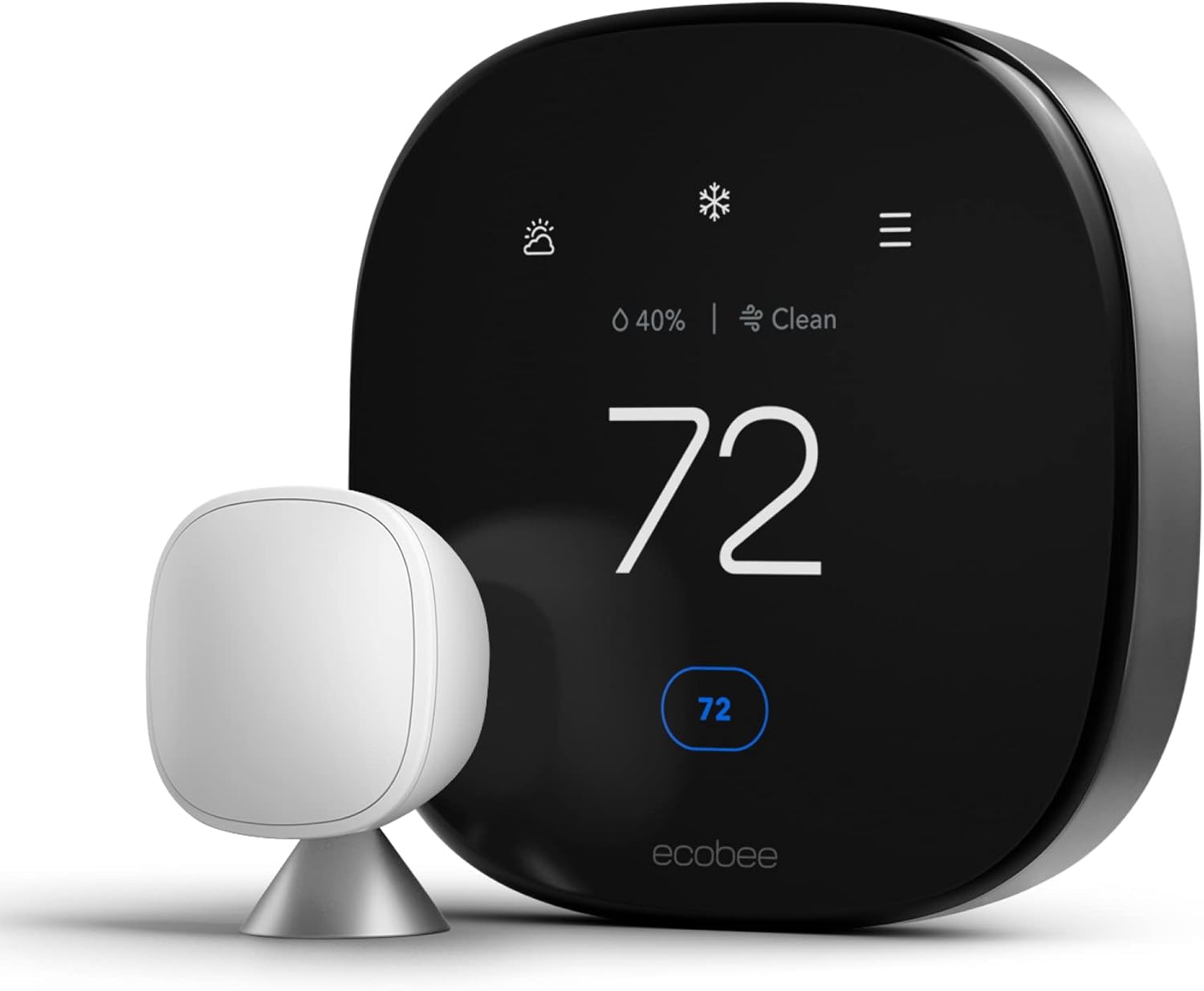
Ecobee built their entire product philosophy around this insight: their thermostats ship with a SmartSensor included in the box, treating multi-point sensing as a standard feature rather than an optional add-on.
How Remote Sensors Communicate with Your Thermostat
Remote sensors are not passive devices — they are active participants in your HVAC system’s control logic. Understanding how they communicate helps you position them correctly and troubleshoot connection problems when they arise.
Wireless vs. Wired Remote Sensors
The vast majority of modern residential remote sensors use wireless communication, which eliminates the need to run additional wiring between sensor locations and the thermostat. Two wireless protocols are most common in the residential market:
Zigbee is a low-power mesh networking protocol that operates on the 2.4 GHz band. It is widely used in smart home devices because of its low battery consumption and its mesh capability — each Zigbee device can act as a signal repeater, extending range as more devices are added to the network. Ecobee’s SmartSensors use a proprietary variation of this protocol to communicate with the main thermostat.
Proprietary RF (Radio Frequency) protocols operate on sub-GHz bands (typically 900 MHz) and are used by brands including Nest, Honeywell, and others. Sub-GHz signals penetrate walls and floors more effectively than 2.4 GHz, providing more reliable range in larger or multi-story homes. The tradeoff is that proprietary RF sensors only work with their own brand’s thermostat ecosystem.
Older commercial and semi-commercial systems sometimes use hardwired 10k NTC sensors — resistor probes that connect directly to the thermostat’s sensor input terminals via low-voltage wiring. These offer perfectly reliable, interference-free communication but require physical wire runs. If you need to extend sensor wiring to reach a new location, the process is similar to thermostat wire extension and the same techniques apply, as described in our guide on spliced or extended thermostat wiring.
Sensor Communication Range and Signal Strength
Wireless remote sensors have operational range limits that vary by protocol and building construction. In ideal open-air conditions, most residential wireless sensors have a rated range of 45–60 feet. In real-world home environments with drywall, wood framing, and insulation, effective range typically drops to 25–40 feet per wall or floor barrier. Homes with concrete or masonry construction see further range reduction.
Practical placement guidance: position sensors no more than one floor away from the main thermostat, or run a path check by holding the sensor at the intended location and confirming a successful pairing signal before permanently mounting it. If signal strength is marginal, mounting the sensor slightly higher on the wall (closer to the ceiling, where fewer dense objects block the signal path) can improve connectivity.
Modes of Operation: Averaging, Priority, and Follow Me
- Averaging Mode: The thermostat computes a weighted or simple average of all active sensor readings and uses that average as the effective “room temperature” for control decisions. For example, if the hallway thermostat reads 74°F and a living room sensor reads 70°F, the system treats the home as 72°F. This mode works well when all monitored rooms are equally important and you want a balanced whole-home temperature.
- Priority Mode: The thermostat ignores all other sensors and bases its decisions exclusively on one designated sensor. This is useful for time-of-day scenarios — for instance, prioritizing the living room sensor during daytime hours and the master bedroom sensor from 9 PM onward, so the HVAC optimizes for where you are actually spending time at each point in the day.
- Follow Me Mode (Ecobee): The thermostat dynamically shifts priority to whichever sensor room is currently occupied, as detected by the PIR occupancy sensors. As you move through the house, the system “follows” you and ensures the room you are in is at the correct temperature. When all sensor rooms are vacant, the system shifts to an energy-saving Eco setpoint rather than maintaining a room no one is using.
- Balance Mode: A hybrid mode that attempts to ensure no monitored room exceeds a set temperature differential from the target while maintaining an overall average. Useful in homes where extreme hot or cold spots exist in specific rooms and you want to prevent those outlier conditions even if it means running the system longer overall.
Occupancy Detection: How Remote Sensors Know the Room Is Used
Occupancy detection is one of the most valuable — and most frequently misunderstood — capabilities of advanced remote sensors. Models that include a PIR occupancy sensor use the same passive infrared technology as motion-activated light switches: the sensor detects changes in infrared radiation caused by a warm body moving through the sensor’s field of view.
When the sensor detects occupancy, it flags the room as “active” to the thermostat. When no motion has been detected for a configured period (typically 30 minutes), the room is marked as vacant. This occupancy data feeds directly into Follow Me mode logic and into Auto-Away calculations — if all sensor-equipped rooms show vacant simultaneously for long enough, the thermostat triggers an energy-saving away state without any manual input.
Important limitations to understand: PIR sensors detect motion across a thermal gradient — a sleeping person generates very little detectable motion. This means a bedroom with a remote sensor may be marked “vacant” after you fall asleep, potentially causing the thermostat to reduce heating or cooling during the night. For bedrooms, it is generally advisable to either disable occupancy detection for that specific sensor or configure the system to maintain comfort setpoints overnight regardless of occupancy detection status.
Temperature Sensors vs. Humidity Sensors: What’s the Difference?
Not all remote sensors measure the same things. Understanding the distinction helps you choose the right sensor for each room’s needs.
| Sensor Type | What It Measures | Primary Use Case | Typical Accuracy |
|---|---|---|---|
| Temperature Only | Ambient air temperature | HVAC control, hot/cold spot correction | ±1°F |
| Temperature + Occupancy | Ambient air temp + PIR motion detection | Follow Me mode, Auto-Away optimization | ±1°F + motion detection |
| Temperature + Humidity | Ambient air temp + relative humidity % | Basement moisture control, nursery monitoring, whole-home humidity management | ±1°F / ±3% RH |
| All-in-One | Temp + occupancy + humidity | Premium installations, multi-parameter room monitoring | ±1°F / ±3% RH + motion |
Humidity sensors are particularly valuable in basements, laundry rooms, and nurseries — spaces where humidity levels meaningfully affect comfort and health but where the main thermostat has no visibility. If your smart thermostat supports humidifier or dehumidifier control, a remote humidity sensor in a problem area can trigger that equipment more accurately than relying solely on the thermostat-location humidity reading.
Benefits of Using Remote Sensors
Hot and Cold Spots: What Causes Them and How Sensors Fix Them
Hot and cold spots are localized temperature imbalances that exist in virtually every forced-air HVAC home to some degree. They arise from a combination of physical factors: heat rising through open floor plans and stairwells, solar heat gain through south- and west-facing windows in afternoon hours, the thermal mass differences between rooms with different amounts of exterior wall exposure, supply register placement that doesn’t evenly distribute conditioned air, and air duct leakage that reduces delivery to distant rooms.
The critical problem with hot and cold spots is that the main thermostat, mounted in a single location, cannot detect them. If the thermostat is in a centrally located hallway that measures a comfortable 72°F, it has no way of knowing that the master bedroom at the end of the south-facing wall is actually 77°F on a summer afternoon — or that the basement bonus room is 65°F while everyone shivers through movie night.
A remote sensor placed directly in the affected room changes this dynamic completely. The thermostat can now respond to actual conditions in the hot or cold room rather than making decisions based on an unaffected location. In Priority mode, it will run the HVAC until the sensor room reaches the target temperature. In Averaging mode, it will weight the imbalanced room’s reading into its calculations and run longer to compensate. In Follow Me mode, it will prioritize the room while it is occupied and automatically deprioritize it when empty.
How Many Remote Sensors Do You Need?
There is no universal answer — the right number depends on your home’s size, layout, and the specific comfort problems you are trying to solve. The following guidance covers the most common household scenarios:
Sensor Count by Home Type
The practical upper limit is rarely reached — most households find 2–4 sensors covers their needs effectively. Beyond that, additional sensors provide diminishing returns and can introduce noise into averaging calculations if placed in rooms that are seldom occupied.
Remote Sensor Placement Guide
Sensor placement has a direct and significant impact on reading accuracy. A poorly placed sensor produces data that is just as misleading as no sensor at all — and can actively cause the system to make worse decisions than it would with a single well-placed thermostat.
✓ Good Placement Locations
- Interior wall, 4.5–6 feet from floor (breathing zone height)
- Central wall of the target room, away from corners
- At least 3 feet from any supply or return air register
- Away from exterior walls that absorb outdoor temperature
- Clear line of sight across the room for occupancy detection
- Away from heat-generating electronics (TVs, computers, lamps)
- In a frequently occupied room that represents your actual comfort needs
✗ Poor Placement Locations
- Near windows where sunlight can create false high readings
- Adjacent to exterior doors subject to air infiltration drafts
- Near the kitchen where cooking heat causes temperature spikes
- Inside closets, cabinets, or enclosed spaces with poor air circulation
- Behind curtains, furniture, or other objects blocking airflow
- Near a supply vent where conditioned air blows directly at the sensor
- In rooms you rarely use — occupancy data from empty rooms adds no value
Multi-Story Home Sensor Strategy
Two-story homes present the most complex remote sensor challenge. The temperature difference between a first-floor thermostat location and a second-floor bedroom can be 5–10°F due to heat rising through open stairwells and the greater sun exposure of upper-floor rooms in summer. Without a sensor on the upper floor, the thermostat will reach its setpoint on the first floor and shut off while the bedrooms remain uncomfortably warm.
The recommended approach for two-story homes is to place a sensor in the primary upstairs bedroom or hallway and configure the system in Averaging mode during the day (balancing both floors) and in Priority/Follow Me mode at night when upstairs bedrooms are occupied. This configuration delivers whole-home balance during active hours and bedroom-priority comfort during sleep — the two conditions that matter most in a two-story home.
How to Install and Set Up a Remote Sensor
Installing a wireless remote sensor is one of the simpler smart home setup tasks — no wiring, no tools beyond a small screwdriver, and no HVAC system access required. The process is the same across most major brands:
Remove the sensor from packaging and, if not pre-installed, insert the included batteries. Most sensors use CR2032 or AAA batteries. Avoid installing the battery and then leaving the sensor in a drawer for an extended period, as the pairing process begins immediately upon power-up on some models.
On the thermostat display or in the companion app, navigate to Settings > Sensors > Add Sensor (exact path varies by brand). The thermostat will enter a listening mode, typically indicated by a pulsing light or an on-screen prompt. Bring the sensor within 5–10 feet of the thermostat during initial pairing to ensure a strong initial handshake — you can move it to its permanent location after pairing is confirmed.
Once paired, assign a descriptive name (e.g., “Master Bedroom,” “Living Room,” “Basement”) to identify the sensor’s location in the app. Choose whether the sensor’s temperature reading should participate in averaging, be available for Follow Me mode, and whether its occupancy detection should be enabled and factored into Auto-Away calculations.
Use the included mounting bracket or adhesive strip to fix the sensor on an interior wall at 4.5–6 feet height. Confirm the sensor shows a connected status in the app from its final installed position before securing it permanently. If signal strength is weak, try a position slightly higher or shifted away from large metal objects and appliances.
In the thermostat app, configure which comfort periods the sensor participates in. For example, you might set the master bedroom sensor to be the priority sensor only during Sleep periods (11 PM–7 AM) while it participates in averaging during the day. This time-based sensor scheduling is one of the most powerful and underused features in the Ecobee and Nest ecosystems.
Battery Life and Maintenance
Remote sensors are designed for low maintenance, but battery management is the one recurring task they require. Understanding realistic battery life expectations and replacement signs prevents the silent failure mode where a sensor stops reporting data without any obvious indication.
- Typical battery life: Most wireless remote sensors last 18 months to 4 years on a set of batteries, depending on transmission frequency, occupancy detection activity, and ambient temperature. Ecobee SmartSensors typically last 18–24 months; Nest Temperature Sensors are rated for approximately 2 years per battery
- Low battery indication: The companion app will display a low battery alert for sensors well before they die completely — this is the most reliable way to know when replacement is needed. Check battery status in the app during seasonal HVAC changeover as a maintenance habit
- Cold temperature impact: Sensors installed in unconditioned spaces (garages, attics, unheated basements) will experience accelerated battery drain in winter. Lithium batteries perform significantly better than alkaline in cold environments and are worth the additional cost for these installations
- Silent failure mode: A sensor whose battery has died without triggering a timely alert will simply stop appearing as “active” in the thermostat’s sensor data. Periodically check the app’s sensor list to confirm all sensors show recent activity timestamps — a sensor with an old “last reported” time has either lost power or lost connection
- Cleaning: Wipe the sensor casing annually with a dry or slightly damp cloth. Do not use sprays or cleaning solutions. Keep the PIR sensor window (the small frosted or clear lens on the front face) free of dust, which can reduce occupancy detection sensitivity over time
Typical Use Cases for Remote Sensors by Room
Bedrooms
The bedroom is the highest-value location for a remote sensor in most homes. Sleep quality is significantly affected by room temperature — research consistently identifies 65–68°F as the range most conducive to quality sleep for most adults — but the bedroom is frequently one of the rooms most poorly served by a hallway thermostat. A sensor in the master bedroom, configured as the priority sensor during Sleep comfort periods, ensures the HVAC runs until the bedroom itself reaches the target temperature rather than shutting off when the hallway does.
For nurseries and children’s rooms, a remote sensor is particularly valuable given the vulnerability of infants and young children to temperature extremes. Placing a sensor in the nursery ensures the room maintains a consistent temperature regardless of what the rest of the house is doing.
Living Rooms and Main Living Areas
If the main thermostat is in a hallway, foyer, or secondary room, the living room — where most of a household’s waking hours are spent — is typically underserved. A sensor in the main living area configured as the daytime priority sensor ensures that the space where the family actually gathers is always at the right temperature during active hours.
When the Thermostat Location Is Not Ideal
If your thermostat is positioned near the kitchen, the radiant heat from cooking will periodically spike the thermostat’s reading and prematurely shut off cooling — leaving the rest of the house uncomfortably warm after meals. A remote sensor in the adjacent living room provides an accurate reference reading that is unaffected by cooking heat, and in Priority mode, the thermostat will base its decisions on the living room sensor rather than the thermally contaminated hallway reading. This scenario is one of the clearest cases where a remote sensor directly and immediately solves a real comfort problem that no amount of thermostat schedule optimization can fix.
Home Offices and Work-from-Home Spaces
Computer equipment, monitors, and other electronics generate meaningful heat during work sessions — often enough to make a home office 4–6°F warmer than the adjacent hallway during working hours. A remote sensor in the home office, set to priority mode during weekday working hours, ensures the HVAC responds to actual conditions in the room where the most time is spent during the day rather than the hallway that stays cooler simply because no heat-generating equipment is running there.
Basements and Lower-Level Rooms
Finished basements are consistently the coldest zone in most homes during heating season — below-grade construction, minimal solar gain, and distance from the thermostat all contribute to readings that can be 5–10°F colder than the main floor. A sensor in the basement that participates in temperature averaging pulls the system’s setpoint calculations toward a warmer average, causing the furnace to run longer and deliver more heat to the colder lower zone. For basements also prone to moisture, a combined temperature and humidity sensor allows the thermostat or a paired dehumidifier to respond to humidity conditions independently of temperature.
Are Remote Sensors Compatible with All Thermostats?
No — remote sensor compatibility requires specific hardware support that is not present in basic programmable or non-smart thermostats. To use wireless remote sensors, you generally need a thermostat explicitly designed with sensor support, including a wireless radio for the relevant protocol (Zigbee, proprietary RF, or Z-Wave) and software logic for processing multi-sensor data.
Standard non-communicating programmable thermostats — even digital models — lack both the wireless radio and the software architecture required to interpret remote sensor data. They have no mechanism for receiving a wireless signal, no way to average or prioritize multiple temperature inputs, and no occupancy logic to act on PIR data. If remote sensor capability is important to your setup, it must be treated as a primary selection criterion when choosing or replacing a thermostat, not an afterthought.
Ecobee vs. Nest vs. Honeywell: Remote Sensor Comparison
The three dominant smart thermostat brands approach remote sensor support in meaningfully different ways, reflecting their different product philosophies.
| Brand / Model | Sensor Name | Max Sensors | Occupancy Detection | Humidity | Follow Me / Averaging |
|---|---|---|---|---|---|
| Ecobee SmartThermostat | SmartSensor | Up to 32 | Yes — PIR | No (temp + occupancy only) | Both — configurable per comfort period |
| Nest Learning Thermostat | Nest Temperature Sensor | Up to 6 | No — temperature only | No | Priority scheduling per time period |
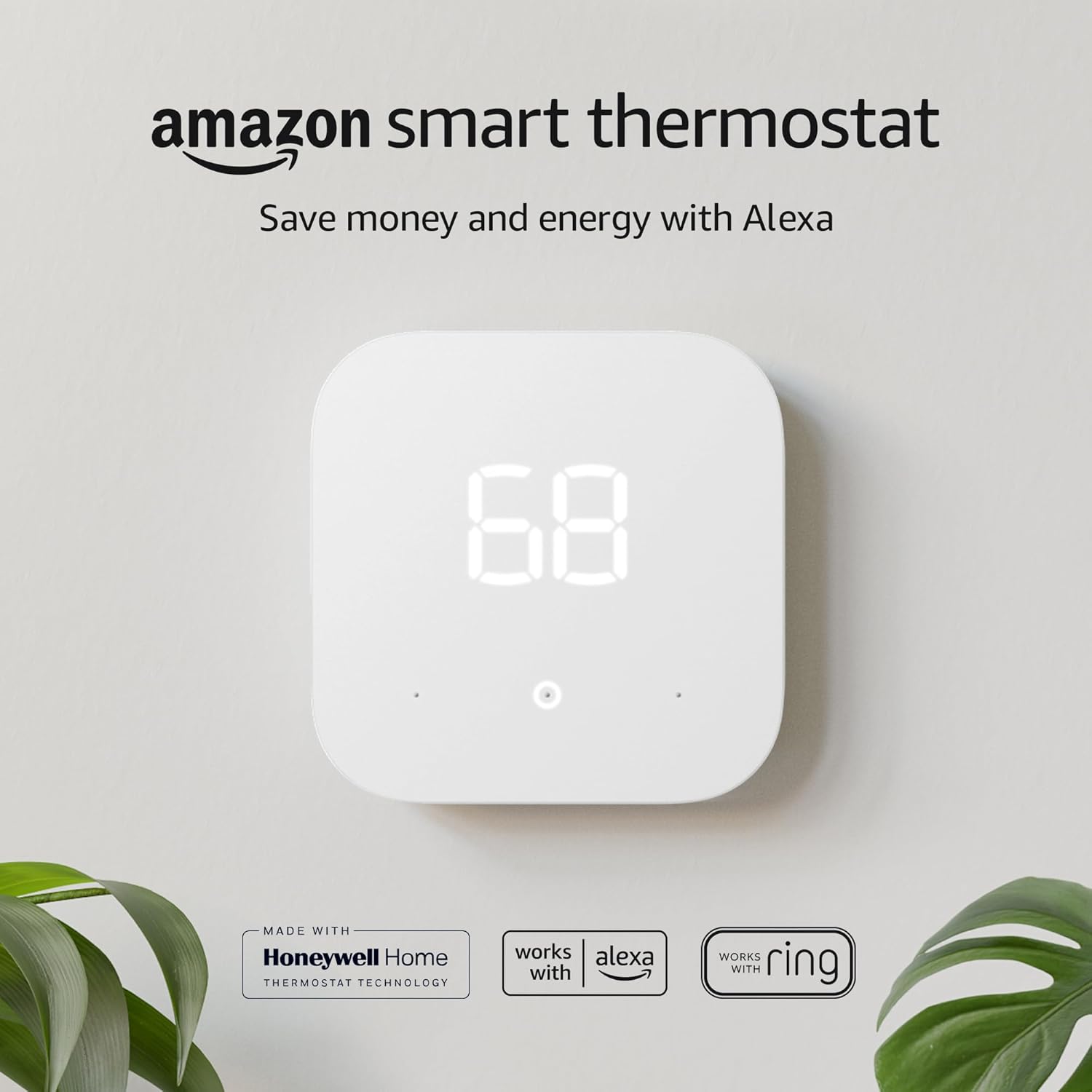
| Honeywell Home T9/T10 | Smart Room Sensor | Up to 20 | Yes — PIR | Yes — temp + occupancy + humidity | Both — with humidity-based prioritization |
Ecobee is the clear leader for multi-sensor deployments and for users who want Follow Me occupancy-based logic. Its support for up to 32 sensors makes it the right choice for large homes where comprehensive room-by-room monitoring is a priority. The SmartSensor ships with the thermostat in many bundles, making the initial investment easier to justify. For more on how sensors interact with Ecobee’s scheduling logic vs. Nest’s learning approach, see the discussion on Ecobee SmartSensors vs Nest comfort control.
Nest’s Temperature Sensors are simpler — temperature-only, no occupancy — but integrate cleanly with the Google Home ecosystem and Nest’s learning algorithm. The practical limit of 6 sensors is sufficient for most single-family homes. The lack of occupancy detection is a meaningful limitation for Follow Me functionality but simplifies configuration for users who don’t need that level of behavioral automation.
Honeywell Home’s T9 and T10 Pro with Smart Room Sensors offer the most comprehensive per-room data of any major platform, including humidity sensing. For homes with known humidity problems in specific rooms — basements, bathrooms, laundry areas — Honeywell’s inclusion of humidity data in the remote sensor reading provides actionable information that Ecobee and Nest sensors cannot supply. The ability to factor humidity into the AI learning vs. schedule logic is a differentiating capability worth considering if whole-home air quality is a priority alongside temperature comfort. For deeper context on how smart thermostat logic types compare, see our guide on AI learning vs. schedule efficiency.
Remote Sensors vs. Zoned HVAC Systems: Understanding the Difference
Remote sensors are frequently and incorrectly discussed as an alternative to zoned HVAC — but they are fundamentally different solutions that address different problems at different cost levels.
A zoned HVAC system uses motorized dampers inside the ductwork to physically direct conditioned air to specific zones of the home independently. Each zone has its own thermostat or temperature sensor and its own damper control. When one zone reaches setpoint, the damper for that zone closes while other zones continue receiving airflow. True zoning requires physical modifications to the duct system, a zone control board, and multiple thermostat or sensor endpoints. Installation cost typically ranges from $1,500–$4,000 for a professional retrofit.
A remote sensor system does not physically redirect airflow — it provides better data to a single-zone system so that the system runs longer or shorter cycles based on conditions in monitored rooms. It cannot independently heat or cool one room without affecting others. What it can do is ensure the HVAC runs until the priority room (your bedroom, your living room) actually reaches setpoint, rather than shutting off when the hallway does.
For homes with severe room-to-room temperature imbalances — particularly multi-story homes where upstairs rooms are consistently 8–10°F warmer than downstairs in summer — true zoning delivers results that remote sensors cannot. For homes where the imbalance is moderate (3–6°F) and stems primarily from thermostat placement rather than fundamental airflow distribution problems, remote sensors deliver most of the comfort improvement at a fraction of the cost.
Troubleshooting Remote Sensor Connection Issues
Most remote sensor problems fall into a small number of categories. Working through these systematically resolves the vast majority of issues without professional assistance.
- Sensor not appearing in the app after pairing attempt: Bring the sensor within 5 feet of the thermostat and retry pairing. Confirm the battery is new and correctly installed (watch for polarity). Remove the battery, wait 10 seconds, reinsert, and attempt pairing again
- Sensor paired but showing offline / not reporting: The sensor has lost its wireless connection. This is usually a range issue — the sensor is too far from the thermostat or there are too many signal-attenuating obstacles in the path. Move the sensor to an intermediate wall location to test whether distance is the problem
- Sensor showing a temperature that seems wrong: Verify placement — check for direct sunlight, proximity to vents, heat-generating equipment nearby. If placement appears correct, compare the sensor’s reading to a trusted reference thermometer placed next to it for 20 minutes. If the discrepancy is consistent and significant, the sensor may have a calibration issue
- Occupancy detection not working or triggering falsely: Ensure the PIR sensor window is unobstructed and clean. Check that occupancy detection is enabled for that sensor in the app. False triggers are commonly caused by pets, direct sunlight movement across the sensor’s field of view, or HVAC airflow that creates warm air movement the sensor interprets as body heat
- Sensor repeatedly drops connection: Check battery level — low batteries cause intermittent connectivity before failure. If batteries are fresh, there may be wireless interference from other 2.4 GHz devices (Wi-Fi routers, microwave ovens, baby monitors). Changing the thermostat’s wireless channel in settings, if supported, can help
- Thermostat not reaching setpoint despite sensor data: Confirm the sensor is configured to participate in control logic (not just monitoring) in the app. If the issue persists, rule out a broader HVAC system performance problem using a faulty thermostat checklist
Cost and Value Analysis
Remote sensors represent one of the highest-value-per-dollar upgrades available for an existing smart thermostat. Individual sensors from the major brands typically range from $25–$45 each at retail. Multi-packs (2–4 sensors) are usually available at a modest discount and represent the best value for multi-room deployments.
The value case for remote sensors is strongest in two specific scenarios: homes where the thermostat is in a known poor location (near the kitchen, on an exterior wall, in a sun-exposed hallway) and multi-story homes where the floor-to-floor temperature differential is causing the HVAC to serve one floor well while the other remains uncomfortable. In both cases, a single sensor costing $30–$40 can resolve a comfort problem that would otherwise require either moving the thermostat (labor cost plus wiring work) or accepting chronic discomfort in specific rooms.
For homes where the primary thermostat location is already reasonable and room-to-room temperature differentials are modest, the value is lower — primarily the incremental efficiency improvement from occupancy-based Follow Me logic and better Auto-Away accuracy. Still, the payback period for a $35 sensor that reduces unnecessary HVAC runtime by even 5% in an average home is measured in months, not years.
Frequently Asked Questions
Can I use a remote sensor without a smart thermostat?
Generally no. Basic programmable thermostats lack the wireless radio, processing capability, and software logic required to receive and act on data from a wireless remote sensor. You need a smart thermostat specifically designed with remote sensor support — such as the Ecobee SmartThermostat, Nest Learning Thermostat, or Honeywell Home T9/T10 Pro. If you are considering adding remote sensors to your setup, thermostat compatibility should be confirmed before purchasing sensors.
Do remote sensors improve HVAC efficiency?
Yes, in two distinct ways. First, occupancy detection through Follow Me mode and Auto-Away prevents the system from heating or cooling unoccupied rooms and triggers energy-saving setpoints when the home is empty — addressing one of the most common sources of unnecessary HVAC energy use. Second, sensors in priority rooms prevent the HVAC from shutting off prematurely when the hallway thermostat reaches setpoint while priority rooms remain outside the comfort range, reducing the number of rebound cycles the system runs to recover those rooms.
Where should I place a remote sensor for the best results?
Mount the sensor on an interior wall at approximately 4.5–6 feet from the floor — breathing zone height — in the room you most want to control. Keep it away from supply and return air registers, exterior walls, windows, direct sunlight, and heat-generating appliances. The goal is to measure the ambient air temperature of the living zone in that room, undistorted by any localized heat sources or air movement. For occupancy detection accuracy, place it on a wall where it has a clear view across the room rather than in a corner with a narrow field of view.
How many remote sensors do I need?
For most homes, 1–3 sensors covers the primary use cases well. A single sensor is valuable if the thermostat location is poor and there is one priority room (a main living area or master bedroom) that isn’t being accurately served. Two sensors work well for addressing the day/night split: one in the main living area for daytime priority and one in the master bedroom for nighttime priority. Three or more sensors are appropriate for multi-story homes, large square footage, or homes with multiple known problem rooms. Most households see diminishing returns beyond 4 sensors for a single HVAC zone.
How long do remote sensor batteries last?
Most wireless remote sensors last 18 months to 3 years on a set of batteries under typical use. Ecobee SmartSensors typically last 18–24 months; Nest Temperature Sensors are rated for approximately 2 years. Sensors in cold spaces (unconditioned basements, garages) will drain faster — use lithium batteries in these locations for significantly better cold-weather performance. The companion app will alert you when battery level is low, well before the sensor goes offline.
Will a remote sensor work if my thermostat is in a bad location?
Yes — this is exactly the scenario remote sensors are designed to address. If your thermostat is near the kitchen, in a sun-exposed hallway, or on an exterior wall, a remote sensor placed in the room you actually want to control can override the thermostat location’s influence on HVAC decisions. In Priority or Follow Me mode, the thermostat will base its heating and cooling decisions primarily on the sensor’s reading rather than its own. This is often faster and less expensive than relocating the thermostat and running new wire.
What is the difference between remote sensors and a zoned HVAC system?
Remote sensors improve HVAC control decisions by providing better data — they tell the system what the temperature is in specific rooms. Zoned HVAC systems improve airflow distribution by physically directing conditioned air to specific rooms via motorized dampers. Sensors cannot independently heat or cool one room without affecting others; zoning can. For moderate temperature imbalances (3–6°F between rooms), remote sensors deliver meaningful improvement at low cost. For severe imbalances (8–10°F or more) caused by airflow distribution problems, true zoning is the more effective long-term solution.




 Home
Home
 Info
Info
 Compare
 Reviews
 Shop
Shop