Automation at Its Peak
Stop heating an empty house. Start coming home to perfect comfort — automatically.
What Is a Thermostat “Home/Away” Feature? Meaning, Benefits & How It Works
A smart thermostat’s greatest strength is its ability to know when you are gone. The “Home/Away” feature — also called “Eco” mode, “Home/Away Assist,” or “Occupancy Mode” depending on the brand — allows your HVAC system to stop heating or cooling an empty house automatically, then begin restoring comfort before you arrive home. For households with variable schedules, this single feature consistently delivers more energy savings than any other smart thermostat capability, often without any user action beyond the initial setup.
This guide covers everything you need to understand and get the most from the Home/Away feature: how it works technically, the difference between the various terms brands use for it, how to configure it correctly for single and multi-person households, what temperature setpoints actually save meaningful energy, and how to troubleshoot the common failure modes that prevent it from working as expected.
What the Home/Away Feature Does
At its core, Home/Away mode changes your thermostat’s behavior based on occupancy rather than time. Instead of sticking to a rigid clock-based schedule that heats or cools the house on a fixed timetable regardless of whether anyone is present, the thermostat actively checks whether the home is occupied before deciding to run the furnace or air conditioner.
When the thermostat detects that the home is empty — through your phone’s GPS location, built-in motion sensors, or a combination of both — it enters “Away” mode, allowing the indoor temperature to drift toward a wider, less energy-intensive comfort band. When you return (or when detection signals indicate someone is heading home), the system switches back to “Home” mode and resumes normal comfort setpoints. This is the cornerstone of what separates a smart learning thermostat from a standard programmable schedule — the ability to respond to real-world occupancy rather than theoretical plans.
Home Mode vs. Away Mode vs. Eco Mode: What’s the Difference?
These three terms are used — sometimes interchangeably, sometimes incorrectly — across different brands and articles. Understanding the precise distinction between them matters for configuring your system correctly.
🏠 Home Mode
The active occupancy state. The thermostat maintains your normal comfort setpoints — the temperatures you have programmed for daily living. Heating and cooling cycle as needed to keep the home within your target range.
🚗 Away Mode
The unoccupied state. The thermostat relaxes the temperature targets to a wider, less energy-intensive band — warmer in summer, cooler in winter — reducing HVAC runtime while the home is empty. The specific Away temperatures are user-configurable.
🌿 Eco / Eco+ Mode
A brand-specific term (primarily Ecobee and Nest) for the energy-saving state entered during Away periods. Eco mode defines the specific temperature targets used when unoccupied. It is functionally Away mode, but the name emphasizes the energy efficiency goal rather than the occupancy trigger.
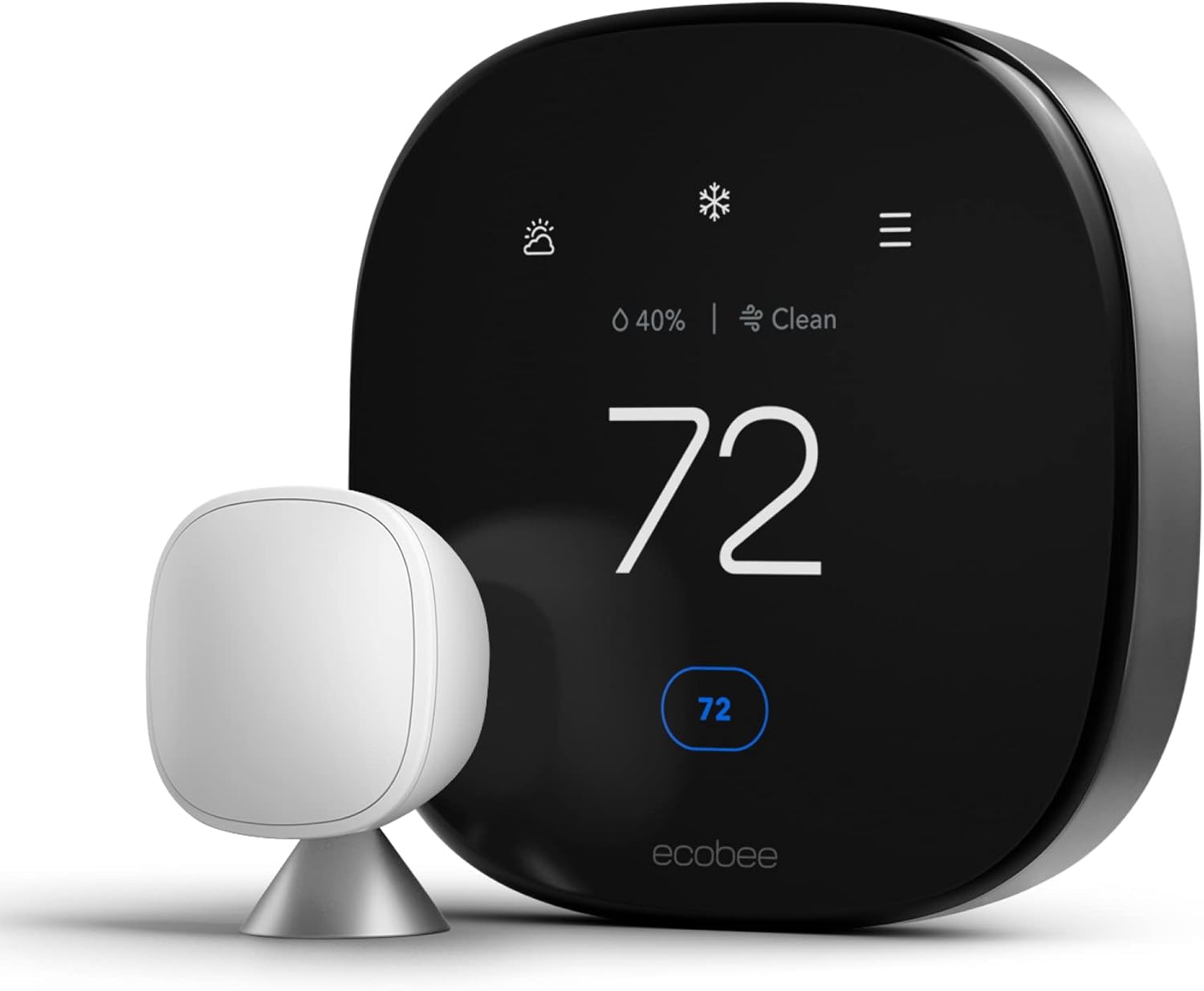
On Nest, the feature that manages the transition between Home and Away is called Home/Away Assist — it is the logic engine that determines which mode to be in based on sensor data and phone location. The temperature targets used during Away periods are called Eco temperatures. On Ecobee, the equivalent automation engine is called Eco+, and it operates on similar principles with additional machine learning components. Understanding that the “mode” and the “temperature target” are configured separately is key to setting up the feature correctly.
How Home/Away Works in Smart Thermostats
Smart thermostats use two primary — and fundamentally different — methods to determine occupancy: your smartphone’s location data and physical sensors inside the home. Most modern implementations use both methods together, treating them as complementary signals that reinforce each other’s accuracy.
Geofencing: Using Smartphone Location to Detect Departure and Arrival
Geofencing is the technology that creates a virtual geographic boundary — a “fence” — around your home’s location using your smartphone’s GPS and location services. When the thermostat’s companion app detects that your phone has crossed outside this boundary (you have left the geofenced area), it sends a signal to the thermostat triggering a shift to Away mode. When your phone re-enters the boundary on the return trip, it signals the thermostat to begin restoring comfort setpoints — ideally before you physically walk through the door.
The proactive nature of geofencing is its defining advantage: because the system knows you are approaching before you arrive, it can begin pre-conditioning the home while you are still in transit. You can learn more about how this impacts overall system runtime and efficiency in our guide to geofencing and HVAC runtime.
Geofencing vs. PIR Motion Sensors: A Direct Comparison
📱 Geofencing
- Proactive — starts pre-conditioning before you arrive home
- Works regardless of in-home activity level
- Accurate for primary occupants who carry smartphones
- Configurable radius (0.5–5 miles typically)
- Requires smartphone, app, and background location permissions
- Misses occupants who don’t have the app installed
- Slight battery drain on the phone (~1–3% per day)
👁 PIR Motion Sensors
- Reactive — responds to presence already inside the home
- Works for all occupants regardless of phone ownership
- Detects guests, children, and elderly family members
- Triggered by pets — can cause false “occupied” readings
- Cannot detect sleeping occupants reliably
- No smartphone or app required
- Range limited to sensor field of view in one room
The hybrid approach — geofencing for departure and arrival detection combined with PIR sensors for in-home presence confirmation — delivers the most reliable occupancy determination. Geofencing handles the transitions at the home boundary; PIR sensors provide a safety net for occupants whose phones aren’t enrolled, and they prevent the system from switching to Away mode if someone is home and stationary (working at a desk, reading, watching TV) but not triggering frequent motion.
Setting the Right Geofencing Radius
The geofencing radius is one of the most impactful and least-discussed configuration settings for Home/Away performance. Set it too small and the thermostat doesn’t have enough lead time to pre-condition the home before you arrive. Set it too large and the system triggers Away mode while you are still in the neighborhood running errands, wasting an HVAC cycle to cool down and then immediately warming back up.
Most smart thermostat apps set the geofence radius at 1–2 miles by default, which works well for typical suburban driving commutes. If you consistently arrive home to a house that isn’t at the right temperature yet, increasing the radius is the first adjustment to make. If the Away mode triggers when you are still nearby (at a neighbor’s house, at a local grocery store), decreasing the radius or enabling a “confirm departure” delay before Away mode activates will prevent these false transitions.
Pre-Conditioning: Arriving Home to Comfort, Not a Stuffy House
Pre-conditioning is the process by which a geofencing-enabled thermostat begins restoring normal comfort setpoints before you physically arrive at the door. When your phone crosses the inbound geofence boundary, the thermostat immediately switches from Eco/Away temperatures back to Home temperatures and starts the HVAC running to close the gap.
The effectiveness of pre-conditioning depends on three factors working together: the size of the gap between your Away setpoints and your Home setpoints (a larger gap takes longer to recover), the capacity and efficiency of your HVAC system, and the radius of your geofence (which determines how much lead time the system gets). In a well-configured setup, you walk through the door to a home that already feels comfortable — not one that’s still 4°F away from your setpoint and needs another 20 minutes to catch up.
For pre-conditioning to work reliably, the geofence radius must be generous enough to give the system adequate lead time. A useful test: after initial setup, come home from a typical errand trip and note whether the home is at setpoint when you arrive. If it isn’t, increase the radius in 0.5-mile increments until pre-conditioning completes comfortably ahead of your arrival.
What Temperature Should You Set for Away Mode?
Away temperature settings are where many users leave significant energy savings on the table. The instinct to set Away temperatures only a few degrees off from Home temperatures — out of concern that extreme setbacks will strain the HVAC system or take too long to recover — is understandable but not supported by how modern equipment actually works.
A common concern is that running the HVAC system hard to recover from a wide setback is less efficient than maintaining a tighter band. In practice, the energy used during a recovery cycle is almost always less than the energy that would have been consumed maintaining Home temperatures during the absence. The exception is very short absences of under 30 minutes — for departures shorter than roughly half the system’s recovery time, the setback provides little benefit and frequent deep cycling can increase wear. Most smart thermostats address this by adding a minimum absence duration before triggering Away mode (typically 30–60 minutes of no detected occupancy).
Multi-Person Household Configuration
Multi-person households are where Home/Away configuration gets meaningfully more complex — and where misconfiguration most commonly causes frustration. The core problem: if five people live in a house and only one person’s phone is enrolled in the geofencing, the system may switch to Away mode while four other people are still home.
The “Last to Leave” Logic
Correctly configured, a multi-person Home/Away system should operate on “last to leave, first to return” logic: Away mode should only activate when all enrolled household members have left the geofenced area, and Home mode should restore as soon as the first enrolled member begins returning. Both Nest and Ecobee support this multi-user geofencing natively when all household members are enrolled in the same home’s thermostat account.
To set this up: in the Nest app, each household member creates their own Google account and is added to the home’s “Nest family.” Each member installs the Nest app with location permissions enabled. The thermostat will then track all enrolled members’ locations simultaneously, only triggering Away mode when all of them have crossed outside the geofence. On Ecobee, household members are added via email invitation through the Ecobee app, and each member’s phone participates in the geofencing pool independently.
What to Do When Household Members Won’t Enroll
Not every household member will want to — or be able to — install an app and share their location. Elderly family members, children without smartphones, guests, and privacy-conscious partners are common examples. In these situations, relying on geofencing alone creates a real risk of Away mode activating with someone still home.
The practical solution is to use PIR motion sensors as the occupancy safety net. Configure the system so that Away mode can only activate if both geofencing AND motion sensors agree the home is empty. On Ecobee with SmartSensors in multiple rooms, this means the system will not switch to Eco mode if any sensor detects occupancy, regardless of what geofencing says — providing a reliable backstop for non-enrolled occupants. See our guide on remote sensors for comfort and occupancy for how to configure this effectively.
Pets and Home/Away False Triggers
Pets are the most common source of Home/Away false positives — situations where the thermostat believes the home is occupied and stays in Home mode because a dog, cat, or bird is triggering the PIR motion sensor, even though no human occupants are present.
This is a genuine tradeoff, not a bug. PIR sensors detect infrared radiation from any warm moving body — they cannot distinguish a 150-pound human from a 15-pound cat. If your pet is large enough, moves frequently enough, and passes through the PIR sensor’s field of view regularly, the sensor will continuously flag the home as occupied and Away mode will never activate.
The most effective solutions depend on your home setup. If your thermostat supports geofencing, configuring Away mode to be triggered primarily by geofencing (all enrolled phones outside the boundary) rather than sensor-only logic eliminates the pet false-positive problem entirely for homes where all adults are enrolled. PIR sensors then serve as a backup to catch any enrolled occupant who remains home, rather than as the primary trigger.
If geofencing is not available or practical, some thermostats allow the sensitivity threshold of PIR sensors to be reduced in settings, which can prevent smaller pets from triggering occupancy detection while still detecting humans. Placing remote sensors at heights above typical pet movement zones (5–6 feet rather than 4 feet) can also reduce false triggers from floor-level pet activity, since small pets rarely enter a sensor’s detection zone at human head height.
Step-by-Step: Setting Up Home/Away on Your Smart Thermostat
Open your thermostat’s companion app (Nest, Ecobee, Honeywell Home, etc.) on your smartphone. Navigate to Settings and ensure “Location” or “Location Services” is set to “Always Allow” — not “While Using App.” The “Always Allow” setting is required for geofencing to work in the background when the app is not actively open. On iOS: Settings > [App Name] > Location > Always. On Android: Settings > Apps > [App Name] > Permissions > Location > Allow All the Time.
On Nest: Open the app, select your thermostat, tap Settings > Home/Away Assist. Toggle “Use Phone Location” on and confirm your home address is correct. On Ecobee: In the app, go to Main Menu > Eco+ and enable the feature. Select which signals Eco+ should use — phone location, occupancy sensors, or both. Enable “Smart Home & Away” as the minimum configuration.
On Nest: Tap the thermostat display, then tap the settings gear, then Eco Temperatures. Set your heating Eco temperature (recommended 60–63°F) and cooling Eco temperature (recommended 78–82°F). On Ecobee: Navigate to Main Menu > Comfort Settings > Away. Set the heat and cool setpoints for the Away comfort profile. These are the temperatures the home will be allowed to drift toward when unoccupied.
In the app’s Home/Away or geofencing settings, locate the radius or distance control. Start with the default (usually 1–2 miles) and test it against your typical commute. If the house isn’t pre-conditioned by the time you arrive, increase the radius. If Away mode triggers while you are still nearby, decrease it or enable a departure delay (a wait period of 20–30 minutes of detected absence before Away mode activates).
Invite all adult household members to the thermostat account so their location contributes to the Away/Home logic. On Nest, add members via the Google Home app under Home Settings > Household. On Ecobee, send invitations from Main Menu > My Account > Access. Each member installs the app and grants location permissions. Verify in the app that all members appear in the household list with location sharing active.
Take a short drive away from home (at least 0.5 miles past your geofence boundary) and confirm the app shows the thermostat switching to Away/Eco mode. Drive back and verify it transitions back to Home mode and begins pre-conditioning before you arrive. Check that the indoor temperature is at setpoint (or nearly so) when you return. If it is still several degrees off, your geofence radius needs to be larger or your Away setpoints need to be less aggressive.
Nest Home/Away Assist vs. Ecobee Eco+: How Each Brand Handles It
While both Nest and Ecobee offer Home/Away automation, their implementations reflect meaningfully different philosophies that affect how well the feature works in different household situations.
| Feature | Nest — Home/Away Assist | Ecobee — Eco+ |
|---|---|---|
| Primary Detection Method | Phone geofencing + built-in PIR sensor | Phone geofencing + SmartSensor network (multiple rooms) |
| Occupancy Sensors | Single built-in sensor at thermostat location | Multiple SmartSensors deployable in key rooms |
| Multi-Person Support | Via Google Home family members | Via Ecobee app account invitations |
| AI / Learning Component | Learns typical departure/arrival patterns and preemptively adjusts | Analyzes weather, occupancy history, and utility rates to optimize Eco timing |
| Eco Temperature Control | Single heating/cooling Eco target pair | Separate Away comfort profile with independent heat/cool setpoints |
| Utility Rate Integration | Rush Hour Rewards (demand response program enrollment) | Eco+ can shift pre-conditioning timing to avoid peak rate periods |
Nest’s Home/Away Assist is more tightly integrated with the Learning Thermostat’s AI — over time it learns your typical departure and return patterns and can begin pre-conditioning proactively even before geofencing triggers, anticipating your schedule. This makes it particularly effective for users with consistent routines where the learned pattern reinforces geofencing data.
Ecobee’s Eco+ adds a layer of utility rate awareness that Nest lacks as a standard feature: the system can delay or advance pre-conditioning start times by a few minutes to avoid peak electricity pricing windows, providing passive cost savings without any user configuration beyond enrolling in the feature. For homes in areas with time-of-use electricity rates, this can meaningfully reduce the cost of each HVAC cycle without compromising arrival comfort.
Smart Home Integrations: Using Home/Away with Voice Assistants and Automations
Both major platforms extend Home/Away functionality through smart home ecosystem integrations, which can significantly improve the feature’s reliability and add automation capabilities that the thermostat app alone doesn’t provide.
Google Home integrates natively with Nest thermostats and allows presence-aware automations using any Google Home device’s presence detection, not just the Nest app. You can create automations like “when the last household member leaves, set thermostat to Eco” that fire based on Google’s own location tracking rather than only the Nest app’s geofence.
Amazon Alexa supports voice-triggered mode changes (“Alexa, set the thermostat to Away”) for both Nest and Ecobee, and supports Routines that tie thermostat mode to other smart home actions — such as switching to Away mode when a connected door lock is engaged from outside, providing an additional non-phone-based departure signal.
Apple HomeKit supports Ecobee and some Honeywell models natively and allows geofencing automation through the Home app using iPhone location — useful as a redundant Away trigger independent of the thermostat’s own app, and valuable for households where some members prefer not to install an additional third-party app.
IFTTT and Home Assistant provide the most flexible custom automation options for technical users who want to combine Home/Away triggers with other signals — door sensors, garage door openers, alarm system arm/disarm events, or presence detection from non-standard devices — into a more comprehensive and reliable occupancy determination system.
Vacation Mode and Extended Away
The standard Away mode is designed for daily absences of hours, not days. For vacations, extended travel, or any absence longer than 24 hours, most smart thermostats offer a dedicated Vacation or Extended Away mode that differs from standard Away in important ways.
Standard Away mode keeps the system ready to restore comfort quickly — it checks for occupancy regularly and pre-conditions aggressively when a return is detected. This readiness has a small energy cost: the system cycles periodically to maintain the Eco setpoints even when no one will be home for days. Vacation mode, by contrast, sets a wider comfort band, reduces the frequency of status checks, and disables geofencing-based pre-conditioning (since there is no “returning home” event to prepare for until you manually cancel the vacation hold).
- On Nest: Set a Vacation hold via the app by navigating to Schedule > Add event > Vacation. Enter the start and end dates and configure Eco temperatures for the duration
- On Ecobee: Navigate to Main Menu > Schedule > Vacation and enter departure and return dates. The thermostat will maintain Away comfort profile temperatures for the full duration and automatically resume normal scheduling on return
- Set winter vacation heating to 58–60°F to protect against pipe freezing in cold climates — this is the primary minimum temperature constraint, not comfort
- Set summer vacation cooling to 85–88°F (or off entirely in mild climates) to prevent excessive humidity buildup and protect heat-sensitive items like musical instruments, electronics, and artwork
- Cancel the vacation hold immediately upon early return — the system will not detect your presence via geofencing while in vacation mode and will not pre-condition automatically unless you manually end the hold
How to Manually Override Home/Away Mode
Automation is valuable precisely because it works without requiring manual input — but there are situations where you need to override the automatic detection: you are working from home on an atypical day, a guest is staying while you are away, the system has incorrectly entered Away mode, or you simply want to temporarily hold a specific mode regardless of detection signals.
On Nest, press the thermostat ring to bring up the main menu, select your current mode (Home or Away), and switch it manually. The system will respect your manual selection for a configured period (typically until the next scheduled occupancy event or until you manually cancel the hold) before resuming automatic detection. In the app, tap the Home/Away icon on the home screen for the same control.
On Ecobee, tap the menu icon on the thermostat display and select a comfort profile (Home, Away, Sleep) to engage a manual hold. By default, Ecobee will hold the manual selection “Until next scheduled activity” — meaning the next programmed comfort period change. You can change the hold duration to “Until I change it” for a permanent hold or set a specific end time for a timed override.
Manual overrides are the correct tool for guests staying in your home while you are away. Engage a permanent Home hold before you leave, and cancel it remotely via the app when your guest departs — preventing the system from switching to Away mode simply because your phone has left the geofence with the home still occupied.
Privacy Considerations for Home/Away Features
Home/Away features that use geofencing require your smartphone to continuously share its location with the thermostat manufacturer’s servers. This is not a trivial data permission — it means the thermostat company has a continuous record of when you leave and return home, how long you are typically away, your commute patterns, and by inference, aspects of your daily schedule and lifestyle.
For Nest (Google), this location data is collected under Google’s privacy policy and may be associated with your broader Google account and its data ecosystem. For Ecobee, location data is processed by Ecobee’s servers in Canada under Canadian privacy law. Both companies publish privacy policies detailing retention and data use practices.
For users where location data sharing is a concern, a fully viable alternative is to use PIR sensor-only occupancy detection (disabling geofencing) in combination with a well-programmed schedule. This approach sacrifices the proactive pre-conditioning capability but delivers solid Away mode functionality without any location data leaving the device. For homes with consistent schedules, a schedule-first approach with sensor-based Auto-Away as a supplemental layer captures most of the energy savings benefit with no location data involvement. For a deeper comparison of the efficiency tradeoffs involved, see our guide on smart learning vs. schedule efficiency.
Key Benefits of the Home/Away Feature
- Energy Savings of 10–20%: Homes that use Home/Away automation effectively reduce heating and cooling runtime by eliminating all the cycles that would otherwise run while the house is empty on a fixed schedule. For a household spending $1,800 annually on HVAC energy, that represents $180–360 in potential savings — entirely from better occupancy detection, with no reduction in comfort while you’re actually home.
- Comfort Upon Arrival: Geofencing-based pre-conditioning means the home reaches target temperature before you walk in, rather than requiring 20–30 minutes of conditioning after arrival. This is the single biggest quality-of-life improvement for households switching from a standard programmable schedule.
- Zero Manual Adjustment Required: Unlike a schedule that requires manual overrides for exceptions, Home/Away adapts in real time to actual occupancy. Unexpected late nights, impromptu weekend trips, and work-from-home days are all handled automatically without any thermostat interaction.
- System Longevity: Reducing unnecessary HVAC cycles during empty-home periods directly reduces operating hours on the compressor, blower motor, heat exchanger, and other wear-prone components. Fewer cycles per year translates to a longer expected service life and reduced maintenance frequency.
- Pipe and Property Protection: Automatic Away mode with a configured minimum heat setpoint protects the home from pipe-freezing temperatures during absences that might otherwise see the system running unnecessarily between moderate setpoints.
When Home/Away Might Not Work Correctly
Despite the sophisticated technology behind it, Home/Away can fail in specific and predictable ways. Understanding the failure modes makes diagnosis and correction straightforward.
Thermostat Stays in Away Mode While You’re Home
If the thermostat remains in Away mode while you are sitting on the couch, the cause is almost always one of three things: geofencing failed to detect your return (location permission issue, GPS signal loss, or app not running in the background), your phone ran out of battery before you arrived home, or PIR sensors are blocked or insufficiently sensitive to detect your presence in your specific location. Check location permissions first — this is the most common cause. Then confirm the app is not being killed by your phone’s battery-saving settings (many aggressive battery management modes prevent background app activity that geofencing requires). If sensors are the issue, check for obstructions and ensure occupancy detection is enabled for the relevant sensors in the app.
Thermostat Stays in Home Mode While the House Is Empty
If Away mode never activates despite everyone being gone, the most common causes are pets triggering PIR sensors (preventing auto-away from activating via sensor logic), enrolled household members’ phones not sharing location (check each member’s app permissions individually), or the geofence radius being set too large (extending beyond where you actually travel, so your phone never crosses the outbound boundary). For households with pets, configuring Away to require geofencing confirmation rather than sensor-only logic resolves this reliably.
Geofencing Location and GPS Issues
If your phone’s Background App Refresh is turned off (iOS) or the app is in a restricted battery state (Android), the thermostat may never receive location update signals. In areas with poor GPS accuracy (dense urban cores, underground parking, rural areas with sparse cellular coverage), location detection can be delayed or missed entirely. Similarly, if multiple people live in the household, the system must be configured correctly to wait until the last enrolled person leaves before switching to Away — a single absent configuration can leave the system permanently in Home mode. These and other behavioral issues may also indicate a hardware or connectivity problem worth diagnosing with a faulty thermostat checklist.
Frequently Asked Questions
Can the thermostat switch to Away mode automatically?
Yes — this is the core function of Home/Away Assist (Nest) and Eco+ (Ecobee). With geofencing enabled, the thermostat shifts to Away/Eco mode automatically when your phone (and all enrolled household members’ phones) crosses outside the geofenced boundary. With PIR sensor-only detection (no geofencing), the thermostat activates Away mode after a configured period of undetected motion — usually 30–60 minutes — confirming the home is empty before making the switch.
Does Home/Away mode override my programmed schedule?
On most smart thermostats, yes — occupancy detection is treated as higher-priority logic than the clock-based schedule. If geofencing detects you have left during a period your schedule has programmed as “Home,” the thermostat will switch to Eco/Away temperatures regardless. The schedule resumes when occupancy detection signals your return. This hierarchy is intentional: real-world presence is more relevant than a scheduled guess about where you will be. You can disable this override behavior if you prefer strict schedule adherence — both Nest and Ecobee allow you to turn off Home/Away Assist independently of other smart features.
Is the Home/Away feature worth using?
For households with variable schedules, yes — it is consistently the single most effective energy-saving feature on a smart thermostat, because it eliminates all the HVAC runtime that would otherwise occur during unoccupied periods on a fixed schedule. For households with extremely consistent, predictable routines (same departure and return times every day), a well-programmed schedule can come close to matching Home/Away performance — but Home/Away still handles exceptions (sick days, early returns, vacation extensions) automatically in a way a static schedule cannot.
How do I turn Home/Away mode on or off?
On Nest: Open the Nest app, select your thermostat, tap the Settings gear, then Home/Away Assist. Toggle “Use Phone Location” and “Use Nest Sense” on or off as desired. On Ecobee: Open the Ecobee app, go to Main Menu > Eco+, and toggle the Smart Home & Away feature. You can also disable individual signals (phone location vs. occupancy sensors) independently, allowing you to keep one active while disabling the other.
What happens to Home/Away mode if my phone battery dies?
If your phone dies while you are away, the thermostat receives no return signal from geofencing and will remain in Away mode. PIR sensor detection serves as the fallback — when you arrive home and begin moving through the house, the thermostat’s built-in sensor (or SmartSensors if deployed) will detect your presence and shift back to Home mode, typically within a few minutes of detection. This is one of the reasons having PIR sensor detection enabled alongside geofencing is recommended — it provides a reliable fallback for exactly this scenario.
Will Home/Away mode work if my thermostat has no internet connection?
Partially. Geofencing requires internet connectivity — the phone’s location signal must be relayed through the cloud to the thermostat, which is not possible without an active connection. PIR motion sensors, however, operate locally within the thermostat itself and continue to function without internet. If your router goes down, the thermostat will lose geofencing-based detection but retain in-home motion-based detection. Many thermostats also retain their programmed schedule as a local fallback when internet connectivity is unavailable.
Can Home/Away mode work for renters?
Yes, with one important caveat. If the smart thermostat is owned by the landlord and registered to their account, you may not have access to configure Home/Away settings, enroll your phone in geofencing, or adjust Eco temperatures. Before setting up Home/Away features on a rented property, confirm with your landlord that the thermostat account has been transferred to you for the duration of your tenancy, or ask them to add your email as an account member with configuration access. Without account access, Home/Away automation is not configurable regardless of the thermostat’s capabilities.




 Home
Home
 Info
Info
 Compare
 Reviews
 Shop
Shop