Adaptive Learning AI
Transforming your habit patterns into climate perfection — without ever touching a schedule.
What Is Thermostat “Adaptive Learning”? Meaning, Benefits & How It Works
For decades, thermostats were rule-following boxes on the wall. Adaptive learning has fundamentally changed that relationship, turning the thermostat into a self-programming system that understands your home’s thermal characteristics, your household’s behavioral patterns, and the external conditions that affect both. The result is a device that optimizes itself continuously — not just in the first week, but throughout the device’s lifetime as your habits and your home evolve.
This guide goes beyond the surface explanation to cover exactly how adaptive learning AI works under the hood, what data it collects and uses, how it handles weather and thermal modeling, how the major brands differ in their implementation, and — critically — when it goes wrong and how to correct it.
What Adaptive Learning Means on a Thermostat
Adaptive learning is an artificial intelligence feature that analyzes behavioral and environmental data to create and continuously improve an optimized HVAC schedule. It moves beyond simple “if-this-then-that” programming rules to build a model of your home’s thermal properties, your household’s occupancy patterns, and your temperature preferences across different times of day, days of the week, and seasons.
The key word is “adaptive” — not just “learning.” A thermostat that learns once and then applies a fixed model is simply a sophisticated schedule builder. A truly adaptive system continues updating its model as conditions change: as your routine shifts with the seasons, as your household composition changes, as you work from home more frequently, or as the thermal properties of your home change with renovations or new insulation. The best implementations treat learning as an ongoing process, not a one-time calibration.
How Adaptive Learning Differs From a Manual Schedule
The difference between adaptive learning and a manual schedule is not just about who does the programming — it is about what information the schedule is based on and how it responds to the inevitable deviations from expectation that characterize real life.
A manual schedule is based on your intentions: what you plan to do, when you expect to be home, and what temperature you have decided you want at each time. It is perfectly rational for a perfectly predictable life. But real life is not perfectly predictable. If you get home early on a Thursday, a manual schedule heats an already-occupied house at the “Away” setpoint until the programmed “Home” time arrives. If your sleep schedule shifts by an hour in winter, you have to manually update the schedule. If a seasonal pattern shift means your wake time changes, the schedule stays fixed until you change it.
Adaptive learning is based on your behavior: what you actually do, when you actually come and go, and what temperature you actually want when you arrive. It doesn’t rely on your intentions being perfectly consistent — it observes the reality and adjusts. This is a core element of what separates smart learning from programmable schedule efficiency in practice.
How Adaptive Learning Works: The AI Process
The “learning” process is not magic — it is a structured, data-driven cycle of observation, modeling, prediction, and correction. Understanding these phases helps explain both why the system takes time to become accurate and how to interact with it most effectively during the learning period.
The Adaptive Learning Cycle
- Observation: The thermostat logs every manual temperature adjustment you make — the time, the direction (up or down), the magnitude (how many degrees), the day of the week, and the occupancy state at the time of the adjustment. Each adjustment is a labeled data point: “user was uncomfortable enough to intervene at this time under these conditions.”
- Contextualization: Each observation is cross-referenced against concurrent context data — outdoor temperature and weather conditions, time since last HVAC cycle, current indoor/outdoor differential, and whether the home was recently transitioned from Away to Home mode. This contextual layer transforms a raw observation into a meaningful signal.
- Pattern Recognition: After accumulating sufficient labeled observations (typically 7–14 days of regular use), the algorithm identifies recurring patterns — consistent wake times, predictable departure and return windows, preferred evening temperatures. Patterns that appear reliably across multiple identical days are encoded with higher confidence than patterns observed only once.
- Anticipation: The thermostat begins acting on predicted preferences — starting the pre-heat or pre-cool cycle early enough that the home has reached target temperature before the typical trigger time, rather than reacting to a manual adjustment after the fact.
- Continuous Correction: Manual overrides to the system’s automatic decisions are treated as new training data. If the system pre-heats to 70°F and you immediately turn it up to 72°F three mornings in a row, the model updates: the actual preferred morning temperature is 72°F, not 70°F. This feedback loop is how the system continuously refines its model beyond the initial training period.
What Data Adaptive Learning Uses
The quality of adaptive learning outputs depends entirely on the quality and variety of inputs. Modern smart thermostats draw from a surprisingly wide range of data signals to build their behavioral models — far more than just manual dial adjustments.
Every time you change the setpoint manually, it is recorded as a preference signal with full timestamp and context.
Arrival and departure times from smartphone GPS provide precise occupancy transition timestamps for learning departure and return patterns.
Motion detection inside the home confirms occupancy status at a room level, distinguishing between present-but-still vs. genuinely absent.
Current temperature, humidity, and weather forecast data from the internet allow the algorithm to contextualize indoor conditions against outdoor factors.
Continuous temperature readings from the built-in sensor and any remote room sensors provide the ground truth the model is trying to predict and control.
Records of how long each heating and cooling cycle ran, and how effective each cycle was at changing indoor temperature, inform the system’s understanding of HVAC capacity.
Home Thermal Modeling: How the AI “Fingerprints” Your House
One of the most sophisticated — and least discussed — aspects of adaptive learning is thermal mass modeling: the process by which the algorithm builds a quantitative model of how quickly your specific home gains and loses heat under specific conditions.
Every home has a unique thermal signature determined by its construction, insulation quality, window area and orientation, ceiling height, and HVAC system capacity. A well-insulated modern home might cool by only 2°F per hour on a mild winter day with the heat off. A poorly insulated older home with single-pane windows might lose 5°F per hour under the same conditions. The adaptive learning algorithm measures this rate of temperature change during periods when the HVAC system is not running and correlates it with concurrent outdoor temperature readings to build a home-specific thermal decay model.
This model serves two critical functions. First, it enables accurate adaptive recovery — knowing how long before a desired occupied time the HVAC system needs to start running to have the home at setpoint on arrival. Second, it enables predictive efficiency decisions — calculating whether it is more efficient to maintain a temperature through continuous small cycles or to allow greater setback and run one larger recovery cycle, based on the actual cost of recovery given the home’s measured thermal properties.
The thermal model also updates over time as seasonal conditions change. A home’s rate of heat loss in December is significantly different from its rate in March, and the algorithm adjusts its predictions accordingly rather than applying a fixed model year-round.
Weather Forecast Integration
Advanced adaptive learning implementations do not just react to current conditions — they anticipate future conditions using weather forecast data retrieved from the internet. This forecast integration adds a forward-looking dimension that significantly improves both comfort and efficiency outcomes.
The most common application is pre-cooling before a heatwave. If the forecast shows the outdoor temperature will peak at 98°F at 3:00 PM, the algorithm may begin cooling the home to slightly below the target temperature in the late morning — using the cheaper, easier cooling available when it is still 78°F outside, so the system has less work to do against the thermal load at peak outdoor temperature. This strategy, sometimes called “pre-conditioning to forecast,” reduces peak demand on the HVAC system and can meaningfully reduce energy costs in regions with time-of-use electricity pricing.
Similarly, on a mild spring day when the outdoor temperature is expected to reach 68°F by afternoon, an adaptive learning system may reduce heating cycles in the morning in anticipation of free passive solar gain — avoiding unnecessary heating that will be immediately overridden by solar warmth through windows a few hours later. This kind of weather-intelligent anticipation is tracked alongside the geofencing and geofencing and runtime data the system uses for occupancy decisions.
Adaptive Recovery: Starting at the Right Time, Not Just the Right Temperature
Adaptive recovery — sometimes called “Smart Recovery” (Ecobee’s branded term) or “Early On” — is the specific application of the thermal model that pre-starts heating or cooling cycles to reach a target setpoint precisely at the programmed time, rather than starting exactly at the programmed time and reaching the setpoint later.
On a standard programmable thermostat, if your “Wake” period starts at 7:00 AM and the heat setpoint is 70°F, the thermostat turns the heat on at 7:00 AM. If the home is at 62°F and needs 25 minutes to warm up, you are comfortable at 7:25 AM — not 7:00 AM. Adaptive recovery addresses this by calculating how long before 7:00 AM the heat needs to start to deliver 70°F precisely at 7:00 AM, based on the home’s measured thermal properties and the current outdoor temperature. Over time, the model becomes increasingly accurate for your specific home — tightening the recovery window to the point where the system starts at exactly the right time for the conditions.
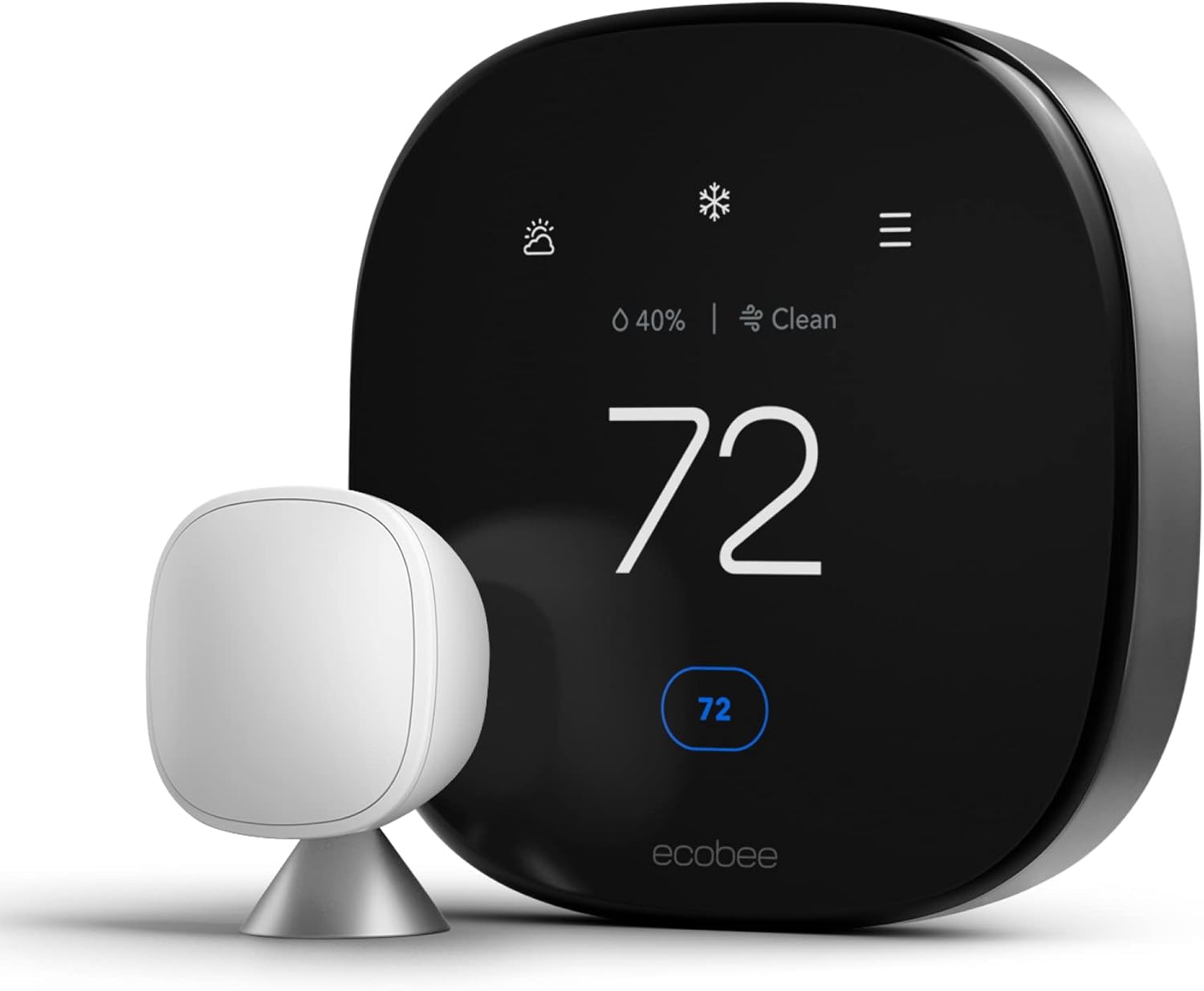
Ecobee’s SmartRecovery uses the home’s measured thermal data and outdoor conditions to dynamically calculate this lead time. Nest’s equivalent is incorporated into the broader learning model. The practical user experience is the same: you arrive at a comfortable temperature at the right time, rather than waiting for the system to catch up after the clock says it should already be there.
Seasonal Adaptation: How the AI Adjusts Across the Calendar
One of adaptive learning’s most underappreciated capabilities is its ability to recalibrate its model as seasons change — a capability that manual schedules require conscious effort to replicate.
Seasonal adaptation manifests in several ways. Wake and sleep times naturally shift with changing daylight — many households wake earlier in summer and later in winter, and the adaptive model tracks these gradual shifts in manual adjustment timing without requiring a schedule update. The thermal model recalibrates as outdoor temperature baselines shift, ensuring that recovery time calculations remain accurate in December as they were in September. Preferred setpoints often shift slightly between seasons — many households prefer 68°F in winter and 72°F in summer even for the same “Home” period — and the learning algorithm encodes these seasonal setpoint preferences as distinct profiles.
The algorithm typically maintains a rolling window of recent behavioral data weighted more heavily than older data, allowing gradual behavioral shifts to update the model without erasing years of learned patterns. This rolling window approach means the system doesn’t need to be told “it’s now fall — update the schedule” — it detects the shift in behavior organically as your habits change with the season and adjusts accordingly.
Time-of-Use Rate Optimization and Demand Response
Advanced adaptive learning implementations extend beyond comfort optimization to active energy cost optimization — using electricity pricing data to shift HVAC runtime toward lower-cost periods when doing so won’t meaningfully compromise comfort.
Time-of-Use (TOU) rate optimization is relevant for households whose electricity utility charges different rates at different times of day — typically higher rates during afternoon peak demand periods (3–9 PM in many markets) and lower rates during off-peak hours. An adaptive learning thermostat with TOU awareness can pre-cool the home during off-peak morning hours to a slightly lower temperature than normal, banking thermal mass against the expected afternoon heat gain, so that the system runs less during the expensive peak window. The home stays comfortable throughout; the energy cost of delivering that comfort is reduced by shifting runtime toward cheaper hours.
Demand response integration (called Rush Hour Rewards on Nest and similar programs on other brands) goes further, allowing the utility company to signal the thermostat during grid stress events — heat waves where electricity demand spikes system-wide — to temporarily raise cooling setpoints by 2–4°F for a limited period. Households that participate typically receive bill credits in exchange. The adaptive learning algorithm manages these demand response events in ways designed to minimize their impact on comfort — pre-cooling more aggressively before an event begins to provide thermal buffer, and restoring normal setpoints precisely when the event window closes.
Adaptive Learning by Brand: Nest, Ecobee, and Honeywell
The three major smart thermostat brands have each taken a meaningfully different approach to adaptive learning, reflecting their different product philosophies and technical priorities.
Nest — Auto-Schedule
- Learning is Nest’s core identity — the product is designed around the expectation that users will not program it manually
- Builds a 7-day schedule based on manual adjustments over the first 1–2 weeks
- Integrates deeply with Google’s ecosystem: Google Home presence detection, Google Calendar (can infer away periods from calendar events), and Google’s weather data
- Farsight feature pre-displays temperature information when it detects you approaching the thermostat
- Sunblock feature detects when direct sunlight is heating the thermostat and corrects the reading to prevent false early shutoffs
- Auto-Schedule can be disabled entirely for users who prefer a fixed program
Ecobee — Eco+ with SmartRecovery
- Treats schedule as the foundation and uses adaptive features to optimize around it, rather than replacing the schedule entirely
- SmartRecovery calculates the precise pre-start time for each comfort transition based on measured thermal data
- Eco+ layer adds weather-based pre-conditioning, TOU rate awareness, and community energy events on top of the base schedule
- Multi-room SmartSensor data gives the adaptive algorithm significantly more environmental context than a single thermostat sensor
- Cleaner separation between user-defined schedule and AI optimization layer makes behavior more predictable and easier to adjust
- Particularly strong for users who want the benefits of adaptation without fully surrendering schedule control
Honeywell Home (Resideo) takes a more conservative approach to adaptive learning, focusing primarily on adaptive recovery (called “Adaptive Intelligent Recovery” or AIR in their T-series lineup) rather than full behavioral learning. The AIR feature pre-starts heating and cooling cycles to deliver setpoint temperatures on time based on measured thermal data — a meaningful improvement over fixed-start scheduling — but does not build a fully adaptive behavioral schedule the way Nest’s Auto-Schedule does. For users who want reliable smart recovery without the full machine learning layer, Honeywell’s approach is a practical middle ground.
How Remote Sensors Improve Adaptive Learning Accuracy
Adaptive learning algorithms are only as good as the data they receive. A thermostat learning from a single sensor mounted in a hallway is building its model based on conditions in one specific, often unrepresentative location. Remote room sensors dramatically expand the algorithm’s environmental awareness — and their impact on adaptive learning quality is one of the most underappreciated arguments for deploying them.
With remote sensors in the rooms you actually occupy, the adaptive algorithm learns temperature preferences in the context of the actual occupied space — not the hallway. If the living room consistently measures 3°F cooler than the thermostat hallway location, and you consistently raise the heat setpoint by 2°F on winter evenings, the algorithm can correctly identify that the occupied room comfort threshold drives these adjustments rather than a preference drift in the abstract. This contextual richness produces a more accurate and stable learned schedule than a single-sensor setup would generate from the same manual override history. For a detailed look at how sensors interact with HVAC logic, see our guide on Ecobee SmartSensors and Nest comfort control.
Adaptive Learning in Multi-Person Households
Multi-person households introduce complexity that single-occupant adaptive learning models handle imperfectly. Different household members often have different temperature preferences, different schedules, and different patterns of interaction with the thermostat — and a single adaptive model must navigate these competing signals.
The practical challenge: if one household member consistently raises the heat in the morning and another consistently lowers it an hour later, the adaptive algorithm observes two conflicting override signals at nearby times. Depending on whose behavior is more recent and whose override frequency is higher, the algorithm may settle on a compromise that satisfies neither preference fully, or may oscillate between learned patterns as different household members’ overrides dominate recent training data.
The most effective approach for multi-person households is to use the adaptive learning feature for broadly shared preferences (Away temperature, rough daily occupancy patterns, seasonal setpoint shifts) while configuring individual comfort schedules for specific periods where preferences diverge strongly. Both Nest and Ecobee support manually locking specific time periods to fixed setpoints that the learning algorithm will not override — providing a way to protect individual comfort preferences from being averaged out by the household’s conflicting signal history.
How to Help Your Thermostat Learn Faster and More Accurately
The quality of adaptive learning outputs depends significantly on the quality of training interactions during the initial learning period. These practices help the algorithm build a more accurate model in less time:
- Be consistent during the training period: The first 14 days of use are the most influential for initial schedule formation. Try to follow your normal routine as closely as possible — atypical weeks (holidays, guests, illness) during this window will encode exceptions as patterns
- Make deliberate, meaningful adjustments: When you change the setpoint, change it to where you actually want it, not an intermediate value. Precise override signals produce a more accurate preference model than vague adjustments
- Adjust in real time rather than in advance: Override at the moment you feel uncomfortable, not speculatively. Speculative adjustments made well before the discomfort occurs give the algorithm incorrect timestamps for when the preference change should occur
- Enroll all household members in geofencing: The more accurate the occupancy transition timestamps, the more precisely the algorithm can determine when pre-heating or pre-cooling should begin
- Deploy remote sensors in the rooms you adjust from most: The algorithm learns better when its temperature data source matches the location where you are making comfort decisions
- Avoid unnecessary overrides during comfortable periods: Adjusting the thermostat when you are already comfortable introduces noise that can shift the learned model toward unnecessary heating or cooling in those time windows
- Use the app to check the inferred schedule periodically: Most smart thermostat apps show the current learned schedule visually. Reviewing it after the first two weeks helps you identify any obviously incorrect patterns before they become entrenched
When Adaptive Learning Encodes the Wrong Behavior
Adaptive learning is only as correct as the behavior it observed during training — and if the training period or subsequent override history contains atypical data, the algorithm can encode patterns that persistently fail to match your actual comfort needs.
The most common causes of a misbehaving learned schedule include an extended atypical period during or shortly after the initial training window (holiday schedules, illness, houseguests, a period of remote work when you are usually in an office), conflicting overrides from multiple household members pulling the model in opposing directions, a pet triggering the PIR occupancy sensor creating false “occupied” data during working hours, and speculative adjustments made in anticipation of future discomfort rather than in response to current conditions.
The symptom is usually a thermostat that makes automatic adjustments you don’t want, at times that make no sense given your actual schedule — pre-heating in the middle of the night, cooling during periods when everyone is gone, or maintaining setpoints that diverge noticeably from your programmed preferences. If the adaptive behavior seems consistently wrong rather than occasionally imprecise, a schedule reset followed by a fresh training period typically resolves the issue more effectively than trying to override specific individual patterns. If the erratic behavior persists after a reset, a sensor or hardware issue may be the actual cause — use our 10-minute faulty thermostat checklist to rule out hardware problems before concluding the learning algorithm is at fault.
How to Reset the Learned Schedule
Resetting the learned schedule clears the algorithm’s accumulated behavioral data and restarts the observation process. This is the appropriate response when the learned schedule has been significantly corrupted by atypical training data and manual override corrections have failed to recalibrate the model adequately.
Open the Nest app. Select your thermostat. Tap the Settings gear icon, then select Reset. Choose “Schedule” from the reset options — this clears only the learned schedule while preserving your account, Eco temperatures, and other preferences. The thermostat will immediately return to a blank schedule state and begin re-learning from your next interaction. Do not choose “All Settings” unless you also want to clear Eco temperatures, network settings, and account connections.
On the Ecobee thermostat display, tap the Menu icon. Go to Settings > Reset > Reset Schedule and Preferences. This clears the comfort profile schedule and any adaptations made by Eco+, while retaining Wi-Fi, account, and system configuration. Alternatively, you can manually edit specific comfort periods in the Schedule view to remove only the incorrect learned adjustments while keeping the portions of the schedule that are working correctly.
On Honeywell T-series thermostats with Adaptive Intelligent Recovery, the AIR feature recalibrates automatically over a rolling window — a full manual reset is rarely necessary. If AIR is starting heating or cooling cycles at noticeably incorrect times, allowing the system to run through several normal cycles will typically recalibrate it. For persistent issues, access the installer menu (hold the blank screen for 5 seconds on most T-series models) and reset the adaptive parameters to defaults.
Limitations of Adaptive Learning
Adaptive learning is genuinely powerful, but it has real limitations that are important to understand before relying on it as the sole automation strategy for your HVAC system.
- Requires consistent behavior to function well: Households whose occupancy and temperature preferences genuinely vary in unpredictable, non-recurring ways cannot be accurately modeled. The algorithm finds patterns — if no patterns exist in the training data, the learned schedule will be unreliable
- Initial training period is a real disruption: The first 1–2 weeks of use require active engagement with the thermostat (manual adjustments to signal preferences) that some users find burdensome. Users who install the thermostat and then do nothing should not expect an accurate learned schedule to emerge
- Cannot model multiple occupants’ conflicting preferences accurately: The algorithm learns a single household model, not individual member preferences. Households with strongly divergent comfort preferences between members will see the model settle on compromises that may satisfy no one fully
- Requires internet connectivity for full functionality: Weather forecast integration, geofencing, and cloud-based AI processing all require an active internet connection. Without Wi-Fi, most smart thermostats fall back to the most recently learned local schedule, but weather-aware pre-conditioning and real-time occupancy updates become unavailable
- Cannot compensate for HVAC system performance issues: If your HVAC system is undersized, has dirty filters, or has declining performance, adaptive learning will attempt to compensate by running longer cycles — masking the underlying problem rather than resolving it
- Atypical weeks corrupt the model: Extended holidays, guests, illness, or any period that significantly deviates from normal routine introduces training data that can shift the learned schedule away from your actual preferences. Monitoring the inferred schedule and resetting when needed is an ongoing maintenance task
Privacy and Data: What Adaptive Learning Collects
Adaptive learning is data collection by definition — the algorithm cannot function without observing and recording your behavior. Understanding what is collected, where it is stored, and who can access it is an important part of informed ownership of these devices.
The behavioral data collected by learning thermostats includes: timestamps of every manual temperature adjustment, the direction and magnitude of each adjustment, occupancy event timestamps from both geofencing and PIR sensors, HVAC runtime logs for every cycle, and in some implementations, associations between behavioral patterns and inferred household member identities (Nest can associate specific geofencing events with specific Google account holders, for example).
This data is transmitted to and processed on the manufacturer’s cloud servers. For Nest devices, processing occurs within Google’s infrastructure and is governed by Google’s privacy policy. For Ecobee, data is processed on servers in Canada under Canadian privacy law. Both companies use aggregate anonymized behavioral data from their installed base to improve their algorithms — individual household data trains not just your thermostat but the model that runs on all devices of the same type.
For users with privacy concerns, the practical alternative is a well-programmed 7-day manual schedule paired with sensor-only (non-geofencing) occupancy detection. This eliminates behavioral learning and location data collection while retaining meaningful comfort automation. For most households, the efficiency and comfort benefits of adaptive learning outweigh the privacy considerations — but the choice should be made consciously rather than by default.
Real-World Energy Savings from Adaptive Learning
It is important to contextualize these figures: savings are measured against non-programmable thermostats held at a constant temperature. A well-programmed 7-day schedule achieves comparable results for households with consistent, predictable routines — the adaptive learning premium over a good manual schedule is typically 3–5%, driven primarily by the Auto-Away equivalent and weather-adaptive pre-conditioning. The larger savings figures are more relevant for households replacing a constant-setpoint or poorly programmed thermostat than for those coming from an already-optimized manual schedule.
Adaptive Learning vs. Other Thermostat Modes: Complete Comparison
| Mode | How It Works | Occupancy Awareness | Setup Required | Best For |
|---|---|---|---|---|
| Manual Schedule | User programs fixed setpoints for specific times | None — clock only | Moderate — thoughtful 7-day programming | Highly predictable, consistent daily routines |
| Home/Away Mode | GPS and sensors toggle between occupied and unoccupied setpoints | Yes — real-time geofencing + PIR | Low — configure Eco temperatures and enroll phones | Saving energy during unoccupied periods regardless of schedule |
| Adaptive Learning | AI observes behavior and builds/refines schedule automatically | Yes — incorporated into learning model | Minimal setup; requires 7–14 day training period | Dynamic, changing lifestyles where manual scheduling would require frequent updates |
| Adaptive Recovery | Pre-starts HVAC cycles to deliver setpoint precisely at programmed time | None — schedule-based | None — runs automatically on top of any schedule | Any schedule-based setup where arriving home to the right temperature matters |
| Hybrid (Schedule + Learning) | Fixed schedule as foundation; AI optimizes around edges | Yes — geofencing + sensors for Away/Eco | Moderate — program base schedule, configure Eco+ or Home/Away | Most households — predictability of schedule with adaptability of AI for exceptions |
Frequently Asked Questions
Does adaptive learning override my manually programmed schedule?
Yes, by design — adaptive learning is intended to evolve and replace the initial schedule with a better one based on observed behavior. If you want a fixed, permanently unchangeable routine that the AI will never modify, you should disable the learning features (Auto-Schedule on Nest, or the learning component of Eco+ on Ecobee) and use a standard programmed schedule instead. Many users find the hybrid approach — keeping a base schedule but allowing learning to adjust the edges — to be the best balance of predictability and adaptability.
How long does adaptive learning take to work well?
Most smart thermostats generate a working initial schedule after 7–10 days of regular manual interaction. The schedule continues improving for several additional weeks as the algorithm accumulates more behavioral observations and refines its thermal model of the home. For the most accurate initial results, the first two weeks should represent a typical week in your household’s normal routine — atypical periods during training produce an initial model that reflects the exception rather than the rule.
Can adaptive learning save money on utility bills?
Yes — real-world data shows adaptive thermostats reduce heating costs by approximately 10–12% and cooling costs by approximately 15% compared to non-programmable thermostats held at constant setpoints. Against a well-optimized manual schedule, the additional savings from adaptive learning are typically 3–5%, driven primarily by accurate Auto-Away detection and weather-adaptive pre-conditioning. The largest savings come from households replacing a constant-temperature or poorly programmed thermostat, where any form of setback scheduling delivers immediate efficiency gains.
Does adaptive learning work without a smartphone or Wi-Fi?
Partially. The thermostat’s built-in PIR sensor continues providing occupancy detection without internet connectivity, and the most recently learned schedule remains stored locally and continues running without Wi-Fi. However, geofencing (which requires the smartphone app and cloud communication), weather forecast integration, and cloud-based AI processing all require an active internet connection. Without Wi-Fi, you get a static version of the most recently learned schedule plus basic in-home occupancy detection — meaningful, but significantly less capable than the full connected implementation.
What happens if the thermostat learns the wrong habits?
If the learned schedule diverges significantly from your actual preferences — typically due to atypical training data, conflicting multi-person overrides, or pet-triggered false occupancy signals — the correct fix is a schedule reset followed by a fresh training period during a representative normal week. Making targeted manual corrections helps but can be slow to fully recalibrate the model when the incorrect patterns are strongly entrenched. After resetting, review your app’s sensor and occupancy detection settings to eliminate any data quality issues (pet false positives, incorrectly configured geofence radius) that may have contributed to the incorrect learning outcome.
Is adaptive learning available on non-smart thermostats?
No. Adaptive learning requires a connected smart thermostat with internet access, a smartphone companion app, and sufficient onboard or cloud processing capability to run the machine learning algorithms. Basic digital programmable thermostats — even advanced models with 7-day programming — operate on fixed rule-based logic and do not have the hardware or software infrastructure for behavioral learning. Adaptive learning is a feature exclusive to Wi-Fi-connected smart thermostats from brands including Nest, Ecobee, and Honeywell Home’s upper-tier T-series lineup.
Does adaptive learning work better with remote sensors?
Yes, meaningfully so. Remote sensors provide the algorithm with multi-room temperature and occupancy data, giving it a far richer environmental picture than a single thermostat-location sensor can provide. Manual adjustments made in response to conditions in a specific room are more accurately interpreted when the algorithm can see what that room’s actual temperature was at the time of the override — rather than only knowing what the hallway thermostat measured. For Ecobee in particular, SmartSensors in the primary occupied rooms are one of the most impactful upgrades for learning algorithm accuracy.




 Home
Home
 Info
Info
 Compare
 Reviews
 Shop
Shop