Programmable Thermostats with Keypad Lock
Secure temperature control for schools, offices, rental properties, and homes with children. Complete 2026 guide to keypad lock thermostats.
View Top ModelsWhat Are Keypad Lock Thermostats?
Programmable thermostats with keypad locks are specialised temperature control devices that require a PIN code, physical key, or digital authentication to change settings. Unlike standard thermostats, they prevent unauthorised adjustments while maintaining energy-efficient programming.
Key Feature: These thermostats combine the energy savings of programmable scheduling (7-day, 5+2, or 5-1-1 programs) with physical or digital locking mechanisms to prevent tampering. They are essential for maintaining consistent temperatures in commercial, educational, and multi-tenant environments.
According to ENERGY STAR, properly used programmable thermostats can save about $180 annually on energy bills. Adding a lock ensures those savings are not undermined by unauthorised adjustments — a problem that costs commercial building operators an estimated $30–$50 per thermostat per month in uncontrolled settings.
Key Benefits of Locking Thermostats
Cost Control
Prevents energy waste from unauthorised temperature changes. Buildings can save 10–30% on HVAC costs by maintaining optimal temperature ranges and preventing extremes.
Access Management
Different access levels for managers, maintenance staff, and occupants. Some models support multiple PIN codes with different permissions and expiry times.
Consistent Comfort
Maintains stable temperatures for equipment-sensitive environments like server rooms, laboratories, pharmaceutical storage, or medical facilities.
Educational Settings
Prevents classroom temperature disputes and ensures compliance with district energy policies. Teachers can override for after-hours events while students cannot change settings.
How Keypad Lock Technology Works NEW
Modern locking thermostats use several distinct security mechanisms. Understanding how each works at a technical level helps you choose the right one for your environment and makes configuration and troubleshooting much easier.
PIN Code Locking (Electronic)
The most common mechanism on modern programmable thermostats. A 4-digit PIN (some commercial models support 6-digit codes) is programmed into the thermostat’s firmware. When the lock is active, any attempt to change the temperature setpoint, modify the programme, or access installer settings triggers a PIN entry prompt. Until the correct PIN is entered, the thermostat is in display-only mode — it shows the current temperature and the programmed setpoint, but the buttons or touchscreen do not alter any values.
PIN locking is implemented in the thermostat’s microcontroller. The code is stored in non-volatile memory (EEPROM or flash) and survives power interruptions as long as batteries are present. Most models use a simple comparison check — the entered digits are compared against the stored value with no time-limited lockout after failed attempts (unlike smartphones), which means default or obvious PINs should be avoided. See the PIN Management section for best practices.
Temperature Range Locking
Rather than blocking all changes, range locking sets upper and lower temperature boundaries that the user cannot exceed. For example, an administrator might configure the thermostat to allow any temperature between 65°F and 74°F but prevent settings outside that band. Users retain a sense of control — they can adjust within their comfort range — but cannot set temperatures that would cause energy waste or equipment damage.
Range locking is implemented in firmware as minimum and maximum setpoint parameters. These are typically configured in an installer or administrator menu before the standard lock is applied. Some thermostats allow the administrator to set the range through a PIN-protected menu and then apply a secondary full lock on top, giving a two-tier system: ordinary users can adjust within the range; nobody can change the range itself without the administrator PIN.
Physical Key Locks
Physical key mechanisms use a cylindrical or wafer tumbler lock — similar to a padlock — built into the thermostat’s cover plate. To access the controls, the authorised person inserts a key (typically a small Allen key or a proprietary key supplied with the unit) and turns to unlock the cover. Physical key locks offer the advantage of no battery dependency and no forgotten PIN issues, but carry the risk of lost keys and the inability to easily change access rights (keys must be physically recovered or the lock replaced).
In hotel and hospitality environments, physical key locks often use master-key systems where a single master key can unlock all thermostats in the property, while guest-facing units are not lockable at all — the physical lock is on the cover plate of a maintenance-access model only accessible to housekeeping staff.
App-Based and Digital Locking (Smart Thermostats)
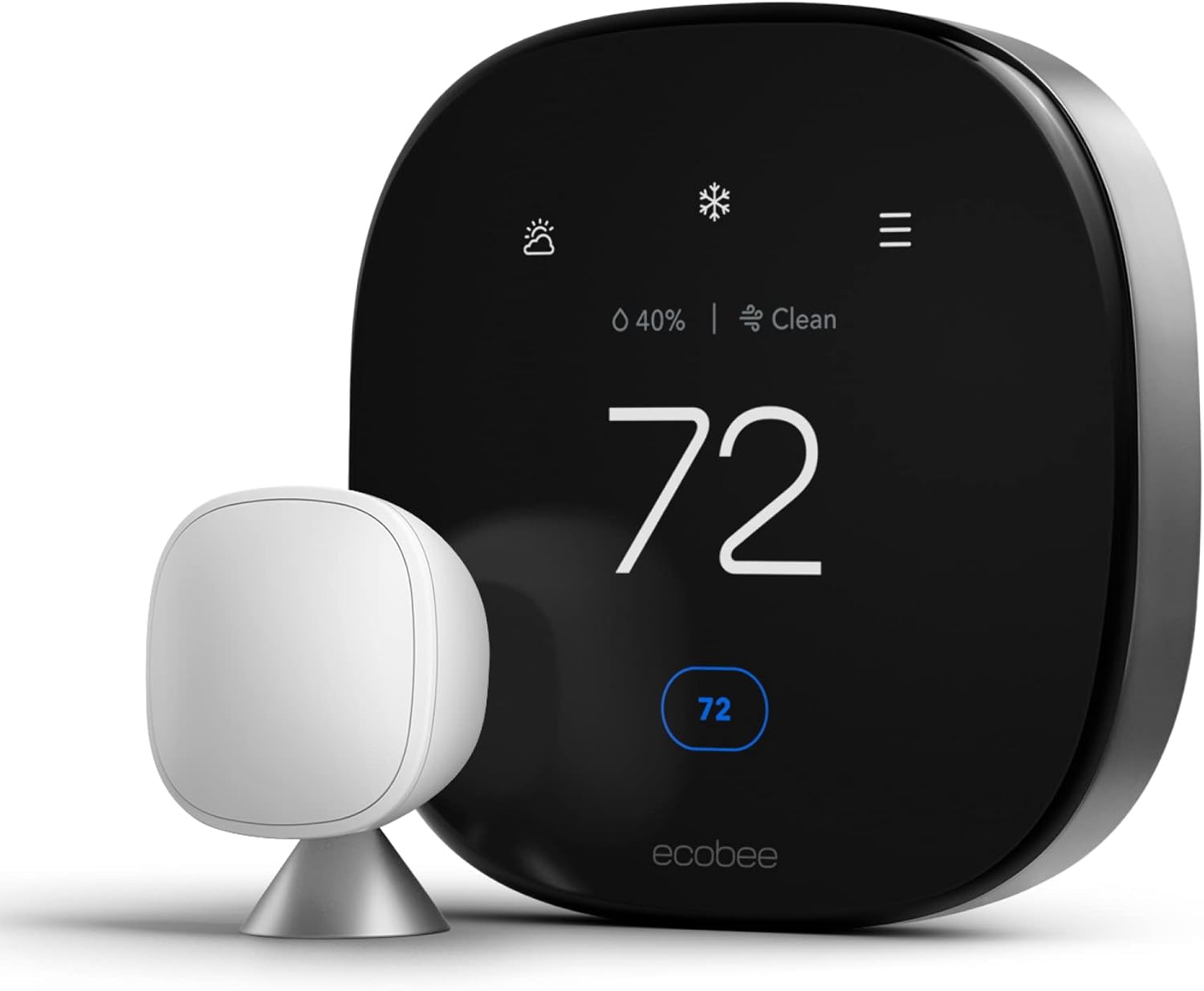
Smart thermostats like the Ecobee, Honeywell T9, and Nest Learning Thermostat implement software-level locking through their cloud management platforms. The physical buttons on the device are disabled via a firmware flag, and the only way to change settings is through the administrator’s app account. This offers the highest flexibility — access can be granted and revoked remotely, audit trails are maintained in the cloud, and temporary access codes can be issued with time limits.
The disadvantage of app-based locking is dependency on an internet connection and the manufacturer’s cloud service. If the cloud goes down or the app loses connectivity, the lock status may behave unpredictably depending on the thermostat’s offline behaviour. For environments where continuous, reliable locking is critical (healthcare, server rooms), a hardware-based PIN lock is often more appropriate than a cloud-dependent app lock.
For environments where continuous locking is a safety or compliance requirement — healthcare facilities, pharmaceutical storage, data centres — choose a thermostat with hardware-level PIN locking that stores credentials in non-volatile memory, not an app-based lock that depends on cloud connectivity.
Lock Types Compared
| Lock Type | Security Level | Best For | Pros | Cons |
|---|---|---|---|---|
| 4-Digit PIN Keypad | Medium–High | Offices, Schools, Rentals | Multiple user codes, temporary override, no physical keys | Needs battery power; default PINs are often guessed |
| Physical Key Lock | Medium | Hotels, Rental Properties | No battery needed, simple operation, master key systems | Keys can be lost, copied, or duplicated |
| Digital / App-Based Lock | High | Commercial Buildings, Remote Properties | Remote management, audit trail, time-limited codes | Requires Wi-Fi and cloud service; app dependency |
| Temperature Range Lock | Low–Medium | Childproofing, Senior Care, Rentals | Users retain some control, reduces complaints | Does not prevent all changes; lower security ceiling |
| Display-Only Lock | High | Commercial, Healthcare | Complete lockout, all functions require PIN | Can frustrate users; emergency override essential |
| Installer Lock (Menu Lock) | Medium | Residential HVAC, Multifamily | Hides advanced settings from users without full lockout | User can still change setpoints; protects config only |
Selection Guide: Which Lock Type Is Right for You? NEW
The right locking thermostat depends primarily on your environment, your tolerance for user complaints, and your security requirements. Use this framework to narrow your choice before looking at specific models.
Residential / Family Home
Children adjusting the thermostat repeatedly. Want easy admin override without memorising long codes.
Recommended: Range Lock + Simple PINRental Property (Single Tenant)
Need to prevent extreme settings and protect HVAC equipment while keeping the tenant comfortable.
Recommended: Range Lock (65–75°F band)Office / Commercial
Multiple employees with conflicting preferences, facilities manager controls the programme.
Recommended: 4-Digit PIN with Multi-User CodesSchool / University
Full programme lock required; occasional teacher override for after-hours events.
Recommended: Display-Only Lock + Temporary OverrideHotel / Hospitality
Guests can adjust within a band; housekeeping has full access; no lost-PIN calls to front desk.
Recommended: Range Lock + Physical Key (housekeeping)Healthcare / Lab
Regulatory compliance, audit trail required, temperature must stay within precise range 24/7.
Recommended: Commercial PIN Lock + Tamper AlarmMulti-Site Remote Management
Properties managed remotely, need to change codes and settings without a site visit.
Recommended: Smart Thermostat with App LockSenior Care / Assisted Living
Residents may adjust to dangerous extremes unintentionally; simple to operate for staff.
Recommended: Narrow Range Lock + Large DisplayTop Use Cases for Locking Thermostats
1. Rental Properties & Multi-Family Units
Landlords can prevent tenants from extreme temperature settings that strain HVAC systems. Range limiting features allow tenants some adjustment while protecting equipment. Legal Note: most US states require landlords to maintain a minimum of 68°F in winter — the thermostat lock cannot override this minimum.
2. Educational Institutions
Schools and universities use locking thermostats to comply with energy policies. Teachers get override capabilities for after-hours events while students cannot change settings.
3. Office Buildings & Commercial Spaces
Prevents “thermostat wars” between employees with different comfort preferences. Facilities managers maintain optimal energy-saving schedules while still allowing limited adjustment windows.
4. Healthcare Facilities
Maintains consistent temperatures for medication storage, laboratory environments, and patient comfort zones with strict regulatory requirements including JCAHO and ASHRAE standard 170.
5. Residential Childproofing
Parents can prevent children from accidentally or intentionally changing thermostat settings, which can lead to unsafe temperatures or significant increases in energy bills.
Industry Deep Dives: Environment-Specific Configuration NEW
Hotel & Hospitality
Hotels represent one of the most demanding thermostat locking environments because they must simultaneously serve guest comfort expectations, energy management goals, and property protection — all with a constantly rotating user base. The optimal configuration for most hotel rooms is a range-lock set to 65–78°F (18–26°C), with a guest-facing interface that allows adjustment within that band without any visible indication of the lock. Guest satisfaction data shows that guests who perceive they have full control report similar satisfaction scores to properties where they actually have full control, as long as the range covers comfortable temperatures.
Housekeeping staff should have a single physical key or master PIN that temporarily disables the lock, puts the room into a “vacant” energy-saving setback mode (typically 60°F/15°C in winter, 80°F/27°C in summer), and automatically re-applies the standard range lock when the door is closed. High-end properties increasingly use smart thermostats linked to the Property Management System (PMS) — the thermostat automatically changes to arrival mode 1–2 hours before check-in, welcome mode on card key insertion, and setback mode on checkout.
Schools & Educational Facilities
School buildings typically run a 5-day occupied programme (6am–6pm on weekdays) with full setback overnight and over weekends. The thermostat should be in full display-only lock mode during school hours, with a teacher override PIN that allows a temporary 2-hour adjustment of ±2°F for after-hours events like evening meetings or weekend sports. The override should automatically expire and return to the schedule — many facilities managers are called out because a well-meaning teacher left an override running all weekend.
For district-wide deployment, look for thermostats that support centralised firmware configuration so PIN codes and temperature ranges can be updated across all buildings simultaneously from a management console, rather than requiring a technician visit to each room. Johnson Controls and Honeywell both offer enterprise BMS integration for this purpose.
Healthcare & Regulatory Compliance
Healthcare facilities are subject to strict HVAC requirements. ASHRAE Standard 170 (Ventilation of Health Care Facilities) and JCAHO (Joint Commission) accreditation standards specify temperature ranges for different areas: patient rooms must be maintained between 70–75°F (21–24°C), operating rooms at 68–75°F (20–24°C) with specific humidity requirements, and pharmaceutical storage areas at 59–77°F (15–25°C) per USP storage guidelines.
In healthcare settings, the thermostat lock must also maintain an audit trail — a log of every access attempt, successful change, and alarm condition. This audit trail may be reviewed during JCAHO accreditation visits or Joint Commission surveys. Choose a thermostat or building management system that exports audit logs in a format compatible with your compliance documentation system. Temperature excursions above or below the set range should trigger an immediate alert to the facilities management team, not just a local display alarm.
Senior Care & Assisted Living
Elderly residents are particularly vulnerable to temperature extremes. Hypothermia risk increases significantly below 65°F, while heat stress becomes dangerous above 80°F for residents with cardiovascular conditions. Locking thermostats in senior care settings should be configured with a narrow range (68–76°F typically), a simple large-print display, and a button layout that is easy for residents with limited dexterity or cognitive impairment.
Crucially, the lock in senior care should be transparent to residents — they should feel empowered to adjust within the safe range. A hidden lock that prevents any change at all can cause distress and repeated calls to nursing staff. The goal is safety, not restriction. Configure range locking rather than full display lockout, and ensure the range is genuinely comfortable for your specific resident population, accounting for medication side effects that alter temperature perception.
Landlord Legal Requirements (US): Most US states require landlords to maintain a minimum indoor temperature of 68°F (20°C) between October 1 and May 1 (or equivalent cold season dates). Locking a thermostat below this minimum can constitute a habitability violation and expose the landlord to legal liability. Always ensure your locking configuration respects your state’s minimum temperature law. Our landlord guide covers state-by-state regulations in detail.
Compatibility Checklist
Before purchasing a locking programmable thermostat, verify these compatibility requirements:
HVAC System Type
Most locking thermostats work with standard 24V systems (gas, electric, heat pump). Verify compatibility with multi-stage systems if needed.
Wiring Configuration
Check for C-wire (common wire) requirement. Many programmable models need constant power for display and lock features. If you have wiring issues, our wiring guide can help.
Voltage Requirements
Standard residential systems use 24V. Line-voltage thermostats (120V/240V) for electric baseboards require specific locking models.
Mounting & Space
Locking thermostats are often larger than basic models. Measure your wall space and ensure proper clearance for ventilation and wiring access.
Multi-Stage Compatibility
If your system has two-stage heating or cooling, verify the thermostat supports O/B, Y2, W2, and auxiliary heat terminals. Not all locking models support multi-stage systems.
Heat Pump Compatibility
Heat pumps need O/B reversing valve terminals and proper auxiliary/emergency heat switching logic. Check the manufacturer’s compatibility list for your specific heat pump model.
Smart Locking Thermostats vs Traditional PIN Lock NEW
The emergence of connected smart thermostats has introduced a new category of software-based locking that is fundamentally different from traditional hardware PIN locking. Understanding the trade-offs is critical when deciding which approach suits your environment.
How Smart Thermostat Locking Works
On smart thermostats like the Ecobee SmartThermostat, Honeywell T9/T10 Pro, and Google Nest, locking is implemented as a firmware feature managed through the companion app or web portal. When an administrator enables the lock, the local display’s physical controls are disabled at the firmware level. The thermostat continues to follow its schedule and can be adjusted remotely through the app, but no local changes are possible. More sophisticated implementations allow multiple user tiers: basic users can see the display but change nothing; comfort users can adjust within a preset range; administrators have full access.
| Feature | Traditional PIN Lock | Smart App-Based Lock |
|---|---|---|
| Works without internet | ✓ Yes — hardware-stored PIN | ✗ Lock may fail if cloud is down |
| Remote management | ✗ Physical access required | ✓ Anywhere via app |
| Audit trail | Limited — some models only | ✓ Full cloud-stored log |
| Temporary codes / expiry | Limited | ✓ Full scheduling of access |
| Regulatory compliance (healthcare) | ✓ Generally preferred | Check cloud SLA and uptime guarantee |
| Subscription / ongoing cost | ✓ None | Some require premium subscription for features |
| Multiple user tiers | Limited | ✓ Full role-based access |
| Voice assistant integration | ✗ Not applicable | ✓ Alexa, Google, HomeKit |
Building Management System (BMS) Integration
Large commercial and institutional properties typically manage HVAC through a centralised Building Management System (BMS), also called Building Automation System (BAS). In these environments, individual thermostat locks are managed as part of the BMS configuration rather than set on each device independently. Systems from Johnson Controls (Metasys), Honeywell (EBI), Siemens (Desigo), and Schneider Electric (EcoStruxure) all support thermostat lock configuration through their respective BMS platforms.
For properties with 10 or more thermostats, BMS integration provides a compelling efficiency advantage: lock codes can be changed across all devices simultaneously, schedules can be pushed centrally, and temperature excursion alarms can be aggregated into a single monitoring dashboard. If you are managing multiple properties or a single large facility, the per-device cost of a BMS-compatible thermostat is typically offset within 12–18 months by reduced technician visits and energy savings.
Top 6 Programmable Thermostats with Keypad Lock
These 2026 models offer the best combination of security features, programmability, and reliability across residential and commercial applications.
- 7-day programmable with PIN lock
- Touchscreen keypad
- 4-user code support
- Temporary override feature
- ENERGY STAR certified
- Physical key lock mechanism
- 5+1+1 programming
- Large backlit display
- Energy usage reports
- Battery backup included
- App-controlled locking
- Smart scheduling
- Remote access via app
- Geofencing capability
- Works with Alexa/Google
- Commercial-grade security
- Multiple PIN levels
- Advanced scheduling
- Outdoor temperature display
- Tamper-proof design
- Temperature range limiting
- Simple 5-2 programming
- Child lock feature
- Large, clear display
- Easy DIY installation
- Industrial security features
- Audit trail capability
- Tamper-proof design
- Multi-zone compatible
- Weather-resistant
Amazon Prime Benefits
- Fast, Free Shipping: Most models qualify for Prime 2-day shipping
- Easy Returns: 30-day return policy on most thermostats
- Verified Reviews: Thousands of customer reviews before purchasing
- Competitive Pricing: Amazon often has the best prices with frequent sales
Full Model Comparison Table NEW
Compare all six recommended models across the features that matter most for locking thermostat applications.
| Model | Lock Type | Programming | Multi-User Codes | Range Limiting | C-Wire Required | Heat Pump | Best For |
|---|---|---|---|---|---|---|---|
| Honeywell PRO T7 | 4-Digit PIN | 7-Day | ✓ Up to 4 | ✓ | Recommended | ✓ | Offices, Schools |
| Lux TX9600TS | Physical Key | 5+1+1 | ✗ | Basic | No | ✓ | Hotels, Rentals |
| Emerson Sensi Touch | App-Based | Flexible / Smart | ✓ Role-based | ✓ Via app | Yes | ✓ | Remote Properties |
| Honeywell T6 Pro | PIN + Range | 7-Day | ✓ Multiple levels | ✓ | Recommended | ✓ | Commercial |
| Orbit Clear Comfort | Range + Child Lock | 5-2 | ✗ | ✓ | No | ✗ | Residential |
| Johnson Controls | Industrial PIN | 7-Day + Custom | ✓ Enterprise | ✓ | Yes | ✓ | Healthcare, Industrial |
Installation Guide for Locking Thermostats
Proper installation ensures all security features function correctly. Follow these steps or hire a professional.
Turn Off Power
Switch off power to your HVAC system at the circuit breaker. Verify power is off using a voltage tester. Safety first when working with electrical components.
Remove Old Thermostat
Carefully remove the cover and take a photo of the wiring configuration. Label each wire with the provided stickers. Unscrew the backplate from the wall.
Install New Backplate
Mount the new backplate using wall anchors if needed. Connect labelled wires to corresponding terminals. Ensure connections are tight and secure. The C-wire (if required) should be connected to the C terminal.
Attach Thermostat Unit
Snap the locking thermostat onto the mounted backplate. Ensure it clicks securely into place. If your unit has battery backup, insert fresh batteries before attaching.
Restore Power & Configure
Turn the circuit breaker back on. Follow the manufacturer’s setup wizard to configure time, date, system type, and initial temperature settings.
Set Lock Features
Program your security PIN, temperature limits, and other locking features before general use. Test the lock function thoroughly — attempt to change temperature without the PIN to confirm it is active.
Professional Installation Tip: For commercial installations or complex HVAC systems, consider hiring an HVAC professional. They can ensure proper wiring and configuration, especially for systems with multi-stage heating and cooling.
Advanced Programming Tips NEW
The scheduling programme behind the lock is as important as the lock itself. A well-designed schedule ensures the protected temperature is actually the right one — energy-efficient, comfortable, and appropriate for your building’s thermal characteristics.
Understanding Schedule Types
Programmable thermostats offer three main scheduling structures. Choosing the right one for your occupancy pattern significantly affects both comfort and efficiency.
| Schedule Type | Periods | Best For | Typical Setpoints |
|---|---|---|---|
| 7-Day | Up to 4 per day × 7 days (28 total) | Variable occupancy — shift work, schools with varied schedules | Wake / Away / Return / Sleep × 7 individual days |
| 5+2 (Weekday/Weekend) | Up to 4 per day × 2 programmes | Standard office / family home with regular weekday/weekend pattern | Wake 68°F, Away 62°F, Return 68°F, Sleep 65°F (winter) |
| 5-1-1 | Up to 4 per day × 3 programmes | Homes where Saturday and Sunday have different schedules | Weekday + separate Saturday + separate Sunday programmes |
Recommended Setpoints by Season and Environment
| Period | Heating (Winter) | Cooling (Summer) | Notes |
|---|---|---|---|
| Wake / Morning | 68°F (20°C) | 76°F (24°C) | Pre-heat/cool 30 min before wake time if Optimum Start available |
| Away / Daytime Unoccupied | 60–62°F (15–17°C) | 82–85°F (28–30°C) | Setback should not be extreme — HVAC recovers faster from moderate setback |
| Return / Evening | 68–70°F (20–21°C) | 74–76°F (23–24°C) | Allow 30–60 min for home to reach temperature before arrival |
| Sleep / Overnight | 65–67°F (18–19°C) | 76–78°F (24–26°C) | Most people sleep better slightly cooler; 65°F is ENERGY STAR recommended sleep temp |
| Vacant / Holiday | 55–58°F (13–14°C) minimum | 88°F (31°C) maximum | Frost protection minimum — never set heating below 55°F in occupied premises |
Commercial Scheduling Best Practices
Commercial buildings have fundamentally different scheduling requirements from residential properties. Key differences include:
- Pre-conditioning: Start HVAC 60–90 minutes before occupancy, not at the moment people arrive. A cold office at 9am is a productivity and comfort problem. Set your schedule to begin heating or cooling at 7:30am for a 9am arrival.
- After-hours override: Provide a short-duration manual override (1–4 hours maximum) that any occupant can activate without a PIN for legitimate after-hours use, but ensure it returns to setback automatically.
- Weekend scheduling: Many commercial buildings can run at much more aggressive setback on weekends (55°F heating minimum, 90°F cooling maximum) unless weekend occupancy is regular.
- Holiday scheduling: Use a dedicated holiday programme that activates frost protection only during known closure dates. Many commercial thermostats allow pre-programming holiday dates at the start of each year.
PIN Management Best Practices NEW
The PIN code is only as secure as its management. Poor PIN practices are the most common reason locking thermostats are defeated — not through technical bypasses, but through social engineering or neglect.
Choosing a Secure PIN
The default PIN on many Honeywell, Emerson, and Lux thermostats is either 1234 or 0000. These must be changed immediately upon installation. Data from building management firms shows that over 60% of locked thermostats in commercial buildings still use the factory default PIN — defeating the entire purpose of the lock. Choose a PIN that:
- Is not a sequential number (1234, 2345, 9876)
- Is not a repeating number (1111, 0000, 2222)
- Is not your building number, room number, or address
- Is not a commonly known date (year the building opened, etc.)
- Uses all four digit positions meaningfully (avoids leading zeros where possible)
- Is different from PINs used on other security systems in the building
PIN Rotation Schedule
Rotate PINs whenever access rights change — when a tenant moves out, when maintenance staff are replaced, or following any suspected security breach. For commercial properties, a quarterly PIN rotation is a reasonable default. Document the current PIN in a secure password manager or sealed envelope in a locked drawer — not on a sticky note on the thermostat.
Forgotten PIN Recovery by Brand
Every major thermostat manufacturer has a slightly different PIN recovery procedure. Here are the most common approaches:
| Brand / Model | Recovery Method | Settings Lost? |
|---|---|---|
| Honeywell T6 / T7 Series | Remove batteries for 60 seconds. PIN resets to 0000. Reconfigure lock settings. | Programming retained; lock settings reset |
| Emerson Sensi | In app: Account > Devices > Reset Lock. Requires admin account login. | No — app-based; settings retained |
| Lux Physical Key Models | Master key from manufacturer — contact Lux support with proof of purchase. | Not applicable — physical lock |
| Orbit Models | Press and hold + and − simultaneously for 5 seconds. Factory reset triggered. | All settings reset including programme |
| Johnson Controls Commercial | Authorised dealer or service engineer required. BMS admin override available. | Depends on configuration |
| Nest Thermostat (App Lock) | Log into nest.com with admin Google account, disable lock remotely. | No — cloud settings retained |
Always record the PIN in a secure location (password manager, sealed envelope in HR/facilities file) immediately after setting it. For commercial properties managing many thermostats, use a centralised password management system like LastPass, 1Password, or Keeper and store each thermostat’s PIN under a location-specific entry. The few minutes this takes prevents hours of troubleshooting during a forgotten PIN situation.
Energy Savings & ROI Calculation NEW
Quantifying the financial return on a locking thermostat installation helps justify the purchase decision for commercial buyers and property managers. The savings come from two sources: the inherent energy savings of programmable scheduling, and the additional savings from preventing unauthorised overrides of that schedule.
Baseline: Programmable Scheduling Savings
ENERGY STAR data shows that a properly programmed thermostat saves approximately $180/year on a typical US residential home. This assumes a 7–10°F setback during sleeping and away hours. Commercial buildings see proportionally larger savings — a medium-sized office building typically saves $800–$2,000 per year per HVAC zone from switching to a properly programmed thermostat compared to a constant setpoint.
Additional Value from Locking
Research from the Building Owners and Managers Association (BOMA) indicates that unlocked thermostats in commercial buildings are adjusted outside their programme by occupants an average of 2–4 times per day. Each unauthorised override that increases heating or cooling by 5°F costs approximately $0.30–$0.80 per hour of operation. In a 200-employee office with 30 thermostats, this casual unauthorised adjustment accounts for roughly $4,000–$8,000 in additional annual energy costs — an amount that easily justifies the cost of replacing non-locking with locking thermostats.
| Scenario | Annual Energy Cost (Before) | Annual Energy Cost (After Lock) | Annual Saving | Payback Period |
|---|---|---|---|---|
| Residential home (single zone) | $1,400 | $1,220 | $180 | 6–12 months |
| Rental unit (prevented extreme settings) | $1,800 | $1,380 | $420 | 3–6 months |
| Classroom / school zone | $2,400 | $1,680 | $720 | 2–4 months |
| Office zone (30+ employees) | $3,200 | $1,900 | $1,300 | 1–2 months |
| Hotel room (range-locked) | $900 | $620 | $280 | 3–6 months |
These estimates assume a thermostat cost of $60–$150 and professional installation of $80–$150. Payback periods are typically 3–12 months for commercial applications and 6–18 months for residential applications depending on energy prices in your area.
Seasonal Programming Strategies NEW
A locking thermostat is only as effective as the programme it is protecting. Updating your programme seasonally ensures the locked settings remain appropriate and comfortable year-round.
Winter Strategy (October–March)
Set the heating programme to bring the building to occupied temperature approximately 60 minutes before the first scheduled occupancy. For residential properties, this means heating begins around 6:00–6:30am for a 7am wake time. For commercial properties, begin HVAC approximately 90 minutes before staff arrival to account for the building’s thermal mass. During occupied hours, maintain 68–70°F. Drop to 62–65°F during sleeping hours or building vacancy.
Lock the programme at or slightly above the legal minimum (68°F in most US jurisdictions for rental properties) during occupied periods. For holiday closures, switch to frost-protect mode at 55–58°F minimum — never lower, as pipe damage risk becomes significant below 50°F.
Summer Strategy (June–September)
Pre-cooling is often more valuable than pre-heating because buildings absorb heat quickly once the sun rises. Set cooling to begin 90 minutes before the first occupancy on hot days. Lock the cooling setpoint at 74–76°F during occupied hours — every degree lower than this increases cooling energy consumption by approximately 6%. Lock the setback at 82–85°F during unoccupied periods.
Note that during heat events (temperatures above 95°F), the setback temperature may need to be lowered to 78–80°F to prevent the building from becoming dangerously hot if HVAC cannot recover in time. Consider adjusting locking parameters seasonally for extreme weather periods rather than running the same year-round lock configuration.
Spring and Autumn Transition Periods
During mild shoulder seasons, avoid running heating and cooling simultaneously — a common problem when the setpoint heating and cooling bands are set too close together (for example, heating set to 70°F and cooling set to 72°F leaves only a 2°F dead band). Many buildings benefit from switching to “heating only” or “cooling only” mode during spring and autumn rather than allowing the thermostat to choose automatically.
Update your locked programme in October (switch to heating schedule) and April (switch to cooling schedule) as a minimum. In climates with distinct seasons, these changeover dates are well-defined; in mild climates, a weather-triggered changeover based on a 10-day forecast average may be more appropriate.
Troubleshooting Guide NEW
This section was missing from the original guide and is one of the most-searched topics for locking thermostat users. Here are the most common problems and their solutions.
Problem: Lock Won’t Activate After PIN Entry
Cause: PIN was entered in the wrong menu, or the lock function requires navigation to a specific “Enable Lock” setting after the PIN is set.
Solution: On most Honeywell models, setting a PIN does not automatically enable the lock — you must separately navigate to the lock enable menu and set it to “On.” Check the manual’s installer settings section. On Emerson Sensi, the lock must be activated in the app under Device Settings > Lock, not just by setting a PIN.
Problem: Thermostat Shows “Locked” But Anyone Can Still Adjust It
Cause: Temperature Range Lock is enabled rather than Full Lockout. The display shows a lock icon but only restricts the range, not all adjustments.
Solution: Check the lock type configuration. If you need complete lockout, look for a “Display Lock” or “Full Lock” option in addition to the range settings. Some models have three separate lock types in the installer menu.
Problem: PIN Entry Screen Not Appearing When Buttons Are Pressed
Cause: The lock may be in “Display Only” mode where button presses are completely ignored rather than triggering a PIN prompt. Or the lock function is not properly enabled.
Solution: Power-cycle the thermostat (remove batteries for 30 seconds). Re-enter the installer menu and verify the lock status. On Honeywell T6/T7 series, check that the ISU (Installer Setup) parameter for lock is set correctly — ISU 0300 controls lock behaviour on most models.
Problem: Thermostat Not Following Locked Programme
Cause: An override was left active, the battery has partially failed causing clock drift, or the programme was not saved correctly.
Solution: Check for active override (a temporary override icon on the display). Cancel any active override. Check the battery level — low batteries cause erratic behaviour on programmable thermostats before they show a low battery warning. Replace batteries proactively every 12 months in critical installations.
Problem: Physical Key Lock Difficult to Turn
Cause: Dust accumulation in the lock cylinder, or the lock is misaligned from the thermostat being slightly crooked on the wall.
Solution: Apply a small amount of graphite lubricant (not WD-40, which attracts dust) to the key before inserting it. Ensure the thermostat is mounted flush and level — a twisted mounting can put lateral stress on the lock cylinder.
Problem: App-Based Lock Not Working After Router Change
Cause: The smart thermostat lost its Wi-Fi connection when the router was changed and cannot communicate with the cloud to enforce the lock.
Solution: Reconnect the thermostat to the new Wi-Fi network (follow the initial setup process for Wi-Fi connection in your specific model’s app). Note that during the period the thermostat was offline, the app-based lock was not enforced — check if any unauthorised changes were made during that window.
Problem: HVAC Not Responding Despite Thermostat Programme Being Correct
Cause: Wiring issue, blown fuse in the air handler, or the thermostat’s system type setting does not match the HVAC equipment.
Solution: Check the HVAC system’s internal fuse (usually a 3A or 5A automotive-style fuse in the air handler). Verify the thermostat’s system settings match your HVAC type (heat pump vs. conventional, gas vs. electric, single vs. two-stage). If the system ran correctly before the thermostat was replaced, the wiring connection is the most likely culprit — re-verify each wire terminal against the original wiring photo.
When to call a professional: If the HVAC system fails to heat or cool and you have verified the thermostat is sending the correct signal (most thermostats have a system status display), the fault is in the HVAC system rather than the thermostat. Attempting to diagnose refrigerant, heat exchanger, or compressor issues without HVAC training is not recommended. Call a licensed HVAC technician.
Frequently Asked Questions
Yes, in most jurisdictions, provided the landlord maintains habitable temperatures (typically 68°F in winter, 78°F in summer). Many states have specific regulations about minimum/maximum temperatures in rental properties. Always check local laws and include thermostat policies in the lease agreement.
Most locking thermostats with battery backup will retain programming and lock settings during outages. However, some may revert to default factory settings if batteries are dead. Always maintain fresh backup batteries. For critical environments, consider models with supercapacitors that provide longer backup.
Most models have emergency override features. Common methods include: 1) Master PIN code, 2) Physical key override, 3) Temporary override with timeout (1–8 hours), 4) Complete reset procedure. Document emergency procedures for authorised personnel. Some commercial models have tamper alarms that alert when overrides are used.
PIN locks offer more flexibility (multiple users, temporary codes, no physical keys to lose) but require battery power. Physical key locks are simpler and don’t need batteries for the lock function, but keys can be lost or copied. For environments with high staff turnover, PIN locks are often preferable since codes can be changed easily without rekeying.
Most do, but verify compatibility. Heat pumps require thermostats with O/B reversing valve terminals and appropriate programming for auxiliary heat. Look for models specifically labelled as heat pump compatible. For complex heat pump systems, consult our heat pump thermostat guide.
Many homeowners can install basic models, especially if replacing an existing programmable thermostat. However, if you have a multi-stage system, heat pump, or complex wiring, professional installation is recommended. Always turn off power at the breaker before beginning.
Lockout completely prevents temperature changes without authorisation. Range limiting allows adjustments within set boundaries (e.g., 68°F–72°F in winter). Range limiting is often better for residential rentals as it gives occupants some control while preventing extremes. Our landlord guide covers this in detail.
Most models have a hard reset procedure that involves removing batteries and/or pressing a recessed reset button. On Honeywell models, removing batteries for 60 seconds typically resets the PIN to the default (0000) while retaining the programme. Orbit models require holding + and − simultaneously for 5 seconds for a full factory reset. Always record PINs in a secure location immediately after setting them.
Yes, several smart thermostats offer digital locking. Ecobee, Nest, and Honeywell Lyric models can be locked via app controls. These offer remote management and more granular access controls but typically lack physical key options. They’re excellent for properties managed remotely. See our smart vs programmable comparison.
Minimal maintenance is needed: 1) Replace backup batteries annually, 2) Clean touchscreen/keypad with appropriate non-abrasive cleaner, 3) Verify lock mechanism operation seasonally, 4) Update PIN codes when personnel change, 5) Review and update the schedule twice yearly for seasonal changeover. For physical key models, occasional graphite lubrication of the lock cylinder may be needed.
Key Takeaways for 2026
- PIN code locks offer the best balance of security and flexibility for most applications, supporting multiple users and easy code changes without physical key management.
- Verify HVAC compatibility before purchasing — especially for heat pumps, multi-stage systems, or line-voltage applications. A thermostat incompatible with your system is no use regardless of its security features.
- Consider range limiting instead of complete lockout for residential rentals to provide tenant comfort while preventing extreme settings and legal liability.
- Never leave the default PIN unchanged — over 60% of commercially installed locked thermostats still use factory default codes. Change the PIN on day one of installation.
- Update programmes seasonally — a locked thermostat is only as effective as the programme it is protecting. Outdated schedules undermine the investment.
- Professional installation is recommended for commercial properties, complex systems, or when unsure about wiring compatibility.
Programmable thermostats with keypad locks provide an effective solution for energy management in environments where temperature control needs to be restricted. From school classrooms to rental properties to hotel rooms to office buildings, these devices prevent unauthorised adjustments while maintaining comfortable, energy-efficient environments.
When selecting a model, prioritise reliability and ease of use alongside security features. The best locking thermostat is one that authorised users can operate intuitively while remaining secure against unauthorised changes — and one whose locked programme actually reflects the correct temperatures for your building and occupants.
View Recommended Models



 Home
Home
 Info
Info
 Compare
 Reviews
 Shop
Shop