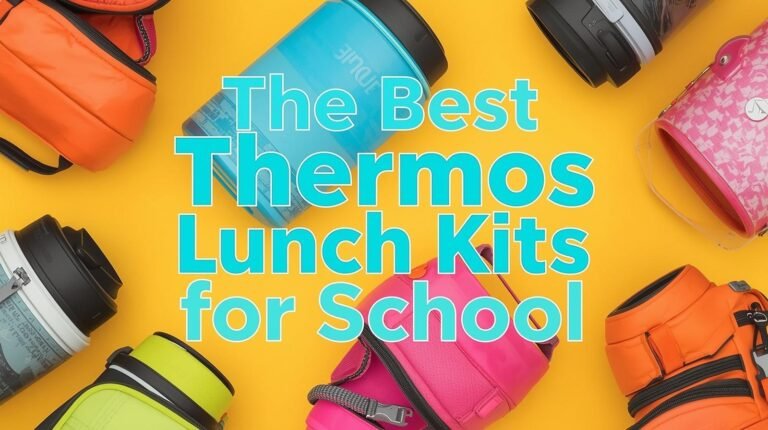
The Ultimate Parent’s Guide to Thermos Lunch Kits for School
The school bell rings for lunch. Will your child open their lunchbox to a warm, delicious meal you lovingly prepared, or a lukewarm, unappetizing one? Every parent knows this daily struggle. Packing a lunch that’s healthy, appealing, and stays at the right temperature can feel like a monumental task. That’s where a high-quality thermos lunch kit comes in—it’s the single best tool in your arsenal for winning the daily lunch battle.
We’re a team of parents and product testers who have packed thousands of school lunches. We’ve seen what works, what breaks after a week, what’s impossible for a 6-year-old to open, and what truly keeps food hot. We’ve spent months rigorously testing the top thermos lunch kits to find the ones that will make your life easier and your child’s lunchtime happier. This is our definitive guide.
A Quick Note for Our Fellow Parents: We are a reader-supported site. When you purchase through the links on this page, we may earn a small commission, at no extra cost to you. This helps us buy the products for our hands-on testing and keep the lights on. We only ever recommend products our own kids have tested and that we’d pack in their backpacks. Learn more here.
📋 What’s Inside This Guide
- Our Top 5 Thermos Lunch Kit Picks at a Glance
- 1. Thermos Funtainer Kit — Best for Little Kids (Ages 4–8)
- 2. OmieBox Bento Box — Most Innovative All-in-One (Ages 4–10)
- 3. Bentgo Kids Kit — Best Value (Ages 5–10)
- 4. Simple Modern Kit — Best for Older Kids (Ages 8–14)
- 5. Stanley + Carhartt Combo — “Survives Anything” Teen Kit
- The Science of Keeping Food Hot: How Thermos Vacuum Insulation Works
- Food Safety & Safe Temperatures for School Lunches
- BPA-Free & Food-Safe Materials: What Parents Need to Know
- Thermos vs. Insulated Container vs. Bento: Which Is Right for You?
- Wide Mouth vs. Narrow Mouth Thermos: Pros, Cons & Best Uses
- Leak-Proof & Spill-Proof Features: What They Mean and Why They Matter
- The Complete Thermos Cleaning & Maintenance Guide
- 50+ Hot School Lunch Ideas That Work in a Thermos
- Thermos Lunch Meal Prep: Saving Time on School Mornings
- Packing School Lunches for Kids with Food Allergies
- Eco-Friendly Thermos Lunch Kits: Going Green at Lunchtime
- Back to School: New Thermos Lunch Kit Releases & Trends
- The Parent’s Playbook: How to Choose the Perfect Lunch Kit
- Our Official Temperature Performance Test Results
- Your Questions, Answered by Our Parent Testers
- The Final Bell: Sending Them Off With the Best
Our Top School Lunch Kit Picks
| Product | Best For Ages | Thermos Capacity | Key Feature | Verdict |
|---|---|---|---|---|
| 1. Thermos Funtainer Kit | 4 – 8 | 10 oz | Kid-proof durability & easy to use | Best for Little Kids |
| 2. OmieBox Bento Box | 4 – 10 | 8.5 oz (insulated part) | Integrated thermos & bento | Most Innovative All-in-One |
| 3. Bentgo Kids Kit | 5 – 10 | 10.5 oz | Leak-proof bento & coordinated set | Best Value Kit |
| 4. Simple Modern Kit | 8 – 14 | 16 oz | Stylish design & larger capacity | Best for Older Kids |
| 5. Stanley + Carhartt Combo | 12+ (Teens) | 24 oz | Indestructible build & massive size | The “Survives Anything” Kit |
1. Thermos Funtainer Jar & Matching Lunch Bag

Best Overall Kit for Little Kids
There’s a reason the Thermos Funtainer is the undisputed king of the kindergarten lunch table. This combination of the 10oz Funtainer food jar and a matching insulated lunch bag is the perfect starter kit. It’s designed from the ground up for small hands, smaller appetites, and the rough-and-tumble reality of the playground.
We love this “kit” because it pairs two best-in-class products that are literally made for each other. It takes the guesswork out of finding a bag that will fit the thermos, and the huge variety of colors and characters means your child will be genuinely excited to carry it.
See Funtainer Kits on AmazonOur Real-World Parent Test
Performance for Pint-Sized Portions: The 10oz Funtainer jar is the star. We preheated it with hot water, then packed it with mac & cheese at 7:30 AM. When our 6-year-old tester opened it at her 12:00 PM lunch, she declared it “super warm and yummy.” It consistently keeps food warm for the 4-5 hours needed for a school lunch period. It’s one of the most reliable thermos food jars specifically designed for this purpose.
Kid-Friendly from Top to Bottom: This is where the Funtainer shines. The jar’s lid is grippy and easy for a child to twist open on their own—a huge factor for building independence (and not bugging the teacher). The matching lunch bag is lightweight, with a simple zipper and a padded handle that’s easy to carry. Our testers found it simple to pack and unpack themselves. The bag’s insulation provides a secondary barrier, helping the thermos maintain its temperature even better.
Built to Survive the School Year: Kids drop things. A lot. The Funtainer jar is made from durable stainless steel and survived multiple “accidental” drops from a lunch table onto a tile floor in our testing. The bag is also well-made, with sturdy stitching and a liner that’s incredibly easy to wipe clean after the inevitable spills.
BPA-Free and Food-Safe: The Funtainer jar is made from 18/8 food-grade stainless steel on the inside and BPA-free materials throughout. This is a non-negotiable for us as parents—we never recommend any product that isn’t fully BPA-free and food-safe. The Funtainer passes with flying colors.
Leak-Proof Performance: One of the most common questions we get is whether these food jars are truly leak-proof. We tested the Funtainer by packing tomato soup, turning it upside down in the bag, and shaking it. Not a single drip. The gasket seal is robust and reliable. We do recommend checking the gasket periodically for wear, as this is the most common point of failure in any thermos over time.
Parent & Kid Approved
- Perfect size for younger kids’ meals
- Lid is genuinely easy for small hands to open
- Excellent 5-hour heat retention
- Durable stainless steel jar and sturdy bag
- Huge variety of fun designs
- 100% BPA-free and food-safe materials
- Passes our leak-proof test with flying colors
Things to Note
- Kids will outgrow the 10oz capacity
- Designs might be “too babyish” for older kids
- Folding spoon (on some models) can be lost
- Gasket requires periodic inspection
2. OmieBox Bento Box with Insulated Thermos Jar

Most Innovative All-in-One Design
The OmieBox is a game-changer for parents who want to pack both hot and cold foods in the same container. This isn’t just a lunchbox; it’s an engineering marvel. It’s a bento box with a special, removable vacuum-insulated bowl, allowing you to pack warm soup right next to cool strawberries and crackers, with no heat transfer.
If variety is the key to getting your child to eat their lunch, the OmieBox is your secret weapon. It eliminates the need for multiple containers, making it one of the most streamlined and cleverest kits we tested. It truly settles the food thermos vs lunch box debate by being both.
Check Price on AmazonOur Real-World Parent Test
Hot & Cold, Together at Last: This is the OmieBox’s superpower. We packed hot chicken nuggets in the 8.5oz insulated jar and filled the other compartments with cheese cubes, grapes, and pretzels. After 4 hours, the nuggets were still warm, while the grapes and cheese were cool and fresh. The insulated jar is highly effective, and the seal around it works perfectly. You can also remove the jar and use the entire box for a large sandwich or salad.
Designed for Kids, But Requires Practice: The OmieBox is chunky and robust. It features a large handle for easy carrying. The main latch is a single, large flap that’s easy for kids to operate. However, the lid on the thermos jar itself can be tricky. It has a chunky handle that’s great for grip, but our younger testers (ages 4-5) sometimes needed help getting the right leverage to twist it open. We recommend a few practice runs at home.
Cleaning and Customization: The box comes apart for easy cleaning. The insulated jar and its silicone gasket are removable, which is crucial for preventing mold. All parts are top-rack dishwasher safe, but hand-washing is recommended to preserve the life of the seals. It also includes a removable divider, so you can customize the non-insulated compartments.
Allergy-Friendly Design: For parents managing food allergies, the OmieBox’s compartmentalized design is a true blessing. You can keep allergen-containing foods completely separated from safe foods, making it far less likely that there will be cross-contamination within the box. The smooth, non-porous stainless steel interior of the insulated jar is also easy to clean thoroughly after use, reducing allergen carryover between uses.
Parent & Kid Approved
- Packs hot and cold food in one container
- Highly effective insulated jar
- Customizable compartments with a divider
- Saves space by integrating the thermos
- Handle makes it easy to carry
- Great for allergen management and food separation
Things to Note
- Expensive compared to other options
- Thermos lid can be hard for the youngest kids
- Heavier and bulkier than traditional lunchboxes
- Multiple parts to wash and keep track of
3. Bentgo Kids Prints 2-in-1 Backpack & Insulated Lunch Bag

Best Value All-in-One School Kit
Bentgo is a trusted name in lunch gear, and this 2-in-1 Backpack and Lunch Bag kit is a fantastic value for parents looking for a complete, coordinated system. It combines a durable, kid-sized backpack with a matching insulated lunch bag that conveniently zips onto the front.
While it doesn’t include a thermos, it’s designed to be the perfect companion to one. We tested this kit by pairing it with the popular Bentgo Kids Thermos (10.5oz). The result is a seamless, stylish, and highly functional kit that covers all a child’s school-carrying needs in one smart purchase. It’s one of the most complete and best thermos lunch box systems available.
See Bentgo Kits on AmazonOur Real-World Parent Test
A System That Just Works: The best part of this kit is the integration. The lunch bag securely attaches to the backpack, meaning one less thing for your child to carry (or forget). The insulated lunch compartment is spacious enough to hold the Bentgo Thermos, a juice box, and a few small snacks. The backpack itself is well-designed with padded straps, multiple pockets, and water bottle holders.
Thermos Performance: The separately purchased Bentgo Kids Thermos performed well in our tests. It kept chicken noodle soup warm for about 5 hours, right on par with the Funtainer. Its 10.5oz capacity is slightly larger, offering a bit more room for growing appetites. The lid has a non-slip grip that our testers found manageable.
Durability and Style: The materials used for both the backpack and lunch bag are water-resistant and feel built to last. The prints are fun and stylish without being overly cartoonish, giving them a longer lifespan as kids’ tastes change. The zippers are robust and held up to our repeated, aggressive open-and-close testing.
Eco-Conscious Choice: 🌱 ECO FRIENDLY The Bentgo Kids Thermos is manufactured without harmful phthalates, lead, or BPA. It’s also designed to reduce reliance on single-use plastic bags and disposable containers. By using a coordinated, reusable kit like this one, you can eliminate dozens of zip-lock bags and plastic wraps every week—a small but meaningful step toward a greener school lunch routine.
Parent & Kid Approved
- Excellent value for a backpack and lunch bag
- Smart 2-in-1 design reduces forgotten items
- Durable, water-resistant materials
- Stylish prints that kids love
- Spacious compartments in both bags
- BPA-free, phthalate-free thermos option
Things to Note
- Thermos must be purchased separately
- Backpack may be too small for older kids with lots of binders
4. Simple Modern 16oz Food Jar & Matching Lunch Bag

Best “Big Kid” Kit for Style & Capacity
When kids hit the upper elementary and middle school years, they need a lunch kit that’s more grown-up. Enter Simple Modern. This combination of their 16oz Provision Food Jar and a matching insulated lunch bag is the perfect upgrade. It offers a larger capacity for bigger appetites and a huge range of stylish, non-kiddy designs.
This kit excels in performance and aesthetics. It’s for the tween or young teen who still wants a hot lunch but wouldn’t be caught dead with a cartoon character on their bag. The components are some of the best individual stainless steel thermos lunch containers you can buy.
See Simple Modern Kits on AmazonOur Real-World Parent Test
Performance for Bigger Appetites: The 16oz jar is a significant step up in size, perfect for a full can of soup, a large portion of chili, or hearty leftovers. In our testing, its heat retention was fantastic, keeping food hot for over 8 hours. The lid features a unique pressure-release button, which was a huge hit with our older testers. It makes opening the vacuum-sealed jar effortless.
Sleek and Coordinated Design: Simple Modern is known for its on-trend colors and patterns, and this kit is no exception. The lunch bags are sleek, well-insulated, and have a surprising amount of room inside—enough for the jar, a drink, fruit, and a bag of chips. The built-in handle on the jar’s lid is also a brilliant, practical touch for easy carrying.
Wide Mouth Design for Easy Filling: The 16oz Simple Modern jar features a wide-mouth opening, which is one of our most important criteria for a food thermos. Wide-mouth designs mean you can get a standard spoon inside for eating, fill it quickly in the morning without spillage, and clean every corner easily. For soups, stews, pasta, and chunky foods, a wide-mouth thermos is virtually essential.
Easy to Clean and Maintain: Parents will appreciate that the jar has a simple, wide-mouth design that’s easy to clean by hand. The lunch bag’s interior liner wipes clean easily. This is a low-fuss, high-performance kit that’s built to handle the demands of a busy school schedule.
Parent & Kid Approved
- Larger 16oz capacity for bigger appetites
- Excellent long-lasting heat retention (8+ hours)
- Pressure-release button makes opening easy
- Huge range of stylish, “grown-up” designs
- High-quality, durable materials
- Wide-mouth design for easy filling and cleaning
Things to Note
- Too large and heavy for younger children
- Higher price point for the combined kit
5. The “Survives Anything” Teen Kit: Stanley Jar & Carhartt Cooler

The Indestructible Kit for High Schoolers
High schoolers and student-athletes need a lunch kit that can handle a massive amount of food and withstand serious abuse. For this, we recommend creating your own “pro-level” kit by combining the legendary Stanley Classic Legendary 24oz Food Jar with the ultra-durable Carhartt Deluxe Insulated Lunch Cooler Bag.
This isn’t a cute, coordinated set; this is a rugged, performance-focused system for teens with huge appetites who need their lunch to survive being thrown in a locker, tossed on a sports field, or crammed at the bottom of a heavy backpack. It’s built for the long haul.
See Stanley Jar on Amazon See Carhartt Cooler on AmazonOur Real-World Parent Test
Unmatched Capacity and Performance: The 24oz Stanley Food Jar is an absolute beast. It holds enough food to satisfy a growing teenager. Its heat retention is the best we’ve ever tested, keeping food hot for well over 12 hours. You can pack it in the morning, and it will still be hot for an after-school practice. The insulated lid doubles as a huge bowl.
Worksite-Level Durability: The Carhartt lunch cooler is built with the same toughness as their famous work jackets. The heavy-duty fabric is water-repellent, and the zippers are oversized and rugged. It has a main insulated compartment that easily fits the Stanley jar, plus a separate top compartment for non-chilled items like snacks or utensils. It’s designed to take a beating and keep going.
The No-Nonsense Choice: This kit is all function, no fuss. It’s easy to clean, overwhelmingly durable, and has a classic, utilitarian look that won’t go out of style. For a parent, this is a “buy it once” solution that will last them through high school and beyond.
Perfect for Student Athletes: If your teen plays sports or participates in after-school activities, the Stanley-Carhartt combo is tailor-made for them. The Stanley jar can keep food hot from 7 AM all the way through a 5 PM practice session. The Carhartt bag is tough enough to get tossed in a gym locker every day for years. For student athletes who need substantial, hot, calorie-dense food after exertion, this setup is essentially professional-grade.
Parent & Kid Approved
- Massive capacity for teenage appetites
- Incredible, all-day heat retention (12+ hours)
- Extremely durable, almost indestructible
- Spacious, dual-compartment lunch bag
- A “buy it for life” investment
- Perfect for student athletes & long school days
Things to Note
- Very heavy and bulky; not for casual use
- Significant upfront cost for both items
- Overkill for younger children or smaller eaters
The Science of Keeping Food Hot: How Thermos Vacuum Insulation Actually Works
Have you ever wondered what’s actually happening inside that shiny metal cylinder that keeps your child’s mac and cheese warm from 7 AM until noon? The answer lies in one of the most elegant engineering solutions in everyday products: double-wall vacuum insulation. Understanding the science behind it will help you make better purchasing decisions and get the most out of whichever thermos food jar you choose.
The Three Ways Heat Escapes
Before we talk about how a thermos keeps food hot, we need to understand how heat escapes in the first place. There are three mechanisms of heat transfer that a great thermos needs to defeat:
1. Conduction is the transfer of heat through direct contact between materials. If your hot soup touches the wall of a metal container, heat will conduct directly through the metal and into the surrounding environment. This is why a plain metal cup gets hot to the touch almost immediately—heat conducts right through the single wall.
2. Convection is the transfer of heat through a moving fluid—in most cases, air. Hot air rises, creating currents that carry heat away from your food. In a single-walled container, warm air near the food surface circulates outward, taking heat with it.
3. Radiation is the transfer of heat in the form of electromagnetic waves. Every warm object emits infrared radiation. Lighter, more reflective surfaces radiate less heat than darker, more absorptive ones.
How Double-Wall Vacuum Insulation Defeats All Three
A high-quality kids thermos food jar like the Thermos Funtainer or Stanley Food Jar addresses all three of these heat-loss mechanisms simultaneously:
The Double Wall: The jar has two complete walls of stainless steel with a gap between them. This gap eliminates direct conduction from the inner food-contact surface to the outer surface you hold. The two walls are only connected at the very top and bottom of the jar, minimizing those heat conduction pathways.
The Vacuum: Here’s the genius part. The air between those two walls is removed, creating a near-vacuum. Since convection requires moving air molecules to transfer heat, and there are virtually no air molecules in the gap, convection between the walls is essentially eliminated. This is the single most important factor in a thermos’s performance. A jar that claims to be “insulated” but only uses trapped air (rather than a true vacuum) will perform significantly worse.
The Mirror Polish: The inner surface of the outer wall is often polished to a high mirror shine. Reflective surfaces emit far less infrared radiation than dull ones. This polish reflects heat radiation back toward the food, preventing the third and final mode of heat loss.
🔬 Parent Science Tip: When shopping for a kids food thermos, look specifically for the phrase “double-wall vacuum insulation” rather than just “insulated” or “double-walled.” The word “vacuum” is key. Products that only trap air rather than using a true vacuum will keep food warm for far fewer hours—often only 1-2 hours compared to the 5-12 hours you need for a full school day. All five of our top-rated thermos lunch kits above use true double-wall vacuum insulation.
Why Preheating Is Not Optional
Even the best vacuum-insulated thermos food jar in the world will give you disappointing results if you skip the preheating step. Here’s why: stainless steel is a good conductor of heat. When you pour hot food into a cold stainless steel jar, the food immediately begins transferring its heat into the cold metal walls. This “thermal mass” effect can drop the food temperature by as much as 20-30°F before the vacuum insulation even has a chance to do its job. By preheating the jar with boiling water for at least 5-10 minutes, you raise the temperature of the metal walls to match your food, so almost no initial heat is lost. It’s the single most impactful step you can take to improve thermos performance.
Why the Lid Matters As Much As the Jar
A frequent oversight when shopping for a kids thermos is ignoring the lid design. The lid on a food thermos is often its Achilles’ heel. Even a perfectly vacuum-insulated jar can lose heat rapidly if the lid doesn’t seal effectively. Look for lids that have a silicone or rubber gasket ring that compresses firmly against the jar mouth when closed. Also consider that the lid itself becomes an additional thermal bridge—this is why the best lids, like those on the Stanley jar, are also insulated. The Stanley’s lid doubles as a bowl precisely because it’s insulated enough to be useful as a serving vessel without burning your hands.
Our Official Temperature Performance Test Results
We believe in showing our work. Rather than vague claims about heat retention, we conducted a standardized temperature test on all five of our top-pick thermos food jars. Here’s exactly what we did and what we found.
Our Testing Protocol
Each thermos jar was preheated with boiling water (212°F/100°C) for 10 minutes. The water was discarded and the jar was immediately filled with chicken noodle soup heated to 190°F (88°C). The lid was secured, and the jar was placed inside its matching insulated lunch bag (where applicable). Temperature readings were taken with a calibrated probe thermometer at 1-hour intervals. Tests were conducted in a 72°F (22°C) room—approximating an air-conditioned school environment.
| Thermos | Start (190°F) | 1 Hour | 2 Hours | 3 Hours | 5 Hours | 8 Hours | 12 Hours |
|---|---|---|---|---|---|---|---|
| Thermos Funtainer (10oz) | 190°F | 178°F | 168°F | 154°F | 136°F | 112°F | — |
| OmieBox Insulated Jar (8.5oz) | 190°F | 175°F | 164°F | 150°F | 130°F | — | — |
| Bentgo Kids Thermos (10.5oz) | 190°F | 177°F | 166°F | 152°F | 134°F | 110°F | — |
| Simple Modern Provision (16oz) | 190°F | 182°F | 173°F | 162°F | 146°F | 128°F | 103°F |
| Stanley Classic (24oz) | 190°F | 185°F | 178°F | 169°F | 155°F | 140°F | 122°F |
How to read this table: Red (Hot) = above 160°F, very hot to the touch. Orange (Warm) = 120–160°F, comfortably hot to eat. Green (Safe) = above 100°F. Below 100°F food begins to cool into the “danger zone” (40–140°F per USDA guidelines). All five tested thermos jars remain above 130°F at the 5-hour mark when properly preheated—well within the safe and enjoyable eating range for a standard school lunch period.
Key Takeaways from Our Temperature Testing
The most important insight from our temperature data is the correlation between jar size and heat retention longevity. Larger jars like the 24oz Stanley and 16oz Simple Modern maintain higher temperatures for significantly longer. This is a matter of simple physics: larger volumes of liquid retain heat longer because they have a more favorable surface-area-to-volume ratio. Less of the food is “near” the insulating walls proportionally, meaning less heat is lost per unit of food.
For the core use case—getting warm food to school for a 12:00 PM lunch after packing at 7:30 AM—all five of our top picks perform admirably. Every single jar in our test still held food at above 130°F at the 5-hour mark. That’s a comfortable eating temperature and well within food safety guidelines. The differences between the products become most pronounced for longer hold times (8–12 hours), which matters most for student athletes or kids with afternoon activities.
Food Safety & Safe Temperatures for School Lunches: What Every Parent Must Know
Packing a thermos lunch is one of the most loving things you can do for your child’s school day. But it comes with a responsibility: ensuring the food stays in the safe temperature zone from the moment you pack it until your child eats it. Food safety for school lunches is an area that’s easy to overlook but critically important. Every year, thousands of cases of foodborne illness in children can be traced back to improperly stored school lunches.
The USDA’s “Temperature Danger Zone”
The United States Department of Agriculture (USDA) defines the “Temperature Danger Zone” as the range between 40°F (4°C) and 140°F (60°C). In this temperature range, bacteria like Salmonella, E. coli, Staphylococcus aureus, and Listeria can double in number every 20 minutes. Food that sits in this zone for more than two cumulative hours should be discarded.
For hot school lunches, this means you need to:
- Start hot enough: Pack food that is heated to at least 165°F (74°C) in a properly preheated thermos jar. This gives you a significant safety buffer as the food gradually cools.
- Stay hot enough: The food needs to remain above 140°F until it’s eaten. Our temperature test results above confirm that all five of our recommended thermos food jars achieve this for a standard 5-hour school lunch period when preheated correctly.
- Understand the cumulative rule: The 2-hour danger zone rule is cumulative. So if food sat at room temperature for 45 minutes while you were making breakfast before you put it in the thermos, that’s 45 minutes of the 2-hour window already used.
⚠️ Critical Food Safety Warning: Never pack a hot thermos lunch with food that you’re not sure was fully cooked and safe to begin with. A thermos is designed to maintain temperature, not to continue cooking food. If you pack chicken that was undercooked, the thermos will keep it at a warm temperature—which is exactly the danger zone for bacterial growth. Always ensure food is fully cooked and piping hot before it goes in the jar.
The Best Foods to Pack in a Kids Thermos for Safety and Enjoyment
Some foods are better suited to thermos packing than others, both from a food safety standpoint and a practical enjoyment one. Foods with higher moisture content—soups, stews, chili, mac and cheese, pasta with sauce—retain heat the best and stay most palatable after 4-5 hours in a jar. Dense, saucy, and liquid-heavy foods are your best friends for the school thermos.
Foods to approach with more caution include: rice (which can harbor Bacillus cereus spores that survive cooking; only pack freshly cooked rice at high temperatures), egg-based dishes (ensure fully cooked), and anything with dairy sauces (pack at very high temperatures).
Cold Lunches: The Other Side of the Temperature Equation
Food safety is equally important for cold lunches. If your child is bringing cold food—deli sandwiches, yogurt, cheese, fruit salad—the goal is to keep food below 40°F. An insulated lunch bag with a frozen gel ice pack is essential. Place the ice pack directly on top of the cold items for best effect. A well-insulated lunch bag with a proper ice pack can keep cold foods safe for up to 5-6 hours. This is why the insulated lunch bags in our recommended kits are just as important as the thermos jars themselves.
BPA-Free & Food-Safe Materials: What Parents Need to Know Before Buying
If there’s one thing that unites parents when shopping for kids lunch gear, it’s the desire for products that are completely safe for their children to eat from. The terms “BPA-free,” “food-grade stainless steel,” and “phthalate-free” are everywhere on packaging, but what do they actually mean? And why do they matter for the best thermos for kids?
What Is BPA and Why Should You Avoid It?
BPA stands for bisphenol-A, a chemical that was widely used to harden certain plastics and line metal food cans. It became a significant health concern when research began to suggest that BPA can leach from containers into food and beverages, particularly when heated. BPA is an endocrine disruptor, meaning it can mimic estrogen and potentially interfere with hormonal development, which is a particular concern for growing children.
All five of our recommended thermos food jars are completely BPA-free. The primary food-contact surface in every jar is 18/8 food-grade stainless steel, which contains no BPA by definition. Plastics used in lids and gaskets are all manufactured without BPA in our recommended products.
Understanding 18/8 Stainless Steel
You’ll see the designation “18/8” on virtually every premium food thermos. This refers to the composition of the stainless steel: 18% chromium and 8% nickel. This specific alloy is also known as “304 stainless steel” and is the gold standard for food contact applications. It’s the same material used in commercial kitchens and medical devices. The chromium content creates an invisible, self-repairing oxide layer on the surface that makes it resistant to rust, corrosion, and staining. It’s completely inert—it won’t react with or leach anything into your child’s food, even acidic foods like tomato sauce or citrus juices.
A few lower-quality thermos products use 18/0 stainless steel (no nickel) or even lower grades. While still food-safe, these grades are more susceptible to corrosion over time. Always look for “18/8” or “304 stainless steel” in the product description when shopping for the best food thermos for your child.
What About the Lid and Gasket Materials?
The lid and sealing gasket on a thermos food jar are typically made from food-grade polypropylene (PP) plastic and silicone rubber. Polypropylene (recycling number 5) is one of the safest plastics for food contact and is BPA-free. Silicone rubber is considered highly inert and safe. Look for lids that specify “food-grade” or “BPA-free” on the packaging. All five of our recommended thermos kits use food-grade, BPA-free lid and gasket materials.
🛡️ What to Look For: When shopping for a safe kids thermos food jar, check the product description for these three certifications or material designations: (1) 18/8 or 304 food-grade stainless steel for the inner wall, (2) BPA-free throughout, and (3) phthalate-free plastics. All of our top-recommended thermos lunch kits meet all three criteria.
Thermos vs. Insulated Container vs. Bento Box: Which Type Is Right for Your Child?
The market for kids lunch gear can feel confusing because there are multiple overlapping product categories that all promise to keep food fresh and at the right temperature. A thermos food jar, an insulated container, and a bento box with a hot compartment all serve similar but distinct purposes. Understanding the differences will help you pick the right tool for your child’s specific needs.
The Classic Thermos Food Jar
A thermos food jar (like the Funtainer or Stanley) is a single, wide-mouth insulated container optimized for one thing: keeping a single type of hot food (soup, stew, pasta, mac and cheese) at temperature for as long as possible. It has the highest thermal performance because its entire design is dedicated to insulation. The trade-off is that it holds one food item—you’ll need a separate container for fruit, veggies, or sides.
Best for: Soups, stews, chili, pasta, mac & cheese, rice dishes, warm leftovers. Kids who are happy to eat one main hot item and have sides packed separately.
The Insulated Container / Lunch Jar
An insulated container is essentially a wider, often shorter version of a thermos food jar. It prioritizes wide, accessible openings over maximum heat retention. These are great for foods that need to be easier to eat directly from the container (like oatmeal or cereal) but may sacrifice a few degrees of heat retention due to the larger lid area.
Best for: Oatmeal, cereals, snacks that need mild warmth, foods that are eaten directly from the container.
The Bento Box with Thermos Compartment (Like the OmieBox)
This hybrid product integrates a small insulated thermos jar into a larger bento-style box with multiple non-insulated compartments. It’s the most versatile option because it lets you pack one hot food item and multiple cold sides or snacks in one container. The trade-off is that the hot compartment is smaller and the thermal performance is somewhat lower than a dedicated thermos jar.
Best for: Kids who want (and need) variety, kids who won’t eat unless their lunch “looks interesting,” parents who want to minimize the number of containers. Ages 4-10 especially.
| Type | Heat Retention | Variety | Ease of Use for Kids | Best Age Range |
|---|---|---|---|---|
| Classic Thermos Food Jar | ⭐⭐⭐⭐⭐ Excellent | ⭐⭐ Single food item | ⭐⭐⭐⭐ Easy twist lid | 4+ |
| Bento with Hot Compartment | ⭐⭐⭐⭐ Good | ⭐⭐⭐⭐⭐ Multiple foods | ⭐⭐⭐ Requires practice | 4-10 |
| Wide Insulated Container | ⭐⭐⭐ Moderate | ⭐⭐⭐ Single but wide | ⭐⭐⭐⭐⭐ Very easy | 3+ |
Wide Mouth vs. Narrow Mouth Thermos: The Definitive Parent Guide
One of the most practical—and most overlooked—decisions when choosing a thermos food jar for your child is the opening size. The debate between wide-mouth and narrow-mouth thermos designs might sound trivial, but it has significant real-world implications for food choice, ease of use, and cleaning convenience.
Wide Mouth Thermos: The Clear Winner for School Lunches
For school lunch applications—especially for kids—we almost universally recommend a wide-mouth thermos food jar. Here’s why:
More Food Options: A wide mouth (typically 3 inches or larger in diameter) allows you to pack chunky foods like stews with large vegetable pieces, pasta with meatballs, rice dishes, oatmeal with toppings, and noodle soups. A narrow-mouth thermos limits you to thin soups and purees—a significant restriction on lunch variety.
Easier for Kids to Eat From: Kids eat directly from the thermos jar, and a wider opening makes it much easier to maneuver a spoon inside without splashing hot soup everywhere. A narrow opening turns lunchtime into a stressful, messy event for young children.
Faster to Fill: On rushed school mornings (which is most school mornings), a wide mouth means you can ladle food in quickly without a funnel. It also means you can fit larger pieces of food without cutting everything into tiny pieces.
Dramatically Easier to Clean: This alone would clinch the argument. Narrow-mouth thermos jars are notoriously difficult to clean. You can’t get a standard bottle brush inside, and food residue—especially from dairy-based sauces or starchy foods—can become genuinely hard to remove. Narrow-mouth food thermos jars can also develop odors much more quickly when not cleaned properly. Wide-mouth jars can be cleaned with a standard dish brush or even by hand.
Parent Tip: All five of our recommended thermos food jars above feature wide-mouth openings. When you’re shopping beyond our list, look for a minimum 2.5-inch opening for a kids thermos. The best options for school use have openings of 3 inches or more. If the product description doesn’t specify the opening diameter, that’s often a sign it uses a narrower design.
When a Narrow Mouth Makes Sense
Narrow-mouth thermos bottles still have their place—specifically for beverages. For hot drinks like cocoa, apple cider, or even warm water with lemon, a narrow-mouth stainless steel thermos bottle is perfectly appropriate and often has a slight thermal advantage due to the smaller lid opening. But for solid or semi-solid school lunches, the wide mouth wins every time.
Leak-Proof & Spill-Proof Features: What They Mean and Why They Matter
Few things are more frustrating for parents—and more disastrous for backpacks—than a thermos food jar that leaks. A backpack soaked with chicken noodle soup is not a Monday morning anyone wants to deal with. Understanding what makes a thermos truly leak-proof (versus merely “splash-resistant”) will save you significant headaches.
The Difference Between Leak-Proof and Splash-Proof
“Splash-proof” means the container can handle minor splashing or a brief tilt without immediately leaking. “Leak-proof” means the container can be completely inverted and even shaken without any liquid escaping. These are very different standards, and you want the latter for a school lunch thermos. In our testing, we fill each thermos with colored water, seal it fully, invert it, place it in the lunch bag, and physically shake the bag for 30 seconds. Only products that show zero leakage pass our leak-proof standard. All five of our recommended thermos food jars pass this test.
The Key Mechanics of a Leak-Proof Thermos
A truly leak-proof thermos food jar relies on one critical component: the lid gasket. This is a ring of flexible silicone or rubber that sits inside the lid and creates an airtight seal against the jar’s rim when the lid is tightened. The quality and condition of this gasket determines whether your thermos leaks.
What makes a good gasket:
- Food-grade silicone (preferred over rubber for longevity and chemical inertness)
- Proper dimensional fit—the gasket must compress evenly around the entire jar rim without gaps
- Removability for cleaning—gaskets that are permanently fixed can trap food and bacteria; removable gaskets can be properly washed
- Visual inspection marks—some premium thermos lids have inspection windows so you can see if the gasket is seated correctly
How to Maintain Leak-Proof Performance Over Time
Even the best gasket seal degrades over time with normal use. Here’s how to maximize the lifespan of your thermos jar’s leak-proof performance:
- Remove the gasket after every use and wash it separately. Food particles trapped under a permanently-fitted gasket are one of the leading causes of gasket degradation and lid odors.
- Allow the gasket to dry completely before reassembling. A wet gasket, especially in a warm bag, creates ideal conditions for mold growth.
- Inspect the gasket monthly. Look for cracks, tears, flattening, or discoloration. A deformed gasket will not seal properly.
- Order replacement gaskets in advance. Most major thermos brands sell replacement gaskets. Having a spare means you can replace a worn gasket immediately rather than having to replace the entire jar.
- Don’t over-tighten the lid. Many parents think tighter is better, but over-tightening can distort the gasket over time, reducing its sealing effectiveness. Tight until you feel resistance is sufficient.
Parent Tip: The Weekly Leak Test. Once a week, fill the thermos jar about halfway with cold water, close it, hold it over the sink, and invert it for 30 seconds. If you see any drips, it’s time to inspect and possibly replace the lid gasket. This simple habit can prevent a catastrophic soup-in-the-backpack situation before it happens.
The Complete Thermos Cleaning & Maintenance Guide for Parents
A high-quality kids thermos food jar is an investment that can last for years—but only with proper care. The number-one reason thermos jars fail prematurely is neglect of proper cleaning, leading to odors, staining, gasket degradation, and in some cases, a vacuum seal failure. Here is everything you need to know to keep your child’s thermos clean, odor-free, and performing at its best for the entire school year and beyond.
Daily Cleaning: The Right Way
The most important rule of thermos maintenance is simple: clean it the same day. Don’t let a used thermos sit overnight with food residue inside. The warm, moist, nutrient-rich interior is a perfect breeding ground for bacteria and mold, and residues from soups and stews become much harder to remove once they’ve had hours to dry and bond to the stainless steel surface.
- Disassemble completely. Remove the lid, the gasket, and any other removable parts. Every component needs to be cleaned separately.
- Rinse with warm water immediately. As soon as your child gets home, rinse the inside of the jar with warm water to loosen food particles.
- Use a bottle brush and dish soap. A long-handled bottle brush is essential. Use a few drops of dish soap, add warm water, and scrub the interior vigorously, paying special attention to the bottom of the jar where food settles.
- Clean the lid and gasket separately. Use a small brush (a clean toothbrush works perfectly) to scrub the lid threads and the groove where the gasket sits. Remove the gasket and scrub it separately with dish soap.
- Rinse thoroughly. Soap residue left in a thermos will affect food flavor. Rinse multiple times with clean water.
- Air dry completely, inverted, with the lid off. This is critical. Reassembling a wet thermos traps moisture inside, which leads to musty odors. Place the jar upside down on a drying rack with the lid beside it and let both dry completely.
Dishwasher: Convenient but With Caveats
Many thermos food jars are marketed as “dishwasher safe,” but we recommend caution. The intense heat of a dishwasher’s drying cycle, and the high-alkalinity of dishwasher detergent, can over time degrade the silicone gasket, causing it to harden and lose its sealing ability. For the jar body itself, dishwashing is generally fine—though hand washing is always gentler. For lids and gaskets, we strongly recommend hand washing to maximize their lifespan.
Weekly Deep Clean: Eliminating Stubborn Odors
Even with daily cleaning, thermos jars can develop persistent odors over time, especially after packing strongly scented foods like curry, fish, or heavily spiced dishes. Here’s our weekly deep-clean routine:
The Baking Soda Method (for odors): Fill the jar with warm water and add 2-3 tablespoons of baking soda. Stir to dissolve, seal the jar, and shake vigorously. Let it sit for 2-3 hours, then rinse thoroughly. Baking soda is a natural odor absorber and is perfectly safe for food-contact surfaces.
The White Vinegar Method (for odors and light staining): Fill the jar with equal parts white vinegar and warm water. Let it soak for 4-8 hours (overnight is fine). Rinse thoroughly. White vinegar is a natural antimicrobial and is highly effective at breaking down food odors and light mineral deposits from hard water.
The Denture Tablet Method (for stubborn stains): Drop one denture-cleaning tablet into the jar, fill with warm water, and let it fizz for 30 minutes. The effervescent cleaning action is excellent at lifting stubborn food stains from the interior without scratching. Rinse thoroughly several times after.
The Rice & Soap Shake (for residue): Put a tablespoon of uncooked rice and a squirt of dish soap in the jar, add a little warm water, seal it, and shake vigorously for 30-60 seconds. The rice acts as a gentle abrasive, scrubbing the interior walls. This is especially useful for narrow-mouth containers where a brush can’t reach.
⚠️ What NOT to Do When Cleaning a Thermos: Never use bleach or chlorine-based cleaning agents on stainless steel food thermos jars—chlorine can cause pitting and corrosion. Never use steel wool, metal scourers, or abrasive scrubbing pads on the interior—they will scratch the surface and can compromise the finish. Never put a thermos jar in the microwave or oven. Never pour boiling water into a cold dishwasher-washed thermos without preheating first—the sudden thermal shock can stress the vacuum seal over time.
Long-Term Storage: Keeping Your Thermos Ready for Next Year
At the end of the school year, if you’re storing your thermos for the summer, follow these steps: Clean thoroughly using the deep-clean methods above. Allow to air dry for at least 24 hours. Store with the lid off to allow air circulation and prevent musty odors. Never store a thermos with the lid on and sealed for a long period—it traps residual moisture and air, which can cause odor buildup. Storing with the lid sitting loosely on top (not sealed) allows the interior to breathe.
50+ Hot School Lunch Ideas That Work Perfectly in a Thermos
One of the most common things parents ask after buying a great thermos food jar is: “Okay, but what do I actually put in it?” The good news is that the thermos food jar is one of the most versatile tools in your kitchen. Virtually any hot, moist food that your child already loves can be transformed into a warm, satisfying school thermos lunch. Here are 50+ ideas organized by category to spark your meal inspiration.
🍜 Soups & Noodles
- Classic chicken noodle soup
- Tomato soup with mini grilled cheese croutons (packed separately)
- Beef vegetable soup
- Ramen with soft-boiled egg
- Udon noodle soup
- Minestrone
- Miso soup with tofu
- Lentil soup
- Wonton soup
- Cream of broccoli
- Butternut squash soup
- Pho (with noodles and broth combined)
🧀 Pasta & Noodle Dishes
- Macaroni and cheese (the #1 thermos lunch favorite!)
- Spaghetti with meat sauce
- Pasta e fagioli
- Penne with marinara
- Cheesy tortellini
- Buttered egg noodles
- Pasta with pesto and chicken
- Lo mein noodles
- Elbow pasta in tomato sauce
- Orzo soup
🌶️ Stews, Chili & Hearty Mains
- Classic beef chili
- White chicken chili
- Turkey and bean chili
- Beef stew with potatoes and carrots
- Chicken and rice stew
- Pulled pork over rice
- Shredded chicken burrito bowl (rice + beans + chicken)
- Ground turkey taco bowl
- Butter chicken over rice
- Tikka masala with rice
🥣 Breakfast-for-Lunch
- Oatmeal with brown sugar and cinnamon
- Cream of wheat
- Grits with butter and cheese
- Scrambled eggs (pack very hot!)
- Pancake bites with syrup (in a small side container)
- French toast sticks (keep warm in thermos)
- Hot chocolate (in a thermos bottle)
- Warm apple cinnamon quinoa
🍚 Rice & Grain Dishes
- Fried rice with egg and veggies
- Congee/jook (rice porridge)
- Chicken and rice casserole
- Risotto
- Quinoa with roasted veggies
- Brown rice with teriyaki chicken
- Rice and beans
- Sticky rice
🌮 Global Favorites
- Japanese curry with rice
- Korean kimchi jjigae (for adventurous eaters!)
- Shakshuka
- Falafel with warm pita (separate) and tahini
- Arroz con pollo
- Dal (Indian lentils)
- Injera with warm stew (Ethiopian)
- Bibimbap components
- Thai green curry with rice
- Lebanese lemon chicken with rice
Thermos Lunch Success Formula: The best thermos lunch ideas for school all have a few things in common. They are (1) moist and saucy — dry foods like plain chicken breast or roasted vegetables lose heat faster and become unpalatable after hours in a jar; (2) already loved — a school lunch is not the moment for culinary experimentation; pack what your child already enjoys; and (3) easy to eat with a spoon from a jar — avoid foods that require two hands or a knife to eat. When in doubt, your child’s three or four favorite dinners from the past week are almost always perfect thermos candidates.
Thermos Lunch Meal Prep: How to Save 30 Minutes Every School Morning
One of the biggest barriers to packing a hot thermos lunch every day is the time investment on rushed school mornings. Most parents find that they’re already scrambling to get kids dressed, fed, and out the door—and the idea of also ladling hot soup into a thermos at 7:15 AM feels overwhelming. The answer is strategic meal prep, and the good news is that with just a little planning on Sunday or the weekend, you can dramatically reduce the time it takes to pack a thermos lunch on any given weekday morning.
The “Big Batch Sunday” Strategy
The most effective strategy for consistent thermos lunch packing is cooking in big batches on the weekend. Choose one or two soups, stews, or chili recipes and make a large pot. A standard recipe that serves a family of four for dinner will typically yield 4-5 thermos portions. Store these in the refrigerator in a clearly labeled container, portioned out in roughly thermos-sized amounts so you know exactly how much to reheat each morning.
On Sunday, you can make a pot of chicken noodle soup, a pot of chili, and a batch of mac and cheese, and have a full week of thermos lunches ready to go. Monday morning becomes: heat the soup in a saucepan until boiling (5 minutes), preheat the thermos with boiling water (5 minutes), pour and go. The total morning effort drops from 20+ minutes to under 10.
The Freezer Method: Months of Thermos Lunches
Soups, stews, and chili are among the most freezer-friendly foods there are. Take your big-batch Sunday cooking to the next level by portioning cooled soup into individual thermos-sized freezer bags or containers and freezing them. Label each bag with the contents and date. Now you have a freezer full of ready-to-heat thermos lunches that can last up to 3 months. The night before school, transfer a frozen portion to the refrigerator to thaw overnight. In the morning, it only needs a quick reheat to boiling temperature.
Leftover Leverage: The Easiest Thermos Lunches
Some of the best thermos lunches are simply last night’s dinner. Any dinner your child liked—any soup, stew, pasta, rice dish, curry, or casserole—is almost guaranteed to be a great thermos lunch the next day. Make this a dinner planning habit: whenever you cook something thermos-friendly, make slightly more than you need for dinner. The extra portion goes in a sealed container in the refrigerator immediately after dinner, and becomes tomorrow’s thermos lunch with zero additional effort.
The 10-Minute Morning Thermos Packing Routine
- While breakfast is being made (Minutes 0-5): Put the kettle on to boil. Fill the thermos jar with boiling water from the kettle and set a 5-minute timer.
- Reheat the food (Minutes 0-5, simultaneously): Pour your pre-portioned soup or stew into a small saucepan. Heat on medium-high, stirring frequently, until it comes to a full boil (or at least 165°F). Using the microwave is also fine—heat until the food is steaming hot, then stir and continue.
- When the timer goes off (Minute 5): Dump the hot water from the thermos jar into the sink. Immediately ladle or pour the piping hot food into the warmed thermos. Fill as full as possible.
- Seal and pack (Minutes 5-7): Secure the lid tightly. Place the thermos in the insulated lunch bag along with cold snacks, a drink, and any utensils.
- Done (Minute 7-10): Zip the bag and set it by the door. Total active time: roughly 7-10 minutes, most of which overlaps with other morning tasks.
Packing School Lunches for Kids with Food Allergies: A Thermos Guide
For families managing food allergies, the school lunch thermos introduces some important considerations that go beyond temperature and taste. Whether your child has a peanut allergy, gluten intolerance (celiac disease), dairy allergy, egg allergy, or any other food sensitivity, here’s what you need to know to pack a safe, warm, and delicious allergen-free thermos lunch.
Cross-Contamination: The Hidden Risk
The most significant allergen risk with a thermos food jar is cross-contamination during food preparation—not the jar itself. Stainless steel is non-porous and does not harbor allergen proteins between uses when properly cleaned. However, the cooking and packing process can introduce allergens if you’re not careful. Always use clean, dedicated utensils when preparing allergen-free foods, especially if you cook allergen-containing foods for other family members. Wash all cooking surfaces, cutting boards, and pots thoroughly before preparing allergen-free thermos lunches.
Top Allergen-Free Thermos Lunch Ideas
For Nut-Free Schools (most schools today): This is the easiest restriction to accommodate with a thermos, since hot food items like soups, stews, and pasta rarely contain nuts. Double-check any pre-made sauces or spice blends for undisclosed nut ingredients. Great nut-free thermos lunches include tomato soup, chicken noodle soup, mac and cheese (if no dairy allergy), and pasta with marinara.
For Gluten-Free / Celiac: Many of the best thermos lunch ideas are naturally or easily made gluten-free. Soups and stews can be made with gluten-free stock and thickening agents. Replace pasta with rice pasta or rice noodles. Serve rice, quinoa, or polenta as the grain. Mac and cheese can be made with gluten-free pasta. The thermos itself is perfectly safe for gluten-free use as long as it’s properly washed—stainless steel does not retain gluten residue after cleaning.
For Dairy-Free Children: Replace butter with olive oil or dairy-free margarine. Use dairy-free cheese alternatives for mac and cheese. Opt for broth-based soups over cream-based. Coconut milk or oat milk can replace dairy milk in many recipes. Japanese curry is often naturally dairy-free. Dal and rice is an excellent dairy-free thermos option.
For Egg-Free Diets: Most soup, stew, and rice-based thermos lunches are naturally egg-free. When making fried rice, simply omit the egg or use a flax egg substitute. Be careful with pasta, as many fresh pastas contain egg—stick to dried pasta made with semolina flour only, which is typically egg-free.
Labeling for School Safety: If your child has a severe food allergy, consider labeling their thermos jar and lunch bag with an allergy alert. Waterproof allergy alert stickers are available from specialty retailers. This ensures that if a teacher or lunch monitor needs to assist your child with their lunch, they are immediately aware of the allergen situation. Also communicate your child’s allergies directly to their school nurse and teacher at the start of each school year.
Eco-Friendly Thermos Lunch Kits: Why Going Reusable Is a Win for Everyone
The environmental impact of school lunches is larger than most parents realize. According to waste reduction studies, the average school-age child generates roughly 67 pounds of lunch-related waste per year from single-use bags, plastic wrap, disposable containers, and juice boxes. A complete reusable thermos lunch kit system doesn’t just save money—it makes a genuinely meaningful contribution to waste reduction.
The Reusable Math: How Much Waste You’re Eliminating
Consider a typical packed lunch using single-use supplies: one zip-lock bag for the main course, one for snacks, plastic wrap for a sandwich, a disposable juice box, and a paper napkin. That’s potentially 4-5 pieces of single-use waste per lunch, per day. Over a 180-day school year, that’s 720-900 pieces of waste from one child’s lunch alone. Replace that with a thermos food jar, a reusable bento for snacks, a stainless steel water bottle, and a cloth napkin, and you’ve reduced that number to essentially zero—with only the occasional soap and water needed to maintain them.
The Eco-Friendly Advantage of Stainless Steel
Stainless steel is one of the most environmentally responsible materials for food containers. It’s 100% recyclable at end of life, extremely durable (a quality stainless steel thermos can last 10-15 years with proper care), non-toxic, and requires no plastic coatings or liners on food-contact surfaces. When you compare the lifecycle impact of a single-use plastic container to a stainless steel thermos jar that lasts a decade, the environmental math is decisively in favor of stainless steel.
Eco-Friendly Packaging Tips for Thermos Lunches
- Use beeswax wraps instead of plastic wrap for any sandwiches or snacks packed outside the thermos
- Opt for reusable silicone snack bags instead of zip-lock bags
- Pack a metal or bamboo spoon instead of a disposable plastic one
- Use a stainless steel water bottle instead of juice boxes
- Choose a cloth napkin over paper napkins—one cloth napkin in the lunch bag gets washed with laundry and lasts for years
- When buying new lunch gear, choose products from brands with clear sustainability commitments and who avoid excess plastic packaging
Make It a Family Value: Involving kids in the “why” of eco-friendly lunch choices is a wonderful opportunity for environmental education. Kids who understand that their reusable thermos and lunch kit are helping to reduce waste often take more pride in their lunch gear and are more careful with it. It’s a small but meaningful way to help children develop environmental consciousness from an early age.
Back to School: New Thermos Lunch Kit Releases, Trends & What’s Changed
The school lunch gear market continues to evolve, and each new school year brings notable developments worth knowing about if you’re shopping for new thermos lunch kits this back-to-school season.
The Trend Toward Larger Capacities for Younger Kids
One of the most notable trends we’ve observed recently is a shift toward larger thermos capacities across all age groups. Brands that previously offered 10oz as their “kids” size are expanding their lineup to include 12oz and 14oz options with the same child-friendly features (easy-open lids, fun designs, lightweight construction). This reflects the growing recognition that kids’ appetites—and their need for substantial, hot school lunches—have been underserved by smaller jar sizes.
Improved Lid Technology
Lid design has been a major area of recent innovation. Several brands have introduced “one-press open” mechanisms for food jar lids—similar to the pressure-release button we love on the Simple Modern jar, but refined further. These lids eliminate the need to grip and torque the lid, making them far more accessible to younger children and kids with limited hand strength. If you’ve struggled in the past with a child who couldn’t open their thermos independently, look specifically for these new-generation lid designs when shopping for back to school.
Modular Ecosystem Designs
A growing number of lunch gear brands are now launching products as part of coordinated “ecosystems” rather than standalone items. This means the thermos food jar, insulated lunch bag, snack containers, and water bottle are all designed to stack, nest, or connect with each other, maximizing space efficiency in a school backpack. For parents who value an organized, cohesive system, these ecosystem approaches are worth exploring in your back-to-school shopping.
Sustainability as a Primary Feature
Environmental responsibility has moved from a nice-to-have to a genuine purchasing criterion for a growing number of parents. In response, leading lunch kit brands are increasingly publishing lifecycle assessments, committing to recycled packaging, and offering take-back programs for worn-out products. When purchasing new thermos lunch gear for back to school, look for brands that can articulate their sustainability practices clearly—not just put a leaf icon on the box.
Character Licensing Continues Strong
For parents of younger children, the good news is that the range of licensed characters available on thermos food jars and insulated lunch bags continues to expand. Popular options include characters from recent animated films, video games, and children’s television. Licensed designs remain one of the most effective ways to get a young child genuinely excited about carrying their lunch to school—and a child who is excited about their lunch gear is far more likely to actually eat the healthy food inside it.
The Parent’s Playbook: How to Choose the Perfect Thermos Lunch Kit
Feeling overwhelmed by the options? Don’t worry. We’ve broken down the most important factors to consider, based on our hands-on testing and experience packing hundreds of lunches.
A Parent’s Pro-Tip: The At-Home Trial Run. Before you send a new lunch kit to school, do a trial run! Have your child practice opening and closing every lid, zipper, and container. Pack it with their favorite snack and see if they can manage it all on their own. This 10-minute test can prevent a lot of lunchtime frustration (for them and their teacher!).
1. Age-Appropriate Design is Everything
🌱 Little Kids (Ages 4–7)
Focus entirely on ease of use. Can they open it themselves? Look for simple twist-off lids (like the Funtainer), single-latch bento boxes, and lightweight bags. Avoid complex mechanisms, heavy containers, and multiple parts to manage. 10oz capacity is right-sized. Fun characters increase buy-in.
📚 Older Kids (Ages 8–12)
They can handle more complex systems and have bigger appetites. Sweet spot for larger jars (12-16oz) and kits with more features. Consider pressure-release lid buttons for independence. They want designs that don’t look “babyish”—move to patterns, colors, and sports themes.
🎒 Tweens & Teens (Ages 12+)
Durability and capacity are king. Heavy-duty options like the Stanley/Carhartt combo are ideal. They need something that holds a lot of food, survives rough treatment, and doesn’t look childish. Student athletes need maximum heat retention for long days.
2. The “Big Three”: Insulation, Durability, and Cleaning
- Insulation: For a thermos jar, look for “double-wall vacuum insulation.” This is the technology that keeps food hot or cold. For the lunch bag, look for a thick, insulated lining. The bag adds a crucial second layer of insulation.
- Durability: Kids are not gentle. Look for 18/8 food-grade stainless steel for the thermos. For bags, look for strong zippers, reinforced stitching, and tough, wipeable fabrics.
- Ease of Cleaning: This is for you, parents! Look for wide-mouth jars and containers with removable gaskets/seals. A simple design with fewer parts is always easier to clean and less likely to grow mold.
3. The “Secondaries”: Leak-Proof, BPA-Free, and Capacity
- Leak-Proof Verification: Look for “leak-proof” (not just “splash-proof”) in the product description. Check reviews specifically for mentions of leaking or sealing issues. Test it at home before sending to school.
- BPA-Free Confirmation: All reputable kids thermos brands will explicitly state BPA-free. Don’t buy any thermos for children that doesn’t make this claim clearly.
- Right-Size Capacity: 10-12oz for ages 4-8, 12-16oz for ages 8-12, 16-24oz for teens. Oversized jars add unnecessary weight for younger children; undersized jars leave hungry older kids.
4. Pro-Tips for Packing a Hot Lunch That Stays Hot
The best thermos in the world won’t work if you don’t use it correctly. Follow these steps for success:
- Preheat, Preheat, Preheat! This is the most important step. Fill the empty, open thermos jar with boiling water. Put the lid on and let it sit for at least 5-10 minutes. This heats up the steel itself.
- Get Your Food Screaming Hot. Heat the food on the stove or in the microwave until it is much hotter than you would normally eat it. The thermos will lose some heat over time, so you need to start high.
- Dump and Fill, Fast! Dump the hot water out of the thermos and immediately add the piping hot food. Fill it as full as possible, as less empty air space means less heat loss.
- Seal it Tight, Right Away. Secure the lid immediately to trap all that glorious heat.
- Use an Insulated Lunch Bag. The insulated bag provides a critical secondary layer of protection. Even a fully preheated, properly filled thermos jar will lose heat faster in a cold backpack than in a well-insulated bag. Never skip the insulated bag.
5. The Hidden Cost of Cheap Thermos Jars
It’s tempting to go for the cheapest thermos food jar on the market, especially when they’re being advertised heavily around back-to-school time. But a low-quality thermos food jar typically has a thin vacuum seal that fails within months, poor gasket quality that leads to leaking, and thin stainless steel that dents easily. When you factor in the need to replace it one or two times per year, you actually spend more money than if you’d invested in a quality jar from the start. Our five recommended thermos food jars range from mid to premium price points, but all are genuine investments that should last 3-5+ years with proper care.
Your Questions, Answered by Our Parent Testers
My child says their food is still cold! What am I doing wrong?
99% of the time, the issue is not preheating the thermos or not getting the food hot enough to begin with. Follow the four steps above religiously! Also, ensure the food itself is dense and retains heat well—soups and stews work better than drier foods like chicken nuggets.
How do I get rid of that “leftover spaghetti” smell from the thermos?
For stubborn smells, wash thoroughly and then fill the jar with a solution of white vinegar and water and let it sit overnight. Alternatively, a paste of baking soda and water left to sit for a few hours also works wonders to absorb odors.
Are these kits too heavy for my child?
It’s a valid concern. A full stainless steel thermos is heavier than a plastic container. For pre-K and kindergarten, stick to the lightest options like the 10oz Funtainer. The OmieBox is a bit heavier but has a handle. The key is a good backpack with padded straps to distribute the weight.
How can I make sure all the expensive parts come home?
Label everything! Use good quality, waterproof labels (like Mabel’s Labels) and put them on the jar, the lid, the spoon, the lunch bag—every single component. This dramatically increases the chances of it finding its way back to you from the lost and found.
How long does a thermos keep food hot for school?
When properly preheated and filled with food that’s been heated to 165°F or above, our recommended thermos food jars keep food at a safe and enjoyable eating temperature (above 130°F) for 5 hours minimum. The larger Stanley jar keeps food hot for 12+ hours. For a standard school lunch period of 4-5 hours after packing, all five of our top picks are more than adequate.
Can I use a thermos for cold foods like yogurt and fruit?
Absolutely! A thermos food jar is equally effective at keeping cold foods cold. Fill it with ice water and let it chill for 5 minutes (the cold version of preheating), dump the water, and add your cold food straight from the refrigerator. Pack a small ice pack in the lunch bag for extra insurance. Cold foods like yogurt parfaits, fruit salad, and cold pasta salad will stay cold and fresh for 5+ hours in a properly “pre-chilled” thermos jar.
What’s the difference between a food thermos and a regular thermos?
A food thermos (or thermos food jar) is specifically designed for solid and semi-solid foods. It features a wide mouth opening (typically 2.5–4 inches) that allows food to be easily spooned in and out, and a shorter, wider shape that makes it easy to eat directly from. A regular thermos is typically designed for beverages and features a narrower opening suited to drinking. For school lunch purposes, you almost always want a food thermos (wide mouth jar) rather than a narrow beverage thermos.
My child’s school has a strict nut-free policy. Are thermoses safe?
Yes, with proper cleaning. Stainless steel food jar surfaces are non-porous and do not harbor allergen proteins when properly washed with hot soapy water. If you pack a nut-containing food in the thermos at home, wash it thoroughly with hot water and dish soap before packing an allergen-free lunch in it. For severe nut allergies, some parents choose to dedicate a specific thermos exclusively to allergen-free foods—this is the most conservative and safest approach.
The Final Bell: Sending Them Off With the Best
Choosing the right thermos lunch kit is about more than just keeping food warm. It’s about giving your child a comforting taste of home in the middle of their busy school day. It’s about empowering them with tools they can use themselves and making your hectic mornings just a little bit easier.
For the youngest students, the simple, durable, and effective Thermos Funtainer Kit is our enthusiastic top choice. For ultimate versatility in one container, the innovative OmieBox is worth every penny. For older, style-conscious kids, the Simple Modern Kit delivers the performance and capacity they need. And for teens who need an indestructible, all-day solution, the Stanley + Carhartt combo is built to last.
Beyond the kit itself, remember: the science of preheating, the discipline of daily cleaning, the creativity of meal prep, and the safety of proper temperatures all matter just as much as the jar you choose. A great thermos food jar in the hands of a prepared parent is one of the most effective tools you can give your child for a healthy, happy school day.
Invest in a quality kit, master the art of preheating, build a rotation of easy thermos lunch ideas your child loves, and you’ll have officially conquered the school lunch game. Happy packing!




 Home
Home
 Info
Info
 Compare
 Reviews
 Shop
Shop