Trane vs. Carrier: Which Brand Reigns Supreme?
A brutally honest comparison of reliability, efficiency ratings, refrigerant changes, heat pump performance, total cost of ownership, and the “Secret Factor” most homeowners ignore.
If you are shopping for a new air conditioner or furnace, you have inevitably narrowed your list down to the two heavyweights of the HVAC industry: Trane and Carrier.
Choosing between them is like choosing between Mercedes and BMW. Both are premium brands with long histories, massive R&D budgets, and high price tags. But they are not identical. Carrier is the innovator — the company founded by the man who invented modern air conditioning in 1902. Trane is the tank — the brand that built its reputation on being “Hard to Stop.” Founded in 1885, Trane has nearly 140 years of heating engineering heritage before it touched air conditioning.
In 2026, the comparison has become more complex than ever. The 2023 SEER2 efficiency regulation overhaul, the ongoing R-410A refrigerant phase-out, the surge in heat pump adoption, and the integration of smart home technology have all reshuffled the competitive landscape. In this guide, we are stripping away the marketing fluff to compare these two giants on every metric that actually matters.
Head-to-Head Comparison: 2026
Before we dive deep, here is the high-level breakdown across 15 dimensions.
| Feature | Trane | Carrier | Winner |
|---|---|---|---|
| Reputation | “Unstoppable” Durability | High-Tech Innovation | Tie (different strengths) |
| Peak Efficiency (SEER2) | Up to 22 SEER2 (XV20i) | Up to 24 SEER2 (Infinity 26) | Carrier |
| Furnace Efficiency (AFUE) | Up to 97.3% (S9V2-VS) | Up to 98.5% (Infinity 98) | Carrier (marginal) |
| Coil Durability | Spine Fin™ all-aluminum | Copper/aluminum plate-fin | Trane (coastal/harsh climates) |
| Compressor | Climatuff™ (proprietary) | Silencer System II | Tie |
| Noise Level (top model) | 57 dB (XV20i) | 51 dB (Infinity 26) | Carrier |
| Proprietary Thermostat | ComfortLink™ II XL1050 | Infinity Touch Control | Carrier (UI advantage) |
| 3rd-Party Thermostat Compatible | Standard models only | Standard models only | Tie (both lock premium) |
| Parts Availability | Good (wide but pricier) | Excellent (modular design) | Carrier |
| Price Range (full install) | $5,500 – $11,000+ | $6,000 – $12,000+ | Trane (marginally) |
| Compressor Warranty | 12-Year (registered) | 10-Year (registered) | Trane |
| R-454B / New Refrigerant Ready | New models (2025+) | New models (2025+) | Tie |
| Smart Home Integration | Nexia / Trane Home | Carrier Home / Google | Carrier |
| Energy Star Certification | Multiple models | Multiple models | Tie |
| Best For | Coastal / harsh environments | Tech users / quiet comfort | Depends on need |
Product Lines Explained: What You’re Actually Buying
One of the most confusing aspects of shopping for either brand is navigating their product tier structure. Both companies use a tiered naming system that obscures exactly what technology you’re getting. Here is a plain-English breakdown.
Trane Product Series Guide
Trane organizes its residential systems into three primary tiers. The specific models below refer to their central air conditioner lineup, but similar naming conventions apply to heat pumps and air handlers.
Reliable workhorses for moderate climates. The XR14 is the most popular builder-grade unit. No variable-speed capability — on/off only.
Introduces two-stage compression for improved humidity control and quieter part-load operation. A significant comfort upgrade over single-stage.
Trane’s flagship. Variable-speed Climatuff compressor with 700+ operational stages. Requires ComfortLink II XL1050 thermostat for full functionality.
The number in the model name approximately indicates the SEER rating of legacy models (e.g., XR14 ≈ 14 SEER). With the switch to SEER2, actual efficiency is slightly lower in practice — a 14 SEER unit is approximately 13.3–13.8 SEER2. Always ask for the SEER2 rating when comparing quotes.
Carrier Product Series Guide
Carrier uses three tiers as well, named after comfort levels rather than arbitrary letters, making them slightly more intuitive.
Carrier’s volume seller. Robust construction, wide parts availability. Comparable to Trane’s XR tier in capability and cost.
Strong value at the mid-range. Two-stage cooling with variable-speed fan options. Compatible with standard third-party thermostats in non-communicating mode.
Carrier’s flagship. Inverter-driven variable-speed compression ramping down to 25% capacity. Requires Infinity Touch Control thermostat for full function. Industry-leading 24 SEER2 on the Infinity 26 model.
SEER2: The 2023 Rating Change You Must Understand
If you have been researching HVAC systems for any length of time, you have seen both “SEER” and “SEER2” ratings — often for seemingly the same models. This is a critical distinction that dramatically affects how you compare units across manufacturers and even across quotes from different contractors.
What Changed and Why
Prior to January 1, 2023, all U.S. residential HVAC systems were rated under the legacy SEER (Seasonal Energy Efficiency Ratio) test protocol. On January 1, 2023, the Department of Energy mandated the transition to SEER2 — a revised testing standard that more accurately reflects real-world operating conditions by applying greater external static pressure during the efficiency test (0.5 inches of water column vs 0.1 inches previously).
The practical effect: the same physical piece of equipment tested under SEER2 will score approximately 4–7% lower than under the old SEER standard. A unit that was rated 16 SEER may receive a 14.7 SEER2 rating with zero physical changes to the equipment. This is not a reduction in efficiency — it is a more honest measurement.
| Legacy SEER Rating | Approximate SEER2 Equivalent | Annual Efficiency vs Baseline |
|---|---|---|
| 13 SEER | ~12.2 SEER2 | Baseline (old minimum) |
| 14 SEER | ~13.3 SEER2 | +8% vs baseline |
| 16 SEER | ~14.7 SEER2 | +20% vs baseline |
| 18 SEER | ~16.5 SEER2 | +35% vs baseline |
| 20 SEER | ~18.5 SEER2 | +51% vs baseline |
| 22 SEER (Trane XV) | ~22 SEER2 | +80% vs baseline |
| 24 SEER (Carrier Inf.) | ~24 SEER2 | +96% vs baseline |
Some contractors still quote legacy SEER ratings because they sound more impressive. When comparing quotes, always ask specifically for the SEER2 rating and confirm all quotes are on the same measurement standard. A quote advertising “22 SEER” may be quoting the legacy rating of a unit that is actually only 19.5 SEER2 — a significant efficiency gap from a competitor quoting true SEER2.
The R-410A Phase-Out: Why This Affects Your 2026 Purchase
This is one of the most important — and least discussed — topics in the 2026 HVAC market. The refrigerant that has powered virtually all residential air conditioners and heat pumps in the United States since the early 2000s, R-410A, is being phased out of new equipment.
What Is Happening and When
The EPA’s AIM Act mandated that manufacturers transition from R-410A (a potent greenhouse gas with a Global Warming Potential of 2088) to lower-GWP alternatives. The new A2L refrigerants — primarily R-454B (GWP: 466, used by Carrier in many new models) and R-32 (GWP: 675, used by various manufacturers) — began appearing in new HVAC equipment in 2023 and accelerated through 2025.
As of January 1, 2025, manufacturers are no longer permitted to produce new equipment using R-410A. Equipment already in the distribution pipeline can still be sold and installed, but the transition is effectively complete for new production. By 2026, the majority of new residential HVAC installations use the new A2L refrigerants.
What This Means When Buying Trane vs Carrier in 2026
Both Trane and Carrier have transitioned their top product lines to A2L refrigerants. However, the transition is not complete across all models, and this creates a purchasing consideration that deserves explicit attention:
- If you buy a new R-410A system in 2026 (from remaining distribution stock), understand that R-410A will become progressively harder and more expensive to obtain for top-off or repair work. The existing supply chain will contract rapidly over the next several years.
- A2L refrigerants have “mildly flammable” classification — this does not make the equipment dangerous, but it does mean HVAC technicians working on A2L systems require specific training and certification. This can affect repair costs and technician availability in some markets.
- Carrier’s R-454B transition is well-advanced, with most new Infinity and Performance series units now shipping with the new refrigerant. Trane’s transition uses a similar timeline.
Before signing any HVAC installation contract in 2026, explicitly ask: “Is this unit R-410A or the new A2L refrigerant?” A unit with legacy refrigerant is not necessarily a bad choice today, but you should understand the long-term service cost implications before committing. R-410A prices have already risen 30–50% since the phase-out announcement, and this trend will continue.
Reliability & Durability: The Spine Fin Factor
This is where the debate gets heated among HVAC professionals. Trane’s marketing slogan, “It’s Hard to Stop a Trane,” isn’t just catchy — it is based on their engineering philosophy of building components that outlast the competition even under harsh conditions.
Trane’s Advantage: The Spine Fin™ Coil
Most AC manufacturers — including Carrier — use standard plate-fin coils. These consist of flat aluminium fins bonded to copper tubing and are effective but prone to clogging with debris and corrosion over time, particularly in humid or coastal environments where salt air is present.
Trane uses a proprietary all-aluminum Spine Fin™ coil, a design acquired from General Electric’s air conditioning division in the early 1980s. It resembles a cylindrical bottle brush rather than a flat radiator. This design has fewer brazed joints (fewer potential leak points), an open geometry that resists debris accumulation, and all-aluminum construction that eliminates the galvanic corrosion that occurs at copper-aluminum interfaces in standard coils.
In coastal environments where salt air accelerates corrosion, HVAC professionals consistently report that Trane’s Spine Fin coils outlast plate-fin coils significantly. This advantage is less pronounced in inland, low-humidity environments, but the structural integrity benefit remains regardless of climate.
Trane’s Climatuff™ Compressor
Trane’s Climatuff compressor is another component that generates strong loyalty among technicians. Trane builds Climatuff compressors to tighter tolerances than OEM-sourced compressors, resulting in units that maintain efficiency and reliability through decades of cycling. On the XV20i and XV18, the Climatuff is a variable-speed scroll compressor capable of operating across its full efficiency range without the degradation typical in less robustly built compressors.
Carrier’s Approach: Precision Engineering
Carrier focuses on precision engineering and quality control rather than any single proprietary component. Their units use high-quality galvanized steel cabinets with weatherproof coatings, and their Silencer System II compressor sound blanket reduces operational noise while protecting the compressor from thermal stress. While Carrier uses standard plate-fin coils, their rigorous factory testing means these coils perform reliably under normal operating conditions.
Where Carrier genuinely leads Trane on a reliability metric is parts modularity. Carrier’s control boards, blower assemblies, and refrigerant circuit components are designed with easier field serviceability in mind, meaning technicians can often diagnose and repair Carrier systems faster than equivalent Trane systems, reducing labor costs and downtime.
Is your current system acting up before you replace it? Check our guide on troubleshooting when the thermostat isn’t reaching set temperature — a $200 thermostat fix can sometimes save a $10,000 replacement decision.

Upgrade Your Control System
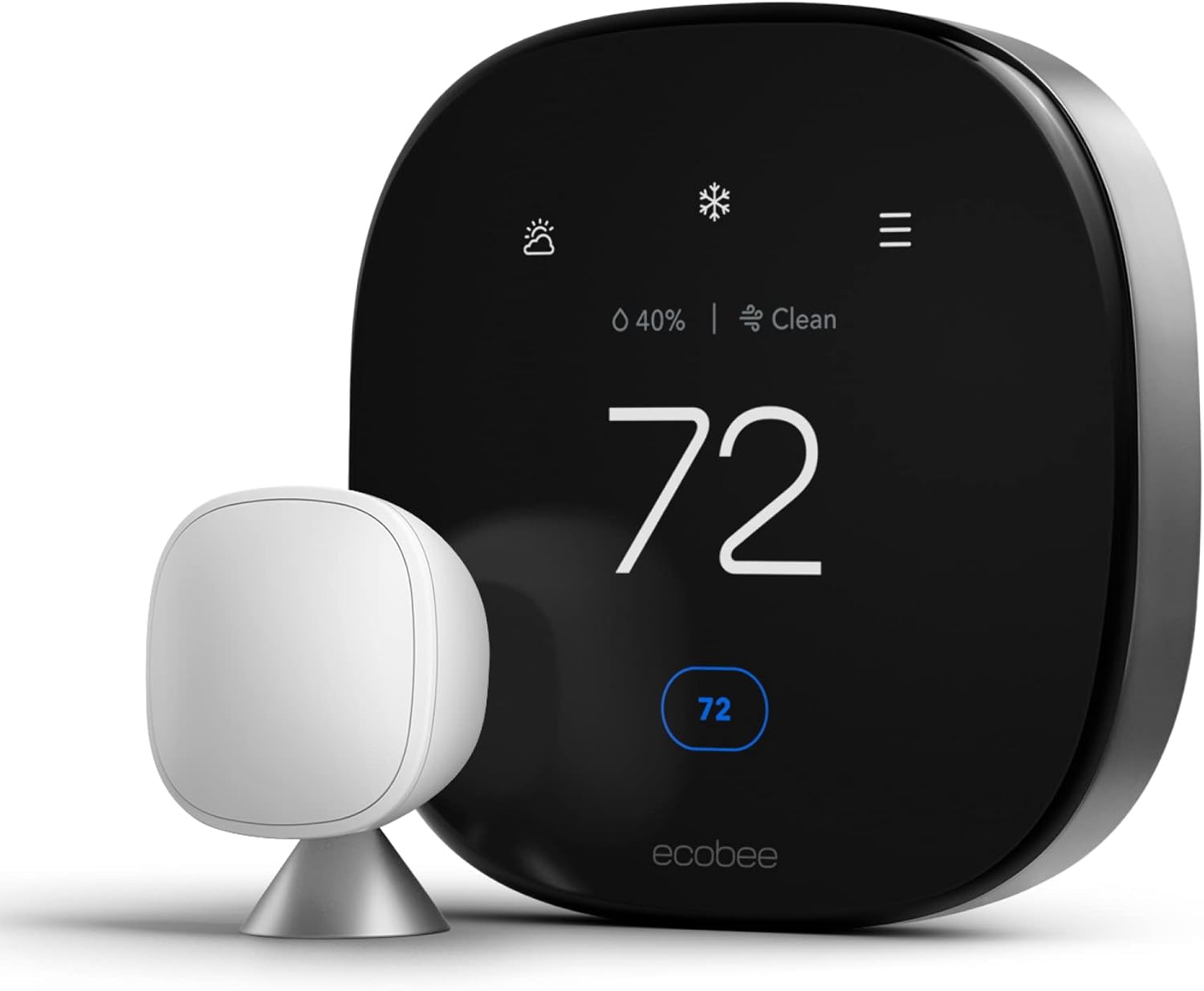
No matter which brand you choose, a smart thermostat unlocks efficiency. The Ecobee Smart Thermostat Premium works beautifully with both Trane and Carrier standard systems and can reduce HVAC runtime by an additional 8–15% through geofencing and smart scheduling.
See Latest PriceHeat Pump Comparison: Cold-Climate Performance & HSPF2
The heat pump market has experienced the most dramatic growth in the residential HVAC sector over the past three years, driven by the Inflation Reduction Act’s incentives, rising natural gas prices, and growing consumer awareness of heat pump efficiency advantages. Both Trane and Carrier have invested heavily in their heat pump lines — but they have made different engineering bets that favor different climates.
Understanding HSPF2: The Heating Efficiency Rating
Just as SEER2 measures cooling efficiency, HSPF2 (Heating Seasonal Performance Factor 2) measures heat pump heating efficiency. Higher HSPF2 means lower heating bills. The minimum HSPF2 for new heat pumps sold in the northern U.S. climate zones (as of 2023) is 7.5 HSPF2. Premium units reach 10+ HSPF2.
| Model | Brand | SEER2 | HSPF2 | Min Operating Temp | Best Climate |
|---|---|---|---|---|---|
| Infinity 24 (25VNA) | Carrier | 20.5 | 10.5 | -22°F (-30°C) | Cold northern climates |
| XV20i TruComfort | Trane | 20 | 10.0 | -13°F (-25°C) | Mixed/moderate climates |
| Performance 17 (25HCB) | Carrier | 17 | 9.0 | 0°F (-18°C) | Mixed climates |
| XL18i Heat Pump | Trane | 18 | 8.5 | 5°F (-15°C) | Mild/moderate climates |
| Comfort 14 (25HBC) | Carrier | 14.5 | 7.8 | 17°F (-8°C) | Southern climates |
| XR14 Heat Pump | Trane | 14.8 | 7.5 | 17°F (-8°C) | Southern climates |
Cold-Climate Heat Pump Performance
The most critical heat pump specification for northern U.S. states (roughly any area that sees regular temperatures below 20°F) is the minimum operating temperature and the efficiency retention as temperatures drop. Standard heat pumps lose significant capacity below 30°F and become ineffective below 15–20°F. Cold-climate heat pumps — sometimes called “hyper heat” or “cold climate” units — maintain meaningful heating capacity down to -13°F to -22°F.
Carrier’s Infinity 24 (25VNA) with its Greenspeed variable-speed technology can operate and maintain useful heating capacity down to -22°F, making it one of the best premium whole-home heat pump solutions for northern climates. Its variable-speed compressor can modulate down to very low capacities in mild weather for maximum efficiency, then ramp up aggressively in very cold conditions when capacity is needed most.
Trane’s XV20i in heat pump configuration operates down to -13°F — excellent performance, but 9°F less capable than Carrier’s top unit in the most extreme conditions. For most northern U.S. homeowners, this difference is rarely encountered in practice. For Minnesota, Michigan, or New England at historically extreme temperatures, the extra Carrier capacity margin may provide meaningful comfort insurance.
Both Trane’s EarthWise Hybrid System and Carrier’s Hybrid Heat® Dual Fuel system pair an electric heat pump with a gas furnace backup. The heat pump handles all heating duty above approximately 35–40°F (extremely efficiently), and the gas furnace takes over only during the coldest periods when the heat pump’s efficiency advantage diminishes. This hybrid approach typically delivers 30–40% lower annual heating costs versus a standalone gas furnace, and qualifies for IRA heat pump tax credits.
Furnace Comparison: AFUE Ratings & Variable-Speed Blowers
While much of the marketing attention goes to air conditioners and heat pumps, the furnace is equally important — in most of the U.S., it provides the majority of the home’s annual energy consumption. Both brands offer furnaces from 80% to 98.5% AFUE (Annual Fuel Utilization Efficiency).
Understanding AFUE
AFUE represents the percentage of fuel that is converted to usable heat. A 96% AFUE furnace converts 96 cents of every dollar of natural gas into heat — 4 cents escapes through the flue. The difference between an 80% AFUE and a 96% AFUE furnace on a $1,200/year gas heating bill is approximately $192 per year — meaningful over a 20-year lifespan.
Trane Furnace Lineup
- S8X1: 80% AFUE, single-stage — budget tier
- S9V2: 96% AFUE, two-stage, multi-speed blower
- S9V2-VS: 97.3% AFUE, variable-speed, ComfortLink II compatible — flagship
- S8B1: 80% AFUE, single-stage, upflow — builder grade
Trane’s variable-speed S9V2-VS is highly regarded for its precision humidity control and quiet operation at part-load. The Climatuff engineering philosophy extends to the furnace — Trane builds for longevity over peak specs.
Carrier Furnace Lineup
- 58SB: 80% AFUE, single-stage — entry level
- Performance 96: 96.5% AFUE, two-stage — mid tier
- Infinity 96: 96.5% AFUE, variable-speed, Infinity compatible
- Infinity 98: 98.5% AFUE, variable-speed — highest AFUE flagship
Carrier’s Infinity 98 holds the highest published residential furnace AFUE on the market at 98.5% — 1.2% better than Trane’s 97.3% flagship. On a $1,200 annual gas bill, this marginal difference saves approximately $14/year. Not a deciding factor but worth noting.
Variable-Speed Blowers: The Comfort Differentiator
The blower motor is one of the most consequential components for both comfort and efficiency. Both Trane and Carrier offer ECM (Electronically Commutated Motor) variable-speed blowers on their premium furnaces, but their implementations differ in meaningful ways.
Carrier’s Infinity 96 and 98 furnaces use fully communicating variable-speed blowers that the Infinity Touch Control thermostat can manage with granular precision — adjusting airflow in real-time based on zone demand, humidity, and temperature differential. Trane’s S9V2-VS similarly communicates with the ComfortLink II thermostat, but technicians generally report that Carrier’s modulation algorithm delivers slightly smoother transitions between heating stages, resulting in fewer perceptible temperature swings.
Innovation & Technology: Thermostats & Communicating Systems
The technology story for both brands has shifted dramatically from hardware features to software and connectivity. In 2026, the differentiating factor between a basic installation and a premium one is often the communicating thermostat — the brain that optimizes the entire system’s operation.
Carrier Greenspeed® Intelligence & Infinity Touch
Carrier’s Infinity system with Greenspeed Intelligence is widely regarded as the most sophisticated integrated HVAC control system in the residential market. The Infinity Touch Control thermostat communicates digitally with every component — the outdoor unit, air handler, furnace, and ventilation accessories — using a proprietary communication protocol that enables continuous performance feedback and real-time optimization.
The system’s variable-speed compression can ramp down to 25% of rated capacity in mild weather, maintaining temperature within ±0.5°F of setpoint continuously — something a two-stage system can never achieve. The Infinity Touch thermostat’s interface is often cited by homeowners and technicians alike as the most intuitive proprietary control panel in the category, with clear display of humidity, air quality, and system operating status.
Trane TruComfort™ & ComfortLink II
Trane’s answer is TruComfort — variable-speed technology with 700+ stages of heating and cooling that effectively eliminates temperature swings through continuous modulation. The ComfortLink II XL1050 thermostat is the system’s interface, and while functional, it receives mixed reviews compared to Carrier’s Infinity Touch on user experience. The display is smaller, the menu navigation is less intuitive, and the smart home integration has historically lagged behind Carrier.
Third-Party Thermostat Compatibility
This is a critical consideration that both brands typically obscure in their marketing: both premium variable-speed systems lose most of their functionality when paired with third-party thermostats. A Nest, Ecobee, or Honeywell thermostat connected to a Carrier Infinity or Trane XV20i can control basic on/off operation, but the variable-speed modulation, humidity optimization, and real-time diagnostics are all disabled — effectively turning a $10,000 variable-speed system into a $4,000 two-stage system in terms of delivered performance.
If smart home integration (Alexa, Google Home, Apple HomeKit) is a priority, evaluate the brand’s native integration options carefully. Carrier has stronger Google ecosystem integration, while Trane’s Nexia platform connects more naturally with broader Z-wave home automation systems. For standard single-stage or two-stage systems from either brand, any quality third-party thermostat works perfectly. Read our detailed explanation of thermostat types and our Ecobee3 Lite review for third-party options.
Noise Levels: A Deep-Dive Into dB Measurements
For many homeowners, particularly those with bedroom windows close to the outdoor unit or who are sensitive to ambient noise, the sound level of the outdoor condenser is a deciding factor. Both brands market “ultra-quiet” operation — but the numbers differ meaningfully.
How HVAC Noise Is Measured
Sound is measured in decibels (dB) on a logarithmic scale. Every 10 dB increase represents a perceived doubling of loudness to human hearing. The outdoor condenser is the primary noise source. Internal air handler noise is usually less significant but matters for units installed in living spaces.
| Reference Point | Decibels (dBA) |
|---|---|
| Library interior | 40 dBA |
| Carrier Infinity 26 (top model, full load) | 51 dBA |
| Carrier Infinity 24 (variable speed, part load) | 54 dBA |
| Normal conversation at 1m | 55–60 dBA |
| Trane XV20i (full load) | 57 dBA |
| Trane XV18 (full load) | 62 dBA |
| Carrier Performance 16 (two-stage, full load) | 67 dBA |
| Standard single-stage unit (any brand) | 72–76 dBA |
| Carrier Comfort series entry tier | 71–75 dBA |
| Trane XR14 entry tier | 73–76 dBA |
The noise advantage of variable-speed units over single-stage units is dramatic — the difference between 51 dBA and 75 dBA is perceived as nearly six times louder. If you are upgrading from a standard single-stage unit, any variable-speed unit from either brand will be a stunning improvement. Between Carrier’s Infinity and Trane’s XV at comparable price points, Carrier’s Silencer System II compressor blanket gives it a consistent 4–6 dB noise advantage at full load — just perceptible to the human ear but meaningful over years of daily operation near a bedroom.
At part-load operation (which is where variable-speed units spend most of their operating time in mild weather), the noise advantage extends further. Both units can modulate down to near-silent operation at 20–30% capacity, comparable to a quiet household appliance.
Humidity Control: The Comfort Factor Nobody Talks About
Temperature and humidity are inseparable components of comfort. A home at 75°F and 70% relative humidity feels oppressively muggy, while the same temperature at 45% relative humidity feels cool and refreshing. This is why humidity control deserves dedicated analysis in any HVAC comparison.
Why Standard Systems Struggle With Humidity
A single-stage air conditioner cools aggressively whenever it runs, then turns off completely when the setpoint is reached. In humid climates, this means the AC may cycle on and off rapidly during mild, humid weather — cooling the air temperature to setpoint before it has had sufficient runtime to remove meaningful amounts of moisture. The result: a house at the right temperature but uncomfortably humid.
How Variable-Speed Systems Solve This
Variable-speed systems from both Carrier and Trane address humidity through “long runs at low capacity.” Running at 30–40% capacity continuously in mild weather means the evaporator coil stays cold and accumulates condensation (removing moisture) for extended periods. A properly sized variable-speed system can maintain indoor relative humidity at 45–50% during humid weather where a single-stage system might allow it to climb to 60–65%.
Carrier’s Infinity system includes a dedicated humidity setpoint on the thermostat — you can program “maintain 45% RH” and the system adjusts its operation to achieve this independently of the temperature setpoint. Trane’s TruComfort system also offers humidity control but with less granular user interface control in the standard configuration.
Trane’s proprietary Comfort-R™ technology — available on premium systems — operates the blower at lower airflow for the first few minutes of each cooling cycle to prioritize moisture removal before switching to normal airflow for temperature maintenance. This is a useful partial mitigation for humidity issues even in two-stage systems and is one of Trane’s differentiating comfort features.
Cost Analysis: Installation, Operating, & Total Cost of Ownership
Neither brand is budget-friendly. If you are looking for the most economical option, brands like Goodman, Rheem, or builder-grade Lennox units serve that market segment. Trane and Carrier are premium investments where the question is not “which is cheaper” but “which delivers better long-term value for the premium paid.”
Installation Cost Ranges (2026)
| System Type / Tier | Trane (Full Install) | Carrier (Full Install) |
|---|---|---|
| Entry-tier AC + Air Handler (1,500 sq ft) | $5,500–$7,000 | $5,800–$7,200 |
| Mid-tier two-stage AC system | $7,000–$9,000 | $7,200–$9,500 |
| Premium variable-speed AC system | $9,000–$11,000 | $10,000–$12,000 |
| Standard heat pump system | $6,000–$8,500 | $6,200–$8,800 |
| Cold-climate heat pump (premium) | $10,000–$14,000 | $11,000–$15,000 |
| Gas furnace replacement only | $2,800–$5,500 | $3,000–$5,800 |
| Full HVAC system (AC + furnace) | $8,500–$14,000 | $9,000–$15,000 |
Operating Cost Comparison
The efficiency difference between a mid-range unit (15–16 SEER2) and a premium variable-speed unit (20–22 SEER2) translates to real annual savings. Using a 2,000 sq ft home in a mixed climate (Atlanta, GA) as a benchmark:
- 14 SEER2 standard unit: ~$680/year cooling cost
- 17 SEER2 two-stage unit: ~$560/year — saving ~$120/year vs entry
- 20 SEER2 variable-speed: ~$476/year — saving ~$204/year vs entry
- 22 SEER2 Trane XV / 24 SEER2 Carrier Infinity: ~$432–$433/year
The payback period for the premium upgrade from a 14 SEER2 to a 22 SEER2 unit (approximately $3,000 additional cost) at $204/year additional savings is approximately 14.7 years — not a compelling pure financial case. The real argument for the premium tier is the comfort improvement from variable-speed operation and humidity control, not purely the energy savings math.
Rebates & Tax Credits: Reducing Your Actual Out-of-Pocket Cost
The Inflation Reduction Act of 2022 created the largest federal incentive program for home energy efficiency in U.S. history. For HVAC equipment specifically, these incentives can dramatically reduce the net cost of upgrading to high-efficiency equipment from either Trane or Carrier.
Federal Tax Credits Available in 2026
- 25C Energy Efficient Home Improvement Credit: 30% of the cost of qualifying high-efficiency HVAC equipment, up to $600 per item (or $1,200 total per year across all home improvements). This credit applies to qualifying central air conditioners, heat pumps, and furnaces. Both Trane and Carrier have models that qualify.
- Heat Pump Tax Credit: Qualifying heat pumps receive a separate credit of 30% up to $2,000 — the most generous incentive category. Cold-climate heat pumps from both brands meeting the CEE Tier 2 efficiency standard are eligible. This credit can be combined with the 25C credits in the same tax year up to the annual caps.
A Carrier Infinity 24 heat pump system installed for $13,500 including labor. If the heat pump component costs $5,800 and qualifies for the full $2,000 heat pump credit, plus $600 for the air handler, the federal tax credit reduces your net cost to $10,900 — a 19% reduction. Combined with state utility rebates (typically $300–$750 for qualifying systems in most states), total incentives can reach $2,500–$3,000. Always consult your tax advisor, as eligibility depends on income thresholds under the IRA program.
Utility Rebates
In addition to federal tax credits, most electric utilities offer rebates for high-efficiency HVAC upgrades, particularly heat pumps. These typically range from $200 to $1,500 depending on your utility and the efficiency tier of the equipment. The ENERGY STAR rebate finder at energystar.gov/rebate-finder allows you to search by zip code for all available local, state, and utility incentives for both Trane and Carrier equipment.
Warranty Comparison: Registration Requirements & Coverage Details
Both brands offer what sounds like identical “10-year parts warranties.” Reading the fine print reveals meaningful differences — particularly on the compressor, which is the most expensive single component in any HVAC system.
| Warranty Item | Trane | Carrier |
|---|---|---|
| Parts Warranty (registered) | 10 Years | 10 Years |
| Compressor Warranty (registered) | 12 Years | 10 Years |
| Parts Warranty (unregistered) | 5 Years | 5 Years |
| Registration Window | 60 days from installation | 90 days from installation |
| Heat Exchanger (furnaces) | Limited Lifetime | Limited Lifetime |
| Labor Coverage (standard) | 1 Year (installer-dependent) | 1 Year (installer-dependent) |
| Extended Warranty Program | Trane Service Advantage | Carrier Extended Service Plans |
Both Trane and Carrier reduce their parts warranty from 10 years to just 5 years if you fail to register the equipment within the required window (60 days for Trane, 90 for Carrier). This is done through the brand’s online portal and takes 10 minutes. Your HVAC installer should provide the model and serial number at installation — keep this documentation permanently. Many homeowners discover they lost half their warranty coverage simply because they never completed registration.
Trane’s 12-year compressor warranty — vs Carrier’s 10-year — is the most meaningful warranty distinction between the two brands. Given that compressor replacement typically costs $1,500–$3,000 in labor and parts, the two extra years of coverage on the most failure-prone component is a genuine financial protection advantage.
Parts Availability & Serviceability
The long-term cost of owning any HVAC system is heavily influenced by how easily — and expensively — it can be serviced. This is an area where most comparison guides gloss over important practical differences.
Standard Components (Both Brands)
For entry and mid-tier systems from both brands, parts availability is excellent. Both Trane and Carrier are distributed through networks of HVAC wholesale distributors in virtually every metropolitan area. Standard capacitors, contactors, fan motors, and refrigerant are interchangeable across many models, and any HVAC technician with manufacturer-basic training can service these systems effectively.
Premium/Communicating System Components
This is where the experience diverges. Carrier’s Infinity system uses proprietary communicating components — control boards, inverter drives, and communicating thermostats — that can only be ordered through Carrier-authorized distributors. The modular design philosophy makes swapping components relatively straightforward for trained technicians, but the parts are Carrier-exclusive and priced at a premium.
Trane’s proprietary components (particularly Climatuff compressors for XV-series units and ComfortLink II control boards) are similarly dealer-exclusive but are reported by technicians as taking longer to source in some markets, particularly in regions with fewer Trane wholesale locations relative to Carrier.
For homeowners in rural areas with limited HVAC contractor choices, Carrier’s slightly broader service network and more technician-familiar systems can be a practical advantage. In major metro areas, both brands are equally well-served.
The Climate Guide: Which Brand Is Better for Your Location?
The single most important contextual factor in the Trane vs Carrier decision — after installer quality — is your local climate. Both brands perform excellently under typical conditions, but each has structural advantages in specific environmental challenges.
| Climate Type | Key Challenge | Recommended Brand | Why |
|---|---|---|---|
| Coastal / Salt Air Florida, Carolinas, Gulf Coast, Pacific Coast |
Salt corrosion on coil | Trane | Spine Fin™ all-aluminum coil resists salt corrosion significantly better than plate-fin coils |
| Extreme Heat Arizona, Nevada, Texas summers |
Continuous high-load operation | Trane | Climatuff compressor engineering focus on durability under sustained stress |
| Northern / Very Cold Minnesota, New England, Great Lakes |
Sub-zero heating performance | Carrier | Infinity 24 cold-climate heat pump operates to -22°F vs Trane XV’s -13°F floor |
| High Humidity Southeast, Gulf States, Midwest summers |
Moisture removal / comfort | Tie (system-dependent) | Both variable-speed lines excel; Trane’s Comfort-R™ and Carrier’s humidity setpoint offer different approaches |
| Moderate / Mixed Mid-Atlantic, Pacific Northwest, California |
Balanced efficiency and comfort | Carrier | Quieter operation, higher peak SEER2, and superior smart home integration favors Carrier where durability extremes don’t apply |
| Noise-Sensitive Dense neighborhoods, near bedrooms |
Minimal sound output | Carrier | Infinity 26 at 51 dBA vs Trane XV20i at 57 dBA — perceptible difference at close range |
System Sizing Guide: Getting the Tonnage Right
Before brand selection means anything, getting the equipment size right is fundamental. An oversized system — a mistake made by many installers who “right-size up” to satisfy customers and reduce callback risk — causes rapid on/off cycling that degrades humidity control, increases wear on components, and wastes energy. An undersized system runs continuously in extreme weather without achieving setpoint.
Manual J: The Only Correct Sizing Method
The industry-standard sizing method is Manual J, a calculation methodology developed by ACCA (Air Conditioning Contractors of America) that accounts for square footage, ceiling height, insulation levels, window area and orientation, local climate data, infiltration rate, and occupancy. A proper Manual J calculation typically takes 1–3 hours and requires specific software — it is not the “rule of thumb” that many installers use (1 ton per 400–600 sq ft).
The rule-of-thumb approach systematically oversizes equipment in well-insulated modern homes and undersizes in older poorly-insulated homes. Always request Manual J documentation from your HVAC contractor before accepting their sizing recommendation. Both Trane and Carrier’s dealer networks include contractors certified to perform proper load calculations — ask specifically for Trane Comfort Specialists (TCS) or Carrier Factory Authorized Dealers (FAD) for contractors who meet the highest training standards.
General Sizing Reference
| Home Size | Typical Tonnage Range | BTU/hr Range | Note |
|---|---|---|---|
| Under 1,200 sq ft | 1.5–2 ton | 18,000–24,000 | Smaller homes often undersized by contractors |
| 1,200–1,800 sq ft | 2–2.5 ton | 24,000–30,000 | Most common residential size |
| 1,800–2,400 sq ft | 2.5–3.5 ton | 30,000–42,000 | Highly dependent on insulation and windows |
| 2,400–3,200 sq ft | 3.5–4 ton | 42,000–48,000 | Two-zone systems often preferable over 4+ ton single |
| 3,200–4,000 sq ft | 4–5 ton | 48,000–60,000 | Strong case for zoned multi-stage systems |
The “Secret Factor”: Installation Quality
Here is the truth that manufacturers don’t want to admit: the brand matters significantly less than the installer. This is not a cliché — it is a structural reality of the HVAC industry that is consistently validated by service technicians across both brands.
A top-tier Carrier Infinity system installed poorly — bad ductwork, wrong refrigerant charge, blower motor not tuned to the duct system, inadequate static pressure testing — will underperform and fail prematurely. A mid-range Trane XR system installed by a meticulous contractor who performs full commissioning will outperform the premium system on comfort, efficiency, and lifespan.
What “Proper Commissioning” Actually Means
- Manual J Load Calculation — Confirms the system is correctly sized for your home’s actual heat load, not a rule-of-thumb estimate.
- Manual D Duct Design — Verifies that the duct system can deliver the designed airflow to every room. Existing ductwork is frequently the cause of new system underperformance.
- Static Pressure Testing — Measures the actual resistance in the duct system. Too much static pressure overworks the blower motor and reduces system capacity; too little causes poor air distribution.
- Refrigerant Charge Verification — Measures actual refrigerant charge against design specifications. Industry studies consistently show that 30–50% of new residential HVAC systems are improperly charged, reducing efficiency by 5–15% and shortening compressor life.
- Blower Motor Speed Tuning — On variable-speed systems, the blower must be programmed for the specific duct system. Most installers skip this step, leaving premium blower motors running at default speeds that may not match the ductwork.
- Thermostat Commissioning — For communicating systems (Carrier Infinity or Trane ComfortLink II), the control system must be configured for the specific equipment combination and home characteristics. This alone can take 30–60 minutes when done properly.
Ask specifically: “Do you perform Manual J calculations, static pressure testing, and refrigerant charge verification on every installation?” A contractor who gives you a vague answer or says these aren’t necessary is a red flag regardless of which brand they’re selling. Both Trane Comfort Specialists and Carrier Factory Authorized Dealers have training requirements that include these commissioning steps — though compliance varies by individual contractor.
Thinking of pairing a third-party thermostat with either system? Read our Ecobee3 Lite review to see if you can save money on controls without sacrificing comfort. For the Honeywell perspective, see our Honeywell Home T9 review.
Trane vs Carrier vs Lennox vs Goodman: Where They All Fit
The two-brand comparison only tells part of the story. Understanding where Trane and Carrier sit in the broader market context helps calibrate whether the premium price is justified for your situation.
| Brand | Tier | Peak SEER2 | Key Strength | Best For |
|---|---|---|---|---|
| Lennox | Ultra-Premium | 28 SEER2 (Signature) | Highest efficiency available; sophisticated zoning | Energy-obsessed buyers, mild climates |
| Carrier | Premium | 24 SEER2 (Infinity) | Best tech integration, quietest, smart home | Tech-savvy, noise-sensitive, moderate climates |
| Trane | Premium | 22 SEER2 (XV20i) | Durability, coastal resistance, compressor warranty | Harsh/coastal environments, durability priority |
| Rheem / Ruud | Mid-Premium | 20 SEER2 | Value at mid-range, wide dealer network | Budget-conscious premium upgrades |
| Goodman / Daikin | Value/Mid | 18 SEER2 | Best price-to-performance, easy parts access | Rental properties, budget installs, DIY-accessible |
Lennox’s XC25 reaches 28 SEER2 — 4 points above Carrier’s best and 6 above Trane’s — but commands a significant premium (typically $2,000–$4,000 more than equivalent Carrier Infinity). For most homeowners, the financial payback on the Lennox efficiency premium over a Carrier Infinity installation does not close within the system’s realistic lifespan. However, in extremely high-cooling-demand climates (Phoenix, Las Vegas, Houston) with high electricity rates, the math becomes more compelling.
Maintenance Schedule: Protecting Your Investment
Both Trane and Carrier systems require identical fundamental maintenance — the equipment physics are the same. The difference is in how each brand’s dealer network makes maintenance accessible and what happens when you skip it.
Annual Maintenance Checklist
Spring (Pre-Cooling Season)
- Clean or replace air filter
- Clean outdoor condenser coils (garden hose rinse)
- Clear condensate drain line
- Check refrigerant pressure (professional)
- Test thermostat calibration
- Inspect electrical connections and capacitors
- Test disconnect and breaker
Fall (Pre-Heating Season)
- Replace air filter
- Test furnace ignition sequence
- Inspect heat exchanger (cracks = CO risk)
- Check gas pressure and combustion
- Clean burners and flame sensor
- Test safety controls and limits
- Lubricate blower motor bearings
Filter replacement frequency — the single most important homeowner action — varies by filter type: standard 1″ fiberglass every 30 days, pleated 1″ every 60–90 days, media filter every 6–12 months. Both Trane and Carrier’s communicating thermostat systems (ComfortLink II and Infinity Touch, respectively) include filter change reminders based on actual runtime hours rather than calendar time — one of the most practical features of their premium thermostat offerings.
Real Homeowner Case Studies
Abstract comparisons benefit from real-world grounding. Here are three representative homeowner scenarios with outcomes based on aggregated real-world installation reports.
Case 1: Coastal Florida Home — Trane XV20i
Home: 2,400 sq ft, 1998 construction, Miami-Dade County. Three previous AC units in 20 years — all plate-fin coil units failed from salt corrosion within 8–10 years. Decision: Trane XV20i (22 SEER2, Spine Fin coil) with ComfortLink II thermostat. Outcome after 4 years: Zero coil-related service calls. Technician’s first annual inspection confirmed coil in pristine condition. Energy bills down 32% from previous system. Customer extremely satisfied.
Case 2: Minnesota Cold-Climate Home — Carrier Infinity 24 Heat Pump
Home: 2,800 sq ft, 2005 construction, Minneapolis suburbs. Previous system: two-stage heat pump that struggled below 15°F, requiring expensive propane backup for 40–60 days per year. Decision: Carrier Infinity 24 (25VNA) cold-climate heat pump with gas furnace backup (dual fuel). Outcome after 2 heating seasons: Propane backup activated only 12 days in the first winter and 8 days in the second, vs 55+ days with the previous system. Annual heating cost down 41%. Customer reports house maintains consistent temperature throughout even at -18°F events.
Case 3: Chicago Suburb — Installation Quality Matters More Than Brand
Home: 1,900 sq ft, 1978 construction, poorly insulated. First quote: Carrier Infinity 20 system with a contractor who recommended 5-ton equipment (oversized by ~40%) for “$zero callbacks.” Second quote: mid-range Trane XL18i, 3-ton, with full Manual J calculation and static pressure testing. Decision: Trane XL18i at $2,000 less cost. Outcome: System runs at ~40% capacity most of summer on long comfortable cycles. Home maintains 45% RH all season. Customer reports it’s the most comfortable the house has been in 30 years. The oversized Carrier system would have short-cycled constantly, providing inferior comfort at higher cost.
Final Verdict: Which Brand Should You Choose?
Choose Trane If:
- You live in a coastal or high-humidity environment
- Durability and corrosion resistance are #1 priority
- You want the 12-year compressor warranty advantage
- Your home has challenging ductwork that stresses equipment
- You are in an extreme-heat climate (desert Southwest)
Choose Carrier If:
- Noise level is a key concern (51 dBA vs 57 dBA)
- You want maximum SEER2 efficiency (24 vs 22)
- Cold-climate heat pump performance is critical (−22°F)
- You want the Infinity smart home integration ecosystem
- Parts serviceability and technician familiarity are priorities
The honest conclusion: both brands will serve you excellently if installed correctly by a qualified contractor. The difference in real-world comfort and longevity between a well-installed Carrier Infinity and a well-installed Trane XV20i is marginal. The difference between a well-installed system of either brand and a poorly installed system of either brand is enormous. Spend as much energy vetting your contractor as comparing brand logos.




 Home
Home
 Info
Info
 Compare
 Reviews
 Shop
Shop