How to Replace the Battery in a Honeywell Thermostat — Every Model Covered
From the classic RTH2300 to the T6 Pro — the exact battery type, removal method, and post-replacement steps for every Honeywell thermostat family.
Before You Start: What You Actually Need to Know
Replacing the battery in a Honeywell thermostat sounds like a 30-second job — and for most models, it genuinely is. But Honeywell’s thermostat lineup spans decades of production and dozens of distinct model families, and what works for one can be completely wrong for another. Before you pull anything off the wall, spending 90 seconds identifying your exact model and battery type will save you a frustrating trip back to the hardware store.
The good news: you don’t need any electrical knowledge, specialized tools, or HVAC experience to do this. The process is purely mechanical — remove the thermostat body from its wall plate, access the battery tray, swap the cells, and put it back. If you can change the batteries in a TV remote, you can replace the batteries in a Honeywell thermostat.
What You’ll Need
- Fresh alkaline batteries in the correct size for your model (see the model reference section below)
- A small flathead screwdriver (optional — only needed for a few older models)
- Your phone or a sticky note to photograph or record your current thermostat settings
- A pencil eraser for cleaning battery contacts if corrosion is present
Finding Your Model Number
Honeywell prints the model number on the thermostat itself — usually on a label on the back of the thermostat body or inside the battery compartment. The model number format for modern Honeywell thermostats typically looks like: RTH2300B1012, T6 Pro TH6320U2008, FocusPRO 6000 TH6110D1005, etc.
The Complete Honeywell Thermostat Battery Reference Guide
This is the section to bookmark. Rather than sending you hunting through individual model manuals, we’ve compiled the battery specifications for every major Honeywell thermostat family in one place.
| Model / Series | Battery Type | Qty | Battery Location | Approx. Life |
|---|---|---|---|---|
| RTH2300 / RTH2410 | AA Alkaline | 2 | Back, slide-out tray | 10–14 months |
| RTH6300 / RTH6350 | AA Alkaline | 2 | Back, slide-out tray | 10–14 months |
| RTH7500 / RTH7560 | AA Alkaline | 2 | Back, slide-out tray | 10–14 months |
| RTH9580 (Smart) | No battery (C-wire) | — | N/A | N/A |
| T4 Pro (TH4110U) | AA Alkaline | 2 | Back, pull-down tab | 12–18 months |
| T6 Pro (TH6320U) | AA Alkaline | 2 | Back, pull-down tab | 12–18 months |
| T9 (THX321WFS2001) | No battery (C-wire) | — | N/A | N/A |
| T10 Pro | No battery (C-wire) | — | N/A | N/A |
| FocusPRO 5000 (TH5110D) | AA Alkaline | 2 | Back of thermostat body | 10–14 months |
| FocusPRO 6000 (TH6110D) | AA Alkaline | 2 | Back of thermostat body | 10–14 months |
| VisionPRO 8000 (TH8321R) | AA Alkaline | 3 | Right side panel or back | 12–16 months |
| Prestige IAQ (THX9321R) | AA Alkaline | 3 | Right side panel or back | 12–16 months |
| CT87 (Round / Analog) | No battery (24V powered) | — | N/A | N/A |
| Lyric T5 / T6 | AA Alkaline | 2 | Back of thermostat body | 10–14 months |
Most Common
- Brands: Duracell, Energizer, Rayovac
- Voltage: 1.5V each
- Pack size: 4-pack covers 2 replacements
- Life: 10–18 months typical
Premium Models
- Brands: Duracell, Energizer
- Voltage: 1.5V each
- Pack size: 4-pack covers 1 replacement + 1 spare
- Life: 12–16 months typical
No Battery Needed
- Power source: 24VAC via C-wire
- Battery: None required
- If screen goes blank: Check C-wire connection
- Check: Transformer output at air handler

How to Know Your Honeywell Thermostat Battery Is Low
Honeywell thermostats are designed to give you advance warning before batteries die completely — but the warning doesn’t always present in the way you’d expect. Knowing what to look for means you can swap cells before the system shuts down on a 95°F afternoon or a freezing January night.
The Official Low Battery Indicator
Most Honeywell digital thermostats display a small battery icon or the text “BATT” or “REPLACE BATTERY” on their screen when the battery voltage drops below a safe threshold — typically around 2.4V total for a 2-AA setup. On some models, this warning appears for several weeks before the batteries actually fail.
Subtler Symptoms of a Low Battery
| Symptom | What’s Happening | Likely Cause |
|---|---|---|
| Dim or fading display | Backlight can’t sustain full brightness | Low battery voltage |
| Slow or unresponsive buttons | Processor running slower on reduced power | Low battery voltage |
| Lost schedule/programs | Insufficient power to maintain EEPROM state | Battery near dead |
| Incorrect time/date shown | Clock circuit lost power momentarily | Battery intermittent |
| HVAC doesn’t respond to setpoint change | Relay can’t energize on low voltage | Battery critically low |
| Blank screen | Complete power loss | Dead battery |
Step-by-Step: Replacing Batteries in the Honeywell RTH Series
The RTH series — including the RTH2300, RTH2410, RTH6300, RTH6350, RTH7500, RTH7560, and RTH9585 — represents Honeywell’s most widely installed programmable thermostat family. Battery replacement on any RTH model follows essentially the same procedure.
RTH Series Battery Specs
Battery type: 2× AA Alkaline | No special tools required | Settings retention: Usually preserved
- Take a photo of your current settings
Before touching anything, snap a quick photo of your thermostat screen showing the current temperature set points, mode (Cool/Heat/Auto), and fan setting. This takes 10 seconds and can save you 10 minutes of re-configuration. - Pull the thermostat body off the wall plate
Grip the thermostat body firmly near the top and pull it straight toward you. It’s held on by plastic clips, not screws. Apply firm, even pressure — it should pop off cleanly. The wires remain connected to the wall plate; only the thermostat body comes off. - Locate the battery tray on the back
Flip the thermostat body around. You’ll see a rectangular battery compartment on the back, usually with a small tab or lip. Slide the tray outward (typically downward) to release it. - Note the polarity and remove old batteries
Before pulling the batteries out, look at the +/- orientation marks in the compartment. Remove the old batteries and check them — look for any white powder or green oxidation on the battery ends or contacts. - Insert fresh alkaline AA batteries
Place 2 fresh alkaline AA batteries into the tray following the polarity markings. The flat end (negative) goes against the spring contact; the positive cap end goes against the flat positive terminal. - Slide the battery tray back in
Push the tray back into the thermostat body until it’s fully seated and flush with the back surface. - Re-attach the thermostat to the wall plate
Line up the thermostat body with the wall plate. Press it firmly until you hear/feel the clips engage. - Wait for power-up and verify the display
The thermostat should power up within a few seconds. If a “time” setup screen appears, set the clock first, then verify your program schedules are intact. - Test a heating or cooling call
Set the target temperature well above (for heat) or below (for cool) the current room temperature and wait 2–3 minutes. Confirm the HVAC system actually starts.

Step-by-Step: Replacing Batteries in the Honeywell T4 Pro and T6 Pro
The T4 Pro and T6 Pro are Honeywell’s current-generation programmable thermostats. The battery access mechanism is slightly different from RTH units but still completely tool-free.
T4/T6 Pro Battery Specs
Battery type: 2× AA Alkaline | No tools required | Settings retention: Preserved in non-volatile memory
- Pull the thermostat body off the base plate
The T4 and T6 Pro both detach by pulling the bottom of the thermostat body outward first, then lifting upward. It’s a slight pivot-and-lift action, different from the straight-pull of RTH models. - Access the battery compartment on the back
With the thermostat body in hand, flip it over. The battery compartment is on the back, accessed via a pull-down tab at the bottom of the tray. - Swap batteries, respecting polarity
Remove the old batteries and install 2 fresh alkaline AAs, matching the +/- markings. Push the tray back up until it latches. - Pivot and click the thermostat back onto the base
Hook the top edge of the thermostat body onto the base plate first, then press the bottom inward until it clicks. - Verify settings and test
The T6 Pro will show its home screen immediately on power-up. Confirm your heat/cool set points and schedule are intact.
Replacing Batteries in Honeywell FocusPRO and VisionPRO Thermostats
The FocusPRO and VisionPRO series were Honeywell’s premium contractor-grade offerings. They use the same AA alkaline batteries as the RTH series, though the VisionPRO 8000 and Prestige IAQ models require three batteries instead of two.
FocusPRO 5000 and 6000
Both the TH5110D (FocusPRO 5000) and TH6110D (FocusPRO 6000) use 2 AA alkaline batteries in a slide-out tray on the back of the thermostat body. The removal procedure mirrors the RTH series: pull the unit off the wall plate, slide out the battery tray, swap batteries, reinsert, and re-attach. The FocusPRO has a slightly firmer clip engagement with the wall plate — apply firm, steady pressure when re-attaching.
VisionPRO 8000 and 8321R
The VisionPRO 8000 uses 3 AA alkaline batteries. On some builds, the battery compartment is accessible from the right side of the thermostat body rather than the back — look for a sliding panel on the right edge. On other builds, it’s accessed from the rear in the conventional way.
Prestige IAQ (THX9321R)
Like the VisionPRO, it uses 3 AA alkaline batteries. The Prestige’s EIM (Equipment Interface Module) stores most system configuration, so battery removal from the thermostat itself doesn’t typically wipe system settings. Always verify zone configurations and schedules after replacement on this model.
FocusPRO / VisionPRO Strengths
- Non-volatile memory preserves most settings
- Battery access is straightforward
- 3-AA design extends time between swaps
- Robust build quality (long replacement cycles)
Watch Out For
- Side-panel battery access can be easy to miss
- Installer parameters may need re-entry
- VisionPRO clips are stiffer — require more force
- Prestige requires installer code for setup recovery

Older and Analog Honeywell Thermostat Models
The Round Honeywell (CT87 Series)
The iconic round Honeywell thermostat — the T87F or CT87 — doesn’t use batteries. It gets its power directly from the 24VAC thermostat circuit. If your round Honeywell isn’t working, the problem is the 24V transformer, the HVAC control board, or the wiring — not batteries.
Older Electronic Models from the 1990s–2000s
Honeywell made several electronic thermostats in the T8000, T8100, and similar series during the 1990s and early 2000s. Most use 2× AA or 2× AAA alkaline batteries in a compartment on the back. The key difference: these older models are more likely to lose their programmed schedule when batteries are removed, since they may use volatile memory backed by the battery. Have your schedule written down before swapping.
Millivolt System Thermostats
Some older gas fireplaces, floor heaters, and gravity furnaces use a millivolt control system — the appliance’s pilot light generates a tiny electrical current that the thermostat uses directly without any external transformer or batteries. If this type of system stops working, battery replacement is not the solution — the thermocouple, pilot assembly, or gas valve is the likely culprit.
What to Do After Replacing Honeywell Thermostat Batteries
Swapping batteries is the easy part. What trips people up is the post-replacement verification. Run through this checklist every time.
- Wait for the display to fully power up
Give it 10–15 seconds to fully initialize. Some models run a brief self-test that blanks the screen before showing the home display. Don’t panic during this window. - Confirm the time and date (if applicable)
Programmable models use the clock to execute schedules. If the time is wrong, your morning heat-up or afternoon cool-down will happen at the wrong time. Set the correct time immediately after battery replacement. - Verify your schedule and set points
Navigate through your programming screens and confirm all your heating and cooling set points are intact. If any period shows a default value, re-enter your preferred schedule. - Test a heating call
Set the target temperature 5°F above the current room temperature and wait 2–3 minutes. You should hear the furnace or heat pump start and feel warm air from the vents within 5 minutes. - Test a cooling call
Set the target temperature 5°F below the current room temperature and verify the outdoor unit starts and the air feels cool. - Reset any “Hold” or override settings
If the thermostat was on “Hold” before batteries died, it will likely restore that hold state when powered up. Cancel any holds to return to normal scheduling.

Troubleshooting: When Battery Replacement Doesn’t Fix the Problem
Problem: Blank Screen After Installing New Batteries
Check 1 — Polarity. Remove the batteries and reinstall them, double-checking that positive (+) and negative (−) ends match the markings in the compartment. Check 2 — Battery contact corrosion. Look at the metal spring contacts inside the battery compartment. Any white or green oxidation will prevent electrical contact. Clean with a pencil eraser or a cotton swab lightly dampened with isopropyl alcohol. Check 3 — Thermostat seating. Confirm the thermostat body is fully clicked onto the base plate.
Problem: Low Battery Warning Won’t Clear
If the “Replace Battery” message persists after installing fresh cells, the most common causes are: incorrect battery type (NiMH rechargeables run at 1.2V, which the thermostat reads as low even when fully charged), batteries that look new but are actually old stock, or a genuine battery contact fault. Try a different brand of batteries.
Problem: HVAC Still Doesn’t Respond After Battery Replacement
- Check that the system mode is set to HEAT or COOL (not OFF or EMERGENCY HEAT)
- Verify the system/fan switch is in the correct position
- Check the circuit breaker for the HVAC unit — a tripped breaker won’t be fixed by a battery swap
- Check the air handler’s 3A or 5A control fuse (a small glass fuse on the control board)
- Confirm the thermostat is actually calling for heating/cooling (set well above or below current room temp)
Problem: Schedule or Settings Lost After Battery Swap
On older models with volatile memory, losing settings during a battery swap is expected behavior. On modern digital models, it shouldn’t happen — if it does, the battery may have been removed for too long or the non-volatile memory chip may be failing. If this keeps happening on a newer model, thermostat replacement is warranted.
Problem: Corrosion on Battery Contacts
- Remove all batteries and any corrosion chunks with a dry toothbrush
- Apply a small amount of white vinegar to neutralize the alkaline corrosion
- Let sit 1 minute, then scrub gently with the toothbrush
- Wipe clean with a dry cotton swab
- Allow to dry completely (15–20 minutes) before installing new batteries
Battery Best Practices: Getting the Most from Your Honeywell Thermostat
Annual Replacement: The Single Best Habit
The most effective thing you can do is stop waiting for the low battery warning and simply replace thermostat batteries every spring, before cooling season starts. Pick a memorable date — the first day of daylight saving time is popular — and swap every thermostat in the house on that day. This takes under 5 minutes total.
| Battery Brand | Type | Voltage | Recommended? | Notes |
|---|---|---|---|---|
| Duracell Coppertop | Alkaline | 1.5V | ✓ Yes | Industry standard, 10-year shelf life |
| Energizer MAX | Alkaline | 1.5V | ✓ Yes | Leak-proof guarantee, consistent voltage |
| Rayovac Fusion | Alkaline | 1.5V | ✓ Yes | Good performance, usually lower price |
| Amazon Basics Alkaline | Alkaline | 1.5V | ~ Acceptable | Less consistent long-term than name brands |
| Energizer Ultimate Lithium | Lithium Primary | 1.5–1.8V | ✗ Not recommended | Higher voltage can stress thermostat electronics |
| Eneloop NiMH Rechargeable | Rechargeable NiMH | 1.2V | ✗ Not recommended | Triggers false low-battery warnings |
| Generic / Dollar Store | Alkaline (low quality) | 1.5V (drops fast) | ✗ Avoid | High leak risk, short lifespan |
Factors That Drain Thermostat Batteries Faster
- Extreme temperatures near the thermostat: Cold ambient temperatures reduce battery capacity. A thermostat on an exterior wall in a poorly insulated home will drain batteries faster in winter.
- High HVAC cycling frequency: Every relay actuation draws a small current spike. A system that short-cycles will consume battery capacity faster than a system with normal 15–20 minute cycles.
- Backlight always on: Some models keep the backlight on continuously. If your thermostat’s screen is always lit, it’s drawing more battery current.
- Old or stored batteries: Alkaline batteries lose about 2–3% of their capacity per year on the shelf. Batteries stored for 3–4 years will run shorter than their rated life.
- Frequent temperature adjustments: Every button press wakes the processor. Heavy daily manual use will drain batteries somewhat faster than set-and-forget programmable operation.
Is It Time to Upgrade to a C-Wire Powered Smart Thermostat?
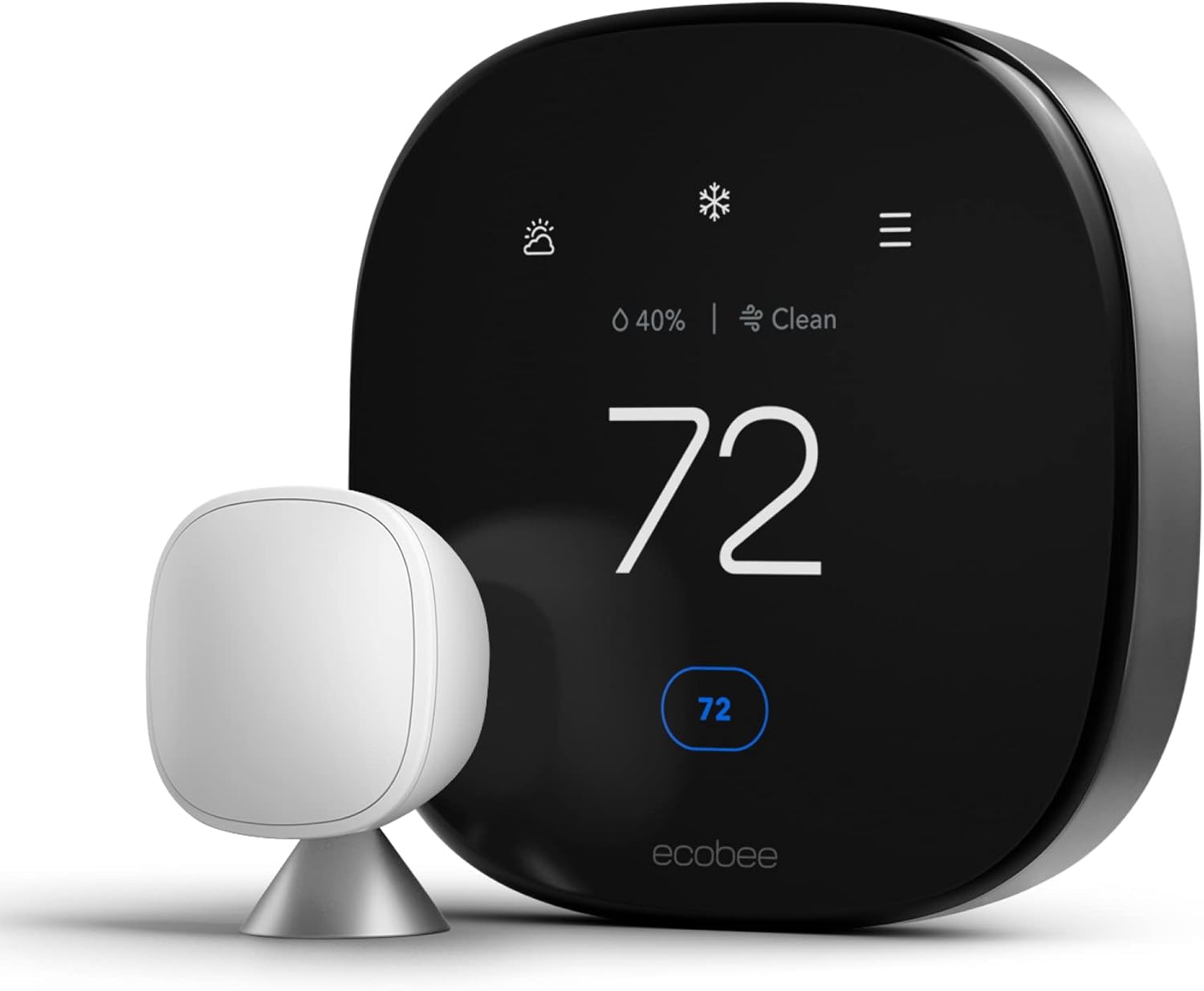
If you’re tired of annual battery changes, upgrading to a C-wire powered smart thermostat eliminates the battery concern entirely. The Honeywell T9, ecobee Premium, and Nest Learning Thermostat 4th Gen all run on the 24VAC C-wire — zero batteries, zero battery-related failures.

Battery-Powered vs. C-Wire Powered: Understanding the Difference
Why Traditional Thermostats Use Batteries
Traditional Honeywell programmable thermostats — the RTH series, the T4 Pro, the T6 Pro, the FocusPRO line — use batteries as their primary power source. The 24VAC control circuit provides just enough power to control the relay switching, but was never designed to power a display, processor, or Wi-Fi radio. Batteries fill this gap.
The C-Wire Revolution
The “Common” wire (C-wire) provides a continuous power return path that allows the full 24VAC current to flow through the thermostat — enough to power even smart thermostats with color touchscreens, Wi-Fi radios, and multiple sensors. Smart thermostats like the Nest, ecobee, and Honeywell T9 leverage this C-wire to eliminate batteries entirely.
| Thermostat Type | Power Source | Battery Replacement | Failure Risk | Best For |
|---|---|---|---|---|
| Basic digital (RTH, T-series) | Battery (AA/AAA) | Every 1–2 years | Medium | Simple, low-cost, reliable setups |
| Smart + battery (some Nest, Wyze) | Battery + power-steal | Every 1–3 years | Medium | Homes without C-wire, basic smart features |
| Smart + C-wire (T9, ecobee, Nest 4th gen) | 24VAC C-wire only | Never | Very Low | Full smart features, maximum reliability |
Model-Specific Notes and Edge Cases
Honeywell Lyric T5 and T6
The Lyric series used 2× AA batteries and a slide-out tray very similar to the RTH series. One notable behavior: the Lyric T5 and T6 would attempt to synchronize Wi-Fi on power-up after a battery swap, which could take up to 60 seconds before the home screen displayed. Give it a full minute before assuming a problem.
RTH9580 and RTH9585 (Wi-Fi Models)
These were Honeywell’s early Wi-Fi smart thermostat offerings. The RTH9580 uses a C-wire for its primary wireless radio operation, but also has a battery slot for backup. The battery in these models is purely for power outage backup — keeping the clock and settings alive during a power failure. When the main power is on, the C-wire handles everything.
Thermostat Is Hard-Wired to the Wall
A small number of Honeywell thermostats in older commercial and residential installations were hard-wired to a 24VAC supply with no battery at all. If you can’t find a battery compartment after examining all surfaces of the thermostat body, check your model documentation to confirm whether a battery compartment exists.
Prestige with RedLINK Gateway
If you have a Prestige thermostat system with the Honeywell RedLINK internet gateway (IFG2), note that the gateway itself uses 2× AAA batteries as backup for its wireless communication module — separate from the thermostat batteries. If your remote access to the Prestige stops working, the gateway batteries may be the issue.
Frequently Asked Questions
Conclusion: A Small Task with Real Consequences
Replacing the battery in a Honeywell thermostat is one of those household maintenance tasks that sounds trivially simple — and for the most part, it is. Pull the thermostat off the wall, swap two AA alkalines, pop it back on. Done in three minutes.
But as this guide shows, the details matter: using the right battery type, knowing which of Honeywell’s many models you actually have, understanding which models don’t use batteries at all, and knowing what to check if fresh batteries don’t immediately fix the problem. A missed annual battery replacement has a way of becoming a weekend HVAC emergency.
The best approach is prevention: mark your calendar for once-a-year proactive replacement each spring. Use quality alkaline batteries from a brand you trust. And if you’re tired of the entire ritual, consider the upgrade to a C-wire powered smart thermostat.
Need More Thermostat Help?
Whether you’re diagnosing a deeper HVAC issue or ready to upgrade to a smart thermostat, we’ve got the guides you need.



 Home
Home
 Info
Info
 Compare
 Reviews
 Shop
Shop