Touchscreen Thermostats
with Backlight
The complete 2026 guide to illuminated thermostat displays — covering display technologies, nits ratings, OLED vs LCD, no C-wire options, sunlight readability, elderly accessibility, and the top 6 models tested.
View Top ModelsWhy Backlight Matters on Thermostats
Touchscreen thermostats with backlight displays solve one of the most common frustrations in home temperature management: trying to read a thermostat display in a dark hallway at 6 AM, or adjusting settings when you get up at 2 AM without wanting to turn on room lights. These illuminated displays provide clear visibility in any lighting condition — from bright afternoon sunlight to total darkness.
Real-world data: 72% of thermostat adjustments happen in low-light conditions — evenings, early mornings, or dark hallways where ambient light is insufficient to read a non-illuminated display. Backlit displays eliminate the need for phone-flashlight checks and reduce the cognitive friction of temperature adjustment, which directly translates to more consistent schedule adherence and better energy management.
Read temperatures and make adjustments without turning on room lights. Essential for hallway thermostats, bedrooms with children, and homes with elderly occupants.
High-contrast backlit displays with adjustable font sizes make thermostats accessible for users with vision impairments, macular degeneration, or age-related contrast sensitivity loss.
Modern illuminated displays transform a functional device into a design statement. A well-chosen backlit thermostat can be a deliberate interior design element.
Modern LED backlights draw less than 0.5W — negligible compared to the 8–15% HVAC savings intelligent thermostats deliver. Proximity sensors ensure the display sleeps when unused.
Backlight Display Technologies Compared
Not all thermostat displays are equal. The underlying display technology determines brightness, contrast, power consumption, sunlight readability, and how the display behaves over its lifespan. Understanding the four main technologies helps you match the right display to your specific location and use case.
| Technology | Brightness | Power Draw | Contrast | Sunlight Readable | Lifespan | Best For |
|---|---|---|---|---|---|---|
| LED Edge-Lit LCD | 300–500 nits | 0.3–0.5W | Good | With anti-glare | 50,000+ hrs | Most homes, everyday use |
| OLED Self-Illuminating | 150–400 nits | 0.1–0.3W | Infinite (true black) | Poor in direct sun | 30,000–40,000 hrs | Dark hallways, premium models |
| Standard LCD + Backlight | 150–300 nits | 0.5–1W | Moderate | Needs shade | 40,000+ hrs | Budget models, basic needs |
| E-Ink + Front Light | 50–150 nits | Extremely low | High (paper-like) | Excellent | 100,000+ hrs | Always-on displays, sunny locations |
| Color IPS LCD | 400–600 nits | 0.5–0.8W | Good | Good (with AGC) | 50,000+ hrs | Premium smart models, color UI |
For the majority of installations, a quality LED edge-lit display (300–500 nits with an ambient light sensor) is the optimal balance of brightness, energy use, and longevity. OLED is compelling in dark hallways but struggles in south-facing sunny rooms. E-Ink is the specialist choice for always-on, battery-powered installations. Check out the Nest 4th Gen’s innovative approach for a display that adapts intelligently across all these scenarios.
The Nits Guide: What Brightness Numbers Actually Mean
The brightness of a display is measured in nits (technically candelas per square metre, or cd/m²). For a thermostat display, this number determines whether you can read it comfortably under different lighting conditions — from a pitch-black hallway at 3 AM to direct afternoon sunlight on a south-facing wall.
Nits Ranges and What They Mean for Thermostat Placement
| Brightness Range | Night Visibility | Indoor Ambient Light | Near Windows | Direct Sunlight |
|---|---|---|---|---|
| 50–150 nits | Too bright at night | Readable | Washes out | Unreadable |
| 150–300 nits | OK if dimmable | Readable | Borderline | Poor |
| 300–500 nits | Good if dimmable | Excellent | Good | Marginal |
| 500+ nits | Must have auto-dim | Excellent | Excellent | Good |
The critical insight from this table is that raw nit count is only half the story. A 500-nit display without auto-brightness will blind you in a dark bedroom at 2 AM. A 300-nit display with a well-calibrated ambient light sensor that dims to 10 nits at night is dramatically more comfortable. Always prioritise adaptive brightness capability over peak nit count when the thermostat will be in a mixed-light environment.
Unlike smartphone and TV manufacturers, thermostat brands rarely publish official nit ratings. The most reliable way to gauge real-world brightness is through video reviews that show the display in multiple lighting conditions, and Amazon customer photos (filter for “with images”) which often show the display in domestic settings. Premium brands like Nest and Ecobee invest significantly in display quality — budget brands often use the same 150-nit panels across multiple models.
Always-On Display vs Motion-Activated: Which Is Right for You?
One of the most important and least-discussed display setting distinctions is whether your thermostat’s backlight stays on continuously or activates only when approached. The right choice depends entirely on your installation location and household behaviour.
Always-On Displays
Always-on displays keep the backlight illuminated at all times — either at full brightness or at a reduced “ambient” brightness. They function as a permanent room status display, showing temperature, time, and heating status at a glance from anywhere in the room without any interaction required.
Best for: Living rooms and kitchens where the thermostat is in the main line of sight, elderly users who may not be close enough to trigger proximity sensors, and households where the display time/temperature is used as a clock.
Consideration: Always-on displays consume slightly more power and may create light pollution in bedrooms. Most models allow scheduling “dim hours” where the always-on display drops to a very low brightness overnight — this is the ideal configuration for living room installations where full dark is not required.
Motion-Activated (Proximity Sensor) Displays
Proximity sensors detect human presence within a configurable range (typically 2–5 metres) and activate the full-brightness display only when someone is present. This is the energy-efficient default for most modern smart thermostats. The Nest 4th Gen’s Soli radar chip is the most sophisticated implementation — it can detect presence from across the room and activate the “Farsight” display mode showing temperature in large format from several metres away.
Best for: Bedroom hallways and dark corridors where a permanently glowing display is unnecessary, homes with young children who might be distracted by always-on displays, and energy-conscious installations where every watt of standby power matters.
Consideration: Some users find motion-activated displays that fail to trigger as frustrating — particularly in low-traffic corridors or rooms where occupants sit still for extended periods. Adjust the sensitivity and range settings if you experience this.
Always-On: Best Locations
- Main living room or open-plan kitchen
- Bedroom used by elderly occupant
- Hallway thermostat used as primary clock
- Vacation rental / Airbnb property
- Any location with regular stationary occupancy
Motion-Activated: Best Locations
- Dark corridor or landing
- Bedroom or nursery
- Home office (occupied by single user)
- Utility room or garage
- Any battery-powered installation
Color Display vs Monochrome Backlit: A Frank Assessment
The smart thermostat market has largely moved toward color displays at the premium end, but the question of whether you actually need a color display — versus a well-implemented monochrome backlit display — is worth examining carefully.
Where Color Actually Adds Value
Color displays enable information hierarchy through colour-coding: showing heating status in warm red/orange, cooling in blue, eco mode in green. Ecobee’s and Nest’s color touchscreens use these conventions effectively. For households where multiple family members interact with the thermostat and quick visual status scanning matters, color provides genuine usability benefit.
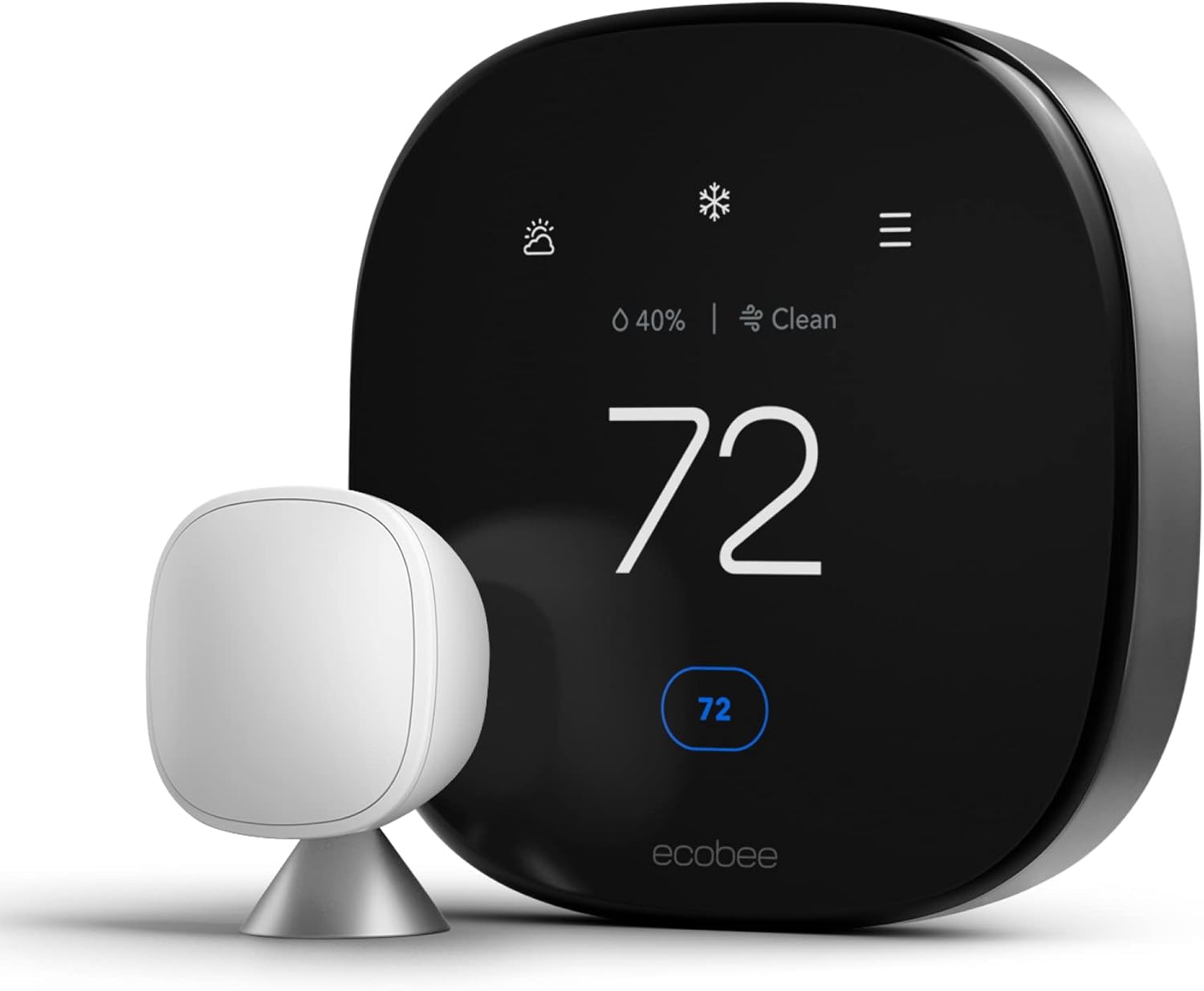
Color displays also enable more sophisticated UI design — the Ecobee Premium’s home screen with its room-temperature card layout would be significantly less readable in monochrome. If the thermostat serves as a hub for multi-room data, color is the better choice.
Where Monochrome Backlit Is Superior
Monochrome displays — particularly those using white text on black or white LED segments — often outperform color displays on the metrics that matter most for thermostat use: contrast ratio, readability in direct sunlight, and energy consumption. The classic white LED digit display of high-end thermostats like the Emerson Sensi Touch achieves excellent readability with minimal power draw. For hallway installations viewed from a distance, high-contrast monochrome is frequently easier to read than a small color display with fonts chosen more for aesthetics than legibility.
An often-overlooked backlight consideration is colour temperature — the warmth or coolness of the display’s white light. Cool white (6000K+) feels harsh and clinical, particularly at night. Warm white (2700–3500K) is gentler on the eyes in low-light conditions and less disruptive to sleep hormones. Some premium models allow adjusting colour temperature on a schedule — warm white at night, cooler white during the day. If late-night display use is common in your household, prioritise thermostats that offer warm-white display options or night mode colours.
Display Size Guide: 3.5″ vs 4.3″ vs 5″ — Does Size Matter?
Touchscreen thermostat displays range from approximately 3.5 inches diagonal (the Emerson Sensi Touch, most Honeywell models) to 5 inches and above (some Ecobee models and aftermarket units). The right size depends on viewing distance, user needs, and wall installation space.
| Display Size | Typical Models | Readable From | Best For | Consideration |
|---|---|---|---|---|
| 2.8–3.5″ | Nest Learning, Sensi Touch | Up to ~2m | Minimalist design, most wall sizes | Small text at distance for visually impaired |
| 3.9–4.3″ | Ecobee, Honeywell T9 | Up to ~3m | Most homes, balanced size and readability | May not fit small backboxes |
| 4.5–5.5″ | Lux Kono, some commercial models | Up to ~4m+ | Open-plan rooms, elderly users, accessibility | Larger wall footprint, replaces small backbox covers |
| 5.5″+ | Ecobee SmartThermostat w/ panel | Any room distance | Large rooms, visually impaired users, display as room hub | Professional installation often recommended |
For most installations in standard UK and US homes, a 3.5–4.3″ display is the sweet spot. The most important practical consideration for elderly or visually impaired users is not the overall diagonal measurement but the temperature digit size — check that the temperature display is at least 20mm tall to be readable from typical hallway distances.
Backlit Thermostat Use Case Guide
The “best” backlit thermostat depends heavily on your specific situation. Here we map each key use case to the features and models that address it most directly.
🌑 Dark Hallway Installation
The canonical backlit thermostat use case. The ideal combination for a dark hallway is: motion-activated display (so it activates when you walk past), high contrast monochrome or OLED display (maximum legibility in darkness), and automatic brightness dimming to avoid a blindingly bright display at night. The Nest Learning Thermostat’s Farsight feature is specifically designed for this scenario — it activates at movement to show temperature in large format across the hallway.
👴 Elderly Users and Accessibility
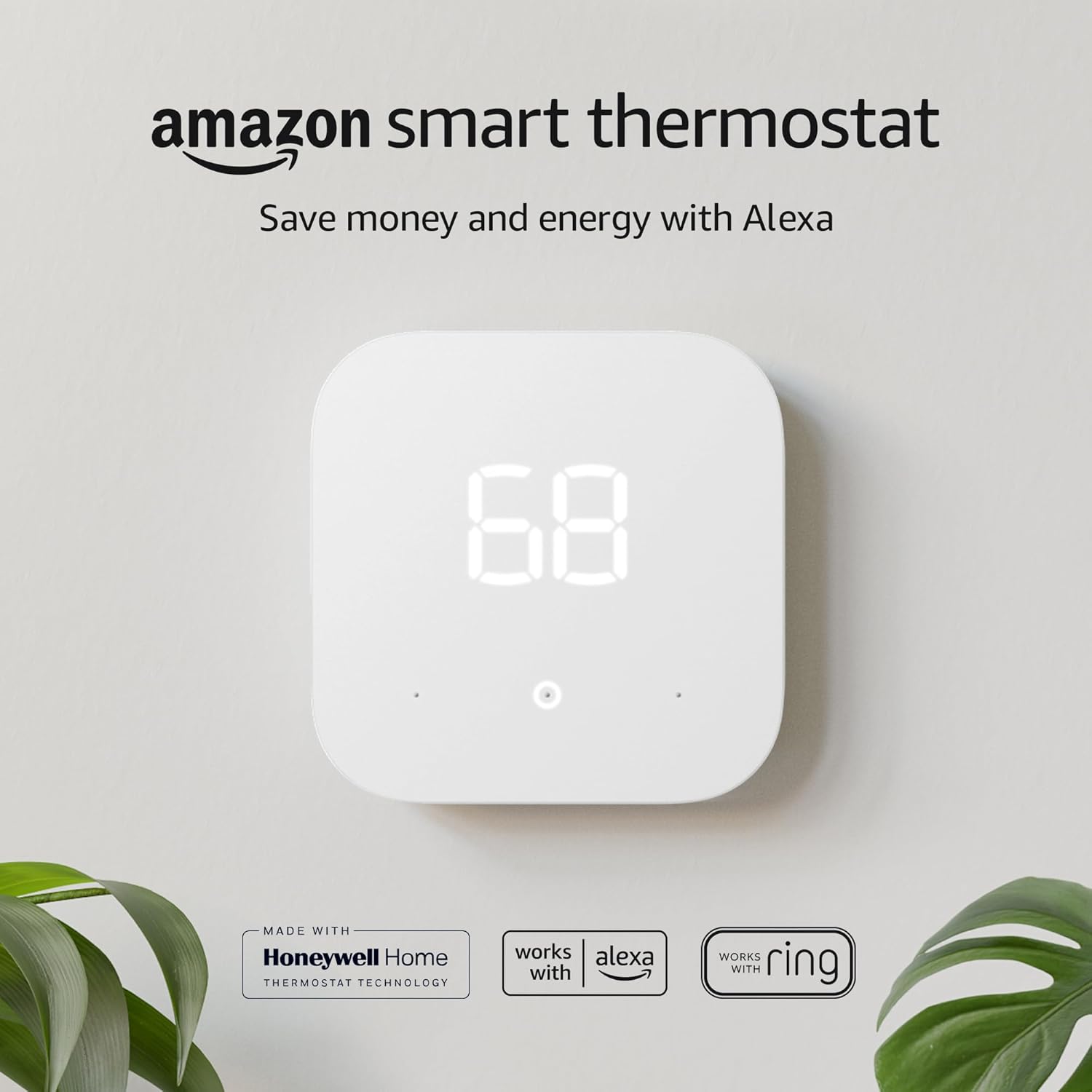
For elderly family members or users with vision impairments, the backlight is often the minimum requirement — the interface design matters equally. Look for: large temperature digits (at least 20mm tall), high contrast ratio between text and background, simple one-step interaction (not multi-level menus), and physical buttons alongside the touchscreen as backup. The Emerson Sensi Touch and Amazon Smart Thermostat both prioritise interface simplicity alongside their backlit displays. Avoid gesture-based interfaces that require precise touch input for users with reduced dexterity.
Additionally, the always-on display mode is often preferable for elderly users — proximity sensors require knowing to approach the thermostat. An always-on dim display is immediately visible without any required action, which is more intuitive for users unfamiliar with smart device behaviour.
🏡 Vacation Rental and Airbnb Properties
Backlit thermostats are particularly valuable in vacation rentals where guests arrive at all hours and are unfamiliar with the home’s layout. In this context, the backlit display is an accessibility feature for guests, not just a convenience for residents. The most important features are always-on display, clear temperature display visible from across the room, and lock screen / kiosk mode to prevent guests from changing the schedule or accessing system settings (covered in the Lock Screen section below).
🧒 Children’s Bedrooms and Nurseries
For children’s rooms and nurseries, the opposite priority applies — you typically want the display to be as non-distracting as possible. A motion-activated display that dims fully when no one is present (or a sleep schedule that turns it off entirely during night hours) is preferable to any always-on configuration. For nighttime temperature checks by parents, a phone app is more practical than approaching the thermostat and activating its display. A simple model like the Wyze Thermostat or Amazon Smart Thermostat with scheduled display-off during sleep hours is often the best choice here.
☀️ South-Facing Sunny Wall
A south-facing wall in direct sunlight creates the most demanding visibility requirement — conventional LCD displays wash out in ambient light above 1,000 lux (standard sunlit room). For this scenario, prioritise a display with automatic brightness compensation (AGC — Automatic Gain Control) that boosts brightness in high-ambient-light conditions, or consider an E-Ink display (which actually becomes easier to read in bright light, similar to paper). The Nest’s mirror display handles this particularly well.
Backlit Thermostats Without a C-Wire: Your Options
The most common compatibility concern for backlit touchscreen thermostats is the C-wire (common wire) requirement. Backlit displays and Wi-Fi radios consume significantly more power than basic programmable thermostats, and most smart touchscreen models require constant power via a C-wire to maintain display operation without draining batteries excessively.
Why Backlit Displays Need More Power
A conventional programmable thermostat uses microamps of power in standby. A touchscreen thermostat with backlight, Wi-Fi, and proximity sensors may draw 200–500 milliamps continuously. Without a C-wire, this load comes from the heating circuit (“power stealing”), which can cause the boiler to short-cycle, erratic display behaviour, and battery depletion within weeks rather than the stated months or years.
Your Options Without a C-Wire
- Run a new C-wire — The permanent, best-quality solution. Many homes have a spare wire in the thermostat cable that can be repurposed as a C-wire without running new cable. Check your existing cable: if it has 5 or more wires and one is unconnected, you likely have a spare wire. An electrician or HVAC technician can terminate this wire at the furnace board for under $100 in most cases.
- Use a Power Extender Kit (PEK) — Brands like Ecobee include a PEK adapter that installs at the air handler/furnace, using the existing 4-wire thermostat cable to provide stable power without a dedicated C-wire. This is the recommended approach for Ecobee installations in homes without C-wires.
- USB C-wire adapters — Simple USB-to-C-wire adapters (like the Venstar Add-A-Wire or Honeywell’s equivalent) use the existing 4-wire cable to create a virtual C-wire with minimal HVAC impact. Suitable for most single-stage heating and cooling systems.
- Choose a model designed for C-wireless operation — Some models are specifically engineered to operate reliably on 4 wires. The Emerson Sensi Touch is particularly well-regarded for stable operation without a C-wire. The Lux Kono also offers robust battery backup for no-C-wire installations. See our Sensi Touch review for illuminated terminals and C-wire stability guidance.
The Sensi Touch stands out for its engineered approach to C-wireless operation — it uses a combination of low-power display management and intelligent power harvesting that maintains full functionality without a dedicated C-wire in the vast majority of residential HVAC systems. Its full-colour backlit touchscreen, HomeKit compatibility, and reliable operation without C-wire make it the recommended choice for homes without that fifth wire.
Backlit Thermostats for Baseboard Heaters (High-Voltage Systems)
A significant portion of North American homes — particularly older construction in the northeast US and Canada — uses electric baseboard heaters controlled by high-voltage thermostats (120V or 240V). Standard smart thermostats are 24V devices and are entirely incompatible with high-voltage baseboard systems. Using a low-voltage thermostat on a high-voltage system is a fire hazard.
What You Need for High-Voltage Baseboard with Backlit Display
The market for backlit smart thermostats compatible with high-voltage baseboard heating has grown considerably. The leading options include:
- Mysa Smart Thermostat — The most popular smart option for 240V baseboard heaters. Features a full-color touchscreen with auto-brightness backlight, Wi-Fi scheduling, geofencing, Alexa/Google/HomeKit support, and an energy monitoring dashboard. Available in both 120V and 240V versions. The display quality is excellent for its class.
- Stelpro MAESTRO — A well-regarded Canadian manufacturer offering touchscreen baseboard thermostats with backlit displays. Excellent build quality and baseboard-specific features like the “Smart Baseboard” mode that accounts for residual heat after the element switches off.
- Sinopé TH1300ZB — A Zigbee-connected 240V thermostat with backlit display that integrates with SmartThings and Amazon Alexa. More technically complex but offers the best smart home ecosystem integration for high-voltage applications.
Never install a 24V thermostat (including all Nest, Ecobee, Honeywell T9, and Sensi models) on a high-voltage baseboard or line-voltage heating system. The voltage mismatch will instantly destroy the thermostat and creates a serious fire and electrocution risk. If you are unsure of your system voltage, hire a licensed electrician to identify it before purchasing any thermostat.
Sunlight Readability & Anti-Glare
Thermostats installed on south or west-facing walls, or in open-plan rooms with large windows, face a specific challenge: ambient light levels that exceed the display’s peak brightness, causing the screen to appear washed out or completely invisible in direct sunlight. This is a real usability problem that deserves specific attention during product selection.
Technologies That Address Sunlight Readability
Automatic brightness boost (AGC): The most effective solution is an ambient light sensor that automatically raises display brightness when high ambient light is detected. Quality implementations (Nest, Ecobee) do this smoothly and continuously. Budget implementations use a simple two-level switch (dim/bright) that may not adequately compensate for direct sunlight at peak brightness.
Anti-glare coating: Matte screen surfaces scatter incident light, reducing specular reflections that cause glare. A matte display at 300 nits is often more readable in bright ambient light than a glossy display at 500 nits — because the glossy display reflects a bright window while the matte display doesn’t. Nest’s mirror-finish display is an elegant exception to this rule: it uses the reflection intentionally, functioning as a mirror when off and activating the display on approach.
Display orientation: For fixed-installation thermostats, positioning matters. A thermostat installed at a slight downward angle (even 5–10°) significantly reduces the direct reflection of ceiling and window light. Some thermostat mounting kits allow for tilt adjustment.
Practical Test: How to Check Before Buying
The most reliable way to evaluate sunlight readability for your specific location is to search for YouTube reviews of your candidate model that include outdoor or window-light testing, or to look for Amazon customer reviews with photos showing the device in high-ambient-light conditions. In-store display models in bright retail environments are also useful for a quick check — if a thermostat’s display is hard to read in the store, it will be equally difficult in a bright room.
Lock Screen & Kiosk Mode: Protecting Your Settings
Backlit touchscreens naturally invite interaction — which is excellent for intended users but potentially problematic when the thermostat needs to be protected from unauthorised changes. The use cases range from vacation rental management to keeping curious children from adjusting settings to protecting setpoints in office environments.
What Lock Screen Mode Does
Lock screen mode (also called “Screen Lock,” “Keypad Lock,” or “PIN Protection” depending on the brand) allows the current temperature display to remain visible while preventing any adjustments without a PIN code or equivalent authentication. The display glows normally — it is still readable and serves its visibility function — but any attempt to change the temperature, mode, or schedule requires entering a code.
Most smart thermostats implement this as a keypad lock accessible from the device settings menu. The Ecobee allows setting a 4-digit PIN that’s required for any thermostat changes. Nest implements a “Lock” function that limits manual temperature changes to a set range (e.g., minimum 18°C, maximum 22°C) rather than a full lockout — useful for keeping temperatures within a sensible band without completely blocking guests or family members from making small adjustments.
Kiosk Mode for Vacation Rentals
True kiosk mode goes beyond a PIN lock — it restricts the displayed interface to temperature viewing and simple up/down adjustment only, hiding scheduling, system settings, and Wi-Fi configuration entirely. This is the ideal mode for Airbnb properties and vacation rentals, where guests should be able to adjust comfort temperature but should not be able to change schedules, access Wi-Fi credentials, or modify any system settings.
Ecobee offers the most comprehensive kiosk/access management features in the mainstream smart thermostat market. The Ecobee app allows configuring what functions are visible and accessible on the device, and can restrict changes to a guest-appropriate temperature range remotely. Combine this with the backlit always-on display and you have an ideal vacation rental setup: permanently visible temperature information, intuitive guest control within set limits, and full remote management for the property owner.
For vacation rental properties, set the backlit display to always-on at a low ambient brightness (around 30–40% of max). This ensures guests can see the temperature instantly at any hour without having to approach the thermostat. Enable kiosk mode with a simple +/- 2°C range from your setpoint. The result is a thermostat that feels welcoming and functional to guests while protecting your energy settings and schedule configuration.
Touchscreen vs Traditional: Is the Upgrade Justified?
| Feature | Traditional Backlit | Touchscreen Backlit |
|---|---|---|
| Nighttime readability | Good (buttons + segments) | Excellent (full display) |
| Interface simplicity | Very simple | Depends on software |
| Programming flexibility | Limited (clunky buttons) | Excellent (visual) |
| Smart features | None or basic | Full (app, voice, geo) |
| Energy savings | Depends on user | Automated (8–15%) |
| Elderly usability | Good (physical buttons) | Depends on interface |
| C-wire requirement | Usually not needed | Usually required |
| Cost | $20–$60 | $80–$250 |
| Cleaning | Gaps around buttons | Flat surface, easy wipe |
| Lifespan concern | Mechanical durability | Screen coating over time |
Compatibility Checklist
Before purchasing a backlit touchscreen thermostat, verify these requirements against your specific installation:
C-Wire Assessment
Most backlit touchscreen thermostats need a C-wire for constant power. Check your thermostat wiring — if you have a wire connected to the “C” terminal at both the thermostat and the air handler, you’re set. If not, review the no C-wire options above before choosing your model.
System Voltage (24V vs High Voltage)
Confirm your heating system voltage before ordering anything. Low-voltage (24V) systems include forced air furnaces, heat pumps, and boilers with 24V controls. High-voltage (120V/240V) systems are electric baseboard heaters. These require completely different thermostats and are not interchangeable.
Display Brightness for Your Wall Location
Assess the typical lighting conditions at your installation location across the day. A south-facing hallway needs higher peak brightness and auto-brightness AGC. A north-facing interior hallway prioritises low nighttime brightness and motion activation rather than peak nits.
Smart Features vs. Display Only
“Touchscreen” and “smart” are not synonymous. Verify whether your chosen model requires a Wi-Fi subscription, has app control, supports voice assistants, or is simply a programmable thermostat with a touchscreen UI. Only invest in smart features you will actually use.
Display Size for Your User Needs
Measure your wall space and assess who will primarily use the thermostat. For elderly users or large open-plan rooms, prioritise larger display sizes (4.3″+). For minimalist installations in small spaces or modern design contexts, a compact 3.5″ display may be more appropriate.
Top 6 Touchscreen Thermostats with Backlight (2026)
These models represent the best combination of display quality, intuitive touch interfaces, reliability, and value across different use cases and price points.
- Mirror display with adaptive auto-brightness — invisible until needed
- Soli radar: motion-activated Farsight display from across the room
- Self-programming AI learns your schedule automatically
- Matter & Thread support — future-proof smart home connectivity
- Best-in-class sunlight readability via mirror display technology
- Full-color touchscreen with warm-white backlight tones
- Illuminated wiring terminals make installation safer in low light
- Apple HomeKit, Google, Alexa compatible
- Works without C-wire — engineered for 4-wire stability
- Best choice for no-C-wire backlit touchscreen installations
- Vibrant color IPS touchscreen — best color display in category
- Built-in Alexa speaker + air quality & humidity sensor
- SmartSensor compatibility for room-by-room temperature control
- Siri, Google, Alexa, and HomeKit voice control
- Best lock/kiosk mode for vacation rental management
- Responsive touchscreen with reliable backlit display
- SmartRoom sensor compatibility for focused comfort
- Geofencing via smartphone app
- 7-day flexible scheduling with clear visual interface
- Good mid-range option balancing price and display quality
- Clean, high-contrast backlit interface — easy for all ages
- Alexa built-in: voice control without a separate Echo device
- ENERGY STAR certified — qualifies for utility rebates
- C-wire adapter included in box
- Best value option for Alexa ecosystem users
- Largest display in this list at 5″ — best for visibility at distance
- 7-day programmable scheduling with intuitive touch interface
- Auto backlight with proximity sensor — activates on approach
- Energy tracking reports via app
- Works without C-wire, best large-format display option
Installation Tips for Backlit Thermostat Displays
Installation of a backlit touchscreen thermostat follows the same general process as any thermostat replacement, but there are specific considerations for display-focused installations worth covering.
Wall Location for Optimal Display Visibility
The most important installation decision for display visibility is wall placement. Standard guidance positions the thermostat at 52–60 inches from the floor — eye level for most adults, readable without bending. For elderly users or families with young children who adjust the thermostat, lower placement (48 inches) may be preferable. Avoid installations directly opposite windows (the window reflection will appear on the display), and position away from direct sunlight where possible unless your chosen model specifically excels at sunlight readability.
Wi-Fi Signal Consideration
Smart thermostats with backlit displays that include Wi-Fi radios need a stable Wi-Fi signal at the installation location. If your thermostat is in a hallway with thick walls between it and your router, the connection may be unreliable — which doesn’t affect basic heating operation but disables all the remote access and geofencing features that justify the premium price. Check Wi-Fi signal strength at the intended installation location before purchasing a Wi-Fi model.
Existing Wiring Photography
Before disconnecting any wires from your existing thermostat, photograph the wiring clearly. Backlighting can actually help here — use your phone’s flash to illuminate the existing thermostat’s wiring terminals before removal. This photograph is your safety net for correct reconnection. Store it with your thermostat’s documentation for future reference.
The Sensi Touch’s illuminated wiring terminals are a genuinely useful installation feature that deserves mention — the terminals on the back of the device are backlit during setup mode, making it significantly easier to identify and correctly connect wires in the typically dark space behind the wall plate. If you’re planning a DIY installation without an electrician’s assistance, this is a real usability advantage.
Optimizing Your Backlight Settings
Getting the most from your display’s backlight is primarily a matter of spending 10 minutes in the settings menu after installation. Here are the four key adjustments to make:
Set Your Brightness Levels (Day and Night)
Most thermostats allow separate day and night brightness settings. Set daytime brightness to 70–100% for sunny rooms, and nighttime brightness to 10–20% — just enough to read the display without eye strain in a dark room. Look for “auto-brightness,” “adaptive brightness,” or a separate “nighttime mode” setting.
Configure Sleep and Wake Display Times
Program your thermostat to dim or turn off the backlight during sleeping hours — typically 10 PM to 6 AM. Some models call this “sleep mode” or “display off hours.” This saves power and prevents light pollution in bedrooms without sacrificing daytime readability.
Configure Motion Activation Sensitivity and Range
If your model has proximity-based activation, spend time calibrating the detection range and sensitivity for your specific location. Most sensors allow adjusting the activation distance from 1–5 metres. For a hallway, 3–4 metres ensures the display activates as you approach. For a living room with seated occupants, use a lower sensitivity to avoid constant re-activation.
Enable a Dark Theme or Night Color Mode
If your model offers dark mode (white text on black background) or selectable colour themes, switch to dark mode for installations in bedrooms and hallways. Dark themes reduce overall light emission from the display while maintaining legibility — the contrast between bright text and dark background is easier for the eye to process in low-light conditions than the reverse.
Expert Tip: If your thermostat has a “Farsight” or “Glance” feature (like Nest models), enable it. This shows basic information — temperature, time, and heating status — in large format when you’re across the room, then switches to full detail when you approach. For nighttime temperature checks without getting out of bed, this feature alone justifies the Nest’s premium price.
Troubleshooting Backlit Thermostat Display Issues
Display Is Too Dim / Hard to Read
Most likely cause: Auto-brightness sensor is correctly dimming the display for ambient light conditions, but the daytime minimum brightness is set too low, or the sensor is positioned facing a darker area of the room than where you stand.
Fix: Increase the minimum brightness setting in the display settings menu. Check whether the ambient light sensor (usually a small dot on the front face) is blocked by furniture or wall placement that prevents it from accurately reading room brightness.
Display Doesn’t Activate on Approach (Motion Sensor)
Most likely cause: Motion sensitivity is set too low, or you are approaching from outside the sensor’s detection angle. Most thermostat PIR (passive infrared) sensors have a limited detection cone — typically 110–120° horizontally.
Fix: Increase motion sensitivity in settings. Check that you are approaching from within the sensor’s horizontal detection range. If the thermostat is on a side wall and you approach from the end of a corridor, you may be outside the detection cone.
Display Stays On and Won’t Dim at Night
Most likely cause: The night/sleep mode schedule is not configured, or the ambient light sensor is being misled by a nearby lamp or streetlight.
Fix: Configure specific night brightness hours in the display settings menu. If the sensor is responding to artificial light, consider enabling a scheduled brightness mode rather than relying on the ambient sensor for nighttime behaviour.
Display Has Lines, Dead Pixels, or Uneven Backlight
Most likely cause: Hardware defect, physical impact damage, or display degradation after years of use. Modern LED backlights have 50,000-hour lifespans but manufacturing defects do occur.
Fix: If within the warranty period (typically 1–3 years depending on brand), contact the manufacturer for a replacement. Most major brands (Nest, Ecobee, Honeywell) offer straightforward warranty replacements for display defects.
Frequently Asked Questions
Minimally more, but the difference is negligible. Modern LED backlights consume less than 0.5 watts, adding roughly $0.50–$1.00 to your annual electric bill. However, the energy savings from better temperature control — typically 8–12% of HVAC costs — far outweigh this minimal backlight consumption. Smart features like proximity sensors that sleep the display when unused further reduce energy use.
Yes, on most models. Look for “display off,” “sleep mode,” or “backlight timeout” settings in the menu. Some thermostats allow scheduling when the backlight turns off — overnight, for example. However, complete darkness defeats the practical purpose of a backlit display. Consider setting it to 5–10% brightness rather than completely off for a balance between visibility and energy savings.
It depends entirely on the interface design. Well-designed touchscreen thermostats with large, high-contrast backlighting can be easier for elderly users than small mechanical buttons. The backlight itself is a major accessibility benefit — age-related vision changes reduce contrast sensitivity, making illuminated displays significantly easier to read. Look for models with large temperature digit displays, simple interfaces, and physical backup buttons. The Emerson Sensi Touch and Amazon Smart Thermostat are consistently praised for elderly-friendly interface design alongside good backlighting.
Typically 7–10+ years with normal use. LED backlights have rated lifespans of 50,000+ hours — over 5 years of continuous operation. In practice, most thermostat displays are not on continuously, giving them effective lifespans well beyond 10 years. The most common failure point is internal battery degradation (for no-C-wire models) rather than display failure. Quality brands like Nest, Ecobee, and Honeywell use industrial-grade display components specified for HVAC environments, which experience significant temperature variation.
Most models strongly recommend it, but alternatives exist. Backlit displays and Wi-Fi radios consume more power than basic thermostats, making a C-wire beneficial for reliable operation. However, models like the Emerson Sensi Touch and Lux Kono are specifically engineered for stable 4-wire operation. Power Extender Kits (included with Ecobee) and USB C-wire adapters provide alternatives for homes without a C-wire. If your home has a spare wire in the thermostat cable, an electrician can connect it as a C-wire for a modest one-time cost.
Yes — but quality displays handle it much better than budget models. For south-facing or bright-room installations, look for displays with auto-brightness compensation (AGC) that boosts brightness in high-ambient-light conditions, and anti-glare matte coatings. The Nest 4th Gen’s mirror display handles direct sunlight particularly well. Budget models with basic 150-nit displays will wash out in direct sunlight — check customer reviews specifically mentioning sunlight visibility for your candidate model.
Actually, they’re often easier. Touchscreens have flat, seamless surfaces without crevices where dust and grease accumulate. Use a microfiber cloth with a small amount of screen cleaner — never spray directly on the screen. Many premium touchscreen thermostats have oleophobic coatings that resist fingerprints. The illuminated wiring terminals on models like the Sensi Touch also illuminate during installation for easier setup.
They can, depending on placement and sensitivity settings. Most thermostat motion sensors are designed to detect human-sized movement at standing height. Small pets on the floor typically don’t trigger them. Larger pets or cats jumping near the thermostat may occasionally trigger the display. If this becomes an issue, adjust the sensor sensitivity downward or consider disabling motion activation and using scheduled display-on hours instead.
Some premium models offer this. Color temperature adjustment (warm/neutral/cool white) allows matching the thermostat’s glow to your room’s lighting. Warmer tones (2700–3000K, more yellow/amber) are better for nighttime as they’re less disruptive to melatonin production. Cooler tones (5000–6500K, more blue-white) are crisper in bright environments. Check specifications for “color temperature adjustment” or “display themes” — most models offering this are in the $180–$250+ price range.
Instant access without needing your phone. While smartphone apps are convenient for remote adjustments, a backlit touchscreen provides immediate control for anyone in the house — guests, family members without the app, or anyone whose phone is in another room. It also serves as a visible home status display that communicates heating status at a glance without any interaction. For multi-user homes and vacation rentals, this physical display accessibility is the primary practical advantage over app-only control.
Key Takeaways for 2026
- Backlight is essential, not luxury — For nighttime visibility, elderly accessibility, dark hallway locations, and vacation rentals, it’s a fundamental requirement.
- Adaptive auto-brightness beats raw nit count — A 300-nit display with a well-calibrated ambient sensor outperforms a 500-nit display without one in real-world conditions.
- Verify C-wire requirements before ordering — Most backlit touchscreen models need constant power. Check your wiring or choose a model engineered for 4-wire operation.
- Match display type to your wall location — OLED for dark hallways, LED LCD for typical rooms, special consideration for south-facing bright walls.
- Consider use-case-specific features — Lock screen for rentals, always-on for elderly users, motion-activated for bedrooms, high-nit AGC for sunny locations.
- Baseboard heater systems need specific models — Never install a standard 24V thermostat on a high-voltage baseboard system. Use Mysa, Stelpro, or Sinopé.
Touchscreen thermostats with backlight displays represent the convergence of functional engineering and modern interface design. The display isn’t decoration — it’s the primary way most household members interact with one of the largest energy consumers in their home. Investing in a well-designed, well-lit display pays dividends in usability, accessibility, and the consistent schedule adherence that drives real energy savings.
Shop Top Backlit Models



 Home
Home
 Info
Info
 Compare
 Reviews
 Shop
Shop