HVAC Energy Efficiency Tips:
Cut Your Bills 30–40%
This Year
Your heating and cooling system burns through 40–60% of your home’s total energy. These 12 expert-tested strategies — from smart thermostat upgrades to duct sealing — will slash your utility bills without sacrificing a degree of comfort.
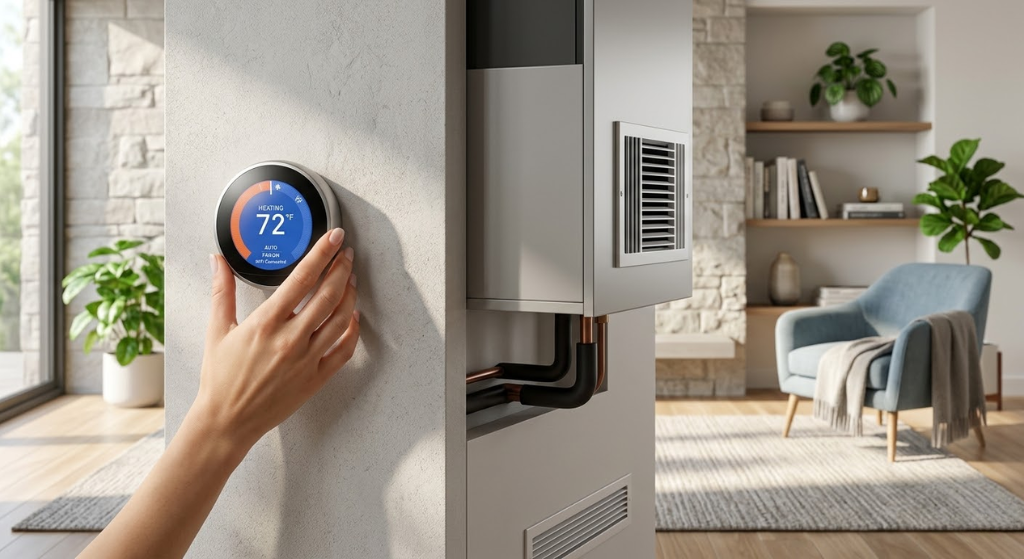
If your utility bills have been creeping upward every summer and winter, your HVAC system is almost certainly the culprit — and the solution. Heating, ventilation, and air conditioning account for 40 to 60 percent of the average American home’s total energy consumption, according to the U.S. Department of Energy. That’s not a small number. That’s the single largest controllable expense in your household budget.
The good news? Most homeowners are leaving serious money on the table. Simple, inexpensive changes — the right thermostat schedule, a clean filter, sealed ductwork — can eliminate 20–40% of wasted energy without spending thousands on new equipment. And when you do upgrade equipment strategically, the payback periods are often measured in months, not years.
This guide covers every layer of HVAC efficiency, from the $0 behavioral changes you can implement today to the larger investments that deliver compounding returns year after year. Whether you’re renting, in a starter home, or managing a multi-zone luxury property, there’s something in here that will put money back in your pocket.
1Why HVAC Efficiency Actually Matters in 2026
Energy efficiency has never been more financially urgent. Residential electricity rates have risen an average of 4.8% per year since 2020, and natural gas costs swung dramatically in 2022–2024 before partially stabilizing. The result: the same thermostat schedule that cost $150/month to maintain in 2019 might cost $230–$260 today in many utility regions.
But efficiency matters beyond your wallet. The EPA estimates that HVAC systems in U.S. homes are responsible for roughly 441 million metric tons of CO₂ emissions annually — more than the entire transportation sector of many countries. When you reduce your HVAC runtime by 20%, you’re not just saving money. You’re making a measurable environmental contribution without any lifestyle sacrifice.
The Hidden Inefficiency Problem
Most homeowners drastically underestimate how inefficient their HVAC system actually is. A 10-year-old system running on a dirty filter at an improper charge level, in a house with leaky ducts and no thermostat schedule, might be delivering efficiency at 40–50% below its rated SEER. It’s not just about equipment age — it’s about the entire system operating as an integrated unit.
The U.S. Department of Energy reports that the average home loses 20–30% of HVAC-conditioned air through duct leaks alone, before it even reaches the living spaces. Sealing ducts is often the single highest-ROI improvement available.
What This Guide Will and Won’t Cover
This guide focuses on practical, actionable improvements that real homeowners can implement — including DIY-accessible strategies and informed decisions about when to call a professional. We won’t cover full system replacement as a primary strategy (though we touch on it in the heat pump section), because for most homes, optimizing the existing system delivers faster ROI than replacement.
2Smart Thermostat Upgrade: The Fastest Payback
If you do nothing else after reading this guide, install a smart thermostat. It’s the single highest-ROI HVAC efficiency upgrade available to the average homeowner, with documented savings of 8–15% on heating costs and 10–15% on cooling costs according to independent studies by Nest, ecobee, and the American Council for an Energy-Efficient Economy (ACEEE).
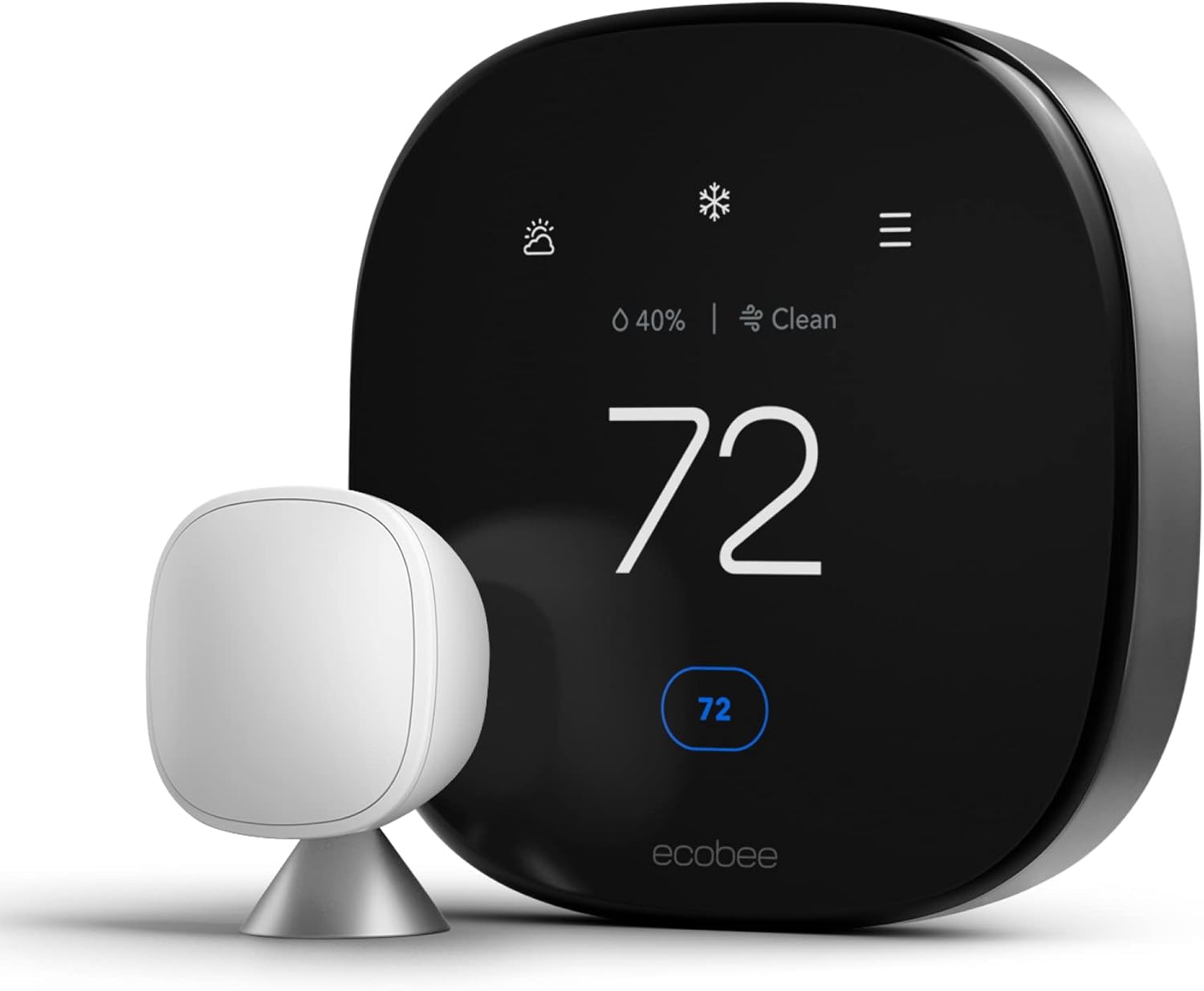
A modern smart thermostat does three things a traditional programmable thermostat cannot: it adapts to your actual schedule automatically, it responds to occupancy in real-time rather than a fixed program, and it provides detailed energy usage data that lets you make informed decisions. The best models — ecobee Premium, Nest Learning Thermostat 4th Gen, Honeywell Home T9 — do all three and more.
Smart vs. Programmable: The Real Difference
Many homeowners assume they’re already getting smart-thermostat-level savings from their programmable thermostat. They’re often wrong. Research consistently shows that fewer than 30% of homeowners with programmable thermostats use them correctly — most either don’t program them, override them constantly, or have programmed them suboptimally years ago and forgotten. A smart thermostat that auto-schedules solves this entirely. For a deep-dive comparison, see our analysis of smart vs. programmable thermostat efficiency.
| Feature | Basic Programmable | Smart Thermostat | Savings Impact |
|---|---|---|---|
| Auto-scheduling | ❌ Manual only | ✅ AI learns pattern | +5–8% |
| Geofencing | ❌ None | ✅ GPS-based | +8–12% |
| Remote access | ❌ None | ✅ App control | Convenience |
| Energy reports | ❌ None | ✅ Detailed analytics | Enables further savings |
| Demand response | ❌ None | ✅ Utility integration | +$50–150/yr rebate |
| Multi-room sensors | ❌ Single point | ✅ Average occupancy | +4–6% comfort/efficiency |
| Installation complexity | Simple | Simple–Moderate | — |
Choosing the Right Smart Thermostat
The right thermostat depends heavily on your HVAC system type. A multi-stage heat pump requires different wiring and programming logic than a single-stage gas furnace. If you’re choosing between leading brands for a complex system, our Nest vs. Honeywell multi-stage HVAC comparison covers the technical differences in detail.
Key considerations when choosing:
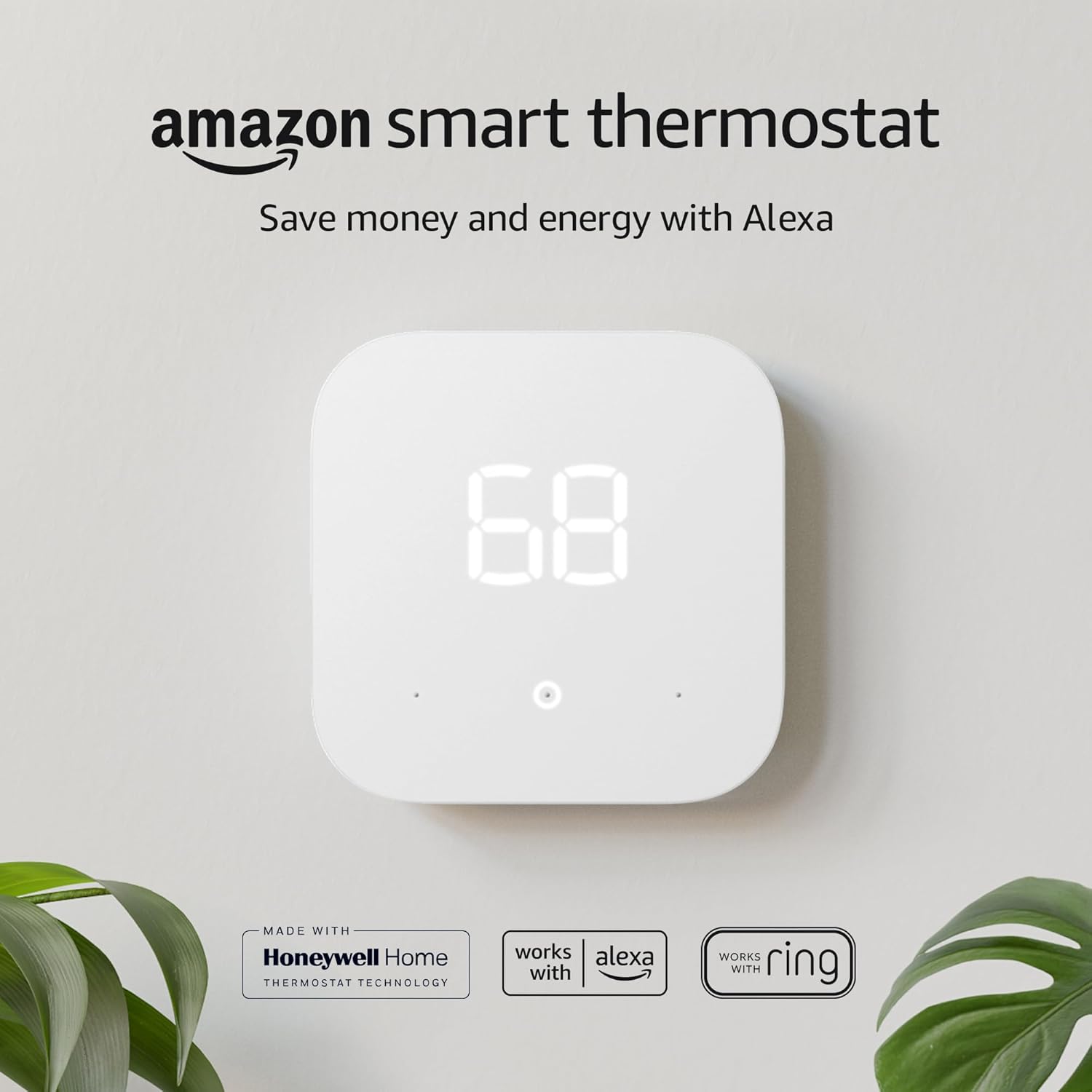
- C-wire availability: Most smart thermostats need a common wire (C-wire) for continuous power. If your current setup lacks one, look for models with a C-wire adapter (ecobee’s PEK, Amazon’s included adapter) or power-stealing technology (Nest).
- System compatibility: 2-stage furnaces, heat pumps with auxiliary heat, and zoned systems all have specific compatibility requirements.
- Ecosystem fit: If you use Amazon Alexa, Google Home, or Apple HomeKit primarily, choose a thermostat that integrates natively with your ecosystem.
- Sensor options: For multi-room comfort, ecobee’s SmartSensor system and Honeywell’s T9/T10 remote sensor approach both address the “thermostat in a cold hallway” problem effectively.

3Air Filter Maintenance: The $5 Fix That Costs Hundreds When Ignored
A clogged air filter is one of the most expensive cheap problems in home ownership. When airflow is restricted, your HVAC system works harder, runs longer, consumes more energy, and deteriorates faster — all at once. A filter clogged beyond its rated capacity can increase energy consumption by 5–15% and reduce system lifespan by causing overheating and short-cycling.
Despite being a sub-$10 fix that takes under 5 minutes, HVAC technicians consistently report that dirty filters are found in 60–70% of systems they service. This is a nearly universal problem with an almost comically easy solution.
Filter Types and Their Trade-offs
Not all filters are created equal, and the common advice to “get the highest MERV rating possible” is actually wrong for many systems. Higher-MERV filters are denser and restrict airflow more — which is the very problem you’re trying to avoid. Here’s how to choose correctly:
| Filter Type | MERV Rating | Best For | Change Frequency | Airflow Impact |
|---|---|---|---|---|
| Fiberglass | 1–4 | Older systems, budget | Monthly | Minimal |
| Pleated (standard) | 7–11 | Most modern homes | Every 60–90 days | Low |
| Pleated (high-efficiency) | 11–13 | Allergy sufferers | Every 60 days | Moderate |
| HEPA / Ultra-high | 14–16 | Medical needs only | Every 30–60 days | High — verify compatibility |
| Washable/Reusable | 1–4 | Low-maintenance preference | Monthly wash | Minimal |
Before upgrading to MERV 11–13, check your system manual or ask your HVAC technician. Many residential systems — especially older ones and those with variable-speed blowers — are rated for MERV 8 maximum. Exceeding this can cause static pressure issues that trigger safety shutdowns and void warranties.
Setting Up a Filter Maintenance Routine
The most practical approach: buy 6–12 months of filters in bulk (far cheaper per unit), set a recurring phone reminder for every 60–90 days, and check the filter at the reminder even if it looks okay. Homes with pets or heavy dust should check monthly. During periods of heavy HVAC use (peak summer, deep winter), check more frequently.
4Duct Sealing and Insulation: Reclaim 20–30% of Lost Energy
Ductwork is the HVAC system’s circulatory system — and like arteries, it can develop leaks that quietly drain efficiency while you continue paying full price. The Department of Energy’s data is striking: the average U.S. home loses 20–30% of conditioned air through duct leaks. If you’re spending $200/month on heating, $40–$60 of that is heating your attic and crawlspace.
Duct leaks occur at joints, connections, and seams — areas that may have been inadequately sealed during installation or that have degraded over decades. Even homes with ductwork in conditioned spaces (inside the thermal envelope) can lose 10–15% through imperfect seals.
Diagnosing Duct Leaks
Before spending money on duct sealing, identify whether you actually have a problem. Signs of significant duct leakage include:
- Uneven temperatures between rooms (some rooms never reaching setpoint)
- High utility bills relative to comparable homes in your area
- Excessive dust accumulation near supply registers
- HVAC system running significantly longer than expected to reach temperature
- Visible gaps, disconnections, or crushed sections in visible ductwork
DIY Duct Sealing: What You Can Do
Accessible duct sections — typically in basements, garages, and attics — can be effectively sealed with mastic sealant (preferred) or UL-listed metal foil tape. Despite the name, duct tape (the cloth variety) is not appropriate for HVAC ductwork — it degrades from heat cycling within months.
Focus on joints between straight sections, take-offs from main trunks, and connections to the air handler. These are the highest-probability leak points.
Mastic won’t adhere to dusty or oily surfaces. Wipe with a dry cloth first. On metal ductwork, a light brush with a stiff bristle brush removes oxidation.
Mastic is a paste applied with a brush or gloved hand. Work it into gaps and create a continuous seal around each joint. For gaps larger than ¼ inch, embed fiberglass mesh tape in the mastic for reinforcement.
After sealing, wrap uninsulated ductwork in attics or crawlspaces with R-6 duct wrap insulation. This reduces heat gain/loss through the duct walls — a separate but equally important efficiency factor.
For inaccessible ductwork (inside walls, under concrete slabs), a professional blower door test with duct pressurization can precisely quantify leakage and locate problem areas. Aeroseal duct sealing — a pressurized aerosol process — can seal inaccessible ducts from the inside.
5HVAC Zoning Systems: Stop Conditioning Space You Don’t Use
A traditional HVAC system treats your entire home as a single zone, conditioning every room to the same temperature regardless of whether anyone is in it. In a typical home where bedrooms are empty during the day and the office is empty at night, this represents enormous, continuous waste.
HVAC zoning solves this by dividing your home into independently controlled temperature areas. Bedrooms form one zone. The living/kitchen area forms another. A home office might be a third. Each zone has its own thermostat (or sensor) and dampers in the ductwork that modulate airflow. The result: you only condition what you’re using, at the temperature that makes sense for that use.
Zoning Options: From Simple to Sophisticated
Full ducted zoning with motorized dampers is the traditional approach, but modern smart thermostats offer a more accessible path to similar results. The ecobee SmartSensor system, for example, creates de-facto zoning by measuring temperatures in occupied rooms and prioritizing comfort where people actually are — reducing runtime when occupied spaces are at temperature, even if unoccupied rooms haven’t reached setpoint.
For homes with separate HVAC systems per floor — common in larger homes — independent thermostat control on each system is the simplest form of zoning. A smart thermostat with geofencing on each system creates dramatic savings with zero ductwork modification.

6Blower Motor Efficiency: The Upgrade Most Homeowners Overlook
Your HVAC blower motor runs every time the system operates — and in many homes, it runs for the system’s entire operating life of 15–20 years. Yet most homeowners have never thought about it. This invisibility is expensive: an inefficient blower motor can add $200–$500 per year to electricity costs compared to a modern high-efficiency alternative.
The critical distinction is between PSC (Permanent Split Capacitor) motors — found in most equipment installed before 2010 — and ECM (Electronically Commutated Motor) motors that are standard in modern high-efficiency systems. PSC motors run at a fixed speed and consume roughly the same energy whether the system needs full airflow or a light touch. ECM motors modulate continuously and use 60–70% less electricity at lower speeds.
For a deep technical comparison of the electricity costs between these motor types, our detailed analysis of HVAC blower wattage: PSC vs ECM costs breaks down the real-world numbers across different home sizes and climates.
If you’re replacing your furnace or air handler anyway, always specify a model with an ECM blower motor, even if it costs $300–$500 more upfront. The energy savings will pay back that premium within 2–3 years in most climates, and ECM motors typically last longer than PSC motors due to lower operating temperatures.
Continuous Fan Mode: ECM Makes It Free
With a PSC motor, running the fan continuously to improve air circulation costs $30–$60/month extra in electricity. With an ECM motor operating at its lowest speed (typically 25–30% of full capacity), the same continuous circulation costs under $5/month. This enables a previously expensive comfort strategy — continuous gentle air mixing to eliminate hot/cold spots — to become essentially free.
7Optimal Thermostat Settings: The Science of Temperature Setbacks
Temperature setback — lowering your heating setpoint when you’re asleep or away, and raising your cooling setpoint — is one of the most well-documented energy-saving strategies in building science. The DOE estimates that you can save approximately 1% per degree for every 8 hours of setback on heating. A 4-degree overnight setback (from 68°F to 64°F) saves roughly 4% on heating costs — implemented automatically every night, that’s $30–$80/year for a typical home.
The key to understanding setback efficiency is heat transfer physics: the greater the temperature differential between your home and the outside, the faster heat escapes (in winter) or enters (in summer). Reducing that differential during unoccupied periods directly reduces energy loss. The popular myth that “it costs more to reheat a cold house than to maintain temperature” has been thoroughly debunked by building scientists — it is false in virtually all real-world residential scenarios.
Recommended Settings by Season
| Period | Heating Setpoint | Cooling Setpoint | Estimated Annual Savings |
|---|---|---|---|
| Home & Awake | 68–70°F (20–21°C) | 76–78°F (24–26°C) | Baseline |
| Sleeping | 64–66°F (18–19°C) | 78–80°F (26–27°C) | $50–120/yr |
| Away (short) | 65–68°F (18–20°C) | 78–82°F (26–28°C) | $30–80/yr |
| Away (vacation) | 55–60°F (13–16°C) | 85–88°F (29–31°C) | Per trip savings |
For vacation thermostat settings specifically — balancing maximum savings against pipe freeze risk in winter — see our guide on winter vacation thermostat settings and pipe freeze prevention. The recommended 55°F minimum heating setpoint provides robust protection in most climates without running the system any more than necessary.
The science on sleep temperature is remarkably consistent: the optimal ambient temperature for human sleep is 65–68°F (18–20°C). Setting your thermostat to 66°F overnight doesn’t just save money — it improves sleep quality, which has cascading health and cognitive performance benefits. A setback that saves energy AND improves sleep quality is about as perfect a win-win as personal finance gets.
8Geofencing and Automation: Let Your Phone Run Your HVAC
Geofencing represents the evolution of the setback strategy — instead of a fixed schedule that sometimes misses early arrivals or forgets when you work from home unexpectedly, your thermostat automatically adjusts based on where you actually are. Using your smartphone’s GPS, the thermostat knows when you’ve left a radius around your home and switches to an eco mode, then begins pre-conditioning the home as you approach.
Real-world data from ecobee (collected from millions of thermostat-equipped homes) shows that geofencing reduces HVAC runtime by an average of 12–18% annually compared to a fixed schedule alone — simply because it correctly identifies away periods that fixed schedules miss and eliminates unnecessary conditioning during those periods.
How Geofencing Thermostat Systems Work
Most modern smart thermostats support geofencing through their companion app. You set a radius (typically 1–5 miles from home), and when all registered household members exit that radius, the thermostat shifts to an energy-saving “away” mode. When the first registered member enters the radius on return, the system begins pre-conditioning so the home is comfortable on arrival.
The geofencing accuracy and HVAC runtime impact vary meaningfully between platforms. For the most current analysis of how different systems perform, our deep-dive on smart thermostat geofencing and HVAC runtime costs compares ecobee, Nest, Honeywell, and Sensi geofencing implementations with real measured data.

9Annual HVAC Maintenance Schedule: Prevent $2,000+ Breakdowns
Preventive maintenance on your HVAC system is one of the most reliable investments in home ownership. A well-maintained system runs more efficiently, lasts significantly longer, and is dramatically less likely to fail during the hottest or coldest days of the year — when replacement parts take the longest to arrive and emergency service calls are most expensive.
The HVAC industry consensus is that annual professional maintenance — an air conditioning tune-up in spring and a heating system check in fall — costs $150–$300 per year but can extend system life by 3–5 years and improve seasonal efficiency by 5–15%. When a new system costs $5,000–$15,000, extending the current system’s life by 3 years is worth $1,000–$5,000 in avoided capital expenditure.
DIY Monthly & Seasonal Checklist
Many HVAC contractors offer annual maintenance contracts (often called “comfort plans” or “service agreements”) for $150–$250/year that include both the spring AC tune-up and fall heating check, with discounts on parts and priority service. If you’ve been paying for individual service calls, a contract typically saves money immediately.
10Heat Pump Efficiency: Modern Systems and SEER2/HSPF2 Ratings
If you’re heating with a gas furnace, you’re converting fuel energy to heat at roughly 80–98% efficiency (AFUE rating). That sounds good — but a modern air-source heat pump doesn’t convert energy to heat. It moves heat, delivering 2–4 units of heat energy for every 1 unit of electrical energy consumed. In mild climates, heat pump COP (coefficient of performance) can reach 4.0 or higher — 400% efficiency in terms of heat delivery per energy input.
The regulatory landscape changed significantly in 2023 when the DOE replaced SEER and HSPF ratings with the more accurate SEER2 and HSPF2 standards, which use more realistic testing conditions. Understanding these numbers matters when evaluating new equipment or comparing contractor proposals.
Choosing the Right Heat Pump Thermostat
Heat pumps — especially variable-speed inverter-driven models — require thermostats specifically designed for their operating logic. A standard thermostat doesn’t understand the difference between a heat pump’s heating mode, auxiliary heat mode, and emergency heat mode, and can cause the system to operate inefficiently or incorrectly. If you’re pairing a new heat pump with a smart thermostat, our guide on the best smart thermostats for Bosch heat pumps in multi-zone setups covers compatibility requirements in detail.
| System Type | Efficiency Rating | Best Climate | Cost vs. Gas Furnace |
|---|---|---|---|
| Standard Heat Pump | SEER2 15–18 | Mild winters (above 25°F) | Similar upfront |
| Inverter Heat Pump | SEER2 18–26+ | Most US climates | Higher upfront, lower operating |
| Cold-Climate Heat Pump | HSPF2 10+ | Zones 4–7 (down to -15°F) | Gas savings offset cost |
| Gas Furnace (high-eff) | AFUE 96–98% | Harsh winters, cheap gas | Baseline comparison |
| Dual-Fuel System | Combined COP 2.5–3.5 | All climates | Moderate premium |

11Home Envelope and Air Sealing: The Foundation of HVAC Efficiency
Here’s an uncomfortable truth that HVAC contractors rarely mention: you can have a perfect, brand-new, properly maintained HVAC system — and still have enormous, uncontrollable energy losses if your home’s thermal envelope is leaky. Air infiltration (uncontrolled air exchange through gaps in the building envelope) accounts for 25–40% of heating and cooling loads in average American homes.
Think of it this way: HVAC efficiency is about how well your system conditions air. Home envelope quality is about whether that conditioned air stays where you put it. Both are essential. A high-efficiency system in a leaky house is like a high-performance engine with a cracked fuel line — the efficiency gains at the engine don’t compensate for the waste elsewhere.
Priority Air Sealing Locations
Air sealing investments follow the 80/20 rule: a relatively small number of locations account for the majority of air infiltration. Prioritize these:
- Top-floor ceiling penetrations — where plumbing, electrical, and HVAC penetrate from the living space into the attic. Stack effect drives continuous air loss here in winter.
- Basement/crawlspace rim joists — the perimeter of the floor framing at the foundation level. Often the single largest air infiltration path in older homes.
- Window and door frames — not just the weatherstripping on the moving parts, but the gap between the frame and the rough opening, typically covered by trim.
- Electrical outlets and switches on exterior walls — each one can be a direct path through the wall cavity.
- Fireplace dampers — open or poorly sealing dampers are a major air loss point; consider an inflatable chimney balloon when not in use.
Insulation Upgrades: Where to Start
If your home was built before 1990 and hasn’t had insulation upgrades, attic insulation is almost certainly your highest-ROI opportunity. Adding insulation to bring attic levels from R-11 or R-19 (common in older construction) to DOE-recommended R-38 to R-60 typically costs $1,500–$4,000 for a 1,500 sq ft attic but can reduce heating/cooling costs by 15–25%, with payback periods of 3–7 years.
Before spending money on envelope improvements, consider a professional home energy audit ($300–$500, often subsidized by utility companies). Blower door testing precisely quantifies air infiltration, and thermal imaging identifies insulation gaps invisibly. It creates a prioritized roadmap for improvements, preventing you from spending $2,000 on attic insulation when rim joist sealing would have delivered better returns at 20% of the cost.
12Rebates, Incentives, and ROI: Getting Paid to Be Efficient
The financial landscape for HVAC efficiency upgrades has never been more favorable. The Inflation Reduction Act of 2022 created or expanded a suite of tax credits and rebates for home energy upgrades that remain in effect through 2032, providing substantial direct financial support for efficiency improvements.
Federal Tax Credits (IRA 25C)
The Section 25C Energy Efficient Home Improvement Credit allows homeowners to claim 30% of the cost of qualifying HVAC improvements, up to specific annual limits:
| Improvement Type | Annual Credit Cap | Efficiency Requirement | Notes |
|---|---|---|---|
| Heat Pumps (air-source) | $2,000 | ENERGY STAR Most Efficient | 30% of cost up to cap |
| Heat Pump Water Heaters | $2,000 (shared cap) | ENERGY STAR certified | Combined heat pump cap |
| Central A/C | $600 | ENERGY STAR Most Efficient | Replaces existing system |
| Gas Furnace/Boiler | $600 | AFUE 97%+ (gas furnace) | Highest-efficiency only |
| Insulation & Air Sealing | $1,200 | Meets IECC 2021 standards | DIY materials qualify |
| Home Energy Audit | $150 | Certified professional | Count toward annual $1,200 |
Utility Rebates and Smart Thermostat Programs
Beyond federal credits, most electric and gas utilities offer their own rebate programs — and these can be stacked with federal credits for dramatically reduced net costs. Smart thermostat rebates from utilities typically range from $50 to $150 per unit, and demand response programs (where you allow the utility to briefly adjust your thermostat during grid stress events) often provide additional annual credits of $20–$75.
For a comprehensive guide to 2026 rebates by state and utility, including a savings calculator that estimates your total available incentives, see our 2026 smart thermostat rebates guide and savings calculator.
A cold-climate heat pump installation in a state like Massachusetts, Minnesota, or Colorado might qualify for: a $2,000 federal tax credit + $500–$2,000 state incentive + $300–$1,500 utility rebate — reducing a $12,000 installation to an effective cost of $8,000–$9,200. Over 15 years of operation at lower heating costs than gas, the system can easily pay for its entire net cost.
Frequently Asked Questions
Start Saving Today — Your Action Plan
HVAC efficiency improvements exist on a spectrum from completely free to significant investments — and nearly all of them deliver positive returns. The key is starting with the highest-ROI items and working systematically down the list.
Your immediate action plan: First, check your thermostat settings right now — if you don’t have a smart thermostat or your schedule isn’t optimized, fix that today. Next, check your air filter — if it’s been more than 60 days, replace it this week. Then schedule your annual professional tune-up if you haven’t had one this year. These three steps alone can cut your HVAC costs by 10–20% in the next billing cycle.
For the larger investments — duct sealing, insulation, smart thermostats, heat pumps — run the numbers with our ROI calculator, check your available rebates, and make a prioritized plan. The financial case for efficiency has never been stronger, and the time to act is now, before peak season arrives.




 Home
Home
 Info
Info
 Compare
 Reviews
 Shop
Shop