HVAC Guide · Thermostats · 2026 Updated
Is Your Thermostat Compatible with Your Furnace? The Complete 2026 Guide
Most thermostat problems aren’t thermostat problems at all — they’re compatibility problems. The wrong thermostat on the wrong furnace is one of the most common and most frustrating HVAC mistakes homeowners make, and it’s almost entirely preventable with the right information.
Here’s the uncomfortable truth about furnace thermostat compatibility: the thermostat market is filled with devices that look nearly identical on the outside but are electrically incompatible in ways that aren’t obvious until something goes wrong. A smart thermostat that works flawlessly on your neighbor’s Carrier two-stage gas furnace might refuse to power on — or worse, blow a fuse — on your older single-stage Lennox with a millivolt pilot.
This guide is the most complete resource available on furnace thermostat compatibility. We cover every variable that matters: system voltage, wire terminals, heating stages, fuel types, C-wire requirements, smart thermostat peculiarities, and the specific compatibility quirks of every major brand. Whether you’re replacing an aging mechanical thermostat, upgrading to a smart model, or troubleshooting a system that stopped working after a thermostat swap, you’ll find exactly what you need here.
We’ll also walk you through a simple, methodical compatibility check you can do yourself in under ten minutes — no multimeter required. By the time you reach the end, you’ll know precisely which thermostat models are compatible with your furnace, what wires you need, and how to install confidently without risking damage to your control board.
What Is Furnace Thermostat Compatibility?
Thermostat compatibility isn’t just about whether it powers on. It’s about whether every function — heating stages, fan control, cooling, humidity — communicates correctly with your specific furnace.
When we talk about furnace thermostat compatibility, we’re really talking about three separate layers of compatibility that must all align for a system to work correctly.
Layer 1: Electrical Voltage Compatibility
The most fundamental compatibility question is voltage. The vast majority of residential furnaces use a low-voltage control circuit operating at 24 volts AC, powered by a small transformer built into the furnace. Thermostats designed for these systems are labeled “24V” or “low-voltage” thermostats — and this includes virtually every smart thermostat on the market today, from Nest to ecobee to Honeywell.
However, some older heating systems — particularly electric baseboard heaters, certain older boilers, and gas wall heaters with standing pilots — operate on entirely different voltage paradigms. Installing a 24V thermostat on a 120V or 240V electric baseboard system, or on a millivolt gas valve system, will result in either immediate failure or potentially dangerous electrical damage. This two-minute wiring test is the fastest way to confirm which type you have before purchasing anything.
Layer 2: Terminal & Wire Compatibility
Even within the 24V universe, not all thermostats speak the same language. Every thermostat communicates with your furnace through labeled terminal connections — R, W, Y, G, C, O/B, and others. The number of terminals a thermostat has, and how it uses them, must match your furnace’s wiring setup. A thermostat with only a W1 terminal won’t correctly control a two-stage furnace that also needs W2. A thermostat without an O/B terminal can’t operate a heat pump.
Layer 3: Control Protocol Compatibility
Some modern high-efficiency furnaces — particularly variable-speed or modulating models from Carrier, Trane, and Lennox — use proprietary communication protocols that go beyond standard terminal wiring. These systems may use two-wire communication buses (like Carrier’s Cor, Trane’s ComfortLink II, or Lennox’s iComfort) that require brand-specific thermostats to unlock full functionality. Connecting a generic smart thermostat to these systems will usually still provide basic heating and cooling, but advanced features like variable-speed control, diagnostics, and fault reporting will be lost.
Thermostat Wire Terminal Reference Guide
Every thermostat wire terminal has a specific function in the control circuit. Understanding what each one does is the foundation of any compatibility discussion. Here’s a complete reference for every terminal you’re likely to encounter.
How Many Wires Do You Actually Need?
| Setup Type | Minimum Wires | Terminals Used | Smart Thermostat Ready? |
|---|---|---|---|
| Heat-only furnace (no AC) | 2 wires | R, W | ⚠ Needs C-wire or adapter |
| Furnace + central AC | 4 wires | R, W, Y, G | ⚠ Needs C-wire or adapter |
| Furnace + AC + C-wire | 5 wires | R, W, Y, G, C | ✓ Fully compatible |
| Two-stage furnace + AC + C | 6 wires | R, W1, W2, Y, G, C | ✓ Full multi-stage control |
| Air-source heat pump | 5–6 wires | R, Y, G, O/B, C (+W2/Aux) | ✓ With O/B support |
| Millivolt gas heater | 2 wires | TH/TP (millivolt) | ✗ Requires millivolt thermostat |
If you find that your thermostat clicks but your HVAC won’t start, the first thing to check is whether the W terminal wire is properly seated at both the thermostat and at the furnace control board. A wire that looks connected but is barely touching the terminal is one of the most common causes of a non-responsive furnace — and it’s completely unrelated to compatibility.
Furnace System Types & Voltage Compatibility
Not all furnaces communicate on the same voltage. Getting this wrong is the one compatibility mistake that can cause immediate hardware damage rather than a simple failure to operate. Here’s every system type you might encounter and the thermostat category each one requires.
Standard 24V Low-Voltage Gas Furnace (Most Common)
The overwhelming majority of US residential furnaces — whether gas, propane, or oil — use a 24-volt AC control circuit. The furnace contains a small step-down transformer (typically 40 VA) that takes 120V from the household circuit and steps it down to 24V for the thermostat wiring. This 24V signal travels from the R terminal through the thermostat and back through the appropriate control terminal (W for heat, Y for cool, etc.) to energize relays and gas valves in the furnace.
Every major smart thermostat — Nest, ecobee, Honeywell Home, Sensi, Amazon Smart Thermostat — is designed for 24V systems. If you have a standard gas furnace manufactured after roughly 1990, you’re almost certainly in this category.
Millivolt Systems (Older Gas Wall Heaters & Fireplaces)
Millivolt systems are a completely different world. These are typically older gas wall heaters, floor furnaces, and gas fireplaces that use a standing pilot light and a thermopile — a device that generates a small electrical current (400–750 millivolts, hence the name) from the heat of the pilot flame. This tiny current is sufficient to open and close the gas valve, but it’s not enough to power any digital electronics.
Standard digital and smart thermostats are incompatible with millivolt systems because they require power from the system’s transformer — which millivolt systems don’t have. The only solutions are: use a dedicated millivolt thermostat (a simple mechanical type), or install a 24V relay transformer that creates a proper low-voltage circuit the digital thermostat can use.
Line-Voltage Electric Heating (120V / 240V)
Electric baseboard heaters, electric radiant floor systems, and some older electric furnaces operate at full line voltage — 120V or 240V. These systems require line-voltage thermostats rated for the appropriate voltage and amperage. Installing a 24V smart thermostat on a 240V baseboard system would result in immediate thermostat failure and a potential shock hazard. Purpose-built smart thermostats like the Mysa exist specifically for line-voltage electric heat.
| System Type | Voltage | Thermostat Type Needed | Smart Thermostat Options |
|---|---|---|---|
| Gas furnace (post-1990) | 24V AC | Low-voltage 24V | All major brands |
| Oil furnace | 24V AC | Low-voltage 24V | All major brands |
| Electric furnace / air handler | 24V AC | Low-voltage 24V | All major brands |
| Millivolt gas heater | 250–750mV | Millivolt only | None directly |
| Electric baseboard (240V) | 240V | Line-voltage 240V | Mysa, Sinopé |
| Electric baseboard (120V) | 120V | Line-voltage 120V | Mysa, select models |
| Hot water boiler (with 24V zone valve) | 24V AC | Low-voltage 24V | Most brands (check terminals) |
| Steam boiler | 24V AC | Low-voltage 24V | Limited — no cooling terminals used |

Single-Stage vs. Two-Stage vs. Modulating Furnaces
The heating stage count of your furnace is the second most critical compatibility variable after voltage — and it’s one that many homeowners discover only after installing an incompatible thermostat.
Single-Stage Furnaces
A single-stage furnace has one speed: full blast. When the thermostat calls for heat by energizing the W terminal, the furnace fires at 100% capacity. When it reaches temperature, it shuts off completely. This simple on/off behavior is controlled by the single W terminal, and any thermostat with a W terminal — from the simplest $20 mechanical model to the most sophisticated smart thermostat — can control it.
Single-stage furnaces represent the majority of residential heating systems in the US. If your furnace was installed before 2010 or cost under $2,500, there’s a high probability it’s single-stage.
Two-Stage Furnaces
A two-stage furnace operates at two distinct output levels — typically 65–70% capacity for stage one (low fire) and 100% for stage two (high fire). Stage one handles the vast majority of heating days, running longer and more quietly while consuming less fuel. Stage two only fires when the demand is extreme — the coldest days of winter or when the home is recovering from a large temperature setback.
Two-stage furnaces require a thermostat with a W2 (second stage heating) terminal. The thermostat determines when conditions warrant escalating to stage two — usually based on how long the home has been calling for heat without reaching the setpoint. A single-stage thermostat connected to a two-stage furnace will work, but will only operate the furnace in stage one (low fire) indefinitely, potentially leaving you cold on the coldest days.
For a detailed look at how Nest and Honeywell handle multi-stage HVAC control, the performance differences are meaningful enough to influence your thermostat choice.
Modulating / Variable-Capacity Furnaces
The most sophisticated furnaces — Carrier Infinity, Trane XV series, Lennox SLP99 — use modulating gas valves and variable-speed ECM blower motors that can operate across a wide spectrum of output levels, from as low as 40% to 100% capacity. These furnaces don’t just have two stages — they have infinite gradations.
Full control of these systems typically requires the manufacturer’s proprietary communicating thermostat. Generic thermostats, including Nest and ecobee, can provide basic on/off control of most modulating furnaces, but they cannot access the variable output range. You’ll get either stage-one or stage-two operation — not the full modulating capability the equipment is designed for.
✓ Multi-Stage Thermostat Benefits
- Full utilization of two-stage or modulating furnace
- Longer, quieter heating cycles with less on/off cycling
- Better humidity control in cooling season
- 15–25% energy savings vs. single-stage operation
- More even temperature distribution
✗ Single-Stage Thermostat on Multi-Stage Furnace
- Only operates furnace at stage 1 — underperforms on cold days
- Misses efficiency gains of two-stage operation
- May void manufacturer’s warranty on some systems
- Reduces lifespan benefit of modulating components
- No diagnostic feedback from advanced furnace controls

The C-Wire Problem: Why It Matters for Compatibility
If there’s one single concept that causes more smart thermostat compatibility problems than anything else, it’s the C-wire. Understanding it thoroughly will save you hours of troubleshooting.
What the C-Wire Actually Does
The C-wire — common wire — completes the 24V AC circuit between your furnace transformer and your thermostat, providing a continuous, dedicated power return path. In the old days of simple mechanical thermostats, this wasn’t needed: those thermostats consumed no power themselves and simply opened or closed a switch in the circuit. They drew zero current.
Modern smart thermostats are different. They run Wi-Fi radios, color touchscreens, processors, and memory. They need continuous power — typically 100–300 milliamps — to stay on and connected. Without the C-wire, there’s no continuous power available.
What Happens Without a C-Wire
Three things can happen when you install a smart thermostat without a C-wire, and none of them are good:
Power stealing: Some thermostats (particularly older Nest models) “steal” small amounts of power by drawing current through the R or W wire when the circuit is open. This works on many systems but can cause furnace control boards to behave erratically — lights flickering, fans running at wrong times, or the system short-cycling. The Nest C-wire power-stealing issues are among the most commonly reported smart thermostat problems.
Battery operation: Other models run on batteries alone — reliable but requiring regular replacement, and batteries are prone to failure in temperature extremes, causing thermostat shutdown mid-winter.
C-wire adapter / PEK: The best solution. Ecobee calls theirs a Power Extender Kit (PEK); Nest sells the Power Connector. These devices repurpose an unused wire in your thermostat cable as a C-wire by wiring into the furnace control board. This is the cleanest compatibility solution when no C-wire is present.
How to Check for a C-Wire
Look at your existing thermostat. If you see a wire connected to a terminal labeled “C” — you have a C-wire. Easy. If not, pull the thermostat off the wall: there may be an extra wire tucked behind the wall plate that was never connected to the old thermostat but exists in your cable bundle. If a blue wire is bundled there and unused, you may be able to connect it as a C-wire at both the thermostat and the furnace control board (where it connects to the C terminal of the transformer secondary).
Smart Thermostat Compatibility with Furnaces
Smart thermostats bring scheduling, learning, geofencing, remote access, and energy reporting to your furnace — but only if they’re correctly matched to your system. This section breaks down compatibility for every major smart thermostat platform.
Nest Learning Thermostat (4th Generation)
Google’s flagship thermostat supports single and two-stage heating, single and two-stage cooling, conventional systems, heat pumps, and dual-fuel setups. It uses the Soli radar sensor for occupancy detection and works with the vast majority of 24V systems. The key limitations: it is not compatible with millivolt systems, high-voltage electric heat, or European boiler systems. Without a C-wire, it uses power harvesting, which can cause issues on some furnace control boards. Google offers a free Power Connector accessory for Nest installs lacking a C-wire.
Ecobee SmartThermostat Premium
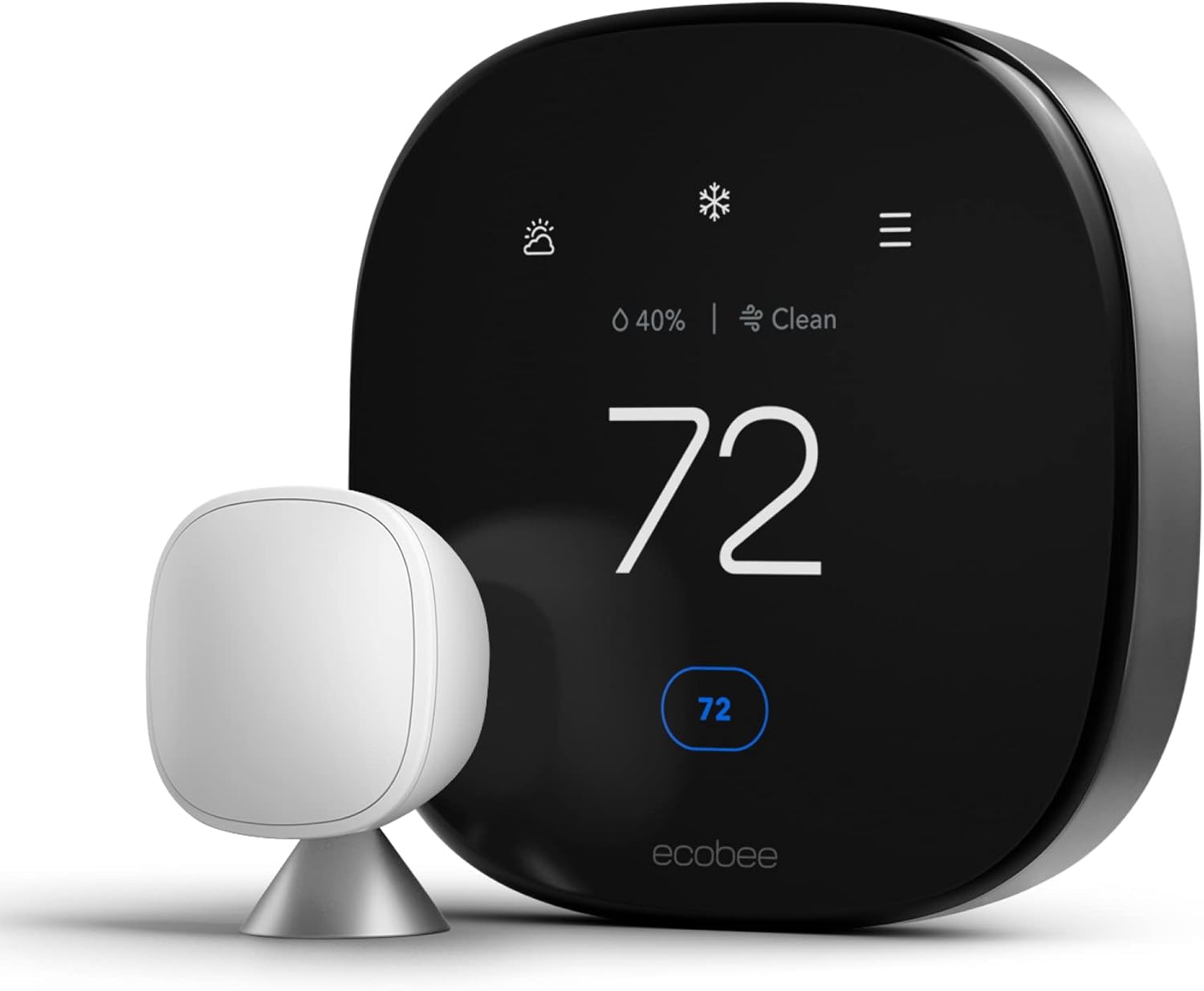
Ecobee is widely regarded as the most compatible smart thermostat for complex systems. It handles up to two-stage heating, two-stage cooling, heat pumps with dual fuel, and includes the PEK adapter for C-wire-free installation. The PEK is one of the most reliable C-wire adapters on the market and rarely causes the issues that Nest’s power-stealing approach can. Ecobee also supports dehumidification control, ventilator accessories, and IAQ monitoring — features that require additional wiring compatibility that ecobee handles gracefully.
Honeywell Home T9 / T10 Pro
Honeywell’s professional-grade smart thermostats support multi-stage heating and cooling, heat pumps, and dual-fuel systems. They are generally considered the most trouble-free compatibility choice for installers because Honeywell has decades of furnace compatibility experience and their terminals map cleanly to nearly every system configuration. The T9 and T10 Pro require a C-wire — there’s no power adapter option — so a C-wire must be available or run.
Wyze Thermostat
An affordable option but with meaningful limitations. The Wyze Thermostat is single-stage only for both heating and cooling, making it incompatible with two-stage furnaces if you want full stage-two control. It includes a C-wire adapter, which works reliably for its simpler use case. For a single-stage gas furnace with central AC in a typical home, it performs excellently at a fraction of the cost of Nest or ecobee.
| Smart Thermostat | 2-Stage Heat | 2-Stage Cool | Heat Pump | C-Wire Adapter | Price Range |
|---|---|---|---|---|---|
| Nest Learning (4th Gen) | ✓ Yes | ✓ Yes | ✓ Yes | Power Connector | $279 |
| ecobee Premium | ✓ Yes | ✓ Yes | ✓ Yes | PEK included | $249 |
| Honeywell T9 | ✓ Yes | ✓ Yes | ✓ Yes | C-wire required | $149 |
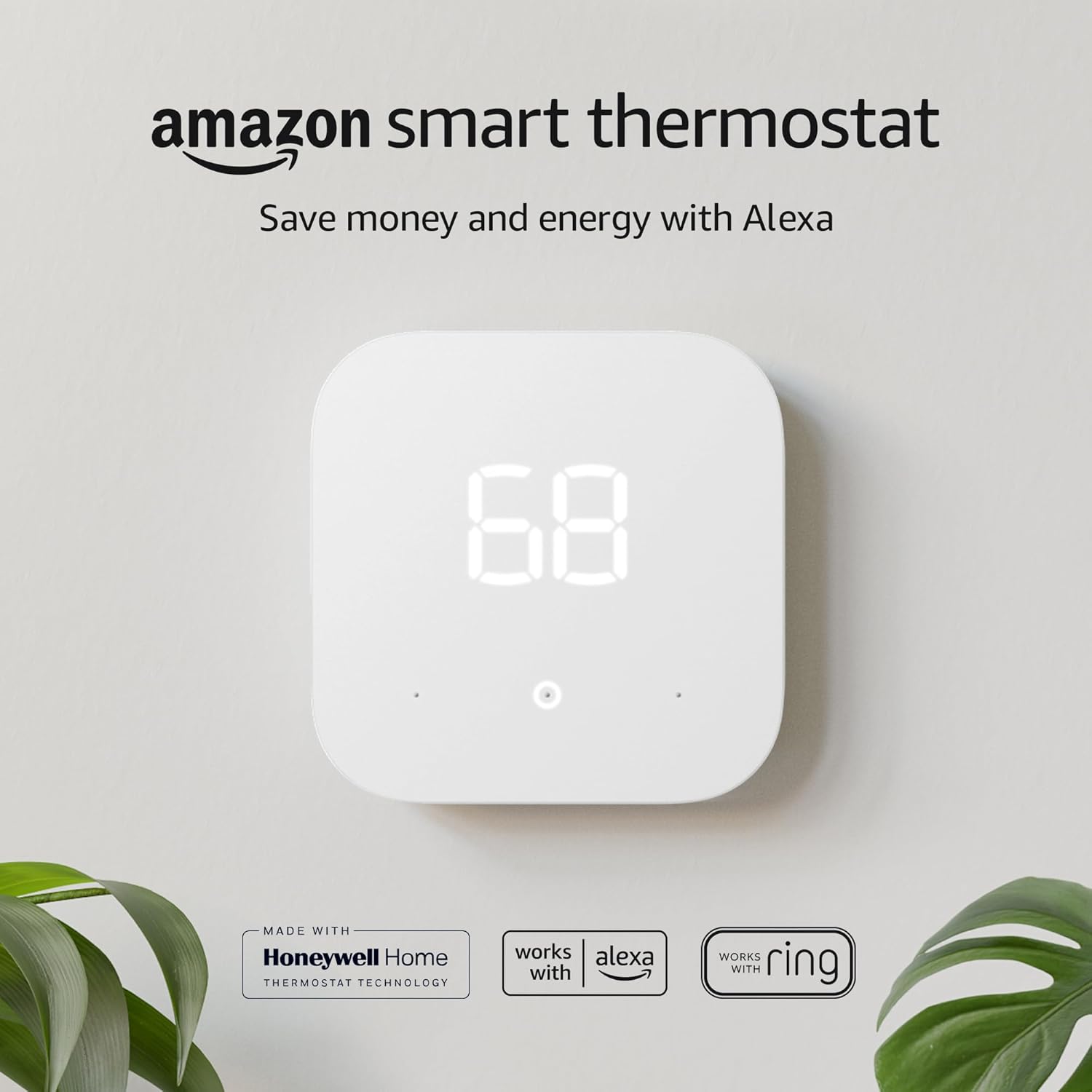
| Amazon Smart Thermostat | ✗ No | ✗ No | ⚠ Basic | Adapter included | $59 |
| Wyze Thermostat | ✗ No | ✗ No | ⚠ Limited | Adapter included | $69 |
| Sensi Touch 2 | ✓ Yes | ✓ Yes | ✓ Yes | C-wire or battery | $129 |
| Honeywell T6 Pro | ✓ Yes | ✓ Yes | ✓ Yes | C-wire required | $69 |
When evaluating whether smart thermostat energy savings justify the upgrade cost, a Wi-Fi thermostat ROI calculator can give you a personalized payback estimate based on your local utility rates and usage patterns. For most homes, the payback period on a smart thermostat ranges from 18 months to 3 years.

Brand-by-Brand Furnace Compatibility Chart
Here’s a practical reference showing which thermostat platforms work with which furnace brands, and any known compatibility caveats you should know before purchasing.
| Furnace Brand | Nest Compatible | ecobee Compatible | Honeywell Compatible | Special Notes |
|---|---|---|---|---|
| Carrier (standard) | ✓ | ✓ | ✓ | Infinity series needs Carrier controller for full variable-speed |
| Trane / American Standard | ✓ | ✓ | ✓ | ComfortLink II communicating requires Trane thermostat |
| Lennox (standard) | ✓ | ✓ | ✓ | iComfort proprietary system requires Lennox iComfort thermostat |
| Goodman / Amana | ✓ | ✓ | ✓ | Excellent compatibility — standard control boards throughout |
| Rheem / Ruud | ✓ | ✓ | ✓ | O/B polarity note: Rheem uses B terminal (energize for heat) |
| Bryant / Payne | ✓ | ✓ | ✓ | Same platform as Carrier — same Infinity caveat applies |
| York / Johnson Controls | ✓ | ✓ | ✓ | Standard control boards. No major compatibility issues. |
| Bosch / Buderus | ⚠ Basic | ⚠ Basic | ✓ | Modulating boilers may need OpenTherm adapter for full control |
| Weil-McLain (boiler) | ⚠ Basic | ⚠ Basic | ✓ | Zone valve systems work fine; steam boilers have no Y/G need |
| Empire / Williams (millivolt) | ✗ | ✗ | ✗ | Millivolt only. Requires relay transformer for digital thermostat. |
Step-by-Step Furnace Thermostat Compatibility Check
Follow this process before purchasing any thermostat. It takes under 10 minutes and eliminates guesswork entirely.
Turn off power at the furnace disconnect switch. This is the small switch mounted on or near the furnace, not the thermostat. Flip it off. If you can’t find it, flip the furnace’s circuit breaker in your electrical panel.
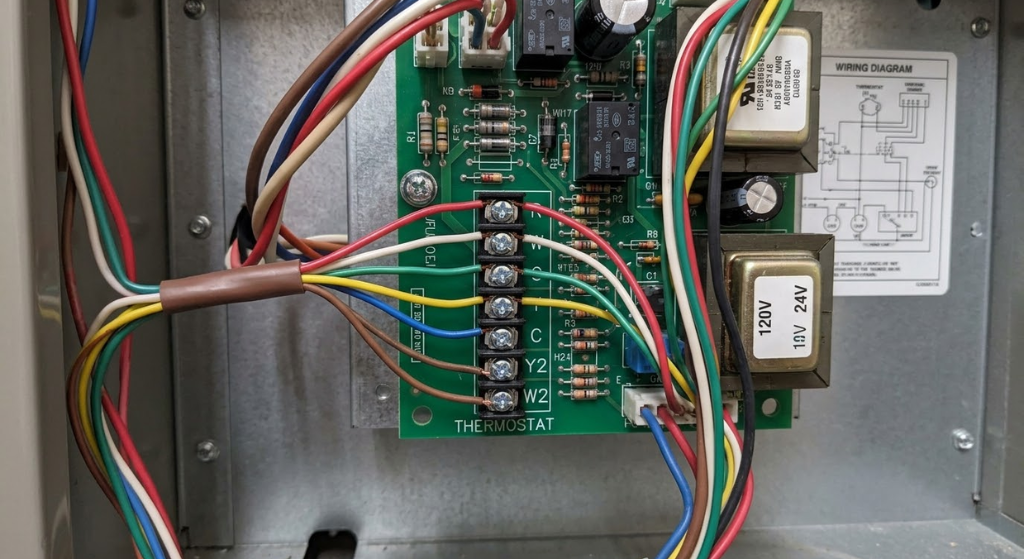
Remove the thermostat cover and photograph the wiring. Take a clear, close-up photo of every wire and its terminal label before touching anything. This photo is your safety net.
Note every wire color and terminal label. Write them down: “Red wire → R terminal, White wire → W terminal,” etc. Count the total number of wires.
Check for a C-wire. Look for a wire on a terminal labeled “C” or “Com.” Also check if any extra wires are tucked behind the wall plate, unused.
Identify your system type. Check the furnace label (usually inside the access panel): single-stage or two-stage? Gas, oil, or electric? Does it mention “communicating” or a proprietary system name?
Run the manufacturer’s compatibility checker. Visit Nest’s, ecobee’s, or Honeywell’s website and input your terminal wire configuration. These tools are free, take 3 minutes, and are highly accurate.
Cross-check the thermostat’s product page. Search for your furnace model number plus the thermostat you’re considering. Look for known incompatibilities, especially for newer variable-speed or communicating systems.
Confirm C-wire situation before purchasing. If you have no C-wire and the thermostat requires one, decide now: use an adapter (PEK/Power Connector), run a new wire, or choose a battery-compatible model.
If you’ve completed this check and your thermostat still seems incompatible with your furnace despite correct wiring, use this 10-minute thermostat diagnostic checklist to rule out whether the problem is a faulty thermostat, a blown furnace fuse, or a wiring fault rather than a true compatibility issue.

Common Compatibility Problems & How to Fix Them
Even after careful compatibility checking, installation doesn’t always go smoothly. Here are the most frequent furnace-thermostat compatibility problems and their solutions.
Problem 1: Thermostat Displays but Furnace Won’t Start
The thermostat is powered and showing temperature but the furnace doesn’t respond to a heat call. This is almost always a wiring issue rather than a fundamental compatibility problem. First, verify the W wire is firmly seated in the W terminal at both ends — thermostat and furnace control board. Second, check whether the furnace’s 3-amp automotive-style fuse (usually on the control board) has blown. A common cause of blown furnace fuses is incorrect wiring during thermostat installation — specifically, touching R and C wires together momentarily. If your thermostat shows “Heat On” but no heat is produced, the furnace control board’s response to the 24V signal is the key diagnostic point.
Problem 2: Furnace Short-Cycling After Smart Thermostat Install
The furnace fires and shuts off every few minutes without reaching setpoint. This is the classic symptom of a power-stealing smart thermostat (typically Nest) interfering with the furnace control board on systems without a proper C-wire. The thermostat is drawing just enough current through the R or W wire to slightly energize the control board in ways that cause erratic behavior. Solution: install a proper C-wire or use the manufacturer’s power adapter. Do not attempt to solve this by adjusting thermostat settings — it’s a power delivery problem, not a programming problem.
Problem 3: Fan Runs Continuously After Thermostat Install
The blower runs non-stop regardless of the heat or cool setting. This typically means the G wire is continuously energized — either connected to the wrong terminal or shorted against another wire. Verify that G is connected only to the G terminal and that no wire insulation is stripped and touching a neighbor. Also check that the thermostat fan setting is on “Auto” rather than “On.”
Problem 4: AC Works but Heat Doesn’t (or Vice Versa)
If cooling works but heating doesn’t, the W terminal connection has likely failed — either at the thermostat, at the furnace, or somewhere in the wire run. If heating works but cooling doesn’t, the Y terminal is the suspect. Use a voltmeter to confirm whether the thermostat is actually sending 24V on the W or Y wire when calling for heat or cooling respectively. A reading of 0V means the thermostat isn’t sending the signal; 24V means the furnace isn’t responding to it.
Problem 5: “Compatibility” Error in Smart Thermostat App
Some smart thermostat apps flag certain terminal configurations as “incompatible.” This is usually a precautionary flag, not a hard block. Common triggers include: no C-wire detected, presence of an O/B wire (heat pump) when the app expected a conventional system, or an unusual wire color combination. Work through the app’s step-by-step override options — in most cases, these warnings can be navigated by accurately describing your system type.
Heat Pump vs. Furnace Thermostat Compatibility
Heat pumps and furnaces may look similar from the outside, but they require fundamentally different thermostat configurations. Installing a furnace thermostat on a heat pump is one of the most common and damaging compatibility mistakes homeowners make.
The Critical Difference: The O/B Reversing Valve Terminal
A heat pump is a refrigeration system that can reverse its cycle — functioning as an air conditioner in summer and as a heater in winter. The mechanism that switches between modes is called the reversing valve, controlled by the O/B terminal on the thermostat.
A standard furnace thermostat has no O/B terminal. If you connect one to a heat pump, the pump will run — but it will never switch between heating and cooling modes correctly. In many cases, the system will operate in cooling mode only, or heating mode only, regardless of the thermostat command.
O vs. B Terminal: The Polarity Confusion
Compounding the O/B issue is a brand-specific polarity question. Most heat pump manufacturers (Carrier, Trane, Lennox, most others) wire the reversing valve to energize during cooling — meaning voltage on O switches the pump to cooling mode. This is the “O” configuration.
Rheem and Ruud, however, use the opposite convention — voltage on B energizes the valve for heating. When setting up a smart thermostat on a Rheem or Ruud heat pump, you must select “B” in the thermostat’s setup menu rather than “O.” Setting it to “O” will cause the heat pump to blow cold air when you ask for heat and warm air when you ask for cooling — a confusing failure mode that looks like a refrigerant problem but is actually just a one-setting configuration error.
Dual-Fuel System Compatibility
A dual-fuel system pairs a heat pump with a gas furnace — using the heat pump for efficiency in mild weather and switching to the gas furnace when temperatures drop below the heat pump’s efficiency threshold (typically 35–40°F). These systems require a thermostat that supports both heat pump control AND gas furnace control, with logic to switch between the two based on outdoor temperature.
Nest, ecobee, and Honeywell T10 Pro all support dual-fuel configurations. The thermostat must be set up correctly to define the switchover temperature (called the “balance point”) at which it transfers from heat pump to gas heat.
| System | Unique Terminal Needed | Furnace Thermostat Works? | What You Need |
|---|---|---|---|
| Air-source heat pump | O/B (reversing valve) | ✗ No | Heat pump compatible thermostat |
| Heat pump + aux heat | O/B + W2/Aux | ✗ No | HP thermostat with Aux support |
| Dual-fuel (HP + gas) | O/B + W1 + W2 | ✗ No | Dual-fuel thermostat (Nest, ecobee, T10 Pro) |
| Gas furnace only | W (no O/B) | ✓ Yes | Standard 24V thermostat |
| Gas furnace + central AC | W + Y + G | ✓ Yes | Standard cooling-capable thermostat |
When and What to Upgrade: The Compatibility-Informed Upgrade Guide
Not every home benefits equally from a smart thermostat upgrade. Let’s get specific about when it makes sense, what to buy for each scenario, and what to watch out for.
Scenario 1: Single-Stage Gas Furnace + Central AC (Most Common)
This is the sweet spot for smart thermostat upgrades. Your system is maximally compatible with every option on the market. Almost any smart thermostat will work, and the energy savings from scheduling and geofencing are substantial because single-stage systems benefit greatly from reduced runtime. Best options: ecobee3 Lite (budget-conscious), Nest Thermostat E (mid-range), ecobee Premium or Nest Learning 4th Gen (full-featured). If you’re curious about how AI learning thermostats compare to programmable schedule efficiency, the answer depends heavily on how consistent your household schedule is.
Scenario 2: Two-Stage Gas Furnace + Two-Stage AC
You need a thermostat that explicitly supports W2 (second stage heating) and Y2 (second stage cooling). This narrows the field: Nest Learning 4th Gen, ecobee Premium, ecobee SmartThermostat Enhanced, Honeywell T6 Pro, Honeywell T9, Sensi Touch 2. Budget models (Wyze, Amazon Smart Thermostat) are not suitable here — they’ll operate only stage one indefinitely, leaving your system’s efficiency and heating capacity on the table.
Scenario 3: Older Home with No C-Wire
Your priority is either finding a C-wire solution or choosing a thermostat with a reliable adapter. The ecobee PEK is the industry gold standard for C-wire-free installs — it’s included free with every ecobee purchase and rarely causes issues. If you prefer Nest, order the free Power Connector before installation. Avoid power-stealing approaches on older furnaces with sensitive control boards (pre-2000 Bryant, Carrier, or Lennox systems are particularly sensitive).
Scenario 4: Heat Pump (Single or Two-Stage)
Your must-have is O/B terminal support. From there, the same hierarchy applies: ecobee Premium or Nest 4th Gen for full-featured, Honeywell T9 for professional-grade reliability, Sensi Touch 2 for value with full heat pump support. Confirm your brand’s O/B polarity before completing setup — Rheem/Ruud require B selection, everyone else uses O.
Scenario 5: High-Efficiency Communicating Furnace (Carrier Infinity, Trane XV, Lennox SLP)
This is where you face a real decision. You can use a standard smart thermostat (Nest, ecobee) with conventional wiring and get basic heating/cooling control — but you’ll lose variable-speed operation, detailed fault reporting, and potentially your extended warranty. Alternatively, use the manufacturer’s proprietary thermostat (Carrier Cor, Trane XL824, Lennox iComfort) to unlock the full system potential. Many homeowners in this situation opt for the proprietary thermostat, accepting its limited smart features, because the efficiency and warranty benefits outweigh the smart thermostat convenience.
“The best thermostat for your furnace isn’t the most expensive one — it’s the one correctly matched to your system’s stages, voltage, and wiring. A $69 Honeywell on the right furnace outperforms a $279 Nest on the wrong one.”

Wiring Safety, Code Compliance & When to Call a Pro
Thermostat replacement is one of the most DIY-friendly HVAC tasks — but there are situations where calling a licensed HVAC technician is the right call, and ignoring those situations can result in real damage.
When DIY Is Appropriate
Replacing a standard low-voltage (24V) thermostat with another standard low-voltage thermostat — on a straightforward gas furnace or heat pump with an existing, conventional wiring setup — is well within DIY capability. The voltages involved are low enough that accidental contact with wires is not dangerous to you, though it can blow the furnace fuse. Take the photo of the existing wiring, follow the compatibility check process above, and you’ll be fine in the vast majority of cases.
When to Call a Professional
Certain situations warrant professional help. If you need to run new thermostat wire — especially through finished walls or across multiple floors — the work involves fishing wire through wall cavities and drilling through structural elements, which is genuinely difficult and potentially damaging if done incorrectly. If you have a communicating system and want to retain full functionality, the setup process can be complicated enough to justify professional configuration. And if you encounter anything involving line-voltage wiring — 120V or 240V — always call a licensed electrician or HVAC contractor.
If your thermostat doesn’t start the furnace after what seems like a correct installation, it’s worth calling a technician before assuming the furnace itself has failed — many seemingly dead furnaces are saved by a quick control board fuse replacement or a wiring correction.
Permits and Code Compliance
In most US jurisdictions, replacing a thermostat does not require a permit as long as you’re doing a straight swap with no new wiring. However, any work that involves opening walls to run new wire, modifying the furnace itself, or changing the system configuration may require a permit and inspection. When in doubt, check with your local building department — permit violations can affect homeowner’s insurance coverage and complicate home sales.
Smart Thermostat Features That Require Additional Wiring
Some advanced smart thermostat features require wiring connections that may not exist in older homes. Dehumidification control requires a connection to the air handler’s dehumidification terminal. Ventilator control (HRV/ERV) requires an accessory terminal. Multi-zone systems require zone controllers and additional thermostat wiring for each zone. These advanced configurations are beyond standard DIY territory and benefit from professional planning and installation, particularly when new wiring must be run.
Furnace Thermostat Compatibility — Frequently Asked Questions
How do I know if a thermostat is compatible with my furnace?
Check your furnace control board for terminal labels (R, W, Y, G, C). Count your wires, identify whether your system is single-stage or multi-stage, and cross-reference with the thermostat manufacturer’s online compatibility checker. Most smart thermostat apps — Nest, ecobee, Honeywell Home — include a guided compatibility tool that takes about 3 minutes to complete.
Can I use any thermostat with my gas furnace?
No. A gas furnace requires a low-voltage (24V) thermostat that matches the number of heating stages. Line-voltage thermostats (120V/240V) are completely incompatible and can damage the furnace control board. Additionally, two-stage furnaces need a thermostat with a W2 terminal; using a single-stage thermostat will limit the furnace to stage-one operation only.
What is the C-wire and do I need it for a smart thermostat?
The C-wire (common wire) provides a continuous 24V power return to the thermostat, enabling it to run Wi-Fi, a color display, and onboard processors without interruption. Most modern smart thermostats work best with a C-wire. Without one, options include using the manufacturer’s C-wire adapter (ecobee PEK, Nest Power Connector), using an unused wire in your existing cable as a C-wire, or choosing a battery-backup model. Power-stealing approaches work on many systems but can cause issues on sensitive older control boards.
What does W1 and W2 mean on a thermostat?
W1 controls the first stage of heating — typically 65–70% gas valve opening on a two-stage furnace, or 100% on a single-stage. W2 controls the second stage (100% capacity) on two-stage furnaces, or auxiliary/emergency heat on heat pump systems. If you have a single-stage furnace, only W1 is used. A thermostat without W2 will only ever fire your two-stage furnace at stage one, potentially leaving you cold on the coldest winter days.
Will a smart thermostat work with a two-stage furnace?
Yes, but only smart thermostats that explicitly support dual-stage heating via a W2 terminal. The Nest Learning Thermostat (4th gen), ecobee SmartThermostat Premium, Honeywell T9 and T6 Pro, and Sensi Touch 2 all support two-stage heating. Budget models like the Wyze Thermostat and Amazon Smart Thermostat are single-stage only and will not provide W2 control.
My thermostat clicks but the furnace doesn’t start — is it a compatibility issue?
Usually not a fundamental compatibility issue. The click means the thermostat relay is working. The most common causes are: the W terminal wire is loose or disconnected at the furnace control board; the furnace’s 3-amp control board fuse is blown (check it — it looks like a car fuse, usually red or brown); the furnace disconnect switch is off; or the furnace is locked out due to a fault code. Check these before concluding incompatibility.
Can I replace a Honeywell thermostat with a Nest on my furnace?
In most cases, yes. Nest is compatible with the vast majority of 24V gas, oil, and electric furnaces, including single and two-stage systems and heat pumps. The main requirements are: correct wiring (R, W, G, Y, and ideally C) and that your system is not a millivolt, line-voltage, or proprietary communicating system. Use the Nest app’s compatibility checker with your wire photo to confirm before purchasing.
What is a millivolt furnace and why is thermostat compatibility different?
A millivolt furnace uses a standing pilot light and a thermopile to generate a small self-contained electrical current (typically 400–750 millivolts) that powers the gas valve. There is no 24V transformer, so standard digital and smart thermostats have no power source and cannot operate the system. Millivolt thermostats are simple mechanical switches that interrupt the millivolt circuit to open/close the gas valve. To use a digital thermostat on a millivolt system, a 24V relay transformer must be installed.
Does a heat pump use the same thermostat as a furnace?
No. Heat pumps require a thermostat with an O/B reversing valve terminal, which standard furnace-only thermostats lack. Without the O/B terminal, the heat pump cannot switch between heating and cooling modes. Additionally, heat pump thermostats differ in their emergency heat and auxiliary heat logic. Always confirm a thermostat is explicitly labeled “heat pump compatible” before installing it on a heat pump system.
What happens if I install an incompatible thermostat on my furnace?
Outcomes range from minor to serious. In the best case, the system simply doesn’t respond to heat or cool commands — easily fixed by reinstalling the original thermostat. More seriously, incorrect wiring can blow the furnace control board’s 3-amp fuse (a $2 fix if you catch it early). In the worst case, a sustained short circuit can damage the 24V transformer (a $40–$80 repair) or the furnace control board itself (a $150–$600 repair). Always verify compatibility and double-check wiring before restoring power.
Can I check thermostat-furnace compatibility without a professional?
Absolutely. Take a photo of your current thermostat wiring before removal, note each wire color and terminal label, then run the online compatibility checker for your target thermostat brand. Nest, ecobee, and Honeywell all provide free, accurate compatibility tools on their websites and apps. For most standard gas furnace setups, this self-check process is accurate and reliable.
How many wires does a thermostat need for a furnace?
Minimum 2 wires (R and W) for heat-only operation. Add Y and G for cooling capability — 4 wires. Add C for smart thermostat power — 5 wires. Add W2 for two-stage heating — 6 wires. Heat pumps follow a different pattern: R, Y, G, O/B, and C at minimum, plus W2/Aux for backup heat. Modern smart thermostats recommend a minimum of 5 wires (including C) for reliable operation.
The Bottom Line on Furnace Thermostat Compatibility
Furnace thermostat compatibility comes down to four core questions: What voltage does your system run on? How many heating stages does your furnace have? Do you have a C-wire — or a reliable way to get one? And does your system use any proprietary communication protocol that limits your thermostat options?
Answer those four questions accurately, and the right thermostat selection becomes straightforward. The compatibility checkers built into Nest, ecobee, and Honeywell’s apps are remarkably accurate — use them. Take that photo of your wiring before you disconnect anything. And if you’re still unsure after working through this guide, it costs almost nothing to have a certified HVAC technician confirm your system specs in a single service call — far less than the cost of a damaged control board.
Ready to find your perfect match? Start with the compatibility checklist in Section 8, then cross-reference against the brand compatibility chart in Section 7.
Run the 10-Minute Diagnostic Checklist →



 Home
Home
 Info
Info
 Compare
 Reviews
 Shop
Shop