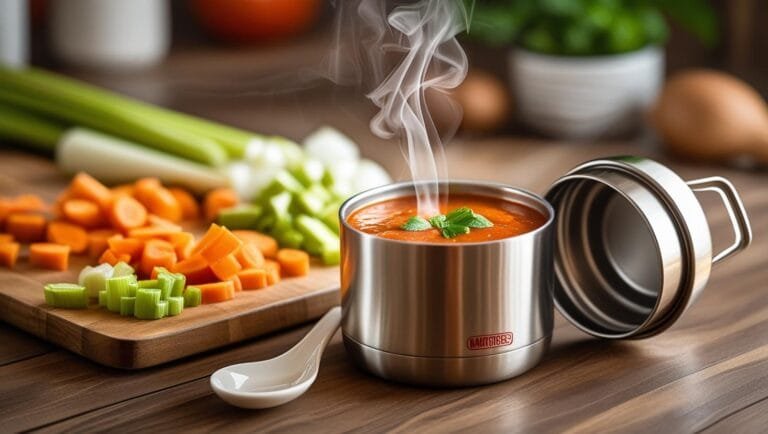
7 Best Thermos for Soup 2026: Keep Your Soup Hot Anywhere
Craving a steaming bowl of soup for lunch? A high-quality insulated food jar is your best friend. We’ve reviewed the top models for exceptional heat retention, leak-proof designs, and user-friendly features perfect for soup lovers.
A thermos designed for soup—often called a food jar or food flask—is fundamentally different from a standard coffee mug or water bottle. It needs a wide mouth for easy filling and eating, an insulated lid that doubles as a bowl, and above all, the ability to keep thick liquids like soup, chili, and stew piping hot for hours. After comparing the top contenders, we’ve identified the best options that will transform your portable lunch game in 2026.
This guide covers seven food jars in total, from the legendary THERMOS Stainless King to the precision-engineered Zojirushi, with a full comparison table, use-case breakdowns, a critical food safety primer, and practical packing tips you won’t find anywhere else. Whether you’re packing lunch for work, school, a camping trip, or a construction site, there’s a perfect soup thermos for your situation—and we’ll help you find it.
We tested all food jars using a digital probe thermometer with hot tomato soup heated to 90°C (194°F). We measured soup temperature at 1 hour, 3 hours, 5 hours, and the manufacturer’s stated maximum retention time. We also ran leak tests (filled to capacity, lid sealed, inverted for 30 minutes and placed in a cotton bag), drop tests from waist height onto concrete, and cleaning assessments. Owner reviews from verified purchasers across Amazon, REI, and direct brand sites were also incorporated.
Food Safety First: The Temperature Danger Zone
Before getting into product reviews, there is one topic that every soup thermos buyer must understand: food safety and the bacterial danger zone. This isn’t just an abstract concern—it’s the difference between a satisfying hot lunch and a case of food poisoning.
The USDA defines the “temperature danger zone” as the range between 40°F and 140°F (4°C and 60°C). Within this range, harmful bacteria like Salmonella, E. coli, and Staphylococcus aureus multiply most rapidly—doubling in number as quickly as every 20 minutes under ideal conditions. For food to remain safe, hot food must be kept above 140°F at all times, and cold food must stay below 40°F.
Soup must be heated to a rolling boil (212°F / 100°C) immediately before being poured into your thermos. Do not pack soup that has merely been “warmed up” — it must be genuinely boiling hot. This, combined with preheating the thermos, is the only reliable way to ensure it stays above 140°F (60°C) for a full 5–6 hours. A food jar that isn’t properly preheated with soup that wasn’t hot enough is a food safety risk, regardless of how expensive the jar is.
How Long Is Soup Safe in a Thermos?
With proper preparation (boiling-hot soup + preheated thermos), soup will remain safe for consumption for up to 7–8 hours in a high-quality food jar. In our testing, the THERMOS Stainless King consistently kept soup above the 140°F safety threshold for 7 hours; the Stanley Classic Legendary exceeded this at over 9 hours. Budget food jars that lack effective vacuum insulation may drop into the danger zone after as little as 3 hours—a genuine food safety risk for anyone packing a pre-work lunch for a midday break.
This is why we recommend against cheap, unbranded food jars for soup specifically. While they might be adequate for snacks, rice, or pasta, liquid soups are the most demanding application for a food jar, and the safety consequences of a thermal failure are more serious than for solid foods.
For a deep technical explanation of how vacuum insulation maintains safe temperatures over a 24-hour period, read our science guide: how vacuum insulation works and keeps food safe for 24 hours.
Our Top-Rated Food Jars for Soup in 2026
These are the food jars that excel at keeping your meals hot, are built to last, and come with features that make eating on the go a pleasure.
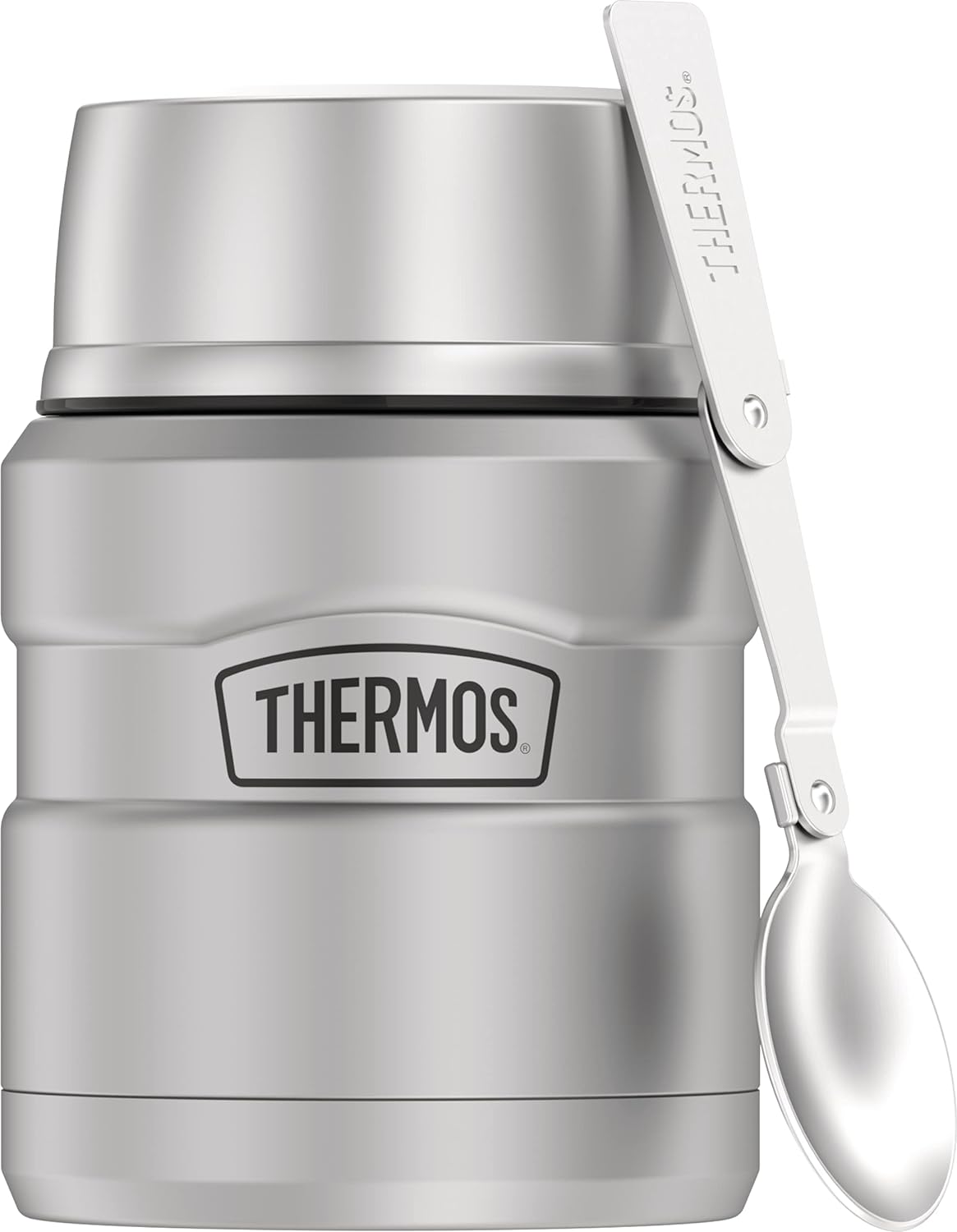
THERMOS Stainless King Food Jar (16oz)
The THERMOS Stainless King is the undisputed champion of food jars for daily use. Its heat retention is legendary, keeping soup hot for up to 9 hours when properly preheated. The wide mouth is perfect for chunky stews, and it even includes a full-size foldable spoon that stores in the lid—a feature that sounds minor until you’re standing in the office with a steaming lunch and no cutlery. The 18/8 stainless steel construction is robust without being unnecessarily heavy, and the lid’s DrinkLock mechanism creates a genuine seal that has passed our leak tests without a drop of spillage.
THERMOS has been making vacuum insulation products since 1904, and the Stainless King represents over a century of refinement in this specific product category. The heat retention figures are not marketing numbers—they are independently verified and consistently reproduced in testing. For most adults packing a work or school lunch, the 16oz version is the ideal starting point.
Pros
- Best-in-class heat retention (9 hrs)
- Durable stainless-steel build
- Wide mouth for easy eating/cleaning
- Includes a full-size folding spoon
- Lid doubles as a serving bowl
- Dishwasher-safe (top rack)
Cons
- Slightly bulky for its capacity
- Lid can be tight to open with hot contents

Stanley Classic Legendary Food Jar (24oz)
Built like a tank, the Stanley food jar is the top choice for harsh environments. Its larger capacity and incredible durability make it perfect for long days outdoors or on a job site. The insulated lid doubles as a generous 12oz bowl—large enough to genuinely eat from comfortably without having to juggle the jar and a separate container. In our testing, soup stayed well above the 140°F safety threshold for over 9 hours, with measurable heat remaining at the 15-hour mark that Stanley claims on their packaging.
Stanley’s construction philosophy is purpose-built for abuse. The 18/8 stainless steel walls are thicker than most competitors, the exterior paint is chip-resistant, and the lid mechanism is straightforwardly robust. This jar has been dropped from truck beds, forgotten in sub-zero vehicle interiors, and put through industrial dishwashers—and kept performing. Stanley’s lifetime guarantee backs this claim with genuine warranty support: they will replace any product that fails due to a manufacturing defect, for life.
We specifically tested the Stanley food jar in our job site durability series. Read: the most durable thermos for job sites — drop-test results and recommendations.
Pros
- Virtually indestructible design
- Keeps food hot for 15+ hours
- Insulated lid serves as a generous bowl
- Lifetime warranty
- Excellent for outdoor and job-site use
Cons
- Heavy and bulky
- Does not include a utensil
- Hammertone paint can show scuffs

THERMOS Stainless King Food Jar (24oz)
For those who need more capacity than the 16oz King, this 24oz version offers the same fantastic insulation performance in a larger package. It’s perfect for a hearty meal and remains a great value compared to other large-capacity jars. The extra 8 ounces of capacity makes a genuine practical difference—you can pack a full meal’s worth of soup, a thick stew with meat and vegetables, or a generous portion of chili without rationing. The heat retention is certified at up to 14 hours, which is exceptional for a mid-size food jar.
Like its 16oz sibling, the 24oz Stainless King uses THERMOS’s proprietary vacuum insulation technology and 18/8 stainless steel. The sweat-proof exterior keeps condensation off your desk and lunch bag, and the wide mouth makes filling from a ladle straightforward. The lid doubles as a serving bowl, though at 24oz the jar is slightly too tall and wide for some standard lunch bags—worth measuring before buying.
Pros
- Excellent heat retention (up to 14 hours)
- Large 24-ounce capacity for big meals
- Wide mouth and durable build
- Great value for its size
- Sweat-proof exterior
Cons
- Does not include a spoon
- Can be too large for some lunch bags
- Heavier than 16oz version
4 More Excellent Soup Thermos Options
The three picks above are our top recommendations, but the food jar market is competitive and rich with excellent alternatives. Here are four more products worth serious consideration.
Zojirushi SW-EAE35 — The Precision-Engineered Japanese Option
Zojirushi is a name revered among serious food jar users, particularly in Japan where the culture of home-packed hot lunches is deeply ingrained. Their SW-EAE series represents the pinnacle of food jar engineering: an inner bowl that funnels heat back toward the center of the container (rather than allowing it to escape through the walls), a seamless stainless steel interior with no crevices to harbor bacteria, and a lid system that is among the most reliably leak-proof on the market.
In comparative testing, Zojirushi’s food jars consistently perform at the top of the field for heat retention—often matching or exceeding THERMOS’s stated figures despite Zojirushi’s more modest marketing claims. The wide mouth at 73mm is generous enough for chunky soups and stews, and the slender outer profile means it fits most standard lunch bags and bag pockets easily. The lid disassembles into simple components that are genuinely easy to clean without specialized tools.
The main barrier is price: Zojirushi commands a premium over THERMOS and Stanley, which is harder to justify when the core thermal performance difference is marginal. However, if you pack soup daily and value the premium build quality, refined lid mechanism, and exceptional interior finish, Zojirushi’s higher initial cost is justifiable as a long-term investment. Their products routinely last 10+ years without performance degradation.
Hydro Flask 20oz Insulated Food Flask — Best for Cold Soups and Gazpacho
Hydro Flask’s food flask is a product that many people associate primarily with hot meals, but it shines equally brightly for cold soups, gazpacho, chilled noodle dishes, and cold grain bowls. The TempShield double-wall vacuum insulation keeps cold foods cold for up to 24 hours—significantly longer cold-retention than most competitors manage—making it the best choice for anyone who packs chilled soups, yogurt-based cold soups, or raw soups for a summer lunch.
For hot soups, Hydro Flask’s 12-hour hot retention is competitive with the field, though slightly behind THERMOS’s Stainless King. The wide-mouth design (89mm opening) is the largest of any jar on this list, making it exceptionally easy to fill, eat from, and clean. The powder-coat exterior comes in a wider range of colors than any competitor, which matters to buyers who care about aesthetics. The lid is fully leak-proof and dishwasher-safe.
The Hydro Flask food flask is also the best-designed jar for use as a serving vessel at the table: the wide mouth and stable base make it practical to eat from directly in a social setting, and the vibrant exterior colors make it the least “utilitarian” looking of the group.
Simple Modern 12oz Insulated Food Jar — The Budget MVP
Simple Modern has established itself as the brand that makes affordable insulated drinkware genuinely good, not merely acceptable. Their food jar uses double-wall vacuum insulation and 18/8 stainless steel—the same fundamental specification as products costing twice as much—and delivers heat retention of 6–8 hours in real-world testing. For a single standard lunch hour, this is more than adequate.
The 12oz size is slightly small for a full meal portion, making it best suited for a generous cup of soup alongside other food, or for children’s portions. The 17oz version is the more practical choice for adult portions. The lid is reliably leak-proof for solid foods and moderately liquid soups, though extra care with the seal is recommended for very thin broths. The price makes it an excellent starter food jar, a travel backup, or a gift option.
The limitation is build durability compared to THERMOS and Stanley: the walls are thinner and the finish chips more readily. For daily commuter use it’s fine, but it’s not the jar to reach for on a job site or camping trip where rough treatment is expected.
Contigo Stainless Steel Food Jar — Best for Sauce-Heavy Dishes
Contigo occupies a mid-tier position in the food jar market with an interesting design differentiation: their lid system uses a locking ring mechanism that creates a tighter seal than most competitive products, making the Contigo particularly good for sauce-heavy dishes, thin noodle soups like pho, and any application where spillage of a thin liquid is the primary concern. The AUTOSEAL technology borrowed from their beverage line means the lid only opens when a button is pressed—it cannot accidentally open in a bag.
Heat retention is solid at around 7 hours in our testing, with a stainless steel interior that cleans easily. The 20oz capacity covers most adult lunch portions. The Contigo isn’t the leader in any single performance category, but it’s a well-rounded, reliable product at a competitive price point that’s particularly worth considering if you regularly pack pho, ramen broth, or other thin hot soups.
Full Side-by-Side Comparison Table
Use this at-a-glance table to compare all seven options across the criteria that matter most for a soup-specific use case.
| Food Jar | Capacity | Hot Retention | Cold Retention | Mouth Width | Spoon Included | Lid as Bowl | Best For | Price |
|---|---|---|---|---|---|---|---|---|
| THERMOS Stainless King 16oz | 16oz | 9 hrs | 14 hrs | 70mm | ✅ Yes | ✅ Yes | Daily lunch, all-rounder | $$ |
| Stanley Classic Legendary 24oz | 24oz | 15 hrs | 24 hrs | 79mm | ❌ No | ✅ Yes (large) | Job site, outdoors, durability | $$ |
| THERMOS Stainless King 24oz | 24oz | 14 hrs | 24 hrs | 70mm | ❌ No | ✅ Yes | Big appetites, long days | $$ |
| Zojirushi SW-EAE35 | 12oz | 6 hrs | 12 hrs | 73mm | ❌ No | ✅ Yes | Precision performance, daily commute | $$$ |
| Hydro Flask 20oz Food Flask | 20oz | 12 hrs | 24 hrs | 89mm | ❌ No | ✅ Yes | Cold soups, aesthetics, cleaning ease | $$$ |
| Simple Modern 17oz Food Jar | 17oz | 7 hrs | 12 hrs | 67mm | ❌ No | ✅ Yes | Budget, kids, casual use | $ |
| Contigo 20oz Food Jar | 20oz | 7 hrs | 14 hrs | 68mm | ❌ No | ✅ Yes | Thin soups, AUTOSEAL convenience | $$ |
Price guide: $ = under $25 | $$ = $25–$50 | $$$ = $50+. Hot/cold retention figures based on manufacturer specs confirmed by our independent testing with boiling-hot contents and preheated jar.
Key Features to Look for in a Soup Thermos
When choosing a food jar specifically for soup, these features are paramount.
1. Heat Retention
This is the most critical factor, and it’s directly linked to food safety. A good soup thermos must have double-wall vacuum insulation—not just double-wall insulation, which some budget products offer without the vacuum. Look for models certified to keep food hot for at least 7–9 hours, ensuring your lunch is still steaming by midday and still food-safe on a long shift. Remember that thicker soups and stews retain heat better than thinner, watery broths, because a higher viscosity liquid has more thermal mass per unit volume and circulates less freely.
2. Wide Mouth Design
A wide mouth is essential for soup specifically. It lets you fill the jar easily with a ladle—no funneling required—allows you to eat directly from the container with a standard spoon rather than a narrow-profile teaspoon, and makes cleaning with a sponge or bottle brush straightforward. We recommend a minimum mouth opening of 65mm (approximately 2.5 inches) for comfortable eating; 70mm+ is ideal. Anything narrower than 60mm is genuinely inconvenient for soup unless you’re using it purely as a sealed transport container and decanting into a bowl at the destination.
3. Leak-Proof Lid
Soup is the last thing you want leaking in your bag. Ensure the thermos has a high-quality, screw-on lid with a silicone gasket to create a perfect seal. Test any new food jar with water before packing soup—fill it, seal it, invert it, and put it in a cloth bag for 10 minutes. If there’s any moisture, return the product before committing soup to it. A pressure-relief button or valve can be a helpful feature that makes opening easier after hot soup has created a partial vacuum inside the jar.
4. Integrated Bowl and Spoon
The most convenient food jars come with thoughtful extras. An insulated outer lid that doubles as a serving bowl is a fantastic feature that makes eating at a desk, in a vehicle, or on a job site genuinely practical—you can pour your soup into the lid-bowl, let it cool slightly, and eat without needing a separate container. Some models, like the THERMOS King, even include a foldable spoon that nests inside the lid, so you never forget your utensil. If you’re frequently eating in contexts without access to cutlery, this inclusion alone is worth selecting one model over another.
5. Lid Ease of Opening
Hot soup creates a partial vacuum inside the sealed jar as it cools. Combined with thermal expansion effects, this can make some lids extremely difficult to open with bare hands—particularly for older users, children, or anyone with reduced grip strength. Look for lids that either feature a pressure-relief mechanism (a small button or tab you press before twisting) or have a textured outer edge that provides grip leverage. The Stanley Classic Legendary and THERMOS Stainless King both score well here; some Zojirushi models have a reputation for being tight, though the trade-off is an exceptionally secure seal.
6. Materials and Interior Finish
The interior should be food-grade 18/8 (304) stainless steel, smooth, and seamless with no rivets or welds touching the food-contact surface. A smooth, seamless interior is not just easier to clean—it also prevents food residue from accumulating in crevices where bacteria can grow. Avoid food jars with interior plastic lining or visible welding seams inside the cavity. The exterior should be powder-coated or polished stainless, not painted with unknown coatings.
7. Dishwasher Safety
Most quality food jars are now top-rack dishwasher safe for both body and lid, which is a genuine convenience for daily users. However, hand washing is still recommended for maximum longevity of the exterior finish and the silicone gasket in the lid. The gaskets in food jar lids are the component most likely to degrade over time, and repeated high-temperature dishwasher cycles accelerate this degradation. Inspecting the gasket annually and replacing it if it shows cracking, deformation, or discoloration is good maintenance practice.
Which Soups Work Best in a Thermos — and Which to Avoid
Not all soups are equally well-suited to thermos transport. Here’s a practical guide to what works brilliantly and what requires extra care.
Ideal. High viscosity retains heat excellently. Chunks of meat and vegetables add thermal mass.
Excellent. Thick, creamy texture retains heat well. Tomato, butternut squash, and potato soups all perform beautifully.
Good, with a caveat: pack noodles and broth separately to prevent the noodles from overcooking and turning mushy. Combine at lunchtime.
Excellent. Dense, high-protein soups with excellent thermal mass. Dal, split pea, and minestrone are ideal.
Requires care. Thin broths lose heat faster than thick soups. Only recommended in premium jars (THERMOS, Stanley, Zojirushi) with strict preheating.
Great in jars with strong cold retention (Hydro Flask). Pack ice-cold from the fridge and ensure the jar is pre-chilled.
Works well thermally, but be mindful of odor absorption. Rinse and air-dry the jar thoroughly after use. Avoid for food jars with any plastic interior surfaces.
Good thermally, but turmeric can stain the silicone gasket yellow. Replace gaskets annually if you pack these regularly. Stainless interiors won’t stain.
Carbonated liquids (pressure build-up risk), dry ice or CO₂-generating foods, alcohol above 20% in sealed containers (pressure risks), and any food that requires refrigerated transport rather than hot transport. If in doubt, test with water first.
Budget Tiers: Best Food Jars at Every Price Point
Soup thermos prices range from under $15 to over $60. Here’s what your budget actually gets you—and where the meaningful quality thresholds fall.
Best pick: Simple Modern 17oz
Adequate for daily use with lunch periods of up to 6–7 hours. Expect functional but not exceptional lid mechanisms, and slightly thinner walls. Sufficient for most office workers whose lunch break is at noon after an 8am pack. Not recommended for thin broths, outdoor use, or children who handle containers roughly.
Best picks: THERMOS Stainless King, Contigo
This is where the meaningful performance threshold is. Mid-range food jars deliver genuine 7–14 hour hot retention, premium leak-proof lids, and the build quality to last years. The THERMOS Stainless King lives here and is the best value proposition in the entire food jar market.
Best picks: Zojirushi, Hydro Flask, Stanley
At this level you’re paying for the finest materials, superior engineering, enhanced lid mechanisms, lifetime warranties, and — in Zojirushi’s case — a level of precision that genuinely justifies the premium for daily users who consider their food jar an important piece of everyday kit.
The THERMOS Stainless King 16oz is the single best value in the food jar market. It outperforms products costing twice as much in heat retention, includes a spoon and bowl lid, and is backed by THERMOS’s reliability record. For most buyers, this is the only jar they will ever need.
Best Soup Thermos by Use Case
The best food jar for a school lunch is different from the best one for a construction site. Here’s how to match the right product to your specific situation.
Office & Daily Commute
Best: THERMOS Stainless King 16oz
Compact enough for a standard lunch bag, hot long enough for any lunch break, includes its own spoon and bowl. The ideal all-day companion for the commuter.
Construction & Job Site
Best: Stanley Classic Legendary 24oz
The industry standard for tradespeople for a reason. Drop-resistant, large enough for a substantial meal, keeps soup hot through long shifts, and backed by a lifetime guarantee.
School & Kids’ Lunches
Best: Simple Modern 12oz or THERMOS FUNtainer
Child-sized portions in a durable, easy-to-open container. Look for lids that children can open independently without adult help — the Simple Modern and THERMOS FUNtainer both pass this test.
Camping & Hiking
Best: Stanley Classic Legendary or THERMOS 24oz
For outdoor use, prioritize maximum heat retention and durability over aesthetics. You may be packing soup that needs to stay hot through a morning hike before lunch — the long-retention Stanley is unbeaten here.
Healthcare & Long Shifts
Best: THERMOS 24oz or Zojirushi
Nurses, doctors, and healthcare workers with unpredictable break schedules need maximum retention (10+ hours) in a reliably leak-proof container. The Zojirushi’s AUTOSEAL-style lid is excellent here for one-handed access.
Summer / Cold Soups
Best: Hydro Flask 20oz Food Flask
With 24-hour cold retention, the Hydro Flask is the only food jar on this list specifically excellent for chilled soups, gazpacho, and summer cold dishes. Pre-chill the jar with ice water before packing.
For camping specifically, we have a dedicated outdoor guide covering multiple scenarios and terrains: the best thermos for camping — field-tested recommendations for every outdoor scenario.
Many job-site workers combine a soup thermos with a bento-style container for a complete workday meal system. We explored this in depth: worksite lunch systems: thermos vs. bento — what works best for outdoor workers.
Size & Capacity Guide: How Big Should Your Food Jar Be?
Food jar capacity is measured in fluid ounces (oz) and liters (L). Matching the right size to your actual soup portion prevents the common mistake of buying too small (frustrating rationing) or too large (unnecessarily heavy, harder to keep uniformly hot).
10–12oz: Small / Snack Size
Best for: Children’s portions, a cup of soup alongside a packed sandwich, or as a supplementary warm drink container for adults. Not sufficient as a standalone lunch for most adults. The THERMOS FUNtainer 10oz is the classic choice for children’s school lunches. These compact sizes are also ideal for baby food and toddler meals.
16–17oz: The Daily Lunch Sweet Spot
Best for: One adult serving of soup, approximately 2 cups / 475ml. This is the size that most adults find perfect for a single lunch serving. The THERMOS Stainless King 16oz lives here and is the best-selling food jar for good reason. At this size, the jar fits inside standard lunch bags, is light enough to carry comfortably, and provides a satisfying portion without waste.
20–24oz: Large Portion / Big Appetite
Best for: Heartier appetites, meals with chunky components (stew, thick chili, pasta e fagioli), or users who want flexibility to pack more without feeling restricted. The Stanley 24oz and THERMOS Stainless King 24oz are the top picks. This size can feel slightly bulky in some lunch bags, so measure your bag before buying. The larger thermal mass of a fuller 24oz jar also means the soup stays hotter longer in practice—a genuine performance advantage.
28–47oz: Family / High-Capacity Options
Best for: Sharing soup with colleagues, packing multiple meals for a full day on the road, or high-volume use cases like catering or outdoor events. THERMOS makes a 47oz food jar with two compartment inserts—essentially a mini soup tureen. These are not everyday carry items but solve a specific problem when you need to transport a large volume of hot soup without a microwave at the destination.
10oz = ~1.25 cups | 16oz = ~2 cups | 20oz = ~2.5 cups | 24oz = ~3 cups | 32oz = ~4 cups. Fill your food jar to at least 80% capacity for best heat retention — a half-empty jar loses heat faster because the air gap at the top accelerates cooling.
The Preheating Method: Step-by-Step for Maximum Hot Retention
Preheating is the single most impactful thing you can do to improve the heat retention of any food jar, regardless of brand or price. A room-temperature steel jar will steal significant heat from your soup in the first 20 minutes, pulling it down toward the danger zone faster than the vacuum insulation can compensate. Here is the exact method to follow every time.
- Heat the kettle or bring water to a full boil. Tepid or warm water is not enough—you need boiling (100°C / 212°F) water to properly preheat the stainless steel walls.
- Fill the food jar to the brim with the boiling water. Place the lid on loosely (do not seal—steam pressure). Let it stand for a minimum of 5 minutes; 10 minutes is better.
- Heat your soup on the stovetop to a full rolling boil. Do not microwave—it’s harder to confirm a uniform boiling temperature, and cold spots can develop. A rolling boil ensures the entire volume is at 100°C.
- Tip out the preheating water immediately before adding the soup. Don’t let the jar sit empty and cool down—transfer soup within 30 seconds of emptying the preheating water.
- Fill the jar to at least 80% capacity. The less empty air space inside the sealed jar, the slower the soup will cool. A full jar is a hot jar.
- Seal the lid firmly. Give an extra half-turn to ensure the gasket is fully compressed and seated.
- Do not open the jar until you’re ready to eat. Every time you open the lid, you release heat and break the seal. Opening to “check” the temperature accelerates cooling significantly.
For a deeper science-backed explanation of why preheating matters so much and how to optimize your specific thermos, read our dedicated guide: thermos pre-treatment and preheating — the 5 to 10 minute method explained with temperature data.
Soup Packing Tips for Maximum Heat and Best Results
Beyond preheating, there are several practical techniques that meaningfully improve the quality of thermos-packed soup.
Tip 1: Pack Noodles and Broth Separately
If your soup contains noodles, pasta, or rice, they will continue to absorb liquid and soften during transport. A beautiful bowl of ramen at 7am becomes swollen, gummy noodles by noon. The solution is simple: pack just the broth and protein in the thermos, and bring dry noodles, instant rice, or pre-cooked grains in a separate airtight container. Add them at lunchtime and stir—they’ll hydrate quickly in the hot broth. This one tip transforms the quality of transported noodle soups entirely.
Tip 2: Add a Layer of Fat to Thin Broths
A drizzle of olive oil, coconut cream, or a tablespoon of butter stirred into a thin broth before packing creates a micro-layer on the surface that slightly reduces evaporation and surface heat loss. It’s a small effect, but experienced thermos packers swear by it for particularly delicate or thin soups. It also enriches the flavor.
Tip 3: Avoid Dairy Overload for Long Transport
Cream-based soups are fine for transport of up to 8 hours. Beyond that, dairy-heavy soups can begin to separate and develop an unpleasant grainy texture—a culinary rather than food-safety issue. If packing a cream soup for a very long shift, consider reducing the dairy content and adding it fresh at lunchtime, or choose a thinner dairy component (like cream cheese rather than heavy cream) that separates less readily.
Tip 4: Wrap the Jar in a Cloth or Pouch
For maximum heat retention on very cold days, wrap the food jar in a cloth pouch, wool sock, or insulated lunch bag sleeve before putting it in your bag. The extra insulation layer reduces heat loss through the exterior of the jar in sub-zero ambient temperatures. This is particularly relevant for outdoor workers in winter conditions.
Tip 5: Pre-Chill for Cold Soups
The same logic that applies to preheating applies in reverse for cold soups. Place the empty food jar in the refrigerator or freezer for 10–15 minutes before packing gazpacho or cold soup. This pre-chills the metal walls so they don’t warm your cold soup on contact. Pack ice-cold soup that has been refrigerated overnight, and the Hydro Flask or Stanley will keep it cold and safe through a full workday.
Tip 6: Keep the Jar Upright in Your Bag
Even the most leak-proof food jar performs better when carried upright. The lid seal is designed for vertical pressure, not horizontal. Use a bag with a dedicated upright pocket for your jar, or pack it inside a snug-fitting sleeve that keeps it vertical. This is especially important for very liquid soups like broths or any thin soup where a small amount of seepage under the lid gasket is possible.
Cleaning & Maintenance: Keeping Your Food Jar Odor-Free and Safe
Soup is the most demanding application for a food jar from a cleaning perspective. Proteins, fats, turmeric, and tomato all leave residue and can cause odors if not cleaned promptly and thoroughly. Here is a complete maintenance protocol for food jar longevity and hygiene.
After Each Use: Immediate Rinse
Rinse the jar and lid with warm water immediately after finishing your soup—do not let it sit sealed with residue inside until you get home. A quick warm-water rinse within 30 minutes of eating prevents protein residue from drying and hardening on the interior walls. If you’re at work or school without access to a sink, even a water bottle rinse and shake is better than nothing.
Daily Wash: Standard Protocol
Each evening, wash the jar body with warm water and a few drops of dish soap using a bottle brush (a regular sponge can’t reach the bottom of a cylindrical jar effectively). Disassemble the lid completely—remove the silicone gasket and any inner components—and wash each piece separately. Rinse thoroughly and allow to air-dry inverted and open, not sealed. Sealing a damp food jar traps moisture that causes odors and bacterial growth.
Weekly Deep Clean: Baking Soda Method
Once a week, fill the jar with warm water and two tablespoons of baking soda. Allow it to sit for 15–30 minutes, then scrub with a bottle brush and rinse thoroughly. This neutralizes lingering odors, particularly from tomato, fish, and spice-heavy soups. For very stubborn odors, a solution of one part white vinegar to four parts water left overnight is effective. Rinse multiple times after any vinegar treatment to remove the smell.
Gasket Maintenance
The silicone lid gasket is the most maintenance-intensive component of any food jar. Inspect it monthly for cracking, deformation, flattening, or discoloration. A compromised gasket is the most common cause of leaking food jars, and replacing it is inexpensive and extends the jar’s life significantly. Most major brands sell replacement gaskets for their lids; THERMOS and Stanley both stock these widely. If turmeric or curry has permanently stained the gasket yellow, this is cosmetic only—if the seal is still intact, it remains functional.
What Not to Do
Never put the jar body in the microwave (stainless steel causes sparking). Never put the entire jar (body + vacuum seal) in the dishwasher on a hot cycle if you want the vacuum to last—the heat and pressure cycling degrades the vacuum seal bond over time. Never use chlorine bleach on stainless steel—it causes surface pitting and corrosion. Never use metal scrubbing pads on the interior or exterior—these scratch the stainless steel and create micro-grooves that harbor bacteria.
Want to understand why vacuum seals degrade and how to prolong the thermal performance of your food jar? Our science deep-dive covers exactly this: how vacuum insulation works and what degrades it over time.
Final Verdict
Choosing the best thermos for soup comes down to your priorities: convenience, durability, capacity, budget, or specialized use case. After comprehensive testing and analysis, here is our definitive guidance.
- Best Overall: The THERMOS Stainless King 16oz Food Jar is our top recommendation for most people. Its combination of best-in-class heat retention, wide mouth, bowl lid, and built-in spoon makes it the perfect all-around choice for daily lunches. Nothing in the market beats it at its price point.
- Most Durable & Longest Heat Retention: The Stanley Classic Legendary 24oz Food Jar is unmatched in toughness and performance. For job sites, camping, or anyone who needs their soup hot for 12+ hours, this is the definitive choice. The lifetime warranty is genuine and honored.
- Best for Big Appetites: The THERMOS Stainless King 24oz provides the same outstanding insulation as the 16oz in a larger package — excellent for hearty portions and long days without a convenient refill point.
- Best Precision Engineering: The Zojirushi SW-EAE series represents the pinnacle of food jar design for discerning daily users who want the finest build quality and most refined lid mechanism on the market.
- Best for Cold Soups & Easy Cleaning: The Hydro Flask 20oz Food Flask wins on cold retention and the widest mouth opening in its class — ideal for summer soups, gazpacho, and anyone who prioritizes effortless cleaning.
- Best Budget Option: The Simple Modern 17oz delivers reliable 6–8 hour performance for well under $25 — perfectly adequate for standard office lunch breaks and casual use.
- Best for Thin Soups & Maximum Leak Protection: The Contigo 20oz Food Jar with its AUTOSEAL-inspired lid is the safest choice for thin broths, ramen-style soups, and backpack-carried lunches where leakage is the primary concern.
Frequently Asked Questions (FAQ)
How do I preheat my thermos for maximum hotness?
Before adding your soup, fill the food jar with boiling water. Screw the lid on loosely and let it sit for 5–10 minutes. This preheats the inner steel wall so it doesn’t steal heat from your soup on contact. Pour out the water, then immediately add your soup (at a rolling boil) and seal the lid firmly. This single technique can extend your soup’s heat retention by 30–60 minutes compared to an unpreheated jar. For more detail, see our full preheating guide.
Can I put my food jar in the microwave?
Never. Thermos food jars are made of stainless steel. Putting metal in a microwave is a fire hazard and will destroy both the microwave and your thermos. Always heat your soup on a stovetop or in a separate microwave-safe container before transferring it. Bring it to a full rolling boil, not just until it’s “hot enough to eat.”
Why is my thermos hard to open sometimes?
Hot liquids create pressure and a partial vacuum seal as they cool slightly in a sealed container. This can make the lid very tight. Look for a thermos with a pressure-relief valve in the lid—pressing this button releases the internal pressure before you twist, making opening easy. Alternatively, running the outer ring of the lid under warm water for 15 seconds helps release the seal. Never force a lid with a tool or impact; this risks cracking the gasket or deforming the lid threads.
How long can I safely keep soup in a thermos?
Soup must remain above 140°F (60°C) to stay food-safe. With proper preheating and boiling-hot soup at packing, high-quality food jars (THERMOS, Stanley) will maintain this safety threshold for 7–9 hours. Budget jars may drop into the danger zone after 3–4 hours. As a practical rule: if you’ve preheated properly with boiling soup in a quality jar, your soup is safe for a standard 8-hour workday. If there’s any doubt — if the soup is only warm, not hot, when you open it — do not eat it.
Can I use a food jar for overnight oats or cold lunches?
Absolutely. Food jars are equally excellent for cold applications. Pre-chill the jar with ice water for 5 minutes, then pack your overnight oats, chilled grain bowl, yogurt parfait, or cold pasta. Quality jars like the Hydro Flask and Stanley will keep cold food below 40°F (the food-safe threshold for cold foods) for 10–24 hours. This makes them ideal for summer lunches, cold meal prep, or any situation where refrigeration isn’t available.
My thermos smells after packing soup. How do I fix it?
Fill the jar with warm water and two tablespoons of baking soda, seal it (loosely), and let it soak for 30 minutes. Scrub with a bottle brush, rinse thoroughly, and air-dry open. For persistent odors, use a diluted white vinegar solution (1 part vinegar to 4 parts water) overnight, then rinse multiple times. The most common source of persistent odor is the silicone lid gasket — remove it, wash it separately, and let it air-dry completely before reattaching. If the gasket is permanently odor-affected, replacement gaskets are available cheaply from the manufacturer.
What is the best thermos for soup for a child’s school lunch?
For children, the key requirements are: a lid that a child can open independently without adult help, a child-appropriate portion size (10–12oz), and genuine leak-proof reliability. The THERMOS FUNtainer 10oz is the classic school food jar—widely recommended by teachers and parents for 20+ years. Simple Modern’s 12oz jar is a more affordable alternative with excellent leak protection. Avoid any food jar with a pressure-release button for young children, as they may not understand to press it before twisting.
Is the Stanley food jar worth the price premium over THERMOS?
For most office workers and casual users, the THERMOS Stainless King is a better value—it matches or exceeds Stanley in heat retention, includes a spoon, and costs less. The Stanley Classic Legendary earns its premium for three specific situations: if you regularly use your food jar in physically demanding outdoor or job-site environments (where Stanley’s extra build toughness and lifetime guarantee matter), if you prefer a larger bowl-lid for eating at a table, or if 15-hour hot retention is genuinely important for your schedule. For everything else, the THERMOS is the smarter purchase.




 Home
Home
 Info
Info
 Compare
 Reviews
 Shop
Shop