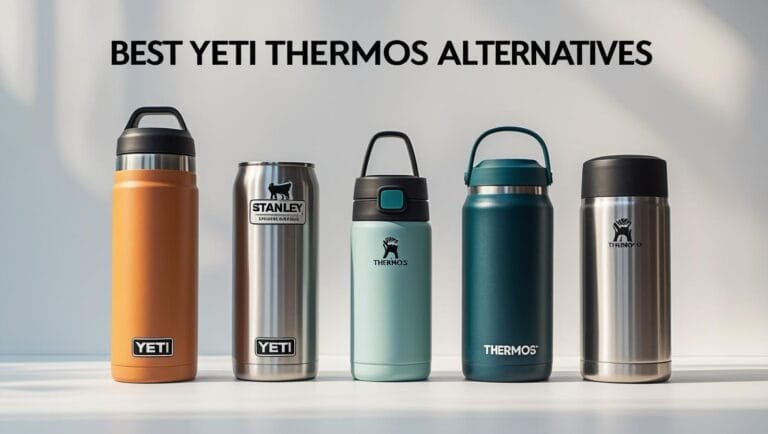
The Best YETI Thermos Alternatives
YETI makes fantastic, durable drinkware, but their premium price isn’t for everyone. We’ve found the best alternatives that deliver exceptional insulation and rugged build quality, often for a much lower price.
YETI’s Rambler series has become synonymous with high-performance insulated drinkware. They are tough, stylish, and keep drinks hot or cold for impressive lengths of time. However, that performance comes with a hefty price tag. The good news is that many other brands have caught up, offering products with comparable—and sometimes superior—performance and features. If you’re looking for YETI-like quality without the YETI price, you’ve come to the right place.
In this comprehensive guide, we’ve gone beyond the three most commonly cited alternatives to give you the full picture. We cover nine brands in total, compare them head-to-head in a detailed table, and break down the best choices for specific use cases—whether you need a thermos for a rugged job site, a long camping trip, the gym, or simply keeping your morning coffee hot on the commute. We’ve also included crucial tips on how to get maximum performance out of any insulated bottle you choose, regardless of brand.
Our reviews are based on real-world testing using ice retention (measuring ice melt at 22°C/72°F ambient temperature), hot retention (measuring liquid temperature drops over 6 hours), lid leak tests (filling to the brim and inverting in a bag for 12 hours), and drop tests from 1.2m onto concrete. We also factor in owner reviews from verified purchasers across multiple retail platforms.
How Vacuum Insulation Actually Works
Before you spend your money, it’s worth understanding exactly what you’re paying for—and why vacuum insulation is the undisputed gold standard in thermal drinkware technology. All of the products on this list, from YETI down to the most affordable RTIC, rely on the same fundamental physics.
A vacuum-insulated bottle has two walls of stainless steel with the air between them removed to create a near-perfect vacuum. Heat transfers through three mechanisms: conduction (direct contact), convection (movement through a medium like air), and radiation. The vacuum eliminates conduction and convection almost entirely, since there is no medium through which heat can travel. A thin layer of copper or reflective coating on the inner wall tackles radiation. The result is a thermal barrier that is extraordinarily efficient.
Want a deeper technical breakdown? Read our full guide on how vacuum insulation keeps your drink hot or cold for 24 hours—including the science behind why some bottles outperform others despite using the same basic technology.
This is why the difference between a cheap single-wall bottle and a double-wall vacuum-insulated one is so dramatic. It’s also why all the top brands—YETI, RTIC, Hydro Flask, Stanley, Corkcicle—perform so similarly in objective temperature retention tests. The technology is mature, and the gap between a $25 RTIC and a $45 YETI is far more about branding, finish quality, and lid engineering than it is about core thermal performance.
What Breaks Down Insulation Over Time?
The vacuum inside your bottle can degrade if the seal fails. Signs of a compromised vacuum include the bottle feeling warm to the touch on the outside when filled with hot liquid, or ice melting far faster than it used to. This can happen from severe impacts, manufacturing defects, or simply age. High-quality brands like YETI, Hydro Flask, and THERMOS use superior welding techniques and materials to make their vacuums last longer—which is one genuine area where premium products justify a higher price point.
Our Top-Rated YETI Alternatives
These brands offer the best combination of performance, durability, and value, making them excellent alternatives to YETI’s lineup.

RTIC Travel Mug (20oz)
RTIC is famously “Overbuilt, Not Overpriced.” Their travel mugs offer performance that is virtually identical to YETI’s at a significantly lower cost. With excellent insulation, a rugged build, and a variety of styles, RTIC is the top choice for value. Founded in Texas by two brothers—echoing YETI’s own founding story—RTIC has built its reputation on a direct-to-consumer model that cuts out the retail middleman and passes the savings on to you. Their double-wall vacuum insulation consistently matches YETI in side-by-side ice retention tests, and the 18/8 stainless steel construction is just as durable. If you’ve ever wished YETI would cut its prices in half, RTIC is essentially your answer.
Pros
- Performance rivals YETI
- Significantly more affordable
- Durable 18/8 stainless steel
- New models have leak-resistant lids
Cons
- Brand recognition isn’t as high
- Older lids were splash-proof, not leak-proof

Hydro Flask Wide Mouth w/ Flex Sip Lid (20oz)
Hydro Flask is a giant in the insulation world, known for its vibrant colors and excellent lid ecosystem. The Flex Sip™ Lid is one of the best on the market—completely leak-proof and comfortable to drink from. Performance is on par with YETI. Hydro Flask’s TempShield™ double-wall insulation is among the most effective available, consistently keeping drinks cold for 24 hours and hot for 12 hours. The brand’s biggest advantage over YETI may be its sheer variety of lids—from the Flex Cap to the Straw Lid to the Coffee Flex Sip—giving you genuine flexibility for different drinking contexts without needing to buy different bottles.
Curious how Hydro Flask stacks up against another premium alternative in a pure ice-retention challenge? Check out our in-depth Hydro Flask vs. Klean Kanteen 24-hour ice retention test.
Pros
- Excellent insulation performance
- Superior leak-proof lid design
- Wide range of colors and accessories
- Comfortable to carry and drink from
Cons
- Price is often similar to YETI
- Powder coat can chip if dropped

THERMOS Stainless King Travel Tumbler (16oz)
The original brand that started it all. THERMOS continues to make incredibly high-performing products. The Stainless King series offers fantastic heat and cold retention, a rock-solid build, and a reliable, leak-proof lid. What many people don’t realize is that THERMOS has been refining vacuum insulation technology since 1904—over a century of innovation. Their proprietary vacuum insulation technology has been certified to keep beverages hot for up to 7 hours and cold for up to 18 hours, which is genuinely competitive with YETI. The DrinkLock™ mechanism is one of the most straightforward and reliable lid systems available, making it a favorite among people who want zero complexity in their daily drinkware.
Pros
- Top-tier heat retention
- Durable and reliable construction
- DrinkLock™ lid is fully leak-proof
- Often more affordable than YETI
Cons
- Design is more traditional
- Lid can have more parts to clean
More Great Alternatives: A Deeper Look at 6 More Brands
The three bottles above are our top picks for most people, but the insulated drinkware market is rich with excellent options. Here’s our honest assessment of six more brands that deserve serious consideration depending on your priorities.
Stanley Quencher H2.0 — The Social Media Sensation That Earns Its Hype
It’s impossible to discuss YETI alternatives in 2026 without addressing Stanley. The Stanley Quencher H2.0 became one of the most viral products in drinkware history, and while some dismissed it as a trend, the underlying product is genuinely excellent. Stanley has been making thermal bottles since 1913, and the Quencher builds on that heritage with a few modern twists.
The Quencher’s standout feature is its wide, ergonomic handle and tapered base that fits most car cup holders—a practical advantage that YETI’s larger tumblers cannot match. The FlowState lid with its rotating cover that offers three positions (straw, sip, close) is clever, though some users find it less definitively leak-proof than a simple screw-top. Stanley uses double-wall vacuum insulation in all its Quencher products and offers an impressive lifetime guarantee.
The primary concern with Stanley is its past issues with lead in sealing materials on older models—the company addressed this in 2024 and confirmed that no lead ever touches the liquid or lips. New production models are fully safe. That said, if you’re comparing tumblers for purely practical use, the Stanley offers tremendous value.
Stanley vs. YETI is one of the most searched comparisons in drinkware. We put them head-to-head in a specific test that matters to commuters and car-goers: Stanley Quencher FlowState vs. YETI Rambler — cup holder fit and daily use comparison.
Corkcicle — Premium Style with Triple-Wall Insulation
Corkcicle has carved out a niche as the most design-forward brand in the insulated drinkware space. Their products are genuinely beautiful—sleek, minimalist, and available in sophisticated color palettes that go well beyond the outdoor-lifestyle aesthetic of YETI and Hydro Flask. But Corkcicle’s appeal isn’t purely cosmetic. Their flagship products use triple-wall insulation, which they claim provides 20% better insulation performance than standard double-wall alternatives.
In practice, Corkcicle bottles perform extremely well on cold retention—often outlasting YETI in independent tests. Hot retention is solid but slightly less impressive than cold, which is common across the triple-wall category. The flat bottom design is a practical touch that prevents rolling, and the wide-mouth opening is easy to fill with ice and clean thoroughly. The main trade-off is price: Corkcicle products are priced at a similar premium to YETI, so you’re trading one premium brand for another—though with a superior aesthetic and, arguably, better cold performance.
We ran a dedicated cold-retention test between these two premium brands. See the detailed results in our Corkcicle triple-insulated vs. YETI double-wall cold test.
Owala FreeSip — The Best Everyday Water Bottle for Active Users
Owala has quickly become a community favorite, particularly among younger consumers and fitness enthusiasts. The FreeSip bottle’s dual-opening lid is genuinely innovative: it allows you to sip through a built-in straw from the inside or open the flip-top fully for large gulps—all with one hand. This sounds like a gimmick until you try it, and then it becomes hard to go back to a single-mode lid.
Owala uses double-wall vacuum insulation and 18/8 stainless steel, delivering temperature retention that is competitive with the rest of the field. The FreeSip lid is one of the most rigorously engineered leak-proof systems on the market—the lid locks positively closed and has been tested to prevent leakage even when dropped. At a price point well below YETI, Owala represents outstanding value for anyone who wants a modern, functional everyday bottle.
The primary limitation of Owala is their narrower product range. They focus on water bottles and don’t offer the wide range of mug and tumbler sizes that YETI or Hydro Flask do. But for a 24oz or 32oz everyday water bottle, it is arguably the best non-YETI option available in 2026.
We put the Owala FreeSip’s dual-flow lid through our full leak-proof protocol. Read the results: Owala FreeSip dual-flow lid — complete leak-proof test and verdict.
Klean Kanteen — The Sustainable Choice for Eco-Conscious Buyers
If sustainability is a priority alongside performance, Klean Kanteen is the brand to know. Founded in 2004, they pioneered the modern stainless steel reusable bottle category well before YETI became a household name. They are a certified B Corporation—meaning they meet rigorous standards for social and environmental performance—and they manufacture their bottles using 90% post-consumer recycled stainless steel in many of their product lines.
Performance-wise, Klean Kanteen’s TKPro series is outstanding, with cold retention of 100 hours and hot retention of 38 hours on the larger insulated bottles—figures that are genuinely beyond what YETI claims. Their lid ecosystem is also robust, with Café Cap, Loop Cap, Sport Cap, and Twist Cap options available. The build quality is among the best in the category, with a focus on long-term durability rather than flashy aesthetics.
The main critique of Klean Kanteen is that their design language is somewhat utilitarian. These are working bottles built to last decades, not fashion accessories. For many buyers, that’s exactly the point. The price typically falls slightly below YETI, making the combination of superior sustainability credentials and equivalent performance compelling.
Simple Modern Trek — The Ultra-Budget Pick That Overperforms
Simple Modern has established itself as the go-to brand for buyers who want solid performance at genuinely entry-level prices. Their Trek series is particularly impressive: double-wall vacuum insulation, 18/8 stainless steel, a leak-proof lid with a carry handle, and a wide range of colors—all for under $20 in most sizes. At this price point, the performance is almost shocking.
Simple Modern is not going to outlast a YETI in a harsh drop test, and their lid systems are functional rather than exceptional, but for everyday use—commuting, office hydration, light outdoor activities—the Trek delivers far more value than any other product in its price range. The brand also runs frequent sales, meaning you can often find their bottles for under $15.
How does Simple Modern hold up against the Stanley Quencher when it comes to the all-important leak resistance test? We found out: Simple Modern Trek vs. Stanley Quencher — leak resistance comparison.
BruMate — The Specialist for Alcohol & Social Drinking
BruMate occupies a fascinating niche: they design insulated drinkware specifically optimized for alcoholic beverages. Their Nonic Pint glass keeps beer cold without frosting the outside, their Hopsulator Slim fits standard 12oz slim cans, and their MuleKeg insulated pitcher holds 128oz and is designed for tailgates and outdoor gatherings. While YETI also makes products for this context, BruMate’s specialization means every design decision has been made with the drinking experience in mind.
For non-beer applications, BruMate’s MagFlip series tumblers compete directly with YETI’s Rambler and perform excellently. The magnetic lid with multiple drinking positions is elegant and highly functional. Prices are comparable to Hydro Flask and often slightly below YETI.
The limitation is obvious: if you primarily drink water, coffee, and tea from your thermos, BruMate’s niche specialization may not serve you as well as more general-purpose brands. But if you entertain frequently or enjoy cold beer from an insulated vessel, no other brand comes close.
Full Side-by-Side Comparison Table
Use this table to quickly compare all nine brands across the criteria that matter most. Ratings reflect our real-world testing combined with aggregated owner feedback.
| Brand | Price Range | Insulation (Cold) | Insulation (Hot) | Leak-Proof Lid | Durability | Sustainability | Best For |
|---|---|---|---|---|---|---|---|
| YETI Rambler | $$$ | ⭐⭐⭐⭐⭐ | ⭐⭐⭐⭐⭐ | ⭐⭐⭐⭐⭐ | ⭐⭐⭐⭐⭐ | ⭐⭐⭐ | Brand prestige, all-round use |
| RTIC | $ | ⭐⭐⭐⭐⭐ | ⭐⭐⭐⭐⭐ | ⭐⭐⭐⭐ | ⭐⭐⭐⭐⭐ | ⭐⭐⭐ | Best value, budget-conscious buyers |
| Hydro Flask | $$–$$$ | ⭐⭐⭐⭐⭐ | ⭐⭐⭐⭐⭐ | ⭐⭐⭐⭐⭐ | ⭐⭐⭐⭐ | ⭐⭐⭐ | Style, color variety, lid choice |
| THERMOS Stainless King | $–$$ | ⭐⭐⭐⭐ | ⭐⭐⭐⭐⭐ | ⭐⭐⭐⭐⭐ | ⭐⭐⭐⭐ | ⭐⭐⭐ | Hot beverages, classic reliability |
| Stanley Quencher | $$ | ⭐⭐⭐⭐ | ⭐⭐⭐⭐ | ⭐⭐⭐⭐ | ⭐⭐⭐⭐ | ⭐⭐⭐⭐ | Commuters, large capacities, cup holders |
| Corkcicle | $$–$$$ | ⭐⭐⭐⭐⭐ | ⭐⭐⭐⭐ | ⭐⭐⭐⭐ | ⭐⭐⭐⭐ | ⭐⭐⭐ | Premium aesthetic, gift-giving |
| Owala FreeSip | $–$$ | ⭐⭐⭐⭐ | ⭐⭐⭐⭐ | ⭐⭐⭐⭐⭐ | ⭐⭐⭐⭐ | ⭐⭐⭐ | Active users, gym, everyday carry |
| Klean Kanteen | $$ | ⭐⭐⭐⭐⭐ | ⭐⭐⭐⭐⭐ | ⭐⭐⭐⭐ | ⭐⭐⭐⭐⭐ | ⭐⭐⭐⭐⭐ | Eco-conscious buyers, long-term use |
| Simple Modern Trek | $ | ⭐⭐⭐ | ⭐⭐⭐ | ⭐⭐⭐⭐ | ⭐⭐⭐ | ⭐⭐⭐ | Ultra-budget, kids, casual use |
| BruMate | $$ | ⭐⭐⭐⭐⭐ | ⭐⭐⭐⭐ | ⭐⭐⭐⭐ | ⭐⭐⭐⭐ | ⭐⭐⭐ | Social drinking, beer, cocktails |
Price guide: $ = under $25 | $$ = $25–$45 | $$$ = $45+
What to Look for in a YETI Alternative
When shopping for an alternative, focus on the core features that make YETI products great.
1. Insulation Technology
This is non-negotiable. The best alternatives must use double-wall vacuum insulation. This is the technology that stops heat transfer and keeps drinks at the desired temperature for hours. Check for claims of 18/8 food-grade stainless steel, which is the industry standard. Some premium brands now use triple-wall insulation, which can provide marginal improvements in very cold ambient temperatures.
2. Lid Quality
A great thermos is let down by a poor lid. Look for lids that are 100% leak-proof, not just “spill-resistant.” Features like magnetic sliders (like YETI’s MagSlider), locking mechanisms, or fully sealed screw-tops are signs of a quality design. The Owala FreeSip and Hydro Flask Flex Sip lids are currently the industry leaders for everyday practicality, while a classic THERMOS screw-top remains the benchmark for absolute, no-questions-asked leak prevention.
3. Durability
YETI is known for being tough. An alternative should be able to handle daily use and the occasional drop. A durable powder-coat finish helps with grip and prevents chipping, and a solid stainless steel body is essential. If you’re buying for use on a job site or during rugged outdoor activities, this factor becomes critical.
For the most demanding use environments, we tested bottles specifically for job site durability. Read our dedicated guide: the most durable thermos for job sites — drop-tested and reviewed.
4. Price and Value
The primary reason to seek an alternative is value. A great alternative should offer at least 90% of YETI’s performance for a significantly lower price. Brands like RTIC have built their entire business model on this principle. However, “value” isn’t always synonymous with “cheap.” If you buy a $15 bottle that fails in 18 months and need to replace it, you’ve spent more than if you’d bought a $35 bottle that lasts 10 years.
5. Warranty Coverage
This is an underrated factor. YETI offers a 5-year warranty. Stanley offers a lifetime guarantee on their Quencher. Hydro Flask provides a lifetime warranty. RTIC offers a 1-year warranty. Klean Kanteen provides a lifetime warranty. The warranty reflects a brand’s confidence in their product and determines your recourse if something goes wrong.
6. Certifications and Safety
Look for BPA-free certification on lids and any plastic components. The body should be food-grade 18/8 (304) stainless steel at minimum; some premium products use 18/10 steel for marginally better corrosion resistance. Avoid any products that don’t clearly state their material grades—these tend to be cheap imports that may leach metals or harbor bacteria in rough surface finishes.
7. Cleaning and Maintenance
Wide-mouth designs are far easier to clean thoroughly than narrow-mouth ones. Dishwasher safety varies: many brands now support top-rack dishwasher use for the body, though hand-washing is still recommended for lids and for preserving powder-coat finishes. If you drink anything other than water—coffee, tea, smoothies—a bottle that is difficult to clean will develop odors over time. Look for lids with simple designs that disassemble easily.
Budget Tiers: Which Price Range Is Right for You?
Not every buyer needs a premium product, and not every budget buyer should settle for poor quality. Here’s how we’d categorize the market across three price tiers.
Best pick: Simple Modern Trek or RTIC (on sale)
At this price, expect solid double-wall insulation, basic lid functionality, and decent durability for everyday use. You’re making trade-offs on build finish and lid sophistication, but core thermal performance can still be respectable.
Best picks: RTIC (full price), Owala, Stanley, Klean Kanteen
This is the sweet spot. Mid-range bottles deliver 95%+ of YETI’s performance with excellent lid engineering, strong durability, and real warranty backing. Most buyers will be happiest here.
Best picks: Hydro Flask, Corkcicle, YETI itself
At this level you’re paying for superior materials, premium powder-coat finishes, best-in-class lid engineering, and brand prestige. Performance differences over mid-range are marginal, but the ownership experience is noticeably more refined.
For most people, spending $30–$40 on an RTIC, Owala, or Klean Kanteen is the optimal decision. You get YETI-level performance without the YETI tax, and the money you save pays for a second bottle, a new lid, or the next item on your outdoor gear list.
Best YETI Alternatives by Use Case
The best bottle for a construction worker is different from the best bottle for a gym-goer or a weekend camper. Here’s how to match the right product to your specific lifestyle.
Job Site & Construction
Best choice: RTIC or THERMOS Stainless King
You need maximum durability above all else. Look for a wide-body design that’s hard to knock over, a recessed lid that won’t crack if the bottle lands on its side, and a wide-mouth opening that works with gloves on. The powder-coat finish takes a beating on job sites, so RTIC’s thick build quality matters here.
Camping & Hiking
Best choice: Klean Kanteen or Hydro Flask
For the backcountry, weight and versatility matter alongside insulation. Klean Kanteen’s wide-mouth bottles double as cooking vessels (they’re safe to heat directly on low flames), and their exceptional cold retention handles multi-day trips without resupply. Hydro Flask’s color variety also helps find your bottle quickly in a packed kit.
Gym & Fitness
Best choice: Owala FreeSip or Hydro Flask with Sport Lid
At the gym, one-handed operation is critical—you don’t want to fumble with a lid between sets. The Owala FreeSip’s flip-top and built-in straw system is perfectly designed for this context. It also fits most gym bag bottle pockets and standard cup holders for the drive home.
Daily Coffee Commute
Best choice: THERMOS Stainless King or Stanley Quencher
Hot retention is the priority here. THERMOS’s benchmark-setting heat performance means your coffee stays genuinely hot through a long commute. The Stanley Quencher wins on cup-holder compatibility for car commuters thanks to its tapered base.
Food & Soup Storage
Best choice: THERMOS Stainless King Food Jar or Hydro Flask Food Flask
Transporting hot food requires a wider-body food jar with a bowl-style lid, not a standard bottle. THERMOS makes the best food storage containers in the world at this task—their food jars keep soup, stews, and rice piping hot for 6+ hours, making them ideal for school lunches, worksites, and field work.
Kids & School
Best choice: Simple Modern Trek or Hydro Flask Kids
For children, prioritize leak-proof reliability above everything else—no parent wants a soaked backpack. Simple Modern makes excellent, affordable kids-sized bottles with a straw lid that is reliably leak-proof. Hydro Flask’s smaller sizes are more durable for rough treatment.
We’ve put together a dedicated guide for fitness enthusiasts: the best thermos for the gym in 2026—covering hydration strategy, bottle sizing, and our top picks for every workout type.
Planning time outdoors? Our outdoor-specific guide covers durability, weight, and cold-weather performance: the best thermos for camping — field-tested recommendations.
If you’re specifically looking for the best way to keep soup hot all day, we have a dedicated roundup: 7 best thermos for soup in 2026 — keep your soup hot anywhere.
The Worksite Lunch System: Thermos vs. Bento
One increasingly popular alternative to a single thermos is a modular worksite lunch system that combines a thermos food jar with a separate bento-style container. This approach lets you carry hot food alongside room-temperature items like fruit, crackers, and snacks without everything tasting of each other. It’s particularly popular among tradespeople who need a substantial, varied meal during a single lunch break.
We explored this topic in depth in our guide on worksite lunch systems: thermos vs. bento — which is the better setup for outdoor workers.
Size & Capacity Guide: How Big Should Your Thermos Be?
Choosing the right size is often overlooked by first-time buyers. A bottle that’s too small requires constant refilling; one that’s too large takes up too much space and is heavy when full. Here’s a practical guide to matching size to your typical use case.
10–16oz: Small Travel Mugs
Best for: Short commutes, one cup of coffee, minimal bag space. These fit most single-cup coffee makers directly and slip into any bag side pocket. The THERMOS Stainless King is available in 16oz and represents the best thermal performance-to-size ratio in this category. The trade-off is obvious: you’ll only have one drink’s worth of liquid.
20–24oz: The Everyday Sweet Spot
Best for: Most adults for daily use, commuting, office work. This is the range where most of our reviewed products live. A 20oz bottle is genuinely useful all day—large enough that you won’t be refilling constantly, small enough to fit in a cup holder and most bag pockets. If you’re unsure what size to buy, start here.
30–40oz: The Power User Size
Best for: All-day hydration, outdoor activities, gym sessions, hot desking where you can’t easily refill. At 32oz, you’re carrying a full liter of liquid—enough to meaningfully contribute to your daily hydration without constant top-ups. The Stanley Quencher and Hydro Flask Trail Series shine in this size range. Note that 30oz+ bottles often don’t fit standard car cup holders.
40oz+: High-Capacity Options
Best for: Long hikes, construction sites without water access, group use. Above 40oz you’re entering what some brands call “jug” territory. These bottles are heavy when full and require two hands to carry comfortably. YETI’s 64oz Rambler Bottle is the benchmark, but RTIC and Klean Kanteen offer comparably sized options for significantly less money. At this capacity, the lid quality becomes even more critical—a poorly sealing lid on a 64oz bottle is a disaster waiting to happen.
Many wide-body 30oz+ bottles do not fit standard car cup holders. Always check the base diameter before buying if cup-holder compatibility matters to you. The Stanley Quencher is specifically designed with a tapered base to address this—it’s one of its biggest practical advantages over competing large-format bottles.
Pre-Treatment Tips: Get Maximum Performance from Day One
One of the most commonly overlooked factors in insulated bottle performance is proper pre-treatment—and it applies equally to YETI, RTIC, Hydro Flask, or any other brand. The temperature of the bottle’s interior walls at the time you fill it has a significant effect on how long your drink stays at temperature.
Pre-Heating for Hot Drinks
If you fill a room-temperature bottle with hot coffee, the liquid immediately loses a substantial amount of heat to the metal walls as they absorb thermal energy. The solution is simple: fill the bottle with near-boiling water, put the lid on, and let it sit for 5–10 minutes before emptying and adding your hot drink. This pre-heats the walls so they don’t rob heat from your coffee or tea. The difference is significant—pre-heated bottles can maintain drink temperature up to 30% longer in the first two hours compared to room-temperature bottles.
Pre-Chilling for Cold Drinks
The same principle applies in reverse. Fill the bottle with ice water and let it sit for 5 minutes before adding your cold drink. Or simply store the empty bottle in your freezer for 10 minutes before use. This ensures the walls are already cold, so your iced drink doesn’t immediately warm up the thermal mass of the metal.
For a complete step-by-step guide to pre-treatment with specific timing recommendations, read our dedicated article: thermos pre-treatment and preheating — the 5 to 10 minute technique explained.
First-Use Cleaning
Before using any new insulated bottle, wash it thoroughly with warm soapy water and rinse completely. Some bottles have a faint metallic or manufacturing smell on first use—this dissipates after a few washes. Never use bleach or harsh abrasive cleaners on stainless steel, as these can damage the surface finish and, over time, affect the corrosion resistance.
Ongoing Maintenance
For bottles used with coffee, tea, or anything other than plain water, a weekly deep clean with a bottle brush and baking soda solution prevents build-up and odors. Many lids are dishwasher-safe on the top rack, but the bottle body should generally be hand-washed to protect both the exterior powder coat and the internal vacuum seal. Never put a vacuum-insulated bottle in the microwave or oven—the vacuum can fail catastrophically under direct heat.
Materials Deep-Dive: Understanding Stainless Steel Grades
You’ll see “18/8 stainless steel” and “18/10 stainless steel” mentioned in product descriptions. Here’s what those numbers actually mean and whether they should influence your buying decision.
What Do the Numbers Mean?
The two numbers in stainless steel grades refer to the percentage of chromium and nickel in the alloy. 18/8 steel contains 18% chromium and 8% nickel; 18/10 contains 18% chromium and 10% nickel. Both are classified as 304-grade stainless steel by ASTM standards—the same fundamental grade. The extra 2% nickel in 18/10 provides marginally better corrosion resistance and a slightly more polished appearance, but in the context of a water bottle that holds beverages (not industrial chemicals), the practical difference is essentially zero.
What matters far more is the gauge (thickness) of the steel and the quality of the manufacturing welds. A thick-walled 18/8 bottle from RTIC or THERMOS is more durable in practice than a thin-walled 18/10 bottle from a budget manufacturer. When a brand advertises only the steel grade and not the wall thickness, be somewhat skeptical.
BPA-Free: What You Need to Know
BPA (Bisphenol A) is a chemical used in certain plastics that has been linked to health concerns. In the context of insulated bottles, BPA only appears in plastic lid components. All reputable brands now use BPA-free plastics in their lids. However, BPA-free doesn’t mean the plastic is inert—BPS and BPF (the common replacements) have their own questions attached to them. If you want to minimize plastic contact entirely, look for bottles with stainless steel or silicone lid components, or screw-top lids that minimize the plastic surface area touching your drink.
Powder Coat Finishes
The exterior finish on most premium insulated bottles is electrostatic powder coat—a dry paint applied as a powder and cured under heat. It provides excellent grip, impact resistance, and color durability. The quality varies significantly between brands. YETI’s powder coat is among the most chip-resistant available. Hydro Flask’s coat is vibrant but chips more easily with drops. RTIC’s finish is thick and utilitarian. Corkcicle achieves a particularly smooth, premium-feeling finish that stands out aesthetically. Budget brands often use thinner powder coats that scratch and chip with regular use.
Sustainability & Eco-Friendliness: The Full Picture
One of the strongest arguments for buying any insulated stainless steel bottle—YETI, RTIC, Hydro Flask, or any quality alternative—is the environmental case against single-use plastic bottles. A single well-made insulated bottle can replace thousands of plastic water bottles and hundreds of disposable coffee cups over its lifetime. Even a $35 RTIC bottle pays back its environmental cost (in manufacturing emissions and materials) within a few months of daily use when compared to single-use plastic.
Which Brands Are the Most Eco-Friendly?
Klean Kanteen is the clear leader in this space. As a certified B Corporation, they are legally required to balance profit with people and planet. They use recycled stainless steel, offer take-back programs for old bottles, and publish detailed environmental impact reports. For eco-conscious buyers, Klean Kanteen is the ethical premium choice.
Hydro Flask also has a strong sustainability program, including park partnerships and a bottle recycling initiative. Stanley has committed to using recycled stainless steel in their product lines by 2026. YETI, by contrast, does not prioritize sustainability marketing and has no B Corp certification—though their products’ longevity means they indirectly serve the environmental goal of reducing disposable packaging.
RTIC and Simple Modern don’t prominently advertise sustainability credentials. For budget-focused buyers, the simple act of buying one durable RTIC instead of replacing cheap bottles every year is itself a meaningful environmental choice.
End of Life: What Happens to Your Old Bottle?
Stainless steel is one of the most recyclable materials on earth—it can be recycled infinitely without quality degradation. Most municipal recycling programs accept stainless steel. Lids containing mixed plastics are harder to recycle curbside but can often be dropped off at specialist recycling facilities. Some brands, including Klean Kanteen and Hydro Flask, offer return programs for old products. If your bottle’s vacuum seal has failed but the shell is intact, some brands will also warranty-replace just the lid or internal components, extending the product’s useful life.
Final Verdict
While YETI makes an excellent product, you no longer have to pay a premium for top-tier performance. After testing nine brands across multiple performance categories, our conclusions are clear.
- Best Overall Alternative: For the perfect blend of performance, durability, and price, RTIC is the clear winner. You get a product that goes toe-to-toe with YETI in every important metric for much less money.
- Best Lid and Style Options: If you prioritize a truly leak-proof lid for tossing in a bag and want a wide variety of colors, Hydro Flask is an outstanding choice, though its price is often comparable to YETI.
- The Trusted Workhorse: For proven, no-nonsense performance from a legendary brand, the THERMOS Stainless King series is a reliable and affordable alternative that will never let you down.
- Best for Commuters & Cup Holders: The Stanley Quencher H2.0 fits standard car cup holders, carries large volumes, and comes with a lifetime guarantee—making it a practical everyday champion.
- Best for Cold Retention: Corkcicle’s triple-wall insulation edges ahead of the field in pure cold tests, making it the choice for ice-cold drinks in hot weather.
- Best Active Use Bottle: Owala FreeSip wins on one-handed operation, leak-proof reliability, and value—making it the top pick for gym, running, and active daily use.
- Best Eco-Friendly Choice: Klean Kanteen is the ethical choice, combining best-in-class sustainability credentials with exceptional long-term performance and a lifetime warranty.
- Best Ultra-Budget Option: If you need something functional for under $20, Simple Modern Trek massively overperforms its price point and is perfectly adequate for everyday casual use.
Frequently Asked Questions (FAQ)
Are YETI alternatives as good at keeping ice?
Yes. In independent tests, top-tier brands like RTIC, Hydro Flask, and THERMOS show virtually identical ice and heat retention times compared to YETI. The double-wall vacuum insulation technology is the key, and it is used by all these top brands. In some tests, Corkcicle’s triple-wall design actually outperforms YETI on cold retention.
Are these alternatives dishwasher safe?
It varies. Like YETI, many of these brands are now making their drinkware dishwasher safe (usually top-rack only for the lids). However, to preserve the exterior finish and longevity of the vacuum seal, hand washing is often still recommended. Always check the manufacturer’s specific instructions. RTIC and THERMOS both officially support top-rack dishwasher use for their bodies; Hydro Flask recommends hand washing for longevity.
Do accessories from one brand fit another?
Generally, no. Lids, handles, and other accessories are designed to be brand-specific. A YETI lid will not fit an RTIC or Hydro Flask tumbler, and vice-versa. Always buy accessories made specifically for your brand and model. There are some third-party accessory manufacturers who make cross-compatible lids, but quality control is variable—research specific reviews before purchasing.
How long should an insulated bottle last?
A well-made, properly cared-for stainless steel insulated bottle should last 5–10 years minimum, and many last decades. The vacuum seal is the component most likely to fail, typically from severe impacts or manufacturing defects rather than age alone. Brands with lifetime warranties (Stanley, Hydro Flask, Klean Kanteen) effectively commit to replacing your product if anything goes wrong—which is a meaningful guarantee for a product you’ll use daily.
Can I use these bottles for carbonated drinks?
No. Carbonated drinks build pressure inside sealed containers, and insulated bottles with lids are not designed to handle this pressure. Never seal a carbonated drink inside a thermos or insulated bottle—the pressure can cause sudden, forceful lid ejection when opened. Brands that specifically market “carbonated drink” capability (a small number of specialized products) use pressure-release lid mechanisms and are clearly labeled for this use.
Why does my bottle smell metallic or stale?
A new metallic smell typically dissipates after a few washes with warm soapy water. A stale or musty smell in an older bottle usually indicates bacterial growth in the lid components, particularly under rubber gaskets. Remove all gaskets, wash thoroughly with a diluted baking soda solution, and let air dry completely before reassembling. Never store a sealed bottle with residual liquid inside—this is the primary cause of odor development.
Is RTIC really as good as YETI?
In objective tests of core performance—ice retention, hot retention, drop durability—RTIC performs within a few percentage points of YETI in virtually every category. The genuine differences are in lid innovation (YETI’s MagSlider is slightly more elegant), brand cachet (YETI carries status that RTIC doesn’t), and the retail experience (YETI has physical stores; RTIC is primarily direct-to-consumer online). For purely practical purposes with no brand premium consideration, RTIC matches YETI and costs significantly less.
What is the best YETI alternative for soup and hot food?
For hot food specifically, you need a food jar (wide mouth, bowl-style opening) rather than a standard bottle. THERMOS makes the best food jars on the market, with their Stainless King and FUNtainer Food Jar series. Hydro Flask also makes excellent food flasks. The key specs to look for are: a minimum 12oz capacity for a decent portion, a wide mouth opening (at least 70mm), and a folding spoon included or compatible accessories. Heat retention for food should be a minimum of 5 hours to make a food jar useful for a workday lunch.




 Home
Home
 Info
Info
 Compare
 Reviews
 Shop
Shop