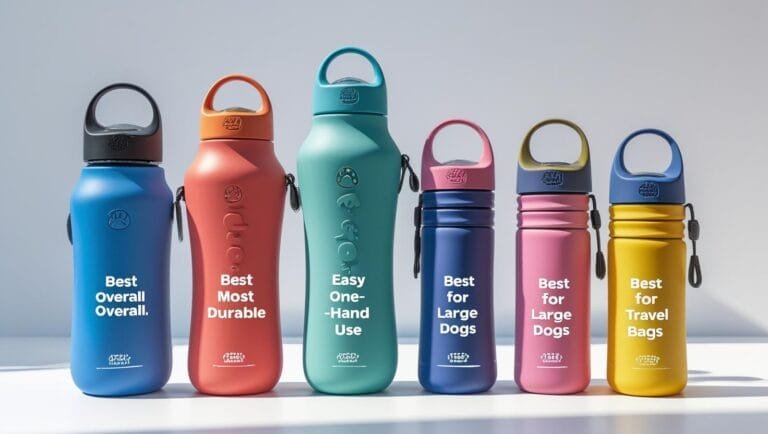
The Best Thermos Dog Flasks for Every Adventure
Keep your furry best friend happy and hydrated with cool, fresh water, no matter where your adventures take you. We’ve reviewed the top thermos-style dog flasks that combine insulation, durability, and clever design.
On a hot day, there’s nothing better than a sip of cold water, and the same is true for our canine companions. A standard plastic bottle can quickly turn water warm and unappealing. That’s where insulated dog water bottles—or “dog flasks”—come in. These brilliant devices combine the vacuum insulation of a high-quality thermos with a built-in, dog-friendly drinking bowl, ensuring your pup has access to refreshing water on hikes, at the park, or on long car rides. Here are our top picks that excel in performance and convenience.
The concept of the dog flask has evolved significantly, moving from a niche accessory to an essential piece of gear for the modern dog owner. It’s no longer just about carrying water; it’s about maintaining the water’s temperature, ensuring hygienic sharing, and integrating seamlessly into an active lifestyle. As we explore these innovations, it’s useful to understand the core technology that makes them possible, much like the principles detailed in our guide on how vacuum insulation works for 24 hours. This same science ensures your dog’s water stays ice-cold from the first mile to the last.
Our Top-Rated Dog Flasks for 2025
We’ve analyzed the market for the best combination of insulation, leak-proof design, and ease of use for both pet and owner. The following selections represent the pinnacle of design, where the robustness needed for a durable job site thermos meets the portability required for a day on the trails.

Asobu Dog Bowl Water Bottle (33oz)
The Asobu is a brilliantly designed flask for both you and your dog. It’s a high-quality, vacuum-insulated stainless steel bottle with a detachable bowl at the base. This means no cross-contamination and cool water for hours.
Pros
- Excellent insulation for cold water
- Detachable bowl for easy sharing
- Large 33oz capacity
- Durable, stylish, and leak-proof
Cons
- Heavier than plastic alternatives
- Bowl is plastic-lined, not full steel
The Asobu’s detachable bowl is more than a novelty; it’s a hygienic marvel. When you’re on a long camping trip, being able to sip from the same water source as your dog without sharing saliva is a major advantage. This design philosophy mirrors the evolution of personal drinkware, where features like the dual-flow lid on an Owala FreeSip, which we’ve tested for leak-proof reliability, show how modern engineering caters to multiple drinking styles in one unit. For a true thermos for dogs, the Asobu sets the standard by adapting proven vacuum insulation technology into a pet-friendly format. Its performance echoes the findings in our comparative cold tests between triple and double-wall insulated bottles, where thermal mass and vacuum gaps directly determine how long your content stays chilled. With a 33oz capacity, you’re packing a significant thermal mass, which fundamentally aids in temperature retention for hours, ensuring a cool drink at the summit.

PupFlask Large Dog Water Bottle (40oz)
For big dogs or long adventures, the PupFlask is a top contender. It features a stainless steel bottle and a large, foldable silicone leaf-shaped bowl. The one-button water release and return function is incredibly convenient.
Pros
- Huge 27oz and 40oz options
- Large drinking bowl for big snouts
- Unused water can return to the bottle
- Durable stainless steel construction
Cons
- Single-wall insulation (not a true thermos)
- Can be bulky to carry
The PupFlask’s water return function is a key innovation, addressing the common problem of waste. On a rigorous hike, every drop counts, and the ability to send clean water back into the bottle avoids messy spills and conserves your supply. This is particularly crucial for backpacking, where pack weight and balance are paramount, a topic we touch on in our guide to the best thermoses for camping. While the PupFlask excels in convenience and reduced waste, its single-wall construction means it won’t keep water cold for as long as a true vacuum flask. This distinction is vital for owners who frequent hot, sunny trails where water temperature can become unappealingly tepid very quickly. For those who prioritize cold retention above all else, understanding the core technology—explored further in ‘What is vacuum insulation in a thermos?’—will guide you toward a double-wall model.

MalsiPree Dog Water Bottle (19oz)
With tens of thousands of positive reviews, the MalsiPree is a fan favorite for its lightweight, leak-proof, and easy-to-use design. It’s perfect for daily walks and quick trips where portability is key.
Pros
- Very lightweight and easy to carry
- One-handed operation is simple
- Excellent leak-proof lock
- Unused water retracts easily
Cons
- Made of plastic (no insulation)
- Smaller capacity is not for long trips
Side-by-Side Comparison: Top Dog Flasks at a Glance
Understanding how each bottle stacks up across the most critical performance metrics is the fastest way to make a smart buying decision. The table below condenses everything you need to know so you can match the right dog water bottle to your precise needs without having to read an entire product specification sheet for each one.
| Feature | Asobu Dog Bowl (33oz) | PupFlask Large (40oz) | MalsiPree (19oz) |
|---|---|---|---|
| Insulation Type | Double-wall Vacuum ✅ | Single-wall ❌ | None (Plastic) ❌ |
| Cold Retention | Up to 24 hrs | 2–4 hrs | Minimal (<1 hr) |
| Body Material | 18/8 Stainless Steel | Stainless Steel | BPA-Free Plastic |
| Bowl Style | Detachable Base Bowl | Foldable Silicone Leaf | Integrated Trough |
| Water Return Function | ✗ | ✓ | ✓ |
| Carabiner / Clip | ✗ | ✓ | ✓ |
| Best For | Hot weather, all-day hikes | Large dogs, long trails | Short walks, urban use |
| Dog Size Suitability | Small to Large | Medium to Large | Small to Medium |
| Weight (Approx.) | ~14 oz (396g) | ~11 oz (312g) | ~5.6 oz (159g) |
| Dishwasher Safe | Hand-wash recommended | Hand-wash recommended | Top rack (bowl only) |
Features to Consider When Buying a Dog Flask
Choosing the right water bottle for your dog involves more than just holding water. Here’s what to look for, breaking down the key elements that separate a clever gadget from a genuinely essential piece of outdoor gear.
1. Insulation: The Heart of a True Thermos
If your main goal is keeping water cold, look for a double-wall vacuum insulated bottle made of stainless steel, like the Asobu. This is true “thermos” technology. Single-wall steel bottles (like the PupFlask) are durable but won’t keep water cold for nearly as long. The principle of vacuum insulation is about creating a space devoid of air between two walls of steel, which eliminates conductive and convective heat transfer. This is the same science that prevents a hot soup thermos from burning your hand. Without this vacuum, a metal bottle simply conducts the ambient temperature straight to its contents, warming them rapidly. For an active dog on a sunny day, this can be the difference between refreshing hydration and a warm, unappealing drink.
The importance of pre-treatment cannot be overstated. Just as you would pre-heat or pre-cool a traditional thermos to maximize performance, a technique thoroughly detailed in our guide on pre-heating and pre-cooling your thermos in 5-10 minutes, the same applies here. Before filling your dog’s flask with ice water, let it sit with ice-cold water for a few minutes. This simple step dramatically extends the cooling duration, making the science of insulation work for you from the first pour.
2. Bowl Design: Ergonomics Meet Canine Anatomy
The integrated bowl is the key feature. Detachable bowls (Asobu) are great for hygiene and stability. Foldable silicone bowls (PupFlask) are space-saving. Trough-style bowls (MalsiPree) are excellent for one-handed use. Consider your dog’s size, snout shape, and drinking style. A deep, narrow bowl might frustrate a brachycephalic (flat-faced) breed like a Pug or Bulldog, while a shallow, wide design is perfect. The material of the bowl also matters; silicone is gentle on teeth and gums, whereas hard plastic can be less forgiving. The durability of these materials in rugged conditions parallels the ruggedness we see in products designed for the most demanding work environments, as highlighted in our review of the most durable thermoses for job site drops—a philosophy that should inspire confidence in your outdoor gear.
3. Leak-Proof Mechanism: Protecting Your Pack
A reliable lock is crucial to prevent a soggy backpack. Look for silicone gaskets and a secure locking switch or a tightly screwing lid. The best mechanisms feature an O-ring seal that is thick and well-seated, often found in bottles that have passed rigorous leak-resistance tests. This engineering challenge is similar to the one faced by traditional bottle makers, which we explored in our comparison of the Simple Modern Trek versus the Stanley Quencher for leak resistance—designs where a single point of failure can compromise an entire bag. Bottles that allow unused water to flow back into the reservoir, like the PupFlask and MalsiPree, add another layer of leak prevention by removing the need to tip out excess water.
4. Materials and Safety: Beyond BPA-Free
The bottle should be made from food-grade 18/8 stainless steel or BPA-free, food-safe plastic. All drinking surfaces for your dog must be made from 100% food-safe materials. But the conversation doesn’t end there. Stainless steel, aside from its inert properties that won’t leach chemicals, is also naturally more resistant to bacterial buildup compared to scratched plastic. This is a crucial consideration when your bottle is used outdoors, potentially picking up dirt and organic matter. The robustness of stainless steel is why it’s the material of choice for everything from soup thermoses that keep food hot for hours to the ultra-durable bottles used on worksites, such as those detailed in our comparison of worksite lunch systems: thermos vs bento. This durability translates directly to the longevity and safety of your dog’s flask, providing peace of mind that it can survive countless adventures without degrading.
Breed-Specific Dog Flask Guide: Which Bottle Works for Your Dog?
One of the most overlooked aspects of choosing a dog water bottle is how well it suits your specific breed’s anatomy, energy level, and hydration needs. A greyhound has a very different snout and drinking style compared to a bulldog, and a Border Collie running agility drills will need significantly more hydration than a Shih Tzu on a gentle morning stroll. Understanding these differences helps you select not just a flask, but the right flask.
Large Working Breeds
Labs, German Shepherds, Huskies, and Malinois need 40oz+ capacity with a wide, deep bowl and vacuum insulation for all-day fieldwork or trail running.
Brachycephalic Breeds
Bulldogs, Pugs, and Boxers overheat fastest. Choose a shallow, wide trough-style bowl and always opt for vacuum insulation to maintain the coldest possible water temperature.
Small & Toy Breeds
Chihuahuas, Yorkies, and Pomeranians are well served by compact 12–19oz lightweight models. Portability and ease of one-handed operation matter more than maximum capacity.
High-Energy Sport Dogs
Agility dogs, hunting dogs, and trail-running companions need bottles that clip to a vest or belt. Look for carabiner loops and a water-return mechanism to minimize hydration breaks.
Senior Dogs
Older dogs may have arthritis or reduced kidney function, making steady hydration critical. A quiet, non-startling pour mechanism with a soft silicone bowl protects sensitive teeth and gums.
Giant Breeds
Great Danes, Mastiffs, and St. Bernards need an oversized bowl and 40oz or more of water per stop. Consider carrying two bottles for hikes over two hours.
Flat-Faced Breeds: A Special Hydration Challenge
Brachycephalic breeds—dogs with shortened snouts like French Bulldogs, Pugs, English Bulldogs, Boston Terriers, and Shih Tzus—face a unique physiological challenge when it comes to drinking and temperature regulation. Unlike longer-snouted breeds, they cannot pant as efficiently, which means their core temperature rises faster during exercise and in warm weather. This makes access to genuinely cold water far more medically important for these dogs, not just a preference. A flat-faced dog drinking water from a deep, cylindrical trough will struggle to get adequate intake because the depth prevents their shortened snout from reaching the water surface effectively. For these breeds, a wide, shallow bowl is non-negotiable. The Asobu’s broad detachable bowl is ideal here. Owners of brachycephalic breeds should also be especially vigilant about keeping exercise sessions shorter, carrying more water per pound of body weight, and stopping to offer water every 10–15 minutes rather than every 20–30.
Long-Distance Running Dogs: Hydration on the Move
Canicross, bikejoring, and trail-running with dogs have surged in popularity, and this active community has very specific requirements for portable hydration. When your dog is tethered to you and running at pace, stopping to wrestle open a complicated lid and pour water into a bowl with two hands is simply not practical. The ideal dog flask for a running partner features a one-button release that can be operated with a single hand while the other hand manages the leash or trekking pole, a bowl size generous enough that the dog can drink efficiently in 15–20 seconds, a clip or carabiner that secures the bottle to a running vest’s side pocket without bouncing, and a robust water-return function to eliminate waste on every stop. Some dedicated canicross athletes also use a waist-belt hydration system that incorporates a separate soft-flask insert for their dog, allowing the dog’s water to be managed independently from their own. At the level of serious endurance sport, understanding exactly how long a given flask will maintain cold water—not just “several hours”—becomes mission-critical data, much as it is for human athletes depending on high-performance tested insulation benchmarks.
A Seasonal Guide to Dog Flask Use: Year-Round Hydration
Many dog owners think of insulated flasks purely as summer gear, but the truth is that a high-quality vacuum-insulated dog water bottle is a year-round essential. Temperature extremes in both directions create hydration challenges, and the right flask addresses all of them.
Spring
Mild temperatures make any flask workable, but mud season and allergy season mean carrying clean water matters more. Avoid letting your dog drink from puddles—always offer flask water first to prevent giardia and other waterborne infections.
Summer
The peak season for dog flask use. Always use vacuum insulation, pre-chill with ice water, and add ice cubes. Offer water every 15 minutes during exercise. On days above 85°F (29°C), limit runs and carry 50% more water than you think you’ll need.
Autumn
Cooler weather can mask dehydration—dogs may seem fine but still need regular hydration, especially on longer runs through fallen leaves. A single-wall flask performs adequately, but a vacuum flask is still the better long-term investment.
Winter
The forgotten flask season. A vacuum-insulated bottle pre-loaded with slightly warm (not hot) water prevents it from freezing on sub-zero hikes. Cold, dry winter air can dehydrate dogs just as effectively as summer heat—especially northern breeds working hard in snow.
Preventing Heat Stroke in Dogs: How a Flask Can Save a Life
Dog heatstroke is a genuine veterinary emergency, and it can develop far more rapidly than most owners expect. A dog’s normal body temperature ranges between 101°F and 102.5°F (38.3°C–39.2°C). When that temperature rises above 104°F (40°C), you are in the danger zone, and above 106°F (41.1°C), organ damage and death can occur within minutes. The early warning signs include excessive panting, drooling more than usual, a glazed expression, stumbling, vomiting, and gums that appear bright red or pale. If you observe any of these signs, move your dog to shade immediately, apply cool (not cold) water to the neck, armpits, and groin, and offer small sips of cool water from your dog flask. Do not force the dog to drink. Transport to a veterinarian as quickly as possible. The ability to provide cool water instantly, without needing to find a stream, fountain, or shop, is precisely why carrying a proper insulated dog flask is not a luxury—it’s a genuine safety measure. Pre-loading your bottle with ice and water before a warm-weather walk is a preparedness step that mirrors the logic of keeping a first aid kit in your hiking pack.
⚠️ Critical Warning: Water Toxicity in Dogs
While rare, water intoxication (hyponatremia) can occur if a dog drinks very large volumes of water in a short period, particularly during swimming sessions involving repeated swallowing. Signs include bloating, lethargy, vomiting, and in severe cases, seizures. The solution is to offer water in controlled amounts: a few sips every 10–15 minutes during intense activity, rather than allowing unrestricted gulping from a full bowl after a long run. The measured, controlled pouring of a dog flask—far better than a stream or public water fountain—actually supports safer hydration habits.
Understanding the Science of Pet Hydration and Temperature
Why is cold water so much better for an active dog? The answer lies in thermoregulation. After exercise, a dog’s core temperature rises, and drinking cool water helps lower that temperature more effectively than lukewarm water. It’s not just about preference; it’s a physiological advantage. Cool water is also more palatable, encouraging a tired dog to drink more and rehydrate faster. The insulation performance needed to achieve this is often compared across major brands. For example, our Hydro Flask vs Klean Kanteen 24-hour ice retention face-off illustrates how subtle differences in vacuum technology and steel quality can yield significant differences in performance. The same principles apply directly to dog flasks, where the best models borrow this high-performance DNA.
Conversely, in winter, while a true dog thermos is primarily for cold water, the concept of insulation extends to keeping liquids from freezing. A vacuum-insulated bottle, pre-treated with warm water, can prevent your dog’s water from turning to ice on a sub-zero hike, ensuring they stay hydrated. This dual capability makes it a year-round essential, much like the camping thermoses we’ve reviewed that handle both hot soups and ice-cold streams. The design elements that make a bottle fit for a cup holder, as debated in our Stanley Quencher vs. YETI Rambler fit test, also translate to finding a dog flask that securely clicks into your backpack’s side pocket, ensuring it’s always within reach but never in the way.
How Much Water Does Your Dog Actually Need? A Complete Hydration Guide
The general guideline of one ounce of water per pound of body weight per day is a useful baseline, but it can significantly underestimate needs during physical activity, in warm weather, or for dogs eating dry kibble versus wet food. Understanding your dog’s true hydration requirements is the foundation of choosing both the right flask capacity and knowing how often to stop and offer water on the trail.
🐾 Dog Hydration Reference Chart
| Dog Weight | Rest (Daily) | Moderate Activity (+50%) | Intense Activity (+100%) | Recommended Flask Size |
|---|---|---|---|---|
| 5–10 lbs (Toy) | 5–10 oz | 7–15 oz | 10–20 oz | 12–19 oz flask |
| 10–25 lbs (Small) | 10–25 oz | 15–37 oz | 20–50 oz | 19–27 oz flask |
| 25–50 lbs (Medium) | 25–50 oz | 37–75 oz | 50–100 oz | 33–40 oz flask (×2) |
| 50–80 lbs (Large) | 50–80 oz | 75–120 oz | 100–160 oz | 40 oz flask (×3–4) |
| 80+ lbs (Giant) | 80+ oz | 120+ oz | 160+ oz | Multiple 40oz flasks |
These numbers assume your dog is also eating, as wet food can account for a significant portion of daily water intake. Dogs fed exclusively on dry kibble will consistently need more water than those eating wet or raw food diets. The chart above represents water needed in addition to what they extract from food. Hot and humid conditions can push requirements toward the higher end of the intense-activity column even during moderate exercise, because the dog cannot cool itself as efficiently and loses more moisture through panting. As a practical rule, if you’re thirsty on a hike, your dog almost certainly is too—likely more so. Always offer water before your dog shows signs of panting, as by the time panting is heavy, mild dehydration may have already set in.
Signs of Dehydration in Dogs: What Every Owner Must Know
Early recognition of dehydration can prevent a minor issue from becoming a serious veterinary emergency. Dogs cannot tell you they’re thirsty, so learning to read the physical signs is an essential skill for any outdoor enthusiast who brings their pet along for adventures. The most reliable field test is the skin turgor test: gently pinch and lift the skin on the back of your dog’s neck. In a well-hydrated dog, the skin will snap back immediately. In a dehydrated dog, the skin will take one to two seconds to return to its normal position, or may remain “tented” briefly. Other signs to watch for include dry or sticky gums (a hydrated dog has moist, slippery gums), sunken eyes, lethargy and loss of interest in surroundings, reduced or concentrated urine output (dark yellow), and a dry nose. Mild dehydration—a loss of around 5% of body fluid—can often be addressed by offering cool water from your dog flask in small amounts over 20–30 minutes. Moderate dehydration (10% loss or more) is a veterinary emergency requiring intravenous fluid therapy. The time from mild to moderate dehydration can be surprisingly short on a hot day with an active dog, which is why proactive hydration from a reliable insulated flask is always the right strategy.
Choosing the Right Capacity for Your Adventure
How much water you need depends on your dog’s size, the activity, and the weather. A small 12oz flask might suffice for a Chihuahua on a short walk, but a 40oz behemoth is the starting point for a Labrador on a half-day hike. The general rule is that a dog needs about 1 ounce of water per pound of body weight per day, but this can double or triple with intense exercise. Here’s a quick guide:
- Small Dogs (under 20 lbs): A 12-19oz flask is ideal for daily walks and short park visits.
- Medium Dogs (20-50 lbs): A 25-33oz flask strikes a good balance for moderate hikes and day trips.
- Large Dogs (50+ lbs): A 40oz or larger capacity is necessary to provide adequate hydration on long, strenuous adventures.
Remember, a larger flask is heavier but has more thermal mass, which inherently helps it stay cold longer, a principle we highlight in our guide to the best thermoses for the gym, where volume-to-surface-area ratio plays a key role in performance.
Dog Flasks for Travel: Cars, Planes, and Hotels
The dog flask’s utility extends far beyond the trail. Modern pet ownership is increasingly mobile, with dogs accompanying their owners on road trips, air travel, hotel stays, and international adventures. Each travel context creates its own set of hydration challenges that a well-chosen flask can elegantly solve.
Road Trips with Dogs: Keeping Water Cold in the Car
A parked car in direct sunlight can reach temperatures of 120°F (49°C) within minutes, even on a relatively mild 70°F (21°C) day. This makes leaving an uninsulated water bottle in the car entirely counterproductive—you’ll return to find room-temperature or hot water. A vacuum-insulated dog flask, pre-loaded with ice, will maintain cool water throughout a full day of stop-and-start travel. For road trips, consider keeping the dog flask in an insulated tote or small cooler bag to further extend its cold-retention performance. During the journey, offer your dog water every two hours at minimum, and during stops, always before putting them back in the car. Dogs traveling in vehicles are at elevated risk of dehydration due to the warm, recirculated air inside a car cabin. A cupholder-compatible dog flask is a significant quality-of-life upgrade—some flat-bottomed models fit standard 2.5-inch cupholders neatly, while wider models may require a fabric cupholder extender.
Flying with Your Dog: Airport and In-Cabin Hydration
TSA regulations require that liquids over 3.4oz be placed in checked baggage, but an empty flask can travel through security and be filled at an airport water fountain or refill station once you’ve cleared the checkpoint. Many modern airports now have dedicated pet relief areas with water access, and staff are generally willing to fill a dog bowl from a drinking fountain on request. For cabin-approved pets traveling in an under-seat carrier, a small collapsible silicone bowl and a compact 12oz flask provide adequate hydration for flights up to three hours. For longer international flights where the dog may travel in cargo as accompanied baggage, regulations vary by airline—some prohibit ice in the container, while others require the water dish to be frozen solid rather than liquid, so verify your carrier’s specific policies well in advance.
Hotel Stays and Urban Adventures
Urban explorers with dogs face a different challenge: not wilderness dehydration but the unpredictability of city infrastructure. Dog-friendly restaurants and cafés will often offer water bowls, but quality and cleanliness vary enormously. Carrying your own dog flask ensures you always have clean, temperature-controlled water regardless of what the next street, park, or business can provide. Many city dogs walk on hot pavement that can reach 145°F (63°C) on a sunny summer day—hot enough to cause paw-pad burns within 60 seconds. In these conditions, dogs are at extreme dehydration risk and need access to water far more frequently than suburban or rural dogs on the same calendar day. A compact, lightweight flask that clips to a crossbody bag or day pack is the ideal urban format, prioritizing one-handed operation and ease of access over maximum thermal retention.
The Complete Dog Flask Cleaning and Maintenance Manual
A dog’s water bottle is a breeding ground for bacteria if not cleaned properly. Saliva, food particles, and outdoor dirt can quickly create biofilm inside the bowl and lid. A rigorous cleaning routine is essential. After each use, especially if the water return function was employed, flush the system with warm, soapy water. At least once a week, a deep clean with a bottle brush and a mixture of baking soda and water will eliminate any lingering odors and keep the flask pristine. For silicone components, boiling them briefly or soaking in a vinegar solution can sanitize them completely. This level of care is akin to maintaining any high-quality food container, as discussed in our article detailing the uses and care for a thermos food jar. A well-maintained stainless steel dog flask can last for many years, making it a sustainable choice over disposable bottles or cheaply made plastic alternatives that degrade quickly.
Step-by-Step Deep Cleaning Protocol
-
Disassemble Completely
Remove every removable component: the lid, the bowl, any silicone gaskets or O-rings, and any internal divider. Do not attempt to clean the flask assembled, as biofilm will accumulate in every crevice that water can reach but a brush cannot.
-
Rinse with Hot Water
Begin by rinsing all components under the hottest tap water available. This loosens saliva residue, softens any dried mineral deposits from hard water, and removes the bulk of surface contamination before you introduce any cleaning agents.
-
Brush the Interior with Dish Soap
Use a long bottle brush with soft bristles to scrub the interior of the flask from top to bottom. Pay special attention to the neck area where the lid seats—this joint traps moisture and is a primary site for mold growth. A small detail brush or even an old toothbrush works well for the lid threads.
-
Clean the Bowl and Silicone Parts
Wash silicone bowls and gaskets with dish soap and your hands, working the soap into the material to remove residual saliva. For foldable silicone bowls, unfold them fully and clean the inside folds, which can harbor surprising amounts of dried residue.
-
Weekly Deodorizing Soak
Fill the bottle with a solution of one tablespoon of baking soda per cup of warm water, and let all components soak for 15–30 minutes. Baking soda is a mild alkaline that neutralizes the slightly acidic compounds in saliva that cause that characteristic “doggy” smell over time.
-
Sanitize with White Vinegar (Monthly)
Once a month, fill the flask with a 50/50 solution of white vinegar and water. Let it stand for one hour. Vinegar is a natural antibacterial and antifungal agent that is entirely food-safe. For silicone components, soak them in the same solution. Rinse thoroughly with clean water afterwards to remove any residual vinegar taste.
-
Air Dry Completely Before Storing
This is the most frequently skipped and most important step. Any moisture left inside a sealed flask becomes the perfect environment for mold and bacterial multiplication. After cleaning, stand all components upside down on a drying rack or clean towel and leave them for at least four hours, or overnight, before reassembling and storing.
Handling Hard Water Mineral Deposits
If you live in an area with hard tap water, you will eventually notice white, chalky mineral deposits (primarily calcium and magnesium carbonate) forming on the interior of your flask and on silicone components. These deposits are not harmful, but they can be abrasive and indicate that water quality and mineral build-up are occurring. The solution is straightforward: fill the flask with undiluted white vinegar and let it sit for several hours. The mild acidity of the vinegar dissolves the carbonate deposits effectively without damaging the stainless steel or silicone. For heavy build-up, a commercial descaling solution designed for kettles or coffee machines works equally well and is safe for food-contact surfaces when rinsed thoroughly. After treatment, rinse multiple times with clean water and perform your standard cleaning protocol before the next use.
When to Replace Your Dog’s Flask
Even the best-quality stainless steel dog flask has a finite lifespan. Knowing when to replace it, rather than continuing to use a compromised vessel, is an important part of responsible pet ownership. You should consider replacing your dog flask when the vacuum seal is breached—indicated by the outside of the bottle becoming warm or cold to the touch (this means the insulation has failed), or when condensation forms on the exterior. Dents and deep scratches on the interior should also prompt replacement, as they create areas where bacteria can colonize and are impossible to clean effectively even with a brush. Cracked or deformed silicone bowls and gaskets should be replaced as components—many manufacturers sell replacement parts, which is always the more sustainable option before purchasing an entirely new bottle. The O-ring or gasket seal in the lid is often the first component to show wear and is almost always available as a replacement part at low cost.
Sustainability and Cost: Is a Premium Dog Flask Worth the Investment?
A high-quality vacuum-insulated dog flask represents a meaningful upfront investment compared to the disposable plastic bottles or cheap single-use alternatives many owners currently rely on. However, viewed through the lens of total cost of ownership and environmental impact, the premium product is almost universally the better choice for the long term.
The Environmental Case for a Quality Dog Flask
The average dog owner who buys water for their dog from disposable plastic bottles during outdoor activities generates approximately 150–300 single-use plastic bottles per year, depending on activity frequency and dog size. Even accounting for recycling rates, a significant portion of this plastic ends up in landfill or waterways. A single stainless steel dog flask, well maintained, can easily last five to ten years, eliminating thousands of single-use plastics over its lifetime. Beyond the bottle itself, the manufacturing footprint of a single durable stainless steel vessel is far lower per year of use than the cumulative production and shipping footprint of hundreds of disposable plastic bottles. From a lifecycle perspective, the environmental math decisively favors a one-time investment in a premium product. This aligns with a broader trend in sustainable outdoor gear purchasing that prioritizes durability and repairability over disposability, a philosophy that mirrors how high-quality human thermos culture has evolved over the past decade.
Breaking Down the Cost Over Time
Consider the numbers in concrete terms. A premium vacuum-insulated dog flask like the Asobu retails for approximately $35–$45. A cheap plastic dog water bottle might cost $8–$12 but may need replacing every 6–12 months due to cracking, discoloration, or failed seals. Over a five-year period, a single premium flask costs roughly $7–$9 per year—often less than the cheapest replacement. If you’re regularly purchasing bottled water for your dog during hikes (at roughly $1–$2 per bottle), the flask pays for itself within a single hiking season. The investment calculation becomes even more compelling when you factor in veterinary costs that can be avoided through proper hydration management—a dog that regularly receives cold, fresh water rather than warm, unpalatable water is more likely to stay hydrated, which reduces the risk of heat stroke, kidney strain, and other dehydration-related conditions that carry significant veterinary bills.
💡 Money-Saving Tips for Dog Flask Owners
To maximize the value of your investment, consider these practical strategies: Pre-fill with tap water and ice rather than purchasing bottled water—your dog genuinely cannot tell the difference and tap water is consistently safe in most developed countries. Purchase a model whose manufacturer sells replacement gaskets and bowls separately—this dramatically extends the usable life of the flask without requiring a full replacement. Store the empty flask with the lid off to prevent any residual moisture from creating odors between uses. Finally, look for end-of-season sales at outdoor retailers, where premium dog gear is often discounted by 25–40% between September and November.
Dog Flask Accessories and Companion Products
The right accessories can meaningfully enhance the functionality of your dog’s flask, transforming it from a standalone hydration device into part of a comprehensive outdoor kit. The accessory market for dog hydration has grown considerably alongside the broader outdoor pet gear category, and several companion products stand out as genuinely useful rather than merely decorative.
Collapsible Travel Bowls: The Compact Backup
Even if your primary dog flask has an integrated bowl, carrying a separate collapsible silicone travel bowl weighing just 1–2 ounces provides significant flexibility. A standalone bowl can be used for dogs who find the integrated bowl too small or too deep, for sharing water between multiple dogs on the trail, and as a backup if the integrated bowl is damaged or becomes contaminated. The best collapsible bowls pack to approximately the size of a golf ball and expand to a full-size 32oz bowl in seconds. They are among the most cost-effective additions to any outdoor dog kit.
Hydration Vest Backpacks for Dogs
For serious multi-day hiking and backpacking with a medium to large dog, a purpose-built dog saddle bag or hiking vest allows your dog to carry a portion of their own water supply. This reduces the weight burden on the human hiker while giving the dog a task that many working breeds find satisfying. Dog saddle bags are typically rated to carry no more than 25% of the dog’s body weight in total—this guideline applies to food, water, and the bag itself combined. For a 50-pound dog, that’s a maximum of 12.5 pounds of load, which could include a 27oz flask of water (roughly 2 pounds full) plus a day’s worth of food and a small first aid kit. Ensure the dog is conditioned to wearing a loaded pack over several weeks before any significant trip, and check for rubs and pressure points at the end of each training session.
Insulated Flask Sleeves and Carriers
Some premium dog flasks are available with optional insulating neoprene sleeves that add an additional thermal layer to a single-wall flask, partially bridging the gap between single-wall and true vacuum performance. While they cannot replicate the performance of a genuine vacuum seal, they can extend the cold retention of a single-wall stainless flask by 30–50% in moderate temperatures. For owners who already own a high-quality single-wall stainless dog flask, an insulating sleeve can represent excellent value as an upgrade path before committing to a full vacuum-insulated replacement.
Dog-Specific Electrolyte Supplements
Increasingly, veterinarians recommend electrolyte supplementation for dogs during extended exercise, particularly in warm weather, paralleling the advice commonly given to human endurance athletes. Canine-specific electrolyte powders and tablets (formulated without xylitol, which is toxic to dogs) can be dissolved in the dog flask’s water to support recovery of sodium, potassium, and chloride lost through excessive panting. These supplements are particularly relevant for dogs that are heavy salivators, for working dogs performing in high heat, and for dogs recovering from a gastrointestinal illness that has caused fluid loss. Always consult your veterinarian before introducing any supplement to your dog’s diet, and never use human sports drinks as a substitute—the sugar and sodium content are calibrated for human physiology and can be harmful to dogs in the quantities required to produce an effect.
7 Common Mistakes When Buying a Dog Water Bottle (And How to Avoid Them)
The dog water bottle market is saturated with options at every price point and quality tier, and the marketing language used by manufacturers doesn’t always make the distinctions clear. Here are the most frequent errors dog owners make when purchasing, and how to sidestep each one.
Mistake 1: Choosing by Price Alone
The cheapest dog water bottles are almost universally made from low-grade plastics with poor seal quality and no insulation. The slight saving at purchase is rapidly offset by a short lifespan, the frustration of a leaking bottle, and water that turns warm within 30 minutes of leaving the house. The $8 bottle that breaks in three months costs more per year than the $40 bottle that lasts five years. Conversely, paying significantly more than $45–$55 for a single-dog flask rarely buys meaningfully better performance—there are diminishing returns at the upper end of the market.
Mistake 2: Ignoring Your Dog’s Snout Shape
A bottle with a narrow trough or small bowl may be perfectly functional for a Greyhound with a long, narrow muzzle but completely impractical for an English Bulldog or Pug who cannot fit their face into the opening. Always measure or visualize the bowl dimensions relative to your specific dog’s face before purchasing. Many manufacturers list bowl diameter and depth in their specifications—look for this data rather than relying on generic “medium dog” category labels.
Mistake 3: Buying the Wrong Capacity
Owners of large dogs often underestimate capacity requirements, particularly for warm-weather hiking. Conversely, owners of small dogs sometimes purchase oversized bottles that are heavier than necessary and awkward to carry. Use the hydration reference chart in this article as a starting point, then add 25% as a buffer for unexpectedly warm conditions or a trail that runs longer than planned.
Mistake 4: Confusing Single-Wall Stainless for Vacuum Insulated
This is the single most common and consequential purchasing error. Many products are marketed with language like “stainless steel dog water bottle” or “premium metal dog flask” without specifying that they are single-wall construction with no vacuum insulation. If the product listing does not explicitly state “double-wall vacuum insulated,” it is not a true thermos and will not maintain cold temperatures for more than an hour or two in warm conditions. Look for explicit mentions of vacuum insulation or double-wall construction, and verify by checking whether the bottle has two distinct walls visible at the opening.
Mistake 5: Skipping the Leak Test Before Your First Hike
Before trusting any new dog flask in your pack on a real adventure, fill it completely with water, lock it, invert it over a sink for 60 seconds, and shake it vigorously. Manufacturing defects in gaskets and O-rings are not uncommon and are far better discovered in your kitchen than at the trailhead when your phone, keys, and spare clothes are soaked. A reputable manufacturer will replace or refund a unit that fails a basic leak test.
Mistake 6: Not Considering Your Carry Method
Think about how you physically carry your dog flask before purchasing. If you walk with both hands on the leash and your dog is energetic, a flask that requires two hands to operate is genuinely impractical. If you run with your dog, a flask that doesn’t clip to your vest will bounce and annoy you within the first mile. If you drive to trail heads and carry a full pack, the extra weight of a stainless flask may be irrelevant. Match the flask’s ergonomic design to your real-world carrying habits, not just its hydration specs.
Mistake 7: Forgetting to Clean Before First Use
New flasks—even premium stainless steel models—may have manufacturing residues, packaging odors, or protective coatings on the interior that can affect taste and safety. Always wash a new flask thoroughly with warm soapy water, rinse multiple times, and air dry before offering it to your dog. Some owners also perform a white vinegar soak on a new flask as a precaution. This step takes ten minutes and can make a meaningful difference in whether your dog accepts the new bottle’s water on the first offering.
Final Verdict: Matching the Flask to the Dog
The best thermos dog flask is the one that fits your lifestyle and your dog’s specific needs. Here’s our definitive breakdown to help you make the perfect choice:
- For True Insulation and Hygienic Sharing: The Asobu Dog Bowl Water Bottle is the clear winner. It’s the only one that is a true thermos for keeping water cold for hours, and the detachable bowl allows for a clean, shared experience between you and your dog. Ideal for the owner who values technology and purity.
- For Large Dogs and Ultimate Convenience: The PupFlask Large Dog Water Bottle is the best choice for big breeds with its huge capacity and generous leaf bowl. The water-return feature makes it incredibly convenient for long trips where conservation matters, even if it sacrifices long-term ice retention. Perfect for the practical adventurer with a thirsty giant breed.
- For Everyday Walks and Urban Portability: For ultimate portability and one-handed ease on daily walks, the plastic MalsiPree Dog Water Bottle is an incredibly popular and effective choice, as long as insulation isn’t your top priority. It’s the lightweight champion for the regular stroll.
- For Flat-Faced Breeds: Prioritize a wide, shallow bowl and always choose vacuum insulation. The Asobu’s broad detachable base bowl is the safest choice for Bulldogs, Pugs, and Boston Terriers who overheat fastest and need the coldest, most accessible water.
- For the Year-Round Adventurer: A vacuum-insulated flask is the only format that genuinely serves you in both summer heat and winter cold, preventing both warm water in July and frozen water in January. The Asobu fits this role perfectly and represents the highest overall long-term value.
Ultimately, a dog flask is an investment in your pet’s health and happiness on the trail. By understanding the technology of vacuum insulation, the importance of leak-proof design, and your own usage patterns, you can select a bottle that will make every adventure more enjoyable for both of you. Whether you’re scaling a mountain or just walking to the local park, the right gear makes all the difference.
Frequently Asked Questions (FAQ)
Why is keeping a dog’s water cold important?
On hot days, dogs are more likely to drink cool, refreshing water, which helps prevent dehydration and heatstroke. Cooler water helps lower their core temperature more effectively after exercise. Warm, stagnant water can also be less appealing, leading to decreased water intake when they need it most.
How do I clean a dog water bottle with an integrated bowl?
Most of these bottles need to be hand-washed with warm, soapy water after every use. Use a bottle brush for the inside of the flask. For silicone or plastic bowls, disassemble them completely to clean all crevices where saliva and bacteria can accumulate. A weekly deep clean with baking soda or diluted vinegar is recommended. Always check the manufacturer’s instructions, as some parts may be top-rack dishwasher safe.
What does “BPA-Free” mean and why is it important?
BPA (Bisphenol A) is an industrial chemical used in some plastics and resins. It can potentially leach into food and drinks, and has been linked to negative health effects in some studies. “BPA-Free” means the plastic components of the bottle are made without this chemical, making it a safer choice for your pet to drink from. This is especially important for a bottle that will be exposed to heat and sunlight, which can accelerate chemical leaching.
Can I use a regular thermos as a dog water bottle?
While you can pour water from a regular thermos into a separate bowl, a dedicated dog flask is far more convenient. A standard thermos lacks an integrated drinking trough, requiring you to carry an extra bowl. The best dog flasks combine both functions seamlessly, allowing for one-handed operation and preventing the mess of pouring into a separate dish on uneven ground.
Is stainless steel or plastic better for a dog flask?
Stainless steel is superior for insulation, durability, and hygiene. It doesn’t retain odors or flavors, is naturally more resistant to bacterial growth than plastic, and can withstand drops. Plastic is lighter and often cheaper, making it suitable for short, casual walks, but it offers no insulation. For any serious outdoor activity, a high-quality stainless steel flask is the recommended choice.
How long will a vacuum-insulated dog flask keep water cold?
A high-quality vacuum-insulated dog flask like the Asobu can typically keep water cold for 12-24 hours, depending on the external temperature and whether you pre-chilled the bottle. A single-wall flask provides minimal insulation, and the water temperature will equalize with the outside air within a couple of hours.
Can I put ice cubes directly into the flask?
Yes, most wide-mouth dog flasks can accommodate ice cubes. Adding ice significantly extends the cooling time. Ensure the ice cubes are not so large that they block the water flow mechanism. Using crushed ice or smaller cubes often works best for flasks with a narrow flow path.
How often should I offer my dog water on a hike?
As a general guideline, offer your dog water every 15–20 minutes during moderate activity in warm weather, and every 30 minutes in cool conditions. High-energy working breeds, brachycephalic dogs, and elderly dogs should be offered water more frequently—approximately every 10–15 minutes during strenuous exercise. Always stop and offer water before your dog shows obvious signs of heavy panting, as mild dehydration may already be underway by that point.
Can I use a dog flask for puppies?
Yes, but with some adjustments. Puppies have different hydration needs than adult dogs—they need water frequently but in smaller amounts. Their snouts may also not fit a bowl designed for a medium or large adult dog. For a puppy, choose the smallest capacity model available with the shallowest, widest bowl. Avoid letting a puppy drink rapidly from a bowl as they may swallow air and experience bloating. Offer water in small amounts, allow the puppy to drink slowly, and wait a few minutes before offering a second portion.
What is the difference between a dog water bottle and a dog travel bowl?
A dog water bottle is a self-contained unit that stores the water and provides a drinking surface in one portable device. A dog travel bowl is a separate, usually collapsible container that requires you to pour water into it from a separate source. Dog water bottles are more convenient for active use (hiking, running, urban walking), while a separate travel bowl is useful at campsites, hotels, or other locations where a larger water source is available and convenience is less critical.
Are there dog flasks specifically designed for multiple dogs?
While no mainstream product is explicitly designed for multi-dog households, the Asobu’s large detachable bowl is the most practical option for serving more than one dog at a single stop, as it provides the largest open drinking surface of the options reviewed. For households with two or more dogs, the most practical approach is to carry two separate dog flasks—one per dog—to avoid cross-contamination between animals and to ensure each dog receives adequate water for their individual size and activity level.




 Home
Home
 Info
Info
 Compare
 Reviews
 Shop
Shop