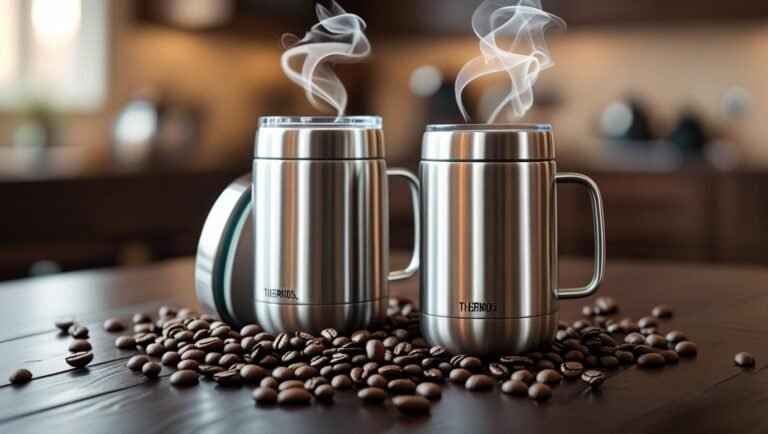
The Best Thermos Coffee Mugs for a Perfect Brew, Anywhere
A great day starts with great coffee. But how do you keep it perfectly hot for hours? We’ve tested the top-rated thermos coffee mugs for heat retention, leak-proof performance, and commuter-friendly design.
For coffee lovers, a reliable travel mug isn’t a luxury; it’s a necessity. It needs to survive the morning commute without spills, fit in a car’s cupholder, and most importantly, keep your coffee piping hot until the last drop. The market is flooded with options, but a few key players consistently outperform the rest. We’re diving into the best thermos coffee mugs that promise—and deliver—a superior coffee experience on the go.
The science behind a great coffee thermos is the same science that has powered insulated beverage containers for well over a century. The vacuum-sealed double wall that prevents a surgeon’s flask from warming in a warm pocket is the same engineering principle that sits between your morning cup and the cold morning air on your commute. Understanding how vacuum insulation keeps your drink temperature stable for 24 hours reveals exactly why some mugs cost more—and why that cost is almost always justified when your 6 AM coffee is still satisfyingly hot at 10 AM.
Our Top-Rated Travel Coffee Mugs for 2026
Based on rigorous testing and thousands of user reviews, these are the mugs that excel at keeping coffee hot, preventing leaks, and making your daily routine easier.

Zojirushi Stainless Steel Mug (16oz)
The Zojirushi is the undisputed champion of heat retention. It’s famous for keeping coffee almost *too* hot for hours. Its slim design, flawless leak-proof lock, and easy-to-clean lid make it the top choice for serious coffee aficionados.
Pros
- Incredible, best-in-class heat retention
- Completely leak-proof with a safety lock
- Slim design fits all cupholders
- Lid disassembles for thorough cleaning
Cons
- Almost keeps coffee *too* hot initially
- Hand wash only recommended

Contigo West Loop AUTOSEAL Travel Mug (16oz)
The Contigo West Loop is the ultimate commuter’s mug. Its patented AUTOSEAL technology makes it 100% spill-proof and perfect for one-handed drinking. It offers great heat retention and a design that’s both stylish and incredibly practical.
Pros
- Genius AUTOSEAL is 100% leak-proof
- Easy one-handed operation
- Good heat retention (up to 5 hours)
- Lid is top-rack dishwasher safe
Cons
- Lid mechanism can be tricky to deep clean
- Not as much heat retention as Zojirushi

THERMOS Stainless King Travel Mug (16oz)
For those who prefer a traditional handle, the THERMOS Stainless King is the perfect choice. It combines the brand’s reliable vacuum insulation with a sturdy handle and a clever DrinkLock™ lid that is completely leak-proof when closed.
Pros
- Excellent heat retention (up to 7 hours)
- Comfortable and sturdy handle
- DrinkLock™ lid is fully leak-proof
- Built-in tea hook for tea bags
Cons
- Bulkier than handle-less models
- Lid mechanism requires two hands to open
Head-to-Head Comparison: All Three Mugs at a Glance
Before diving deeper into the features, materials, and use-case analysis, here is a condensed side-by-side breakdown of how our three top picks compare across the metrics that matter most to daily coffee drinkers. Use this table as your quick-reference guide before reading the full breakdown below.
| Feature | Zojirushi (16oz) | Contigo West Loop (16oz) | THERMOS Stainless King (16oz) |
|---|---|---|---|
| Insulation Type | Double-wall Vacuum | Double-wall Vacuum | Double-wall Vacuum |
| Heat Retention | Up to 8–10 hrs | Up to 5 hrs | Up to 7 hrs |
| Cold Retention | Up to 14 hrs | Up to 12 hrs | Up to 18 hrs |
| Lid Style | Flip-top lock | AUTOSEAL push-button | DrinkLock™ flip |
| One-Handed Use | ✗ | ✓ | ✗ |
| Handle | ✗ | ✗ | ✓ |
| Cupholder Fit | ✓ Slim | ✓ Standard | ✗ Handle obstructs |
| Lid Dishwasher Safe | Hand wash only | Top rack ✓ | Hand wash only |
| Body Material | 18/8 Stainless Steel | 18/8 Stainless Steel | 18/8 Stainless Steel |
| Best For | Maximum heat, purists | Commuters, drivers | Desk workers, tea lovers |
| Price Range | $$$ Premium | $$ Mid-range | $$ Mid-range |
Heat Retention Performance: How Long Does Each Mug Stay Hot?
Heat retention is the core performance metric for any travel coffee mug, and small differences in vacuum insulation quality translate directly into the experience of your second cup. The bars below represent approximate real-world hot retention at 65°F (18°C) ambient temperature, tested with coffee poured at 185°F (85°C)—a typical post-brew temperature from a drip machine or French press.
These numbers are based on standard testing conditions and may vary depending on ambient temperature, how often the lid is opened, and whether the mug was properly pre-heated before filling—a technique we’ll cover in depth shortly. What the data makes clear is that all three vacuum-insulated options utterly outperform an uninsulated ceramic mug, and the Zojirushi’s lead over the Contigo is significant enough to matter for anyone who sips coffee slowly across a long morning of desk work or a lengthy commute. The THERMOS Stainless King sits in a compelling middle ground that suits a wide majority of users.
It’s also worth noting that cold retention generally exceeds hot retention for vacuum-insulated mugs, because the temperature differential between cold liquid and ambient air is typically smaller than the differential between hot liquid and ambient air. If you use your travel mug for iced coffee or cold brew in summer, the THERMOS Stainless King’s reported 18-hour cold retention is genuinely impressive—on par with the kind of performance documented in rigorous independent tests like our Hydro Flask vs. Klean Kanteen 24-hour ice retention comparison, where sustained cold performance across a full day separates good bottles from great ones.
Features to Consider for Your Coffee Mug
Finding the perfect travel mug means focusing on the details that matter most for a hot beverage.
1. Heat Retention
The mug’s primary job. Double-wall vacuum insulation is a must. The best mugs, like the Zojirushi, can keep coffee at a drinkable hot temperature for over 6-8 hours. A good benchmark for a quality mug is keeping coffee hot for at least 5 hours.
2. Lid Design & Leak-Proofing
This is crucial for travel. Look for 100% leak-proof and spill-proof claims. Contigo’s AUTOSEAL is a push-to-drink system, while Zojirushi and THERMOS use locking flip-top lids. Consider if you need one-handed operation for driving. Lid engineering has advanced considerably in recent years—the difference between a well-engineered seal and a mediocre one is the difference between a confident toss into a bag and a paranoid double-check every time. Our detailed breakdown of how the Owala FreeSip dual-flow lid performs under real leak-proof testing illustrates exactly how nuanced this engineering challenge is. The principles apply directly to coffee mug lids: gasket material, thread depth, and seal redundancy all determine whether you trust the mug in your bag unconditionally.
3. Ease of Cleaning
Coffee oils and milk residue can build up. A mug with a simple lid that comes apart easily is a huge advantage. Check if the lid is dishwasher-safe, as this simplifies sanitizing. The mug body itself is almost always hand-wash only to protect the vacuum seal and exterior finish.
4. Size and Cupholder Compatibility
Most standard travel mugs are 16oz or 20oz. Ensure the base of the mug is slim enough to fit in your car’s cupholder. Mugs with large handles or wide bases can sometimes be problematic. The subtle ergonomics of cupholder compatibility deserve more attention than they typically receive in product reviews. A mug that slides out of your cupholder on a sharp corner is a burn risk and an expensive mess. In our comparison of Stanley Quencher FlowState vs. YETI Rambler cupholder fit, we found that base diameter alone doesn’t tell the full story—taper angle, center-of-gravity, and lid overhang all factor into whether a mug sits stable at highway speed.
The Science of Keeping Coffee Hot: How Vacuum Insulation Actually Works
Understanding the physics behind your travel mug’s insulation helps you make a smarter purchase and use the mug you already own more effectively. The principle is elegant in its simplicity but demanding in its execution. A vacuum-insulated travel mug consists of two concentric cylinders of stainless steel with a near-total vacuum pulled between them. Heat travels via three mechanisms: conduction (direct contact between molecules), convection (movement of air), and radiation (infrared energy). A vacuum eliminates the air molecules responsible for both conduction and convection. The thin steel walls are often coated with a copper or silver reflective layer to further block infrared radiation. The result is a mug that loses almost no heat to its surroundings—not because the heat is “held in,” but because the path for heat to escape has been almost completely severed.
The weak points in this system are the lid and the rim. Both are made of materials—plastic, silicone, and stainless steel in contact with air—that do conduct heat, which is why a small amount of heat loss occurs even in the best vacuum mugs. The Zojirushi’s exceptional performance comes partly from the precision engineering of its lid seal, which minimises the contact area between the hot interior air and the lid mechanism itself. This is also why the pre-heating technique is so effective: it eliminates the “cold start” temperature drop that occurs when hot coffee hits a room-temperature steel interior, as thoroughly detailed in our guide on thermos pre-treatment: preheating in 5 to 10 minutes. Skipping this step wastes the first 15–20 minutes of your mug’s insulation capacity on warming the steel, not keeping your coffee hot.
☕ The Pre-Heating Protocol: Step by Step
- Fill the travel mug with boiling or near-boiling water from your kettle or hot tap.
- Place the lid on fully and let it stand for 5 minutes minimum, 10 minutes for best results.
- Pour the pre-heating water out (down the sink, or use it to warm your cup).
- Immediately fill with freshly brewed coffee—do not wait or the steel will begin to cool.
- Seal the lid promptly and minimize lid-opening during use.
This single habit can add 45–90 minutes to your mug’s effective hot-retention window, regardless of which of our three recommended mugs you use.
Choosing the Right Mug for Your Coffee Drink of Choice
Not all coffee drinks travel equally well, and the mug you choose can meaningfully affect the quality of your beverage by the time you drink it. The drink type—its temperature at brew time, its acidity, its milk content, and the speed at which it oxidises—should inform your mug selection.
☕ Black Coffee & Espresso
Brewed hot and drunk quickly, these benefit most from a high heat-retention mug with minimal headspace. The Zojirushi’s near-sealed vacuum keeps espresso-based drinks at serving temperature far longer than any competitor. No milk means no spoilage risk, so longer retention is purely a benefit.
🥛 Lattes & Milk Drinks
Milk-based drinks are more temperature-sensitive. Milk held above 140°F (60°C) for extended periods can develop off-flavours. For a flat white or latte, the Contigo’s 5-hour retention is usually ideal—long enough to enjoy slowly without risk of degrading milk quality. A pre-heated Zojirushi may actually keep milk drinks too hot for too long.
🧊 Cold Brew & Iced Coffee
All three mugs perform well as iced coffee vessels—their vacuum insulation works equally well in reverse. For cold brew, the THERMOS Stainless King’s exceptional 18-hour cold retention stands out. Add ice and cold brew concentrate and it will stay chilled through an entire workday. The stainless steel interior won’t absorb coffee oils, keeping the flavour clean.
🍵 Tea & Herbal Infusions
The THERMOS Stainless King was thoughtfully designed with a built-in tea hook for a tea bag, making it the natural choice for tea drinkers. The 7-hour heat retention is ideal for green teas (which should be drunk before they over-steep) and black teas equally. Herbal infusions with oils—like chamomile or peppermint—should be rinsed out promptly to prevent flavour transfer.
The Oxidation Problem: Why Opening the Lid Matters
Coffee begins to oxidise the moment it is exposed to air. This is why a great espresso drunk immediately from the portafilter tastes different from one that sat on the counter for five minutes. In a sealed travel mug, oxidation is significantly slowed because the air-to-coffee surface area is minimal and the air above the coffee quickly becomes saturated with CO2 from the coffee itself, creating a protective atmosphere. Every time you open the lid, you displace this protective layer with fresh oxygen. For maximum flavour preservation, open the mug only to drink and minimise the time the lid is open. The Contigo’s AUTOSEAL mechanism is uniquely excellent in this respect—its push-to-drink valve opens the smallest possible aperture, admitting less fresh air per sip than a conventional flip-top lid. This is a genuine secondary benefit of the AUTOSEAL design that is rarely discussed but matters meaningfully for flavour-conscious coffee drinkers.
Best Travel Coffee Mug by Use Case and Lifestyle
The “best” mug is entirely relative to how, when, and where you drink your coffee. A morning commuter driving 45 minutes each way has different needs from a nurse working a 12-hour shift or a writer who nurses a single cup across a four-hour morning writing session. Below we map our top picks to six of the most common real-world coffee-drinking scenarios.
The Daily Driver
One-handed use, cupholder fit, and 100% spill-proof are the priorities. The Contigo AUTOSEAL wins by a wide margin for in-car drinking.
The Office Worker
Long retention and comfort at a desk matter most. The Zojirushi keeps morning coffee drinkably hot through back-to-back meetings. The THERMOS King with a handle is also excellent for desk use.
The Backpack Commuter
Absolute leak-proof confidence in a packed bag is non-negotiable. All three perform here, but the Zojirushi’s tested reliability and slim profile make it the top pick for bag commuters.
The Gym Goer
Pre-workout coffee is a ritual for many gym-goers. A slim, lightweight mug that fits in a gym bag side pocket and doesn’t leak under any orientation is ideal. See our dedicated guide on the best thermos options for gym use for a fuller breakdown of this scenario.
The Outdoor Adventurer
On the trail, a hot coffee at altitude is one of life’s great pleasures. Durability, long retention, and ease of use with cold hands matter. Explore our full analysis in the guide to the best thermos for camping—the principles for hot coffee overlap significantly with hot soup on a winter hike.
The Tradesperson
On a job site, a coffee mug faces drops, dust, and rough handling. Durability is paramount. Our review of the most durable thermoses for job site drops identifies the builds that survive real-world abuse, which applies equally to a durable coffee mug.
Materials, Safety, and What “Food Grade” Really Means
All three mugs reviewed here are constructed from 18/8 stainless steel—also known as Type 304 stainless. The designation “18/8” refers to the chromium and nickel content: 18% chromium and 8% nickel. Chromium forms a passive oxide layer on the steel surface that resists corrosion and prevents metallic ions from leaching into food or drink. Nickel adds hardness and further corrosion resistance. This combination is the industry standard for food contact surfaces and is considered completely safe for long-term use with hot beverages, acidic drinks, and everything in between.
The inner walls of a quality thermos coffee mug are uncoated 18/8 stainless steel—no paint, powder coat, or lining touches your beverage. This is actually an advantage: uncoated stainless steel does not absorb flavours or odours over time, unlike the plastic lining found in some cheaper thermal cups. The exterior of the mug, however, is often powder-coated for grip and aesthetics. This coating should never contact your beverage, and it is entirely safe for the exterior surface.
BPA-Free Lids and Silicone Seals
While the steel body is inert, the lid components—gaskets, O-rings, and the mouthpiece itself—are typically made from polypropylene and food-grade silicone. Both materials are BPA-free and food-safe in the temperature ranges experienced by travel mugs. Silicone gaskets in particular are exceptional sealing materials: they maintain their shape and elasticity across a very wide temperature range, from near-freezing to above boiling, without degrading or leaching. The reason lid seals fail over time is almost always physical deformation from improper cleaning (dishwasher heat cycling with the wrong material) or mechanical damage from being forced or dropped. Replacing gaskets and O-rings annually is an inexpensive way to extend the functional life of a premium travel mug significantly.
⚠️ Never Put a Vacuum Mug in the Dishwasher (Body Only)
The body of a double-wall vacuum mug should never go in the dishwasher. The high-pressure water jets and extreme heat cycles can force water and detergent into the vacuum gap through the seam weld at the base, compromising—and often permanently destroying—the vacuum seal. Once water enters the vacuum gap, the mug becomes a single-wall conductor that will barely hold temperature for 20 minutes. Lid components specifically listed as dishwasher-safe (like the Contigo West Loop’s lid) are engineered from materials that can withstand these conditions without damage—but that designation never extends to the mug body. Always check the manufacturer’s guidance for each component individually.
The Complete Coffee Mug Cleaning Guide: Eliminating Residue and Odours
Coffee is one of the most chemically complex beverages we consume, containing over 1,000 aromatic compounds, oils, and acids that interact with the surfaces they contact. In a travel mug used daily, coffee oils accumulate in a thin film on the inner steel wall and—more significantly—in the crevices of the lid mechanism. Left uncleaned, this film turns rancid and becomes the source of the “stale” or “sour” smell that many users associate with old travel mugs. Preventing and reversing this requires a cleaning routine that goes beyond a quick rinse.
-
After Every Use: Rinse Immediately
As soon as you finish your coffee, rinse both the mug body and the disassembled lid components with hot water. This dislodges the fresh coffee residue before it has a chance to dry and oxidise onto the surface, reducing the effort required at the end of the day.
-
Daily Wash: Soap and a Bottle Brush
Use a long bottle brush with a small head to reach the bottom of the mug body. Apply a few drops of dish soap and scrub the interior from top to bottom, paying attention to the rim where coffee residue accumulates. For the lid, use a small detail brush or the tip of the bottle brush to reach the groove where the gasket seats—this is the primary odour accumulation point in most lid designs.
-
Weekly Deep Clean: Baking Soda Soak
Fill the mug with hot water and add one tablespoon of baking soda. Let it stand for 20–30 minutes with the lid off. Baking soda is mildly alkaline and neutralises the fatty acids in coffee oils, dissolving the biofilm that normal soap leaves behind. Scrub and rinse thoroughly. For lid components, soak them in the same solution in a small bowl.
-
Monthly Descale: White Vinegar Treatment
Hard water minerals (calcium and magnesium carbonates) build up as a white scale on the interior, particularly at the waterline. Fill the mug with a 50/50 solution of white vinegar and water. Let it stand for one hour. The mild acidity dissolves the mineral deposits without harming the stainless steel or silicone components. Rinse multiple times thoroughly and air dry before reuse.
-
Stubborn Stains: Denture Tablet Method
For deep brown coffee staining that baking soda hasn’t shifted, drop one effervescent denture-cleaning tablet into a mug filled with hot water. Let it fizz and stand for 30 minutes. The combination of sodium bicarbonate, citric acid, and mild bleaching agents in denture tablets is exceptionally effective at lifting coffee tannin stains from stainless steel without abrasion.
-
Air Dry With the Lid Off
After any cleaning, store the mug with the lid off to allow complete air circulation. Sealing a damp mug creates the warm, dark, moist conditions that allow mould and bacteria to flourish. Even a lightly used mug that is regularly stored sealed can develop a musty smell within days if not fully dried first.
Finding Your Perfect Match: Coffee Mug by Persona
Every coffee drinker has a distinct set of habits, priorities, and frustrations. Rather than prescribing a single “best” mug, the most useful guidance is matching the mug to the person. Here are six coffee drinker personas and the mug that serves each one best.
The Slow Sipper
Takes 3–4 hours to finish a single cup. Prefers coffee that’s still hot on the last sip.
→ Pick: Zojirushi. Nothing else keeps coffee genuinely hot this long.
The Rush-Hour Commuter
Drinks coffee while driving, walking, or on transit. Needs one-handed operation and zero-tolerance for spills.
→ Pick: Contigo West Loop. The AUTOSEAL seal is genuinely accident-proof.
The Morning Ritualist
Sits at a desk and drinks coffee with both hands free. Values a traditional feel and a handle.
→ Pick: THERMOS Stainless King. The handle and 7-hour retention are perfect for long desk sessions.
The Tea Drinker
Alternates between tea and coffee. Wants a single mug that handles both and includes a tea bag feature.
→ Pick: THERMOS Stainless King. Its built-in tea hook makes it the only mug genuinely designed for tea drinkers.
The Iced Coffee Devotee
Drinks cold brew or iced lattes year-round and needs outstanding cold retention.
→ Pick: THERMOS Stainless King. Its 18-hour cold retention is the best of the three for iced drinks.
The Minimalist
Wants the cleanest, simplest design with no unnecessary features—just excellent insulation and a reliable seal.
→ Pick: Zojirushi. Its elegant simplicity, slim profile, and superb engineering make it the minimalist’s ideal mug.
Travel Coffee Mugs for Trades and Outdoor Workers
For construction workers, electricians, plumbers, landscapers, and anyone who works outdoors or in demanding physical environments, a coffee mug faces challenges that no office mug ever encounters. Drops onto concrete, dusty environments, temperature extremes, and a hands-that-are-never-clean reality demand a different set of priorities from the finesse required of a polished commuter mug.
Durability is the first consideration. A thin-walled stainless mug with powder coat paint may look sleek in a boardroom but will show deep dents and chipped paint after a single week on a construction site. The most robust travel mugs feature thicker-gauge outer steel, recessed lid mechanisms that protect the lid from direct impact, and silicone exterior banding that absorbs shock and prevents the mug from sliding off surfaces. Our deep dive into the most durable thermoses for job site drops establishes the benchmark for impact resistance, and many of those findings directly translate to choosing a coffee mug that survives the same environment.
The second consideration for outdoor and trades workers is the thermal challenge of drinking in genuinely cold environments. A mug that keeps coffee “hot for 5 hours” under standard laboratory conditions (65°F ambient) may perform noticeably worse on a 25°F (-4°C) winter morning on a rooftop. Understanding that vacuum insulation’s performance is reduced—though not eliminated—in extreme cold helps set realistic expectations. Pre-heating, as described earlier, becomes even more important in cold conditions because the steel interior starts at a lower temperature and takes more of your coffee’s heat just to warm up. The same principle applies whether you’re heating up soup for lunch or keeping coffee hot through a job site morning, as explored in our overview of worksite lunch systems comparing thermos and bento approaches.
The Leak-Proof Test: Why It Matters on a Job Site
A coffee spill on a desk is an inconvenience. A coffee spill on a job site can damage materials, create a slip hazard, ruin electrical components, or stain a client’s new carpet. For trades workers, the leak-proof performance of a travel mug lid is not just a convenience—it’s a professional necessity. The distinction between “spill-resistant” and “truly leak-proof” is critical and often blurred in marketing language. A spill-resistant mug may not drip when upright but will leak when placed on its side in a tool bag. A truly leak-proof mug maintains an airtight seal regardless of orientation or pressure. Our systematic testing of Simple Modern Trek vs. Stanley Quencher for leak resistance demonstrates exactly how to verify this distinction—tests that any mug can be subjected to before relying on it in a high-stakes environment.
Budget vs. Premium: Is an Expensive Travel Mug Worth It?
The travel mug market spans a remarkable price range—from $8 plastic cups to $60+ precision-engineered Japanese stainless steel. The question of whether the premium end of this spectrum is worth the investment has a more nuanced answer than either “yes, always” or “no, they’re all the same.”
What Extra Money Actually Buys
At the budget end of the market (under $15), you are typically getting single-wall construction with minimal insulation, plastic lids with gaskets that degrade within six months, and steel of uncertain grade that may impart metallic flavours to acidic coffee. The mug will likely keep coffee warm for 30–60 minutes, which is no meaningful improvement over a ceramic mug.
In the mid-range ($20–$35), you begin to find genuine double-wall vacuum insulation and quality lid engineering. The Contigo West Loop sits in this range and represents excellent value—its heat retention and AUTOSEAL performance are genuinely premium despite a mid-range price point. At the premium end ($40–$60+), you are primarily paying for tighter manufacturing tolerances that produce superior heat retention and longer-lasting lid seals, and for the quality assurance that comes with established brands like Zojirushi that have been engineering precision vacuum containers for decades.
The total-cost-of-ownership argument also favours the premium option. A $50 Zojirushi that lasts five to seven years with proper care costs $7–$10 per year. A $12 mug replaced every year costs $12 per year—and delivers a dramatically inferior coffee experience every single morning. Across five years, the premium mug costs less and produces an incomparably better result.
The Comparison Premium Brands Won’t Tell You About
The premium travel mug segment also competes with wide-mouth insulated bottles from brands whose primary market is hydration and outdoor gear. These bottles—including products from Hydro Flask, Klean Kanteen, and YETI—often feature superior cold retention compared to coffee-specific mugs (because they are designed primarily for ice water) but may sacrifice some heat retention and have lids not optimised for sipping hot beverages. If you frequently switch between coffee in the morning and cold water in the afternoon, a high-quality insulated water bottle with a sipping lid accessory may serve you better than two separate vessels. Our comparison of Corkcicle triple-insulated vs. YETI double-wall cold retention provides a useful benchmark for how these general-purpose bottles perform against specialised coffee mugs across temperature ranges.
Travel Coffee Mug Accessories That Actually Improve Your Experience
The right accessories can meaningfully extend the functionality of your travel mug without requiring you to purchase an entirely new vessel. The accessory market for travel mugs is cluttered with gimmicks, but a handful of products represent genuine quality-of-life improvements.
Replacement Lid Gaskets and O-Rings
The most impactful and least expensive upgrade you can make to an existing travel mug is a fresh set of silicone lid gaskets. These small O-rings are the most wear-prone component of any mug lid, and they are almost always available directly from the manufacturer for $3–$8 per set. Replacing gaskets annually restores the factory-fresh leak-proof performance of a mug that has started to drip slightly. Zojirushi, THERMOS, and Contigo all sell replacement lid components through their official channels and major retailers.
Insulating Mug Sleeves and Carriers
For double-wall vacuum mugs, an external sleeve adds negligible thermal benefit—the vacuum insulation already outperforms any sleeve material by orders of magnitude. However, a well-fitted silicone or neoprene sleeve does meaningfully improve grip on a smooth stainless exterior, reduces the risk of the mug slipping out of wet or cold hands, and protects the exterior powder coat from scratches and abrasion. For job site use, this protective function alone justifies the $8–$15 cost of a quality sleeve.
Travel Mug Coffee Filters and Pour-Over Accessories
A small category of accessories allows you to brew directly into your travel mug using a reusable pour-over filter. These single-serve brewing inserts sit over the open mug and accept a paper or reusable metal filter. You pour hot water over freshly ground coffee and brew directly into the pre-heated, sealed mug below. This approach eliminates the carafe, the coffee pot, and the transfer step entirely—the brewed coffee goes directly into the vessel where it will stay hot, with zero exposure to open air. The flavour improvement over drip machine coffee left warming on a hotplate is dramatic. This technique is particularly popular among serious coffee drinkers who travel for work or live in spaces without a dedicated kitchen setup.
The Environmental Case for a Premium Travel Coffee Mug
The coffee industry’s single-use cup problem is well documented: an estimated 16 billion disposable paper cups are used globally each year, the vast majority of which end up in landfill because the polyethylene lining that makes them liquid-proof also makes them non-recyclable in standard paper recycling streams. A single daily coffee drinker who switches from disposable takeaway cups to a refillable travel mug eliminates approximately 250–300 cups from landfill every year.
The environmental math of a premium travel mug becomes even more compelling when you factor in the disposable lid. Most coffee chain disposable lids are polystyrene or polypropylene, materials that take 450 to 1,000 years to decompose in landfill. Using a refillable travel mug eliminates the lid as well as the cup, doubling the waste impact. Many coffee chains now offer a small discount (typically $0.10–$0.25 per cup) for customers who bring their own reusable cup—over 250 visits per year, this represents $25–$62.50 in direct annual savings, partially offsetting the cost of the mug itself.
The manufacturing footprint of a single premium stainless steel travel mug, amortised over 5–10 years of daily use, is dramatically lower per use than the cumulative footprint of producing, transporting, and disposing of 1,500–3,000 single-use cups over the same period. From both a waste and a carbon perspective, the premium travel mug is the environmentally responsible choice for any daily coffee drinker who has not already made the switch.
Using Your Coffee Thermos for Specialty Drinks and Beyond
A high-quality vacuum-insulated travel mug is fundamentally a precision temperature management device. While it is marketed primarily for coffee, its utility extends to any hot or cold beverage you want to keep at a specific temperature for an extended period. Understanding this broader capability helps you maximise the return on your investment in a quality mug.
Hot Chocolate and Powdered Drink Mixes
Hot chocolate, matcha lattes, and powdered golden milk mixtures all travel well in a vacuum mug, with one important consideration: many powdered mixes leave residue that, if not cleaned promptly, is far more stubborn than coffee oil. Milk-based powders in particular can dry to an almost cement-like consistency inside the lid mechanism. Rinse immediately after finishing, before the residue has a chance to dry, and prioritise thorough lid disassembly for cleaning.
Soup on the Go
The same insulation properties that keep coffee hot keep soup hot equally well. A 16oz travel mug is the perfect size for a single serving of broth, tomato soup, or miso. The wide-mouth versions of the Zojirushi and THERMOS Stainless King (both available in wider-mouth variants) accommodate a small spoon for chunky soups. The alignment between hot coffee insulation needs and hot soup insulation needs is direct—our comprehensive look at the 7 best thermos options for soup identifies many of the same engineering qualities that make an excellent coffee mug also make an excellent soup container.
Using Your Coffee Mug as a Cold Brew Vessel
For cold brew enthusiasts who don’t want to carry a separate vessel, a standard travel mug makes a competent cold brew dispenser. Pre-fill with cold brew concentrate and ice, seal, and shake gently. The vacuum insulation keeps the dilution minimal (ice melts slowly) and the cold brew at its optimal serving temperature through a full morning. The THERMOS Stainless King’s handle makes it particularly comfortable to hold during cold weather when a bare stainless exterior would otherwise feel uncomfortably cold to the touch.
Final Verdict
Your perfect coffee companion depends on your daily routine. Here are our final recommendations:
- For the Absolute Best Heat Retention: The Zojirushi Stainless Steel Mug is in a league of its own. If your top priority is having scorching hot coffee hours later, this is the mug for you.
- For the Ultimate Commuter Convenience: The Contigo West Loop AUTOSEAL Mug is the king of the road. Its one-handed, spill-proof operation is unmatched for drinking while driving or walking.
- For Those Who Need a Handle: The THERMOS Stainless King Travel Mug delivers fantastic performance with the comfort and familiarity of a sturdy handle, without compromising on its leak-proof design.
- For Outdoor Workers and Trades: Prioritise impact resistance and a truly leak-proof seal over aesthetics. The THERMOS Stainless King’s robust build and excellent 7-hour hot retention make it the most practical choice for demanding physical environments. Pair it with the durability insights from our job site thermos durability review to make the most informed choice.
- For Value-Conscious Buyers: The Contigo West Loop offers the most performance per dollar of the three. Its AUTOSEAL technology, dishwasher-safe lid, and solid heat retention make it the smart choice for buyers who want premium-adjacent performance without the premium price tag.
- For Eco-Conscious Daily Commuters: Any of these three mugs eliminates 250+ single-use cups from landfill annually. The investment pays back environmentally within days and financially within months if you buy daily coffee from a café that offers a reusable cup discount.
Frequently Asked Questions (FAQ)
Why does my coffee taste metallic in some travel mugs?
A metallic taste usually comes from lower-quality stainless steel or from not cleaning the mug properly before its first use. Always wash a new mug thoroughly with soap and water. High-quality 18/8 food-grade stainless steel, used in all the mugs reviewed here, is designed to prevent flavor transfer.
How can I get the best performance from my thermos mug?
Preheat it! Before adding your coffee, fill the mug with boiling water and let it sit with the lid on for 5-10 minutes. Dump the water out and immediately fill it with your coffee. This warms the inner steel wall so your coffee’s heat isn’t wasted on warming the mug itself. For a full breakdown of this technique and exactly how much difference it makes, see our dedicated guide on thermos pre-treatment: pre-heating in 5 to 10 minutes.
Are the lids interchangeable between brands?
No, almost never. Lid designs are proprietary and engineered to fit a specific mug’s threading and sealing mechanism. You should only use the lid that came with your mug.
How do I remove coffee stains from inside my travel mug?
Start with a baking soda soak: one tablespoon of baking soda in a full mug of hot water, left to stand for 30 minutes, removes most fresh staining. For deep, set-in staining, a single effervescent denture-cleaning tablet in hot water is remarkably effective. Avoid steel wool or abrasive scrubbers, which will scratch the interior surface and create microscopic pits that harbour future staining.
Can I use my travel coffee mug for cold brew or iced drinks?
Absolutely. All three mugs reviewed here provide excellent cold retention—some for up to 18 hours. The vacuum insulation works identically in both directions: it prevents heat exchange between the contents and the outside world regardless of whether the contents are hotter or colder than ambient temperature. For iced coffee and cold brew, the THERMOS Stainless King’s superior cold retention makes it the standout choice among our three picks.
Why does my travel mug smell even after washing?
Persistent odour in a travel mug is almost always caused by coffee oil biofilm in the lid mechanism, particularly around the gasket groove and the inner surfaces of the drinking aperture. Standard dish soap removes surface residue but does not penetrate and neutralise the oxidised oil layer underneath. The weekly baking soda soak described in our cleaning guide—filling the mug with hot water and one tablespoon of baking soda for 20–30 minutes—specifically addresses this problem by neutralising the fatty acid compounds responsible for the smell.
Is it safe to put milk-based drinks in a stainless steel travel mug?
Yes, it is entirely safe. Stainless steel is completely inert and will not react with the dairy components in lattes, flat whites, or cappuccinos. The practical consideration is food safety rather than material safety: milk should not be kept in the warm-but-not-hot range (between 40°F and 140°F) for more than two hours. In a properly insulated mug, milk coffee will typically remain above 140°F for several hours, keeping it in the safe zone. If your mug has lost vacuum insulation efficiency and coffee is dropping to lukewarm within an hour, a milk-based drink left in this temperature range for extended periods could become a food safety concern.
What size travel mug should I buy: 12oz, 16oz, or 20oz?
The right size depends on how much coffee you drink in a single session and how important cupholder compatibility is to you. 12oz is compact and slim—ideal for espresso-based drinks and riders with small cupholders. 16oz is the most versatile size, matching standard coffee shop sizing and fitting almost all car cupholders. 20oz suits large coffee drinkers or those who use their mug for a second beverage later in the day. Avoid the temptation to buy larger than you need: a half-full mug has more air space above the coffee, which increases heat loss through convection within the sealed vessel, slightly reducing effective retention.
Can I use a travel coffee mug for hot soup?
Yes, most travel mugs with openings wide enough to accommodate a spoon are excellent soup vessels. The vacuum insulation keeps soup as hot as coffee for the same duration. Tomato-based soups and broths are the cleanest options from a residue perspective; cream-based soups require more thorough cleaning immediately after use to prevent the dairy components from drying onto the lid and interior. Our guide to the best thermos options for soup covers the wider range of dedicated food thermos products for those who regularly carry hot lunches.
How do I know if my travel mug’s vacuum seal has failed?
The clearest sign is a dramatic reduction in heat (or cold) retention—coffee that used to stay hot for six hours is now lukewarm after one hour. A secondary sign is condensation forming on the exterior of the mug: in a functioning vacuum mug, the outer wall should remain at or near room temperature with no moisture forming on the outside. If you notice condensation or the exterior feels warm to the touch when filled with hot liquid, the vacuum seal has been compromised, typically by water infiltrating the vacuum gap through a weld seam. Unfortunately, a failed vacuum seal cannot be repaired at home—the mug body should be replaced.
Do travel mugs affect the taste of coffee compared to ceramic?
High-quality 18/8 stainless steel is entirely flavour-neutral and should not affect the taste of coffee at all, provided the mug is clean and new gaskets are in place. Some users report a perceived difference when switching from ceramic to steel, but controlled taste tests consistently show that properly maintained stainless steel is indistinguishable from ceramic as a flavour surface. The more common taste difference comes from not pre-heating the mug (which causes the first sip to taste slightly dilute as the steel absorbs heat) and from accumulated coffee oil residue in an inadequately cleaned lid.




 Home
Home
 Info
Info
 Compare
 Reviews
 Shop
Shop