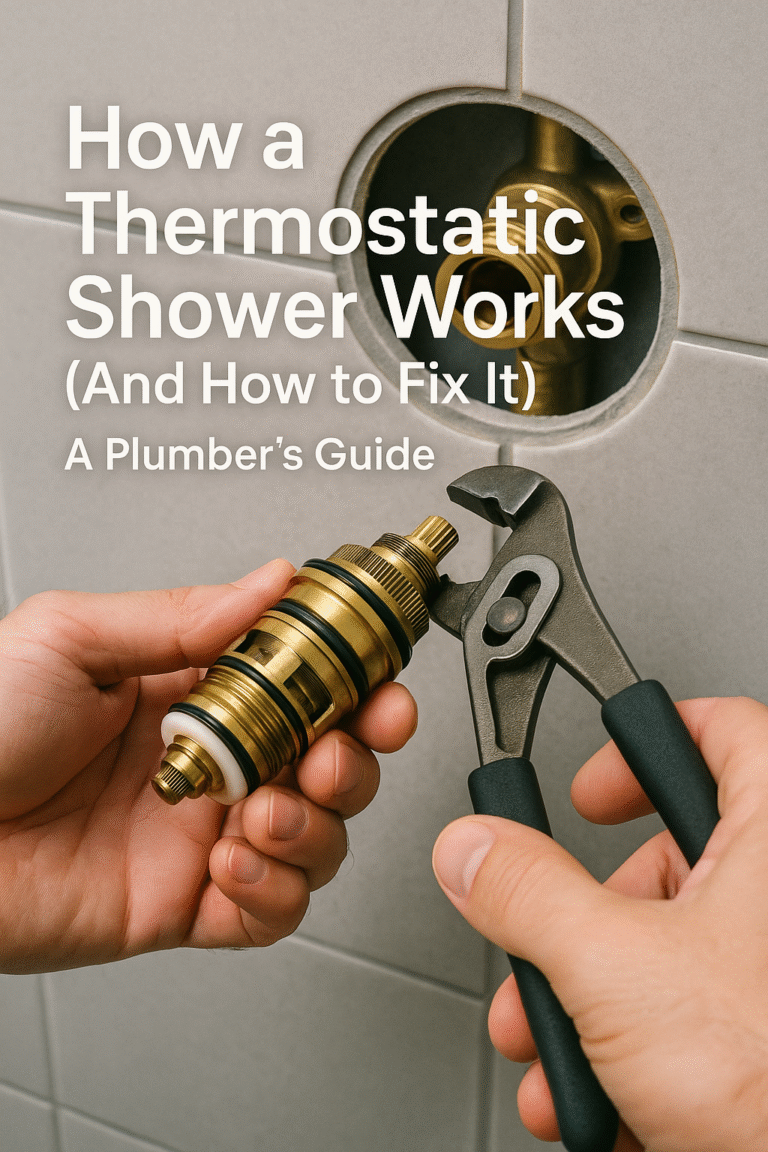
How a Thermostatic Shower Works (And How to Fix It): A Plumber’s Guide
We’ve all been there. You’re enjoying a perfect shower when suddenly a toilet flushes elsewhere in the house, and you’re hit with a blast of scalding hot water. Or someone starts the dishwasher, and your warm stream turns into an icy shock. For decades, this was just an unpleasant fact of life. But modern plumbing has a brilliant solution: the thermostatic shower.
As a licensed plumber with over 15 years of experience installing and repairing residential water systems, I’ve seen firsthand how a quality thermostatic valve can transform the daily shower from a gamble into a guaranteed luxury. It’s one of the single best upgrades for safety and comfort you can make in your bathroom. This guide will demystify exactly how these clever devices work, what to do when they don’t, and how to choose the best one for your home.
What’s a Thermostatic Shower, Anyway?
A thermostatic shower isn’t the showerhead or the faucet handle; it’s the advanced mixing valve hidden in the wall behind the controls. Its sole purpose is to maintain the water temperature you’ve selected, regardless of changes in the hot or cold water supply pressure or temperature.
It differs from other common valve types:
- Manual (Single-Handle) Valves: These are the most basic type. The handle position simply controls the ratio of hot to cold water. If the hot water pressure drops, the ratio changes, and you get scalded. There is no automatic adjustment.
- Pressure-Balancing Valves: These are a step up and are required by plumbing code in many areas for safety. They sense the pressure of the hot and cold water lines. If the cold water pressure drops (from a toilet flush), the valve automatically reduces the hot water pressure to match, preventing a dangerous temperature spike. However, it doesn’t control the actual temperature, only the pressure ratio.
- Thermostatic Valves: This is the premium option. A thermostatic valve directly senses and controls the temperature of the mixed water. It automatically adjusts the hot and cold water mix to maintain a constant, precise temperature, providing the highest level of safety and comfort.
How a Thermostatic Shower Valve Works: The Magic Inside
From the outside, you just have a dial for temperature and a lever for water flow. But inside the valve’s brass body, a sophisticated mechanical process is constantly at work. The heart of the system is the thermostatic cartridge.
Think of it like the thermostat for your home’s HVAC system, but for water, and reacting in milliseconds. Here’s a breakdown of the process:
1. The Thermo-Sensitive Element
The core component is a small, sealed capsule containing a special type of wax (or sometimes a bimetallic coil). This wax has been precisely engineered to expand or contract based on the temperature of the water flowing past it.
2. The Piston and Sleeve Mechanism
This wax element is connected to a small piston or slide valve that sits inside a sleeve. The sleeve has ports that allow hot and cold water to enter the mixing chamber. The piston’s position determines how much of each port is open or closed.
3. The Balancing Act
- When you turn the temperature dial, you are setting a baseline position for this piston.
- As water flows, the wax element heats up or cools down to the mixed water temperature.
- If the water gets too hot (e.g., someone uses cold water elsewhere), the wax expands. This expansion pushes the piston forward, partially closing the hot water port and opening the cold water port wider. More cold water enters the mix, bringing the temperature back down to your set point almost instantly.
- If the water gets too cold (e.g., the water heater is struggling), the wax contracts. This pulls the piston back, closing the cold water port and opening the hot water port wider until the temperature is correct again.
This entire process is purely mechanical and happens continuously throughout your shower, making tiny adjustments to maintain a stable temperature within ±1°F.
Key Takeaway
A thermostatic valve uses a heat-sensitive wax element to physically move a piston, automatically and instantly adjusting the hot/cold water mix to hold your desired temperature perfectly steady. It’s a proactive, temperature-based system, not a reactive, pressure-based one.
Anatomy of a Thermostatic Shower System: Every Component Explained
Understanding what all the parts of a thermostatic shower system are—and what each one does—is the foundation for both smart purchasing decisions and effective troubleshooting. A complete system is made up of several distinct components that work together.
The Thermostatic Valve Body
The valve body is the brass or bronze housing that is permanently installed inside the wall. It receives the hot and cold supply lines, houses the thermostatic cartridge, and routes the mixed water to one or more outlets (showerhead, body jets, hand shower, tub spout). Valve bodies are rated by the number of outlets they can serve: a two-outlet valve is the most common for a standard shower setup, while three- or four-outlet valves accommodate elaborate multi-function shower systems. The valve body is the most permanent component of the system—it’s the part you never want to have to replace, because doing so means opening the wall. This is why investing in a quality brass body from a reputable brand matters so much.
The Thermostatic Cartridge
The cartridge is the replaceable heart of the valve. It contains the wax element, piston, O-rings, and all the internal passages that do the temperature-sensing and mixing work. Cartridges are brand- and model-specific and are not interchangeable between manufacturers. When a thermostatic shower starts misbehaving—drifting temperature, stiff controls, dripping when off—the cartridge is almost always the component responsible. The good news is that because the cartridge is designed to be replaceable, you can restore a failing thermostatic shower to like-new performance without touching the valve body in the wall.
The Volume Control
Many thermostatic shower systems separate the functions of temperature control and volume (flow) control into two distinct handles or knobs. This is one of the major advantages over traditional single-handle valves: you can pre-set your preferred temperature, then simply turn the water on and off with the volume control without ever touching the temperature setting. Your shower is always ready at your exact preferred temperature from the very first second. On integrated trim kits, the volume control is typically a separate lever or button adjacent to the temperature dial.
The Diverter
In multi-outlet shower systems, a diverter routes water from the thermostatic valve body to one or more outlets in sequence. A simple two-way diverter switches between, for example, a fixed overhead rain shower and a hand-held shower. More sophisticated diverters built into multi-function trim kits allow multiple outlets to be operated simultaneously or independently. Understanding how the diverter works in your specific system is important for troubleshooting—a diverter that is stuck or worn can cause water to flow to the wrong outlet, or cause pressure and flow issues.
The Trim Kit (Escutcheon and Handles)
The trim kit is everything you see on the wall: the decorative plate (escutcheon), the temperature handle or dial, the volume lever or button, and any diverter controls. Trim kits are style-specific and come in a vast array of finishes (chrome, brushed nickel, matte black, polished gold, bronze) and design aesthetics (modern/minimalist, traditional, industrial). Most valve manufacturers design their trim kits to be interchangeable with the same valve body, meaning you can update the look of your shower in the future by simply swapping the trim without disturbing the valve body in the wall.
The Showerhead and Outlets
The showerhead, hand shower, body jets, and any other water outlets are the final delivery components of the system. These are independent of the thermostatic valve and can be upgraded or changed separately. When selecting outlets for a thermostatic system, pay attention to the flow rate (measured in gallons per minute, or GPM) of each component and ensure the combined flow of all simultaneously used outlets does not exceed the supply capacity of your thermostatic valve and home water supply.
Thermostatic vs. Pressure-Balancing vs. Manual: A Full Comparison
The three main types of shower valve technology represent three different levels of performance, safety, and cost. The right choice depends on your priorities, but understanding the differences in depth helps you make a truly informed decision.
| Feature | Manual Valve | Pressure-Balancing | Thermostatic |
|---|---|---|---|
| Temperature Control | None – manual adjustment only | Indirect – controls pressure ratio only | Direct – senses and controls actual temperature |
| Anti-Scald Protection | ✘ None | ✔ Good | ✔ Excellent |
| Response to Toilet Flush | Noticeable temperature spike | Minimal – pressure balanced | None – temperature maintained |
| Response to Water Heater Fluctuation | Noticeable drift | Noticeable drift | Automatically corrected |
| Separate Volume & Temp Controls | ✘ No | ✘ No | ✔ Yes (usually) |
| Required by Code? | No (in most areas) | Yes (IPC/UPC in most U.S. jurisdictions) | Meets or exceeds code |
| Initial Cost | $30–$150 | $50–$300 | $150–$1,500+ |
| Cartridge Replacement Cost | $10–$40 | $15–$60 | $30–$200 |
| Ideal For | Budget renovations, low-traffic bathrooms | Standard residential bathrooms (code minimum) | Master baths, safety-critical use, luxury upgrades |
The Safety Case for Thermostatic Valves
The anti-scald argument for thermostatic valves is compelling from a pure safety perspective. According to the U.S. Consumer Product Safety Commission, tap water scalds are responsible for thousands of emergency room visits annually, with children under five and adults over 65 being the most vulnerable populations. A thermostatic valve set to a maximum of 120°F provides a physical guarantee—not just a behavioral one—that the water can never exceed that temperature, regardless of what happens elsewhere in the plumbing system. For households with young children, elderly family members, or anyone with reduced sensation due to medical conditions, this is not a luxury feature; it’s a critical safety system.
How to Adjust a Thermostatic Shower Valve
Sometimes, the temperature on the dial doesn’t match the actual water temperature. This usually means the handle was installed incorrectly or the valve’s maximum temperature stop needs calibration. Adjusting it is a simple DIY task.
-
Access the Valve Stem. First, you need to remove the temperature control handle. This is usually done by prying off a small decorative cap (with a small flathead screwdriver) to reveal a set screw. Loosen the screw (typically with an Allen key or Phillips screwdriver) and pull the handle straight off.
-
Find the Rotational Stop. Once the handle is off, you’ll see a plastic or metal ring around the valve stem. This is the high-temperature limit stop. Its job is to prevent the handle from being turned to a dangerously hot setting. It usually has splines or teeth that engage with the handle and a mechanism to limit how far it can turn.
-
Calibrate the Temperature. Turn on the shower and let the water run until it’s at its maximum hot temperature. Use a reliable thermometer (a digital kitchen thermometer works well) to measure the temperature of the water coming from the showerhead. Most safety codes recommend a maximum of 120°F (49°C).
-
Set the Limit Stop. Pull the limit stop ring off, rotate it, and then place it back on so that it physically stops the valve stem from turning any further at that 120°F position. This sets the new maximum safe temperature.
-
Reinstall the Handle. Turn the water off. Place the handle back onto the stem, ensuring the temperature indicator on the handle aligns correctly with the temperature markings on the wall plate (escutcheon). Tighten the set screw and replace the decorative cap. Test your work to ensure the temperature is comfortable and safe.
Thermostatic Shower Troubleshooting: Diagnosing Every Common Problem
Before you call a plumber or order parts, a systematic diagnosis of the problem can save you time, money, and frustration. The vast majority of thermostatic shower issues fall into a handful of predictable categories. Use this guide to identify your specific symptom and its most likely cause.
| Symptom | Most Likely Cause(s) | DIY Fix? |
|---|---|---|
| Water temperature drifts hot or cold during shower | Worn wax element in cartridge; mineral deposits on piston; failing cartridge | Yes – Replace cartridge |
| Temperature dial set point doesn’t match actual water temperature | Limit stop out of calibration; handle installed incorrectly; cartridge partially worn | Yes – Calibrate limit stop first; replace cartridge if persists |
| Water runs cold no matter how high dial is turned | Hot water supply shut off or restricted; failed cartridge (wax element stuck open to cold); inlet filter blocked | Yes – Check supply valves; clean inlet filter; replace cartridge |
| Water runs scalding hot, won’t cool down | Failed cartridge (wax element stuck, cold port closed); limit stop removed or broken | Yes – Replace cartridge immediately; do not use shower until fixed |
| Low water pressure / reduced flow | Blocked inlet filter screens; partially closed isolation valves; lime scale buildup in valve body; undersized supply lines | Yes – Clean inlet filters; check isolation valves; descale or replace cartridge |
| Shower drips or runs when turned off | Worn O-rings on cartridge; damaged volume control cartridge; debris on sealing faces | Yes – Replace cartridge O-rings or full cartridge |
| Temperature control handle is stiff or hard to turn | Lime scale on cartridge stem; corroded or dry O-rings; debris under handle | Yes – Lubricate stem; descale; replace cartridge if damage is advanced |
| Water leaks from behind the wall plate | Failed O-ring on valve body; cracked cartridge body; loose connection on supply line | Partially – O-ring/cartridge DIY; supply line leak needs plumber assessment |
| Diverter won’t switch outlets properly | Worn diverter cartridge; debris blocking diverter ports; diverter O-rings degraded | Yes – Replace diverter cartridge |
The Inlet Filter Screen: The Most Overlooked Fix
One of the most common causes of low flow and erratic temperature in thermostatic showers is something most homeowners have never heard of: the inlet filter screens. Located on the hot and cold water inlets inside the valve body (you can see them once the cartridge is removed), these small mesh screens catch debris from the water supply—sediment, pipe scale, plumber’s tape fragments—that would otherwise damage the delicate wax element and precision-machined surfaces inside the cartridge.
Over time, these screens can become completely clogged, particularly after a plumbing repair elsewhere in the house has disturbed pipe scale or debris. A clogged cold water inlet screen can even mimic the symptoms of a failed cartridge—the shower runs too hot because insufficient cold water is getting through the blocked screen. Before spending money on a new cartridge, always inspect and clean these screens first. Simply remove the cartridge, use needle-nose pliers or a small screwdriver to carefully pry out the screens, rinse them under running water, scrub with a small brush and white vinegar if scaled, and reinstall.
Pro Tip: Hard Water and Your Cartridge
If you live in a hard water area (most of the Midwest, Southwest, and Southeast US), mineral scale is your thermostatic cartridge’s biggest enemy. Consider installing a whole-house water softener or at minimum a shower-specific inline filter. This single investment can triple the life of your cartridge. You can also soak a removed cartridge in white vinegar for several hours to dissolve light scale deposits—sometimes this alone restores a sluggish cartridge to full performance without the cost of replacement.
How to Remove & Replace a Thermostatic Shower Valve Cartridge
If your shower has low flow, a constantly dripping head, or fails to regulate temperature properly, the cartridge is the most likely culprit, especially in areas with hard water. Replacing it is an intermediate DIY job that can save you a significant plumbing bill.
Safety First: Shut Off The Water!
Before you begin any work, locate the main water shut-off valve for your house and close it completely. Then, open the shower faucet and another faucet in the house (like a sink) to drain any remaining water from the pipes. Failure to do this will result in a major flood in your bathroom.
Tools You’ll Need:
- Phillips & Flathead Screwdrivers
- Set of Allen Keys (Hex Wrenches)
- Adjustable Wrench or Channel-Lock Pliers
- Utility Knife
- Flashlight or Headlamp
- White Vinegar & a Small Brush
- Plumber’s Grease
- The correct replacement cartridge

Pro-Tool Recommendation: Cartridge Puller
While not always required, a dedicated cartridge puller tool can be a lifesaver, especially for cartridges that are badly stuck due to age or hard water. This tool is designed to grip the cartridge securely and use leverage to pull it straight out without damaging the valve body. For Moen valves, this Danco puller is an industry standard.
Check Price on AmazonStep-by-Step Cartridge Replacement Guide
-
Remove Handles and Trim Plate. Follow the steps above to remove the temperature and flow control handles. Next, remove the large decorative wall plate (escutcheon). It may be held on by screws or simply caulked and press-fit onto the valve body. If it’s caulked, carefully run a utility knife around the edge to break the seal before prying it off gently.
-
Expose the Cartridge. With the trim removed, you’ll see the brass valve body in the wall and the end of the cartridge. There might be a metal sleeve or bonnet nut holding the cartridge in place.
-
Remove the Retaining Clip/Nut. Many cartridges are held in by a small retaining clip at the top. Use a flathead screwdriver or needle-nose pliers to pull this clip straight up and out. Other models use a large threaded bonnet nut that you’ll need to unscrew with pliers or a wrench (turn counter-clockwise).
-
Remove the Old Cartridge. This can be the trickiest part. Grip the stem of the cartridge firmly with pliers and pull straight out. If it’s stuck, this is where the cartridge puller tool becomes invaluable. Be patient and apply steady pressure.
-
Clean the Valve Body. Once the old cartridge is out, inspect the inside of the brass valve body. Use a small brush and some white vinegar to scrub away any mineral deposits or debris. A clean housing is essential for the new cartridge to seal properly. Wipe it clean with a rag.
-
Install the New Cartridge. Lightly lubricate the O-rings on the new cartridge with plumber’s grease. Carefully align the new cartridge (referencing your photo!) and push it straight into the valve body until it seats fully.
-
Reassemble and Test. Re-insert the retaining clip or screw on the bonnet nut. Turn the main water supply back on SLOWLY and check for any leaks around the cartridge. If all is dry, re-install the trim plate and handles, calibrate the temperature stop as described earlier, and enjoy your perfectly functioning shower!
Pro Tip
Take a clear photo of the exposed cartridge and any retaining clips with your phone. This is an invaluable reference for reassembly, especially for remembering the orientation of the cartridge.

Example Replacement Cartridge: Moen 1222
It is CRITICAL to buy the exact replacement cartridge for your valve’s make and model. One of the most common in US homes is the Moen 1222 Posi-Temp cartridge (note: this is pressure-balancing, but the replacement process is similar for thermostatic models). Always verify your model before purchasing.
Check Price on AmazonBrand-by-Brand Cartridge Identification Guide
One of the most common frustrations when replacing a thermostatic cartridge is identifying exactly which cartridge you need. Cartridges are not universal—using the wrong one is not simply a matter of it not fitting; an incorrect cartridge may fit partially but seal poorly, leading to leaks or unsafe temperature behavior. Here is a practical guide to identifying cartridges for the most common thermostatic shower brands found in U.S. homes.
How to Identify Your Valve Brand and Model
Before you can order the correct cartridge, you need to know the brand and ideally the model number of your valve. Try the following identification methods in order:
- Check the trim plate and handles: Most reputable brands emboss or stamp their name on the escutcheon (wall plate) or on the back of the handle. Even if the logo is subtle, look carefully—it’s usually there.
- Look for markings on the valve body: After removing the trim, inspect the exposed brass valve body. Manufacturer names, model numbers, or date codes are often cast or stamped directly into the brass.
- Check home records and receipts: If the shower was installed as part of a bathroom renovation, check the contractor’s invoice, the original purchase receipt, or any permits filed with your local building department, which often list specific fixture makes and models.
- Take the old cartridge to a plumbing supply house: Professional plumbing supply stores (as opposed to big-box home improvement stores) often have staff with the expertise to identify cartridges by sight or by cross-referencing the old part’s dimensions and markings.
- Contact the manufacturer directly: All major shower valve manufacturers have customer service lines. If you can describe the trim style, approximate installation date, or provide a photo, they can usually identify the correct cartridge quickly.
Grohe Thermostatic Cartridges
Grohe is a German brand with a strong presence in the U.S. luxury bathroom market. Their thermostatic valves are known for exceptional build quality and longevity, and their cartridges are correspondingly precise engineering components. The most common Grohe thermostatic cartridges encountered in U.S. residential installations include the Grohtherm 1000 and 2000 series cartridges (part numbers 47 650, 47 910, and similar). Grohe cartridges are generally available from plumbing supply houses and major online retailers. Always verify the part number on the old cartridge or valve body before ordering, as Grohe has several cartridge generations that can look superficially similar but are not interchangeable.
Hansgrohe/Axor Thermostatic Cartridges
Hansgrohe (and its premium sub-brand Axor) is another German manufacturer respected for quality and innovation. Their iBox Universal+ concealed valve system is widely installed in North America and uses proprietary thermostatic and volume control cartridges. Hansgrohe cartridges are identified by specific part numbers that can be found on the valve body or by contacting Hansgrohe’s U.S. technical support. One important note: Hansgrohe offers replacement cartridge kits that include new O-rings and seals, and it’s worth using these complete kits rather than cartridge-only replacements to ensure all sealing components are fresh.
Kohler Thermostatic Cartridges
Kohler is one of the most widely installed plumbing fixture brands in North America. Their DTV (Digital Thermostatic Volume) and Rite-Temp thermostatic valve systems are found in bathrooms across the country. Kohler uses a range of thermostatic cartridges identified by K-part numbers. The Kohler GP77759 is one of the most commonly replaced thermostatic cartridges in their lineup. Kohler also offers a “Genuine Kohler Parts” program through their website where you can enter your product model number to find the correct replacement parts. One practical advantage of Kohler: genuine replacement cartridges are usually available at major home improvement stores, not just specialty plumbing suppliers.
Moen Thermostatic Cartridges
Moen is a dominant force in the U.S. residential plumbing market. Their ExactTemp thermostatic valve system is a popular choice for mid-range bathroom renovations. Moen has an outstanding cartridge replacement policy—if your cartridge is failing and your Moen product is registered, they will often send a replacement cartridge free of charge under their limited lifetime warranty, regardless of how old the product is. This is an exceptional policy that underscores the value of registering plumbing fixtures with manufacturers at the time of installation. Contact Moen’s customer service before paying for a replacement cartridge.
Delta Thermostatic Cartridges
Delta’s MultiChoice Universal valve body is designed so that the same in-wall rough-in can be used with multiple different trim kits—a smart system that provides long-term flexibility. Delta’s Monitor and MultiChoice thermostatic cartridges are widely available and well-documented. Like Moen, Delta offers strong warranty support and often provides replacement cartridges at no charge for registered products within the warranty period.
How to Install a New Thermostatic Shower Valve: A Complete Guide
Installing a brand-new thermostatic shower valve from scratch—as part of a bathroom renovation or new construction—is significantly more involved than a cartridge replacement. It requires opening the wall, working with your home’s water supply piping, and ensuring proper installation depth and alignment before the wall is closed up again. Here is a comprehensive overview of the process.
Know Your Limits
While a competent DIYer with plumbing experience can successfully install a new thermostatic valve, this job involves working with your home’s primary water supply lines. An error—an improper solder joint, a cross-connected hot and cold supply, or incorrect installation depth—can result in expensive water damage, incorrect (potentially dangerous) water temperatures, and failed inspections. Many jurisdictions also require plumbing permits for this type of work. If you have any doubt about your skills or local code requirements, hire a licensed plumber for the rough-in installation and handle only the trim installation yourself.
Planning and Preparation
Before picking up a tool, several planning steps are essential for a successful installation. First, check your local plumbing code (typically the IPC or UPC, or your state’s version of either) to confirm the requirements for thermostatic valve installation in your jurisdiction—specifically, minimum anti-scald temperature requirements and accessibility provisions. Second, measure and plan the valve’s rough-in position carefully. The valve body must be mounted at the correct depth relative to the finished wall surface so that the trim plate seats properly—typically, the valve face should be set back 1/4 to 5/8 inch from the finished tile surface, depending on the specific product specifications. Installing the valve at the wrong depth is one of the most common and costly installation mistakes; it can result in trim plates that don’t seat flat or handles that bind against the wall. Third, plan your supply line routing. Thermostatic valves require balanced hot and cold water supply pressures for optimal performance. If your home’s plumbing has significantly unequal supply pressures (a common issue in older homes), address this before installation.
Rough-In: Installing the Valve Body
The rough-in is the phase where the valve body is physically installed in the wall, connected to the hot and cold supply lines, and connected to the outlet(s). Most thermostatic valves include a rough-in bracket that attaches to the wall studs to hold the valve body at the correct position and depth. Connect the hot water supply to the hot inlet (almost always on the left side of the valve, marked with a red indicator) and cold to the cold inlet (right side, blue indicator). Reversing the hot and cold supply connections is a surprisingly common mistake that causes the thermostatic mechanism to operate in reverse—the valve gets hotter as you turn toward the “cold” setting. Always double-check polarity before closing the wall.
Supply connections on modern valves are typically made with compression fittings, push-fit (SharkBite-style) fittings, or sweat (solder) connections, depending on your existing pipe material and the valve’s inlet configuration. Ensure all connections are secure and leak-free before closing the wall—test with the water supply on for at least 30 minutes and inspect all joints carefully.
Finishing: Tile, Trim, and Commissioning
Once the valve body is installed, pressure-tested, and the inspection is complete (if a permit was required), the wall can be closed and tiled. After tiling and grouting are complete and fully cured, install the trim plate, handles, and any diverter controls according to the manufacturer’s instructions. Reconnect the supply, commission the system by running water and checking for leaks and correct temperature behavior, and calibrate the temperature limit stop as described earlier in this guide.
What Thermostatic Shower is Best? A Buyer’s Guide
Choosing the “best” thermostatic shower depends on your budget, style, and existing plumbing. For a detailed comparison of specific models, you can read our complete guide to the best thermostatic shower systems. But in general, since you can’t see the most important part (the valve), brand reputation and build quality are paramount.
- Top-Tier Brands: Companies like Grohe, Hansgrohe, Kohler, and Moen have decades of engineering experience and are known for producing reliable, high-quality brass valves and cartridges that last. They offer excellent warranties and readily available replacement parts.
- Valve Construction: Look for a valve with a solid brass body. This ensures durability and longevity. The cartridge itself will have plastic components, but the housing should be metal.
- Features to Look For: Anti-scald protection, separate flow and temperature controls, and a style/finish that matches your bathroom.
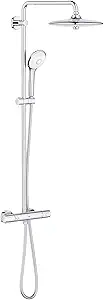
Plumber’s Recommendation: Grohe Thermostatic System
When clients ask for a top-of-the-line, reliable system, I often recommend Grohe. Their German engineering is exceptional. This Grohtherm system features a true thermostatic valve, separate push-button controls for volume, and a sleek, modern trim plate. It’s an investment, but one that pays off in safety and performance for years.
Check Price on AmazonThermostatic Shower Buying Guide: Everything to Consider Before You Purchase
The thermostatic valve market spans an enormous price range—from basic residential units at $150 to elaborate designer systems at $3,000 or more. The difference in price reflects real differences in materials, engineering precision, finish quality, and long-term reliability. Here is a framework for making the right choice at the right budget level.
Budget Tier ($150–$400): Entry-Level Thermostatic
At this price point, you’ll find thermostatic valves from mid-range brands as well as the entry-level thermostatic offerings from major manufacturers like Moen and Delta. These valves typically feature a brass valve body with a thermostatic cartridge accurate to within ±3–4°F, chrome or brushed nickel trim in a limited range of styles, and basic separate temperature and volume controls. They are a significant upgrade over pressure-balancing valves for safety and convenience and represent good value for standard residential bathrooms. The main compromises at this price point are finish durability (lower-tier PVD coatings can dull or spot over time), cartridge longevity in hard-water areas, and limited style options.
Mid-Range Tier ($400–$900): The Performance Sweet Spot
This is where the thermostatic shower market offers the best combination of genuine engineering quality and value. At this price point you’ll find Kohler’s Rite-Temp and Kohler Anthem systems, Moen’s ExactTemp line, and entry-level offerings from Hansgrohe. Valves in this range typically deliver temperature accuracy of ±2°F, offer a broader selection of trim finishes (including matte black and polished nickel), and are built to last 15–20+ years with normal cartridge maintenance. For the majority of homeowners undertaking a bathroom renovation, this tier provides everything a thermostatic shower should deliver without the premium price of luxury brands.
Premium Tier ($900–$3,000+): Luxury Engineering
The premium tier is dominated by European brands—Grohe, Hansgrohe/Axor, Dornbracht, and Vola—alongside the top-of-line domestic offerings from Kohler’s Kallista division and American Standard’s Town Square series. At this level, you are paying for exceptional fit and finish (heavy PVD coatings that resist scratching and tarnishing for decades, precise tolerances on all components), temperature accuracy consistently within ±1°F, multi-function valve bodies that can manage four or more outlets simultaneously, and in some cases digital thermostatic control (with touchscreen interfaces and memory presets for multiple users). Hansgrohe’s iBox with ShowerSelect trim and Grohe’s Grohtherm SmartControl are excellent representatives of what premium thermostatic engineering delivers.
Key Purchasing Checklist
- Confirm your rough-in type: Does the valve install in a standard stud wall (most common), a solid concrete wall, or a tile-backer-only wall? Some valve systems have specific depth requirements that may not be compatible with all wall constructions.
- Check your water pressure: Thermostatic valves perform best with balanced hot and cold supply pressures between 30–80 PSI. Very low supply pressure (under 20 PSI) can cause erratic thermostatic performance.
- Check your water heater temperature: For the thermostatic valve to function, your water heater must be set to at least 10–15°F above your desired shower temperature. A water heater set to 115°F cannot reliably deliver a 110°F shower temperature through a thermostatic valve because there is insufficient temperature differential for the valve to operate in its control range. The recommended water heater setting is 120–140°F (the valve’s limit stop prevents scalding at the showerhead).
- Verify outlet compatibility: If you’re planning a multi-outlet shower, calculate the total GPM demand of all outlets operating simultaneously and confirm this is within the capacity of your thermostatic valve and home water supply.
- Check warranty terms carefully: Some manufacturers offer limited lifetime warranties that cover the valve body but only 1–5 year coverage on the cartridge. Others provide comprehensive lifetime coverage on all components. Warranty terms are a direct indicator of how confident the manufacturer is in their product’s longevity.
- Consider parts availability: A beautiful thermostatic shower from an obscure brand that subsequently exits the U.S. market can leave you unable to source replacement cartridges in 10 years. Stick with brands that have strong U.S. distribution networks and a long track record.
Thermostatic Shower Maintenance: Keep Your Valve Performing Like New
A thermostatic shower valve is one of the most mechanically precise components in your home’s plumbing system. Like any precision mechanism, it rewards regular, simple maintenance with dramatically extended service life and reliable performance. Neglect it, and what should last 15–20 years may fail in five. Here is a practical maintenance schedule.
Monthly: Clean the Showerhead and Filter
Lime scale and mineral deposits that clog the showerhead are the same deposits that eventually attack the cartridge. Soaking the showerhead in white vinegar monthly (or weekly in very hard water areas) dissolves scale before it can enter the valve. If your showerhead has a removable flow restrictor or filter screen, clean this at the same time.
Annually: Inspect and Lubricate
Once a year, remove the temperature handle and inspect the stem. If the stem feels stiff or shows visible scale deposits, apply a small amount of plumber’s silicone grease to the stem and work it in by rotating the stem through its full range several times. This prevents the accelerated wear that occurs when a dry, scale-coated stem is forced against the limit stop each time someone adjusts the temperature. While the handle is off, also inspect the O-ring on the stem for any cracking or deformation and replace it if necessary.
Every 3–5 Years in Hard Water Areas: Descale or Replace the Cartridge
In hard water regions (water hardness above 150 mg/L or 8 grains per gallon), plan for a cartridge service every 3–5 years even if the shower appears to be functioning normally. Remove the cartridge, soak it in a 50/50 solution of white vinegar and water for 4–6 hours to dissolve internal scale, rinse thoroughly, and reinstall with fresh O-rings and plumber’s grease. If the wax element is damaged or the piston is noticeably worn, replace the cartridge entirely. This proactive maintenance schedule is far less disruptive and expensive than waiting for a failure.
Consider a Water Softener or Inline Filter
If you’re repeatedly replacing cartridges due to scale, the long-term solution is to address water hardness at the source. A whole-house water softener is the most comprehensive solution and protects all plumbing fixtures and appliances in the home. For a more targeted approach, an inline shower filter (installed on the shower supply line behind the wall, or in-line with the shower arm) can significantly reduce the mineral load reaching the cartridge. Look for filters specifically rated for scale reduction (calcium and magnesium), as basic sediment filters do not address dissolved mineral hardness.
Thermostatic Showers and Your Water Heater: Getting the Relationship Right
The thermostatic shower valve and your water heater are interdependent systems, and understanding how they interact is essential for optimal performance. Several common thermostatic shower problems are actually water heater problems in disguise.
The Recommended Water Heater Temperature Setting
The U.S. Department of Energy recommends setting your water heater to 120°F as a balance between energy efficiency and safety. However, if your thermostatic shower is set to 108°F (a common comfortable shower temperature), that leaves only 12°F of headroom—the valve must be almost fully open to the hot supply to reach 108°F. This means any drop in hot water temperature arriving at the valve (due to long pipe runs, simultaneous hot water demand elsewhere in the house, or a water heater that is undersized or poorly maintained) can cause the shower to run cool because the valve has no additional hot water to draw on.
For thermostatic showers to perform optimally, a water heater setting of 130–140°F is recommended. At these temperatures, the valve is operating in the middle of its control range (blending hot and cold in roughly equal proportions at a typical 108–112°F shower temperature), giving it plenty of adjustment capacity in both directions. The anti-scald protection function of the valve’s limit stop ensures the water at the showerhead cannot exceed 120°F regardless of the water heater setting.
Important: Legionella Risk at Low Water Heater Temperatures
Water heater temperatures below 120°F can allow Legionella bacteria to proliferate in the tank and hot water lines. This is a genuine public health concern, not just a plumbing performance issue. Setting your water heater to 130°F or above effectively eliminates the Legionella growth risk and, in conjunction with your thermostatic valve’s limit stop, still delivers safe shower temperatures. If your household includes immunocompromised individuals, the 140°F setting is often recommended by healthcare authorities.
Tankless Water Heaters and Thermostatic Showers
Tankless (on-demand) water heaters present a unique challenge for thermostatic shower valves. Unlike tank water heaters that maintain a constant supply temperature, tankless units have a brief “cold water sandwich” phenomenon at startup—a burst of cold water passes through the heater before the heating element fully activates and the outgoing temperature stabilizes. This transient cold pulse can cause a thermostatic shower valve to momentarily open fully to the hot supply and then surge hot when the tankless heater reaches full temperature.
Modern premium thermostatic cartridges with rapid-response wax elements handle this transition well, but budget cartridges can produce a noticeable temperature lurch at the start of a shower. If you have a tankless water heater and experience temperature swings at the start of a shower, this is the most likely cause. Solutions include upgrading to a premium thermostatic cartridge with a faster-responding element, installing a small buffer tank (a mini storage tank downstream of the tankless unit to smooth out temperature variations), or simply allowing the shower to run for 15–20 seconds before stepping in.
Frequently Asked Questions (FAQs)
How to fit a thermostatic shower?
Fitting a complete thermostatic shower system from scratch is a major plumbing job that involves opening the wall, cutting and soldering pipes, and ensuring the valve is installed at the correct depth. While the replacement of a cartridge is DIY-friendly, I strongly recommend hiring a licensed plumber for a new installation. An incorrect installation can lead to major leaks inside your walls, incorrect temperatures, and other serious issues.
Thermostatic vs. Pressure-Balancing: Is it worth the extra cost?
In my opinion, yes. While a pressure-balancing valve provides good anti-scald protection, a thermostatic valve provides a superior comfort experience. It maintains the actual temperature, not just the pressure ratio. This means your shower temperature won’t dip if your water heater temperature fluctuates, giving you a more consistent and luxurious experience every time.
How often does a thermostatic cartridge need to be replaced?
This depends almost entirely on your water quality. In areas with soft water, a quality cartridge can last 10–15 years or more. In areas with very hard water, mineral buildup can cause a cartridge to fail in as little as 3–5 years. If you notice the temperature starting to drift or the handle becoming stiff, it’s likely time for a replacement.
Can a thermostatic shower be used with a combination boiler (combi boiler)?
Yes, and thermostatic showers are actually very popular in the UK and Europe where combi boilers are the dominant hot water system. However, there are some important compatibility considerations. Combi boilers typically deliver hot water at mains pressure, which can be quite high (3–10 bar in some systems), and some thermostatic valves have a maximum working pressure rating that must not be exceeded. Additionally, combi boilers can exhibit a similar “cold start” delay to tankless water heaters—a brief period before hot water reaches full temperature. Look for a thermostatic cartridge rated for high-pressure operation and with a fast-response thermostatic element if pairing with a combi boiler.
Why does my thermostatic shower take so long to get hot?
A thermostatic shower that takes a long time to reach temperature is almost always a pipe run issue rather than a valve issue. Hot water must travel from your water heater to the shower valve before the shower can reach temperature. If the water heater is located far from the shower, or if the hot water pipes are large-diameter (holding more cold water that must be purged first), the wait time can be 1–3 minutes or more. Solutions include: installing a hot water recirculation system (a small pump that keeps hot water circulating through the pipes, eliminating the wait entirely), insulating the hot water supply pipes to reduce heat loss and speed delivery, or installing a point-of-use small electric water heater near the shower. Note that a thermostatic valve cannot compensate for cold water in the supply line—it can only mix what it receives.
Is a thermostatic shower good for low water pressure systems?
Thermostatic valves do require a minimum operating pressure—typically 0.5–1.0 bar (7–15 PSI) at the valve inlet for residential products. Below this minimum pressure, the valve may not function correctly and the thermostatic element may not respond properly. If your home has a gravity-fed low-pressure system (common in older homes with a header tank in the attic), a standard high-pressure thermostatic valve may not be the right choice. Instead, look for thermostatic valves specifically rated and designed for low-pressure systems (some manufacturers offer specific “LP” or low-pressure rated variants), or consider installing a shower pump to boost pressure at the valve inlet. Mixing low-pressure and high-pressure (mains) supply lines at a thermostatic valve is also problematic and should be avoided.
Can I convert my existing shower to thermostatic without opening the wall?
In most cases, no—replacing a standard valve with a thermostatic valve requires accessing and replacing the valve body in the wall. However, there is one exception: some manufacturers offer retrofit thermostatic trim kits that can replace the handle and cartridge of an existing pressure-balancing valve body in certain compatible product lines without replacing the valve body itself. Delta’s MultiChoice system, for example, is specifically designed for this type of upgrade path. Check with the manufacturer of your existing valve to see whether a thermostatic cartridge upgrade is available for your current rough-in valve body. If you’re replacing a completely different brand’s valve, a new rough-in installation is almost certainly required.
What temperature should I set my thermostatic shower to?
Personal preference varies, but the most commonly reported comfortable shower temperature range is 104–109°F (40–43°C). The World Health Organization and most dermatological guidelines recommend keeping shower temperatures below 112°F (44°C) to avoid stripping the skin’s natural oils and protective barrier. For households with children, elderly family members, or individuals with reduced skin sensation, setting the maximum temperature stop at 100–105°F provides a margin of safety while still delivering a comfortable, warm shower. For the plumbing system, the limit stop should never be set above 120°F (49°C)—the temperature at which serious scalding can occur within seconds.
My thermostatic shower only runs cold, even on the hottest setting. What’s wrong?
This is one of the most common thermostatic shower calls I receive. The first thing to check is whether the hot water supply isolation valve behind the valve body is fully open—it’s surprisingly common for these to be partially closed after a previous service visit. Access the valve by removing the trim plate and check that both the hot and cold isolation valves are fully open (usually quarter-turn ball valves with the handle parallel to the pipe). If the isolation valves are open, the next most likely culprit is a completely failed thermostatic cartridge (wax element has ruptured or separated, leaving the cold port permanently open) or completely blocked hot water inlet filter. Follow the cartridge replacement procedure described earlier in this guide to restore normal operation.
How do I know if I need a licensed plumber or can I DIY?
As a general rule: cartridge replacement, handle adjustment, limit stop calibration, and filter screen cleaning are all appropriate DIY tasks for a homeowner with basic plumbing comfort. New valve installation, modifications to supply piping, and any work that requires opening walls in a way that could affect the structure or waterproofing are best left to a licensed plumber. In most U.S. jurisdictions, any work beyond like-for-like cartridge replacement technically requires a plumbing permit if it involves modifying the pipe system. When in doubt, a consultation call with a licensed plumber (often free or low-cost) can clarify whether your specific situation is safely within DIY territory or not.
Thermostatic Shower Glossary: Key Terms Explained
Navigating product specifications, installation instructions, and repair guides is easier when you know the terminology. Here’s a plain-language glossary of the most important terms in the thermostatic shower world.
- Anti-Scald Protection: A feature that prevents the shower water from exceeding a maximum safe temperature (typically 120°F), either through a mechanical limit stop on the handle or through the thermostatic valve’s built-in maximum temperature setting.
- Bonnet Nut: A large threaded nut that retains the cartridge within the valve body in some valve designs. Removed with pliers or a wrench to access the cartridge.
- Cartridge: The replaceable internal component of a thermostatic shower valve that contains the temperature-sensing wax element, piston, and all internal seals. The primary service item in a thermostatic shower.
- DIF (Day/Night Temperature Difference): Not typically used in shower contexts, but worth knowing as it appears in some horticultural crossover discussions. In plumbing contexts, “differential” refers to the temperature difference between supply and desired output.
- Diverter: A valve component that routes water from the thermostatic valve body to one or more outlets (showerhead, hand shower, body jets).
- Escutcheon: The decorative plate mounted on the wall that covers the valve body rough-in and frames the handles and controls. Also called a trim plate.
- GFCI (Ground Fault Circuit Interrupter): An electrical safety device required near water in building codes. Relevant if your shower system includes any electrical components such as digital controls or heated elements.
- GPM (Gallons Per Minute): The flow rate measurement for showerheads and valves. U.S. federal standards limit residential showerheads to 2.5 GPM; many states (California, Colorado, New York) have more stringent limits of 1.8–2.0 GPM.
- Hard Water: Water with a high dissolved mineral content (primarily calcium and magnesium carbonate). Hard water deposits scale inside thermostatic cartridges, accelerating wear. Hardness above 150 mg/L (8 grains per gallon) is considered problematic for thermostatic valves without regular maintenance.
- IPC / UPC: International Plumbing Code / Uniform Plumbing Code—the two dominant model plumbing codes used in U.S. jurisdictions. Both require anti-scald protection in new shower installations; most jurisdictions accept either a pressure-balancing valve (ASSE 1016) or thermostatic valve (ASSE 1070) to satisfy this requirement.
- Isolation Valve: A small shut-off valve located on the hot and cold supply lines directly behind the thermostatic valve body. Allows the water supply to the valve to be shut off for service without cutting off water to the rest of the house.
- Limit Stop: A mechanical stop that limits how far the temperature handle can be turned toward the hot position, setting a maximum water temperature at the outlet. Adjustable by the installer or homeowner to comply with safe temperature limits.
- O-Ring: A circular rubber seal used throughout the valve cartridge and body to prevent water leakage. O-rings are wear items that should be replaced when the cartridge is serviced.
- PVD (Physical Vapor Deposition): A high-quality finish application process that bonds finish materials (chrome, nickel, gold, black) to the brass substrate at a molecular level. PVD finishes are significantly more durable and tarnish-resistant than electroplated finishes.
- Rough-In: The phase of plumbing installation where supply lines are run and the valve body is installed in the wall, before the wall surface is closed and finished. The rough-in depth determines whether trim plates and handles will fit correctly.
- Wax Element: The temperature-sensing core of the thermostatic cartridge—a sealed capsule containing specially formulated wax that expands and contracts with water temperature changes, driving the piston that controls the hot/cold mix.
Ready to Upgrade?
Now that you understand how these systems work, you can make an informed decision. For our top recommendations and in-depth reviews, be sure to check out our complete guide to the best thermostatic shower systems.





 Home
Home
 Info
Info
 Compare
 Reviews
 Shop
Shop