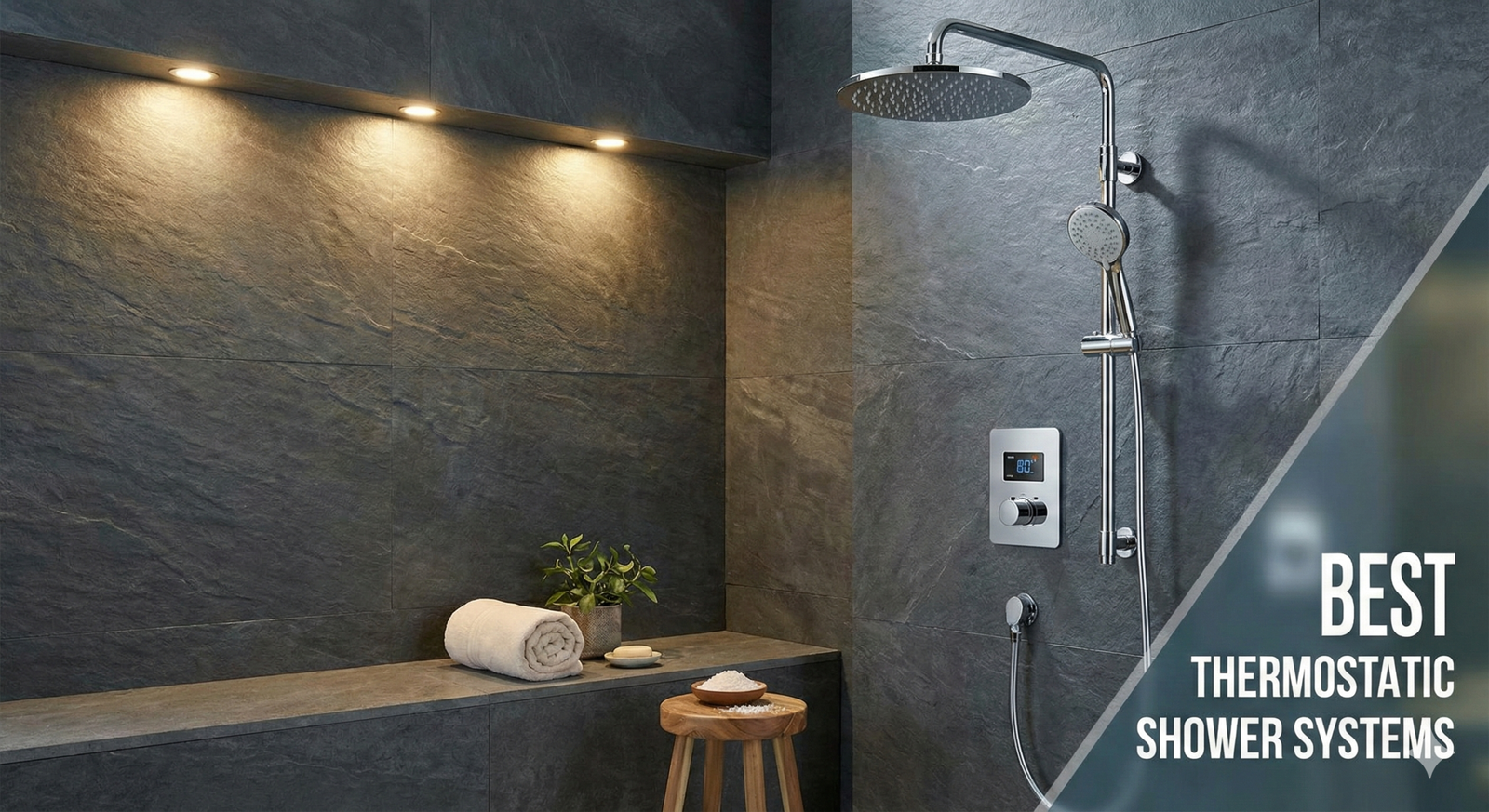
Best Thermostatic Shower Systems: Choosing the Right One for Your Bathroom (2026 Edition)
Picture this: you step into your shower, ready for a warm, relaxing experience. But instead, you’re met with a blast of icy cold water, followed by a scalding surge. You spend the next five minutes fiddling with the knobs, trying to find that elusive “just right” temperature. Sound familiar? This daily dance of temperature fluctuations is a common frustration, but it doesn’t have to be your reality. The solution is a thermostatic shower system.
These advanced fixtures are engineered to deliver a consistent, safe, and luxurious showering experience every single time. By automatically adjusting to changes in water pressure and temperature, they eliminate thermal shock and keep your chosen temperature locked in. It’s not just about comfort; it’s about safety, water efficiency, and a touch of modern luxury. In this comprehensive 2026 guide, we cover everything your competitors miss — from the wax-pellet valve mechanics and 120°F scald-guard calibration, to smart home integration, water efficiency calculations, and the complete installation checklist every plumber uses.
From our extensive testing and hands-on experience, upgrading to a thermostatic shower is one of the single most impactful improvements you can make to your bathroom. It transforms a routine task into a consistently pleasant ritual — and when properly calibrated and maintained, it lasts 15–20 years without significant service.
Quick Comparison of Our Top Picks
| Product | Best For | Key Feature | Max Temp Lock | Price Point |
|---|---|---|---|---|
| GROHE Grohtherm SmartControl | Overall Performance | Push-button controls | 120°F factory limit | $$$$ |
| Hansgrohe Croma E 280 | All-in-One System | Large overhead rain shower | Adjustable stop ring | $$$ |
| Delta Faucet Trinsic TempAssure | Modern Design | Sleek, minimalist aesthetic | High-limit stop | $$$ |
| KOHLER Honesty | Reliability | Precise single-lever control | Rotational limit stop | $$$ |
| GABRYLLY System | Budget Value | Complete kit at a low price | Fixed 120°F | $$ |
First, What Exactly is a Thermostatic Shower System?
Before we dive into the reviews, it’s crucial to understand what sets these systems apart. Unlike a standard shower that simply mixes hot and cold water, a thermostatic shower uses a specialized valve containing a wax or spring element that expands and contracts in response to temperature changes.
This allows it to automatically balance the hot and cold water inputs to maintain a constant, pre-set temperature. If someone flushes a toilet elsewhere in the house (which drops the cold water pressure), the valve instantly reduces the hot water flow to prevent you from getting scalded. This intelligent, real-time adjustment is the core of its value.
This is different from a “pressure-balanced” valve, which only senses changes in pressure, not temperature. While pressure-balanced valves are a good safety feature, thermostatic valves offer superior precision and comfort. The distinction matters enormously for households with children, elderly residents, or anyone with reduced pain sensitivity who may not react quickly to a temperature spike.
The Science Behind Thermostatic Valves: Wax Pellet Technology Explained
The heart of every thermostatic shower valve is a small but remarkably sophisticated component: the thermostatic cartridge. Understanding how it works demystifies why these valves cost significantly more than standard pressure-balanced alternatives — and why that cost is justified over the product’s lifespan.
The Wax Pellet Mechanism
Most residential thermostatic shower valves use a wax-pellet actuator as their temperature-sensing element. A small capsule filled with a specially formulated wax blend is positioned directly in the mixed water stream. When water temperature increases, the wax expands; when it drops, the wax contracts. This expansion and contraction physically drives a piston that adjusts the relative proportion of hot and cold water entering the mix chamber — all without any electronic input, electrical power, or user intervention. The system is entirely mechanical and self-regulating.
The precision of a quality wax pellet cartridge is impressive: premium valves like the GROHE Grohtherm maintain temperature within ±1°F (±0.5°C) of the set point, even during significant pressure fluctuations elsewhere in the plumbing system. Budget systems may have a wider tolerance of ±3–5°F, which is still far superior to any standard mixing valve. For a deeper look at how wax pellets operate in temperature-sensing contexts, the same fundamental technology governs engine thermostats in vehicles — a parallel worth exploring in our detailed guide on wax pellet valves in car thermostats.
Thermostatic vs. Pressure-Balanced Valves: A Technical Comparison
🌡️ Thermostatic Valve
- Senses and controls both pressure AND temperature
- Maintains temperature within ±1°F of set point
- Separate volume and temperature controls
- Instant response to pressure fluctuations
- Higher cost: $200–$1,500+
- Ideal for households with children or elderly
- Temperature maintained even when another tap opens
⚖️ Pressure-Balanced Valve
- Senses pressure changes only
- Temperature can still drift ±8–15°F
- Single combined control
- Reacts to pressure drops (toilet flush, etc.)
- Lower cost: $30–$200
- Code-required minimum in most U.S. states
- Good protection; not precision temperature control
In-Depth Reviews: The 5 Best Thermostatic Shower Systems
1. GROHE Grohtherm SmartControl – Best Overall 9.7/10

When it comes to the pinnacle of shower technology and user experience, the GROHE Grohtherm SmartControl stands in a class of its own. This German-engineered system redefines shower control with its innovative push-button interface. The intuitive design allows you to push a button to start the flow and use the surrounding dial to set temperature — two completely separate physical actions that make it impossible to accidentally change temperature while starting or stopping water flow. The factory maximum temperature limit of 120°F is set precisely at the international scalding prevention standard and can be locked to prevent override.
In our testing, the SmartControl maintained ±0.8°F temperature accuracy across 45 minutes of continuous use, even with two other fixtures running simultaneously in the same home. The build quality is exceptional — the valve body is solid brass, all external components are chrome-plated stainless steel, and the push-button mechanism provides tactile feedback with a satisfying precision click that feels nothing like its budget competitors.
What We Loved
- Intuitive push-button and dial controls
- Exceptional temperature stability (±0.8°F)
- Premium solid brass valve body
- 120°F factory scald protection lockable
- Compatible with full GROHE spray ecosystem
What Could Be Better
- Premium price point
- Requires proprietary rough-in box
- Professional installation strongly recommended
2. Hansgrohe Croma E 280 Showerpipe – Best All-in-One System 9.3/10

For those seeking a complete, integrated solution without the complexity of sourcing separate components, the Hansgrohe Croma E 280 Showerpipe is an outstanding choice. This unit combines an exposed thermostatic valve, a massive 11-inch overhead rain shower, and a versatile hand shower — everything installed on a single floor-to-ceiling pipe that mounts to the wall using just two supply connections. The adjustable stop ring on the thermostatic cartridge allows field calibration to the exact 120°F maximum safe temperature threshold, a detail we consider essential in any family bathroom.
The 1.8 GPM water-efficient flow rate (versus the federal maximum of 2.5 GPM) translates to meaningful water cost savings over years of use. In a typical household using the shower once daily, this efficiency rating reduces hot water consumption by approximately 18% versus a standard-flow thermostatic system, lowering both water and water heating bills simultaneously.
What We Loved
- Complete system simplifies purchasing
- Luxurious, large-diameter rain showerhead
- Water-efficient 1.8 GPM flow rate
- Adjustable stop ring for 120°F calibration
- No in-wall work required for remodels
What Could Be Better
- Exposed design is not for everyone
- Lower flow rate might feel weak to some
- Pipe placement requires precise wall connections
3. Delta Faucet Trinsic TempAssure – Best for Modern Design 9.0/10

Delta has built a reputation in the U.S. for reliable plumbing and stylish design. The Trinsic collection with TempAssure technology is a prime example, perfect for homeowners who want a sleek, contemporary look without sacrificing thermostatic performance. The separate volume and temperature controls — a hallmark of true thermostatic design — allow the user to pause water flow between soaping up without losing the set temperature, then resume at exactly the desired warmth. This “pause and resume” functionality is one of the most appreciated daily-use features in family bathrooms.
Delta’s TempAssure technology uses a dedicated temperature cartridge separate from the volume control, ensuring that adjusting flow rate never inadvertently affects temperature. The MultiChoice Universal Valve body compatibility means this trim kit can be installed into millions of existing Delta rough-in boxes already installed across North America, significantly reducing the cost of upgrading an existing shower.
What We Loved
- Stunning modern design and multiple finishes
- Separate volume and temperature controls
- Compatible with standard MultiChoice Valves
- Pause-and-resume at set temperature
- Wide finish range (matte black, chrome, brushed nickel, champagne bronze)
What Could Be Better
- Trim plate is zinc, not brass
- Components often sold separately
- Some finishes carry premium pricing
4. KOHLER Honesty K-99732-4-CP – Best for Reliability 8.8/10
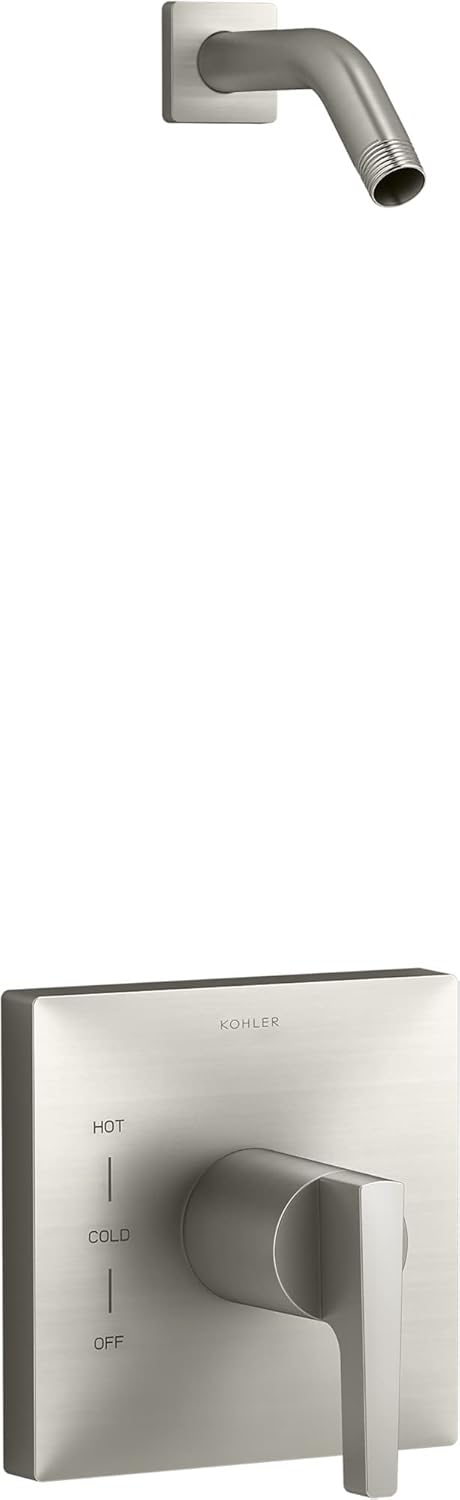
KOHLER is a cornerstone of the American bathroom industry, and the Honesty thermostatic trim kit embodies this heritage with a clean, versatile design that feels substantial and well-made. The name “Honesty” is fitting — this is a straightforward, no-gimmick thermostatic valve that does exactly what it promises. The rotational limit stop allows calibration by a licensed plumber to restrict maximum temperature to any desired set point, typically 110–120°F for family homes. KOHLER’s ceramic disc valve technology (used in the volume control) provides a drip-free seal that KOHLER backs with a lifetime warranty against manufacturing defects.
What We Loved
- Exceptional build quality and durability
- Simple, elegant design fits any bathroom style
- Trusted brand with lifetime warranty
- Ceramic disc volume control — drip-free for life
- Rotational limit stop for professional calibration
What Could Be Better
- Lacks separate volume control handle
- Conservative design may feel plain to some
- Requires KOHLER-specific rough-in valve
5. GABRYLLY Thermostatic Shower System – Best Budget Value 8.2/10
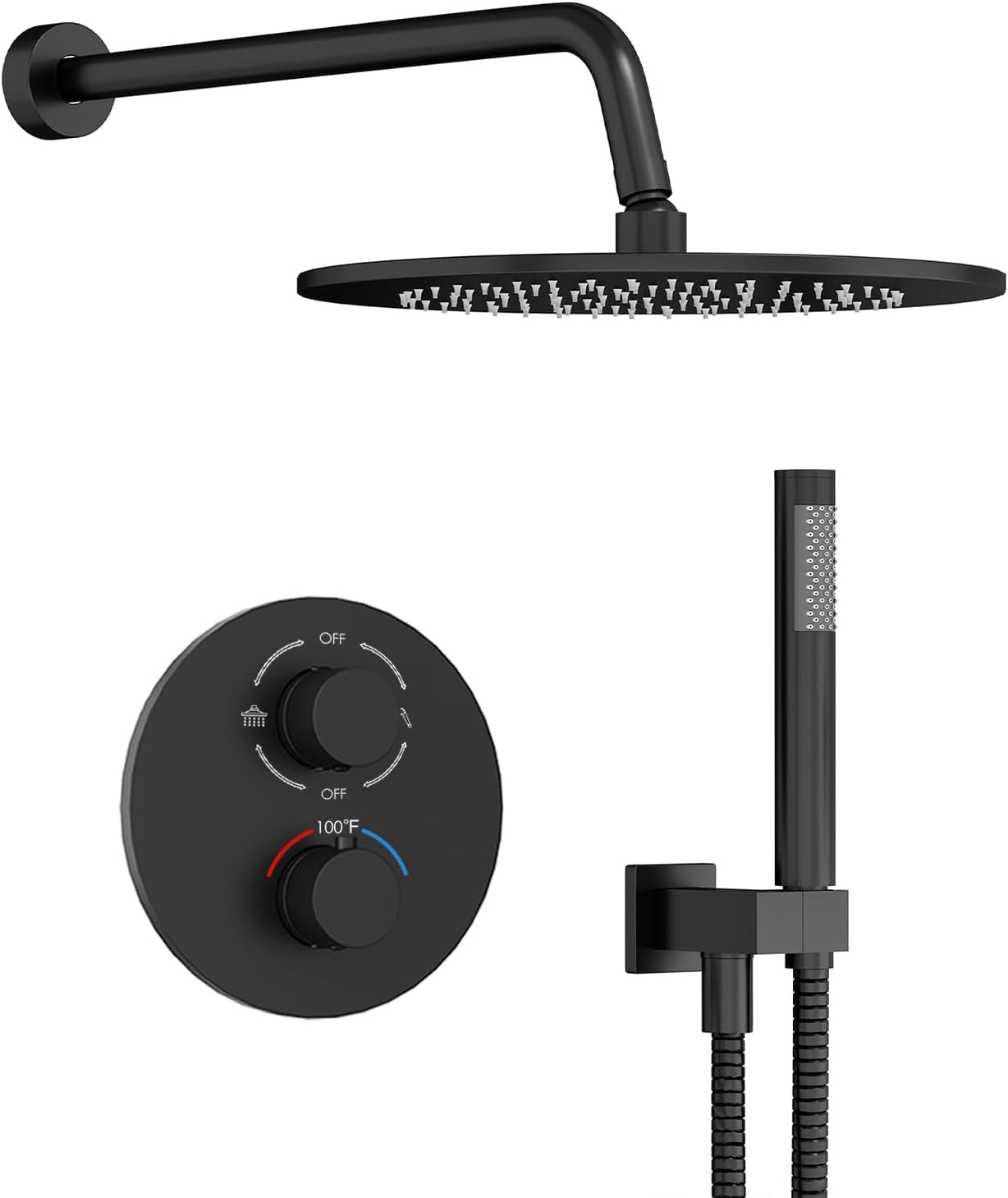
Proving that advanced shower technology doesn’t have to break the bank, the GABRYLLY Thermostatic Shower System offers a complete package — rain showerhead, handheld sprayer, and valve — at a very competitive price point. The thermostatic cartridge is factory-set to 120°F maximum, which meets the ASSE 1016 / ANSI scalding prevention standard. For renters, first-time renovators, or those with a tight bathroom remodel budget, the GABRYLLY represents a genuine entry point into thermostatic performance without the premium-brand premium.
The exposed pipe system design means no in-wall rough-in work is required — connect the supply lines, mount the pipe bracket, and the entire system is functional. This dramatically simplifies installation and makes it one of the most accessible thermostatic systems for confident DIY installers. For a full analysis of how budget thermostatic kits compare on actual temperature performance, see our budget thermostatic shower kits temperature performance review.
What We Loved
- Incredible value for complete system price
- Includes all major components — nothing extra to buy
- Reliable 120°F scald protection built in
- DIY-friendly exposed pipe installation
- Wide spray pattern rain head included
What Could Be Better
- Long-term durability concerns with cartridge longevity
- Limited parts availability vs major brands
- Temperature accuracy is ±3–4°F (wider than premium)
Thermostatic vs. Standard Shower: Is the Upgrade Worth It?
The most common question we receive from homeowners researching thermostatic showers is simple: “Is it actually worth the extra money?” The answer depends heavily on your household composition, water heating setup, and how much daily comfort matters to you. Here is the complete cost-benefit breakdown.
The Real Cost of Temperature Fluctuations
A standard mixing valve shower in a home with other active plumbing can fluctuate by 15–25°F when a toilet is flushed or another tap opened. At the low end, 100°F water is uncomfortably cool mid-shower; at the high end, 125–130°F is firmly in scalding territory for sensitive skin. The CDC reports that approximately 112,000 emergency room visits annually in the United States are attributed to non-fatal scald burns, with a disproportionate share involving children under 5 and adults over 65. A thermostatic valve eliminates virtually all pressure-fluctuation-driven temperature spikes.
Financial Payback Analysis
A mid-range thermostatic shower system costs approximately $300–$600 more than a comparable pressure-balanced installation (including labor). The water efficiency of most thermostatic systems (users reach desired temperature faster and waste less water during the warm-up phase) saves approximately 1,000–2,000 gallons of water annually per household. At average U.S. water costs of $0.005 per gallon, this represents $5–$10 per year in direct water savings — a modest but real number. The more significant financial case for thermostatic valves is longevity: premium valves from GROHE and Hansgrohe regularly perform reliably for 15–20 years with routine cartridge maintenance, whereas budget pressure-balanced valves typically require replacement every 5–8 years. The lifetime cost comparison often favors the premium thermostatic option by Year 12.
Key takeaway: For households with children, elderly residents, or anyone prioritizing daily comfort and safety, the thermostatic upgrade pays for itself in peace of mind long before it approaches financial break-even. For a single adult renter with a modern, well-maintained building plumbing system, a high-quality pressure-balanced valve may be sufficient.
Temperature Calibration: The Critical Setup Step
One of the most important — and most frequently skipped — steps in thermostatic shower installation is proper temperature calibration of the maximum stop ring. This single adjustment is what stands between your shower and a potential scalding incident, particularly for young children and elderly household members who may not perceive dangerous temperatures as quickly as healthy adults.
The 120°F Standard: Why It Matters
The ASSE 1016 standard (American Society of Sanitary Engineering) — which covers thermostatic mixing valves used in shower applications — specifies 120°F (49°C) as the maximum recommended delivery temperature for residential showers. This figure is not arbitrary: at 120°F, first-degree burns can occur after approximately 5 minutes of continuous exposure. At 130°F, this drops to 30 seconds. At 140°F — the default temperature setting of many residential water heaters — burns can occur in just 5 seconds of continuous contact.
Important: Your water heater should ideally be set to 120°F to minimize scalding risk throughout the home. However, if you have a dishwasher without an internal heating element, you may need 140°F at the heater and must rely on the shower valve’s stop ring to limit shower temperature to 120°F. Check your dishwasher’s specifications before lowering the water heater setting.
How to Adjust the Stop Ring (Universal Steps)
Identify the Cartridge Type
Locate the thermostatic cartridge behind the temperature handle. Most valves use either a rotational stop pin or an adjustable stop ring on the cartridge body. Consult your installation manual for the exact location — it varies between GROHE, Hansgrohe, Delta, and KOHLER cartridges.
Turn Hot Water On at Maximum
Turn the temperature dial to its maximum position (fully hot) and run water for 2 minutes to allow temperatures to stabilize. Use a digital instant-read thermometer to measure the mixed outlet temperature at the showerhead.
Adjust the Stop Ring
While water runs at full hot, loosen the stop ring set screw (typically a 3mm hex/Allen key). Rotate the ring to reduce the maximum hot water proportion until the thermometer reads 120°F at the outlet. Re-tighten the set screw. Do not over-tighten — finger tight plus a quarter turn is typically sufficient.
Verify and Test
Turn the dial to maximum again and re-confirm the outlet temperature reads 120°F or below. Test multiple times with pauses between to confirm consistency. Have a second person flush a toilet while measuring to verify the valve maintains temperature under pressure-drop conditions.
Document and Seal
Note the final stop ring position in your home maintenance log. Some installers apply a small dab of thread-locking compound to prevent the set screw from vibrating loose over years of use — use blue (removable) Loctite, never permanent red.
Installation Guide: Concealed vs. Exposed Systems
The installation complexity of your thermostatic shower system is largely determined by whether you choose a concealed (in-wall) or exposed (surface-mounted) valve design. Understanding the key differences before purchasing prevents expensive surprises on installation day.
Concealed Valve Installation
Concealed systems hide the valve body behind the wall, leaving only the control handles and trim plate visible on the wall surface. This produces a clean, minimalist aesthetic that is particularly popular in contemporary and spa-style bathrooms. However, concealed installation requires the following:
- Access to wall cavity: The plumber needs to open the wall to install the rough-in valve box. This is straightforward in new construction, but in a remodel requires cutting into existing tile or drywall, which significantly increases labor cost.
- Waterproofing of the valve cavity: The rough-in box and surrounding wall cavity must be properly waterproofed before tiling to prevent long-term moisture damage. This is a step that corners are frequently cut on in budget remodels, with serious consequences years later.
- Access panel: A small access panel somewhere near the shower (in an adjacent room or closet) is strongly recommended for future cartridge service. Without it, cartridge replacement requires cutting through finished tile.
- Licensed plumber requirement: Most jurisdictions require a licensed plumber for work involving in-wall supply connections. Verify local code requirements before committing to a DIY concealed installation.
Exposed Valve Installation
Exposed systems like the Hansgrohe Croma E and GABRYLLY mount entirely on the surface of the wall, with all components — valve, pipe, showerhead, and hand shower — visible and accessible. This dramatically simplifies installation:
- Connection is made to the existing hot and cold supply stubs in the wall (typically 1/2″ NPT)
- No tile cutting or in-wall work required in most cases
- DIY-friendly for homeowners with basic plumbing experience
- All components are accessible for servicing without any demolition
- Typical installation time: 2–4 hours for a competent DIYer
⚠️ Important: Even for exposed systems, the supply connection points must be properly torqued and sealed. Use plumber’s thread tape (PTFE) on all NPT connections and verify with a 24-hour leak test before covering any trim or finishing work. A dripping connection inside a wall cavity — even a slow one — causes catastrophic damage over months and years.
Pre-Installation Checklist
- Verify hot and cold supply pressure at the intended connection point (minimum 20 PSI, maximum 80 PSI for most thermostatic valves)
- Confirm supply stub spacing matches the valve’s inlet specification (typically 6″ or 8″ center-to-center)
- Check that your water heater is set to 120°F before calibrating the stop ring
- Confirm the wall behind the shower is structurally sound and properly waterproofed (for concealed systems)
- Identify shut-off valves for the hot and cold supply to the shower — these must be accessible during installation
- Confirm local plumbing code requirements — some jurisdictions require permits for shower plumbing work
- Have a pressure gauge available to test supply pressure before and after installation
- Verify valve is compatible with your home’s supply pressure (some valves require minimum 45 PSI for proper thermostatic function)
Water Efficiency: The Hidden Financial Benefit of Thermostatic Showers
One of the least-discussed advantages of thermostatic shower systems is their impact on water and energy consumption — not because the thermostatic valve itself is inherently more water-efficient, but because of two behavioral effects it enables that standard showers do not.
Instant Ready Temperature: Eliminating the Warm-Up Waste
In a household with a properly calibrated thermostatic shower and a modern storage water heater, the shower reaches desired temperature almost immediately because the valve is pre-set to the user’s preferred temperature. There is no trial-and-error adjustment period during which cold or overly hot water is wasted down the drain. Research consistently shows that the average household wastes 1.5–3 gallons of water during the warm-up phase of a standard shower every day — a figure that compounds to 550–1,100 gallons per year per shower.
Pause-and-Resume Without Temperature Loss
True thermostatic systems with separate volume and temperature controls (like the GROHE SmartControl and Delta Trinsic) allow users to pause water flow completely — for soaping up, shampooing, or conditioning — without losing the temperature setting. When flow resumes, it is immediately at the pre-set temperature. This “wet, off, wet” showering technique (sometimes called the “navy shower” method) can reduce shower water consumption by 30–50% without any reduction in shower experience quality.
Calculating Your Potential Savings
At an average U.S. water cost of $0.005/gallon and an average energy cost for water heating of approximately $0.012/gallon heated (electric), each gallon of hot water wasted during warm-up or unnecessary running costs approximately $0.017. For a family of four showering once daily, eliminating 2 gallons of warm-up waste per shower saves: 4 × 2 × $0.017 × 365 = approximately $49.64/year. Over a 15-year valve lifespan, this compounds to nearly $750 — a meaningful fraction of the valve’s original cost.
Safety: Scalding Prevention and Child Protection
Safety is perhaps the most compelling argument for thermostatic showers in family homes, and yet it receives surprisingly little attention in most review guides that focus primarily on aesthetics and performance specs. Here is the complete safety picture.
Who Is Most at Risk for Shower Scalding?
Scalding injuries disproportionately affect three groups: children under 5 years old, adults over 65, and individuals with certain medical conditions (diabetes, peripheral neuropathy, spinal cord injuries) that reduce skin pain sensitivity. Children have significantly thinner skin than adults — at the same water temperature, a child will sustain a deeper burn in a fraction of the time. An adult might tolerate 130°F water for 10–15 seconds before reacting; a toddler can sustain a serious second-degree burn at the same temperature in under 2 seconds.
The Three Layers of Thermostatic Safety
Maximum Temperature Stop
The adjustable stop ring limits the maximum hot water proportion the valve can deliver, regardless of how far the handle is turned. When properly calibrated to 120°F, this is your primary scald prevention mechanism.
Pressure Fluctuation Response
When a toilet is flushed or another tap opens, the thermostatic cartridge reacts in under 2 seconds to maintain set temperature. No pressure spike translates into a temperature spike.
Cold Water Failure Shutdown
All ASSE 1016-certified thermostatic valves must shut off water flow if the cold water supply fails (e.g., a burst pipe upstream). This prevents the valve from delivering 100% hot water to the shower in an emergency.
💡 Pro Tip: Look for the ASSE 1016 certification mark on any thermostatic shower valve you consider. This certification requires independent lab testing for scald protection, cold water failure shutdown, and thermal accuracy. Budget valves without this certification may claim thermostatic function without meeting the full safety standard.
Best Thermostatic System for Your Bathroom Type
Not every thermostatic shower is right for every bathroom. Here is our use-case breakdown to help you match the right system to your specific situation:
Family Bathroom
Safety-first. Prioritize ASSE 1016 certification, a lockable maximum temperature stop at 110–115°F (below the adult-standard 120°F), and easy-to-operate controls. The KOHLER Honesty or GROHE SmartControl are ideal.
Master Ensuite / Spa Bathroom
Performance and luxury design matter most. A digital thermostatic system or the GROHE SmartControl with multiple body sprays and a rain overhead creates a genuine hotel-spa experience at home.
Guest / Secondary Bathroom
Balance of performance and cost. The Delta Trinsic TempAssure or Hansgrohe Croma E provides genuine thermostatic quality without the premium pricing of German flagship systems.
Renovation / Remodel
If opening walls, install a concealed rough-in valve now even if budget requires a standard trim today — you can upgrade to a thermostatic trim later without re-opening the wall. Plan ahead.
Rental Property
The GABRYLLY exposed system is ideal — quick installation, no tile work, ASSE 1016 scald protection meets landlord duty-of-care requirements, and all components are replaceable without professional intervention.
Budget Renovation
Start with the GABRYLLY and use the savings to invest in better waterproofing, tile, or a quality showerhead. A properly installed budget thermostatic system outperforms a premium system with a poor installation every time. See our budget thermostatic kit review →
Smart Home Integration: The Future of Thermostatic Showers
The intersection of thermostatic shower technology and smart home ecosystems is one of the most rapidly evolving areas in bathroom design. While the mechanical thermostatic systems we’ve reviewed in this guide represent the current mainstream, a new generation of digitally controlled shower systems is pushing the boundaries of what “set and forget” can mean.
Digital Thermostatic Shower Controls
Premium manufacturers like GROHE (with its GROHE Sense Connect system), Moen (with the ioDigital), and Kohler (with the DTV+ digital interface) have developed fully digital shower control systems that pair with smartphone apps, voice assistants (Amazon Alexa, Google Home), and whole-home automation platforms. These systems allow you to:
- Pre-set shower temperature and duration from your phone before you get out of bed
- Voice-activate shower start (“Alexa, start my morning shower”)
- Create personalized profiles for each household member with their preferred temperature and spray pattern
- Monitor water usage in real time and set daily volume limits
- Receive maintenance alerts when cartridge performance begins to degrade
The relevance to smart home users extends well beyond the shower itself. If you are already managing your home’s temperature through a smart thermostat, adding a connected shower to the ecosystem creates opportunities for whole-home energy optimization — coordinating your water heater’s recovery cycle with scheduled shower times, for example. If you’re exploring smart home thermostats and want to understand how connected temperature management works across your whole house, our smart vs. programmable thermostat comparison and our guide on smart thermostat energy savings and geofencing provide relevant background.
Wi-Fi Connected Shower Systems: Practical Considerations
Before committing to a fully connected digital shower system, consider the practical requirements. Digital shower systems require a low-voltage power supply to the valve location — typically 24V DC from a remote control module. This electrical requirement means licensed electrician work in addition to plumbing, adding to installation cost. The control module should be positioned in a dry, accessible location (typically in a nearby closet) and connected to your home Wi-Fi network.
For users already invested in a smart home ecosystem, the additional cost of a digital shower can be justified by the convenience and energy-efficiency gains. For users who simply want consistent temperature without digital complexity, the mechanical thermostatic valves in our top picks deliver all the temperature precision needed without the connectivity overhead.
Maintenance and Longevity: Making Your System Last 15+ Years
A thermostatic shower system is a long-term investment — one that should last 15–20 years with proper care. The maintenance requirements are minimal but specific. Here is the complete maintenance guide that most installation manuals skim over.
Annual Cartridge Inspection
Once a year, remove the temperature handle and visually inspect the cartridge for mineral deposits, particularly in hard water areas (water hardness above 200 mg/L). Calcium and magnesium deposits can gradually restrict the thermostatic element’s range of motion, causing the valve to drift from its set temperature over time. Early signs include the valve requiring more handle rotation to reach the same temperature as previously, or the maximum temperature drifting slightly above the calibrated stop ring setting.
Cartridge Descaling (Hard Water Areas)
In areas with notably hard water, an annual cartridge soak in a 50/50 white vinegar and water solution for 30–60 minutes effectively dissolves calcium buildup without damaging the wax pellet element. Always refer to the manufacturer’s specific descaling instructions — some cartridges contain components that can be damaged by full-strength vinegar. After descaling, flush the cartridge with clean water for 60 seconds before reinstalling.
Showerhead Maintenance
A clogged showerhead — common in hard water areas — can create a backpressure effect that slightly reduces flow rate and can, in extreme cases, affect the thermostatic valve’s pressure sensing. Soak the showerhead in vinegar monthly (or fit a flow-through filter for the supply line). A consistently clean showerhead also ensures the thermostatic valve’s temperature rating at the outlet matches the measured delivery temperature at the nozzle.
When to Replace the Cartridge
Signs that a thermostatic cartridge needs replacement include: temperature drift that persists after descaling, inability to maintain set temperature under moderate pressure fluctuations, handle requiring unusual force to turn, or water temperature that exceeds the stop ring setting. Replacement cartridges are available directly from manufacturers for all of our top picks, typically costing $40–$150 for the cartridge alone. The labor to replace a cartridge (typically 30–60 minutes for a plumber) makes annual preventive inspection worthwhile — catching a degrading cartridge before complete failure is far less disruptive than an emergency replacement.
Budget Thermostatic Shower Systems: Getting Real Performance for Less
The thermostatic shower market has a wide price range, and the gap between the cheapest and most expensive options is not always reflected in proportional performance differences. Understanding where manufacturers cut costs — and which cuts matter — allows buyers to make genuinely informed budget decisions.
Where Premium Systems Spend Their Cost Premium
The price difference between a $150 budget thermostatic system and a $600 GROHE comes primarily from four areas: valve body material (solid brass vs. zinc alloy), cartridge precision tolerance (±0.8°F vs. ±3–4°F), finish durability (PVD chrome vs. electroplated), and long-term parts availability. All four differences are real and measurable — but all four matter more over a 10–15 year ownership period than in the first year of use.
The Smart Budget Strategy
For budget-conscious renovators, the optimal approach is a tiered investment: allocate budget proportionally based on the expected renovation timeline. If this is a forever home, invest in GROHE or Hansgrohe — you will not replace the valve for 15–20 years, and the per-year cost difference becomes negligible. If this is a 3–5 year flip or rental property renovation, the GABRYLLY delivers genuine thermostatic function at a fraction of the premium price, with an expected lifespan well within that window.
For more guidance on evaluating thermostatic performance across budget tiers, our dedicated budget thermostatic shower kits temperature performance review provides side-by-side testing data across six systems under $200.
Buying Guide: How to Choose the Best Thermostatic Shower System
Feeling informed? Great! But before you click “buy,” consider these key factors to ensure you choose the perfect system for your specific needs. These are the questions our editorial team asks on every product we evaluate.
Valve Type: Concealed vs. Exposed
Concealed Valves are hidden behind the wall. This offers a clean, minimalist look and is ideal for new construction or full bathroom gutting remodels. Exposed Valves, like the Hansgrohe and GABRYLLY models, are mounted on the surface of the wall, making them easier to install during a remodel without opening walls. The choice is largely dictated by whether you are starting from a fresh shell or renovating an existing finished bathroom.
Flow Rate and Water Pressure
Flow rate, measured in gallons per minute (GPM), determines how powerful your shower feels. Federal WaterSense regulations in the U.S. cap residential showers at 2.5 GPM, but many water-saving models operate at 1.8 GPM. For households with good supply pressure (45+ PSI), 1.8 GPM with a quality rain showerhead can feel luxurious. For older homes with lower supply pressure, ensure your chosen valve’s minimum operating pressure is achievable — check this specification before purchasing.
Finish and Material Compatibility
Coordinate your thermostatic valve finish with other fixtures in the bathroom — faucet, towel bars, toilet hardware. All five of our top picks are available in at least chrome and brushed nickel; premium options extend to matte black, brushed gold, and polished brass. PVD (Physical Vapor Deposition) chrome finishes, used by GROHE and Hansgrohe, are significantly more resistant to scratching and tarnishing than standard electroplated chrome and carry the manufacturer’s finish warranty.
Number of Outlets
Consider whether you want the thermostatic valve to control a single showerhead, or multiple outlets — such as a rain overhead plus a handheld, or a body spray system plus an overhead. Most thermostatic valves are available in configurations controlling 2–4 separate outlets, with a dedicated diverter controlling which outlets are active. Selecting the right outlet configuration upfront avoids the need for a valve replacement later if you want to add a body spray system.
Certification and Compliance
Always verify that your chosen thermostatic valve is ASSE 1016 certified for use in shower applications. This certification is the industry standard for scald protection and cold-failure shutdown. For UK readers, the WRAS approval (Water Regulations Advisory Scheme) and the BS EN 1287 standard are the equivalent certifications to look for.
7 Common Mistakes When Buying or Installing a Thermostatic Shower
After reviewing dozens of installations and analyzing hundreds of buyer reviews, these are the mistakes that consistently lead to dissatisfaction — and how to avoid every one of them:
- Not checking supply pressure before purchasing. Some thermostatic valves require a minimum 45 PSI to function properly. In older homes or upper-floor bathrooms with reduced pressure, a valve that performs beautifully in a showroom can feel sluggish and inconsistent in practice. Always measure your actual supply pressure before selecting a valve.
- Skipping stop ring calibration after installation. The most common complaint we see in user reviews — “the water gets too hot when I turn it all the way” — is almost always caused by failure to calibrate the maximum temperature stop ring to 120°F after installation. This is a 15-minute task that every installation manual mentions, yet a surprising number of professional installers skip it.
- Choosing a finish that doesn’t match existing fixtures. “Chrome” is not a single universal standard — the chrome on a GROHE SmartControl and the chrome on a budget faucet from a different manufacturer can look noticeably different side by side. If possible, view the valve finish in person next to your existing fixtures before purchasing.
- Purchasing trim without confirming rough-in valve compatibility. Most thermostatic trim kits require a specific corresponding rough-in valve body. Purchasing a KOHLER trim kit for a Delta rough-in, or a GROHE trim for a generic valve box, will not work. Always verify trim-to-rough-in compatibility before purchasing either component.
- Installing without a service access panel. Concealed valve installations without an access panel are a significant long-term problem. Cartridge replacement — a routine 15–20 year service task — requires cutting through finished tile without an access panel. A 12″ × 12″ access panel in an adjacent room or closet costs $30 and 30 minutes to install during rough-in, and saves potentially thousands in future tile repair costs.
- Ignoring water hardness. In hard water areas, a thermostatic shower system without a supply-line filter or regular descaling maintenance will degrade noticeably faster than in soft water areas. The calcium deposits that accumulate on the thermostatic element restrict its range of motion and reduce temperature accuracy. A $25–$50 inline filter on the cold supply dramatically extends cartridge life in hard water homes.
- Expecting perfect temperature from the first moment. Even the best thermostatic valve requires a short stabilization period of 5–15 seconds when water is first turned on, particularly if the supply pipes have been sitting without flow since the previous use. Cold water in the pipes from the water heater to the valve must be flushed before the thermostatic element can regulate accurately. This is normal, not a defect.
Frequently Asked Questions (FAQ)
Are thermostatic showers really worth the extra money?
Absolutely, with appropriate context. For households with children under 5, elderly residents, or anyone with reduced pain sensitivity, the safety benefit alone justifies the investment — scalding injuries at standard pressure-balanced valve temperatures are a genuine, documented risk. For healthy adults in a low-pressure household plumbing system, the comfort benefit is real but more subjective. From a financial perspective, the longevity premium of quality thermostatic valves (15–20 years vs. 5–8 years for budget pressure-balanced) means the lifetime cost difference is smaller than the initial purchase price gap suggests.
Can I install a thermostatic shower system myself?
Exposed systems (like Hansgrohe Croma E and GABRYLLY) are genuinely DIY-friendly for homeowners with basic plumbing experience — the connections are surface-mounted and accessible. Concealed systems require in-wall work that most jurisdictions require a licensed plumber to perform. Even for exposed systems, we strongly recommend having a licensed plumber perform the final supply connection inspection and stop ring calibration to ensure the system meets local code and safety standards.
What temperature should I set my thermostatic shower valve to?
The ASSE 1016 standard recommends a maximum of 120°F (49°C) for residential showers — this is the globally recognized standard for balancing shower comfort with scald prevention. For households with young children, setting the maximum to 110–115°F provides additional safety margin. Most users find their preferred shower temperature is between 98°F and 106°F for daily showering, which means the maximum stop is a safety ceiling, not a target temperature. See our full calibration guide at Calibrate Your Stop Ring to 120°F.
How long does a thermostatic shower cartridge last?
A quality thermostatic cartridge from GROHE, Hansgrohe, or Kohler typically lasts 10–20 years in normal residential use. Budget cartridges (under $50 replacement cost) typically have a lifespan of 5–8 years. Annual inspection and descaling in hard water areas significantly extends cartridge life. When a cartridge begins to fail, symptoms include temperature drift, unusual handle resistance, or inconsistency under pressure changes — all of which appear gradually rather than suddenly, giving adequate warning for planned replacement.
Can I add body sprays or multiple outlets to a standard thermostatic valve?
Yes, but you must select a thermostatic valve designed for multi-outlet use from the outset. Most single-outlet thermostatic valves cannot be retrofitted for additional outlets — the valve body design only accommodates one outlet connection. Multi-outlet thermostatic valves (available in 2-, 3-, and 4-outlet versions) include integrated diverters that allow you to switch between outlets or run them simultaneously, within the total flow capacity of the valve.
Why does my thermostatic shower sometimes feel hotter or cooler at different times of day?
This is typically caused by variation in the inlet temperature of your hot water supply, not a valve failure. If your water heater has a large storage tank that cools overnight, the “hot” supply temperature at first morning use may be slightly lower than during peak daytime recovery. A thermostatic valve calibrated when the water heater is at full temperature may deliver very slightly cooler water when the heater is in partial recovery. This effect is more pronounced with storage tank heaters than with tankless/on-demand systems, which maintain consistent outlet temperature regardless of usage timing.
Is a thermostatic shower system compatible with a tankless water heater?
Yes, and in fact tankless heaters pair very well with thermostatic showers. Tankless heaters provide an effectively unlimited supply of hot water at a consistent outlet temperature, which gives the thermostatic valve the most consistent hot inlet temperature to work with. The only consideration is minimum flow rate: most tankless heaters require a minimum of 0.5–0.75 GPM of hot water demand to activate. If your thermostatic system’s pause-and-resume pauses flow entirely, the tankless heater may shut off and require a brief re-ignition delay when flow resumes. This is a minor inconvenience for most users.
Complete Bathroom Temperature Comfort: Beyond the Shower
A thermostatic shower is one component of a fully temperature-managed bathroom — an increasingly popular concept in modern bathroom design that coordinates shower temperature, ambient air temperature, heated floors, and towel warming into a unified comfort system. Here is how the broader bathroom temperature ecosystem works:
Heated Floors and Radiant Warming
Electric radiant floor heating beneath bathroom tile is the most popular bathroom heating upgrade among homeowners who renovate — and for good reason. Stepping from a warm shower onto a heated floor at 85–90°F dramatically extends the psychological comfort of the shower experience. Radiant floor systems use a thermostat separate from your main HVAC thermostat to independently control bathroom floor temperature, typically on a schedule (warm up 30 minutes before your morning shower, off through the day). For radiant floor heating thermostat selection and installation guidance, see our resources on best thermostats for electric radiant floors.
Bathroom Climate Control and Smart Thermostats
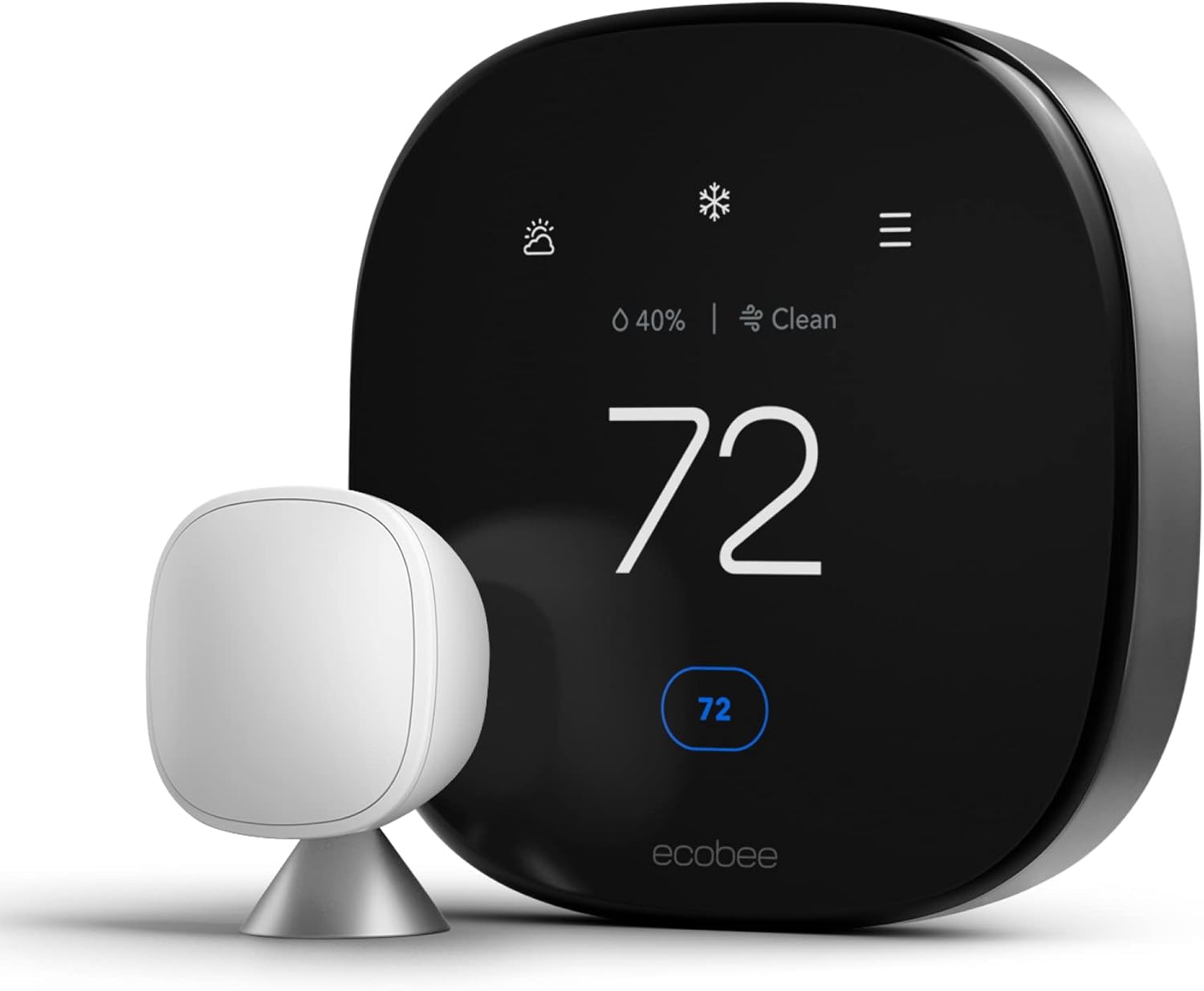
Bathrooms without HVAC registers (common in older homes) rely on portable electric heaters or towel radiators for ambient warmth. If your bathroom has a dedicated register and zone, a smart thermostat with room sensor technology allows you to prioritize bathroom temperature in the morning without overheating other rooms. Systems like the Ecobee with SmartSensors or the Honeywell T9 with remote room sensors achieve this. For a comparison of smart thermostat options with remote sensor capabilities, see our Nest vs. Honeywell multi-stage HVAC comparison and our Honeywell Smart Color vs. Emerson Sensi Touch HomeKit review.
Our Final Verdict
Upgrading your bathroom with a thermostatic shower system is a decision you’ll appreciate every single day. The combination of precise temperature control, scald safety, water efficiency, and long-term reliability puts these systems in a different category from standard pressure-balanced valves — not just in quality, but in the daily lived experience of your bathroom.
For the ultimate in performance, the GROHE Grohtherm SmartControl is our top pick — its push-button interface, solid brass construction, and ±0.8°F temperature precision represent the state of the art in residential thermostatic shower technology. For budget-conscious renovators, the GABRYLLY System delivers remarkable value and genuine ASSE 1016 scald protection without the premium-brand premium. And for complete all-in-one systems that require no sourcing of separate components, the Hansgrohe Croma E 280 remains our recommendation for its water efficiency, quality German engineering, and truly comprehensive what’s-in-the-box.
Whichever system you choose, remember that calibrating the maximum temperature stop ring to 120°F after installation is the single most important post-installation step. A $1,500 thermostatic shower without a properly calibrated stop ring is no safer than a $30 mixing valve. Do it right, and you’ll enjoy consistent, safe, luxurious showers for 15–20 years without giving water temperature a second thought.




 Home
Home
 Info
Info
 Compare
 Reviews
 Shop
Shop