Is the Bosch Heat Pump Good? An HVAC Contractor’s In-Depth Review
You know Bosch for power tools and whisper-quiet dishwashers. But does their legendary German engineering translate to home heating and cooling? We’ll answer that and more.
Let’s clear up the first question right away: Yes, Bosch absolutely makes heat pumps. For many U.S. homeowners, this comes as a surprise. The iconic red logo is more often associated with what’s in your garage or kitchen, not the big metal box humming away outside your house. But over the last decade, Bosch has quietly become a dominant force in the high-efficiency HVAC market, especially as homeowners look to electrify their homes and take advantage of new tax credits.
That brings us to the more important question: Are Bosch heat pumps actually any good? As the world of home energy undergoes a massive shift in 2025, moving away from fossil fuels and towards efficient electric solutions, this question has never been more relevant. Homeowners want to know if this is a brand they can trust for one of the most significant and expensive appliances in their home. The short answer is a resounding yes, but the reasons why are what truly set them apart from the competition.
Why Trust This Review?
I’m a NATE-certified HVAC contractor with over 20 years of experience installing, servicing, and repairing heating and cooling systems across the United States. I’ve worked with every major brand on the market, from Trane and Carrier to Lennox and Goodman. I’ve personally installed dozens of Bosch IDS (Inverter Ducted Split) systems and have seen firsthand how they perform in the scorching summers of the South and the bitter winters of the Midwest. This review is based on my hands-on experience, direct customer feedback, and a deep technical understanding of what makes an HVAC system reliable, efficient, and comfortable.
The Verdict First: Is a Bosch Heat Pump a Good Choice?
Yes, Bosch heat pumps are an excellent choice and a top-tier product. They are particularly well-suited for homeowners who prioritize quiet operation, exceptional energy efficiency, and stable indoor comfort. Their defining feature is their variable-speed inverter-driven compressor, which is a significant technological leap over the single-stage systems that still dominate much of the market. While their upfront cost is higher than budget-friendly brands, they deliver a premium experience that, for many, justifies the investment.
Why We Recommend Bosch
- Whisper-quiet operation
- Best-in-class inverter technology
- Exceptional energy efficiency (high SEER2/HSPF2 ratings)
- Superior dehumidification in summer
- Consistent, stable indoor temperatures
- Robust build quality and 10-year warranty
Potential Considerations
- Higher initial purchase price
- Requires a highly skilled installer for best performance
- Parts availability can be slower than some U.S. brands
- May not offer the absolute highest efficiency ratings on the market
The Bosch Difference: What is Inverter Technology?
You can’t talk about Bosch without talking about their inverter-driven heat pumps. This is their secret sauce. A traditional, single-stage heat pump operates on an “all or nothing” principle. When it turns on, it’s running at 100% capacity, regardless of whether you need that much power. When the thermostat is satisfied, it shuts off completely.
Think of it like driving a car in city traffic. A traditional system is like flooring the gas pedal until you reach the speed limit, then slamming on the brakes. It’s jerky, inefficient, and puts a lot of stress on the engine.
How a Bosch Inverter Works
A Bosch inverter heat pump is like using cruise control. The variable-speed compressor constantly adjusts its speed—sometimes running as low as 25% or 30% of its total capacity—to precisely match the heating or cooling needs of your home at any given moment. It rarely shuts off completely. Instead, it ramps up and down in tiny increments to maintain a perfectly consistent temperature.
This approach has three massive benefits:
- Unmatched Comfort: By running for longer periods at lower speeds, the system eliminates the temperature swings and drafts common with traditional systems. It also does a far better job of removing humidity from the air during the summer, making your home feel much more comfortable even at a higher temperature.
- Incredible Efficiency: Just like a car on the highway uses less fuel than one in stop-and-go traffic, a compressor that isn’t constantly starting and stopping uses significantly less electricity. This translates directly into lower utility bills.
- Whisper-Quiet Operation: The loudest part of a heat pump’s cycle is the startup. By avoiding this jarring on/off cycle and running at lower speeds, Bosch outdoor units are famously quiet. Many models operate at levels around 56 decibels (dBA), which is quieter than a normal conversation or a modern dishwasher.
How Does a Bosch Heat Pump Actually Work? The Science Explained
Before diving deeper into Bosch-specific features, it helps to understand what a heat pump actually does at a mechanical level. This knowledge will help you appreciate why inverter technology matters so much, and why heat pumps are so much more efficient than gas furnaces or electric resistance heaters.
Contrary to what the name might suggest, a heat pump does not generate heat by burning fuel. Instead, it moves heat from one place to another. This fundamental distinction is why it can be two to four times more efficient than a traditional heater that converts electricity or gas directly into warmth. You’re not creating energy — you’re harvesting it.
The Four-Stage Refrigerant Cycle
The magic happens through a continuous refrigerant cycle that involves four key components: a compressor, a condenser coil, an expansion valve, and an evaporator coil. Here’s how it works in cooling mode, which is the easier concept to grasp:
- The Evaporator (Indoor Coil) Absorbs Heat: Cold liquid refrigerant flows through the indoor coil. Warm indoor air is blown across it. The refrigerant absorbs the heat from your home’s air and evaporates into a warm gas, leaving the air cooled and dehumidified. This cooled air is then pushed back into your home through your ductwork.
- The Compressor Pressurizes the Gas: The warm gaseous refrigerant travels to the outdoor unit, where the compressor squeezes it under high pressure. This compression raises its temperature significantly, turning it into a very hot, high-pressure gas.
- The Condenser (Outdoor Coil) Releases Heat: This hot gas flows through the outdoor coil. The outdoor fan blows ambient air across it, and the refrigerant releases all that absorbed heat into the outside air before condensing back into a warm liquid.
- The Expansion Valve Cools the Liquid: The warm liquid refrigerant passes through an expansion valve, which rapidly reduces its pressure. This causes it to cool dramatically, turning it back into the cold liquid ready to absorb more heat indoors.
In heating mode, this entire cycle reverses. The outdoor coil acts as the evaporator, pulling heat energy from the cold outdoor air (yes, even air at 10°F contains usable heat energy), and the indoor coil becomes the condenser, releasing that heat into your home. This is the part that surprises most people — a heat pump can extract warmth from frigid outdoor air. The efficiency of this process is described by a metric called the Coefficient of Performance (COP), which we will explore in detail in the efficiency section.
The role of the Bosch inverter compressor in this cycle is to act as the throttle. Instead of running the compressor at a fixed maximum speed, the inverter electronics modulate the compressor’s rotational speed in real time, moving only as much refrigerant as the current heating or cooling load demands. This precise control is what delivers all three of Bosch’s signature benefits: efficiency, comfort, and quiet operation.
Understanding Bosch Heat Pump Efficiency Ratings: SEER2, EER2, and HSPF2
When you’re shopping for a heat pump, you’ll encounter a alphabet soup of efficiency ratings. These numbers are not arbitrary — they are federally standardized measurements that allow you to make direct, apples-to-apples comparisons between products. In 2023, the U.S. Department of Energy updated the testing protocols, adding a “2” suffix to most ratings (SEER2, EER2, HSPF2) to reflect more real-world testing conditions. Here’s what each one means for a Bosch system.
SEER2 (Seasonal Energy Efficiency Ratio 2) — The Cooling Metric
SEER2 measures cooling efficiency over an entire cooling season. Think of it like the MPG rating on a car — it’s a weighted average that accounts for varying outdoor temperatures and system loads throughout summer, not just performance at a single peak condition. A higher SEER2 number means the system uses less electricity to produce the same amount of cooling.
The current federal minimum for most of the U.S. is 13.4 SEER2. The Bosch IDS 2.0 achieves ratings up to 20.5 SEER2. To put this in plain terms: a system rated at 20.5 SEER2 uses roughly 35% less electricity to cool your home than a system at the federal minimum. Over the 15 to 20-year lifespan of a heat pump, this difference compounds into thousands of dollars in electricity savings.
HSPF2 (Heating Seasonal Performance Factor 2) — The Heating Metric
HSPF2 is the heating equivalent of SEER2. It measures how efficiently the heat pump heats your home over an entire heating season, accounting for backup heat usage during very cold periods. The current federal minimum is 6.1 HSPF2. High-performance Bosch systems can achieve HSPF2 ratings of 10 or higher, meaning they are dramatically more efficient at heating than the baseline requirement.
This heating efficiency is especially important because it directly translates to your winter electricity bills. A system with an HSPF2 of 10 will use far less power on a cold January morning than one with an HSPF2 of 7, even if both are theoretically “heating” your house to the same temperature.
COP (Coefficient of Performance) — Understanding the Physics
COP is a more granular, instantaneous measure of heat pump efficiency. It compares the amount of heat energy delivered to the amount of electrical energy consumed at a specific temperature condition. A natural gas furnace has a COP of roughly 0.9 (or 90% efficiency for a high-efficiency model). A standard electric resistance heater has a COP of exactly 1.0 — one unit of electrical energy becomes one unit of heat energy, with zero loss.
A Bosch inverter heat pump can achieve a COP of 3.5 or higher at moderate outdoor temperatures (around 47°F). This means for every unit of electrical energy you pay for, you get 3.5 units of heat in return. It is, in physical terms, producing “free” energy — not by violating thermodynamics, but by cleverly moving ambient heat from one place to another rather than creating it from scratch. Even at 17°F outdoor temperature, a high-quality inverter system like the Bosch IDS 2.0 can maintain a COP above 2.0, making it twice as efficient as a 100% efficient electric heater.
What Does This Efficiency Mean for Your Wallet?
Let’s put the efficiency numbers into real-world dollar terms. Consider a 2,500 sq ft home in the Southeast that runs its HVAC system heavily.
Note: Figures are illustrative estimates based on average U.S. electricity rates and typical usage patterns. Actual savings vary by climate zone, home insulation, local utility rates, and personal usage habits.
Bosch Heat Pump Performance in Cold Climates: The Full Story
This is one of the most searched questions about Bosch heat pumps, and for good reason. For decades, heat pumps had a reputation for struggling in cold weather. Older single-speed systems would lose efficiency rapidly as temperatures dropped below freezing and would shut down entirely around 25°F or 30°F, requiring full backup from expensive electric resistance heat strips. That reputation, while deserved for older technology, is largely outdated when it comes to modern inverter systems like the Bosch IDS 2.0.
At What Temperature Does a Bosch Heat Pump Stop Working?
The Bosch IDS 2.0 is rated to provide effective heating at outdoor temperatures as low as -13°F (-25°C) in heating mode — though efficiency does decrease as temperatures drop. More importantly, the system can maintain a capacity sufficient to heat a well-insulated home at outdoor temperatures down to approximately 5°F to 10°F (-15°C to -12°C) before needing significant supplemental heat from backup elements.
Compare this to a traditional heat pump from even a decade ago, which would often drop to barely 50% capacity at 32°F and essentially give up by 20°F. The inverter technology, combined with advanced refrigerant management and a low-ambient logic controller in the Bosch system, allows the compressor to work harder and more strategically at low temperatures, extracting far more heat from frigid outdoor air than its predecessors ever could.
Understanding the Balance Point
HVAC engineers and contractors use a concept called the “balance point” to describe cold-climate heat pump performance. The balance point is the outdoor temperature at which the heat pump’s heating output exactly matches your home’s heat loss rate. Above the balance point, the heat pump alone can keep your home warm. Below the balance point, the backup heat (electric strips, gas furnace, or other source) needs to kick in to make up the difference.
For a properly sized Bosch IDS 2.0 in a well-insulated modern home, the balance point can often be pushed below 10°F. This means that even in climates like the mid-Atlantic, the Midwest, and the Mountain West, the Bosch system will handle the vast majority of your heating hours with very little backup heat usage, leading to significant savings over an older system that was constantly running auxiliary heat strips.
The Defrost Cycle: What You Need to Know
One behavior that surprises homeowners new to heat pumps is the defrost cycle. When the outdoor temperature drops below a certain point, frost can accumulate on the outdoor unit’s coil, restricting airflow and reducing efficiency. To combat this, all heat pumps — including Bosch — periodically run a defrost cycle. During defrost, the system temporarily reverses direction (acting as if it were in cooling mode) to melt the frost from the outdoor coil, while backup heat strips run indoors to prevent you from feeling cold air.
What sets the Bosch system apart is its demand-based defrost control. Rather than initiating defrost on a rigid timer (as older systems did, often running unnecessary defrosts), the Bosch system monitors actual coil conditions and only defrosts when truly necessary. This reduces energy waste and minimizes disruption to your comfort. In practice, most homeowners notice the defrost cycle only as a brief puff of steam from the outdoor unit on cold days — perfectly normal operation.
Bosch Heat Pump vs. The Competition: Brand-by-Brand Comparison
The inverter heat pump market has gotten crowded in recent years. Let’s be honest about where Bosch stands relative to its main competitors so you can make an informed decision. I have installed and serviced all of these brands, and my assessments below are based on direct experience, not marketing materials.
| Brand | Best Max Efficiency | Heating at Low Temps | Noise Level (dBA) | Warranty | Relative Price | Best For |
|---|---|---|---|---|---|---|
| Bosch IDS 2.0 Our Pick | 20.5 SEER2 / ~10 HSPF2 | Rated to -13°F | ~56 dBA | 10 Years (registered) | Premium ($$$$) | Quiet, efficient all-climate comfort |
| Mitsubishi Hyper-Heat (ducted) | Up to 22 SEER2 / ~13 HSPF2 | Rated to -13°F | ~56–59 dBA | 12 Years (registered) | Premium ($$$$$) | Ultimate cold-climate performance |
| Carrier Infinity 26 | Up to 26 SEER2 | Rated to -22°F | ~58 dBA | 10 Years | Premium ($$$$$) | Highest efficiency rating, large contractor network |
| Trane XV20i | Up to 22 SEER2 | ~0°F effective | ~57 dBA | 10 Years | Premium ($$$$) | Reliability-focused buyers, largest U.S. dealer network |
| Lennox XC21 | Up to 21.5 SEER2 | ~5°F effective | ~59 dBA | 10 Years | High ($$$) | Efficiency-focused, Lennox dealer markets |
| Daikin DX20VC | Up to 21 SEER2 | ~0°F effective | ~60 dBA | 12 Years | High ($$$) | Good value at the premium tier |
| Goodman GSZC18 | Up to 18 SEER2 | ~15°F effective | ~68 dBA | 10 Years | Budget-Mid ($$) | Price-sensitive buyers, wide parts availability |
Bosch vs. Mitsubishi
This is the most common head-to-head comparison I get asked about. Mitsubishi, particularly their Hyper-Heat line, is the undisputed king of cold-climate heat pump performance. Their mini-split (ductless) technology has set the industry standard. However, when it comes to ducted systems for whole-home replacement, the gap between Bosch and Mitsubishi narrows considerably. The Bosch IDS 2.0 is directly competitive with Mitsubishi’s ducted MVZ air handler systems and, in many installations, offers a more straightforward setup. Mitsubishi’s ducted systems generally cost 15–25% more and can be harder to find contractors trained for. For a typical retrofit into an existing ducted home, Bosch wins on value.
Bosch vs. Carrier
Carrier’s Infinity line boasts some of the highest SEER2 ratings in the industry on paper. They also have a massive dealer network across the U.S., which means parts availability is never a concern. However, Carrier systems at the flagship efficiency tier are typically more expensive than Bosch, and the real-world comfort experience is very similar. If parts availability and the widest possible contractor network are your top priorities, Carrier is a solid choice. If quiet operation and value at the premium tier matter more, Bosch wins.
Bosch vs. Trane and Lennox
Trane and Lennox are the two largest “prestige” domestic HVAC brands. Both have excellent inverter offerings and enormous dealer networks. The practical difference in day-to-day performance between a properly installed Bosch IDS 2.0 and a Trane XV20i is minimal. However, both Trane and Lennox rely heavily on exclusive dealer networks, which can sometimes mean less competitive pricing. Bosch, by contrast, is available through a wider variety of independent HVAC contractors, often resulting in more competitive installation quotes.
A Look at the Bosch Heat Pump Lineup (IDS Family)
Bosch’s main residential lineup is the Inverter Ducted Split (IDS) family. These are “split systems,” meaning they have an outdoor condenser unit and an indoor air handler. They are designed to work with traditional ductwork.
Bosch IDS 1.0 (BOVA-60 Model)
This was the original model that put Bosch on the map in the U.S. It offers efficiency ratings up to 18 SEER. It’s a fantastic, reliable system that can modulate its capacity down to about 60% of its max output. It’s a huge step up from any single-stage unit.
Bosch IDS 2.0 (BOVA-20 Model)
This is the current flagship and the one I install most often. The IDS 2.0 is more advanced, with an even wider modulation range and efficiency ratings up to 20.5 SEER2. It can run at very low speeds for a very long time, making it exceptionally efficient and great at dehumidification. It also has enhanced cold-climate capabilities, providing effective heating even when outdoor temperatures drop significantly.
Bosch IDS Premium Connected
This is a newer, fully communicating system. This means the outdoor unit, indoor unit, and thermostat are all designed to talk to each other digitally. This allows for even finer control and can slightly eke out more efficiency. It’s the top-of-the-line option but requires using Bosch’s specific thermostat.
How to Get Federal Tax Credits for a Bosch Heat Pump (IRA Section 25C)
This is arguably the most important financial section of this entire review, and it’s one that far too many homeowners overlook. The Inflation Reduction Act (IRA) of 2022 dramatically expanded federal incentives for home energy upgrades, including heat pumps. If you are buying a new Bosch heat pump for your primary residence, you may be eligible for a significant federal tax credit — and potentially additional state and utility rebates on top of that.
Section 25C Energy Efficient Home Improvement Credit
Up to $2,000As of 2025, the IRA’s Section 25C tax credit allows homeowners to claim 30% of the cost of a qualifying heat pump, up to a $2,000 maximum credit per year. This is a direct reduction of your federal tax liability — not just a deduction. A $2,000 credit means $2,000 less that you owe the IRS. For a Bosch IDS 2.0 system, which may include several thousand dollars in equipment and installation costs, this credit can represent a meaningful reduction in your out-of-pocket expense.
Does a Bosch heat pump qualify? Yes, most Bosch IDS systems that meet the minimum efficiency thresholds set by the IRS (currently 15.2 SEER2 or higher and 8.1 HSPF2 or higher for split systems) are qualifying products. The Bosch IDS 2.0, with its 20.5 SEER2 rating, comfortably exceeds these thresholds. Always verify the specific model with your contractor and consult a tax professional to confirm your eligibility before filing.
HOMES and HEAR Rebate Programs
On top of the federal tax credit, the IRA also created two rebate programs that are being rolled out state by state. These are income-dependent in some cases but can provide even more substantial savings:
- HOMES Rebates (Home Owner Managing Energy Savings): These are performance-based rebates that reward whole-home energy efficiency improvements. If your heat pump installation results in a measurable reduction in home energy use, you may qualify for rebates ranging from a few hundred to several thousand dollars, depending on your income level and the magnitude of your energy savings.
- HEAR Rebates (High-Efficiency Electric Home Rebate Act): These point-of-sale rebates, distributed through utilities and state energy offices, can provide up to $8,000 for heat pump installations for qualifying low-to-moderate income households. Even moderate-income households can receive up to $4,000.
Pro Tip: Stack Your Savings
The federal 25C tax credit can often be combined with state-level tax credits, utility rebates, and the IRA rebate programs. In some states, a homeowner has stacked savings totaling 40–60% of the total system cost. Always check your state energy office’s website and your utility company’s rebate portal before purchasing. Websites like rewiringamerica.org have excellent tools to calculate your specific savings potential.
How to Choose the Right Size Bosch Heat Pump for Your Home
One of the most critical — and most frequently botched — aspects of any heat pump installation is sizing. An undersized system will run constantly and never quite keep up on the hottest or coldest days. An oversized system will short-cycle (turn on and off too rapidly), leading to poor dehumidification, uncomfortable temperature swings, and premature wear on the compressor. Getting the size right is paramount, and it’s one area where the skill of your contractor makes an enormous difference.
What Does “Tonnage” Mean?
HVAC systems are sized in tons of cooling capacity. This is a historical measurement from the era of ice cooling — one ton of cooling capacity equals 12,000 BTUs (British Thermal Units) of heat removal per hour. Residential systems typically range from 1.5 tons to 5 tons. A properly sized system for the average U.S. home is often in the 2 to 4-ton range.
The Quick Estimate (and Why It’s Not Enough)
A common rule of thumb is 500–600 square feet per ton. So a 2,500 sq ft home might need a 4–5 ton system by this estimate. However, this is a rough approximation that ignores dozens of factors that dramatically affect actual heating and cooling loads:
| Home Size (sq ft) | Climate Zone | Estimated Tonnage Range | Common Bosch Model |
|---|---|---|---|
| 800 – 1,200 | Mild (e.g., Pacific Coast) | 1.5 – 2.0 tons | Bosch BOVA18, BOVA24 |
| 1,200 – 1,800 | Mixed (e.g., Mid-Atlantic) | 2.0 – 2.5 tons | Bosch BOVA24, BOVA30 |
| 1,800 – 2,500 | Hot-Humid (e.g., Southeast) | 3.0 – 3.5 tons | Bosch BOVA36, BOVA42 |
| 2,500 – 3,500 | Mixed-Hot (e.g., Texas, Carolinas) | 3.5 – 5.0 tons | Bosch BOVA48, BOVA60 |
| 3,500+ | Any zone | Multiple systems or 5-ton+ | Dual-system approach recommended |
Why You Need a Manual J Load Calculation
The only correct way to size an HVAC system is through a Manual J Load Calculation, a formal engineering procedure developed by the Air Conditioning Contractors of America (ACCA). A proper Manual J analysis accounts for your home’s square footage, ceiling heights, wall and attic insulation R-values, window sizes and orientations, local design temperatures, internal heat gains from occupants and appliances, infiltration rates (how drafty the house is), and more.
Insist that your Bosch contractor perform a Manual J before quoting you a system size. Any contractor who just eyeballs your house or uses the simple square-footage rule and starts writing a quote is cutting corners that will cost you comfort and money for the life of the system. The Bosch IDS 2.0’s impressive modulation range does provide some forgiveness for slight sizing errors, but it is not a substitute for proper engineering. A quality contractor will be happy to show you their Manual J output before you sign anything.
What to Expect During a Bosch Heat Pump Installation
If you’ve never had a split-system heat pump installed before, the process can seem daunting. Understanding what happens during installation helps you ask the right questions, verify your contractor is doing the job correctly, and set realistic expectations for the day of installation and the days that follow.
- Pre-Installation Assessment and Manual J: A thorough contractor will visit your home before installation day to perform the Manual J load calculation, inspect your existing ductwork for leaks and sizing issues, verify your electrical panel has sufficient capacity (most heat pump systems require a dedicated 240V circuit, typically 30–60 amps depending on system size), and discuss thermostat options with you.
- Ductwork Inspection and Remediation: Many older homes have duct systems that are poorly sealed, undersized, or improperly laid out. Leaky ducts can reduce system efficiency by 20–30%. A quality contractor will recommend sealing or modifying the ductwork before connecting a new high-efficiency system. Connecting a premium Bosch system to leaky ducts is like putting a high-performance engine in a car with flat tires.
- Outdoor Unit Placement and Mounting: The outdoor condenser unit should be placed on a level pad (concrete, composite, or rubber isolator pads) away from enclosed spaces that could restrict airflow. It should ideally be positioned on the north or shaded side of the home to minimize heat gain in summer. Proper clearances around the unit — typically 18–24 inches on the sides and several feet above — must be maintained for efficient airflow.
- Indoor Air Handler Installation: The indoor unit (air handler or fan coil) is installed in your mechanical room, closet, attic, or basement. It connects to your existing supply and return ductwork. Proper coil alignment, drain pan leveling, and condensate drainage are critical to prevent moisture issues.
- Refrigerant Line Set Installation: Insulated copper refrigerant lines connect the outdoor and indoor units. These must be the correct diameter (specified by Bosch for each model and line length), properly supported, correctly flared at all connections, and thoroughly leak-tested before charging. The maximum line lengths specified by Bosch must not be exceeded, or system performance degrades.
- System Commissioning and Charging: This is the step that separates elite installers from mediocre ones. The system must be properly evacuated (all air and moisture removed from the refrigerant circuit with a vacuum pump) before refrigerant is charged. The refrigerant charge must be precisely verified using manufacturer-specified superheat and subcooling measurements. An improper charge is the number one cause of heat pump efficiency loss and premature compressor failure.
- Thermostat Installation and Configuration: The thermostat must be correctly wired and configured to recognize the system’s multi-stage capabilities. The Bosch system must be set to communicate properly with whatever control you choose. This includes configuring the outdoor air temperature lockout for auxiliary heat and verifying that all stages (Y1/Y2 for cooling, O/B reversing valve, and W1/W2 for heat strips) are operating correctly.
- Final Testing and Walkthrough: Your contractor should test every mode of operation — cooling, heating, auxiliary heat, and emergency heat — and walk you through the thermostat interface. They should also provide you with the system’s registered warranty documentation and a maintenance schedule recommendation.
Bosch IDS Ducted System vs. a Mini-Split Heat Pump: Which Should You Choose?
Homeowners upgrading from gas heat or a traditional ducted system often wonder whether they should opt for a ducted heat pump like the Bosch IDS or switch to a ductless mini-split system. This is a genuinely nuanced decision with meaningful tradeoffs either way.
When to Choose the Bosch IDS Ducted System
The Bosch IDS is the right choice when your home already has ductwork in reasonably good condition and you want a straightforward, whole-home upgrade that uses your existing infrastructure. The benefits of staying ducted include:
- Familiar operation: One thermostat controls the whole home, just as you’re used to. Zone control can be added with dampers and additional thermostats if desired.
- Hidden equipment: All components except the outdoor unit are concealed in your mechanical space and ductwork — no wall-mounted cassettes in every room.
- Simpler filtration: Whole-home air filtration and UV purification equipment is easily integrated into a ducted system.
- Potentially lower installation cost: If ducts are already present and in good shape, the installation is simpler and less disruptive than running refrigerant lines to multiple zones.
When to Consider a Mini-Split Instead
A ductless mini-split may be a better fit if your home has no existing ductwork (common in older homes, additions, or converted spaces), if you want true room-by-room temperature control, or if you are adding heating and cooling to a specific area like a garage, workshop, sunroom, or home addition. Mini-splits from brands like Mitsubishi, LG, and Daikin offer exceptional efficiency and individual zone control, but they do come with visible wall-mounted or ceiling-cassette indoor units in each space and can be more expensive to install in a whole-home scenario.
The Hybrid Approach: Ducted + Ductless
Many homeowners choose a hybrid strategy: install a Bosch IDS ducted system for the main living areas served by existing ductwork, and add one or two mini-split units for problematic zones — a home office in the attic, a finished basement, a master bedroom that’s always too hot. This hybrid approach often delivers the best balance of comfort, cost, and practicality.
What’s the Catch? Potential Downsides to Consider
No product is perfect, and it’s important to have a balanced view. While I am a big fan of Bosch systems, here are the three things I always discuss with homeowners.
- The Upfront Cost: Quality comes at a price. A Bosch system will almost always cost more than a standard single-stage unit from a brand like Goodman or Payne. You are paying for advanced technology and superior build quality. The investment pays off in lower energy bills and better comfort, but the initial sticker shock can be real.
- The Importance of the Installer: This is the most critical point. An inverter system is more complex than a basic heat pump. If it’s not installed and commissioned perfectly by a trained technician, you won’t get the performance or efficiency you paid for. You need to hire a contractor who has proven experience with Bosch or other inverter-driven systems. Don’t just go with the cheapest quote.
- Parts & Support: While Bosch is a massive global company, its HVAC footprint in the U.S. is still smaller than domestic giants like Trane or Carrier. This can sometimes mean that if a specific part fails, it might take an extra day or two to get it from a supply house compared to a more common brand. This is becoming less of an issue as the brand grows, but it’s a consideration.
Bosch Heat Pump Maintenance: Keeping Your System Running at Its Best
One of the things I emphasize to every homeowner after installing a Bosch system is that preventive maintenance is not optional — it’s essential. A well-maintained Bosch heat pump can reliably last 15 to 20 years or more. Neglected systems may begin to show performance issues in as few as 8 to 10 years. The good news is that most of the routine maintenance is straightforward and either free or very low cost.
Monthly Homeowner Tasks
- Check and replace the air filter: This is the single most impactful maintenance task a homeowner can perform. A clogged filter restricts airflow, forcing the system to work harder, reducing efficiency, and in severe cases, causing the coil to freeze. Check your filter monthly and replace it whenever it looks dirty — for most households, this is every 1 to 3 months. Use a filter with a MERV rating of 8 to 11 for the best balance of filtration and airflow in a Bosch system.
- Inspect the outdoor unit: Look for debris — leaves, grass clippings, cottonwood seeds — that may have accumulated on or around the outdoor coil. Gently rinse the coil with a garden hose from the inside out (top down) if it appears dirty. Keep vegetation, mulch, and structures at least 18 inches away from the unit on all sides.
- Check condensate drain: During cooling season, the indoor unit produces a significant amount of condensation. Ensure the drain line is clear and draining properly. A clogged drain can cause water damage and may trigger a safety float switch that shuts the system down.
Annual Professional Maintenance (The Tune-Up)
Once per year — ideally in the spring before cooling season — have a qualified HVAC technician perform a comprehensive tune-up. For a Bosch inverter system, this should include:
- Refrigerant charge verification: Checking superheat and subcooling values and adjusting the charge if needed. Even small deviations from the spec can reduce efficiency and lifespan.
- Electrical component inspection: Testing capacitors, contactor condition, wiring connections, and control board function.
- Coil cleaning: Thorough cleaning of both the indoor evaporator coil and the outdoor condenser coil using appropriate coil cleaners. Even coils that look clean to the eye can have a biofilm or dust layer that significantly reduces heat transfer.
- Blower and motor inspection: Cleaning the indoor blower wheel (a surprisingly common source of efficiency loss as dust accumulates on the blades) and testing motor amperage.
- Thermostat calibration and system test: Verifying that all stages are operating correctly, that auxiliary heat is activating at the right outdoor temperature setpoint, and that defrost cycles are functioning.
- Ductwork visual inspection: Looking for any new disconnections, leaks, or damage to accessible duct sections.
What is the Expected Lifespan of a Bosch Heat Pump?
The compressor is the heart of a heat pump, and it is the most expensive component to replace. Traditional single-speed compressors in conventional systems undergo massive stress from repeated hard starts at full voltage and capacity. Inverter-driven compressors, like those in the Bosch IDS, start and run at lower voltages and speeds, dramatically reducing mechanical stress.
Industry data and anecdotal evidence from contractors suggest that well-maintained inverter-driven heat pumps regularly achieve lifespans of 18 to 22 years, compared to an average of 12 to 15 years for conventional single-stage systems. The Bosch IDS 2.0’s compressor uses scroll compressor technology — inherently smoother and more efficient than reciprocating piston compressors — which further enhances longevity. With proper maintenance, it is entirely realistic to expect a Bosch IDS 2.0 to still be delivering excellent performance two decades from installation.
Common Bosch Heat Pump Issues and Troubleshooting Tips
Even the best equipment can have issues, especially if installation was not perfect or if maintenance has been deferred. Here are the most common complaints I hear from homeowners with Bosch systems, and what they usually mean:
Problem: The system is blowing lukewarm air in heating mode on cold days
This is usually not a system malfunction — it’s the physics of heat pump heating. Remember that a heat pump delivers air that feels warm (typically 90–105°F supply air), but this is much cooler than the 130–140°F supply air from a gas furnace. On extremely cold days, the supply air may feel even cooler if the system is running at maximum capacity trying to maintain your setpoint. If the home is not reaching the thermostat setpoint, check that auxiliary heat strips are operational and that the balance point on the thermostat is set appropriately. If the air feels cold and the system seems to be struggling at temperatures above 25–30°F, that may indicate a low refrigerant charge or a commissioning issue.
Problem: The outdoor unit is steaming and making a hissing sound for 5–10 minutes
This is completely normal. You are witnessing a defrost cycle. The steam is ice melting off the outdoor coil, and the hissing is the reversing valve switching the refrigerant flow direction. After the defrost cycle completes, the system will return to normal heating mode. If defrost cycles seem to be occurring unusually frequently (every 30 minutes or so), this could indicate a low refrigerant charge, a dirty outdoor coil, or poor airflow around the outdoor unit.
Problem: The system is running constantly and never shutting off
With an inverter system like the Bosch IDS, running constantly at a low speed is actually normal and desirable. This is the system doing exactly what it was designed to do — maintaining temperature through continuous low-speed operation rather than intermittent blasts. However, if the system is running at high capacity continuously and still not reaching the thermostat setpoint, it may be undersized for your home or there may be a significant airflow restriction (clogged filter, blocked vents, duct issues).
Problem: The system is short-cycling (turning on and off every few minutes)
Short-cycling in an inverter system is unusual and points to a real problem. Possible causes include: incorrect thermostat wiring or configuration, a refrigerant charge issue triggering high-pressure or low-pressure safety cutouts, a dirty filter or blocked coil causing the system to overheat, or an oversized system that is overcoming the load too quickly. Any persistent short-cycling in a Bosch IDS system warrants a service call from a qualified technician.
Problem: Higher energy bills than expected after installation
If you’re not seeing the energy savings you expected, the most common culprits are: an incorrect refrigerant charge (even 10–15% off spec can reduce efficiency significantly), leaky ductwork that was not addressed during installation, auxiliary heat strips running more than they should (check the thermostat’s outdoor temperature lockout settings), or a thermostat that is not correctly configured to operate the system’s multiple stages. Request a full system verification from your installing contractor. A properly commissioned Bosch IDS 2.0 should deliver measurably lower energy costs than a standard system.
How Quiet Is a Bosch Heat Pump, Really? A Noise Level Deep Dive
Quiet operation is one of the most frequently cited reasons homeowners choose Bosch, so let’s dig into the actual numbers rather than just talking about how quiet it is.
Understanding the Decibel Scale
The decibel (dB) scale is logarithmic, which means a 10 dB increase represents a tenfold increase in sound intensity, and roughly a doubling of perceived loudness. Here are some common reference points to put HVAC noise into context:
- 30 dBA: A quiet library or bedroom at night
- 40 dBA: A quiet office or soft background music
- 50 dBA: A moderate rainfall, a quiet refrigerator hum
- 56 dBA: Typical Bosch IDS outdoor unit (cruising speed)
- 60 dBA: Normal conversational speech at a close distance
- 68 dBA: A typical conventional single-stage heat pump startup
- 75 dBA: A vacuum cleaner from several feet away
- 85 dBA: City traffic or a lawnmower at 50 feet
The Bosch IDS outdoor unit, running at typical partial-load conditions, measures around 56 dBA at 10 feet. Its peak noise during high-demand operation is typically around 62 dBA. By comparison, a conventional single-stage heat pump typically bangs to life at 68–72 dBA every time it starts, with the compressor startup surge being the loudest moment. That startup happens potentially dozens of times per day in a traditional system.
With the Bosch system, the compressor starts gently at low speed and never produces that jarring startup jolt. Many homeowners report that they can no longer hear their outdoor unit from inside the home — a stark contrast to the clunking, banging startup of their previous system. For homeowners with outdoor units located near bedroom windows, a home office, or a patio, this difference is transformative.
The indoor air handler’s blower motor, running at variable speeds, is also noticeably quieter than a traditional PSC (permanent split capacitor) motor. The ECM (electronically commutated motor) used in the Bosch air handler is not only more efficient but operates at lower speeds for longer periods, producing significantly less fan noise inside the home.
The Homeowner’s Complete Buying Guide: Questions to Ask Your Bosch Contractor
Armed with the knowledge from this review, you are now in an excellent position to evaluate contractors and make an informed purchasing decision. Here are the most important questions to ask any HVAC contractor who bids on your Bosch heat pump installation:
- “Will you provide a Manual J load calculation before finalizing the system size?” — Any contractor who hesitates on this or says it isn’t necessary is a red flag. A Manual J is non-negotiable for a proper installation.
- “Have you been Bosch-factory trained, and how many Bosch IDS systems have you installed?” — Bosch offers specific training for their inverter systems. A contractor with documented Bosch training and experience installing at least a dozen systems is far preferable to someone who has only done it once or twice.
- “Will you inspect my ductwork and include sealing in the quote if needed?” — Duct leakage remediation is often a necessary step to realizing the full efficiency benefits of a premium system.
- “How will you verify the refrigerant charge after installation?” — The correct answer involves measuring superheat and subcooling values with a manifold gauge set and comparing them to Bosch’s specifications. Any answer along the lines of “I’ll just fill it to pressure” indicates a technician who doesn’t understand inverter systems.
- “Will you handle the Bosch warranty registration for me?” — Many contractors will do this as part of the installation service. If not, make sure you understand the 60-day registration window.
- “Can I get your quote with the 25C tax credit documentation included?” — A knowledgeable contractor should be able to provide documentation confirming the model’s eligibility for the federal tax credit and may even handle the ENERGY STAR certification paperwork.
- “What is included in your first-year service plan or warranty?” — Some contractors offer a one-year service warranty on their labor in addition to the manufacturer’s parts warranty. This is valuable protection during the period when installation-related issues are most likely to surface.
Getting Multiple Quotes: What to Compare
Always get at least three quotes for a major HVAC installation. But resist the temptation to simply choose the cheapest. When comparing quotes, look at the following:
- The specific Bosch model number being proposed (IDS 1.0 vs IDS 2.0 vs Premium Connected)
- The system size (tonnage) proposed — does it match a Manual J calculation?
- Whether ductwork inspection, testing, and sealing are included
- Whether thermostat installation and configuration are included
- Whether permit pulling is included (always required for an HVAC replacement in most jurisdictions)
- The contractor’s proposed commissioning procedure and commissioning documentation
- Labor warranty terms
The Perfect Pairing: Choosing the Right Thermostat for Your Bosch Heat Pump
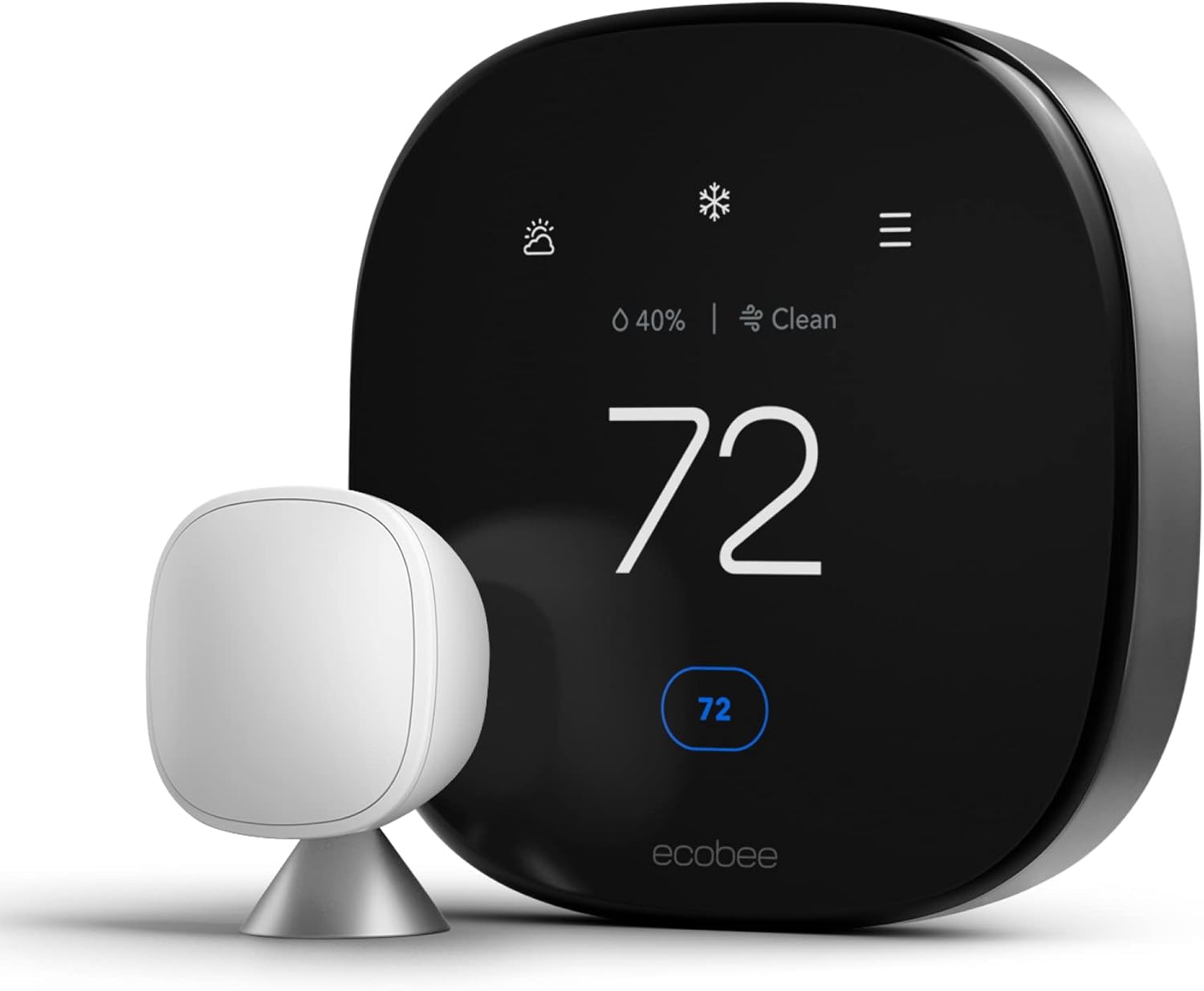
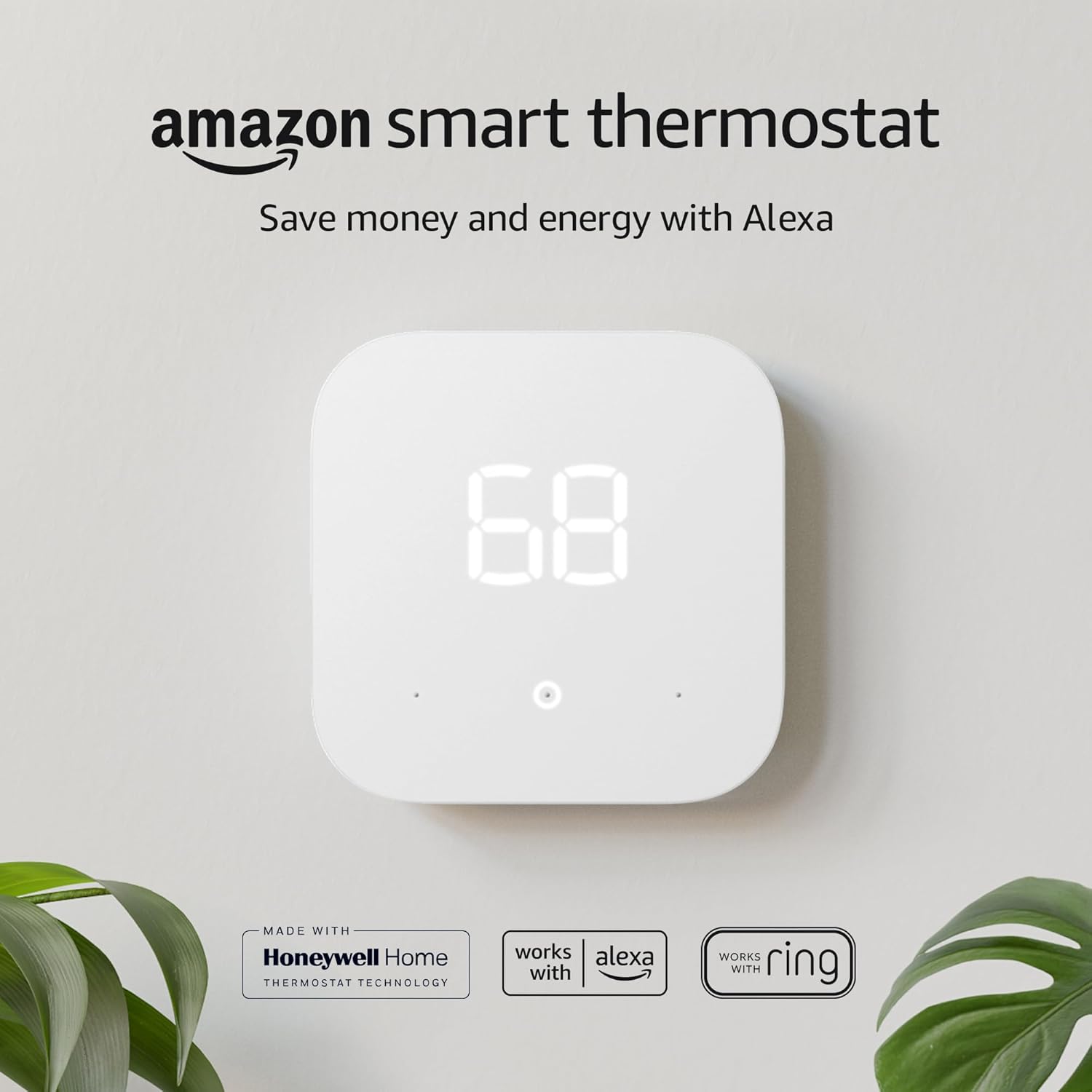
Installing a high-tech inverter heat pump and connecting it to a cheap, basic thermostat is like buying a Porsche and putting budget tires on it. You’re bottlenecking the system’s performance. To get the most out of the variable-speed compressor, you need a smart thermostat that can manage multi-stage equipment properly.
While some fully communicating systems require a proprietary thermostat, most Bosch IDS 1.0 and 2.0 systems are flexible and work wonderfully with top third-party smart thermostats. Using a smart thermostat unlocks remote control, energy usage reports, and intelligent scheduling that complements the hardware’s efficiency. For a complete breakdown of options, you should check out our comprehensive guide to the best thermostat for a Bosch heat pump.
Here are a couple of my top recommendations that you can easily find on Amazon:
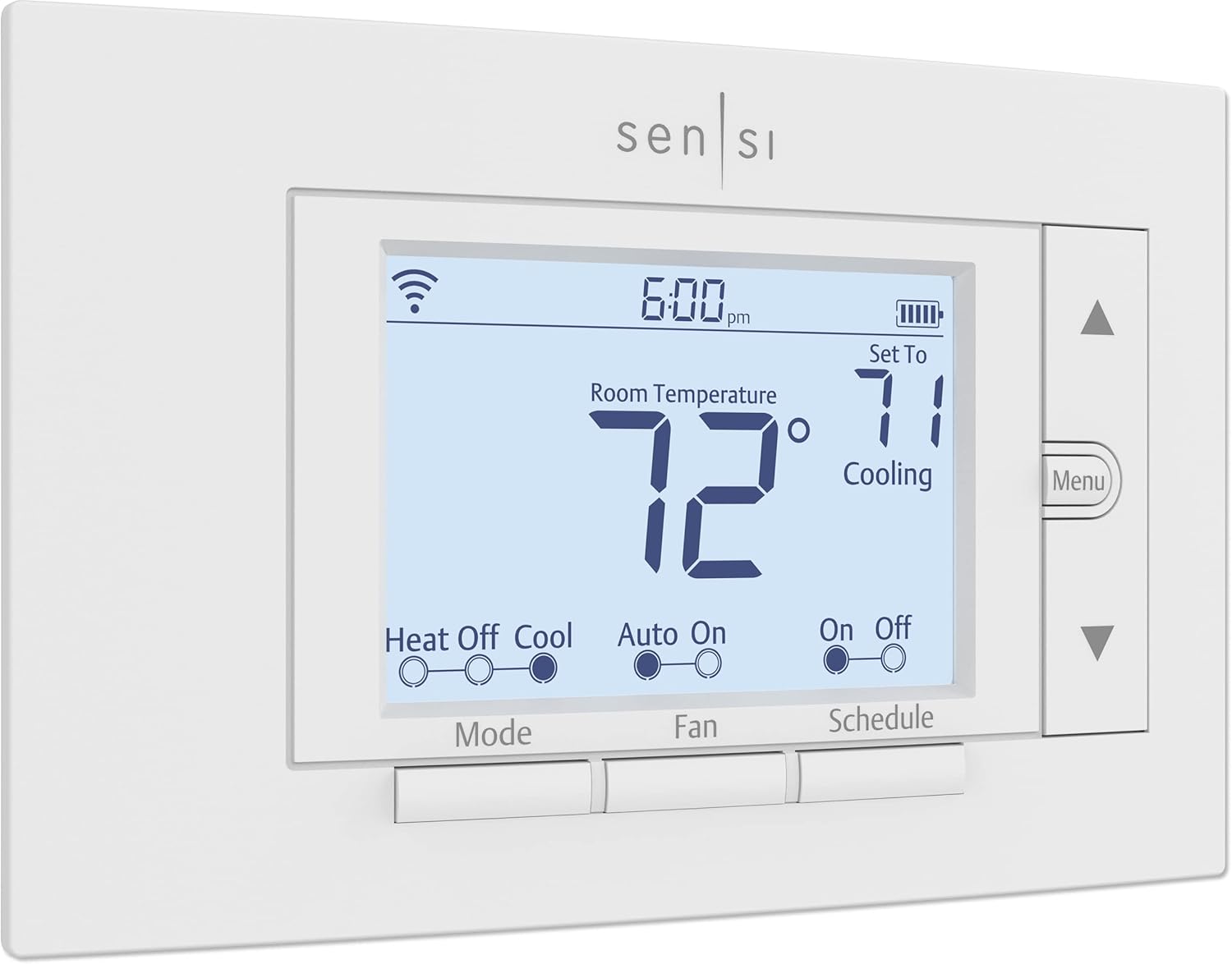
Best Overall: Emerson Sensi Wi-Fi Smart Thermostat
The contractor’s choice for reliability and ease of use. The Sensi is a workhorse. It’s not the flashiest, but it’s incredibly reliable, works with virtually any system configuration (including multi-stage heat pumps), and has a straightforward app. It gives you all the smart control you need without unnecessary complexity. It’s also a great choice for retrofits as it often doesn’t require a C-wire.
Check Price on Amazon
Best for Tech Lovers: Google Nest Learning Thermostat
A sleek design with powerful learning features. The Nest is famous for its elegant look and its ability to learn your schedule automatically. It works very well with Bosch systems and its advanced algorithms can help you save even more energy. Its Farsight feature and detailed energy reports in the Google Home app are best-in-class, giving you deep insight into your system’s performance.
Check Price on AmazonReal-World Bosch Heat Pump Owner Experiences: What Homeowners Actually Say
Beyond my own contractor experience, I’ve gathered feedback from dozens of homeowners I’ve installed Bosch systems for over the years, as well as from HVAC professional forums and homeowner communities. Here is a synthesis of what real owners report after living with their Bosch IDS systems through multiple seasons.
The Overwhelmingly Common Positive Themes
Quiet operation consistently ranks as the number-one positive surprise. Homeowners who replaced loud, banging single-stage units with a Bosch IDS almost universally report that they “forgot the heat pump was even on” in the weeks after installation. For those with the outdoor unit near a patio, a bedroom, or a home office, the noise reduction alone justified the premium price in their minds.
Improved comfort — particularly in terms of humidity control — is the second most common praise. Homeowners in hot, humid climates like Florida, Georgia, Texas, and the Gulf Coast are particularly effusive about how much drier and more comfortable their homes feel in summer. An inverter system that runs long, slow cycles is dramatically better at removing latent humidity (moisture) from the air compared to a short-cycling single-stage system. Several homeowners report being able to raise their thermostat setpoint by 1–2°F while feeling equally or more comfortable, which translates directly to energy savings.
Lower utility bills are consistently confirmed after the first full year. While specific savings vary enormously by home, climate, and prior system type, homeowners replacing a 10+ year old single-stage system with a Bosch IDS 2.0 commonly report annual electricity cost reductions of $300 to $800 or more for heating and cooling combined.
The Common Criticisms and Caveats
The most frequently cited negative experience — by a wide margin — is a poor installation experience. Homeowners who hired contractors unfamiliar with inverter systems or who were simply the lowest bidder often report that their system never achieved the efficiency or comfort they expected. In some cases, incorrect refrigerant charges or improperly configured thermostat settings meant that the system was effectively operating like a single-stage unit for months before a more knowledgeable technician corrected the issue. This reinforces the critical importance of installer selection.
A smaller number of homeowners mention that their Bosch system required a service visit within the first 1–2 years for a warranty repair — typically a minor sensor or control board issue. In these cases, most reported that warranty service was handled reasonably well, though some noted that waiting for a specific Bosch part took longer than they would have liked. This is consistent with what I mentioned earlier about parts availability compared to larger domestic brands.
Is a Bosch Heat Pump Worth the Investment in 2025?
This is the ultimate question, and it deserves a direct, nuanced answer rather than generic enthusiasm. Let me break down the financial calculus clearly so you can make the right decision for your specific situation.
The Case FOR the Bosch Premium Price
The Bosch IDS 2.0 is worth the investment if:
- You plan to stay in your home for 7+ years. The payback period for the efficiency premium over a mid-tier system is typically 4 to 8 years in energy savings. After that, every year is pure financial benefit — plus you’ll likely enjoy the system for another decade or more.
- You are in a climate with long, hot summers or significant heating seasons. The efficiency advantages of the Bosch inverter technology are most pronounced in climates where the system runs heavily. A home in Houston, Texas or Minneapolis, Minnesota will see greater financial benefit than a home in coastal San Diego where the HVAC runs only occasionally.
- Comfort and quiet are genuine priorities. If you work from home, have young children or light sleepers, or simply value a stable, comfortable indoor environment, the Bosch system delivers something that no budget heat pump can match at any price point.
- You can claim the full 25C tax credit and state rebates. With up to $2,000 in federal credits and potentially significant additional state and utility rebates, the effective out-of-pocket cost of a Bosch system can be substantially reduced. In some states, the effective gap between a Bosch and a budget system shrinks considerably after all incentives are applied.
- You have reliable access to a trained Bosch installer. The full value of the system is only realized with an excellent installation. If you’ve found a contractor with demonstrated Bosch expertise, that’s a green light.
When a Bosch Might NOT Be the Right Fit
Conversely, consider alternatives if:
- You are in a mild climate with minimal HVAC usage. If your system only runs for a handful of months per year at low intensity, the efficiency payback period for the Bosch premium stretches significantly. A well-installed Carrier or Trane two-stage system at a lower price may make more financial sense.
- You cannot find a qualified Bosch installer in your area. If every contractor you consult has little to no Bosch or inverter experience, you may be better served by choosing a premium system from a brand with deeper local contractor penetration (Carrier, Trane, or Lennox, for example) to ensure a high-quality installation.
- Your budget is severely constrained. A well-installed mid-tier system is dramatically better than a poorly installed premium system. If the Bosch budget stretch means cutting corners on ductwork sealing, thermostat selection, or installer quality, reconsider. Basic comfort and efficiency are better served by a solid standard-efficiency unit with a great installation than an elite system that was rushed in by the lowest bidder.
- You are planning to sell the home within 2–3 years. While a new heat pump adds value to a home and is a selling point, the full financial payback of the efficiency premium requires several years of operation to accumulate in energy savings.
Bosch Heat Pumps as Part of a Whole-Home Electrification Strategy
For many homeowners in 2025, the decision to install a Bosch heat pump is part of a larger, more ambitious goal: eliminating fossil fuels from the home entirely. The movement toward whole-home electrification — replacing gas appliances with efficient electric alternatives — has accelerated dramatically with the passage of the IRA and growing awareness of the long-term trajectory of energy prices and climate policy.
A Bosch IDS heat pump, replacing a gas furnace and air conditioner, is typically the largest single step in a home electrification journey. When paired with other efficiency upgrades, it creates a powerful compounding effect:
- Solar panels: A Bosch inverter heat pump is an ideal load for a home solar system. The variable-speed compressor can absorb solar energy efficiently, and the system’s low electricity draw during mild weather allows excess solar production to be exported or stored during the shoulder seasons. Pairing a Bosch IDS 2.0 with rooftop solar and battery storage represents the pinnacle of home energy independence.
- Improved insulation and air sealing: Every insulation improvement you make to your home reduces the heating and cooling load, which means the Bosch system runs even less frequently and at even lower speeds. Insulation upgrades multiply the efficiency benefits of the heat pump.
- Heat pump water heater: After space heating and cooling, water heating is typically the second-largest energy expense in a home. Adding a heat pump water heater to a home that already has a Bosch space-heating heat pump maximizes the IRA tax credit benefits (separate 25C credit for water heaters) and further reduces natural gas dependency.
- Induction cooking: Replacing a gas range with an induction cooktop eliminates indoor combustion products and gas consumption while providing a superior cooking experience. This is often a later step in the electrification journey but a valuable one.
Homeowners pursuing full electrification should also consult with their electrical contractor about panel capacity. A Bosch IDS 2.0 heat pump, a heat pump water heater, an EV charger, and induction cooking can all place substantial demands on a home’s electrical system. Many older homes with 100-amp panels will need an upgrade to 200 amps or more to accommodate the new loads. This upgrade cost — typically $2,000 to $5,000 — should be factored into the overall electrification budget but is also eligible for tax credits under the IRA.
Frequently Asked Questions (FAQs)
The installed cost of a Bosch heat pump system typically ranges from $12,000 to $20,000+ in the U.S. The final price depends heavily on the size of the unit, the model (IDS 1.0 vs 2.0), your location, labor rates, and the complexity of the installation (e.g., whether your ductwork needs modification). After applying the $2,000 federal 25C tax credit and any applicable state and utility rebates, the effective cost can be meaningfully lower.
Yes, particularly the newer IDS 2.0 and IDS Premium models. They have excellent low-ambient temperature performance, meaning they can continue to produce heat efficiently even when outdoor temperatures are well below freezing, often into the single digits Fahrenheit (around 5°F or -15°C) before needing to rely on auxiliary heat strips. The IDS 2.0 is rated for heating operation down to -13°F (-25°C).
Bosch offers a comprehensive 10-Year Limited Parts Warranty on all components, including the compressor, as long as the unit is registered online within 60 days of installation. This is a competitive, industry-standard warranty. Note that the labor warranty is separate and provided by your installing contractor — typically 1 year.
Bosch is known more in the U.S. for their tankless gas water heaters and combi-boilers than for heat pump water heaters. For heat pump water heaters, brands like Rheem (ProTerra), A.O. Smith, and Stiebel Eltron are more commonly recommended. Your Bosch IDS HVAC installer may be able to point you toward a complementary heat pump water heater option for your home.
In most U.S. climates outside of the most extreme cold regions, yes — a Bosch IDS 2.0 paired with appropriate backup electric heat strips can fully replace a gas furnace system. In very cold climates (Minnesota, Wisconsin, northern New England, mountain states), you may want to consider a dual-fuel system that uses the heat pump as the primary system and a high-efficiency gas furnace as backup only during the coldest days, achieving the best of both worlds in efficiency and cold-climate performance.
The Bosch IDS 2.0 outdoor unit typically operates between 54 and 62 dBA, depending on the operating load. At typical partial-load conditions (which is where it spends most of its time), it is extremely quiet — comparable to a modern dishwasher or moderate rainfall. This is significantly quieter than a standard single-stage heat pump, which often bangs to life at 68–72 dBA during startup.
Yes, most Bosch IDS systems that meet or exceed the IRS minimum efficiency thresholds (currently 15.2 SEER2 and 8.1 HSPF2 for split systems) qualify for the Section 25C Energy Efficient Home Improvement Credit of 30% of the installed cost, up to $2,000. The Bosch IDS 2.0’s 20.5 SEER2 rating comfortably surpasses the threshold. Always consult a tax professional to confirm eligibility for your specific situation.
Sizing depends on your home’s square footage, insulation levels, window area, local climate, and many other factors. A proper Manual J load calculation by your HVAC contractor is the only reliable way to determine the correct size. Rough rules of thumb suggest approximately 400–600 square feet per ton of capacity, but this is an oversimplification. Do not allow a contractor to size your system without a Manual J.
A Bosch inverter heat pump should receive a professional tune-up once per year, ideally in the spring before the cooling season begins. Additionally, homeowners should check and replace the air filter every 1 to 3 months, inspect the outdoor unit for debris regularly, and ensure the condensate drain is clear throughout the cooling season. With proper maintenance, the system should provide reliable operation for 15 to 20+ years.
Final Thoughts: A Top-Tier Choice for the Modern Home
So, is the Bosch heat pump good? Without a doubt, yes. It’s a premium product that delivers on its promises of quiet, efficient, and consistent home comfort. The German engineering is evident in the build quality and the sophisticated inverter technology that powers the system.
The key takeaways from this in-depth review are straightforward: the Bosch IDS 2.0 is among the best ducted heat pumps available in the United States today for homeowners who prioritize quiet operation, superior dehumidification, excellent cold-climate performance, and long-term energy savings. The 20.5 SEER2 efficiency rating, effective heating to -13°F, whisper-quiet 56 dBA operation, and robust 10-year warranty make it a genuinely compelling choice at the premium tier.
The two factors that most determine whether your experience with a Bosch heat pump is excellent or disappointing are entirely within your control: choosing the right contractor and ensuring a proper, thorough installation. With those two things in place, a Bosch IDS 2.0 is one of the wisest investments you can make in your home’s comfort, energy efficiency, and long-term value. Pair it with a great smart thermostat, claim your federal tax credits, and you have a heating and cooling solution that will serve your family exceptionally well for the next two decades.




 Home
Home
 Info
Info
 Compare
 Reviews
 Shop
Shop