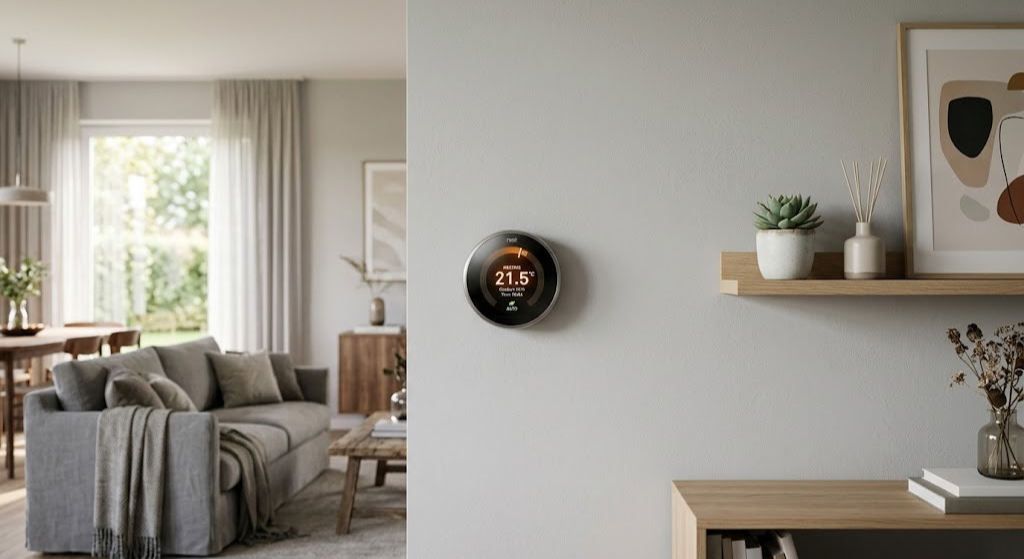
How a Smart Thermostat Makes Your Home Dramatically Safer
From frozen pipe alerts to air quality monitoring, fire integration, and remote emergency shutoffs — the safety case for smart thermostats goes far deeper than most homeowners realize.
Smart Thermostats Do More Than Save Energy — They Protect Lives
When most people think about upgrading to a smart thermostat, the mental math goes something like this: I will save on my energy bill, I can control the temperature from my phone, and maybe it will learn my schedule. Those are real benefits. But there is an entire dimension of value that almost never makes it into the marketing brochures: home safety.
A well-configured smart thermostat is, in practice, a 24/7 home monitoring system for your HVAC environment. It watches temperature fluctuations that signal frozen pipe risk. It detects HVAC behavior patterns that suggest equipment about to fail. It monitors air quality for invisible threats like elevated CO2 and volatile organic compounds. It integrates with fire and CO detection systems to cut HVAC fan operation the moment a smoke alarm triggers. And it sends alerts to your phone before any of those situations escalate from a warning into a disaster.
None of this replaces dedicated safety devices — smoke detectors, CO alarms, leak sensors, and security systems all deserve their own place in your home’s safety layer. But smart thermostats add a dimension of environmental awareness and automated response that conventional thermostats simply cannot provide. This guide covers every safety mechanism in detail, with real scenarios, data, and product-specific guidance for configuring these features correctly.
Minimum temperature setpoints and low-temperature alerts prevent pipe-bursting conditions
Smoke alarm integrations shut off HVAC fans before smoke spreads through ducts
VOC, CO2, and humidity sensing alert you to invisible indoor air hazards
Instant smartphone notifications for temperature extremes, HVAC faults, and power loss
Detects abnormal cycling, equipment underperformance, and impending failures early
PIN protection and temperature range limits prevent unauthorized changes
Frozen Pipe Prevention: The Single Most Expensive Disaster Smart Thermostats Prevent
A burst water pipe from freezing temperatures is the most financially devastating home damage event that smart thermostats directly prevent. The Insurance Information Institute estimates the average frozen pipe burst causes $15,000–$30,000 in damage — and that number jumps dramatically when the event occurs while the homeowners are away on vacation and the water runs undetected for days.
Conventional thermostats cannot protect against this because they have no awareness of your absence, no way to communicate with you remotely, and no intelligence to maintain minimums when you switch to a setback temperature. A smart thermostat changes all three of those limitations simultaneously.
How Smart Thermostats Prevent Frozen Pipes
Minimum temperature setpoints: Every major smart thermostat allows you to set an absolute floor temperature below which the system will not go, regardless of schedule or setback programming. Setting a minimum of 55°F effectively eliminates frozen pipe risk in all but the most extreme structural scenarios, since water begins to freeze in pipes exposed to temperatures well below that threshold. Importantly, the system maintains this minimum even if you are running vacation mode, even if your scheduled setback would otherwise call for 60°F, and even if your geofencing determines the home is unoccupied.
Low temperature alerts: When interior temperature drops below a threshold you define — say, 58°F — the thermostat sends an immediate push notification to your smartphone. This matters most during power outages or furnace failures: while the thermostat itself cannot heat without a working system, it gives you the warning signal to act before damage occurs. You can call a neighbor to check in, contact an HVAC emergency service, or arrange for someone to assess the situation before the pipes reach the freezing point.
Geofencing-maintained minimums: When geofencing determines you have left home, smart thermostats can enter eco or away mode — but responsible smart thermostat configurations maintain the low-temperature minimum floor even in those modes. Do not assume that eco mode and freeze protection are the same setting. They are not, and verifying the minimum setpoint is maintained regardless of occupancy mode is a critical configuration step.
In your smart thermostat app, find the alerts or notifications section and enable the low temperature alert. Set the threshold to 55°F. This single configuration step is free, takes two minutes, and represents the most direct financial protection smart thermostats offer.
Vacation Mode vs. Freeze Protection — Know the Difference
A common and dangerous misconception: “I set vacation mode, so my home is protected.” Vacation mode on most thermostats is an energy-saving mode that holds a setback temperature — typically 60°F or whatever you program — during your absence. It is not inherently a freeze protection mode. If your furnace fails during vacation mode, the thermostat has no mechanism to compensate for the lost heating, and interior temperatures can plummet well below the vacation setpoint.
The freeze protection is the separate minimum temperature alert and setpoint — the floor below which the system sends an alert and will not willingly allow temperature to fall. These are different from the vacation setpoint, and both should be configured independently. Our guide on winter vacation thermostat settings and pipe freeze prevention covers the exact configuration steps for each major brand.

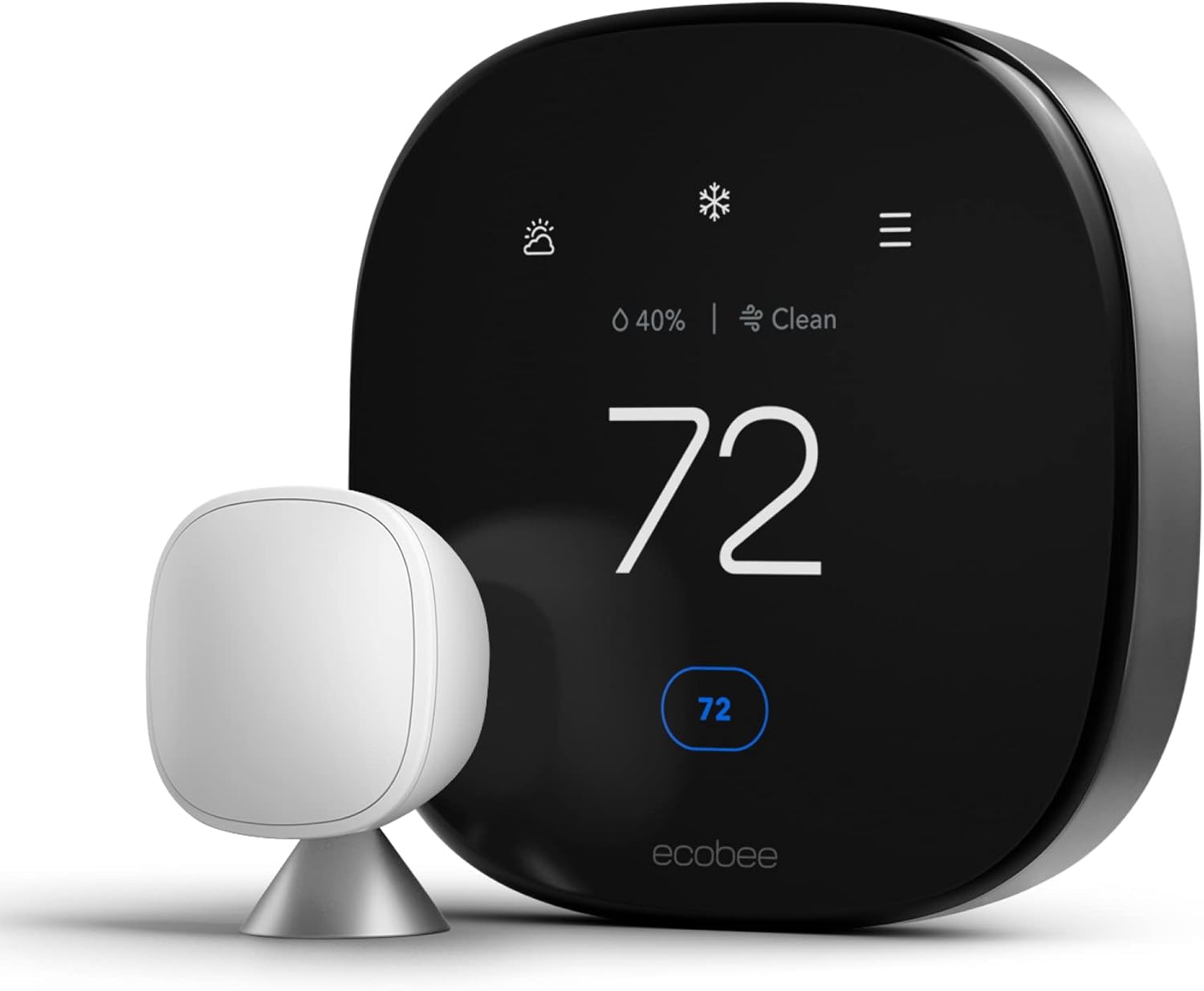
Built-in air quality (VOC + CO2 + humidity), SmartSensor for room-level occupancy, freeze protection alerts, HVAC health monitoring, and full HomeKit/Alexa/Google integration for smoke alarm automations.
🛒 Check Price on AmazonFire Risk Reduction: HVAC Integration with Smoke and CO Detection
Here is something most homeowners do not think about until it is too late: when a fire starts in your home, your HVAC system can become an active participant in spreading it. The same forced-air ductwork that delivers conditioned air throughout your home will, if the air handler is running during a fire, push smoke and combustion gases from the fire’s origin point to every room serviced by that duct system within minutes. Smart thermostats, integrated with smoke and CO detectors through a smart home hub, can automatically shut off that fan before it spreads the danger.
HVAC Fan Shutoff During Smoke Events
In ecosystems like Google Home, Amazon Alexa, or Apple HomeKit, automations can be configured to execute the following sequence the moment a connected smoke detector triggers: shut off the HVAC system immediately, send an alert to all household members’ phones, and prevent the system from restarting until manually overridden. This sequence takes effect in under 10 seconds — faster than most household members can process the alarm and take action themselves.
The practical impact is significant. Research on residential fire behavior consistently shows that smoke inhalation — not direct flame contact — causes the majority of fire-related injuries and fatalities. Anything that slows smoke distribution through the home buys critical escape time and reduces exposure. Shutting off the HVAC fan is a direct intervention in that distribution mechanism.
HVAC System Overheating Alerts
Smart thermostats also contribute to fire prevention at the HVAC equipment level. When a furnace, air handler, or heat pump runs abnormally — for example, when a dirty filter causes the furnace heat exchanger to overheat, or when an air handler’s blower motor begins to fail and draws excess current — smart thermostats detect the resulting performance anomaly and alert you. The thermostat observes that the system is running continuously without achieving the setpoint, that temperatures are rising or falling in unusual patterns, or that runtime behavior has changed significantly from baseline.
Early detection of overheating equipment is meaningful fire prevention. Furnace heat exchanger failures — where a cracked exchanger allows combustion gases to enter the living space — produce both fire risk and CO poisoning risk simultaneously. Smart thermostat alerts that prompt an early HVAC inspection catch these conditions before they become emergencies.
In a forced-air system, the air handler fan can move 800–2,000 cubic feet of air per minute through your home’s ductwork. If a fire is burning in one room and the HVAC fan is running, it can fill the entire home with smoke in 2–4 minutes. Smart home automation to shut off HVAC on smoke alarm trigger is one of the highest-impact safety configurations you can make.
Setting Up HVAC-Smoke Alarm Integration
Configuration requires three elements: a smart thermostat with API access to a home automation hub, a compatible smart smoke detector (Nest Protect, First Alert Onelink, or a connected Kidde model), and a hub automation that links the two. In Google Home, this appears as a “routines” automation. In Alexa, it is an Alexa Routine triggered by the smoke detector guard. In Apple HomeKit, it is an automation in the Home app. The specific steps vary by platform, but all three major ecosystems support this integration with no special hardware beyond what you likely already own or plan to purchase.
Indoor Air Quality Monitoring: The Invisible Safety Layer
The air inside a typical home is measurably more polluted than outdoor air in most scenarios. The EPA has documented indoor air quality as a significant public health issue, with common indoor pollutants including volatile organic compounds from building materials and furniture, elevated CO2 from occupancy, humidity extremes that promote mold growth, and particulate matter from cooking, candles, and tracked-in outdoor pollution. Most of these hazards are invisible and odorless — you cannot see, smell, or feel them in real time, even as they affect your health, cognition, and comfort.
Advanced smart thermostats with integrated air quality sensors change this picture fundamentally by making invisible hazards visible and actionable.
VOC Monitoring: Catching Chemical Hazards Early
Volatile organic compounds — VOCs — are gases emitted from a wide range of household products and materials: new furniture and carpeting, paints and varnishes, cleaning products, adhesives, and building materials. Short-term exposure to elevated VOCs causes headaches, dizziness, and irritated eyes. Long-term exposure to certain compounds is associated with liver, kidney, and nervous system damage, and several common VOCs are classified as probable human carcinogens.
The Ecobee Premium’s integrated VOC sensor continuously monitors these compounds and alerts you through the app when levels rise above safe thresholds. It does not identify specific chemicals — it measures total VOC load — but the alert is actionable: increase ventilation, identify and remove the source, or use air filtration until levels normalize. This is the kind of hazard that a conventional thermostat provides zero information about, while a premium smart thermostat treats as a standard monitored variable.
CO2 Level Monitoring and Cognitive Effects
Carbon dioxide is not a toxic gas at the concentrations found in occupied homes — it will not poison you the way CO will. But elevated CO2 levels, which build up in occupied spaces with inadequate ventilation, have well-documented effects on cognitive performance. Research from Harvard’s School of Public Health found that CO2 levels above 1,000 ppm (parts per million) — a threshold easily reached in occupied, under-ventilated rooms — reduced decision-making performance by 15%. At 2,500 ppm, cognitive performance declined by over 50%.
A smart thermostat that alerts you when CO2 in your living space exceeds healthy thresholds is not being alarmist. It is telling you to open a window or run the ventilation system before a condition that you cannot perceive is already impacting your household’s function. For home offices where concentration and decision quality matter, this is a meaningful and practical benefit.
Humidity Monitoring and Mold Prevention
Mold requires three conditions: organic material (present everywhere in a home), mold spores (present everywhere in ambient air), and moisture. Relative humidity above 60% consistently for extended periods in accessible building materials creates ideal mold growth conditions. Smart thermostats monitor interior humidity continuously and alert you when levels exceed a threshold you define — typically 55–60% RH.
Mold remediation costs $500–$6,000 for typical residential cases, and much more when the problem is discovered late. Humidity monitoring that prompts you to run a dehumidifier or check for moisture sources when RH climbs is inexpensive prevention with meaningful financial and health protection value.
Remote Monitoring: Knowing What Is Happening When You Are Not There
The most fundamental safety feature of any Wi-Fi connected smart thermostat is deceptively simple: you can see exactly what temperature your home is right now, from anywhere in the world, at any time. That capability — available even on $60 budget smart thermostats — is a safety superpower that conventional thermostats and even many programmable models completely lack.
What Remote Monitoring Actually Protects Against
Without a smart thermostat, a furnace failing while you are at work or traveling may not be discovered until temperatures have dropped dangerously. With remote monitoring, you see the temperature drop in real time and receive an alert before it reaches critical levels.
Unusual temperature spikes in specific zones, or the home not cooling despite the AC running, signal equipment malfunction. Remote visibility allows you to identify the anomaly and respond before equipment damage or safety risk develops.
Smart thermostats with battery backup or that send outage alerts notify you immediately when power is lost. In winter, this gives you a head start on response before temperatures drop to dangerous levels for vulnerable occupants or at-risk plants and items.
If your HVAC system activates unexpectedly — a sign of thermostat malfunction, a stuck relay, or unauthorized system access — remote monitoring shows you the system runtime in real time and allows immediate investigation.
Multi-Location Monitoring for Property Owners
Homeowners with vacation properties, rental homes, or family members living independently benefit disproportionately from remote thermostat monitoring. A landlord with five rental properties can view the current temperature and HVAC status of all five from a single app screen — a capability that previously required either tenants calling in problems (reactive) or in-person visits (expensive). A family with an aging parent living alone can monitor home temperature as a secondary indicator of wellbeing, noting unusual patterns that might indicate a problem. This kind of ambient awareness was simply not possible before connected smart thermostats made it a standard feature.
Most homeowners use only a fraction of the available alert configurations in their smart thermostat app. Go through every notification setting and enable: low temperature alerts, high temperature alerts, HVAC failure alerts, filter change reminders, and if available, air quality threshold alerts. Each one is a specific safety net you are paying for through the device cost — configure all of them.
HVAC Fault Alerts: Catching Problems Before They Become Emergencies
Your HVAC system does not fail catastrophically without warning in most cases. It gives signals — irregular cycling, longer-than-normal runtimes, inability to reach setpoints, unusual noises, equipment that restarts repeatedly — that indicate developing problems. The challenge with conventional thermostats is that they cannot observe these patterns, cannot remember them across time, and certainly cannot alert you to them. Smart thermostats change all three.
Short-Cycling Detection
Short-cycling — where an HVAC system turns on and off in rapid succession with very short run times — is one of the most reliable indicators of equipment problems. It can signal an oversized system, a refrigerant issue, a failing compressor, a clogged filter causing the system to overheat and trigger its safety shutoff, or a control board problem. Smart thermostats track runtime patterns and can detect when cycling frequency changes significantly from the established baseline. When short-cycling is detected, some models send direct alerts; others include runtime anomalies in their periodic equipment health reports.
Filter Change Monitoring
A clogged air filter is the single most common cause of HVAC inefficiency and a direct path to equipment damage. When a filter becomes so restricted that airflow drops significantly, furnace heat exchangers overheat, AC coils ice over, and blower motors work harder than designed. All of these outcomes reduce equipment life and, in the furnace case, create potential fire and CO risks. Smart thermostats track runtime hours and send filter change reminders calibrated to your specific usage — far more accurate than a calendar reminder, since a home running the HVAC 10 hours per day in an extreme weather month clogs a filter much faster than the same home during mild weather.
Equipment Underperformance Detection
When your thermostat calls for heating or cooling but the home is not reaching the setpoint within expected time, something is wrong. Smart thermostats observe this pattern and alert you. The underlying cause could range from a low refrigerant charge in the AC to a failing furnace igniter, a damper stuck closed in a zone, or a cracked heat exchanger allowing heat to escape rather than entering the living space. Each of these represents either a safety concern or an imminent complete failure — the kind of thing that becomes a $3,000–$8,000 emergency replacement if discovered on a January night when the system stops entirely. Discovered early through smart thermostat alerts, many of these become a $200–$800 repair. If you ever encounter a situation where your thermostat is not triggering the furnace correctly, the detailed diagnostic at thermostat clicks but HVAC won’t start covers the exact wiring, battery, and breaker checks to isolate the problem quickly.
| HVAC Signal | What It Indicates | Safety Risk | Smart Thermostat Response |
|---|---|---|---|
| Short cycling (<5 min runs) | Oversizing, refrigerant, safety shutoff | Equipment damage, CO risk | Runtime anomaly alert |
| Not reaching setpoint | Low refrigerant, failing igniter, airflow | Temperature extremes, pipe freeze | Performance alert |
| Continuous runtime (>4 hrs) | System undersized, extreme weather, leak | Equipment overload | Long runtime notification |
| Unexpected system startup | Thermostat malfunction, relay stuck | Energy waste, fire (in rare cases) | Operational anomaly alert |
| Temperature spike in zone | Equipment overheat, blockage, sensor fail | Fire risk, equipment damage | High temp alert |
| Power loss | Outage, circuit fault | Temperature drop in winter | Outage notification (battery backup) |

Continuous HVAC health monitoring, filter change alerts, low temperature warnings, Home/Away Assist with Soli presence sensing, and native integration with Nest Protect smoke alarms for automatic HVAC shutoff.
🛒 Check Price on AmazonProtecting Vulnerable Household Members: Children, Elderly, and Immunocompromised Residents
The safety value of a smart thermostat is not uniform across all household members. For healthy adults in good health, temperature extremes are uncomfortable and inconvenient. For infants, elderly individuals, and people with certain medical conditions, the same temperature extremes can be genuinely dangerous. Smart thermostats provide specific mechanisms that meaningfully improve safety for these populations.
Infants and Young Children
Infants cannot regulate their body temperature efficiently and are highly vulnerable to both overheating and cold stress. The American Academy of Pediatrics recommends maintaining nursery temperatures between 65°F and 70°F — a fairly narrow range that conventional thermostats cannot guarantee against HVAC system failures or unexpected outdoor temperature changes. A smart thermostat with a remote sensor placed in the nursery monitors the actual temperature at that location — not just at the thermostat in the hallway — and alerts parents immediately if that temperature moves outside the safe range. Features like Ecobee’s SmartSensors or the Honeywell T9’s remote sensor system make this room-level monitoring possible without additional smart home infrastructure.
Elderly Individuals Living Independently
Elderly adults, particularly those living alone, face compounded risks from temperature extremes. The ability to detect a cold home early — through remote monitoring by a family member or caregiver — provides a secondary safety check that can catch situations where an elderly person has not noticed or cannot address a declining home temperature. Equally important, temperature-related cognitive effects are more pronounced in elderly individuals, meaning that a home drifting cold or hot can impair the ability to recognize and respond to the danger.
Remote access features that allow family members or caregivers to monitor and adjust a relative’s thermostat from another location — available in every major smart thermostat through account sharing or family access features — are directly applicable to this use case. Setting up a shared app access account for a family member who wants to monitor an aging parent’s home temperature is a straightforward two-minute configuration that provides real peace of mind and genuine protective value.
Medical Conditions Requiring Temperature Stability
Certain medical conditions require stable home temperatures: multiple sclerosis patients experience symptom exacerbation with heat; individuals with hypothyroidism are highly sensitive to cold; people with cardiovascular conditions are at elevated risk during both heat exposure and cold stress. For these households, the combination of smart thermostat monitoring, remote access, and multi-level alerts provides a layer of environmental health protection that significantly exceeds what any conventional thermostat can offer.
Vacation and Extended Vacancy Safety: Remote Awareness When You Are Furthest Away
The scenarios where smart thermostat safety features matter most are the ones where you are furthest from home and most dependent on remote information and automation. Vacations, extended business travel, seasonal properties, and rental homes all create extended periods of physical absence during which HVAC system failures, temperature extremes, or air quality events would otherwise go undetected until severe damage has already occurred.
The Smart Vacancy Configuration
A responsible smart thermostat vacation configuration includes more than setting a lower setpoint temperature. The complete safety-oriented vacation setup involves:
- Set the energy-saving vacation setpoint (e.g., 62°F heating / 82°F cooling for summer) to reduce energy consumption during absence.
- Independently configure and verify the low temperature minimum alert (55°F) so you receive an immediate notification if system failure causes temperatures to drop toward freeze risk regardless of the vacation setpoint.
- Enable high temperature alerts (85°F+) for summer absence so AC failure during a heat wave does not damage temperature-sensitive items or create conditions dangerous to any animals or plants left in the home.
- Verify that freeze protection minimum is set and active — confirming in the app that the system will maintain a minimum regardless of other programming.
- Enable push notifications for HVAC system faults, so equipment failures are reported immediately rather than discovered upon return.
Before any extended trip, open your thermostat app while at home, change the setpoint, and verify the thermostat responds. Then confirm your alert notifications are active by reviewing notification settings. A vacation that relies on remote monitoring you have never tested is not as protected as you think.
Seasonal and Vacation Properties
For seasonal properties — lake houses, ski cabins, beach homes — smart thermostats are arguably even more valuable than in primary residences. These properties sit unoccupied for extended periods in weather conditions that may be extreme, with no neighbor checking in and HVAC systems that may have sat idle for months. A smart thermostat with reliable Wi-Fi connectivity (even through a cellular hotspot if broadband is not available) gives the owner continuous visibility into a property that would otherwise be entirely dark. The specific vacation thermostat configuration guidance, including the exact settings to use by season, is covered thoroughly in our guide on winter vacation thermostat settings for pipe freeze prevention.
Tamper Protection and Lockout Features: Keeping Unauthorized Hands Off
Not every safety feature in a smart thermostat is about environmental monitoring. Some of the most practically important features protect the thermostat itself from unauthorized changes — by children, tenants, guests, or housekeepers — that can create safety or comfort problems without the homeowner’s knowledge.
PIN Lock and Display Lock
Most smart thermostats support a PIN lock mode that requires entry of a code before any settings can be changed at the physical device. This is useful in households with young children who might accidentally (or deliberately) change the thermostat to extreme temperatures, in rental situations where tenant access to the thermostat needs to be restricted, and in commercial or shared spaces where the thermostat serves multiple users with conflicting preferences.
The PIN lock does not prevent changes made through the owner’s smartphone app — those remain fully accessible to the account holder. It only restricts changes at the physical device, which is exactly the right balance between security and usability.
Temperature Range Limits
Separate from PIN locks, range limits restrict the minimum and maximum temperatures that can be set — even by authorized users at the device. A landlord-configured range limit of 60°F minimum and 80°F maximum, for example, prevents a tenant from setting the heat to 85°F and running up utility costs, while also ensuring the tenant cannot disable heating entirely and risk the pipes. This feature is particularly valuable for rental property management and is supported by most mid-range and premium smart thermostats. Resources like our guide on landlord thermostat lockouts and PIN range limits detail how to configure these settings across major brands for property management scenarios.
Access Sharing and Permission Levels
Smart thermostats support tiered access models: the primary account holder has full control; secondary users (family members, guests) can be granted limited access; and some models allow a “view only” mode where additional parties can see the thermostat status but cannot change settings. For households where different members have very different temperature preferences — or where a caregiver needs monitoring access but not control — these access levels prevent conflicts and unauthorized changes without eliminating remote visibility.
- ✓ PIN lock prevents unauthorized physical access
- ✓ Temperature range limits cap extremes
- ✓ Tiered account access controls permissions
- ✓ App activity logs show who changed what and when
- ✓ Encrypted communications on major brands
- ✓ Regular firmware security updates
- ✗ PIN can be bypassed by device reset on some models
- ✗ Wi-Fi network security affects overall device security
- ✗ Shared app access requires trust in account holders
- ✗ Geofencing depends on occupants carrying phones
Smart Home Integration: How Connected Thermostats Amplify Every Other Safety System
A smart thermostat operating in isolation — connected to the cloud, visible in an app, but not integrated with any other smart home devices — is already significantly safer than a conventional thermostat. But the real safety multiplier comes from integration: connecting the thermostat with smoke detectors, leak sensors, security systems, and home automation hubs in ways that create automated safety responses beyond what any individual device can achieve.
Smoke and CO Detector Integration
The Nest ecosystem has the most seamless implementation of this: when a Nest Protect smoke or CO alarm detects danger, it immediately sends a signal to any Google Nest thermostats in the home to shut off the HVAC system. No app automation required, no manual intervention — the system executes automatically in under 10 seconds. Other smart thermostats achieve similar results through hub-based automations in Google Home, Amazon Alexa, or Apple HomeKit, though these require a more deliberate setup process.
Water Leak Sensor Integration
Smart water leak sensors placed near water heaters, under sinks, near dishwashers and washing machines, and in basement areas can trigger thermostat-adjacent automations when leaks are detected: shutting off relevant HVAC zones, alerting all household members, and activating smart water shutoff valves if present. While the thermostat itself is not directly involved in water leak response, it is part of the broader smart home ecosystem that makes automated multi-device responses possible.
Security System Integration
When integrated with a security system, smart thermostats can respond to armed/disarmed status in safety-relevant ways. When the security system is armed in “away” mode — signaling that all residents have left — the thermostat automatically transitions to eco mode with freeze protection maintained. When the system is disarmed — residents returning home — the thermostat begins temperature recovery before anyone walks through the door. This closes the gap between geofencing (which requires residents to carry phones) and security system arming (which happens actively at every departure and arrival).
Smart Thermostat Safety Features: Brand-by-Brand Comparison
Safety features vary meaningfully across brands and models. Here is a direct comparison of how the major smart thermostats stack up on the safety dimensions covered in this guide.
| Feature | Ecobee Premium | Nest 4th Gen | Honeywell T9 | Wyze | Sensi Touch 2 |
|---|---|---|---|---|---|
| Low Temp Alert | ✓ Yes | ✓ Yes | ✓ Yes | ✓ Yes | ✓ Yes |
| High Temp Alert | ✓ Yes | ✓ Yes | ✓ Yes | ✓ Yes | ✓ Yes |
| HVAC Fault Alerts | ✓ Detailed | ✓ Detailed | ⚠ Basic | ⚠ Basic | ⚠ Basic |
| VOC Monitoring | ✓ Built-in | ✗ No | ✗ No | ✗ No | ✗ No |
| CO2 Monitoring | ✓ Built-in | ✗ No | ✗ No | ✗ No | ✗ No |
| Humidity Monitoring | ✓ Yes | ✓ Yes | ✓ Yes | ✓ Yes | ✓ Yes |
| Smoke Alarm Integration | ✓ Via hub | ✓ Native | ✓ Via hub | ✓ Via Alexa | ✓ Via hub |
| Remote Sensor | ✓ SmartSensor | ✓ Temp Sensor | ✓ Smart Room | ✗ No | ⚠ Add-on |
| PIN / Lockout | ✓ Yes | ✓ Yes | ✓ Yes | ⚠ Limited | ✓ Yes |
| Multi-User Access | ✓ Yes | ✓ Yes | ✓ Yes | ✓ Yes | ✓ Yes |
| Power Outage Alert | ✓ Yes | ✓ Yes | ⚠ Via hub | ⚠ Limited | ⚠ Via hub |
If air quality monitoring (VOC, CO2) is your primary safety concern, the Ecobee Premium is the clear choice — it is the only major smart thermostat with built-in VOC and CO2 sensing. If smoke alarm integration and occupancy-based safety automation are the priority, the Nest ecosystem’s native Nest Protect integration is seamless in a way that hub-based workarounds are not.
The Complete Smart Thermostat Safety Setup Checklist
Owning a smart thermostat and having it configured for safety are two different things. This checklist covers every configuration step needed to make your smart thermostat an active home safety system rather than just a convenient remote control for your HVAC.
Installation-Level Safety Steps
- Verify wiring compatibility before installation. Incorrect wiring can damage the control board, create a fire risk from short circuits, or cause intermittent system behavior that is harder to diagnose. Our thermostat wiring guide covers every terminal type and compatible wire configuration for all major systems.
- Confirm C-wire configuration is correct. An improperly connected C-wire can cause the HVAC system to cycle abnormally, create voltage issues on the control board, or cause the thermostat to power on and off unpredictably.
- Test all HVAC modes after installation. Confirm heating, cooling, and fan modes all operate correctly from the new thermostat before declaring installation complete. An incorrectly wired thermostat may appear to work but fail in a mode you will not discover until the season changes.
App Configuration Safety Steps
- Enable low temperature alert at 55°F. The highest-priority safety configuration for any smart thermostat. Non-negotiable in climates with freezing winter temperatures.
- Enable high temperature alert at 85°F. Protects against AC failure in summer, particularly important for households with pets, temperature-sensitive items, or vulnerability to heat.
- Set freeze protection minimum setpoint. Distinct from the low temperature alert — this is the floor below which the system will not schedule, regardless of other programming.
- Enable HVAC fault and maintenance alerts. Filter reminders, short-cycling alerts, and performance notifications.
- Configure vacation/away mode with freeze protection verified. Confirm that the low-temperature minimum remains active in away and vacation modes.
- Enable air quality alerts if your thermostat supports them (Ecobee Premium specifically). Set VOC, CO2, and humidity threshold alerts.
- Set up smoke alarm integration through your smart home hub if the native integration (Nest-to-Nest Protect) is not available.
Access and Security Configuration
- Configure PIN lock if unauthorized physical access is a concern — households with young children, rental properties, or shared living situations.
- Set up secondary account access for trusted family members or caregivers.
- Enable all push notifications on every household member’s phone who should be informed of safety alerts.
- Test all alerts by temporarily adjusting thresholds to verify that notifications arrive on your phone as configured.
Working through this checklist for a newly installed smart thermostat takes approximately 15 minutes in the app. That 15-minute investment activates safety features that could prevent tens of thousands of dollars in property damage and provide genuine protection for household members. It is the highest ROI quarter-hour in home safety.
Frequently Asked Questions About Smart Thermostat Home Safety
Most smart thermostats do not directly detect carbon monoxide. However, models like the Ecobee Premium include indoor air quality monitoring for VOCs and CO2 (which is different from CO). In smart home ecosystems, smart thermostats can be integrated with dedicated CO detectors to trigger HVAC shutoff when CO is detected — but the CO detection itself requires a separate CO alarm.
Yes, through two mechanisms: a minimum temperature setpoint that prevents the system from allowing temperatures to drop below a defined floor (typically 55°F), and a low temperature alert that notifies you immediately by smartphone if temperatures approach dangerous levels due to equipment failure. Together, these provide early warning and automated response that conventional thermostats cannot offer.
Smart thermostats contribute to fire safety in two ways: by integrating with smoke detectors through smart home hubs to automatically shut off HVAC fans when smoke is detected (preventing smoke from spreading through ducts), and by monitoring HVAC system health to detect overheating equipment before it becomes a fire risk. They do not replace dedicated smoke detectors but add a system-level safety layer.
Yes, all modern Wi-Fi smart thermostats allow remote temperature monitoring via smartphone app. You can view current temperature and system status in real time, receive alerts when temperature moves outside defined ranges, and adjust settings from anywhere. This capability is available even on budget-tier smart thermostats at the $60–$80 price point.
Smart thermostats protect vulnerable residents by maintaining safe temperature ranges automatically through minimum and maximum setpoints, alerting caregivers or family members when temperatures become extreme, enabling remote monitoring and adjustment by trusted parties through shared app access, and supporting PIN lockouts that prevent accidental or unauthorized temperature changes to unsafe levels.
Yes, in smart home ecosystems. The Nest thermostat and Nest Protect smoke alarm have a native integration that executes this automatically. For other smart thermostat and smoke detector combinations, automations in Google Home, Amazon Alexa, or Apple HomeKit can achieve the same result through a configured routine or automation triggered by the smoke detector alert.
The Ecobee Premium monitors VOCs, CO2 levels, and relative humidity, alerting you through the app when levels exceed thresholds you define. Other smart thermostats typically monitor humidity only. None of the standard smart thermostats detect CO (carbon monoxide), particulate matter (PM2.5), or allergen counts without additional dedicated sensors.
Yes. Smart thermostats monitor runtime patterns, temperature achievement rates, and cycling behavior to detect abnormalities. When the system detects short-cycling, failure to reach setpoints, unusually long runtimes, or equipment underperformance, it sends alerts via the app. This early warning system converts imminent failures into actionable warnings rather than emergency discoveries.
Major smart thermostat brands use encrypted communications (TLS/SSL), secure cloud infrastructure, and two-factor authentication options. Keeping firmware updated, using strong unique passwords, and securing your home Wi-Fi network reduces the already-low risk further. The practical risk of thermostat hacking is significantly lower than most connected home devices and has not been a documented real-world safety concern in consumer deployments.
Smart thermostats with battery backup or power-stealing capability maintain their settings through brief outages and restore operation immediately when power returns. Models like the Ecobee send a push notification when they lose AC power, alerting homeowners to the outage in real time. This early notification gives you time to respond before temperatures in an unheated home drop to dangerous levels during a winter outage.
Conclusion: The Safety Case for Smart Thermostats Is Compelling and Underappreciated
The energy savings case for smart thermostats gets all the marketing attention. The safety case — which is arguably just as compelling for most homeowners and genuinely more compelling for those with young children, elderly family members, vacation properties, or rental units — gets almost none.
What this guide has covered represents the real scope of smart thermostat safety value:
- Frozen pipe prevention through minimum temperature setpoints and real-time low temperature alerts that can prevent $15,000–$30,000 in water damage.
- Fire risk reduction through HVAC fan shutoff automations when smoke is detected, and early HVAC health monitoring that catches overheating equipment before it becomes a fire hazard.
- Air quality monitoring that makes invisible indoor hazards — VOCs, CO2 buildup, excessive humidity — visible and actionable for the first time in most homes.
- Remote monitoring that provides 24/7 awareness of your home’s condition regardless of your physical location.
- HVAC fault detection that converts what would have been emergency discoveries into early-warning maintenance opportunities.
- Vulnerable resident protection through room-level monitoring, caregiver remote access, and automated temperature maintenance.
- Tamper lockouts that prevent unauthorized changes by children, tenants, and guests.
None of these benefits require a premium-tier device to activate. Low temperature alerts, remote monitoring, and HVAC fault notifications are available on smart thermostats at every price point. The features that require premium hardware — VOC monitoring, built-in CO2 sensing — are specifically available in the Ecobee Premium, which also happens to be the most capable thermostat for HVAC health monitoring and smart home integration.
If you have been on the fence about upgrading from a conventional or programmable thermostat, the safety case alone makes the upgrade worthwhile. Configure it properly — work through the checklist in Section 12 — and the safety features activate immediately. The energy savings are a bonus.




 Home
Home
 Info
Info
 Compare
 Reviews
 Shop
Shop