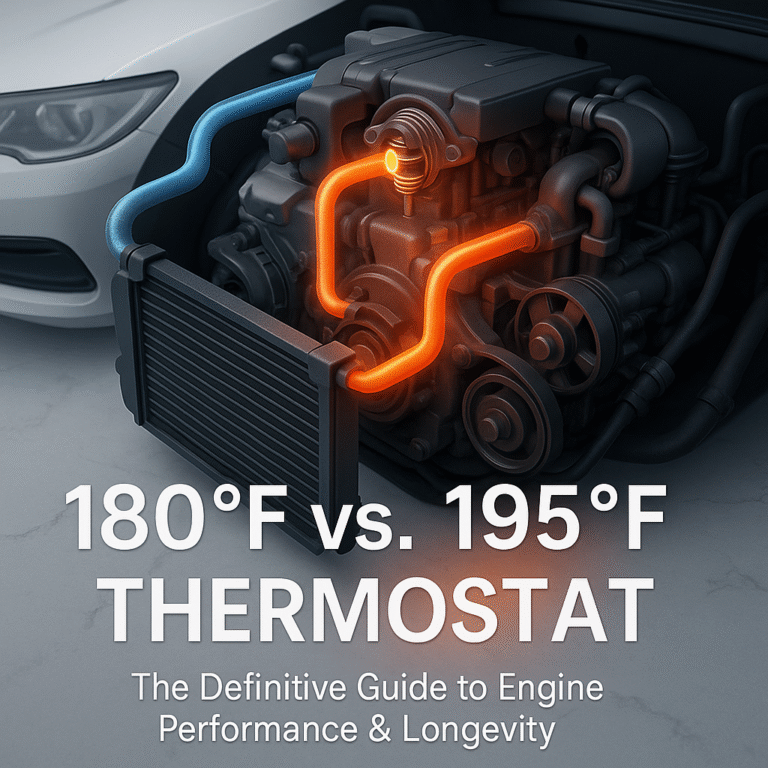
180°F vs. 195°F Thermostat: The Definitive Guide to Engine Performance & Longevity
If you’ve spent any time on car forums or talking shop with mechanics, you’ve likely encountered the great thermostat debate: should you stick with the factory 195°F thermostat or switch to a cooler 180°F unit? It’s a seemingly minor 15-degree difference, but the implications for your engine’s health, performance, and efficiency are significant. Many believe a cooler engine is always a healthier engine, but modern automotive engineering tells a more nuanced story.
This guide will cut through the myths and misinformation. We’ll dive deep into the science behind engine operating temperatures, explain why your car’s manufacturer chose the temperature they did, and provide clear, data-driven reasons to help you choose the right thermostat for your vehicle and driving style.
The Quick Verdict: Which Thermostat Should You Use?
For over 95% of stock, daily-driven vehicles, the answer is unequivocally the 195°F (or OEM-specified) thermostat. Modern engines are designed by teams of engineers to run at this higher temperature for optimal fuel combustion, lower emissions, and proper lubrication. Deviating from this can actually harm your engine and reduce performance. A 180°F thermostat should only be considered for very specific, niche applications like heavily modified race engines with a custom ECU tune, and it is NOT a fix for an overheating problem.
How a Thermostat *Really* Works (The Simple Analogy)
Before we compare temperatures, let’s clarify what a thermostat does. Think of it as a smart gatekeeper for your engine’s coolant. It sits between the engine and the radiator, controlling the flow.
- When the engine is cold: The thermostat stays closed. This keeps coolant trapped inside the engine block, allowing the engine to warm up as quickly as possible. A cold engine is inefficient, pollutes more, and wears out faster.
- When the engine reaches operating temperature (e.g., 195°F): The wax inside the thermostat melts and expands, pushing a valve open. This allows hot coolant to flow to the radiator to be cooled down.
Crucially, the thermostat sets the minimum normal operating temperature. It does not determine the maximum temperature. If your engine is overheating, your cooling system (radiator, fans, water pump) can’t keep up, and a lower-temp thermostat won’t fix that underlying problem.
Inside the Thermostat: How the Wax Pellet Valve Actually Works
Most car owners know roughly what a thermostat does, but very few understand the elegant physics happening inside that small brass-and-rubber component. The mechanism at the heart of every modern automotive thermostat is called a wax pellet valve, and understanding how it works helps explain why thermostat temperature ratings matter so precisely — and why cheap or worn-out thermostats can cause serious problems.
The Wax Pellet: A Brilliant Piece of Engineering
Inside the thermostat body sits a sealed copper or brass cup packed with a specially blended wax compound. This wax is the entire brains of the operation. At room temperature, the wax is solid, and a spring holds the thermostat valve firmly closed, blocking coolant flow to the radiator entirely.
As the engine warms up and coolant temperature rises, heat conducts through the metal cup and into the wax. Here’s where the engineering gets clever: the wax blend used is calibrated to begin melting at a very precise temperature — your thermostat’s rated temperature, whether that’s 180°F or 195°F. Unlike water, which melts and freezes at a fixed point, this wax transitions from solid to liquid across a narrow but controlled range.
As the wax melts, it expands significantly — the volumetric expansion of these wax compounds is substantially greater than that of most liquids, which is precisely why they’re used. This expansion pushes against a piston or pushrod, which in turn overcomes the return spring’s tension and forces the valve open. Coolant can now flow from the engine block through to the radiator.
When the engine cools — such as when you stop at a long red light and airflow through the radiator drops — the wax solidifies again, contracting and allowing the spring to pull the valve closed. The thermostat essentially oscillates in this zone, modulating coolant flow to maintain a stable engine temperature. For a full technical breakdown of this mechanism, see our deep dive into how the car thermostat wax pellet valve works.
Why Wax Compound Blending Matters for Your Temperature Rating
Different thermostat temperature ratings — 160°F, 180°F, 195°F — are achieved entirely through changes in the wax blend. Higher-melting-point wax formulations produce higher-rated thermostats. This is significant because it means the rating is baked into the physical chemistry of the component, not adjustable by any external factor. A 195°F thermostat cannot open at 180°F no matter what you do to it, short of physically breaking it open and replacing the wax compound. This precision is why simply running a lower-rated thermostat to “trick” the ECU into thinking the engine is cooler than it is causes so many downstream problems.
The Rubber Seal and Jiggle Pin
Two smaller but important components deserve mention. The rubber seal on the thermostat flange creates a watertight closure when the valve is shut. This seal degrades over time with heat cycling, which is one reason even a thermostat that “opens” correctly can cause overheating — if the seal leaks, coolant bypasses the thermostat even when it’s closed, preventing proper warm-up. The small bleed hole or “jiggle pin” on the thermostat flange is a deliberate small aperture that allows a tiny trickle of coolant and any trapped air to pass through even when the thermostat is fully closed, preventing air pockets from forming in the system during a coolant flush or after a repair.
The Truth About Thermostat Opening Temperatures
Here’s a key point that’s often misunderstood: a thermostat’s rated temperature is the point at which it begins to open — not when it’s fully open.
The 10-Degree Gradient
For example, a thermostat labeled as 195°F is designed to start opening at that temperature, but it won’t be completely open until approximately 10°F higher — around 205°F. That means, depending on where you’re measuring, you might notice slightly different readings throughout the engine, such as a lower temperature at the intake manifold and a higher one in the cylinder head where heat is more intense.
Understanding Your Gauge
So if you see a temperature a bit above the thermostat’s rating on your gauge, don’t panic — that’s entirely normal. The thermostat operates on a gradient, gradually allowing more coolant to flow as the engine warms up to keep everything precisely regulated.
How Driving Conditions and Environment Affect Engine Temperatures
Thermostats set the baseline for your engine’s operating temperature, but real-world conditions can nudge those numbers up or down. Most stock cooling systems are efficient enough that, under normal circumstances — whether you’re cruising city streets, hammering down the interstate, or hauling a trailer — your engine will stay within about 5 degrees of the thermostat’s rating.
Towing or Heavy Loads
Pulling a trailer or carrying extra weight naturally makes your engine work harder, which produces more heat. A good cooling system compensates, keeping temps within the intended range, but sustained heavy loads can still push engine temperatures slightly higher.
Stop-and-Go Traffic
Repeated idling puts less airflow through the radiator, so engine heat can creep up — though the radiator fan usually steps in to keep things under control.
Highway Speeds
Generally, higher speeds improve airflow, which helps the radiator shed heat more efficiently. Ironically, this often keeps things closest to thermostat-controlled levels.
Extreme Ambient Temperatures
Sweltering summer heat, especially combined with city driving or towing, will challenge any cooling system. Expect temperatures to rise a bit, but the thermostat ensures things don’t dip too low.
Altitude and Thin Air
Climbing from sea level to higher elevations can drive up temperatures. Thinner air up high means less efficient cooling — for both your engine and radiator — so it’s normal to see the needle rise on steep grades.
The Bottom Line
While your thermostat defines the minimum operating temperature, outside variables like towing a heavy load, traffic jams, steep mountain climbs, or extreme heat can temporarily bump engine temps higher — even if your cooling system is in tip-top shape. This is all by design, and modern engines are engineered to handle these swings without issue.
Cooling System Efficiency & Sensor Placement: The Overlooked Variables
When it comes to your engine’s operating temperature, the thermostat is just one piece of the puzzle. The real-world temperature your gauge displays is shaped by three often-overlooked factors: cooling system efficiency (radiator and water pump), where your temperature sensor is mounted, and the outside ambient conditions.
1. Cooling System Performance
A thermostat begins to open at its rated temperature, but it doesn’t fully open instantly — that process is gradual. If your radiator and water pump are exceptionally effective, the coolant can stay near the thermostat’s lower threshold, causing the stat to remain mostly closed or cycle open and shut. On the flip side, if your cooling system can’t shed heat fast enough (due to high temperatures, clogged radiator, or weak water pump), the thermostat may stay wide open all the time, unable to bring temperatures down. This is why simply swapping thermostats rarely cures chronic overheating.
2. Sensor Location Matters
Where you place the temperature sender can significantly influence the reading you see on the dash. Sensors in the cylinder head (where combustion happens) often show higher temperatures than those in the intake manifold, which sits further from the hottest combustion zones. So, a reading of 190°F in the head might correspond to a noticeably lower figure in the intake manifold.
Takeaway
A lower-temp thermostat might prevent your engine from ever reaching full operating temperature if your cooling system is highly efficient. Conversely, if your cooling system is struggling, even a colder thermostat can’t compensate — it will simply remain open as your engine creeps towards higher temps. Always consider the bigger picture: radiator health, water pump capability, and sensor placement all play important roles in how your thermostat behaves and what your temperature gauge reports.
Sensor Placement: Head vs. Intake — Why Location Matters
Where you place your temperature sensor can dramatically affect the readings you see. Sensors located in the cylinder head will typically register a higher temperature than those installed in the intake manifold. This isn’t a sensor malfunction — it’s simply a reflection of how coolant flows through the engine.
The Heat Gradient
- Head-mounted sensors: Measure coolant as it exits the engine, after it has absorbed the most heat from combustion.
- Intake-mounted sensors: Measure coolant entering the engine, which has had a chance to cool down in the radiator.
Reading the Difference
For example, it’s perfectly normal to see a reading a bit below 180°F at the intake, while a sensor in the head might show temperatures over 190°F. Both are correct for their location, and this difference is important to keep in mind when diagnosing or tuning your cooling system.
Are Automotive Temperature Gauges Accurate? How to Verify Yours
Factory-installed temperature gauges are, frankly, not precision instruments. Most are built for affordability and general monitoring, not laboratory-level accuracy. This means what you see on your dash is best viewed as “ballpark,” not gospel. It’s not uncommon for these gauges to display readings that are slightly (or occasionally, wildly) off from the true coolant temperature.
Why Are They Inaccurate?
- Calibration Variance: Car manufacturers design these gauges to provide a general warning rather than exact temperature monitoring.
- Sensor Location: Sensors usually measure coolant temperature at specific engine points, which may not represent overall temperature accurately.
- Tiered or “Buffered” Gauges: Many modern gauges are purposely non-linear — designed to stay steady within a safe range, only swinging noticeably when there’s a real issue.
How to Test Your Gauge Accuracy
- Sensor Testing: Remove the coolant temperature sensor from the engine (with the ignition off, of course).
- Controlled Heating: Submerge the sensor in a container of water. Use a highly accurate thermometer (digital or classic mercury) to track the water temperature as you gradually heat it.
- Monitor the Gauge: With the sensor still wired to the car and its body properly grounded, watch your dash gauge as the water rises in temperature.
- Compare & Record: Note the exact temperature on the thermometer when the dash gauge reaches key points like “normal” or approaches the red zone.
Takeaway: By knowing your gauge’s limitations — and how to test it — you set yourself up for smarter maintenance decisions and fewer surprises down the road.
Stuck Open vs. Stuck Closed: Understanding Thermostat Failure Modes
A thermostat can fail in two fundamentally different ways, and each produces a completely different set of symptoms. Understanding the difference is critical for accurate diagnosis — and for avoiding the very costly mistake of overlooking a simple thermostat replacement while chasing a more exotic (and expensive) diagnosis.
Failure Mode 1: Stuck Closed
When a thermostat fails in the closed position, the valve remains shut even as the engine heats up beyond its normal operating temperature. Coolant cannot flow to the radiator, so heat accumulates rapidly in the engine block. This is the more dangerous of the two failure modes and can destroy an engine within minutes if not caught.
Symptoms of a stuck-closed thermostat:
- Temperature gauge climbs rapidly and continuously after startup, well past the normal operating range.
- The upper radiator hose remains cool or cold even when the engine is clearly very hot (no hot coolant is reaching the radiator).
- Steam from under the hood in severe cases.
- Coolant overflow tank bubbles or pushes coolant out.
- Heater may blow extremely hot air (all the heat is trapped in the engine) or may blow cold air (if the coolant has turned to steam and the heater core is receiving vapor rather than liquid).
A stuck-closed thermostat can cause head gasket failure, a warped cylinder head, or a cracked engine block — all catastrophically expensive repairs. If your gauge is climbing toward the red zone, pull over immediately, shut the engine off, and let it cool completely before investigating.
Failure Mode 2: Stuck Open
A thermostat stuck in the open position is far more common and far less immediately dangerous. The valve remains open permanently, meaning coolant circulates through the radiator continuously — even when the engine is cold. The result is an engine that takes much longer than normal to reach operating temperature and may never fully reach it on short trips in cold weather.
Symptoms of a stuck-open thermostat:
- Temperature gauge takes an unusually long time to reach the normal range after a cold start.
- Temperature gauge stabilizes below normal — for example, sitting at a quarter of the range when it should sit at the midpoint.
- Poor fuel economy, because the ECU stays in open-loop enrichment mode, dumping extra fuel.
- Weak cabin heater performance, especially in cold weather.
- Fouled spark plugs over time due to incomplete combustion from running too cool.
- Oil sludge buildup developing over months of operation.
Many drivers live with a stuck-open thermostat for months or years, dismissing the symptoms as normal. The engine doesn’t overheat, the car still drives, and the symptoms are gradual. But the cumulative damage — sludge, oil dilution, increased ring wear from incomplete warm-up — adds up. A thermostat is one of the cheapest engine components you can replace (typically $10–$30 for the part), making it one of the best-value maintenance items you can address proactively.
For a complete symptom guide covering both failure modes, along with diagnostic tests, see our dedicated article on stuck open vs. stuck closed thermostat symptoms.
The “Fail-Safe” Design Principle
Most modern thermostats are engineered to fail open rather than closed. This is a deliberate safety design choice: a stuck-open thermostat causes inconvenience (poor fuel economy, weak heater), while a stuck-closed thermostat can destroy the engine in minutes. When selecting a replacement thermostat, look for units specifically marketed as “fail-safe” or “fail-open” — they’re designed with a secondary mechanism that forces the valve open if the primary wax pellet mechanism seizes.
How to Tell If Your Car Thermostat Is Bad: 8 Diagnostic Tests
Thermostat failure is one of the most commonly missed diagnoses in DIY automotive maintenance, largely because the symptoms overlap with several other cooling system issues. Here is a systematic approach to confirming whether your thermostat is the culprit before spending money on a mechanic or replacing other cooling system components.
Test 1: The Cold Start Temperature Rise Test
Start the engine from cold and watch the temperature gauge. On a properly functioning system, the gauge should begin rising within a few minutes and reach the normal operating range (roughly midway on the gauge) within 5–10 minutes of driving. If the gauge is still sitting at or near the bottom after 15 minutes of driving, the thermostat is very likely stuck open — coolant is flowing to the radiator before the engine has a chance to warm up.
Test 2: The Upper Radiator Hose Test
With the engine at normal operating temperature, carefully feel the upper radiator hose (the large hose connecting the top of the radiator to the engine). Be cautious — it will be hot. It should feel hot and firm, indicating that hot coolant is flowing from the engine to the radiator. If it remains cool or lukewarm while the temperature gauge shows a high reading, the thermostat may be stuck closed, preventing flow.
Test 3: The Lower Radiator Hose Check
The lower hose carries cooled coolant from the radiator back to the engine. It should feel noticeably cooler than the upper hose. If both hoses feel equally hot, the thermostat is stuck open and coolant is circulating without restriction. If both hoses feel cool despite a hot-reading gauge, suspect a failed water pump rather than the thermostat.
Test 4: The Infrared Thermometer Scan
An infrared thermometer (less than $20 at any hardware store) lets you take accurate surface temperature readings without touching hot components. Point it at the thermostat housing on a fully warmed engine. If the housing is reading 20°F or more below the thermostat’s rated temperature, the thermostat may be stuck open. If it’s reading significantly above the rated temperature, suspect a stuck-closed thermostat or a cooling system flow restriction.
Test 5: The Pot Test (Bench Verification)
This is the most definitive DIY thermostat test. Remove the thermostat from the engine (see replacement procedure below). Fill a pot with water and a thermometer, and submerge the thermostat. Heat the water slowly while watching the thermostat. It should begin opening within 2–3 degrees of its rated temperature. A thermostat that opens far too early, far too late, or not at all is definitively confirmed as faulty. This test takes about 15 minutes and costs nothing if you already own a kitchen thermometer.
Test 6: Check for ECU Fault Codes
Modern vehicles monitor coolant temperature through the ECU and will set a diagnostic trouble code (DTC) if the engine fails to reach normal operating temperature within a defined time after a cold start. The code P0128 — “Coolant Temperature Below Thermostat Regulating Temperature” — is the standard code for a stuck-open thermostat or a thermostat rated too low for the vehicle. If your check engine light is on and your scan tool shows P0128, a failing thermostat is the first thing to replace. It’s a $15 part that clears this code in the vast majority of cases.
Test 7: Heater Output Check
Turn on the cabin heater to maximum heat and maximum fan after the engine has reached normal operating temperature. Heater output should be hot — not warm, but genuinely hot. Weak or lukewarm heater output when the engine is supposedly at operating temperature points directly to a thermostat stuck open or a partially blocked heater core.
Test 8: Fuel Economy Tracking
A stuck-open thermostat forces the ECU to run in open-loop mode longer than designed, injecting more fuel than the engine actually needs. If your fuel economy has dropped noticeably and you can’t find another explanation (dirty air filter, low tire pressure, spark plugs), a stuck-open thermostat is a strong and often overlooked suspect. For a comprehensive guide covering all these tests and more, see our full article on how to tell if your car thermostat is bad.
Plastic vs. Aluminum Thermostat Housing: Which Lasts Longer?
When you replace a thermostat, you often have the option of replacing the thermostat housing at the same time — and the material that housing is made from has a bigger impact on long-term reliability than most people realize. Modern vehicles have increasingly moved to plastic thermostat housings as a cost-cutting measure, while aftermarket suppliers and enthusiasts often prefer aluminum. Understanding the tradeoffs between these two materials helps you make a smarter decision at the parts counter.
The Case for Plastic Thermostat Housings
Plastic thermostat housings — typically made from glass-filled nylon or similar engineering polymers — are the OEM choice in the majority of vehicles built after 2000. Manufacturers favor them for several legitimate reasons. Plastic is significantly lighter than aluminum, contributing to the overall vehicle weight reduction programs that improve fuel economy. Plastic also doesn’t corrode in the traditional sense, eliminating the risk of coolant passages narrowing from internal oxidation. And plastic is cheaper to manufacture in high volumes, which keeps repair costs lower for consumers.
Modern engineering-grade plastics can withstand continuous exposure to 250°F coolant and intermittent spikes well beyond that without degradation — at least when new. The issue is what happens over time.
Why Plastic Housings Fail: Thermal Cycling Fatigue
The fundamental weakness of plastic thermostat housings is their response to thermal cycling — the repeated expansion and contraction that occurs every time the engine heats up and cools down. Plastic and metal expand and contract at different rates. The plastic housing expands and contracts on a different schedule than the aluminum block it’s bolted to, and different from the steel bolts clamping it in place. Over thousands of thermal cycles across the years, this differential movement creates micro-stresses in the plastic, particularly around bolt holes and the sealing flange.
Eventually — typically between 80,000 and 150,000 miles, though much earlier in hot climates or in vehicles that see frequent short trips and rapid temperature changes — these micro-stresses accumulate into visible cracks. The most common failure point is at the sealing surface or around the bolt bosses. A cracked plastic housing causes coolant leaks that range from a minor seep to a sudden large loss of coolant, and in the worst cases, the housing can fracture completely during a heat soak event.
If you’ve ever seen the distinctive green or orange staining of dried coolant on an engine near the thermostat, a failing plastic housing is almost always the cause in vehicles over 10 years old.
Aluminum Thermostat Housings: Advantages and Limitations
Cast aluminum thermostat housings are the traditional design and still the preferred choice for performance applications and for owners who prioritize long-term durability. Aluminum’s thermal expansion coefficient is closer to that of the surrounding engine block (also typically aluminum in modern engines), which means less differential movement during thermal cycling and dramatically less fatigue stress on the housing over time.
Aluminum housings also tolerate physical impacts better than plastic — a dropped wrench or a hose that chafes against the housing over years of engine vibration won’t crack aluminum the way it can crack plastic. And if an aluminum housing does eventually develop a small crack or porosity, it can often be repaired by welding, which is impossible with plastic.
The downsides of aluminum are internal corrosion and electrolytic degradation. If the coolant isn’t properly maintained (old or depleted antifreeze with exhausted corrosion inhibitors), aluminum housings can develop internal pitting and mineral deposits that narrow coolant passages and eventually cause leaks from the inside. Using the correct coolant type for your vehicle and changing it on schedule is especially important with aluminum components.
The OEM Replacement Decision
When replacing a thermostat on a vehicle with a plastic housing, you have a practical choice to make. If the existing plastic housing shows no cracking or staining and the vehicle has fewer than 80,000 miles, replacing only the thermostat (and gasket or O-ring) is reasonable. But if the housing is older, shows any signs of brittleness, discoloration, or micro-cracking, replacing it at the same time as the thermostat is a smart preventive move — you’re already draining the coolant and have everything apart anyway. The incremental labor cost is minimal.
Aftermarket aluminum replacement housings are available for many popular vehicles and represent a genuine upgrade in durability, particularly for those in hot climates or who do a lot of short-trip driving with its associated thermal cycling. For a full engineering analysis of both materials and their failure patterns, see our detailed guide on plastic vs. aluminum thermostat housing: thermal cycling and failure modes.
| Property | Plastic Housing | Aluminum Housing |
|---|---|---|
| Weight | Lighter | Heavier |
| Thermal cycling durability | Fatigues and cracks over time | More resistant; expands similarly to engine block |
| Internal corrosion risk | Very low | Moderate (requires proper coolant maintenance) |
| Typical failure mode | Cracking at flange/bolt holes | Internal pitting if coolant neglected |
| Repairability | Generally not repairable | Weldable in some cases |
| Cost | Lower | Moderate to higher |
| Best for | OEM replacement; temperate climates; newer vehicles | Hot climates; high-mileage vehicles; performance builds; longevity priority |
The 160°F Thermostat: When It Makes Sense and When It Doesn’t
If the 180°F thermostat is a niche option for performance builds, the 160°F thermostat is even more specialized — and even more problematic when used incorrectly. Yet it’s regularly recommended on forums and by well-meaning (but misguided) enthusiasts as a way to “run cooler and safer.” Let’s examine the reality.
What the 160°F Thermostat Was Actually Designed For
The 160°F thermostat traces its origins to dedicated racing applications — specifically oval track and drag racing cars that produce enormous amounts of heat under continuous full-throttle operation and have custom-built cooling systems engineered around that lower operating temperature. These vehicles typically use custom ECU maps, high-volume racing water pumps, large-capacity aluminum radiators with multiple rows, and synthetic racing oils specifically formulated to lubricate effectively at lower temperatures. In that context, the 160°F thermostat is part of a holistic, engineered system. Taken out of that context and dropped into a street car, it creates a cascade of problems.
The Open Loop Problem
Modern fuel-injected engines use a closed-loop fuel control system that relies on the engine coolant temperature sensor as one of its primary inputs. When the coolant temperature sensor reports a temperature below approximately 170–175°F, most ECUs interpret this as the engine still being in warm-up mode and command the fuel injectors to deliver a richer (more fuel-heavy) mixture than normal. This is called open-loop operation.
With a 160°F thermostat in a stock engine, the coolant temperature may never reach the threshold at which the ECU switches from open-loop to closed-loop operation, particularly on short trips or in cold weather. The engine runs permanently rich, wasting fuel, fouling oxygen sensors, loading up the catalytic converter with unburned hydrocarbons, and potentially washing oil off cylinder walls with raw fuel. The fuel economy penalty can be 10–20% compared to a properly warmed engine on a closed-loop mixture.
Oil Contamination and Sludge at 160°F
Water is a byproduct of combustion, and a small but constant amount of it inevitably enters the engine oil past the piston rings as blow-by gases. At the correct operating temperature of 195°F, the crankcase ventilation system and the oil temperature together ensure this moisture evaporates and is expelled through the PCV system. At 160°F, particularly on short trips where the oil never gets fully hot, this moisture accumulates in the oil as emulsified water — visible as a milky or creamy residue on the oil filler cap — and eventually as sludge throughout the oil passages.
This is not theoretical. Engines run consistently at 160°F in daily street use show measurably higher rates of oil sludge accumulation than identically used engines running at OEM temperatures. The damage accumulates slowly but compounds over time, eventually restricting oil flow to critical components like camshaft bearings, lifters, and variable valve timing actuators. For a detailed examination of these risks including real-world case studies, see our comprehensive guide on 160°F thermostat risks: sludge, open loop, and cabin heat problems.
Cabin Heat Impact
A commonly overlooked practical problem with very low temperature thermostats in street vehicles: cabin heating performance is severely compromised. Your car’s heater core works by blowing air across a small radiator filled with hot engine coolant. At 160°F operating temperature — particularly during slow warm-up — the coolant reaching the heater core simply isn’t hot enough to deliver comfortable cabin temperatures on a cold day. For anyone in a northern climate who needs reliable cabin heat for safety (windshield defrosting, occupant warmth), this is a meaningful daily inconvenience, not a minor tradeoff.
Why Most Modern Cars Use a 195°F Thermostat: The OEM Standard
Vehicle manufacturers spend millions on research and development. The 195°F (90°C) thermostat isn’t an arbitrary choice; it’s the key to unlocking the efficiency and longevity engineered into your engine.
Key Benefits of a 195°F Thermostat:
- Optimal Fuel Efficiency (Better MPG): At 195°F, gasoline atomizes more effectively. This allows for a more complete and powerful combustion event. A cooler engine can cause the ECU to stay in “open loop” mode, a warm-up phase where it injects extra fuel, hurting your gas mileage.
- Reduced Harmful Emissions: A complete, hot burn means fewer unburnt hydrocarbons exit through the exhaust. This is critical for your catalytic converter, which needs to reach a high temperature to effectively scrub pollutants. A 195°F thermostat helps it get there faster and stay there.
- Improved Oil Performance and Reduced Sludge: Engine oil has a target temperature range. At 195°F, it flows easily to lubricate every tiny part of your engine and is hot enough to burn off moisture and fuel contaminants. Running too cool prevents this, allowing moisture and fuel to churn into a thick, engine-killing sludge.
- Powerful Cabin Heater: Your car’s heater works by blowing air over the heater core filled with hot engine coolant. Hotter coolant means a much warmer cabin on a cold winter day.
Short Trips vs. Highway Runs: The Real Oil Contamination Culprit
Let’s clear up a common misconception: oil contamination isn’t really about what thermostat you run — it’s about how (and how far) you drive.
The Short Trip Struggle
When you make frequent short trips, the engine oil rarely gets hot enough, long enough, to burn off the inevitable moisture, fuel vapors, and contaminants that accumulate during operation. This lingering “soup” doesn’t have time to evaporate, which means your oil is more likely to turn sludgy over time, regardless of whether your thermostat opens at 180°F or 195°F.
The Highway Advantage
Contrast that with a good, sustained highway drive. At cruising speeds, your engine’s oil not only reaches optimal temperature, but it also stays there — often for the 30 minutes or more needed to effectively vaporize off water and fuel residues. You might even notice the oil level drop a bit afterward due to this evaporation, but your engine stays healthier in the long run.
The Case for a 180°F Thermostat: Niche and Performance-Oriented
So if 195°F is so great, why does the 180°F thermostat even exist? It’s a holdover from older engine technology and a tool for very specific high-performance applications.
Potential Benefits of a 180°F Thermostat:
- Slightly Increased Margin Against Detonation (Engine Knock): In very high-compression or supercharged/turbocharged engines, running a cooler temperature can provide a small safety buffer against engine knock. However, this benefit is only realized if the engine’s computer is professionally tuned to account for the lower temperature.
- Historical Use in Older Engines: Classic cars with carburetors were less precise with fuel delivery and often performed well at these slightly lower temperatures. Modern fuel-injected engines are the opposite — they rely on precise temperature data.
The Hidden Impact: Underhood and Induction Air Temperatures
Let’s peel back the hood and talk about a factor that catches many gearheads off guard: underhood heat and the temperature of the air your engine breathes. While a thermostat regulates coolant temperature, it plays a silent role in overall engine bay heat and, by extension, the efficiency of your air intake.
Cooler Underhood Air
Reduced coolant temps mean less heat radiating from the engine block and heads. As a result, the ambient temperature under the hood drops. Cooler intake air is denser, packing more oxygen molecules into every gulp the engine takes, which can translate to snappier throttle response and marginally better power output.
Hotter Engines and Air Intake
On the flip side, running higher coolant temps (closer to 195°F) raises underhood heat. That’s extra warmth swirling around your air filter, hoses, and intake plenum, potentially feeding your engine hot, less-dense air — reduced power particularly noticeable on hot days and in traffic.
Material Matters: Aluminum vs. Cast Iron
Your engine’s material also plays a part. Aluminum-headed powerplants tend to tolerate — and even thrive — at slightly lower temps, feeling responsive as soon as they hit 160–170°F. Classic cast-iron headed engines, however, can feel downright sluggish until they reach 180°F or above.
In short: When considering a thermostat swap, don’t just think about coolant temperature. Think about where your intake air is coming from, how hot your engine bay gets, and how all those temperatures intertwine. It’s not just numbers on a gauge — it’s the whole system in harmony.
Major Drawbacks and Risks of a 180°F Thermostat in a Modern Car:
- Decreased Fuel Economy: The ECU thinks the car is never fully warmed up, leading to a richer fuel mixture and worse MPG.
- Increased Engine Wear: Engine components are designed to expand with heat to their precise operating clearances. Running too cool means parts like piston rings may not seal perfectly against the cylinder walls, leading to increased friction, “blow-by” of combustion gases, and long-term wear.
- Guaranteed Sludge Buildup: The engine oil will never get hot enough to evaporate condensed moisture, leading to sludge formation and accelerated wear on internal components.
- Higher Emissions: Incomplete fuel burn means your car will pollute more, and you could potentially fail an emissions test.
🚨 The Overheating Myth: A Critical Warning
A 180°F thermostat will NOT fix an overheating engine. This is the most dangerous misconception in this debate. If your engine temperature climbs past its normal point and continues to rise, your cooling system is failing to remove heat. A 180°F thermostat will only make the overheating process start a few minutes later. The engine will still overheat because the root cause — a clogged radiator, a failing fan, a weak water pump, or low coolant — has not been addressed.
Drilled Holes and High-Flow Thermostats: A Closer Look
You might see thermostats with small holes drilled in the flange, or come across “high-flow” designs from brands like Stewart or Robertshaw. But do these modifications offer real benefits, or are they just automotive folklore?
Purpose of Drilled Holes
Drilling a few small (1/8″ or so) holes in the thermostat helps air and a trickle of coolant pass through even when the thermostat is closed. This can prevent air pockets, helping your cooling system fill fully after service, and allow bypass flow — giving a bit of coolant flow during warm-up as slight insurance against hot spots in heavily modified engines.
High-Flow Thermostats
These thermostats are engineered to move coolant more efficiently, with increased bypass flow or a bigger valve opening. They make sense if you’re running an aftermarket high-flow water pump, tracking your car, or pushing serious horsepower.
Drawbacks
Using drilled or high-flow thermostats in an otherwise stock, street-driven car rarely provides much advantage — and in some cases can actually slow warm-up time or cause the engine to run cooler than intended, bringing all the risks outlined above.
The Verdict: While these tweaks can be useful in specialized builds or high-performance setups, daily-driven cars with a healthy cooling system are better off with the standard thermostat configuration.
How to Replace a Car Thermostat: A Step-by-Step Guide
Replacing a thermostat is one of the most approachable DIY engine repairs — for most vehicles it requires only basic hand tools, takes 30–90 minutes, and the part itself typically costs between $10 and $30. The most important things to get right are buying the correct temperature-rated thermostat for your vehicle, properly seating the new gasket or O-ring, and bleeding air from the cooling system afterward.
Before You Start: Safety Precautions
Never open the cooling system when the engine is hot. Coolant under pressure can spray and cause severe burns. Wait at least 2 hours after the last run, or overnight, before beginning this procedure. Place a large drain pan under the radiator before loosening anything — you will spill some coolant.
- Gather your tools and parts. You’ll need the correct replacement thermostat (verify the temperature rating and part number for your specific vehicle year/make/model), a new gasket or O-ring (often sold with the thermostat), a drain pan, basic hand tools (typically 8mm–13mm sockets), pliers for hose clamps, and fresh coolant of the correct type for your vehicle.
- Drain the coolant. Locate the drain petcock at the bottom of the radiator and open it to drain coolant into your pan. You don’t need to drain the entire system — draining until the level drops below the thermostat housing location is sufficient. If there’s no petcock, you can remove the lower radiator hose, but this is messier.
- Locate the thermostat housing. On most engines, follow the upper radiator hose from the radiator back toward the engine — it will lead directly to the thermostat housing. On some engines (particularly inline-4s and certain V6 designs), the thermostat is at the lower radiator hose outlet instead. Consult a repair manual or an online resource specific to your vehicle if you’re unsure.
- Remove the upper radiator hose from the housing. Loosen the hose clamp with pliers or a screwdriver and pull the hose free. Some coolant will drain from this point.
- Remove the thermostat housing bolts. There are typically 2–3 bolts holding the housing in place. Remove them and set aside. Gently wiggle the housing free — it may require light tapping if the gasket has sealed it tightly. Do not use a screwdriver to pry it, as this can damage the sealing surface.
- Remove the old thermostat and gasket. Note the orientation of the thermostat before removing it — specifically which end faces the engine and which faces the radiator. There is usually a correct orientation, often indicated by a small arrow or a specific shape on the flange. Clean the gasket sealing surfaces on both the housing and the engine with a gasket scraper or fine sandpaper. Old gasket material must be fully removed for the new seal to work properly.
- Install the new thermostat and gasket. Place the new thermostat in the correct orientation. Install the new gasket (dry, or with a thin smear of gasket sealant if specified — check the instructions that came with your gasket). Reinstall the thermostat housing and tighten the bolts to the specified torque — typically 80–100 inch-pounds for most aluminum housings. Do not overtighten, especially on plastic housings.
- Reinstall the radiator hose and refill coolant. Reconnect the upper radiator hose and tighten the clamp. Refill the cooling system with the correct coolant mixture through the radiator cap or coolant reservoir.
- Bleed the air from the system. This is a critical step that is often skipped, leading to overheating. Air pockets in the cooling system prevent proper coolant flow. Start the engine with the heater set to maximum heat and let it idle with the radiator cap off or reservoir cap loosened. Watch for bubbles in the coolant as air escapes. Top up the coolant level as it drops. Some vehicles have a specific bleed screw at a high point in the cooling system — consult your vehicle’s service manual.
- Test drive and verify. Take the vehicle for a 15–20 minute drive including some highway speed. The temperature gauge should rise to the normal position and remain stable. Check for coolant leaks around the thermostat housing when you return. If the gauge climbs toward the red zone at any point, pull over immediately and investigate.
ECU Interaction: How Your Thermostat Choice Affects Engine Management
One of the most underappreciated aspects of the thermostat temperature debate is how deeply the engine control unit (ECU) interacts with coolant temperature data. Modern engine management systems use coolant temperature as one of their most fundamental inputs, and the downstream effects of running a different thermostat than the ECU expects extend far beyond simple temperature regulation.
Open Loop vs. Closed Loop: What the ECU Actually Does
During cold engine operation, the ECU runs in open loop mode: it commands fuel delivery and ignition timing based on a pre-programmed enrichment map, ignoring feedback from the oxygen sensors. This is necessary because catalytic converters and oxygen sensors only work correctly above a certain temperature, so the ECU can’t use them for feedback during warm-up. Open loop mode is designed to be temporary — a brief phase that ends as quickly as possible once the engine reaches operating temperature.
Once coolant temperature reaches the ECU’s programmed threshold (typically 170–185°F depending on the manufacturer), the system switches to closed loop mode: it now uses the oxygen sensors to continuously monitor exhaust composition and trim the fuel mixture in real-time for optimal combustion efficiency and emissions. Closed loop is the engine’s “normal” operating state, and it’s far more efficient than open loop.
A 180°F or 160°F thermostat doesn’t just change the temperature — it delays the closed-loop transition on every cold start, and on short trips in cold weather, may prevent the ECU from ever fully transitioning. Every minute spent in open loop mode is a minute of slightly worse fuel economy, slightly higher emissions, and slightly more fuel washing into the oil past the rings.
Fuel Trim, Ignition Timing, and Variable Valve Timing
Beyond the open/closed loop distinction, coolant temperature affects fuel trim tables (how much fuel is injected at different load and RPM points), ignition timing advance (hotter engines tolerate more advance for better efficiency), and variable valve timing target positions. These parameters are all calibrated for the OEM thermostat temperature. Run a cooler thermostat without a corresponding ECU retune, and all of these are operating in a range they weren’t designed for — producing an engine that is measurably less efficient and potentially at increased risk of carbon buildup on intake valves, which thrive in conditions of slightly incomplete combustion.
When a Tune Is Genuinely Necessary
For a race or track car running a 180°F or 160°F thermostat, a professional ECU retune is not optional — it’s mandatory for the lower temperature to deliver any benefit at all. Without a retune, a lower thermostat is purely a penalty. With a proper retune by a skilled calibrator who adjusts all the temperature-dependent tables, a lower thermostat can genuinely work within a purpose-built performance application. This underscores why the 180°F thermostat recommendation always comes with the caveat “only if professionally tuned” — and why that caveat is not just boilerplate, but an essential technical requirement. For a full comparison of how these thermostat choices interact with engine management in the real world, see our article on 180 vs 195 thermostat: engine wear, sludge, and fuel economy.
180°F vs. 195°F: Head-to-Head Comparison
| Feature | 195°F Thermostat (OEM Standard) | 180°F Thermostat (Performance) |
|---|---|---|
| Fuel Economy | ✅ Optimal | ❌ Reduced |
| Emissions | ✅ Lower | ❌ Higher |
| Engine Wear | ✅ Minimized (As Designed) | ❌ Potentially Increased |
| Oil Sludge Risk | ✅ Low | ❌ High |
| Cabin Heater Performance | ✅ Excellent | ❌ Weaker |
| Fix for Overheating? | ❌ No | ❌ Absolutely Not |
| ECU Closed-Loop Operation | ✅ Achieved quickly | ❌ Delayed on every cold start |
| Best For | 95% of stock or lightly modified vehicles. Daily driving in all climates. | Highly modified race engines with a specific professional tune. Some classic carbureted cars. |
Essential Cooling System Maintenance Gear
Regardless of your thermostat choice, its performance is meaningless if the rest of your cooling system is neglected. Here are some essential products to keep your engine’s cooling system in top shape.
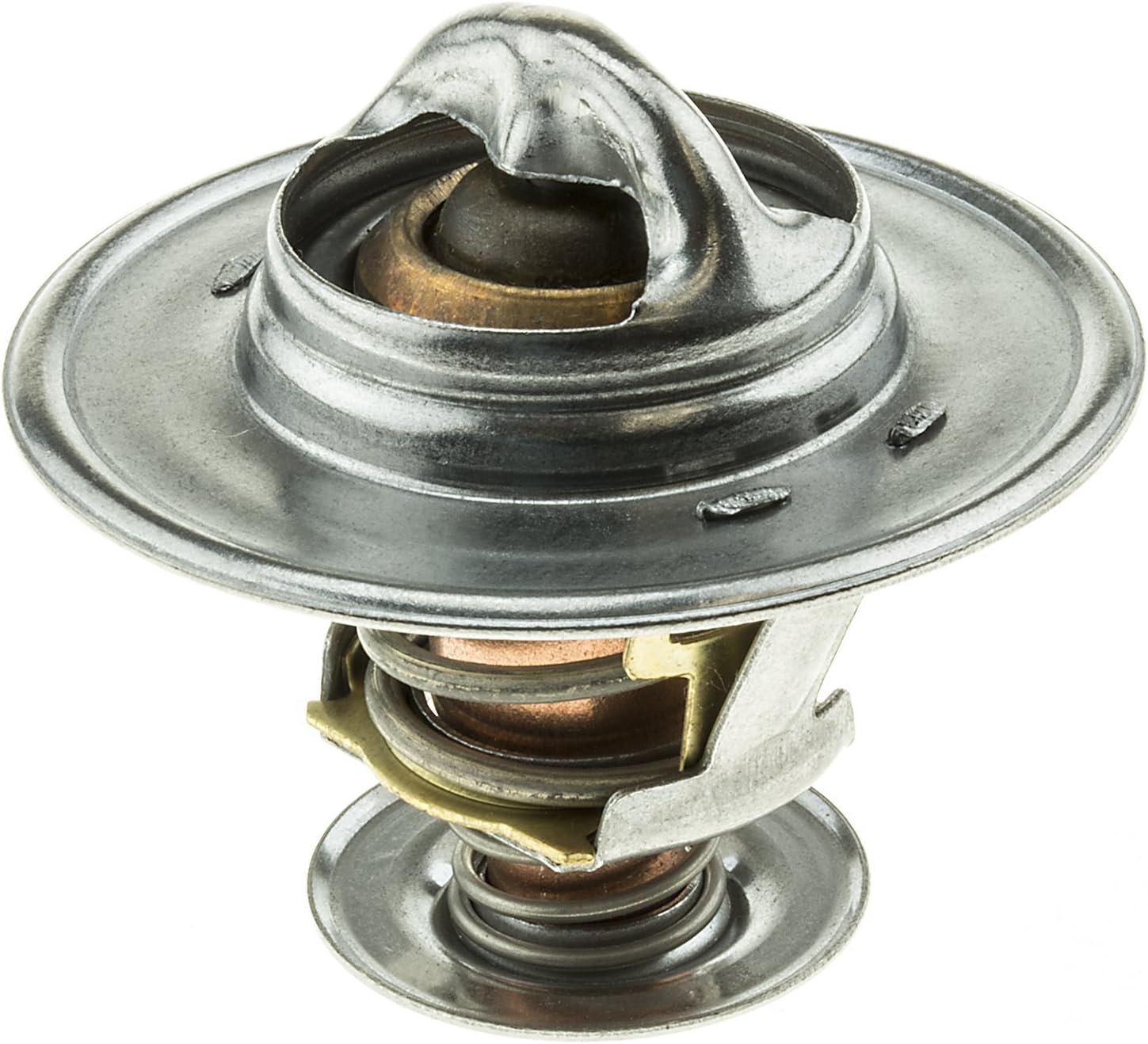
Motorad 195°F Fail-Safe Thermostat
A high-quality, OEM-spec thermostat is your best bet for reliability. This Motorad unit is designed to lock in the open position if it fails, preventing a catastrophic overheating event. It’s the right choice for most standard vehicle repairs.
Check Price on Amazon
Mishimoto Low-Temp 180°F Racing Thermostat
For those with a dedicated track car or a heavily modified engine that has been professionally tuned for cooler operation, Mishimoto is a trusted name in performance cooling. This is for specific, high-performance applications only.
Check Price on Amazon
Lisle 24680 Spill-Free Funnel
Changing your coolant can be messy. A spill-free funnel kit like this one is a game-changer. It allows you to easily fill the radiator and “burp” the air out of the system, which is critical for preventing air pockets that cause overheating.
Check Price on AmazonChoosing the Right Thermostat Brand: How They Differ
When it comes to thermostats, not all brands or designs are created equal — some subtle distinctions can make a big difference in engine performance and reliability.
Stant: The OEM Standard
Stant is a common OEM replacement, with their 195°F units often found at the parts counter. They’re reliable for most standard repairs and day-to-day driving, offering predictable operation and straightforward installation. For most drivers aiming to preserve factory performance and emissions, a Stant 195°F thermostat is a solid, no-frills choice.
Stewart Warner and Performance Brands
Stewart Warner and other performance brands often cater to builders looking for high-flow options or those with engines featuring blocked bypasses or upgraded water pumps. Their “Stage 2” and “Stage 3” thermostats are designed to flow more coolant even when just starting to open. This can be useful if you have a large aluminum radiator or a high-volume pump. However, too much flow when cold can actually prevent the engine from reaching its proper operating temperature.
Robertshaw: The Manufacturer Behind the Brands
Robertshaw is well-known for manufacturing thermostats for a wide range of brands. Their performance thermostats often include additional bleed holes or unique flow designs to better match high-performance or modified engines.
A Few Key Tips
- The 10°F Rule: The temperature marked on the thermostat is typically when it starts to open; full opening happens about 10°F higher.
- System Matching: High-flow or specialty thermostats are really only necessary if you’ve upgraded your water pump, added a multi-row aluminum radiator, or are consistently working the engine harder than stock.
- The Safe Bet: For most vehicles, a standard 195°F thermostat from a reputable brand like Motorad or Stant will offer the best performance, efficiency, and fuel economy.
Frequently Asked Questions (FAQ)
Will a 180°F thermostat void my car’s warranty?
Almost certainly, yes. Installing a part that alters the engine’s designed operating parameters gives the manufacturer grounds to deny any warranty claims related to the engine, powertrain, or emissions systems.
Can I get my car tuned for a 180°F thermostat?
Yes, a professional tuner can adjust the ECU’s fueling maps, fan activation temperatures, and other parameters to work with a cooler thermostat. This is standard practice for race cars but is expensive and unnecessary for a daily driver.
What are the signs of a failing thermostat?
Common signs include: engine overheating, engine taking a very long time to warm up, temperature gauge fluctuating wildly, poor heater performance, and a check engine light with code P0128. A thermostat can fail stuck open (engine runs cold) or stuck closed (engine overheats quickly). For an in-depth guide to diagnosis, see our article on stuck open vs. stuck closed thermostat symptoms.
Is there an even cooler option, like a 160°F thermostat?
Yes, but they are almost exclusively for dedicated, all-out racing applications. A 160°F thermostat in a street car would cause significant problems with engine wear, sludge, ECU open-loop operation, and weak cabin heating. For a complete breakdown of the risks, see our guide on 160°F thermostat risks: sludge, open loop, and cabin heat.
How do I know if my car’s thermostat has actually failed?
The most reliable tests are: (1) the cold-start temperature rise test — the gauge should reach normal range within 5–10 minutes of driving; (2) the upper/lower radiator hose temperature check; (3) a scan tool check for code P0128; and (4) the pot test where you remove the thermostat and test it in heated water with a thermometer. See our detailed guide on how to tell if your car thermostat is bad for step-by-step instructions on all these tests.
How does the wax pellet inside a thermostat actually open the valve?
The wax compound inside the sealed thermostat pellet expands significantly as it melts at the rated temperature, pushing against a piston or pushrod that overcomes the return spring’s force and opens the coolant valve. The wax blend is calibrated to melt at the exact rated temperature — that’s how different temperature ratings are achieved. For a complete explanation of the mechanism, see our guide on how the car thermostat wax pellet valve works.
Should I replace a plastic thermostat housing with an aluminum one?
If the existing plastic housing shows any signs of cracking, brittleness, or coolant staining, replacing it with an aluminum unit is worthwhile — especially since you’re already draining the cooling system for the thermostat replacement. Aluminum housings are more resistant to thermal cycling fatigue, the primary failure mode of plastic units over high mileage. For a full materials comparison, see our guide on plastic vs. aluminum thermostat housing: thermal cycling and failure modes.
Does installing a lower-temperature thermostat help with engine knock?
Only marginally, and only if accompanied by a professional ECU tune. Without a retune, the fuel and timing maps are still calibrated for the OEM temperature, so the thermostat change produces no knock benefit while creating all the downsides — poor fuel economy, sludge risk, and emissions increase. For naturally aspirated daily drivers, a lower-temp thermostat provides no meaningful knock protection and is not recommended.

About the Author
Mark Davis is an ASE-certified Master Automobile Technician with over 20 years of experience. He specializes in engine diagnostics and performance tuning, with a passion for educating car owners on proper maintenance and myth-busting common automotive misconceptions.






 Home
Home
 Info
Info
 Compare
 Reviews
 Shop
Shop