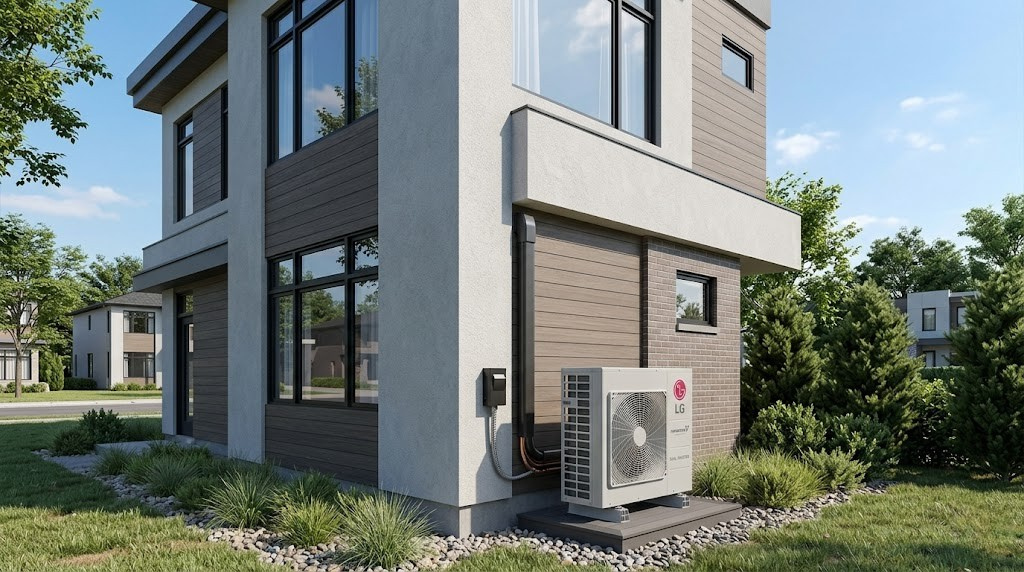
What Is Inverter Technology in HVAC? The Complete Expert Guide
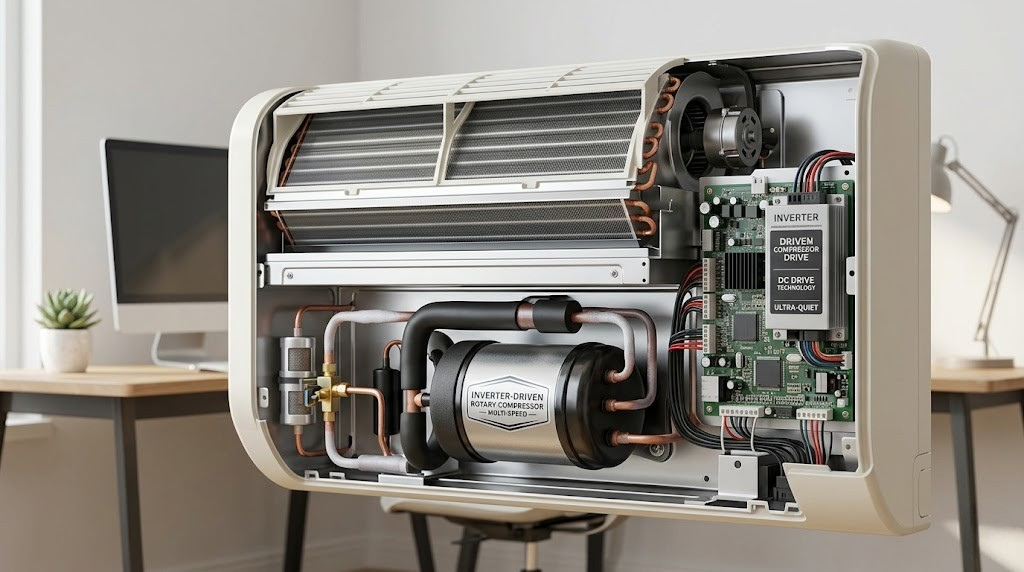
If you’ve researched air conditioners, heat pumps, or mini-splits recently, you’ve almost certainly seen the phrase “inverter technology” plastered across spec sheets and marketing brochures. But what does it actually mean, and why does it matter? This comprehensive guide cuts through the marketing language to explain exactly what inverter technology is in HVAC, how it transforms the way your home heating and cooling works, how much money it can save you, and whether it’s the right choice for your climate and budget.
What Is Inverter Technology in HVAC?
At its most fundamental level, inverter technology in HVAC refers to a variable-speed motor control system that allows the compressor — the heart of any air conditioner or heat pump — to operate at varying speeds rather than switching between fully ON and fully OFF. The term “inverter” is borrowed from electrical engineering: it describes a circuit that converts DC (direct current) electricity back into AC (alternating current) at a precisely controlled frequency.
Here’s the key insight: by controlling the frequency of the current supplied to the compressor motor, the inverter circuit can dial the motor’s speed up or down with extraordinary precision. Instead of your AC turning on at 100% capacity, cooling the room too aggressively, and then switching off — only to restart the whole cycle minutes later — an inverter-driven system can run at 30%, 60%, 85%, or any intermediate capacity to match your home’s actual cooling demand in real time.
This concept traces its origins to Japanese manufacturers in the 1980s. Daikin is widely credited with introducing the world’s first residential inverter air conditioner in 1981, a technology that gradually spread across Asia before eventually arriving in North American markets years later. Today, it’s the dominant technology in virtually every high-efficiency HVAC product category.
Think of it like driving a car. A conventional (non-inverter) HVAC system is like a car that can only go 0 mph or 60 mph — nothing in between. Every time you need to move, you floor the accelerator to full speed, then completely stop when you get close to where you want to be. An inverter system is like normal driving: you ease the accelerator up gradually, cruise at whatever speed is appropriate, and gently brake as needed. The result is lower fuel consumption, less wear and tear, and a far more comfortable ride.

Shop Top-Rated Inverter Mini-Splits
Compare Daikin, Mitsubishi, and LG inverter systems with verified customer reviews and real-world efficiency data.
🛒 View on AmazonHow Does Inverter HVAC Technology Work?
To truly understand inverter technology, you need to follow the electrical path from your wall outlet to the spinning compressor. The process involves several stages of power conversion working in concert.
Stage 1: AC to DC Conversion (Rectifier)
Standard household electricity arrives as alternating current (AC) — in North America, that’s 120V or 240V at 60Hz. The first stage in an inverter circuit is a rectifier, which converts this incoming AC to DC. This raw DC current is then smoothed out by a capacitor bank to eliminate voltage ripple.
Stage 2: The Inverter Circuit (DC to Variable-Frequency AC)
Here’s where the magic happens. A bank of transistors — typically IGBTs (Insulated Gate Bipolar Transistors) or MOSFETs in modern systems — switches on and off at thousands of times per second under the control of a microprocessor. This rapid switching synthesizes a new AC waveform from the DC supply. By changing how fast the transistors switch, the microprocessor can produce AC at virtually any frequency from near-zero to well above the 60Hz standard.
Since AC motor speed is directly proportional to the frequency of the current driving it, controlling frequency means controlling compressor speed precisely. This is the core mechanism of inverter HVAC control.
Stage 3: The Feedback Control Loop
The inverter circuit doesn’t operate blindly. A network of temperature sensors, pressure sensors, and thermistor arrays continuously reports conditions back to the system’s control board. When indoor temperature is far from the setpoint, the controller pushes compressor speed up. As the gap closes, it gradually pulls speed back down until only a small fraction of maximum capacity is needed to maintain comfort. This closed-loop control is what delivers the hallmark characteristics of inverter systems: precise temperature maintenance and remarkable efficiency at partial loads.
Modern inverter systems — especially those using DC inverter technology — pair this variable-speed compressor drive with variable-speed ECM (Electronically Commutated Motor) blowers. You can read more about how this blower technology affects operating costs in our detailed breakdown of HVAC blower wattage: PSC vs. ECM costs. The combination creates a fully variable system where both the refrigerant compression side and the air-moving side scale together seamlessly.
Inverter vs. Conventional HVAC: A Direct Comparison
Understanding inverter technology becomes clearer when you directly compare it to the conventional single-stage and two-stage systems that have dominated the North American market for decades. Each technology has distinct operating characteristics that translate into real-world differences in comfort, cost, and longevity.
| Feature | Fixed-Speed (Single Stage) | Two-Stage | Inverter (Variable Speed) |
|---|---|---|---|
| Capacity Control | 100% only | 65% or 100% | 10%–130% continuously variable |
| Temperature Precision | ±3–5°F swing | ±2–3°F swing | ±0.5–1°F swing |
| Start-Up Current Draw | 5–7× running amps | 4–5× running amps | 1.5–2× running amps |
| Typical SEER2 Range | 13–16 | 16–18 | 18–33+ |
| Noise Level (partial load) | Loud cycling on/off | Moderate cycling | Near-silent at low speeds |
| Dehumidification | Adequate | Better than single-stage | Superior (long slow runs) |
| Up-Front Cost | Lowest | Moderate | Higher initial cost |
| Expected Lifespan | 12–15 years | 15–18 years | 18–25 years |
| Refrigerant Compatibility | R-410A, R-32 | R-410A, R-32 | R-32, R-454B, R-410A |
The gap in temperature precision is particularly significant for comfort. A conventional single-stage system might let your indoor temperature swing from 73°F to 77°F during a normal cooling cycle. An inverter system keeps that swing to a fraction of a degree, which most occupants describe as the air conditioner being “on all the time” — though at very low power. This perception actually reflects the system working exactly as designed.
The Start-Up Current Problem
One underappreciated advantage of inverter technology is dramatically reduced start-up current. When a conventional compressor starts, it draws 5 to 7 times its normal running current for a fraction of a second. This inrush creates voltage sags that can cause lights to flicker, and over thousands of start cycles per year, it accelerates wear on motor windings and electrical contacts. Inverter compressors use soft-start by design — the drive circuit ramps up frequency gradually, limiting start-up current to roughly 1.5 to 2 times running current. This is gentler on both the compressor and your home’s electrical system.
Types of Inverter HVAC Systems
Inverter technology doesn’t belong exclusively to one type of HVAC equipment. It has been integrated into virtually every category of modern heating and cooling hardware. Here’s a breakdown of the major system types where you’ll encounter variable-speed drives:
1. Mini-Split (Ductless) Systems
This is the most common residential application for inverter technology, and where it is most easily understood. A split HVAC system separates the condensing unit (outdoor) from the air handler (indoor), connecting them via refrigerant lines. Mini-splits are inherently ductless, which eliminates the 20–30% energy losses that occur in conventional ducted systems. When you combine ductless design with inverter-driven compressors, the result is some of the most efficient residential HVAC equipment available anywhere in the world.
Multi-zone mini-split systems take this further: one outdoor inverter unit can control multiple indoor air handlers independently, with each room effectively having its own thermostat. The outdoor compressor modulates its total output to serve the aggregate demand of all connected zones simultaneously.
2. Ducted Central Air Conditioners
Many modern central air conditioning systems — particularly those with SEER2 ratings above 18 — now use inverter-driven variable-speed compressors. These look identical to conventional ducted split systems from the outside, but the variable-speed technology inside delivers the same comfort and efficiency advantages. These are often marketed as “variable-capacity” units by manufacturers like Carrier (with its Greenspeed Intelligence technology), Trane, and Lennox.
3. Inverter Heat Pumps
Heat pumps are perhaps the most compelling application for inverter technology. A standard heat pump loses heating efficiency rapidly as outdoor temperatures drop. An inverter heat pump, however, can ramp up compressor speed and extend refrigerant operating ranges to maintain useful heating output even in very cold weather. Bosch’s IDS series and Mitsubishi’s Hyper-Heating lineup are prime examples — you can read about their performance specifications in our analysis of Bosch inverter heat pump SEER2 and HSPF2 ratings.
4. Window and Portable Inverter ACs
In recent years, inverter technology has trickled down into window-mounted and portable air conditioners. While these units still have significantly lower efficiency than split systems, inverter-driven window ACs offer meaningful improvements over their fixed-speed counterparts in the same form factor, with quieter operation and better temperature control.
5. Inverter Chillers and Commercial Equipment
Commercial HVAC — including rooftop units, chillers, and applied systems — has widely adopted inverter technology. VRF (Variable Refrigerant Flow) systems, which dominate commercial and multi-family applications in Asia and are growing rapidly in North America, are built entirely around the inverter concept at a larger scale.
Energy Efficiency and Real-World Savings
The efficiency advantage of inverter HVAC technology is real and substantial — but the magnitude depends enormously on how you use your system and what climate you live in. Let’s unpack the genuine savings story with actual numbers.
Why Inverter Systems Are More Efficient
The fundamental efficiency advantage comes from operating the compressor in its optimal efficiency band the vast majority of the time. Hermetic compressors — the type used in virtually all residential HVAC — are most efficient when running at moderate speeds under moderate loads. They’re least efficient during start-up, when high inrush current spikes and mechanical friction absorb energy without producing useful refrigeration. Inverter systems avoid this inefficiency by rarely cycling completely off.
Additionally, compressor efficiency decreases rapidly at very high compression ratios. When an oversized conventional system starts at 100% capacity on a mild 75°F day, it’s pumping refrigerant against a relatively small temperature differential but at full current draw. An inverter system throttles back and operates far more efficiently in proportion to the actual thermal load.
Seasonal Energy Consumption: Real Numbers
| Home Size / Climate | Annual Cost (Fixed-Speed 14 SEER2) | Annual Cost (Inverter 22 SEER2) | Annual Savings |
|---|---|---|---|
| 1,500 sq ft – Mild (Pacific NW) | $280–$350 | $155–$200 | ~$140–$165/yr |
| 2,000 sq ft – Moderate (Mid-Atlantic) | $520–$680 | $290–$390 | ~$230–$290/yr |
| 2,500 sq ft – Hot-Humid (SE) | $900–$1,150 | $490–$650 | ~$400–$500/yr |
| 3,500 sq ft – Hot-Dry (SW) | $1,200–$1,550 | $650–$875 | ~$550–$675/yr |
These estimates assume electricity at $0.14/kWh (national average) and reflect cooling-only operation. In heating-dominated climates where an inverter heat pump is used year-round instead of a gas furnace, the combined savings over conventional HVAC plus gas heat can exceed $800–$1,200 per year depending on local utility rates.
For a deeper exploration of energy-saving strategies that complement your inverter HVAC purchase, our guide on HVAC energy efficiency tips covers insulation improvements, smart thermostat settings, and behavioral changes that can amplify your system’s inherent efficiency advantages.
The Payback Calculation
A common objection to inverter HVAC is the higher up-front cost. A ducted inverter central AC system typically costs $1,500–$3,500 more than a comparable fixed-speed system of the same capacity. But with annual operating savings of $300–$600 in a moderate climate, the simple payback period is often 3–7 years — well within the expected 20+ year lifespan of the inverter equipment.
The math improves further when you account for federal tax incentives. The Inflation Reduction Act extended the 25C energy efficiency tax credit through 2032, covering 30% of the cost of qualifying heat pumps up to $2,000 annually. Many state and utility rebate programs offer additional incentives on top of the federal credit.

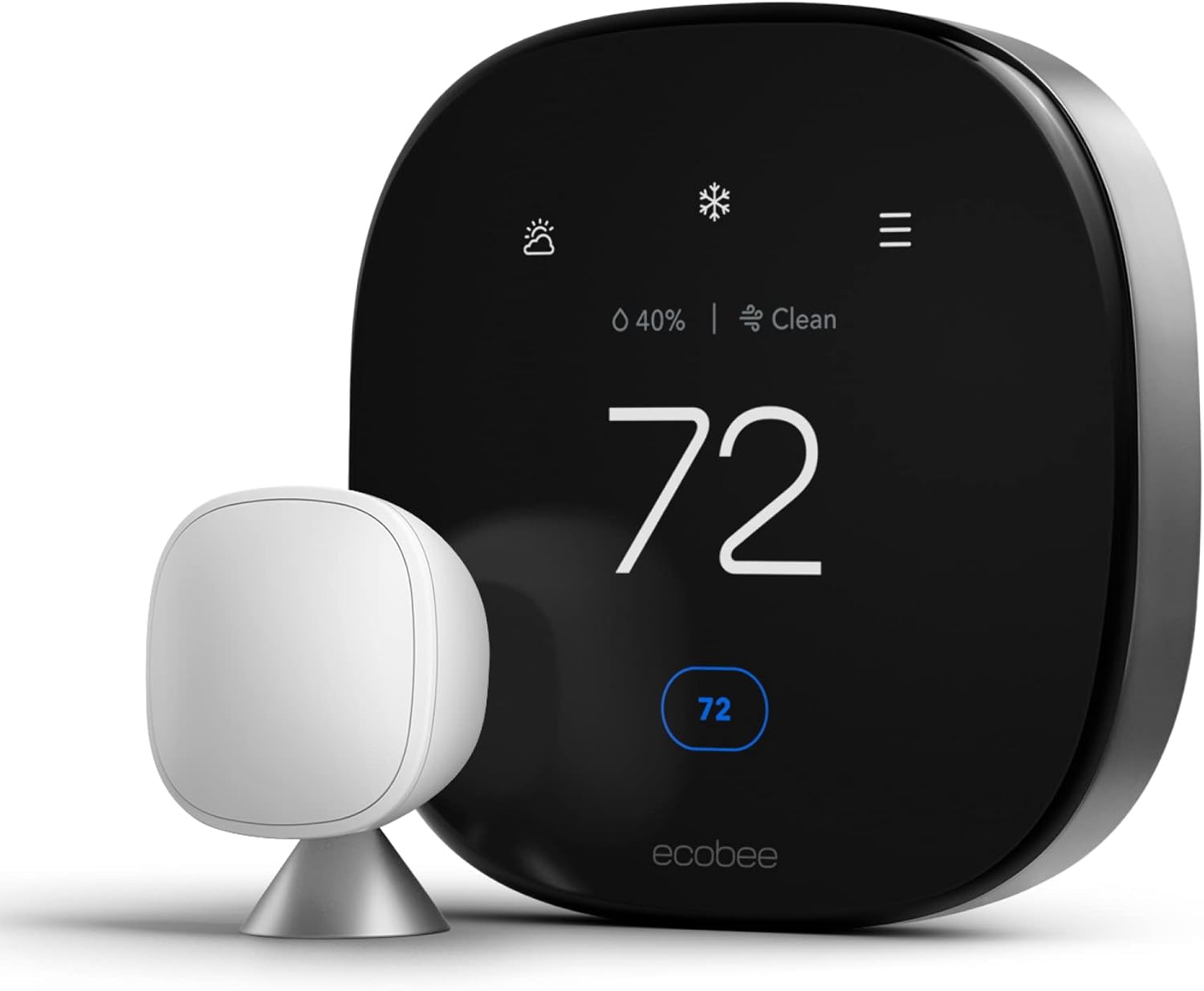
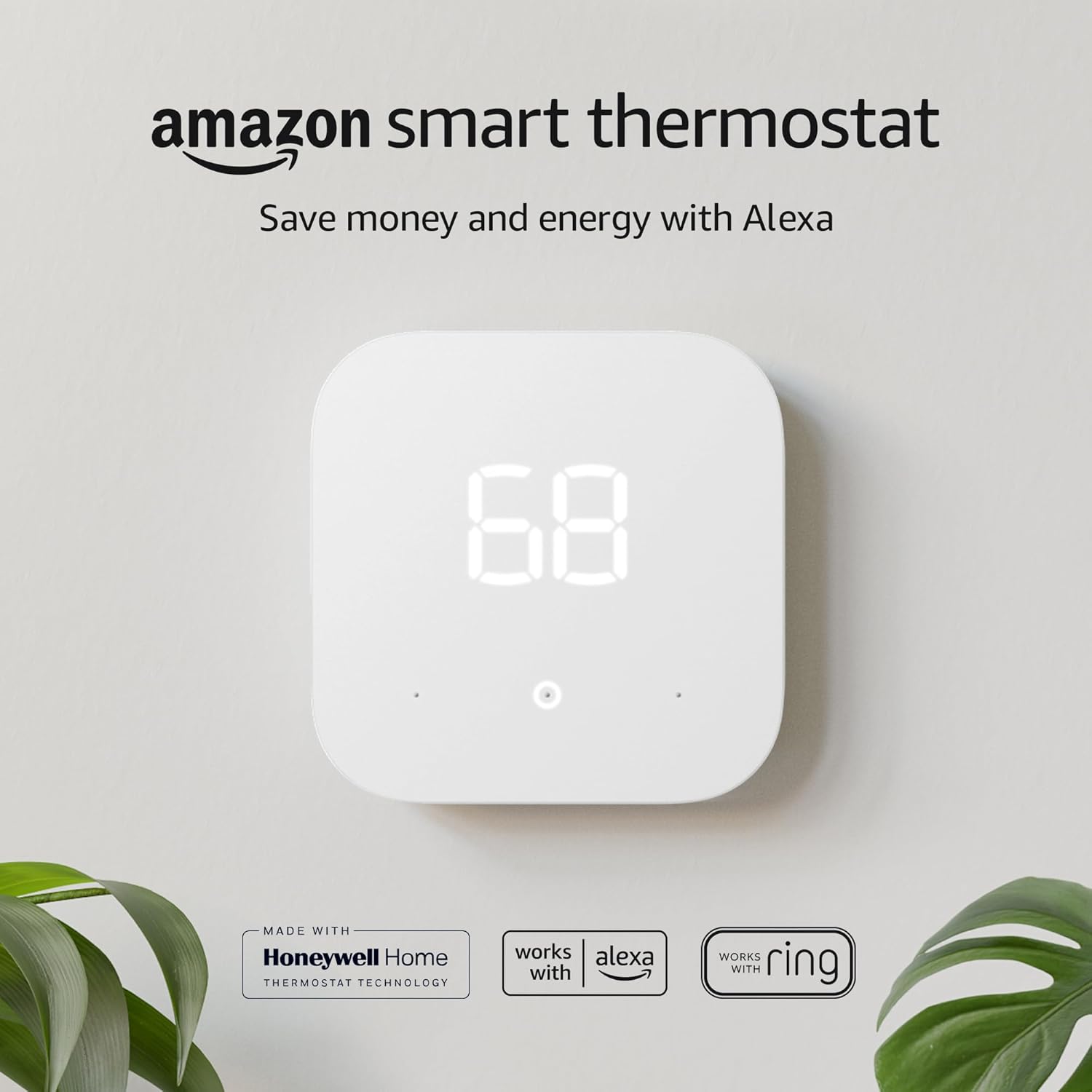
Pair Your Inverter System with a Smart Thermostat
Maximize inverter efficiency gains with compatible communicating thermostats that unlock full variable-speed control.
🛒 Browse Smart ThermostatsSEER2 Ratings and Inverter HVAC: What the Numbers Really Mean
SEER2 — Seasonal Energy Efficiency Ratio 2 — is the primary efficiency metric used for air conditioners and heat pumps in the United States. It measures the total cooling output (in BTUs) over a typical cooling season divided by the total electrical energy consumed (in watt-hours). The “2” indicates it was measured under the revised test procedures that became mandatory in 2023, which include higher external static pressure to better reflect real-world ducted system performance.
How Inverter Systems Achieve High SEER2 Numbers
The highest SEER2 ratings in the residential market — currently reaching 33–38 in some premium mini-split models — are only achievable through inverter technology. Here’s why: the SEER2 test is conducted across a range of outdoor temperatures and load conditions. At part-load conditions (which occur on most days of the cooling season), an inverter system throttles down and operates at a disproportionately high efficiency level. These exceptional part-load efficiency points pull the overall seasonal average up dramatically.
A fixed-speed system, even one with an excellent EER at peak rating conditions, has only one operating point. Its SEER2 is limited by that single point’s efficiency. An inverter system has hundreds of operating points, and most of them are more efficient than the rated peak condition.
SEER2 Comparison Chart
| SEER2 Rating | Technology Type | Relative Efficiency | Typical Application |
|---|---|---|---|
| 13–15 | Fixed-speed single stage | Federal minimum (southern states) | Replacement on budget |
| 15–17 | Fixed-speed / two-stage | Good | Standard new construction |
| 17–21 | Variable-speed (inverter entry-mid) | Very good | Energy-conscious upgrades |
| 21–26 | Inverter mid-premium | Excellent | Green building, hot climates |
| 26+ | Premium inverter mini-split | Best-in-class | Net-zero homes, zoned systems |
It’s worth noting that SEER2 ratings are established under standardized lab conditions and don’t directly account for installation quality, duct losses (in ducted systems), thermostat behavior, or local climate. A well-installed inverter system in a properly insulated home will comfortably meet or exceed its published SEER2 performance, while a poorly installed system — even a premium inverter model — may underperform significantly.
For a comprehensive brand-by-brand analysis of inverter technology implementation, our detailed comparison of Trane vs. Carrier: Spine Fin Coil vs. Greenspeed explained examines how two leading American manufacturers have approached variable-speed technology differently, with measurable real-world outcomes.
Inverter HVAC Cost Analysis: Installation, Operation, and Lifetime Value
Making the financial case for inverter HVAC requires looking at three distinct cost categories: initial purchase and installation, annual operating costs, and maintenance and repair costs over the system’s lifetime. Only by examining all three can you make a genuinely informed decision.
Initial Cost Breakdown
| System Type | Equipment Cost | Installation Cost | Total Installed Cost |
|---|---|---|---|
| Fixed-speed central AC (3-ton, 14 SEER2) | $1,200–$2,000 | $2,000–$3,500 | $3,200–$5,500 |
| Variable-speed central AC (3-ton, 20 SEER2) | $2,800–$4,500 | $2,200–$4,000 | $5,000–$8,500 |
| Single-zone mini-split (12,000 BTU, 25+ SEER2) | $800–$1,600 | $1,500–$3,000 | $2,300–$4,600 |
| Multi-zone mini-split (3 zones, 24 SEER2) | $3,000–$5,500 | $3,000–$6,000 | $6,000–$11,500 |
| Inverter heat pump (3-ton, 20 SEER2/10 HSPF2) | $3,000–$5,000 | $2,500–$4,500 | $5,500–$9,500 |
Installation costs vary substantially by region, by contractor, and by the complexity of the specific installation. Our comprehensive HVAC system replacement cost guide for 2026 includes region-specific data and a breakdown of what drives installation price variation. Similarly, if you’re evaluating a heat pump against a gas furnace replacement, our furnace replacement cost analysis and separate AC unit installation cost breakdown give you the component-level detail to compare apples to apples.
Lifetime Cost Comparison (15-Year Horizon)
When you add up equipment cost, installation, operating expenses, and maintenance across 15 years, a properly selected inverter system typically results in a lower total cost of ownership despite the higher up-front price — particularly in climates with long cooling or heating seasons.
Pros and Cons Summary
✅ Advantages
- 30–50% lower operating costs vs. fixed-speed
- Superior comfort and temperature precision
- Dramatically quieter at partial load
- Better dehumidification in humid climates
- Eligible for 25C tax credits and utility rebates
- Longer compressor lifespan (less cycling)
- Cold-climate heat pump capability (some models)
- Lower peak electrical demand (grid-friendly)
❌ Disadvantages
- Higher purchase price
- More complex electronics (specialized repair)
- Not all technicians trained on inverter systems
- Refrigerant charge must be precise (leak is costly)
- Inverter board failures can be expensive
- ROI takes 3–8 years depending on climate
- Premium units may require proprietary thermostats

LG DUAL Inverter Window AC Units
LG’s DUAL Inverter compressor technology delivers up to 25% energy savings in a window unit form factor — rated at up to 25 SEER.
🛒 See LG Inverter ACsTop Inverter HVAC Brands and Their Technologies (2026)
Inverter HVAC technology is far from a commodity — manufacturers have taken meaningfully different approaches to compressor design, control algorithms, and refrigerant management. Here’s a substantive look at how the leading brands distinguish themselves.
Mitsubishi Electric: The Premium Benchmark
Mitsubishi Electric is widely considered the gold standard for residential inverter mini-splits in North America. Their Hyper-Heating INVERTER (H2i) technology achieves full heating capacity down to 5°F outdoor temperature and 76% capacity at -13°F — performance that simply didn’t exist in residential heat pumps before inverter drives made it possible. The proprietary Zuba-Central ducted air handler extends this cold-climate performance to whole-home applications.
Daikin: The Inverter Pioneer
As the inventor of residential inverter HVAC, Daikin brings a depth of engineering knowledge unmatched in the industry. Their Daikin Fit is noteworthy for being a slim-profile ducted inverter system designed to retrofit existing duct systems — addressing the common concern that inverter technology requires ductless installation. Daikin also manufactures their own compressors in-house, unlike many brands that source them from third parties.
Bosch: German Engineering in Cold-Climate Heat Pumps
Bosch’s IDS (Inverter Ducted Split) heat pumps have earned strong reviews for their balance of high-efficiency cold-climate performance and compatibility with existing ducted systems. Their proprietary variable-speed compressor and ECM blower work together in a communicating system architecture. For a detailed look at their efficiency certification specifics, our breakdown of Bosch inverter heat pump SEER2 and HSPF2 metrics is essential reading before purchasing.
Carrier (Greenspeed Intelligence)
Carrier’s Greenspeed Intelligence platform — used in their Infinity series — pairs a variable-speed inverter compressor with a proprietary Infinity control system that continuously monitors and adjusts operation. The system communicates between the thermostat, air handler, and outdoor unit every 30 seconds, allowing real-time optimization that standard non-communicating thermostats cannot achieve.
Trane and Lennox
Both Trane and Lennox have developed their own variable-speed product lines (Trane XV Series and Lennox XC and XP series). These integrate well with existing American ducted home configurations and offer robust dealer networks for installation and service — an important practical consideration when choosing inverter equipment that requires specialized technician training.
LG and Samsung
LG’s DUAL Inverter and Samsung’s Wind-Free technology represent the Korean manufacturers’ approaches. LG’s dual-rotary inverter compressor claims to reduce vibration significantly compared to single-rotary designs, while Samsung’s Wind-Free technology uses micro-holes in indoor unit panels to diffuse cool air without creating drafts — a comfort innovation built on top of the inverter foundation.
Installation Considerations for Inverter HVAC Systems
Installing an inverter HVAC system correctly is considerably more demanding than replacing a conventional fixed-speed unit. Both the equipment itself and the installation process have specific requirements that, when ignored, dramatically undermine performance and longevity. This section covers what to look for and what to insist on when hiring a contractor.
Proper System Sizing
This is the single most critical installation consideration, and it’s often handled poorly. Conventional HVAC sizing folklore says “bigger is better” — but with inverter systems, this thinking is counterproductive. An oversized inverter system will still function, but it loses much of its efficiency advantage because it reaches setpoint quickly and throttles down so far that it cycles off, losing the continuous-operation dehumidification benefit.
A proper Manual J load calculation is non-negotiable before any inverter system installation. Manual J accounts for wall insulation R-values, window area and orientation, ceiling height, local design temperatures, internal heat gains from occupants and appliances, and infiltration rates. Do not accept a contractor who sizes by square footage alone or who uses rules of thumb like “one ton per 600 square feet.”
Refrigerant Charge Precision
Inverter compressors are significantly more sensitive to refrigerant charge accuracy than conventional compressors. An overcharge or undercharge of even 5–10% can cause the inverter drive board to limit compressor speed, reducing both capacity and efficiency. Modern refrigerants like R-32 and R-454B (which are replacing R-410A in new systems) require even more precise charge management due to their different thermodynamic properties. Insist on weighing the refrigerant charge during installation — not just gauging pressures.
Electrical Requirements
Inverter systems typically require a dedicated circuit with appropriate breaker sizing. Unlike fixed-speed systems where you can roughly estimate the breaker size from the locked-rotor amperage, inverter systems may draw different amounts of current at different operating speeds. Always verify the Minimum Circuit Ampacity (MCA) and Maximum Overcurrent Protection (MOCP) ratings on the equipment nameplate and have a licensed electrician confirm the existing or new circuit meets these specifications.
Line Set and Refrigerant Piping
Mini-split line sets must be properly sized, properly insulated, and free of sharp bends that could restrict refrigerant flow. Most manufacturers specify maximum and minimum line set lengths — exceeding the maximum requires additional refrigerant charge. Some premium systems have maximum elevation differences between the outdoor unit and the highest indoor unit, which must be verified before installation to avoid oil logging (where compressor oil pools in the refrigerant circuit rather than returning to the compressor).
Commissioning and Testing
After installation, proper commissioning includes: checking for refrigerant leaks with electronic detection equipment, verifying airflow across indoor unit coils, confirming the communicating control system is properly configured, and measuring actual system performance against the rated specifications. Request a commissioning report from your contractor and keep it for warranty purposes.
Maintenance, Reliability, and Longevity of Inverter HVAC Systems
Inverter HVAC systems have a well-earned reputation for exceptional longevity, and that reputation is supported by the physics of how they operate. However, realizing that potential lifespan requires consistent maintenance and an understanding of where these systems are most vulnerable to failure.
Why Inverter Compressors Last Longer
The primary wear mechanism in any refrigerant compressor is the friction between moving parts during start-up, before oil has fully distributed to all bearing surfaces. A conventional single-stage system might start and stop 6–12 times per hour during peak demand periods. Over a 15-year lifespan in a hot climate, that translates to hundreds of thousands of cold starts — each one creating momentary metal-to-metal contact.
An inverter system might never fully stop during an entire summer day. It simply modulates between 15% and 80% of its rated capacity continuously, with the compressor always rotating and always oil-lubricated. Compressor bearing and scroll element wear is dramatically reduced, which is a primary reason why premium inverter systems carry 10-year or even 12-year compressor warranties.
The Inverter Board: The Vulnerable Component
If inverter compressors have Achilles’ heel, it’s the inverter drive board — the electronic control module that manages the IGBT transistors and frequency generation. This board operates under high electrical stress, particularly when serving high-capacity loads on hot days. Heat cycling can eventually degrade solder joints and capacitor electrolytes. Most manufacturers design their inverter boards to last the system’s full lifetime, but failures do occur, and board replacements can cost $500–$1,500 depending on the manufacturer and system capacity.
Several steps can extend inverter board life:
- Ensuring adequate clearance around the outdoor unit for heat dissipation
- Installing a surge protector on the dedicated circuit
- Keeping the outdoor unit’s heat sink fins clean and unobstructed
- Verifying that electrical supply voltage is within the unit’s specified range
Routine Maintenance Schedule
| Maintenance Task | Frequency | DIY or Professional? | Impact on Performance |
|---|---|---|---|
| Indoor air filter cleaning | Every 2–4 weeks | DIY | High — dirty filters reduce airflow significantly |
| Outdoor unit fin cleaning | Annually (spring) | DIY (gentle rinse) | High — clogged fins reduce heat transfer |
| Condensate drain check/flush | Annually | DIY or Professional | Moderate — prevents overflow and mold |
| Refrigerant level check | Every 2–3 years | Professional only | Critical — off-charge system degrades severely |
| Electrical connections inspection | Every 3–5 years | Professional | Safety and reliability |
| Communicating controls calibration | Every 5 years | Professional | Ensures full variable-speed optimization |

HVAC Maintenance Essentials Kit
Keep your inverter system running at peak efficiency with professional-grade coil cleaners, fin combs, and condensate treatment tablets.
🛒 Shop HVAC Maintenance ToolsInverter HVAC Performance by Climate Zone
Climate is arguably the most important factor determining how much value you’ll extract from inverter HVAC technology. The equipment performs differently in different thermal environments, and the investment case varies substantially by geography.
Hot-Humid Climates (Southeast US, Gulf Coast)
This is inverter technology’s sweet spot for cooling applications. Systems run for 2,000–3,000+ hours per year, meaning the per-hour efficiency advantage accumulates rapidly into substantial annual savings. The continuous-run, low-speed dehumidification capability is particularly valuable in humid climates where latent (moisture) loads often equal or exceed sensible (temperature) loads. Homeowners in Florida, Georgia, and Louisiana consistently report among the most dramatic comfort improvements after switching from fixed-speed to inverter systems.
Hot-Dry Climates (Southwest US)
Inverter systems deliver excellent efficiency in hot-dry climates, but the dehumidification benefit is less relevant. The primary gains are from reduced cycling losses and better part-load performance during the many hours per year when outdoor temperatures are extreme but not at their absolute peak. Variable-speed systems also reduce peak electrical demand, which matters in states with demand charges on residential electricity bills (Arizona, Nevada).
Mixed-Humid and Mixed-Dry Climates (Mid-Atlantic, Midwest, Pacific NW)
In climates with significant heating and cooling seasons, inverter heat pumps deliver particularly compelling value by providing efficient both-season performance. The moderate outdoor temperature ranges in these climates (rarely below 10°F for most of the Midwest and Mid-Atlantic) suit inverter heat pump efficiency very well. The payback period is moderate — typically 5–8 years — balanced by exceptional year-round comfort.
Cold Climates (Upper Midwest, Northeast, Canada)
Cold-climate inverter heat pumps have undergone a genuine revolution in the past decade. Systems like Mitsubishi’s H2i series, Bosch IDS, and Daikin’s cold-climate line maintain useful heating output at outdoor temperatures that would have rendered conventional heat pumps useless. At -13°F, a properly specified cold-climate inverter heat pump can still deliver 76% of its rated heating capacity — enough to be the primary heat source in all but the most extreme cold snaps.
The cold-climate heat pump revolution is one of the most significant developments in residential HVAC in the last two decades. When paired with intelligent thermostatic control — including integration with outdoor thermistor sensing as described in our analysis of how thermistors and smart thermostats work — modern inverter heat pumps can dramatically reduce heating fuel consumption in cold climates where gas or oil furnaces have historically been the only viable option.
Frequently Asked Questions About Inverter HVAC Technology
Conclusion: Is Inverter HVAC Technology Worth It?
The question isn’t really whether inverter technology is better than conventional HVAC — by nearly every measurable metric, it is. The real question is whether the specific combination of your home’s characteristics, your local climate, your utility rates, and your priorities makes the investment in a premium inverter system the right move for you, right now.
For homeowners in hot or cold climates with systems that run heavily for eight or more months per year, the case is virtually airtight. The energy savings alone justify the premium cost within a reasonable timeframe, and the comfort improvements — precise temperature control, superior dehumidification, near-silent operation — are benefits that compound every day you live in the home.
For homeowners in very mild climates with systems that run lightly for five or fewer months per year, the financial payback takes longer. The comfort benefits remain, but you may reasonably prioritize the lower initial cost of a well-specified two-stage system over the top-tier efficiency of a premium inverter product.
What’s beyond debate is that inverter technology represents the direction the entire HVAC industry is moving. New federal efficiency standards are increasingly requiring variable-speed performance even at the entry level. As adoption scales and manufacturing costs decline, the price premium for inverter systems continues to narrow. If you’re replacing an HVAC system today and planning to be in your home for more than five years, there’s rarely a compelling reason not to invest in inverter technology.
Ready to Upgrade to Inverter HVAC?
Use our complete replacement cost guide to understand exactly what you should pay — by system type, climate zone, and contractor tier — so you can negotiate with confidence and choose the right inverter system for your home.
📋 See the 2026 HVAC Replacement Cost Guide →



 Home
Home
 Info
Info
 Compare
 Reviews
 Shop
Shop