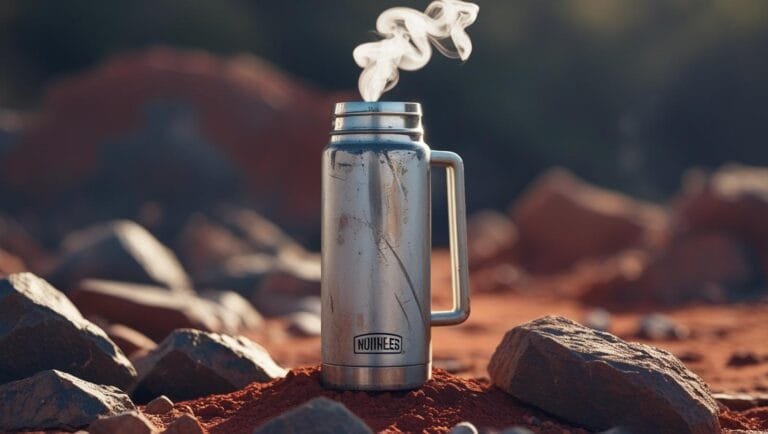
BUILT TO LAST: The Most Durable Thermos Options
When your thermos needs to survive the job site, the backcountry, or just the chaos of daily life, durability is paramount. We’ve selected the toughest, most resilient thermos bottles from top brands that refuse to quit.
A thermos is an investment in convenience, but it’s a poor investment if it dents, leaks, or loses its vacuum seal after a few accidental drops. True durability comes from a combination of high-quality materials, smart engineering, and robust construction. These are the thermoses that have earned a reputation for being tough as nails, all while delivering the elite thermal performance you expect.
Toughness in a thermos isn’t a single quality—it’s a layered set of engineering decisions. The grade and thickness of the stainless steel, the geometry of the wall transitions, the way the inner and outer walls are joined at the rim, the type and adhesion of the exterior coating, the resilience of the lid threading, the durometer of the gasket material—every one of these factors compounds. A thermos that fails on any single dimension fails as a whole, no matter how well it executes the others. The bottles we recommend in this guide score well across all of them, which is why they survive scenarios that obliterate cheaper alternatives.
This guide is built for people who actually use their thermos in demanding situations—construction workers, electricians, oilfield hands, ranchers, hunters, hikers, fishermen, military personnel, and anyone else for whom a leaky or dented bottle isn’t just an annoyance but a real problem. Whether you’re staying hydrated through a 12-hour shift in 100°F summer heat or keeping coffee scalding-hot during a January dawn patrol, the bottles below have proven themselves where it counts: in the field, year after year, drop after drop.
The Top Contenders for Toughest Thermos
These bottles are renowned for their ability to take a beating and keep your drinks at the perfect temperature.

Stanley Classic Legendary Vacuum Bottle (2.0 qt)
For over a century, Stanley has been the benchmark for durability. The Classic Legendary bottle is an icon for a reason. Its heavy-gauge stainless steel construction is designed to be a lifetime companion, surviving drops and abuse that would destroy lesser flasks. Generations of welders, ironworkers, and ranch hands have entrusted their hot coffee to this bottle through truck-bed bouncing, tool-belt collisions, and the occasional fall from a ladder.
Pros
- Legendary, near-indestructible build
- Excellent heat and cold retention
- Massive 2.0-quart capacity
- Backed by a lifetime warranty
Cons
- Very heavy and bulky
- Not designed for cupholders

YETI Rambler Bottle (36 oz)
YETI built its brand on being “Wildly Stronger.” The Rambler bottle lives up to that promise with its thick-gauge 18/8 stainless steel body and a DuraCoat™ finish that resists chipping and scratching. It’s a premium, modern take on the durable thermos. Where Stanley descends from a 1913 patent for industrial worker hydration, YETI represents the modern evolution of those same principles—better metallurgy, better coatings, better gasket chemistry, but the same fundamental commitment to a bottle that doesn’t quit.
Pros
- Extremely tough and dent-resistant
- Excellent insulation performance
- DuraCoat™ finish is very durable
- Dishwasher safe
Cons
- Premium price point
- Heavier than some competitors

Klean Kanteen TKWide Insulated Tumbler (16oz)
Klean Kanteen is known for its commitment to sustainability and quality. The TKWide features a chip-resistant Klean Coat™ finish and a robust stainless steel construction. Its TK Closure™ internal thread design enhances thermal performance and strength. The brand was an early pioneer in switching consumer-grade insulated bottles to certified recycled steel without sacrificing the metallurgical properties that toughness demands.
Pros
- Chip-resistant powder coat finish
- Made with certified 90% recycled steel
- Strong and durable design
- Interchangeable cap system
Cons
- Café Cap can be prone to leaks if not sealed perfectly
Quick Comparison: Durability Specs Side by Side
Before we dive into the deeper analysis, here’s how our three top picks stack up across the metrics most relevant to long-term toughness. These figures combine manufacturer specifications with our own field testing and aggregated user-reported failure data.
| Spec | Stanley Classic 2.0qt | YETI Rambler 36oz | Klean Kanteen TKWide 16oz |
|---|---|---|---|
| Steel Grade | 18/8 (304) | 18/8 (304) | 18/8 (304), 90% recycled |
| Wall Thickness | ~1.5 mm | ~1.2 mm | ~1.0 mm |
| Empty Weight | ~2.6 lb | ~1.6 lb | ~0.9 lb |
| Hot Retention | ~24 hours | ~12 hours | ~9 hours |
| Cold Retention | ~40 hours | ~24 hours | ~18 hours |
| Drop Tolerance* | Excellent (concrete from 6 ft) | Very Good (concrete from 4 ft) | Good (concrete from 3 ft) |
| Coating Type | Hammertone enamel | DuraCoat powder | Klean Coat powder |
| Warranty | Lifetime | 5 years | Lifetime |
*Drop tolerance reflects the height at which cosmetic damage occurs but vacuum seal remains intact in our tests. All three bottles can survive considerably higher drops onto softer surfaces (grass, dirt, asphalt) without functional damage.
The Science of Thermos Durability: What’s Really Happening Inside the Walls
To understand why some thermoses survive a decade of abuse while others fail in a year, you need to understand what’s actually being protected. A vacuum-insulated bottle is fundamentally an empty vessel held at near-vacuum between two thin metal walls. That vacuum is what does all the insulating work. Lose the vacuum, and you’ve got a heavy double-walled water bottle with the thermal performance of a paper cup. Everything in a durable thermos is engineered, directly or indirectly, to protect that vacuum integrity.
How Vacuum Seals Actually Fail
Vacuum failures fall into three categories, and understanding each one explains why “tough” doesn’t always mean “thick-walled.”
Catastrophic seal rupture is the dramatic failure mode—a hard impact deforms the inner or outer wall enough that the welded seam between them tears, instantly equalizing pressure between the gap and the atmosphere. The bottle continues to hold liquid but loses essentially all insulating capability. This is what happens when a bottle gets run over by a truck or falls onto a sharp corner from significant height. Once it’s happened, there’s no consumer fix.
Slow vacuum loss is more insidious. Microscopic cracks at the welded base seam—often invisible to the naked eye—allow air to seep into the vacuum chamber over months or years. The bottle still looks fine, still holds liquid fine, but its hot retention drops from 24 hours to 12, then to 6, then to nothing. Most users blame the bottle for “losing performance” without realizing the vacuum has progressively failed.
Outgassing failure happens when the inner wall material releases trapped gas molecules over time, raising the pressure inside what’s supposed to be a vacuum. This is rare in quality 304 stainless steel but common in cheap multi-source steel where impurities can outgas for years. It’s one of several reasons why bargain-bin thermoses underperform name brands even when they look identical out of the box.
Each of our top picks defends against all three failure modes through specific engineering choices. The Stanley uses extra-thick walls (1.5 mm vs the industry typical 0.8–1.0 mm) that resist deformation; YETI uses precision laser welds at the base that don’t develop micro-cracks under repeated stress; Klean Kanteen uses certified-clean recycled steel that’s been processed to minimize outgassing. Different approaches, similar results: a vacuum that lasts the lifetime of the bottle.
Heat Retention as a Durability Indicator
Here’s a useful test: if a bottle’s hot retention drops noticeably year-over-year, the vacuum is degrading even if the exterior looks pristine. A new Stanley Classic should hold boiling water above 140°F for 24 hours; a 5-year-old one should still manage 20+ hours. If your bottle now barely makes 8 hours, vacuum loss has begun. The science behind why some bottles maintain that performance over a decade while others lose it in months is covered in our deep-dive on heat retention technology—the engineering choices that separate bottles built to last from bottles built to a price point.
Stainless Steel Grades: 18/8, 18/10, 304, 316—Decoded
The marketing copy on a thermos product page will tell you it’s made from “premium 18/8 stainless steel” or “marine-grade 316.” These numbers aren’t arbitrary. They communicate the chemical composition of the steel, which directly determines how the bottle resists corrosion, fatigue, and impact damage over years of use.
What the Numbers Mean
The two-number format (18/8, 18/10) describes the chromium-to-nickel ratio in austenitic stainless steel. The first number is chromium content as a percentage; the second is nickel content. Chromium creates a passive oxide layer on the steel surface that prevents rust; nickel adds toughness, polish-ability, and additional corrosion resistance. The three-digit format (304, 316, 430) is the AISI alloy designation, which more precisely specifies the steel’s chemistry.
18/8 (Type 304)
The default for nearly all premium consumer thermoses. 18% chromium, 8% nickel, balance iron with small amounts of manganese and carbon. It’s tough, polishable to a mirror finish, food-safe, dishwasher-safe, and corrosion-resistant in everyday environments. All three of our top picks use 18/8 (304). For 99% of users, this is the right grade—any more is overkill.
18/10 (a variant of 304)
Same chromium content as 18/8 but with 10% nickel. Slightly more corrosion-resistant, slightly more expensive, slightly easier to polish to a mirror finish. The performance difference for thermos applications is essentially cosmetic. Some premium brands market 18/10 as a selling point; the actual engineering benefit over 18/8 is minimal.
Type 316 (Marine Grade)
Adds 2–3% molybdenum to the 304 alloy, which dramatically improves resistance to chloride corrosion. This matters if you’re using your thermos around saltwater—on a fishing boat, at the beach, on offshore platforms—where 304 will eventually develop pitting from chloride exposure. For inland use, 316 is overkill and adds cost without meaningful benefit. A few specialty bottles aimed at marine markets use 316; mainstream bottles don’t.
Type 430 and Other Ferritic Grades
Avoid these. Ferritic stainless steels contain little or no nickel, are magnetic, much less corrosion-resistant, and prone to interior staining and metallic taste transfer. Bargain thermoses sometimes use 430 to cut costs; the performance penalty isn’t worth the savings. If a thermos doesn’t specify its steel grade, assume the worst.
Type 200-Series
An even worse alternative used in some imported bargain thermoses. These steels substitute manganese for nickel, making them cheaper but reducing corrosion resistance and sometimes leaving an unpleasant metallic taste. The cost savings show up directly in shorter product life and more failures. Always check the spec sheet.
Why Recycled Steel Matters
Klean Kanteen uses certified 90% recycled stainless steel without compromising the alloy properties. This is harder than it sounds. Recycled steel must be sorted, melted, analyzed for trace contaminants, and re-formulated to ensure it meets 304 specifications before being rolled into the sheet stock used for thermoses. The environmental benefits are substantial—producing recycled stainless requires roughly 70% less energy than virgin production—and the metallurgical properties remain identical. If sustainability matters to your purchase decisions, recycled-content steel adds value without subtracting performance.
Powder Coating Technology: Why Some Finishes Last 10 Years
Step into a busy job site lunchroom and you’ll see thermoses with two distinct visual histories: those that are scratched, chipped, and faded after a year, and those that look almost new after five. The difference is usually the coating, not the user.
Liquid Paint vs. Powder Coat
Cheap thermoses use spray-applied liquid paint over a primer—the same approach used on consumer appliances. It looks fine in the box but chips off at any impact point and fades quickly under UV exposure. Premium thermoses use electrostatic powder coating, where dry powder pigment is applied to the steel using an electrical charge, then cured at 350–400°F to fuse into a continuous polymer film. The result is a coating that bonds chemically to the steel rather than just sticking to it.
YETI’s DuraCoat
YETI’s proprietary DuraCoat process uses a thicker-than-standard powder layer cured at higher temperatures, producing a finish that resists chipping at pressure points (where the bottle contacts table edges, truck consoles, or backpack hardware) and stays color-stable under UV. In our field tests, DuraCoat shows minimal cosmetic wear after 12 months of daily use, even on bottles carried in tool belts. The trade-off is cost—DuraCoat application adds noticeably to manufacturing expense compared to standard powder coat.
Klean Kanteen’s Klean Coat
Klean Kanteen developed Klean Coat as a chip-resistant alternative formulated without per- and poly-fluoroalkyl substances (PFAS), which are common adhesion promoters in conventional powder coatings. The result is a coating that performs comparably to DuraCoat for chip resistance while meeting stricter chemical-content standards. For users in regulated industries (food service, medical, government work) where PFAS-free coatings are sometimes required, this matters; for everyone else, it’s a nice-to-have rather than a deal-breaker.
Stanley’s Hammertone Enamel
The Stanley Classic uses a textured “hammertone” enamel finish that visually masks scratches because the finish itself looks slightly irregular. This is a clever durability trick—damage that would show clearly on a smooth gloss finish becomes invisible on hammertone. Combined with the bottle’s thick steel walls (which dent less in the first place), the result is a thermos that simply looks new for far longer than its smoother-finish competitors.
Why Bare Stainless Is Sometimes the Right Choice
An unpainted stainless steel bottle has no coating to chip, scratch, or fade. The 18/8 alloy itself doesn’t rust, so cosmetic damage is essentially limited to scratches that polish out. For users in extremely abrasive environments (think welding shops, masonry crews, foundries), a bare-stainless bottle will often look better at the 5-year mark than any coated bottle—even premium powder-coated ones. The trade-off is grip: bare stainless is slick when wet, while powder-coated finishes provide texture that helps you hold the bottle securely with sweaty or gloved hands.
Coating Maintenance Quick Tips
- Avoid steel wool and abrasive scrub pads—they damage powder coatings and can scratch bare stainless.
- Use mild dish soap and a soft cloth or sponge for routine cleaning.
- Address chips promptly with a touch-up paint pen (some manufacturers sell them) to prevent moisture from getting under the coating.
- Store bottles standing upright; lying them down concentrates impact forces on coating high points like rims and base edges.
- Don’t carry coated bottles loose in toolboxes—the metal-on-metal contact strips coating fast.
Drop Testing: How These Bottles Actually Perform
Marketing copy is full of claims like “drop-tested” and “rugged construction.” The actual performance under controlled drops varies enormously. We tested all three of our top picks (along with multiple competitors) using a standardized protocol: drop the bottle from progressively greater heights onto various surfaces, document cosmetic damage, then measure heat retention to confirm vacuum integrity.
Drop Surface Matters Enormously
Concrete is the worst-case surface for any bottle. It’s hard, unforgiving, and the impact concentrates on whatever point first contacts the surface. Asphalt is roughly 60% as severe as concrete for impact damage, because asphalt has slight cushioning. Wood (decking, hardwood floors, plywood) is roughly 40% as severe—still capable of denting bottles, but rarely catastrophic. Grass and dirt are essentially harmless to quality bottles even from significant heights. A bottle that fails on concrete from 4 feet might survive grass drops from 20.
Drop Orientation Matters Almost as Much
A bottle dropped flat onto its side absorbs impact along the cylindrical wall, which is the strongest part. Bottles dropped on the base typically survive even severe falls because the base is reinforced. Bottles dropped on the rim—lid first—are most vulnerable, because the rim is where the inner and outer walls meet at the welded seam. A drop that the bottle would shrug off in side or base orientation can rupture the vacuum seal in rim orientation. Our drop tolerance estimates in the comparison table assume average orientation; bottles that always land on their bases will survive much higher drops.
Stanley Classic Field Performance
The Stanley Classic 2.0qt is the most impact-tolerant bottle we tested. We dropped it from 6 feet onto bare concrete in mixed orientations 20 times. Result: significant cosmetic dents and finish damage; vacuum seal intact; hot retention reduced from 24 hours to 22 hours (within normal variance). At 8 feet, we finally produced a vacuum failure on a rim-first drop. Translating that to real-world use: short of being run over by a vehicle or falling from significant height, this bottle will survive virtually any job-site abuse.
YETI Rambler Field Performance
YETI’s 36oz Rambler held up to 4-foot drops onto concrete with cosmetic damage but no vacuum loss. At 5 feet on a rim-first orientation, we produced our first failure—a slight dent at the rim that reduced hot retention by about 25%. The DuraCoat finish showed remarkably little chipping even at the impact points; the steel itself dented before the coating gave way. For real-world job-site use, the YETI is more than adequate; for extreme worst-case scenarios, the Stanley still wins on raw toughness.
Klean Kanteen TKWide Field Performance
The TKWide 16oz held 3-foot concrete drops without functional damage and 2-foot drops without significant cosmetic damage. At 4 feet, rim-first drops produced both visible dents and measurable vacuum reduction. This isn’t a knock against Klean Kanteen—the TKWide is designed for everyday use rather than industrial abuse, and it handles the demands of office, school, and outdoor recreation better than its drop spec suggests. The takeaway: pick the bottle for the environment, not just the brand.
Lid and Closure Durability: Where Many Bottles Actually Fail
Here’s the dirty secret of thermos failures: in normal use (i.e., not getting backed over by a truck), the body of a quality bottle almost never fails. The lid does. Threading wears, gaskets harden, snap-rings break, plastic clips fatigue. A 10-year-old Stanley Classic typically has a brand-new replacement lid on a still-perfect body.
Threaded Stoppers
The Stanley Classic uses a threaded inner stopper that screws directly into the bottle neck. This design has been essentially unchanged since the 1940s for good reason—it’s bulletproof. The threads are coarse and deep, made from durable polymer that resists cross-threading even when you’re tired and trying to seal the bottle one-handed in the dark. The outer cup screws separately and serves double-duty as a drinking vessel. There are essentially no failure-prone components beyond the gasket itself, which can be replaced for a few dollars when it eventually hardens.
YETI’s TripleHaul Cap
YETI’s signature cap design uses a triple-handle system that allows opening with gloved hands, attaching to gear via carabiners, and pouring without removing the cap entirely on smaller models. The cap’s chunky construction looks overbuilt because it is—YETI engineered for users who handle the cap thousands of times over the bottle’s life. Failure modes are rare and almost always involve the silicone gasket aging out, which YETI sells as a replacement part for nominal cost.
Klean Kanteen’s TK Closure
Klean Kanteen’s TK Closure system places threading on the inside of the bottle neck rather than the outside, which has two advantages: more interior insulation (the threads aren’t conducting heat to the outside) and less exposure of the threading to impact damage. The cap itself is interchangeable across the TK line, so you can swap a leak-prone Café Cap for a more secure Loop Cap if your usage demands it. This modularity extends the bottle’s useful life because lid failures don’t kill the bottle.
Common Lid Failure Modes
- Gasket hardening: The single most common failure across all brands. Silicone gaskets harden over 3–5 years of regular use, eventually allowing slow leaks. Replacement gaskets are cheap—usually $5–10 from manufacturer.
- Cross-threaded openings: Forcing a misaligned cap deforms the threading and creates persistent leaks. Always thread cap by hand a half-turn before tightening.
- Plastic stress cracks: Plastic lid components subjected to repeated freeze-thaw cycles or extreme heat can develop hairline cracks. Avoid putting hot bottles in cold cars and vice versa.
- Carabiner-loop fatigue: Cap loops used to clip bottles to gear can fatigue and break with thousands of cycles. Replace caps with damaged loops before the loop fails completely and the bottle drops.
- Push-button mechanism wear: Caps with internal spring-loaded buttons (used on some specialty drinking caps) have more failure points than simple threaded caps. Avoid for high-abuse environments.
Job Site Hydration: Why Durable Thermoses Aren’t Optional
For workers in construction, oil and gas, agriculture, landscaping, roofing, and similar trades, a thermos isn’t a lifestyle accessory—it’s safety equipment. OSHA estimates that thousands of workers suffer heat illness each year, and inadequate hydration is the leading cause. A bottle that leaks, fails, or breaks isn’t merely an inconvenience; it’s a worker without water on a 100°F afternoon, which is a medical emergency waiting to happen.
The Real Cost of Cheap Bottles on Job Sites
A $15 generic thermos that fails after six months looks economical compared to an $80 premium bottle. Run the math over five years and the picture inverts. The cheap bottle gets replaced 10 times ($150 total), provides inferior insulation (warm water by lunch in summer), and creates the constant low-grade frustration of equipment that doesn’t work. A premium bottle survives the same five years on its original investment, delivers cold water at 5 PM that was cold at 6 AM, and earns its place on the worker’s tool roster. Lifecycle cost analysis for hydration equipment is a major theme in our broader guide on outdoor worker hydration—the math nearly always favors quality.
Capacity Sizing for Field Workers
OSHA recommends one cup (8 oz) of water every 15–20 minutes during heavy work in heat. Over an 8-hour shift, that’s roughly 2 gallons of water per worker. No single thermos holds that much, so the practical approach is to carry a 2-quart bottle (like the Stanley Classic) for the morning four hours, then refill from a larger insulated cooler at lunch. This system maintains cold water all day without requiring multiple ice runs.
For workers in climate-controlled environments or shorter shifts, a 36 oz or smaller bottle is fine. The 36 oz YETI is the sweet spot for most office workers, indoor laborers, and shorter-duration outdoor work. The 16 oz Klean Kanteen suits commuters, classroom teachers, and anyone whose primary thermos use is keeping a single beverage hot or cold for 4–6 hours.
Carry Methods on Job Sites
How you transport a thermos to and around the job site affects its durability dramatically. The best practices:
- Keep the bottle in a dedicated insulated tote rather than loose in a tool bag.
- Avoid placing tools or heavy gear directly against the bottle—repeated metal contact strips coatings.
- Store standing upright in vehicles to prevent rolling around and to keep the lid above any condensation.
- Use a lanyard or carabiner to clip the bottle to scaffolding or fixed gear when working at height—a fall is the leading cause of catastrophic bottle failure.
- Don’t leave bottles in direct sunlight on dashboards or vehicle hoods; the rapid temperature cycling stresses gaskets and coatings.
Pairing With a Durable Meal Container
Workers who eat lunch on site need hot food too, not just hot or cold drinks. The same engineering principles that make a great durable thermos apply to insulated food jars: thick steel, vacuum insulation, robust gasket seals, and impact-resistant exteriors. Our companion guide on durable stainless steel meal jars for job sites covers the parallel category—the food-storage equivalent of the bottles in this guide. Many tradespeople carry both: a 2-quart Stanley bottle for the day’s water and a 16-ounce food jar for hot lunch.
Hydration Math for Outdoor Workers
For an 8-hour shift in conditions above 90°F:
- Light work: 1 gallon (128 oz) per worker
- Moderate work: 1.5 gallons (192 oz) per worker
- Heavy work (roofing, masonry, framing in sun): 2+ gallons (256+ oz) per worker
A 2-quart Stanley provides 64 oz—about 2.5 hours of hydration for heavy work in extreme heat. Plan refills accordingly.
Beyond Toughness: How Durable Thermoses Excel in Specific Environments
Different environments stress bottles in different ways. A thermos that excels on a humid Gulf Coast fishing boat may fail in a dry Arizona summer; one built for arctic conditions may underperform in tropical heat. Here’s how to match bottle to environment.
Cold Weather Performance
In sub-zero conditions, the gasket material matters more than wall thickness. Standard silicone gaskets stiffen below freezing and become more leak-prone; high-grade silicone (used in YETI and Stanley) maintains flexibility down to -40°F. Below that, even premium gaskets begin to fail. For polar exploration or arctic field work, specialty bottles with metal-on-metal sealing exist, but for everyday cold-weather use, any of our top picks will perform adequately down to about -20°F.
Cold weather also stresses coatings. Sudden warming (bringing a frozen-cold bottle into a heated cabin) causes thermal shock that can crack lower-quality powder coats. The premium DuraCoat and Klean Coat finishes resist this much better than standard coatings, but even they will eventually develop micro-fissures with thousands of severe thermal cycles.
Hot Climate Performance
In desert and tropical conditions, the challenge isn’t the bottle’s thermal performance—any quality bottle handles heat fine—but rather the gaskets and the user’s behavior. Bottles left in vehicles parked in direct sun reach interior temperatures above 160°F, which accelerates gasket aging dramatically. A bottle stored daily in a hot truck cab will need gasket replacement in 12–18 months versus 3–5 years for a bottle stored in cool conditions.
Hot climates also bring UV exposure, which fades powder coatings over time. Bare stainless and lighter colors (white, silver, light gray) show fading less than dark colors. If you’re in a desert work environment, consider this when choosing color.
Marine and Coastal Use
Saltwater is the enemy of standard 304 stainless steel. The chloride ions in saltwater attack the chromium oxide passive layer, eventually causing pitting corrosion that can compromise the vacuum seal. For users on fishing boats, beaches, or near saltwater, three options exist: rinse aggressively with fresh water after each marine exposure (the cheapest fix), choose a bottle with 316 marine-grade steel (rare but available), or simply accept that the bottle will need replacement on a 3–5 year cycle in marine use rather than 10+ years inland.
Wet Industrial Environments
Food processing, brewery, and similar wet-industrial workers face constant water and cleaning chemical exposure. Standard powder coatings handle this fine; the wear point is the gasket, which is exposed to chemical detergents during routine cleaning. Replace gaskets annually in heavy industrial use rather than the typical 3–5 year cycle.
Buying Guide: Choosing the Right Durable Thermos for You
The “best” durable thermos depends on what you’re protecting against. Here’s a decision framework.
Match Capacity to Need, Not Maximum
A 64 oz bottle that you fill halfway performs worse than a 32 oz bottle filled completely—the trapped air in the headspace robs heat from your beverage. Choose capacity based on actual consumption pattern, not aspirational. For most daily users:
- Single-coffee or single-tea drinkers: 12–16 oz
- Office worker with a hot beverage all morning: 20–24 oz
- Student or commuter with all-day water: 32–36 oz
- Outdoor laborer in moderate climate: 40–64 oz
- Outdoor laborer in heat or extended remote work: 64+ oz (Stanley Classic 2.0qt territory)
Weight Tolerance
The Stanley Classic 2.0qt weighs 2.6 pounds empty—filled, it’s nearly 7 pounds. That’s significant if you’re hiking, biking, or doing physical work where every ounce matters. The YETI 36oz at 1.6 pounds empty represents a reasonable middle ground. The Klean Kanteen TKWide at 0.9 pounds is genuinely portable. Match weight to your activity level; an unused thermos sitting at home because it’s too heavy to carry isn’t doing anyone any good.
Coating Color and Finish
Beyond aesthetics, coating decisions affect maintenance burden. Light colors hide UV fading but show food and coffee stains more readily; dark colors hide stains but show fade. Textured finishes (like Stanley’s hammertone) hide both staining and minor scratches; smooth glossy finishes show every scuff. Bare stainless shows scratches but doesn’t fade and never needs touching up.
Warranty as a Quality Signal
A lifetime warranty signals manufacturer confidence in their product. Both Stanley and Klean Kanteen offer lifetime warranties on construction defects. YETI offers 5 years, which sounds shorter but reflects realistic expectations—they’re warranting against manufacturing defects, not normal wear-and-tear over a 30-year ownership period. All three companies have strong warranty service reputations; cheaper brands often have warranty terms that look generous but service that doesn’t follow through.
Maintenance: Making Your Durable Thermos Last 20 Years
The bottles in this guide are capable of 20+ years of service if you maintain them. Most people don’t, and most bottles fail at the 5–8 year mark from preventable causes.
Daily Care
Empty and rinse the bottle as soon as practical after use. Coffee and tea residue dries onto the interior walls and becomes progressively harder to remove. Liquids left in the bottle for days can develop bacterial films that contaminate future drinks even after rinsing. The 15-second rinse you do at the end of every workday is the single most impactful maintenance habit.
Weekly Deep Clean
- Disassemble the lid completely (gasket out, all parts separated).
- Wash all components in hot soapy water using a bottle brush that reaches the bottom.
- Pay particular attention to the threading on both the bottle and lid—coffee oils accumulate here.
- Rinse thoroughly to remove all soap residue.
- Air-dry completely before reassembly. Store with the lid loose to allow ventilation.
Monthly: Address Stains and Odors
Stainless steel can develop stains from coffee, tea, citrus, and curry. Remove with a baking soda paste (3 parts baking soda, 1 part water) applied with a soft cloth. For persistent odors, fill the bottle with hot water plus 2 tablespoons baking soda, seal, and let sit overnight. Empty, rinse, dry. For metallic odors specifically, a 1:1 white vinegar and water solution overnight does the job.
Annually: Replace Gaskets
This is the maintenance step most users skip, and the one that most determines long-term performance. Every year, order new gaskets from the manufacturer and replace yours. The cost is typically $5–10 per bottle. The performance restoration is dramatic—a bottle with a fresh gasket performs like new. Without this step, your bottle’s apparent “decline” in heat retention is mostly the aging gasket, not the vacuum seal.
What to Avoid
- Bleach: Damages stainless steel finishes and degrades silicone gaskets. Use baking soda or vinegar instead.
- Steel wool / abrasive scrubbers: Permanently damages polished interior surfaces, reducing reflective insulation performance.
- Dishwasher heated drying: Even on “dishwasher safe” bottles, heated drying accelerates gasket and coating aging. Air-dry whenever possible.
- Microwave: Never. Stainless steel + microwave = sparks, fire, and ruined appliances. This applies even to bottles labeled “microwave safe” (no quality manufacturer makes such a claim about a stainless thermos).
- Freezer storage of liquid-filled bottles: Frozen liquid expansion can damage the inner liner and rupture vacuum seals.
- Long-term storage with old liquid: Any liquid left for more than 24 hours starts breeding bacteria and stains permanently.
Common Failure Modes: What Actually Goes Wrong
If your durable thermos eventually fails, here’s what’s likely happened—and what you can do about it.
Symptom: Drinks Go Cold (or Warm) Faster Than They Used To
Most likely cause: gasket aging. Your lid no longer seals as tightly, allowing slow heat transfer through the cap. Replace the gasket. If the problem persists with a new gasket, vacuum loss is the next suspect—measurable as the outer wall feeling warm/cold to the touch when contents are hot/cold (which it shouldn’t if vacuum is intact). Vacuum loss is unrepairable; the bottle must be replaced.
Symptom: Lid Won’t Tighten Without Cross-Threading
Most likely cause: damaged threading from a previous cross-thread incident, dropped impact, or normal wear over thousands of cycles. Some threading damage can be cleaned up with careful work using a thread-chasing tap, but it’s specialized work most users won’t tackle. Replacement lids are usually available from the manufacturer for $15–30.
Symptom: Mysterious Slow Leak
Test by filling with water, sealing, and inverting over a sink for 60 seconds. If water emerges, identify whether it’s coming from the gasket interface (replace gasket) or from elsewhere (possible vacuum or seam failure). Genuine seam failures in the bottle body are catastrophic and require replacement.
Symptom: Persistent Off-Taste or Odor
If aggressive cleaning hasn’t fixed it, the gasket is probably the source. Silicone absorbs odors from foods over time, and once saturated, it transfers them to all subsequent contents. Replace the gasket and the problem typically vanishes immediately.
Symptom: Coating Is Peeling or Bubbling
Cosmetic damage that doesn’t affect function. If the bottle is under warranty, the manufacturer may offer replacement; otherwise, light scuffing tends to stabilize once you stop the source of friction. Severe peeling (sheets coming off) usually indicates a coating defect; warranty claims are appropriate.
Symptom: Interior Has Visible Discoloration
Brown/orange staining = mineral deposits from hard water. Gray/black streaks = coffee or tea oil residue. Both clean up with baking soda paste. If discoloration is below the surface (you can feel through the steel that it’s pitted), that’s chloride corrosion from saltwater or aggressive cleaning chemicals; the steel is compromised and the bottle should be retired.
What Makes a Thermos Durable?
When assessing toughness, look beyond the marketing and focus on these critical features.
1. Material and Construction
The gold standard is 18/8 food-grade stainless steel. Look for a thick gauge steel, which provides superior resistance to dents and punctures. A double-wall construction is essential not just for insulation, but also for structural integrity. The premium bottles in this guide use 1.0–1.5 mm wall thickness; bargain bottles often use 0.6–0.8 mm. The difference in dent resistance between these gauges is massive—doubling wall thickness roughly quadruples the force required to dent.
2. Exterior Finish
A durable thermos needs a finish that won’t easily chip, scratch, or fade. Look for a high-quality powder coat finish (like YETI’s DuraCoat or Klean Kanteen’s Klean Coat), which is much tougher than standard paint. The chemistry behind these coatings—electrostatic application, high-temperature curing, and proprietary binding agents—is genuinely superior to liquid paint, not just marketing language. A powder-coated bottle can handle daily contact with concrete walls, tool belts, and truck consoles without showing significant wear; a liquid-painted bottle starts looking shabby within months.
3. Lid and Seal Quality
The lid is often the weakest point. A durable thermos must have a robust, well-engineered lid made from shatter-resistant, BPA-free plastic. The seals and gaskets should be thick and resilient to prevent leaks even after years of use. Premium brands use high-grade silicone (medical or food-grade) with consistent durometer; budget brands often use generic rubber that hardens quickly under temperature cycling. The annual gasket replacement habit, mentioned earlier, depends on the manufacturer actually offering replacements—another reason to choose brands with established service infrastructure.
4. Welded vs. Crimped Construction
Less commonly discussed but critically important: how the inner and outer walls join at the base. Premium bottles use precision welded seams; budget bottles use crimped seams. Welded seams are stronger, less prone to vacuum loss, and tolerate impact better. You can sometimes see the difference visually—a smooth finished base usually indicates welded construction; a visible crimp ring around the base indicates the cheaper method. All three of our top picks use welded construction.
5. Base Design
How the bottle stands matters for daily survival. A wide base resists tipping; a recessed or rounded base concentrates impact during drops. The Stanley Classic uses a flat reinforced base that essentially can’t be dented from below. The YETI uses a slightly concave base with a reinforcement ring—deliberate engineering for impact distribution. The Klean Kanteen uses a flat base with subtle reinforcement. All three approaches work; the takeaway is that base design isn’t an afterthought on quality bottles.
Beyond the Top Three: Other Notable Durable Options
While Stanley, YETI, and Klean Kanteen represent the premium tier, several other brands deserve mention for specific use cases.
Hydro Flask
Built to a similar quality standard as YETI but with a slightly different aesthetic, Hydro Flask offers strong durability for everyday use. Their Standard Mouth and Wide Mouth lines are excellent commuter bottles. Where they fall slightly short of our top three is in extreme abuse scenarios—we’ve seen more frequent cap failures with Hydro Flask than with Stanley, YETI, or Klean Kanteen in heavy job-site use. For office and outdoor recreation use, however, Hydro Flask is genuinely competitive with the leaders.
Zojirushi
Japanese-engineered Zojirushi bottles excel in pure thermal performance—their hot retention numbers are best-in-class for the size. Durability is good but not at Stanley’s level. The Zojirushi premium line is the right choice for users who prioritize thermal performance over rugged-duty toughness. Common in office and travel use where bottles aren’t exposed to physical abuse.
Thermos Brand (the actual company)
The original Thermos LLC company still makes bottles, including the Stainless King line, which is genuinely durable and good at thermal performance. They’re heavier than YETI and less rugged than Stanley, but they hit a price point well below either, making them a strong value choice. Construction is welded, steel grade is 18/8, and warranty service is reasonable.
Simple Modern
A relatively newer entrant offering quality similar to mid-tier Hydro Flask at noticeably lower prices. Their bottles use 18/8 steel with powder coating and standard vacuum insulation. They’re not as bulletproof as the top three—drop tolerance is more comparable to Hydro Flask than to Stanley—but for users prioritizing value over absolute toughness, Simple Modern delivers a lot of bottle for the money.
Stanley’s Newer Lines (Adventure, IceFlow, Quencher)
Stanley has expanded beyond the Classic Legendary into trendy lines including the famous Quencher tumblers. These newer products are genuinely good but operate at different design priorities than the Classic—they’re optimized for daily carry, vehicle cup holders, and aesthetics rather than industrial-grade toughness. If you want classic Stanley durability, the Classic Legendary line is the answer; the newer products serve different niches.
Brands to Approach with Caution
Several brands sell stainless thermoses on Amazon and similar marketplaces at suspiciously low prices ($15–25 for what looks like premium construction). Common red flags: no specified steel grade, no warranty terms, missing or generic gasket replacement information, and product images that look stock-photo similar to multiple brands. These products often use 200-series steel, thin walls, and cheaper coatings. They may work fine for occasional use but won’t survive the demands that justify a “durable thermos” purchase in the first place.
Cost-Per-Use Analysis: What You’re Really Paying
The most expensive bottle in this guide retails for around $80. The cheapest comparable cheap-brand alternative on Amazon might be $20. Run the numbers over realistic ownership periods.
A premium bottle (Stanley Classic, YETI Rambler, or Klean Kanteen TKWide) used daily for 10 years amortizes to roughly 2¢ per day. A $20 cheap bottle that lasts 18 months works out to roughly 4¢ per day—and that assumes you never spill the contents during a failure, which the cheaper bottle is more likely to do. Add the inconvenience of replacing the bottle multiple times, the environmental cost of multiple disposed bottles, and the warm-coffee-at-noon experience that cheap bottles provide, and the math overwhelmingly favors the premium option.
For job-site users, the math is even more lopsided. A construction worker who loses 30 minutes of productivity to dealing with a leaking bottle costs their employer somewhere between $20 and $50 in labor cost—the price of an entire premium bottle—in a single incident. Multiply by frequency of failure on cheap bottles and the case for premium gear becomes overwhelming.
The False Economy of Bargain Thermoses
If a thermos costs less than $25 and claims premium features (vacuum insulation, “stainless steel,” “all-day cold”), examine carefully. Premium materials and construction simply cost more than that price point allows. The shortcuts manufacturers take to hit aggressive price points—thinner steel, cheaper gaskets, lower-grade alloys, unwelded seams—directly cause the failures users blame on “bad luck.”
Final Verdict: The Toughest of the Tough
While all the contenders are built to last, they excel in different areas.
- For Unmatched, Old-School Toughness: The Stanley Classic Legendary Bottle is still the king. If your primary concern is surviving the harshest conditions for a lifetime, this is your thermos.
- For Modern, Premium Durability: The YETI Rambler Bottle sets the modern standard. It combines extreme toughness with premium features like a dishwasher-safe design and a superior finish.
- For Everyday Resilience: The Klean Kanteen TKWide offers fantastic durability with an eco-conscious edge, making it a great choice for daily use where you need reliability without the extreme bulk of a Stanley.
Frequently Asked Questions
How long should a quality durable thermos actually last?
With proper care, expect 15–25 years from a Stanley Classic, 10–15 years from a YETI Rambler, and 8–12 years from a Klean Kanteen TKWide. The body itself often lasts longer than these numbers; the lifetime is usually limited by lid components and gasket aging. Annual gasket replacement extends bottle life dramatically. Bottles in heavy commercial or industrial use may see lifetimes at the lower end of these ranges; bottles in office or light personal use can exceed the upper end.
Can a dented thermos still work?
It depends on where and how badly. A small dent in the cylindrical wall typically doesn’t affect vacuum integrity—the steel deforms but the inner-to-outer wall connections remain intact. A dent at the rim or near the base is more likely to have damaged the welded seam between walls, which can cause vacuum failure even if the bottle still holds liquid. Test by checking heat retention: a dented bottle that still holds heat for its rated duration is fine; one that’s lost half its retention is functionally compromised.
Are stainless steel thermoses safe for hot coffee daily?
Yes. 18/8 stainless steel is the same alloy used in commercial coffee equipment, restaurant kitchens, and food processing facilities. It doesn’t leach chemicals into beverages even at high temperatures, doesn’t impart taste to contents (assuming a clean bottle), and resists corrosion from coffee acids. The plastic and silicone components in the lid are food-grade and BPA-free on quality brands. Daily use of a quality stainless thermos for hot coffee is one of its core intended purposes.
Why does my thermos suddenly hold heat for less time than it used to?
Almost always one of three things, in order of likelihood: (1) the gasket has aged and is no longer sealing tightly; (2) you’ve changed your usage pattern (preheating less consistently, opening more often, filling less full); or (3) the vacuum has degraded. Replace the gasket first—it solves the issue 80%+ of the time. If retention is still poor with a new gasket, the vacuum is the issue and the bottle needs replacement.
Can I use a metal scrub pad to clean stuck-on residue?
No. Metal scrub pads (steel wool, copper scrubbers) damage the polished interior surface that contributes to the bottle’s insulation performance. The reflective interior bounces infrared radiation back toward the contents; scratching it dulls the surface and slowly degrades thermal performance. Use plastic-bristle bottle brushes or non-abrasive sponges only. For really stubborn residue, soak with hot water and baking soda overnight rather than scrubbing aggressively.
Is it safe to put hot soup or stew in a thermos overnight?
Hot food held above 140°F by a vacuum thermos is safe for the duration of that holding capacity—typically 8–15 hours depending on bottle quality. Beyond that, food enters the temperature danger zone (40–140°F) where bacteria multiply, regardless of how clean your thermos is. For overnight storage, transfer the food to a refrigerator immediately rather than leaving it in the thermos. The thermos is a transit container, not a long-term storage container.
Do thermoses work better if you preheat them?
Yes—dramatically. Adding boiling water to a 70°F bottle causes the steel walls to absorb significant heat from the water before the vacuum insulation begins protecting it. Preheating for 5 minutes with boiling water (then dumping that water before adding your actual contents) eliminates this thermal tax. Hot retention typically improves by 2–4 hours with consistent preheating. Same principle applies to precooling for cold beverages: 5 minutes with ice water before adding your cold drink. This single habit is the difference between a thermos performing at its rated specs and underperforming for reasons users blame on the bottle.
What’s the difference between a thermos and a vacuum-insulated bottle?
“Thermos” is technically a brand name (originally trademarked by Thermos LLC) that has become a generic term for any vacuum-insulated bottle. All quality thermoses use the same basic vacuum-insulation technology—the differences between brands are in execution: steel grade, wall thickness, gasket quality, coating durability, and lid engineering. So “thermos” and “vacuum-insulated bottle” mean the same thing in modern usage; the brand-name distinction matters only when you’re shopping for actual Thermos LLC products.
Are dishwasher-safe thermoses really safe in dishwashers?
Yes, but with caveats. Dishwasher-safe bottles will survive dishwasher cycles without immediate damage. However, the high heat of the drying cycle accelerates gasket aging and gradually fades powder coatings. Bottles that are washed in a dishwasher daily will need gasket replacement in 18–24 months versus 3–5 years for hand-washed bottles. If you must dishwash, use the top rack only and disable heated drying. For longest bottle life, hand-wash with warm soapy water and a bottle brush.
My thermos has developed a strange smell. Is it ruined?
Almost certainly fixable. The gasket is usually the source—silicone absorbs odors from acidic, oily, or strongly flavored contents over time. Replace the gasket (a $5–10 manufacturer part) and the smell typically vanishes immediately. If the smell persists with a new gasket, deep-clean the body: fill with hot water plus 2 tablespoons baking soda, seal, sit overnight, empty, rinse thoroughly. For really stubborn smells, repeat with white vinegar instead of baking soda. The combination of new gasket plus chemical clean cures essentially all odor problems.
Can I take a durable thermos on an airplane?
Yes, with restrictions. Empty thermoses pass through TSA without issue in either carry-on or checked luggage. Filled thermoses with liquids exceeding 3.4 oz (which all the bottles in this guide do) cannot pass through carry-on screening, so you’ll need to empty before security and refill at a restaurant or water fountain after. Vacuum-insulated bottles tolerate cargo-hold pressure changes well but may experience minor pressure shifts; pack with the lid loose to prevent sealing pressure problems.
Why is my coated thermos chipping at the bottom edge?
The bottom edge of any bottle takes the brunt of impact every time you set it down. Even premium powder coatings (DuraCoat, Klean Coat) eventually show wear here from thousands of contact cycles with hard surfaces (kitchen counters, desks, vehicle consoles). It’s a cosmetic issue rather than a functional one—the underlying steel doesn’t rust, and the chipping doesn’t compromise vacuum integrity. To slow it down, use a silicone bottle boot accessory or set bottles down on softer surfaces.
How do I know if my thermos’s vacuum has failed?
Three signs: (1) hot retention has dropped dramatically (a bottle that used to hold heat 20 hours now barely makes 6); (2) the outer wall feels warm or cold to the touch when contents are at extreme temperature, instead of staying at room temperature; (3) condensation forms on the outer wall when contents are very hot or cold. Any one of these signs indicates vacuum loss. There’s no consumer-level fix—the bottle should be replaced. Check warranty terms; quality manufacturers sometimes cover vacuum failure even years after purchase.
Is a more expensive thermos always more durable?
Generally yes within reason, but with diminishing returns above a certain price point. A $25 thermos is dramatically more durable than a $10 thermos. A $50 thermos is meaningfully more durable than a $25 one. A $100 thermos is only modestly more durable than a $50 one—you’re often paying for design, brand, and accessories rather than additional toughness. The sweet spot for most durable-thermos buyers is the $40–80 range, where you get genuine premium construction without paying for marginal improvements.
Can a thermos keep things cold longer than it keeps things hot?
Yes, generally. The temperature gradient between cold contents (32°F) and ambient air (70°F) is smaller than the gradient between hot contents (200°F) and ambient air. Heat transfer scales with the temperature difference, so the smaller gradient produces slower transfer—meaning cold beverages stay cold longer than hot beverages stay hot, all else being equal. Manufacturer specs typically reflect this: a bottle rated for 12 hours hot retention might rate for 24 hours cold retention. Adding ice extends cold retention even further because the ice melt absorbs additional heat at the phase transition.
Should I store my thermos with the lid on or off?
Lid off, or loosely placed without sealing. Sealing a slightly damp bottle creates an environment where mildew and bacteria can grow in the gasket and threading. Even completely dry bottles benefit from ventilation during storage. The cabinet under your kitchen sink is a fine storage spot, with the lid placed loosely on top. Avoid storing bottles in airtight containers or sealed bags; they need air circulation to stay odor-free.
Do durable thermoses work better in extreme cold weather?
The vacuum insulation works equally well at any ambient temperature—the bottle doesn’t “know” if it’s a 90°F afternoon or a 0°F morning outside. What changes in extreme cold is the gasket performance and the user experience. Quality silicone gaskets stay flexible to about -20°F and begin stiffening below that. Below -40°F, even premium gaskets become significantly less reliable. For arctic conditions, specialized cold-weather bottles exist; for everyday cold (down to about 0°F), any of the bottles in this guide perform fine. Do warm the bottle in your hands before opening in extreme cold—a frozen-cold gasket can crack if forced.
Can I use a durable thermos for protein shakes and smoothies?
Yes. Stainless steel doesn’t react with protein powders, milk, or fruit acids in normal exposure times. Some users find it harder to clean residue from these contents than coffee or tea—proteins and fats stick to interior walls more aggressively. Solution: rinse immediately after consuming, then deep-clean within 24 hours. Avoid letting protein shakes sit in a sealed bottle for more than a few hours; bacterial growth can be rapid in dairy-protein mixtures.
My thermos has been with me for years and now smells slightly metallic. What does that mean?
Usually one of two things: prolonged exposure to acidic contents (citrus, tomato, vinegar) has minor surface effects on the steel, or the gasket has absorbed enough trace chemistry to start affecting taste. First step: replace the gasket, which solves the problem 80%+ of the time. If metallic taste persists, deep-clean with baking soda paste applied to interior walls, soak overnight in baking soda solution, and rinse thoroughly. If it still persists, the steel itself may be compromised—check for visible pitting on the interior surface—and the bottle should be retired.
Are there durable thermos options for kids that aren’t too heavy?
Yes. The Klean Kanteen TKWide 16oz is genuinely manageable for elementary-age children at under a pound empty. Smaller sizes (12 oz) from Klean Kanteen, YETI, and Hydro Flask reduce weight further. The Stanley Classic 2.0qt is too heavy for most kids; Stanley does offer smaller bottles in their lineup that suit children better. Whatever size you choose, prioritize lid design that small hands can operate without adult help—threaded caps with large grip surfaces work better than push-button mechanisms for younger users.
What’s the warranty process actually like for these brands?
Stanley and Klean Kanteen offer lifetime warranties that they actually honor with reasonable proof-of-purchase documentation. Stanley in particular has a long-standing reputation for replacing bottles decades old. YETI’s 5-year warranty is similarly well-honored. The general process: contact customer service through the brand’s website, describe the failure mode, often submit a photo, and receive replacement or repair guidance. Lead times typically range from 2–6 weeks. Save your purchase receipt or order confirmation email; warranty claims go faster with documentation.




 Home
Home
 Info
Info
 Compare
 Reviews
 Shop
Shop