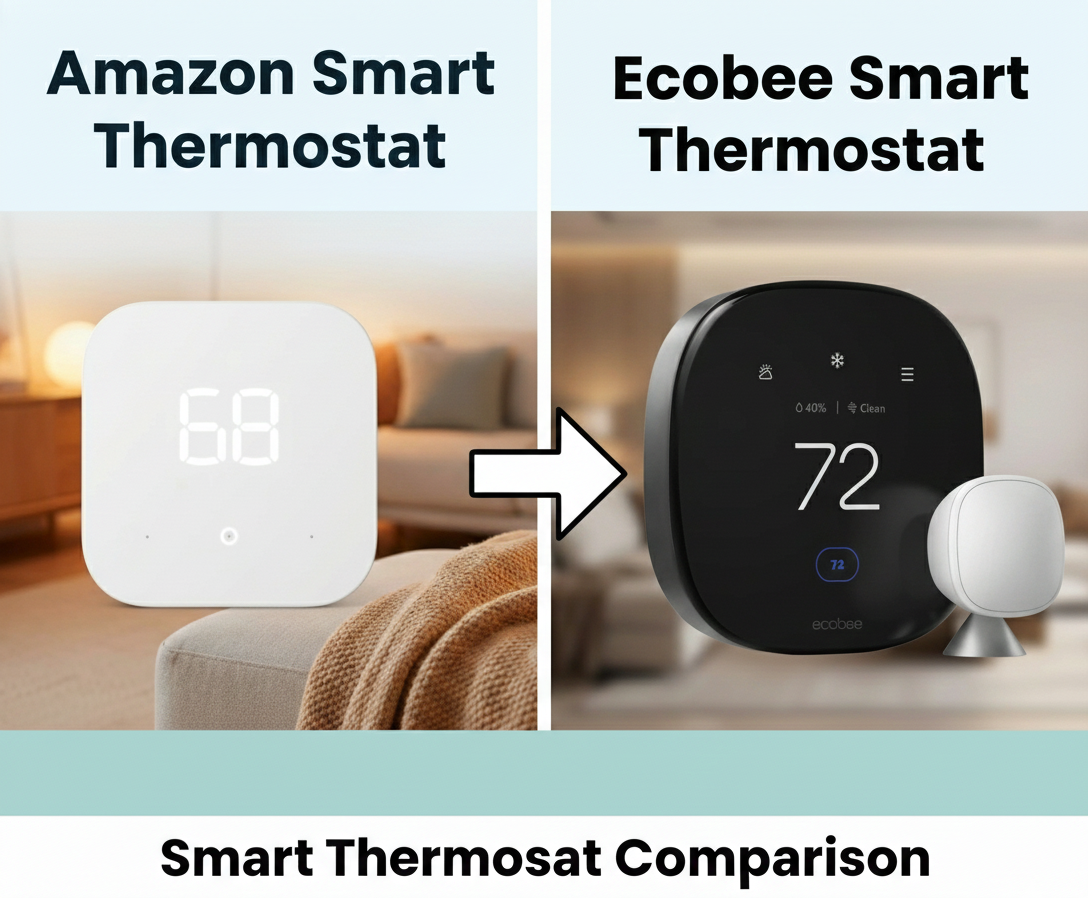
Amazon Smart Thermostat vs. Ecobee: The Battle of Budget vs. Brains
The smart home market has split into two distinct directions: high-end devices packed with sensors and voice assistants, and affordable, utilitarian devices that simply get the job done. This divide is perfectly illustrated in the showdown between the Amazon Smart Thermostat and the Ecobee Smart Thermostat Premium (and its siblings).
On one hand, you have Amazon’s entry into the HVAC space—a device built in partnership with Honeywell Home (Resideo) that costs less than a tank of gas. It promises to bring smart features to the masses using the power of Alexa. On the other hand, Ecobee has long been the gold standard for enthusiasts, offering remote room sensors, advanced air quality monitoring, and Apple HomeKit integration.
So, which one belongs on your wall? Are you paying for features you’ll never use with Ecobee, or is the Amazon thermostat too basic to be truly “smart”? In this comprehensive comparison, we analyze installation, ecosystem compatibility, and whether these devices are truly the best smart thermostat for energy savings in their respective classes. This deep dive will also unpack how how a smart thermostat saves money in the long run, and whether features like what is a thermostat remote sensor or what is a geofencing thermostat are essentials or niceties.
At a Glance: The Tale of the Tape
Here is the high-level specification breakdown. Note that we are comparing Amazon’s single model against Ecobee’s flagship “Premium” model, though we will also reference the cheaper ecobee3 Lite Smart Thermostat review model where relevant.
| Feature | Amazon Smart Thermostat | Ecobee Smart Thermostat Premium |
|---|---|---|
| Price Tier | Budget ($) | Premium ($$$) |
| Build Quality | Plastic | Zinc & Glass |
| Remote Sensors | No (Not officially supported) | Yes (1 Included, supports up to 32) |
| Voice Assistant | Alexa Compatible (Requires ext. device) | Built-in (Alexa & Siri) |
| C-Wire Required | Yes (Adapter sold separately) | Yes (Adapter included) |
| Smart Home Ecosystem | Alexa Only | HomeKit, Alexa, Google, SmartThings |
| Air Quality Monitor | No | Yes (VOCs & CO2) |
Round 1: Design & Aesthetics
The difference in design philosophy is stark. When considering the key features to compare when buying a smart thermostat, the physical interface is paramount. It’s the one part of your HVAC system you interact with daily, and its placement can even tie into your thermostat cover ideas that actually blend into your home.
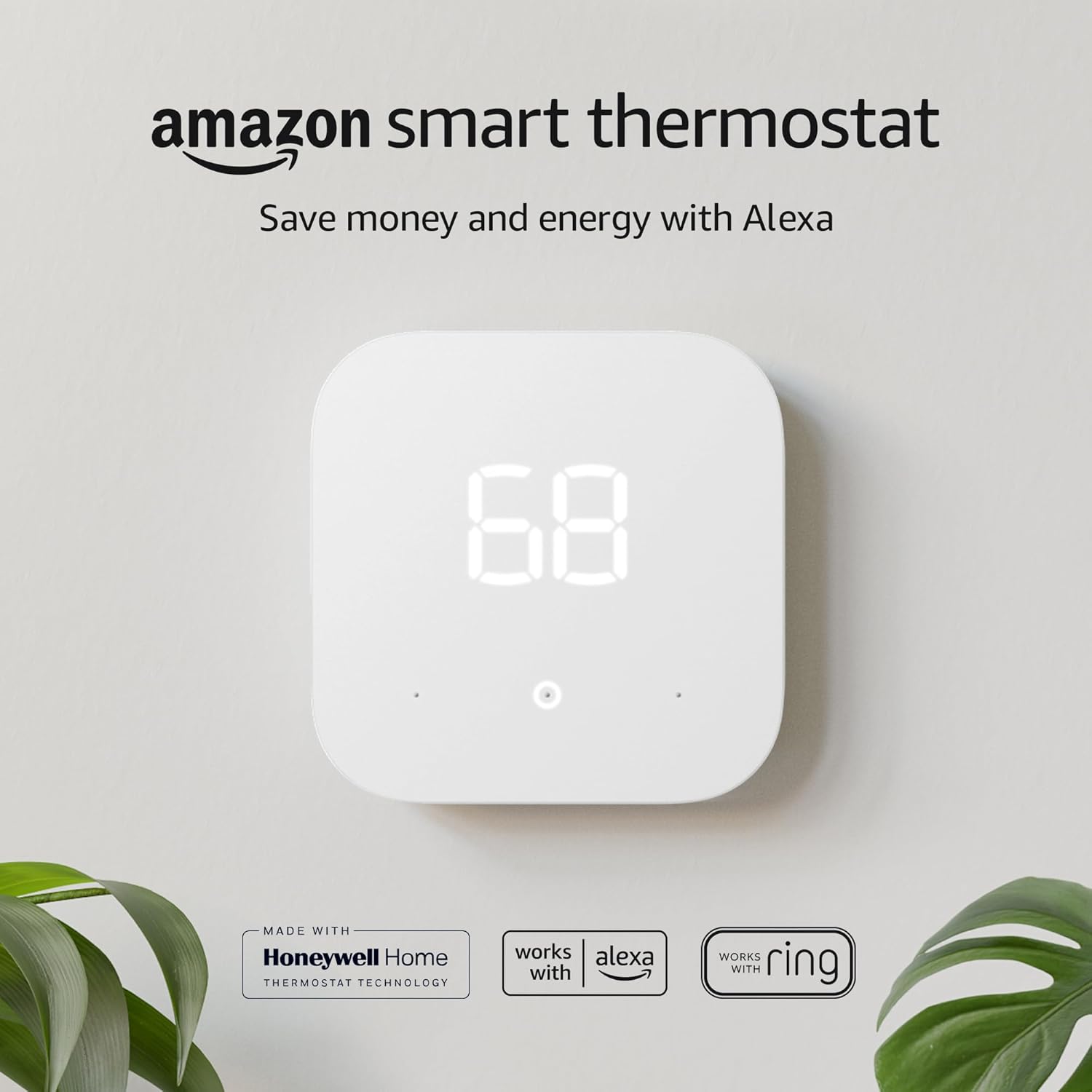
Amazon Smart Thermostat: The Minimalist Box
Amazon’s device is a simple, white square with rounded corners. It looks remarkably similar to a sticky note on the wall. The display uses simple LEDs behind the plastic face to show the temperature. It is unobtrusive and clean, designed to blend into a white wall. It feels lightweight and, frankly, a bit cheap—but at its price point, that is expected.
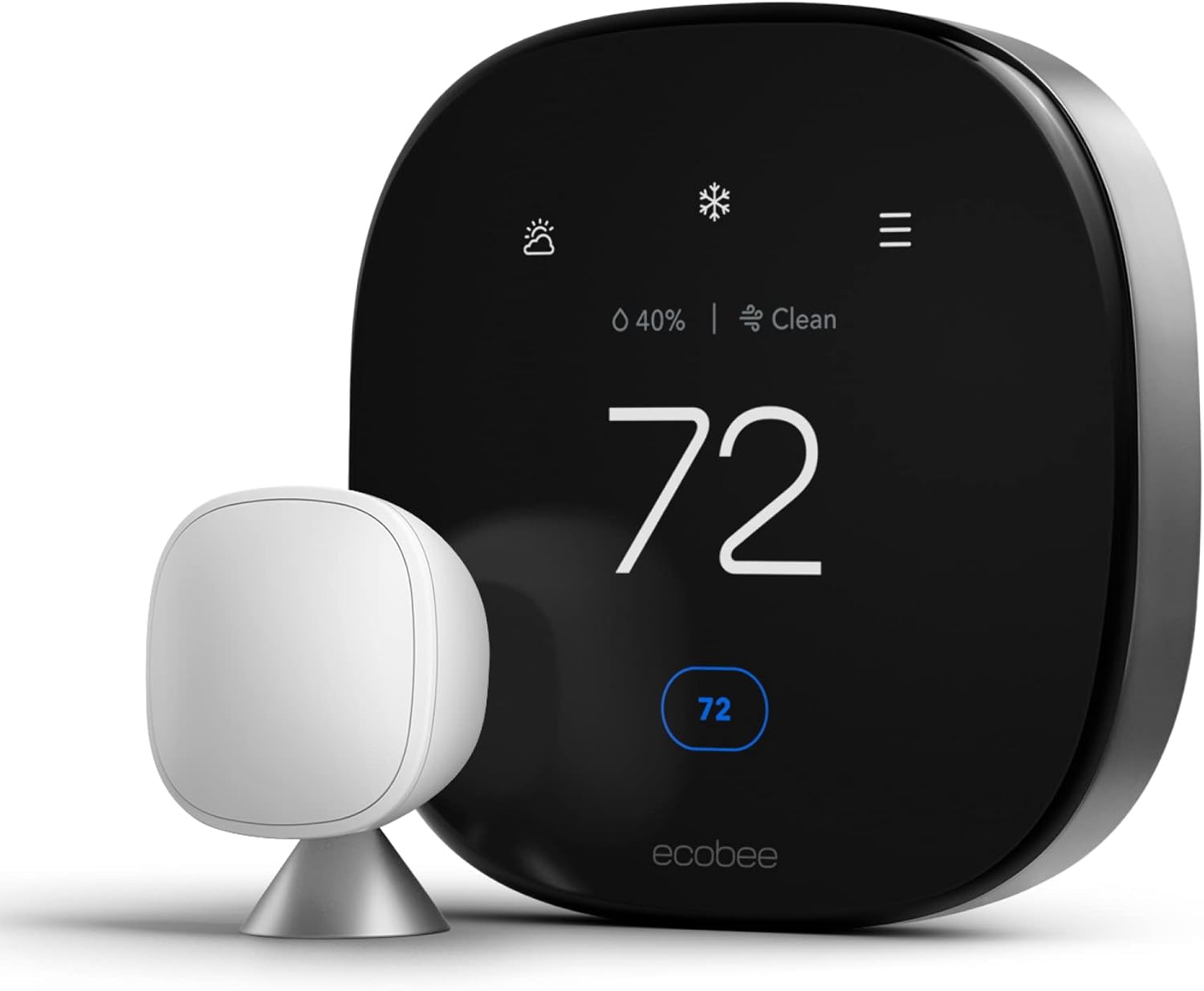
Ecobee: The Tech Statement
The Ecobee Smart Thermostat Premium is a piece of jewelry for your home. It features a heavy zinc body and a smooth glass touchscreen. The display is a full-color LCD with high resolution. It has a presence. Even the cheaper Ecobee3 Lite feels more substantial than the Amazon unit.
Winner: Ecobee. If you care about interior design and premium materials, Ecobee wins easily. You might want to consider the best wall color behind your thermostat to make either model pop.

Round 2: Installation & The “C-Wire” Headache
This is the most critical section for DIYers. A thermostat is only good if you can actually install it. Understanding thermostat wiring is fundamental.
The Common Wire (C-Wire) Issue
Both devices require a C-wire to provide constant power for their Wi-Fi radios. Older homes often lack this wire. Before you even buy one, you should learn how to tell if your thermostat can be upgraded.
- Ecobee: Every Ecobee thermostat comes with a Power Extender Kit (PEK) in the box. This small adapter installs at your furnace and repurposes your existing wires to create a C-wire solution. It’s brilliant and saves you from fishing new cables.
- Amazon: The Amazon Smart Thermostat requires a C-wire adapter, but it is sold separately (usually around $15-$20). If you don’t have a C-wire and don’t buy the adapter, the unit will not work. This is a key difference highlighted in our Amazon Smart Thermostat vs. Ecobee Premium c-wire adapter comparison.
We have a detailed guide on how to switch out an hz311 thermostat for an ecobee thermostat, which illustrates just how user-friendly Ecobee’s kit is. Amazon’s installation relies on the Alexa app, which is good, but the lack of an included adapter is a hidden cost.
Round 3: Intelligence & Ecosystem
Here is where we answer the question: do smart thermostats really save money? The intelligence of a thermostat relies on its ability to sense, learn, and react. This involves everything from what is a thermostat home/away feature to what is thermostat adaptive learning.
Amazon’s “Hunches”
The Amazon Smart Thermostat relies heavily on Alexa. It uses a feature called “Alexa Hunches.” Alexa learns your habits based on your interactions with other smart devices (lights, locks, Echo speakers). If Alexa thinks you are asleep or away, it adjusts the thermostat. It’s a clever, passive way to save energy. However, it locks you strictly into the Amazon ecosystem. If you use Google Home or Apple HomeKit, this thermostat is essentially a paperweight. Read our full Amazon Smart Thermostat review for more on this.
Ecobee’s Sensors & Compatibility
Ecobee is the “Swiss Army Knife” of thermostats. It provides a deep understanding of how smart thermostat connectivity works across protocols.
- Remote Sensors: Ecobee includes a SmartSensor (with the Premium) that detects motion and temperature in other rooms. This fixes the classic problem of a thermostat not reaching set temperature in a distant bedroom. Amazon has no official remote sensor support.
- Platform Agnostic: Ecobee works with Apple HomeKit, Google Assistant, Amazon Alexa, SmartThings, and IFTTT. It doesn’t care what phone you use. If you’re in the Apple camp, see our guide on how to add your Nest thermostat to Apple Home for a comparison.
- Air Quality: The Premium model monitors VOCs and humidity, alerting you to poor air health and functioning much like what is a whole-house dehumidifier sensor.
If you are looking for comparisons like Google Nest vs Amazon Smart Thermostat, you’ll find Amazon sits at the bottom regarding features, while Ecobee sits at the top. We also have a great breakdown of smart vs programmable thermostats if you’re considering a non-Wi-Fi model.
Winner: Ecobee. The cross-platform compatibility and remote sensors make it vastly superior for smart home enthusiasts.The Smart Divide: Alexa vs. The World
The choice of thermostat is as much a choice of digital assistant and privacy philosophy as it is about temperature control. This divide has never been more pronounced. If you’re leaning toward a specific platform, our Nest vs Honeywell thermostat comparison showcases another walled-garden competitor.
The Privacy Angle
Ecobee has publicly advocated for user privacy, stressing that data from its sensors is anonymized and used primarily for energy reports and the Eco+ community energy savings program. Amazon, on the other hand, integrates your thermal data into its vast profile of your household via Alexa. This “Hunches” feature, while innovative, relies on Amazon’s servers monitoring your behavior across multiple devices. If privacy is a deciding factor, examine are wifi thermostats worth it from a data perspective.
Voice Control Showdown
Ecobee Premium has Alexa built directly into the thermostat. You can ask it to play music, announce dinner, or control your lights—just like an Echo device, but from your wall. The Amazon thermostat has no speaker or microphone; it must be tethered to a separate Echo device to respond to voice commands. This makes the Ecobee a hub, while the Amazon is a satellite.
Routine & Automation Depth
Ecobee’s integration with IFTTT, SmartThings, and HomeKit allows for automations that the Amazon thermostat cannot touch. For instance, you can set an Ecobee to activate your best whole-house humidifier when the humidity drops, or trigger a ceiling fan via a HomeKit scene when the temperature rises. The Amazon thermostat is largely reactive to Alexa routines, which, while powerful, are confined to the Amazon ecosystem. See our HomeKit thermostat automation geofencing scenes guide for inspiration.
The Real Green Potential: Savings, Rebates, and Algorithms
Both manufacturers claim significant energy savings, but their methods differ. To maximize these, you need to understand your utility’s rate structure, covered in our 2026 smart thermostat rebates ultimate guide savings calculator.
Amazon’s Energy Dashboard
The Amazon thermostat works with Alexa’s energy dashboard. Because it knows the Square footage of your home (which you provide in the app), it can roughly estimate runtime and energy usage. But it lacks granular data.
Ecobee’s eco+ Engine
Ecobee’s eco+ software is a multi-pronged engine for conservation. A key feature is “Time of Use” (TOU) optimization. If your utility charges more for electricity at peak hours, Ecobee can pre-cool your home when energy is cheap and then reduce usage during the expensive window, potentially letting you save money without sacrificing comfort. This feature is leagues ahead of Amazon’s simple schedule. It’s the practical application of how does a smart thermostat save money at a system level.
The Rebate Reality
A crucial piece of the value puzzle is the utility rebate. Many energy companies offer instant or mail-in rebates for Energy Star-certified smart thermostats. Both qualify, but the impact is disproportionate. A $50 rebate makes the Amazon thermostat virtually or completely free, an incredible value proposition. That same $50 rebate on a $250 Ecobee brings it down to a still-premium $200. Your final cost depends entirely on your local providers. Check our guide on HVAC energy efficiency tips to stack your savings.
Beyond the C-Wire: Deep Compatibility with Modern HVAC Systems
For most single-stage furnaces and air conditioners, both devices work well. But as home HVAC systems become more complex—incorporating heat pumps, dehumidifiers, and multiple stages—the differences between Amazon and Ecobee become critical. You should first understand your system by reading about what is a split HVAC system and what is inverter technology in HVAC.
Multi-Stage Systems and Heat Pumps
If you have a two-stage furnace or a two-stage air conditioner, Ecobee is the clear winner. It can directly control multi-stage equipment, intelligently switching from the low, efficient stage to the high-output stage only when necessary. The Amazon Smart Thermostat supports up to two heating and two cooling stages, but its logic is not as sophisticated and often defaults to the high stage during recovery, reducing efficiency. For a more technical trouble code comparison, our Trane vs Carrier spine fin coil vs Greenspeed explained article details how premium equipment expects premium controllers.
Accessory Control (Humidifier/Dehumidifier/ERV)
This is a deal-breaker for many. The Ecobee Premium can natively control whole-home humidifiers, dehumidifiers, and Energy Recovery Ventilators (ERVs). It transforms into an air quality command center. The Amazon thermostat has no such capability. If your home has a separate humidifier, you’d need a manual control or a separate automation setup, which contradicts the point of a “smart” home. For more on this, see our guide to what is a whole-house dehumidifier.
Specialty Systems
Radiant Floor Heating: While neither is natively designed for line-voltage, low-voltage smart controls are sometimes used in conjunction with relays. See our best thermostat electric radiant floors gfci line voltage guide.
Mini-Splits: Most ductless mini-splits use proprietary IR remotes and are difficult to connect to any third-party smart thermostat, though some high-end units are now integrating with Ecobee or using adapters.
Baseboard Heaters: As previously warned, these are almost certainly incompatible. Use our line voltage vs low voltage thermostat test to be sure.
Round 4: Price & Value Proposition
This is Amazon’s knockout punch. The price difference feeds into a larger conversation about smart thermostats under 50 alexa cwire options.
The Amazon Smart Thermostat typically retails for under $80, often dipping to $60 on sale. Utility rebates can sometimes bring the cost down to $0. It is incredibly affordable.
The Ecobee Smart Thermostat Premium retails for around $250. Even the cheaper Ecobee3 Lite is usually double the price of the Amazon unit.
The Value Calculation:
If you have a small apartment, live alone, and use Alexa, the Amazon Thermostat is unbeatable value. You don’t need remote sensors for a studio apartment. However, if you have a multi-story home with hot/cold spots, the Ecobee pays for itself by balancing comfort without you needing to crank the HVAC system. To understand the financial breakeven point, see our analysis of do smart thermostats really save money.
Reliability & Common Issues
Since Amazon partnered with Resideo (Honeywell Home), the HVAC control logic is solid. We rarely see reports where the thermostat says heat on but no heat due to software glitches on the Amazon unit. It’s a simple machine, and simple machines break less often. However, power stealing issues documented in other brands can appear; see our look at Nest vs Sensi power stealing vs battery backup.
Ecobee is also highly reliable, but its complexity introduces more potential points of failure. For example, Wi-Fi dropouts can affect the server connection. However, Ecobee provides excellent diagnostics. If you see thermostat low battery symptoms or power cycling, the Ecobee support articles are extensive. Another common issue is a thermostat keeps rebooting due to a voltage drop.
One minor annoyance with the Amazon unit: the interface is touch-capacitive but can be finicky. Sometimes you have to tap it multiple times to wake it up. For deeper hardware failure diagnostics, read how to tell if your thermostat is bad 12 symptoms tests real fixes.
From the Wall to the Cloud: A Step-by-Step Setup Comparison
The physical installation is only half the battle. The software setup and calibration can make or break the user experience. If your home lacks a C-wire and you opt for the Amazon adapter, you must also understand how to tell if thermostat can be upgraded in house.
Ecobee: Guided Precision
Ecobee’s app uses a visual wiring guide. You tell it the color of the wires connected to your old thermostat’s terminals, and it builds a custom wiring diagram for your new Ecobee. The calibration process is automatic, and the sensor pairing is instantaneous.
Amazon: The Alexa App Approach
Amazon uses the Alexa app for everything. The wiring instructions are in a linear list format, which can be confusing if you make a mistake and need to backtrack. One common error: forgetting to turn off the furnace breaker before installation, potentially blowing the 3-amp fuse on the control board. We cover this in our thermostat battery failure relay no start guide.
Post-Installation: Calibrating Comfort
Once powered, both thermostats will begin their learning routines. Ecobee’s default schedule is “Home/Sleep/Away,” which it populates using sensor data within the first 48 hours. Amazon relies entirely on the Alexa Hunches engine, which can take up to two weeks to learn your full routine. For both, ensuring your sensors aren’t triggered by a thermostat keeps turning on AC due to drafts is a vital follow-up.
Room-by-Room Control: Why Sensors Redefine “Smart”
The most significant technical gulf between these two products is the sensor ecosystem. Without external sensors, a thermostat is just a fancy on/off switch with Wi-Fi. To truly grasp the benefit, you must understand what is a thermostat remote sensor and its role in comfort.
Occupancy vs. Proximity
Ecobee’s SmartSensors not only detect temperature but also occupancy. This enables a feature called “Follow Me,” where the thermostat averages the temperature of only the occupied rooms. If your living room is sunny and warming up while your bedroom is cool and empty, Ecobee focuses on cooling the living room. The Amazon thermostat, without sensors, is blind to this. It will run until the hallway (where the thermostat is likely located) reaches the set point, leaving your sunny living room roasting. This tech also ties into the home/away feature.
Multi-Zone Competition
Can a sensor array replace a dedicated multi-zone ducted system? Partially. While sensors like Ecobee’s cannot direct airflow to specific rooms (that requires motorized dampers), they can average out the temperature to find a fair middle ground. For true zoning, you need hardware, but Ecobee sensors offer a software-based compromise. Compare this to the Ecobee vs Honeywell remote sensor range multi-zone battle for broader context.
Strategic Sensor Placement
If you buy an Ecobee, sensor placement is crucial. Avoid placing sensors near drafty windows, air vents, or heat-generating appliances. A sensor near a lamp can cause the AC to run all day. A sensor in a basement that is naturally cool will never call for heat, leaving your upstairs freezing. Our why thermostat shows wrong room temperature guide highlights the importance of insulation from thermal bridging.
Amazon’s Alternative: Alexa Ambient Home
Amazon announced a concept called “Ambient Home,” where Echo devices with temperature sensors (like the Echo Dot 5th Gen) can act as remote sensors for the Amazon Smart Thermostat. However, this is indirect. An Echo Dot measures the temperature inside its own plastic casing, which can be inaccurate by 3-5°F. Ecobee’s dedicated sensors are lithium-battery-powered precision instruments; an Echo Dot is a speaker that happens to have a thermometer.
The Wider Smart Thermostat Landscape: How Do They Stack Up?
It would be shortsighted to compare only Amazon and Ecobee without positioning them against the broader market. When evaluating a purchase, consider the key features to compare when buying a smart thermostat across all brands.
Google Nest Learning Thermostat (4th Gen)
Nest is Ecobee’s true rival. The Nest auto-schedule learning is the most aggressive in the industry—it physically programs itself. Ecobee requires you to set a base schedule and then uses sensors to fine-tune; Nest builds the schedule from a blank slate. Compare their approaches in our Nest auto schedule vs Ecobee smart sensors comparison. Our Nest Learning Thermostat power stealing c wire fixes review also highlights key installation differences.
The Budget Contenders: Wyze vs. Govee
If you like the Amazon price point but want slightly more features, Wyze and Govee are the disruptors. The Wyze Thermostat offers remote sensors (sold separately) at a fraction of the Ecobee price. However, its ecosystem is smaller. We pit them against each other in Wyze vs Govee best budget thermostat for hot cold rooms. Our Wyze thermostat review c wire adapter performance covers the installation quirks.
Emerson Sensi & Honeywell Home
Sensi (by Emerson) is a sleeper hit for reliability. It often works without a C-wire using standard alkaline batteries, bypassing the power-stealing instability of Nest or the C-wire requirement of Amazon. Read our comparison of Sensi thermostat vs Ecobee and Sensi Touch review illuminated terminals c wire stability. Honeywell Home’s T9 and T10 Pro are also robust competitors; view our head-to-head of Honeywell Home T9 vs T10 Pro.
International & Niche Options
In the UK and Europe, Tado and Hive dominate. Tado’s geofencing is arguably superior to any American competitor. Our Hive vs Tado geofencing automation features analysis details this. For baseboard heaters, Mysa and Sinopé are the go-to brands; compare them in Mysa vs Sinope electric baseboard thermostat.
Total Cost of Ownership: 5-Year Analysis
Looking beyond the retail price, the 5-year cost includes energy savings, replacement parts, and potential HVAC system replacement cost if an incompatible thermostat damages equipment.
Equipment Wear & Tear
A smart thermostat that short-cycles your furnace to maintain a perfect temperature can actually wear out components faster than a “swingier” manual thermostat. Both Amazon and Ecobee have minimum cycle times, but Ecobee’s adjustable “minimum on/off time” and “temperature differential” settings in the advanced installation menu give homeowners fine-grained protection against short-cycling. The Amazon thermostat offers fewer protective settings. A broken thermostat can even cause AC failure; see can a bad thermostat cause AC not to cool.
Battery Replacement
Unlike older thermostats where you just pop in AAs, these smart devices have internal lithium batteries for clock backup. Why is my thermostat not charging is a common query after a few years. The Amazon one uses a coin-cell CR2032 for memory backup. Ecobee’s Premium has an embedded battery for the screen during power outages. Neither is easily user-replaceable without disassembly.
Compatibility with Aging Furnaces
If your furnace is older, check its compatibility carefully. Thermostats that draw too much power from older control boards can cause logic failures. Our article on is your thermostat compatible with your furnace is essential pre-reading.
Seasonal Smart Home Maintenance for Optimal Performance
Your smart thermostat is the conductor of your home’s comfort orchestra. To keep the music playing, seasonal check-ups are vital, whether you’re setting your recommended thermostat settings for winter or what temperature to set your thermostat when on vacation in winter.
Summer-to-Fall Transition
Before you fire up the furnace, check your thermostat’s wiring for corrosion. A corroded connection is a leading cause of why thermostat doesn’t start furnace. Also, review your schedule. Ecobee’s “Eco+” community energy savings events often kick in during peak summer and winter demands, which can tweak your temperatures. Finally, check your how to replace the battery in a honeywell thermostat guide—if the battery is a few years old, preemptive replacement is wise to avoid winter failure.
Winter-to-Spring Transition
Flip the mode from “Heat” to “Cool” and test immediately. A common post-winter problem is a valve stuck on heat, making it impossible for the thermostat to call for cooling. Also, check your how to reset thermostat guide if the switchover causes a system lockout. If you’re using sensors, remove any winterization covers from draft points that might have skewed the sensor readings.
The App Experience: Where the Data Lives
For many users, the smartphone app is the actual thermostat interface. The wall unit just looks pretty.
Alexa App (Amazon Thermostat)
The thermostat control is buried inside the Alexa app, which is designed for a thousand other tasks. Finding your schedule requires tapping through several menus. It’s utilitarian but cluttered. It allows grouping with other Alexa devices into routines, which is powerful if your home is Alexa-centric.
Ecobee App
Ecobee’s app is a dedicated, single-purpose tool. The home screen shows the temperature in every room with a sensor, the system runtime, and the air quality index (on the Premium). How to set, change, lock, and reset your thermostat is clearer in the Ecobee app due to its dedicated nature. Its “Home IQ” reports are incredibly detailed, showing you exactly how many hours your system ran, the outdoor temperature impact, and a comparative energy score. For data nerds, Ecobee wins the app war.
Pros & Cons: Head-to-Head
Amazon Smart Thermostat
Pros
- Incredible price point (often under $60).
- Powered by Honeywell Home reliability.
- Seamless Alexa integration.
- Simple, minimalist aesthetic.
Cons
- No remote sensor support.
- C-wire adapter sold separately.
- Plastic build feels cheap.
- Does not work with Apple HomeKit or Google Home.
Ecobee Smart Thermostat
Pros
- Works with ALL major smart home platforms.
- Remote sensors solve hot/cold spot issues.
- Premium glass and metal build.
- Power Extender Kit (PEK) included.
- Advanced Eco+ energy savings.
Cons
- Significantly more expensive.
- Can be overkill for small apartments.
Frequently Asked Questions
Is Ecobee better than Amazon Smart Thermostat?
Ecobee is objectively “better” in terms of features, compatibility (HomeKit/Google), build quality, and sensor support. However, Amazon Smart Thermostat is a better value for users who only use Alexa and have smaller homes.
Does Amazon Smart Thermostat work with Ecobee sensors?
No. The Amazon Smart Thermostat does not officially support remote temperature sensors. Ecobee sensors are proprietary to Ecobee devices.
Do I need a C-wire for these thermostats?
Yes, both require a C-wire. Ecobee includes a Power Extender Kit (PEK) in the box to create one if you don’t have it. Amazon requires you to buy a separate C-wire adapter.
Can I use Siri with Amazon Smart Thermostat?
No. The Amazon Smart Thermostat is exclusively compatible with Alexa. It does not support Apple HomeKit or Siri. You need an Ecobee for that.
What if my thermostat keeps rebooting after install?
This usually indicates a power issue or a tripped float switch in your condensate line. Check our guide on thermostat keeps rebooting to diagnose the wiring or drainage issue.
Will a smart thermostat work with my old furnace?
Most modern smart thermostats work with common 24V systems, but older or proprietary systems may be incompatible. Check out our guide on is your thermostat compatible with your furnace for specific testing procedures.
Final Verdict: Which Smart Thermostat Wins?
The battle between Amazon Smart Thermostat vs. Ecobee results in a split decision based on your specific needs. Whether you’re looking at an Ecobee Premium vs Enhanced or just a basic model, the logic stands.
Buy the Amazon Smart Thermostat IF:
- You are on a tight budget and want a thermostat under $100.
- You live in a smaller home or apartment (single zone).
- You are already deep into the Alexa ecosystem.
- You don’t care about flashy touchscreens or metal bodies.
Buy the Ecobee Smart Thermostat IF:
- You use Apple HomeKit or Google Home.
- You have a multi-story home with hot/cold spots (needs sensors).
- You want premium build quality and a glass touchscreen.
- You lack a C-wire and don’t want to buy extra adapters.
- You want to monitor air quality (Premium model).
- You want advanced integration with a whole-house humidifier or thermostatic shower systems.
For most homeowners looking for a true “upgrade,” Ecobee is the superior product. But for landlords or budget-conscious buyers, Amazon has created a formidable entry-level contender.
Make Your Choice
Whether you choose budget or premium, stop wasting energy today.
Looking to learn more about the competition? Read our Ecobee vs Honeywell Home comparison or check out our guide on how a smart thermostat saves money in the long run. Also, ensure your system is ready by reading how to tell if your thermostat can be upgraded before you buy.



 Home
Home
 Info
Info
 Compare
 Reviews
 Shop
Shop